There’s something magical about transforming a forgotten basement into a cinematic sanctuary. The musty storage area becomes a portal to other worlds—where blockbuster explosions rattle your ribcage and whispered dialogue hangs in the air with crystalline clarity. But here’s the challenge that basement theater enthusiasts face: traditional wired surround systems turn your dream renovation into a cable management nightmare, drilling through concrete and snaking wires through ceiling joists. In 2026, wireless surround sound technology has finally matured to the point where “cutting the cord” doesn’t mean compromising on the immersive audio experience your basement theater deserves.
The latest generation of wireless kits leverages advanced transmission protocols, AI-driven room calibration, and robust connectivity standards that laugh in the face of concrete interference and subterranean signal challenges. Whether you’re working with a cozy 12x15 foot media room or a sprawling 800-square-foot entertainment complex beneath your home, understanding what separates marketing fluff from genuine performance is crucial. This guide dives deep into the technical and practical considerations that will help you build a wireless audio foundation capable of delivering reference-quality sound for years to come.
Top 10 Wireless Surround Sound Kits for Basement Theaters
Detailed Product Reviews
1. DYNASTY PROAUDIO WSA-5RP Wireless Surround Sound Rear Speakers Kit with 2 x 50W Amplifier Built-in, 5.2G / 5.8GHz Dual Band Selectable, Total 106 RF Channel Auto Switching, Black
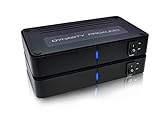
Overview: The DYNASTY PROAUDIO WSA-5RP transforms any passive bookshelf speakers into wireless rear surrounds. Operating on 5.2/5.8GHz dual bands with 106 auto-switching RF channels, it delivers near lossless 24-bit/48kHz audio up to 100 feet. The kit includes a transmitter and receiver with built-in 2x50W Class D amplification, plus subwoofer pass-through connectivity.
What Makes It Stand Out: This system’s dual-band architecture intelligently avoids WiFi interference, crucial for modern 5G home networks. The 106-channel auto-selection ensures stable transmission without dropouts. Its versatility shines through multiple input options—speaker line-level and stereo RCA—while the dedicated subwoofer loop-through preserves your existing LFE channel without compromise.
Value for Money: At $189.99, this kit costs significantly less than replacing your entire system with native wireless speakers. For owners of quality passive speakers, it eliminates wire-running hassles while preserving audio fidelity. Compared to competitor kits lacking dual-band flexibility, it offers professional-grade interference mitigation that justifies every dollar.
Strengths and Weaknesses:
- Strengths: Exceptional interference avoidance; CD-quality uncompressed audio; flexible connectivity; subwoofer integration; substantial 100ft range; works with existing equipment
- Weaknesses: Requires line-of-sight for optimal performance; needs separate passive speakers; limited to 50W per channel; may have latency issues with some AV receivers
Bottom Line: Ideal for enthusiasts wanting to wirelessly upgrade existing quality speakers without sacrificing audio purity or dealing with WiFi congestion.
2. Bobtot Wireless Surround Sound System Home Theater System, 1000W Surround Speakers 8" Subwoofer 5.1/2.1 Channel Deep Bass with ARC Optical Bluetooth Karaoke Input
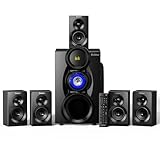
Overview: Bobtot’s all-in-one 5.1 system delivers 1000W peak power through an 8-inch subwoofer and four wireless satellite speakers, plus a wired center channel. It supports Bluetooth 5.3, HDMI ARC, optical, AUX, USB, and DVD inputs. The system features karaoke mic inputs with echo and an FM tuner, creating a versatile entertainment hub.
What Makes It Stand Out: The four truly wireless satellites offer 32 feet of placement freedom, while the 5.1/2.1 channel switching adapts to content type. Independent speaker volume control via remote allows precise calibration. The karaoke functionality with dual mic inputs and LED lighting effects transforms it from theater system to party centerpiece.
Value for Money: At $289.99, this complete system undercuts buying components separately. The 1000W peak power rating, while marketing-inflated, still represents genuine capability for medium rooms. Competing systems with similar wireless satellite configurations typically start $100 higher, making this a budget-friendly entry into true surround sound.
Strengths and Weaknesses:
- Strengths: Comprehensive input selection; true wireless satellites; karaoke features; remote volume control per channel; easy auto-connection; LED effects
- Weaknesses: Peak power rating misleading; 32ft wireless range is modest; MDF/plastic construction; no dedicated app; limited audio customization; center speaker is wired
Bottom Line: A feature-packed, affordable surround system perfect for casual users wanting wireless convenience and karaoke functionality without audiophile pretensions.
3. ULTIMEA 7.1ch Soundbar with Wireless Subwoofer, Virtual Surround Sound System for TV, App Control, 410W Peak Power, Sound bar for TV, 4 Wired Surround Speakers, Home Theater Sound System Poseidon D70

Overview: The Poseidon D70 upgrades to 7.1 channels with a soundbar, 6.5-inch wireless subwoofer, and four wired surround speakers (two front, two rear). Delivering 410W peak power, it uses virtual surround processing while maintaining physical speakers for authenticity. App control provides extensive EQ customization, though it’s not Dolby Atmos compatible.
What Makes It Stand Out: Unprecedented EQ control defines this system: 121 preset matrices across four genres plus a 10-band equalizer with six modes (Movie, Music, Voice, Sport, Game, Night). The Ultimea Smart App enables OTA updates and custom tuning. The 20-foot rear speaker cables allow flexible placement while ensuring stable, latency-free audio.
Value for Money: At $224.98, you’re paying for sophistication over simplicity. While true 7.1 receivers cost more, this integrated solution offers tuning depth rare at this price. The wired surrounds provide reliability that wireless systems can’t match, making it a smart compromise for serious listeners on moderate budgets.
Strengths and Weaknesses:
- Strengths: Exhaustive audio customization; reliable wired surrounds; wireless subwoofer freedom; app-based control; OTA updates; 20ft cable length
- Weaknesses: Not Dolby compatible; complex setup for novices; wired surrounds limit placement; virtual processing isn’t true discrete 7.1; requires app for full functionality
Bottom Line: Tailored for tinkerers who prioritize audio control and stable connections over wireless convenience, delivering professional-grade calibration in a consumer package.
4. DYNASTY PROAUDIO WSA-5RP Wireless Surround Sound Rear Speakers Kit with 2 x 50W Amplifier Built-in, 5.2G / 5.8GHz Dual Band Selectable, Total 106 RF Channel Auto Switching
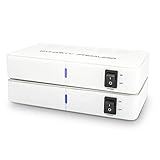
Overview: The WSA-5RP wireless kit liberates your passive surround speakers from cable constraints. This transmitter/receiver set features 5.2/5.8GHz dual-band operation with intelligent 106-channel auto-selection, delivering uncompressed 24-bit/48kHz audio up to 100 feet. The receiver includes a 2x50W Class D amplifier (25W at 8 ohms) and unique subwoofer pass-through, integrating seamlessly with existing AV receivers.
What Makes It Stand Out: The dual-impedance amplifier design (50W@4Ω, 25W@8Ω) accommodates various speaker types while the subwoofer loop-through maintains your LFE channel integrity—a feature rarely found in wireless kits. The 5.8GHz band specifically dodges crowded 2.4GHz networks and modern 5G WiFi, ensuring pristine audio in congested wireless environments.
Value for Money: Priced at $189.99, it targets savvy upgraders who’ve already invested in quality passive speakers. Rather than spending $500+ on new wireless speakers, this preserves your audio investment while adding modern convenience. The professional-grade interference management rivals systems costing twice as much.
Strengths and Weaknesses:
- Strengths: Dual-impedance compatibility; subwoofer preservation; superior interference avoidance; uncompressed CD-quality; extensive 100ft range; simple AVR integration
- Weaknesses: Requires technical knowledge; line-of-sight dependent; no app control; potential micro-latency; limited to 50W output; needs external speakers
Bottom Line: A specialized solution for home theater purists seeking to wirelessly upgrade existing speakers without compromising audio quality or subwoofer performance.
5. ULTIMEA 5.1ch Sound Bar with Subwoofer, Home Theater Virtual Surround Sound System for TV, Soundbar with App Control, 2 Surround Speakers, Opt/AUX, Peak Power 250W, Aura A30

Overview: The Aura A30 delivers 5.1-channel virtual surround at an entry-level price point, featuring a soundbar with two wired surround speakers and a 4-inch subwoofer. Rated at 250W peak power, it’s designed for rooms 108-215 sq ft. The system utilizes Ultimea’s BassMX technology for enhanced low-end and offers app-based EQ control with 121 presets.
What Makes It Stand Out: Surprising app integration at this price includes 121 EQ matrices and SurroundX virtual processing with AI fine-tuning. The BassMX technology specifically enhances action scenes and music. The wireless soundbar-to-surround connection simplifies setup, while the wired subwoofer ensures consistent bass response without wireless interference.
Value for Money: At $79.99, this is among the most affordable true 5.1 systems available. While power and driver size are modest, the feature set—including app control and extensive EQ—matches systems costing three times more. It’s an unbeatable value for apartment dwellers or small-room installations.
Strengths and Weaknesses:
- Strengths: Exceptional price; app control and EQ; BassMX enhancement; simple wireless pairing; compact size; adequate for small spaces
- Weaknesses: Low power limits dynamics; 4-inch subwoofer lacks deep bass; wired sub reduces placement flexibility; not for large rooms; virtual surround less immersive than true discrete
Bottom Line: The ultimate budget gateway into surround sound, perfect for small spaces where affordability and features trump raw power and audiophile performance.
6. TV Sound Bar, Soundbar with RGB LED Lights & 2.1CH Bluetooth Speaker Surround System, 180W Surround Sound, AUX/Optical/HDMI ARC Home Theater Speaker, 2 in 1 Detachable for Smart TV/Projector/Gaming/PC

Overview: This versatile 2.1-channel soundbar delivers 180W of total power through a unique detachable design that splits into two tower speakers. Featuring RGB lighting, Bluetooth 5.3, and comprehensive connectivity options including HDMI ARC, it targets budget-conscious gamers and entertainment enthusiasts seeking flexibility without sacrificing modern features. The system includes dual full-range and bass speakers for balanced audio reproduction.
What Makes It Stand Out: The innovative 2-in-1 detachable configuration sets this apart from rigid soundbars, allowing horizontal placement or split vertical positioning flanking your display. RGB lighting with LED display adds gaming-centric aesthetics rarely found at this price point. Bluetooth 5.3 ensures stable, low-latency wireless streaming, while the bundled accessory package—remote, HDMI/optical/AUX cables, and wall-mount kit—provides exceptional out-of-box value.
Value for Money: At $72.99, this soundbar dramatically undercuts competitors offering similar connectivity and power output. The detachable feature alone justifies the cost compared to static budget models, while RGB lighting typically commands a $30-50 premium elsewhere. It’s an ideal entry point for users wanting customizable audio placement without investing in separate components.
Strengths and Weaknesses: Pros: Unique detachable design; vibrant RGB lighting; latest Bluetooth 5.3; complete accessory bundle; multiple EQ settings via DSP; HDMI ARC support. Cons: 2.1-channel limitation lacks true surround; 180W may insufficiently fill large rooms; unknown brand reliability; RGB may not suit all aesthetics; bass response limited without dedicated subwoofer.
Bottom Line: Perfect for dorm rooms, gaming setups, or small apartments where flexibility and visual flair matter as much as audio performance. While not replacing premium home theater systems, it delivers remarkable versatility and connectivity at an unbeatable price point. Recommended for budget gamers and casual viewers prioritizing adaptability over raw power.
7. 5.1 CH Surround Sound Bar with Dolby Audio, Sound Bars for TV, Wireless Subwoofer & Rear Speaker, Dolby Digital Plus, Bluetooth 5.3, Surround Sound System for Home Theater, 4K & HD TVs| HDMI & Optical

Overview: This genuine 5.1-channel surround system delivers immersive home theater audio with a wireless subwoofer and two wireless rear speakers, powered by Dolby Digital Plus processing. With 400W total system output, it creates a 360° soundscape for movies, gaming, and music. Bluetooth 5.3 enables seamless streaming, while HDMI ARC and optical inputs ensure universal TV compatibility.
What Makes It Stand Out: True wireless rear speakers differentiate this from 2.1 systems masquerading as surround solutions. The 400W power envelope provides headroom for dynamic cinematic swells, while four EQ modes (Music, Movie, News, 3D) optimize performance by content type. Dolby Audio virtualization creates height effects without ceiling speakers. The included smart remote offers independent treble/bass adjustment and advanced settings control.
Value for Money: Priced at $299.99, this system competes directly with soundbars costing $400-500 from premium brands. The complete wireless 5.1 package eliminates cable clutter typically associated with true surround. Considering the subwoofer, rear satellites, and Dolby processing, it represents a cost-effective upgrade from basic soundbars while approaching the immersion of component systems.
Strengths and Weaknesses: Pros: Authentic 5.1 wireless surround; powerful 400W output; Dolby Digital Plus decoding; flexible EQ modes; complete cable/accessory inclusion; simple wireless pairing process. Cons: Rear speakers require separate power outlets; Bluetooth 5.3 limited to streaming (rears use proprietary wireless); larger footprint than single-bar solutions; setup complexity may challenge novices.
Bottom Line: An excellent mid-range home theater solution that genuinely delivers surround immersion without the wiring nightmare. Ideal for movie enthusiasts wanting authentic 5.1 performance in a convenient package. The wireless rears and robust power make it a compelling alternative to more expensive branded systems. Highly recommended for dedicated entertainment spaces.
8. LG S40TR 4.1 ch. Home Theater Soundbar with Rear Surround Speakers and Wireless Subwoofer, Wow Interface, Dolby Audio, AI Sound Pro, 2024 Model, Amazon Exclusive

Overview: LG’s 4.1-channel soundbar system combines a compact main bar with wireless rear satellites and a wireless subwoofer, delivering cinematic audio through Dolby Digital and DTS Digital decoding. The 2024 model emphasizes ecosystem integration with LG TVs via WOW Orchestra and WOW Interface technologies. AI Sound Pro automatically optimizes audio based on content type, creating a tailored listening experience without manual adjustment.
What Makes It Stand Out: Seamless LG TV integration represents the primary differentiator, allowing simultaneous use of TV and soundbar speakers for enhanced clarity. The WOW Interface enables controlling both devices through a single remote with on-screen sound mode selection. Wireless rear speakers eliminate placement constraints without requiring a separate receiver. DTS Digital support ensures compatibility with legacy content libraries that competing models often ignore.
Value for Money: At $246.99, this LG system commands a brand premium over generic alternatives while undercutting flagship models by $150-200. The exclusive Amazon pricing and 2024 feature set provide modern connectivity and processing. For LG TV owners, the synergy features deliver tangible value unavailable from third-party brands, justifying the moderate price increase over budget systems.
Strengths and Weaknesses: Pros: LG brand reliability; WOW TV integration; wireless rear speakers; AI Sound Pro optimization; Dolby and DTS decoding; compact, room-friendly design. Cons: 4.1-channel lacks center channel for dialogue clarity; WOW features limited to LG TVs; rear speaker drivers smaller than dedicated satellites; subwoofer size unspecified; no HDMI eARC mentioned.
Bottom Line: The ideal choice for LG TV owners seeking cohesive ecosystem performance without flagship pricing. While the 4.1 configuration compromises absolute dialogue precision, the wireless convenience and intelligent features make it a smart, future-proofed investment. Less compelling for non-LG TV users who can’t leverage ecosystem benefits. Recommended specifically for LG television households wanting seamless operation.
9. ULTIMEA 5.1ch Sound Bar with Dolby Atmos, Surround Sound System for TV, App Control, Home Theater Sound System, TV Soundbar with Subwoofer, 2 Surround Speakers, HDMI eARC/Opt/AUX/BT, Aura A50 Pro

Overview: The Aura A50 Pro brings Dolby Atmos to the budget segment with a 5.1-channel configuration featuring a wired subwoofer and two surround speakers. The hybrid wireless setup connects rears to each other via cable while communicating wirelessly to the main bar, reducing clutter while maintaining stability. HDMI eARC support ensures lossless audio transmission, while app control provides advanced customization. The system targets rooms under 215 square feet.
What Makes It Stand Out: Dolby Atmos capability at $109.98 is unprecedented, delivering height-channel virtualization typically reserved for $300+ systems. SurroundX technology upmixes stereo content to 5.1, enhancing everyday viewing. BassMX subwoofer processing amplifies low-frequency impact. The ULTIMEA Smart App offers OTA updates and granular EQ adjustments, features rare in this price class. HDMI eARC compatibility future-proofs the investment for modern TVs.
Value for Money: This system redefines budget audio by offering Atmos and eARC at a price point where most competitors provide only basic stereo widening. The hybrid wireless approach intelligently balances cost and performance. Compared to soundbars costing twice as much, it sacrifices only absolute power and fully wireless rears while retaining core immersive technologies, delivering 80% of the premium experience for 40% of the cost.
Strengths and Weaknesses: Pros: Dolby Atmos support; HDMI eARC; app control with OTA updates; SurroundX upmixing; exceptional price; compact room optimization. Cons: Wired subwoofer limits placement; rear speakers require cable between them; 215ft² room constraint; brand recognition concerns; power output unspecified.
Bottom Line: A breakthrough product that democratizes Dolby Atmos for budget-conscious buyers. Perfect for apartments, bedrooms, or small living rooms where immersive audio was previously cost-prohibited. The cable-between-rears compromise is minor given the savings. For small spaces, this delivers genuine Atmos height effects that transform movie nights. Highly recommended as the best value immersive soundbar available.
10. ULTIMEA 7.1Ch Soundbar with Dolby Atmos, APP Control, Surround Sound System for TV, 4 Wired Surround Speakers, Sound Bar for TV with 6.5" Wireless Subwoofer, Soundbar for TV, Poseidon D80 Upgraded

Overview: The Poseidon D80 upgrades to 7.1 channels with four wired surround speakers and a potent 6.5-inch wireless subwoofer, creating a comprehensive immersive audio system. Eight high-performance drivers work with Dolby Atmos to generate a 360° soundscape through SurroundX and 360° Aural Spatial Localization technologies. The system targets enthusiasts wanting maximum channel count without premium brand pricing, though it omits DTS decoding.
What Makes It Stand Out: The 7.1-channel configuration with front and rear surrounds delivers unparalleled soundstage width in its class. The 6.5-inch wireless subwoofer provides substantial low-frequency extension typically found in $500+ systems. The ULTIMEA app enables sophisticated control and OTA firmware updates. HDMI eARC with 4K passthrough simplifies home theater integration. The four surround speakers create precise localization cues that 5.1 systems cannot match.
Value for Money: At $299.99, this competes with premium 5.1 systems while offering two additional front surround channels and a larger subwoofer. The price reflects a 40% savings versus comparable channel-count systems from established brands. The trade-off—wiring four surround speakers—is acceptable for permanent installations where performance outweighs convenience. The wireless subwoofer maintains placement flexibility where it matters most.
Strengths and Weaknesses: Pros: 7.1-channel immersion; large 6.5" wireless subwoofer; Dolby Atmos support; app control with updates; HDMI eARC; competitive pricing. Cons: Four wired surround speakers require cable management; no DTS decoding; brand lacks LG/Sony recognition; setup complexity higher than soundbar-only solutions; room placement critical for optimal effect.
Bottom Line: An enthusiast-grade system delivering true 7.1-channel Atmos at a revolutionary price. Ideal for dedicated home theaters where wiring can be concealed and maximum immersion is prioritized. The wired surrounds are a non-issue for permanent setups, while the wireless subwoofer and robust app control add modern convenience. For audio purists seeking channel count over brand prestige, this is the definitive value champion. Recommended for serious movie watchers with flexible installation options.
Why Basement Theaters Demand Specialized Audio Solutions
The Acoustic Challenges of Underground Spaces
Basements aren’t just another room—they’re acoustic anomalies. Concrete walls create intense sound reflections, low ceilings cause problematic bass buildup, and that lack of natural light that makes them perfect for theaters also eliminates the sound-dampening benefits of windows. Wireless surround kits designed for standard living rooms often fail miserably when confronted with these unique conditions. The reverberation time in an untreated basement can exceed 1.2 seconds, turning crisp dialogue into muddy gibberish.
Professional installers know that basement acoustics require systems with sophisticated digital signal processing (DSP) specifically tuned for enclosed, reflective environments. Look for wireless kits advertising “room mode correction” or “boundary compensation”—features that digitally counteract the sonic artifacts caused by your basement’s rigid surfaces. The most advanced 2026 systems incorporate machine learning algorithms that map your room’s unique acoustic signature during setup, creating a custom frequency response curve that compensates for concrete-induced anomalies.
Why Wireless is the Future of Basement Entertainment
The practical realities of basement renovations make wireless systems not just convenient but often essential. Running speaker wire through poured concrete walls requires professional drilling equipment and compromises structural integrity. Even in unfinished basements, the process of fishing wires through ceiling cavities filled with ductwork, plumbing, and electrical runs can turn a weekend project into a month-long ordeal.
Modern wireless systems operating on the 5.2-5.8 GHz spectrum with dynamic frequency selection can maintain stable connections even through multiple concrete barriers. The key is understanding that “wireless” in 2026 doesn’t mean “unreliable”—the latest WiSA (Wireless Speaker and Audio) certified systems achieve sub-5ms latency with 24-bit/96kHz uncompressed audio, performance that rivals traditional copper connections while eliminating the installation headaches that have historically plagued basement theaters.
Understanding Wireless Surround Sound Technology in 2026
The Evolution from Bluetooth to WiSA and Beyond
Bluetooth 5.4 might work for your backyard speakers, but it’s woefully inadequate for serious theater applications. The real action in 2026 is happening with WiSA EARC and proprietary 6 GHz mesh networks. These technologies transmit eight channels of uncompressed audio simultaneously with latency so low (under 3 milliseconds) that your brain can’t perceive any delay between video and audio.
What’s revolutionary about this year’s systems is their use of adaptive frequency hopping. Unlike older fixed-frequency systems that would drop out when your microwave ran, 2026’s premium kits constantly scan the RF environment and switch channels mid-stream to avoid interference. This is particularly crucial in basements where Wi-Fi routers, furnaces, and electrical panels create a cacophony of electromagnetic noise that can cripple lesser systems.
Decoding Latency: Why It Matters for Theater Applications
Latency—the delay between video and audio—is the silent killer of immersive experiences. Anything above 40ms creates a perceptible disconnect where lips don’t match dialogue. Budget wireless systems often hide latency figures in fine print, but basement theaters magnify this problem due to signal path complexities.
The gold standard for 2026 is sub-10ms end-to-end latency, achieved through a combination of dedicated wireless chips and predictive audio buffering. Some cutting-edge systems now offer “latency compensation” settings in their companion apps, allowing you to fine-tune sync based on your specific display’s processing delay. This is particularly valuable for basement setups using projectors, which typically have longer video processing chains than TVs.
Key Specifications That Separate Good from Great
Channel Configurations Explained: 5.1 vs 7.1 vs 9.1.4
For basements under 300 square feet, a properly implemented 5.1 system will absolutely dominate the space. The “5” represents front left, center, front right, surround left, and surround right speakers, while the “.1” denotes the subwoofer. The myth that “more channels is always better” leads many basement theater owners to cram speakers into spaces where they create more confusion than immersion.
However, if your basement exceeds 400 square feet or has a rectangular layout with seating more than 12 feet from the screen, stepping up to 7.1 adds discrete rear surround channels that create a more seamless 360-degree soundfield. The 9.1.4 configuration—with its four overhead height channels—presents a unique challenge in basements with low ceilings. Height effects require at least 8 feet of vertical space to breathe; anything less and you’ll hear the speakers rather than the immersive effects.
Wattage Reality Check: What Power Ratings Actually Mean
Manufacturers love to splash “1000W Total Power!” across packaging, but this spec is meaningless without context. What matters is continuous power per channel (measured in watts RMS) and dynamic headroom. A quality 2026 wireless kit delivering 80W RMS per channel with 3dB of headroom will outperform a cheap system claiming 200W per channel but distorting at 50% volume.
Basement environments require more power than you might expect. Concrete doesn’t absorb sound—it reflects it, meaning you need clean power to overcome boundary interference and maintain clarity at reference listening levels. Look for systems where the wireless amplifiers can deliver at least 100W RMS to the front three channels and 60W RMS to surrounds. The subwoofer should have its own dedicated amplifier rated at a minimum of 200W RMS to properly energize a subterranean space.
The Truth About “Wireless” in Surround Systems
Which Components Can Actually Be Wireless
Marketing departments have stretched the definition of “wireless” to its breaking point. In a true wireless surround system, the only physical connections should be power cords and a single HDMI cable to your display. The rear surround speakers, side surrounds, and potentially height modules should communicate wirelessly with the main soundbar or hub.
However, the front soundbar or left/right speakers almost always require wired connections to each other and to the hub. The subwoofer is typically wireless but still needs AC power. Some 2026 “wireless” kits still require ethernet cables for firmware updates or initial pairing, though the best systems now handle everything through Bluetooth Low Energy for setup before switching to their primary wireless protocol for audio transmission.
Power Requirements: The Hidden Cables Nobody Talks About
Here’s the dirty secret: every speaker needs power. Those sleek wireless surrounds require either built-in rechargeable batteries or AC adapters. Battery-powered speakers seem convenient until you realize you’re climbing behind your seating every 8-10 hours to recharge them. For permanent basement installations, AC-powered wireless speakers are the only practical solution.
This means you’ll still need outlets strategically placed around your room. Plan for a dedicated 15-amp circuit for your audio system—basements often share circuits with workshops or laundry rooms, and nothing kills a dramatic moment like a tripped breaker when your subwoofer hits a demanding passage. The most advanced 2026 systems include power management hubs that sequence startup to avoid inrush current issues that can overload marginal electrical service.
Basement-Specific Audio Considerations
Managing Concrete Walls and Low Ceilings
Concrete’s sound reflectivity coefficient approaches 0.95, meaning it reflects 95% of the sound energy that hits it. This creates intense first-reflection points that smear imaging and collapse soundstage depth. Wireless surround kits with built-in room correction can help, but you need to understand their limitations.
The most effective approach combines physical treatment with digital correction. Even minimal absorption panels at first reflection points can reduce the DSP workload by 60%, allowing the system to focus on fine-tuning rather than fighting acoustic disasters. For low ceilings (under 7.5 feet), disable any up-firing Atmos modules and invest the savings in better quality base-layer speakers. Height effects in compressed vertical spaces create more problems than they solve.
Humidity and Temperature Fluctuations
Basements are notorious for moisture issues, and electronics hate humidity. The wireless components in 2026’s premium kits feature conformal coating on circuit boards and sealed enclosures rated for 20-80% relative humidity operation. But you need to do your part—maintain basement humidity between 30-50% using a dehumidifier, and never place wireless receivers directly on concrete floors where condensation forms.
Temperature swings from 55°F in winter to 75°F in summer affect speaker component performance. Voice coil resistance changes with temperature, altering frequency response. Advanced systems now include thermal compensation algorithms that adjust EQ based on internal temperature sensors. This is particularly important for wireless subwoofers, whose amplifiers generate significant heat that gets trapped in basement corners.
Connectivity Standards for Modern Basements
HDMI eARC vs Optical: Making the Right Choice
The optical (Toslink) connection is dead for serious theater use—its bandwidth caps at 384kbps, insufficient for Dolby TrueHD or DTS-HD Master Audio, let alone Atmos. HDMI eARC (enhanced Audio Return Channel) is mandatory for 2026 wireless kits, delivering up to 37Mbps of uncompressed audio bandwidth.
But eARC has a basement-specific quirk: it requires HDMI cables rated for 48Gbps (Ultra High Speed) to function reliably over distances exceeding 15 feet. Many basement setups need 25-35 foot runs from equipment racks to projectors, and cheaper cables will cause intermittent audio dropouts that are maddening to diagnose. Invest in active optical HDMI cables for runs over 20 feet—they’re immune to electromagnetic interference from your furnace and electrical panel.
The Role of Wi-Fi 6E in 2026 Audio Streaming
While the primary audio transmission uses dedicated wireless protocols, Wi-Fi 6E has become crucial for system control, firmware updates, and high-resolution music streaming. The 6 GHz band offers 14 additional 80MHz channels that don’t overlap with your 2.4GHz subwoofer link or 5GHz surround channels.
The best wireless surround kits now include Wi-Fi 6E as a secondary communication path, using it for bandwidth-intensive tasks like downloading DSP updates while keeping the primary audio link isolated. This separation prevents your Netflix stream from competing with system-critical data. Ensure your basement has strong 6 GHz coverage—concrete attenuates these higher frequencies more severely than 2.4 GHz, so you might need a mesh node in the basement for reliable connectivity.
Immersive Audio Formats Worth Investing In
Dolby Atmos and DTS:X for Basement Theaters
Object-based audio formats like Dolby Atmos and DTS:X don’t just add height channels—they create a three-dimensional soundfield where sounds move as independent objects rather than being locked to specific speakers. In basements, this technology can overcome acoustic limitations by using DSP to “place” sounds in spaces where physical speakers can’t fit.
The critical spec is the number of simultaneous objects a system can process. Entry-level wireless kits handle 16-20 objects, while premium 2026 systems manage up to 128 simultaneous audio objects. This matters in complex action scenes where explosions, dialogue, and environmental sounds all compete for sonic real estate. More processing headroom means each element remains distinct rather than collapsing into a muddy soup.
Height Channels: Are They Effective Below Ground?
The effectiveness of height channels depends entirely on ceiling height and treatment. With ceilings under 8 feet, traditional in-ceiling speakers are impractical. This is where up-firing Dolby Atmos modules built into wireless surround speakers show their value—when properly calibrated, they bounce sound off the ceiling to create phantom height channels.
However, concrete ceilings are terrible reflectors for high frequencies. They absorb the very treble information needed for convincing height effects. In basements with concrete ceilings, skip the up-firing modules and invest in a higher-quality 7.1 system. If you have a drywalled ceiling with at least 8 feet of clearance, consider wireless height modules that mount high on side walls, firing across the room rather than upward. This approach yields far more convincing results in subterranean spaces.
Smart Features That Enhance the Experience
AI-Driven Room Calibration in 2026
Gone are the days of waving a cheap microphone around your room for 30 seconds. 2026’s premium wireless kits use AI-powered calibration that takes hundreds of measurements across multiple seating positions, analyzing room modes, reflection patterns, and even HVAC noise signatures. The system then builds a 3D acoustic model of your basement and creates correction filters for each speaker individually.
The most advanced implementations use machine learning trained on thousands of basement theater profiles. They can distinguish between a problematic room mode that needs correction and a desirable boundary effect that adds warmth. Some systems even adapt their correction over time, learning your listening habits and adjusting EQ for different content types—boosting dialogue clarity for movies, widening soundstage for music, and tightening bass for gaming.
Voice Control Integration Without Compromise
“Alexa, turn up the center channel” might sound gimmicky, but voice control has evolved into a legitimate accessibility feature. The key is local processing—2026’s best systems don’t send your commands to the cloud, eliminating the 1-2 second delay that makes cloud-based voice control useless for real-time adjustments.
Look for kits with dedicated far-field microphones in the main hub that understand context-aware commands. “Make dialogue clearer” should automatically boost the 1-3kHz range on the center channel by 2-3dB. “Movie night mode” should engage dynamic range compression for late-night viewing. The system should also recognize multiple voices, applying personalized EQ settings based on who’s asking—crucial for households with varying hearing profiles.
Placement Strategies for Wireless Components
Subwoofer Positioning in Enclosed Spaces
The “subwoofer crawl”—placing the sub in your listening position and crawling around the room to find where bass sounds best—is even more critical in basements. Concrete walls create standing waves that can boost certain frequencies by +12dB while completely canceling others. Wireless subwoofers give you placement flexibility, but that freedom requires disciplined methodology.
Start with the subwoofer in a front corner, then measure bass response at your main seating position using a smartphone SPL app playing a sine wave sweep. Move the sub in 1-foot increments along the front wall, noting response changes. Basements often benefit from placing the subwoofer mid-wall rather than in corners, which excites fewer room modes. Some 2026 systems include wireless dual-subwoofer capability—running two smaller subs wirelessly often yields smoother bass response than one large subwoofer in a problematic basement.
Surround Speaker Height and Angle Optimization
The ITU-R BS.775 standard specifies surround speakers should be 2-3 feet above ear level, but basements with low ceilings can’t always accommodate this. In spaces with 7-foot ceilings, mounting surrounds at 5.5-6 feet high often works better than cramming them at ceiling height where they blast directly down on listeners.
Wireless surrounds with adjustable wall mounts give you the flexibility to angle speakers precisely. Aim for a 110-degree angle from the main listening position—slightly behind the viewer—to create proper envelopment without localization. The wireless protocol should maintain perfect sync even when speakers are placed asymmetrically, which is common in basements with structural columns or utility areas breaking up wall space.
Power Management and Battery Considerations
Rechargeable vs Plug-In Wireless Speakers
Battery-powered wireless speakers promise clean aesthetics but deliver ongoing frustration. Lithium-ion cells degrade significantly in basement temperatures, losing 20% capacity after just 50 charge cycles in 60°F conditions. By year two, you’re charging speakers weekly instead of monthly.
AC-powered wireless speakers are the only sensible choice for permanent installations. Yes, you need outlets, but you gain reliability and consistent performance. The best 2026 systems use power-over-wireless technology where the hub wirelessly monitors each speaker’s power consumption, alerting you to failing power supplies before they die mid-movie. This predictive maintenance feature is invaluable in basements where accessing behind-speaker outlets is a major hassle.
UPS Backup Systems for Uninterrupted Viewing
Basements experience more power fluctuations than upper floors, and nothing’s worse than your system shutting down during a storm. A UPS (Uninterruptible Power Supply) isn’t just for your projector—your wireless audio hub needs clean, stable power to maintain wireless sync during brief outages.
Calculate your system’s total power draw: hub (50W), subwoofer (200W), and each wireless speaker (30W). A 1500VA UPS provides 10-15 minutes of runtime, enough for graceful shutdown or to ride through brief interruptions. More importantly, it conditions the power, filtering out the voltage spikes common in basement circuits that share space with sump pumps and dehumidifiers. Some premium wireless kits now include built-in power monitoring that automatically engages a “low power mode” during UPS operation, reducing volume slightly but maintaining full functionality.
Budget Allocation Framework
The 50/30/20 Rule for Basement Theater Audio
Smart budgeting prevents the all-too-common mistake of overspending on channels while underspending on quality. Allocate 50% of your audio budget to the front three channels (left, center, right) and subwoofer, 30% to wireless surround speakers, and 20% to processing/wireless hub. This ensures the speakers responsible for 80% of what you hear are premium quality.
In basement environments, consider shifting 5% from the surrounds to the subwoofer. Concrete spaces need more clean bass output to overcome boundary reinforcement issues. A $800 wireless subwoofer will transform your experience more than $800 worth of height channels that can’t perform properly in your space.
Where to Splurge vs Where to Save
Splurge on: DSP processing power (you can’t upgrade this later), subwoofer quality (the foundation of basement audio), and wireless reliability (dropped signals ruin everything). Save on: height channels if ceiling height is marginal, battery-powered features, and streaming services bundled with the system (use your existing subscriptions).
The wireless hub is the brain you can’t see—don’t cheap out. A $300 difference in hub quality affects every speaker, while a $300 difference in surround speakers only affects two channels. In 2026, the hub handles all the complex room correction, wireless management, and format decoding. A premium hub with upgradeable firmware will support audio standards that haven’t been invented yet, protecting your investment.
Installation and Setup Best Practices
Firmware Updates: The First Critical Step
Your brand-new wireless kit will ship with firmware that’s already outdated. Manufacturers continuously refine their DSP algorithms and wireless protocols. Before running any room calibration or listening to a single note, connect the hub to ethernet and run all available updates—this can take 45-90 minutes but is non-negotiable.
2026’s best systems support “staged updates,” allowing you to update the hub first, then each speaker sequentially without losing wireless pairing. Some even include rollback protection, automatically reverting to the previous firmware if an update causes instability. This is crucial in basement installations where troubleshooting requires moving furniture and accessing tight spaces.
Wireless Interference Troubleshooting Guide
Basements are RF hellscapes. Your electrical panel broadcasts broadband noise, the water heater’s igniter creates sharp pulses, and your Wi-Fi router fights for the same spectrum as your wireless speakers. Start your installation by scanning the RF environment using a Wi-Fi analyzer app on your phone.
If you detect congestion on the 5 GHz band (common if your router is in the basement), manually configure your wireless audio system to use the upper 5.8 GHz range or the new 6 GHz band. Premium kits allow channel width adjustment—switching from 80MHz to 40MHz channels reduces bandwidth but dramatically increases reliability in noisy environments. Keep wireless speakers at least 3 feet from your electrical panel and any large metal ductwork, which can create RF shadows.
Future-Proofing Your 2026 Investment
Modular Systems That Grow With You
The “wireless” aspect of your system should extend beyond just audio transmission to system architecture. Look for kits with modular wireless amplifiers that can be added later. Maybe you start with 5.1, but next year want to add wireless height modules or a second subwoofer.
True modularity means the hub has unused wireless channels and processing headroom ready to activate via firmware. Some 2026 systems use a “hub and satellite” architecture where each speaker is essentially a self-contained wireless amplifier module. Adding channels is as simple as pairing new satellites—the hub automatically reconfigures its DSP and power allocation. Avoid systems where the hub is maxed out at purchase; you’ll be replacing the entire system instead of expanding it.
Upgrade Paths and Compatibility Standards
The Wireless Speaker and Audio (WiSA) standard has matured into WiSA 2.0 in 2026, guaranteeing interoperability between components from different manufacturers. A WiSA-certified hub can control speakers from brand A while receiving audio from a TV brand B. This ecosystem approach protects your investment—if one component fails or becomes obsolete, you replace that piece, not the entire system.
Also consider HDMI standards. HDMI 2.1b is the minimum for 2026, but HDMI 2.2 is already appearing on flagship displays. Your wireless hub should have upgradable HDMI hardware via daughter cards or at least support the full 48Gbps bandwidth for future formats. Some manufacturers offer “future-proof” guarantees, promising free hardware upgrades if new standards emerge within two years of purchase.
Common Basement Theater Mistakes to Avoid
Overlooking Sound Isolation
Your incredible wireless surround system will create a terrible neighbor if you ignore sound isolation. Concrete is an excellent sound transmitter—it doesn’t absorb bass, it conducts it through the structure directly into your upstairs living space and adjacent homes. Wireless speakers vibrating against concrete walls become unintentional transducers.
Isolate every speaker using neoprene pads or dedicated isolation stands, even for wall-mounted units. The subwoofer absolutely must sit on an isolation platform—concrete-on-concrete contact turns your foundation into a giant speaker, transmitting bass at full volume to every room in the house. Some 2026 wireless subwoofers include built-in isolation feet with tuned compliance, but adding a $100 isolation platform yields dramatically better results.
Mismatched Component Impedance Issues
Wireless systems still have amplifiers and speakers with specific impedance requirements. Mixing a 4-ohm center channel with 8-ohm wireless surrounds forces the hub’s amplifier to work harder on some channels, creating uneven performance and potential overheating. While the hub can digitally compensate for some mismatches, it’s fighting physics.
Stick with matched systems from the same manufacturer, or verify that the wireless hub supports mixed impedance loads with independent amplifier channels. The spec sheet should list “minimum impedance per channel”—if it doesn’t, assume the system requires matched speakers. This is particularly important for basement installations where heat dissipation is already challenging due to limited airflow.
Maintenance and Longevity Tips
Seasonal Care for Basement Environments
Spring brings humidity, winter brings dryness—both stress electronic components. Every season change, inspect wireless speaker grilles for mold growth (common in damp basements) and clean them with a dry brush. Check that condensation hasn’t formed on the hub’s ventilation slots; even sealed systems breathe, and blocked airflow shortens lifespan.
Run a full system diagnostic monthly—most 2026 hubs include automated health checks accessible via their apps. This scans wireless signal strength, driver impedance, amplifier temperature, and battery health (if applicable). Catching a failing wireless module early prevents catastrophic failure during your annual Oscar party viewing. Keep firmware auto-updates enabled, but schedule them for 3 AM to avoid interrupting viewing sessions.
When to Reset vs When to Replace
Wireless systems sometimes lose pairing after power outages or RF interference events. Before factory resetting, try the “soft re-pair” function—most 2026 systems can re-establish connections without wiping your calibration settings. This takes 2-3 minutes versus the 45-minute recalibration process after a factory reset.
If a wireless speaker develops intermittent dropouts that persist after re-pairing, it’s likely a failing wireless module, not a settings issue. Replacement modules cost 30-40% of a new speaker and are user-installable in premium systems. Don’t tolerate chronic dropouts—each one stresses the hub’s synchronization engine and can eventually corrupt the DSP firmware. In basements where wireless conditions are harsh, budget for one replacement wireless module over the system’s 7-10 year lifespan.
Frequently Asked Questions
Will a wireless surround system work reliably through my basement’s concrete walls?
Yes, but you need a system operating on lower frequencies (5 GHz or dedicated wireless protocols like WiSA) rather than Bluetooth. Concrete attenuates 2.4 GHz signals significantly, but 5+ GHz systems with adaptive frequency hopping can maintain stable connections. Position the wireless hub centrally and avoid placing speakers on opposite sides of structural concrete pillars.
Do I need special electrical considerations for a wireless audio system in my basement?
Absolutely. Basements often have older, overloaded circuits. Install a dedicated 15-amp circuit for your audio system to prevent interference from sump pumps, dehumidifiers, or workshop tools. Use a UPS power conditioner to protect against basement-specific power fluctuations and provide backup during brief outages.
How much ceiling height do I need for Dolby Atmos height channels to work effectively?
Minimum 8 feet for up-firing modules, preferably 9+ feet for in-ceiling speakers. In basements with 7-foot ceilings, skip Atmos and invest in a higher-quality 7.1 system. The height effects won’t render properly and can actually degrade the overall experience by creating localized sound sources rather than immersive overhead audio.
Can I mix wireless speakers from different brands in my basement theater?
Only if all components support the WiSA 2.0 standard. This ensures interoperability of wireless protocols and synchronization. Mixing non-certified brands will result in latency mismatches, dropout issues, and inability to run unified room correction. For basement installations where troubleshooting is difficult, stick with a complete ecosystem from one manufacturer.
What’s the realistic battery life for truly wireless surround speakers?
8-12 hours at moderate volumes, but lithium batteries degrade 20-30% annually in basement temperature ranges. For permanent installations, AC-powered wireless speakers are vastly superior. Only consider battery models if you absolutely cannot install outlets, and plan to replace batteries every 18-24 months.
How do I prevent my wireless subwoofer from disturbing upstairs neighbors?
Concrete transmits bass remarkably efficiently. Use a subwoofer isolation platform to decouple it from the floor. Position the subwoofer away from shared walls and consider a wireless dual-subwoofer setup—two smaller subs at lower volumes often produce smoother bass with less structural transmission than one large subwoofer straining to fill the space.
Will my basement’s Wi-Fi router interfere with my wireless surround system?
Yes, unless you manually separate frequencies. Use a Wi-Fi analyzer to identify congested channels, then configure your wireless audio system to use non-overlapping frequencies. Premium 2026 systems automatically avoid Wi-Fi channels, but budget systems may require manual intervention. Consider upgrading to Wi-Fi 6E to move your home network off the 5 GHz band entirely.
How often should I recalibrate my wireless system in a basement environment?
Run a full recalibration every season change. Temperature and humidity shifts affect speaker components and room acoustics. Additionally, recalibrate after any significant change—adding furniture, installing acoustic panels, or even storing holiday decorations in the room. The best 2026 systems offer “quick recalibration” modes that take 5 minutes versus the initial 45-minute deep scan.
Can I use a wireless surround system in an unfinished basement?
Yes, but protect the components. Wireless speakers need to be shielded from dust and moisture. Mount them on walls rather than placing them on exposed studs, and use weather-resistant covers when the system isn’t in use. The hub should live in a sealed equipment enclosure with filtered ventilation. Unfinished basements are RF-friendly (fewer reflective surfaces) but environmentally harsh.
What’s the lifespan of a premium wireless surround system in a basement?
Expect 7-10 years with proper maintenance. The wireless modules are typically the first failure point, lasting 5-7 years in basement conditions. Choose systems with user-replaceable wireless cards. Amplifiers and drivers can last 15+ years, but capacitors in the hub may need replacement around year 8. Budget 15-20% of the initial cost for maintenance over the system’s lifetime.