Transforming your living space into a seamless smart home ecosystem begins with choosing the right voice control architecture. Alexa-compatible devices have evolved far beyond simple speaker systems—they now serve as sophisticated command centers that orchestrate lighting, climate, security, and entertainment throughout your entire property. Whether you’re building your first connected home or upgrading an existing setup, understanding the nuanced differences between various Alexa-integrated assistants and hubs is crucial for making an investment that serves you well for years.
The landscape of voice-controlled smart home technology has expanded dramatically, creating a rich but sometimes confusing marketplace where specifications, integration capabilities, and long-term support vary significantly between device categories. This comprehensive guide cuts through the marketing noise to examine the core features, technical considerations, and strategic factors that separate exceptional Alexa-compatible devices from mediocre ones. We’ll explore what truly matters when evaluating these systems so you can identify the perfect match for your specific needs, technical comfort level, and smart home ambitions.
Top 10 Alexa-Compatible Voice Assistants
Detailed Product Reviews
1. Amazon Echo Hub, 8” smart home control panel with Alexa+ Early Access, Compatible with thousands of devices

Overview: The Echo Hub transforms wall space into a centralized smart home command center. This 8-inch touchscreen panel integrates seamlessly with Alexa, offering both voice and tactile control over your entire connected ecosystem. Designed for permanent installation, it eliminates the need to fish for your phone to adjust devices or check camera feeds.
What Makes It Stand Out: Unlike standalone Echo speakers, this dedicated panel provides always-visible device status and controls. Its multi-protocol hub supports WiFi, Bluetooth, Zigbee, Matter, Sidewalk, and Thread—future-proofing your setup. The customizable dashboard lets you create routines, view security cameras, and manage lighting zones with a single tap, making complex automation accessible to everyone.
Value for Money: At $179.99, it undercuts similar control panels while delivering superior Alexa integration. Competing hubs often lack the display or charge $250+. Considering it replaces multiple remotes and provides security system control, the price is justified for serious smart home enthusiasts.
Strengths and Weaknesses: Strengths include broad protocol compatibility, clean wall-mounted design, and intuitive interface. The always-on display enhances convenience. Weaknesses: requires proximity to an outlet (unless using PoE adapter), mounting accessories sold separately, and it’s less portable than a tablet. The 2.4GHz limitation for some devices may frustrate users with dual-band networks.
Bottom Line: Perfect for dedicated smart home control. If you’re invested in Alexa and want a permanent, elegant solution, the Echo Hub delivers exceptional functionality at a competitive price.
2. KimFilter WiFi Smart Plug, Wireless Plugs Outlet Compatible with Alexa & Google Voice Assistant, App Controlled Outlet with Timer Function, 2.4GHz Only Wi-Fi Smart Socket, Smart Plug Timer for Home

Overview: The KimFilter Smart Plug delivers essential automation at an entry-level price point. This single-outlet WiFi plug enables remote control, voice commands, and scheduling through popular platforms. Its compact design fits standard wall outlets without blocking adjacent sockets, making it ideal for lamps, fans, and small appliances.
What Makes It Stand Out: The sub-$9 price tag is remarkable for a plug with full Alexa/Google integration and robust app features. Group control allows creating scenes like “Movie Night” that command multiple devices simultaneously, while family sharing enables household members to control devices without complex account setups.
Value for Money: At $8.99, this is among the cheapest reliable smart plugs available. Competitors typically charge $12-$15 for similar functionality. The inclusion of scheduling, voice control, and group features makes it an exceptional value for budget-conscious buyers dipping their toes into smart home tech.
Strengths and Weaknesses: Strengths include unbeatable price, simple setup, and reliable voice control. The “Smart Life” compatibility ensures broad ecosystem support. Weaknesses: 2.4GHz WiFi only may cause connection issues on mesh networks, lacks energy monitoring, and the plastic construction feels basic. No USB ports limits versatility compared to premium alternatives.
Bottom Line: An excellent starter plug that punches above its weight. For basic automation needs, it’s hard to beat the KimFilter’s combination of features and affordability.
3. Homewerks 7148-01-AX Smart Bathroom Fan with Alexa Voice Assistant Color Changing LED Light and Bluetooth Speakers 110 CFM 1.5 Sones

Overview: This Homewerks bathroom fan reimagines ventilation as a multi-functional smart fixture. Combining a 110 CFM exhaust fan with an Alexa-enabled speaker, Bluetooth audio streaming, and tunable LED lighting, it consolidates three devices into one ceiling unit. The whisper-quiet 1.5-sone operation ensures comfort without sacrificing performance.
What Makes It Stand Out: Integration is the key differentiator—having Alexa respond from your bathroom ceiling is genuinely novel. The color-temperature adjustable LED (2200K-5000K) supports circadian rhythms, while the Bluetooth speaker delivers surprisingly decent audio for shower singalongs. All functions are controllable via voice, app, or the included touch panel.
Value for Money: At $193.51, it’s priced competitively with high-end bathroom fans that lack smart features. Considering you get a $50 smart speaker, $30 LED fixture, and premium fan in one package, the value is solid for bathroom renovators seeking modern convenience.
Strengths and Weaknesses: Strengths include quiet operation, true three-in-one functionality, and excellent voice recognition even with fan running. The included wall switch is a nice touch. Weaknesses: installation requires electrical expertise and ceiling access; it’s overkill for half-baths; and the Alexa feature may feel gimmicky to some. WiFi connectivity can be challenging in bathrooms.
Bottom Line: Ideal for primary bathroom remodels. If you’re already installing a new fan, the smart features justify the premium and eliminate countertop clutter.
4. Lepro P1 Smart Plug Mini 15A, WiFi Outlet Plugs Compatible with Alexa & Google Assistant, Voice/APP Control, Timer & Group Controller, 2.4Ghz Only, ETL & FCC Certified, 2-Pack
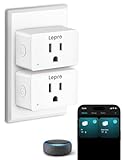
Overview: The Lepro P1 Mini offers compact smart control for higher-draw appliances in a two-pack configuration. These space-saving plugs support 15A/1800W loads, making them suitable for coffee makers and space heaters. The dual Bluetooth and WiFi connection promises more stable connectivity than WiFi-only alternatives.
What Makes It Stand Out: The 15A capacity exceeds the standard 10A rating of most budget plugs, expanding compatibility. Bluetooth-assisted setup simplifies pairing, while the mini design ensures adjacent outlets remain usable. The dual-connection approach reduces “device unreachable” errors common with single-protocol plugs.
Value for Money: At $19.99 for two ($10/plug), pricing is competitive mid-tier. However, the mandatory Lepro app (no Smart Life/Tuya support) creates ecosystem lock-in. For users already invested in Lepro’s lighting products, this is seamless; others may find the proprietary approach limiting despite the hardware quality.
Strengths and Weaknesses: Strengths include high power handling, compact footprint, and reliable dual-mode connectivity. ETL/FCC certification ensures safety. Weaknesses: app exclusivity fragments smart home control, 2.4GHz-only limitation persists, and setup requires more steps than native Alexa plugs. No energy monitoring feature.
Bottom Line: Best for Lepro ecosystem users or those needing 15A capacity in a small form factor. Otherwise, more flexible options exist at similar prices.
5. GUPUP Smart WiFi Led Lights 100 ft, Compatible with Alexa and Google Assistant Devices, Voice Control, Music Sync Color Changing Strip Lighting, App&Remote Controlled Indoor Light for Bedroom, Party

Overview: GUPUP’s 100-foot LED strip delivers impressive length and feature density at a budget price. This RGB strip offers 16 million colors, music synchronization, and voice control via Alexa/Google. The generous length covers large rooms, ceilings, or multiple furniture pieces, making it ideal for immersive lighting setups.
What Makes It Stand Out: The combination of 100ft length, music sync, and sub-$16 pricing is unmatched. Most competitors charge $30+ for similar specs. The ability to cut every 3 LEDs provides customization, while the included remote offers backup control if apps fail. Dynamic and Calm music modes adapt to different gathering types.
Value for Money: At $15.99, this is arguably the best value in LED strips. You’re getting premium features—voice control, scene modes, music sync—at entry-level pricing. The cost per foot is exceptionally low, making elaborate installations affordable.
Strengths and Weaknesses: Strengths include extraordinary length, vibrant color accuracy, and responsive music sync. The dual control methods add flexibility. Weaknesses: 2.4GHz-only WiFi complicates setup on modern routers; adhesive may fail on textured surfaces; connector accessories must be purchased separately; the three-plug pairing ritual is cumbersome.
Bottom Line: Perfect for large-scale ambient lighting projects. Despite setup quirks, the feature-to-price ratio makes it a standout choice for bedrooms, dorms, and party spaces.
6. Govee Smart Plug, WiFi Plugs Work with Alexa & Google Assistant, Smart Outlet with Timer & Group Controller, WiFi Outlet for Home, No Hub Required, ETL & FCC Certified, 2.4G WiFi Only, 4 Pack

Overview: The Govee Smart Plug 4-pack delivers reliable home automation at an accessible price point. These compact outlets connect via both WiFi and Bluetooth, offering a stable dual-connection system that prevents the dropped connections common with WiFi-only alternatives. Designed for seamless integration with major voice assistants, the plugs enable remote control of lamps, fans, and small appliances without requiring a dedicated hub.
What Makes It Stand Out: The Bluetooth backup connection is the standout feature, ensuring you maintain control even when your internet falters. The group controller function lets you manage multiple devices simultaneously through the Govee Home app, creating scenes for “movie night” or “bedtime” with one tap. At just 2.36 inches wide, the space-saving design won’t block adjacent outlets, allowing you to stack them in standard wall plates.
Value for Money: At $26.99 for four plugs ($6.75 each), this package undercuts most competitors while offering superior connectivity options. Individual smart plugs from premium brands often cost $15-25 each, making this set exceptional for whole-home automation on a budget. The ETL and FCC certifications provide peace of mind that cheaper alternatives lack.
Strengths and Weaknesses: Pros: Dual Bluetooth/WiFi connectivity prevents disconnections; compact design fits tight spaces; straightforward group control; no hub required; robust safety certifications.
Cons: Limited to 2.4GHz networks only; no energy monitoring features; 10A/1200W rating restricts use with high-power appliances; setup can be finicky with some routers.
Bottom Line: The Govee Smart Plug 4-pack is an excellent entry point for smart home newcomers. The dual-connection stability and group control features make it ideal for automating multiple rooms without breaking the bank, though power users may miss advanced monitoring capabilities.
7. DAYBETTER Smart WiFi Led Lights, Tuya App Controlled, Work with Alexa and Google Assistant, Timer Schedule, RGB Strip Color Changing Décor for Bedroom Party Kitchen, 50ft

Overview: DAYBETTER’s 50-foot smart LED strip delivers vibrant, app-controlled lighting for expansive spaces at a budget-friendly price. The Tuya-compatible strip integrates with Alexa and Google Assistant for voice commands, while the music sync feature transforms any room into a dynamic entertainment zone. With customizable schedules and remote access, these lights offer professional-grade features without the premium cost.
What Makes It Stand Out: The music synchronization capability sets this apart from basic strips, using your phone’s microphone to make lights “dance” to beats and rhythms. The generous 50-foot length covers large areas like bedroom perimeters, kitchen cabinets, or party spaces in one continuous run. Cutting marks every 3 LEDs allow precise customization without damaging remaining sections, and the Tuya app’s group function controls multiple strips simultaneously.
Value for Money: At $15.99 ($0.32 per foot), this is one of the most affordable smart LED strips available. Competitors charge $1-2 per foot for similar features, making DAYBETTER perfect for budget-conscious decorators. The included music sync and voice control typically require premium-priced alternatives, delivering exceptional feature-per-dollar value.
Strengths and Weaknesses: Pros: Excellent length for large spaces; music sync adds entertainment value; easy to cut and customize; voice control integration; affordable pricing.
Cons: 2.4GHz WiFi only; adhesive backing may weaken over time; requires Tuya app (not proprietary); brightness levels are moderate; microphone-dependent music sync can lag.
Bottom Line: For ambient lighting and party atmospheres, DAYBETTER’s strip is unbeatable value. The music sync and generous length make it perfect for dorm rooms, bedrooms, and entertainment areas, though installation requires patience to ensure lasting adhesion.
8. Smart Light Switch with Bluetooth Remote, Single Pole One-Way WiFi Wall Switch, Smart Life App & Voice Control, Compatible with Alexa & Google Assistant, Neutral Wire Required, No Hub Needed

Overview: This smart wall switch combines modern connectivity with traditional tactile operation, offering both WiFi and Bluetooth control in a single-pole design. The physical button provides reliable feedback unlike touch-sensitive alternatives, while the Smart Life app enables scheduling and remote access. Alexa and Google Assistant integration allows hands-free operation, making it a versatile upgrade for standard lighting circuits.
What Makes It Stand Out: The Bluetooth remote function is a game-changer for reliability, providing instant local control when WiFi is down—a feature rarely found in this price range. The traditional key switch design appeals to users who prefer physical buttons over capacitive touch panels, ensuring operation for guests and family members unfamiliar with smart home tech. No hub requirement simplifies setup, and the scheduling feature automates lights for security and energy savings.
Value for Money: At $24.99, this switch sits in the mid-range category, but the dual connectivity justifies the cost. Comparable WiFi-only switches cost $15-20, while premium models with Bluetooth run $30-40. However, the neutral wire requirement may necessitate professional installation, adding $50-100 to the total cost for many homes.
Strengths and Weaknesses: Pros: Bluetooth backup ensures constant control; familiar physical button design; no hub needed; robust scheduling options; reliable Smart Life app integration.
Cons: Requires neutral wire (not compatible with older homes); single-pole only (no three-way support); installation demands electrical knowledge; limited to 2.4GHz networks.
Bottom Line: Ideal for tech-savvy homeowners with modern wiring, this switch delivers exceptional reliability through its dual connectivity. The physical button design makes it user-friendly, but verify neutral wire availability before purchasing to avoid installation headaches.
9. TENDA SP3 (1 Pack) Smart Plug WiFi Outlet Switch, Compatible with Alexa & Google Assistant for Voice Control, Timer & Schedule Function, Compact Design, UL FCC RoHS Certified, No Hub Required

Overview: The Tenda SP3 is the minimalist’s smart plug—offering essential automation features at an impulse-buy price point. This single outlet provides voice control via Alexa and Google Assistant, customizable scheduling, and remote app operation without requiring a hub. Its ultra-compact design fits discreetly into any outlet, while UL, FCC, and RoHS certifications ensure safe operation with small appliances and electronics.
What Makes It Stand Out: The sub-$6 price is the most compelling feature, making smart home technology accessible to anyone curious about automation. Tenda backs this with an industry-leading 3-year warranty, demonstrating confidence in durability rarely seen in budget electronics. The compact form factor is specifically engineered to avoid blocking adjacent outlets, allowing multiple SP3s to stack vertically or horizontally in standard wall plates.
Value for Money: At $5.99, this is among the cheapest certified smart plugs from a reputable brand. Most competitors start at $10-12 for similar basic functionality. The 3-year warranty adds tremendous value, potentially outlasting pricier alternatives. It’s perfect for testing smart home waters or automating a single lamp or fan without financial commitment.
Strengths and Weaknesses: Pros: Unbeatable price point; triple safety certifications; ultra-compact design; impressive 3-year warranty; simple setup and operation.
Cons: Single-pack only (no bulk discount); basic features (no energy monitoring or Bluetooth); 2.4GHz WiFi limitation; 10A rating limits high-power devices; Tenda app is less polished than premium brands.
Bottom Line: The Tenda SP3 is the perfect gateway drug to smart home automation. For under six dollars, you get reliable voice control and scheduling with exceptional warranty protection. It’s ideal for singular automation needs but lacks advanced features for comprehensive smart home setups.
10. Govee Smart Light Bulbs, Color Changing Light Bulb, Work with Alexa and Google Assistant, 16 Million Colors RGBWW, WiFi & Bluetooth LED Light Bulbs, Music Sync, A19, 800 Lumens, 4 Pack

Overview: Govee’s RGBWW smart bulbs deliver full-spectrum color control and music synchronization in a standard A19 form factor. With 16 million colors and 54 preset scenes, these 800-lumen bulbs transform any fixture into a dynamic lighting element. Dual WiFi and Bluetooth connectivity ensures stable operation, while the Govee Home app provides group control, scheduling, and sunrise/sunset routines for comprehensive automation.
What Makes It Stand Out: The music sync feature uses your phone’s microphone to create real-time light shows, making these bulbs ideal for parties and immersive entertainment. Unlike basic RGB bulbs, the RGBWW designation means true warm white capability alongside saturated colors, improving everyday usability. The group control function synchronizes multiple Govee devices simultaneously, creating cohesive lighting schemes across rooms.
Value for Money: At $36.99 for four ($9.25 per bulb), these sit below premium brands like Philips Hue ($25-50 per bulb) while offering comparable color quality and smarter features. The dual connectivity and music sync typically command $15-20 per bulb from competitors, making this 4-pack excellent for whole-room color coordination. The 800-lumen brightness matches standard 60W incandescents.
Strengths and Weaknesses: Pros: True RGBWW color accuracy; music sync entertainment value; dual WiFi/Bluetooth stability; extensive scene library; group control across Govee ecosystem.
Cons: 2.4GHz WiFi only; incompatible with smart switches (must remain powered); microphone-dependent sync can be delayed; brightness diminishes at saturated colors; requires Govee Home app.
Bottom Line: These bulbs excel at mood lighting and entertainment applications. The music sync and true warm white capability make them versatile for daily use and special occasions, though they work best in fixtures controlled solely via app or voice—not traditional wall switches.
Understanding Alexa Compatibility and Ecosystem Integration
What “Alexa-Compatible” Really Means
The term “Alexa-compatible” encompasses a surprisingly broad spectrum of functionality. At its most basic level, it indicates a device can receive commands through the Alexa voice service, typically via another Alexa device on the same network. However, true integration goes much deeper. Premium Alexa-compatible hubs process commands locally, offer two-way status reporting, support complex routine creation, and maintain functionality even during internet outages. Understanding this distinction helps you avoid purchasing devices that merely offer superficial voice triggers rather than genuine ecosystem integration.
The Difference Between Native Alexa and Alexa-Enabled Devices
Native Alexa devices run Amazon’s voice service directly on their hardware, featuring wake word detection and onboard processing capabilities. Alexa-enabled devices, conversely, rely on external Alexa hardware to receive and relay commands. This fundamental architectural difference impacts everything from response latency to offline reliability. When building a robust smart home, strategically placing native Alexa devices as primary command nodes while using Alexa-enabled accessories as satellite components creates the most resilient and responsive network topology.
The Role of the Alexa Skills Kit in Device Functionality
The Alexa Skills Kit (ASK) serves as the middleware that translates your voice commands into device-specific actions. Advanced implementations use smart home skills for direct device control, while basic integrations depend on custom skills that route through third-party clouds. The most sophisticated Alexa-compatible hubs leverage the Alexa Connect Kit (ACK) for seamless pairing and rich feature sets. Evaluating a device’s skill implementation quality reveals much about its long-term reliability and feature expansion potential.
Key Categories of Alexa-Compatible Voice Assistants & Hubs
Smart Speakers with Built-In Alexa
These foundational devices prioritize audio output and voice capture, serving as your primary interaction points. Premium models distinguish themselves through superior acoustic engineering, featuring multiple drivers, passive radiators, and adaptive audio tuning that adjusts to room acoustics. The microphone array architecture—specifically the number of microphones and their beamforming capabilities—directly impacts far-field voice recognition accuracy from across large rooms or over background noise.
Smart Displays: Visual Intelligence for Your Home
Combining voice control with touchscreen interfaces, smart displays unlock visual feedback for smart home management. Screen quality metrics like brightness (nits), viewing angles, and anti-glare coating determine kitchen and bedroom usability. Advanced models offer ambient sensing that adjusts display content based on room presence, transitioning from control panel to digital photo frame to video calling device automatically. The integration between voice and touch modalities creates hybrid interaction models that experienced users find indispensable.
Universal Smart Home Hubs with Alexa Integration
These powerhouse devices transcend simple voice control, incorporating multiple wireless protocols to directly manage Zigbee, Z-Wave, Thread, and Matter devices without separate bridges. The best implementations feature local processing engines that execute automations offline, store device states, and provide backup control when cloud services are unavailable. Their value proposition hinges on protocol diversity, automation complexity capabilities, and the sophistication of their rule engines.
Entertainment-Focused Alexa Devices
Designed for media rooms and home theaters, these specialized hubs prioritize audio-video synchronization, HDMI control, and multi-source input management. They excel at integrating streaming services, gaming consoles, and traditional cable boxes into unified voice-controlled experiences. Key differentiators include CEC implementation quality, audio passthrough capabilities, and the ability to create complex entertainment routines involving multiple devices and input switching.
Wearable Alexa Devices for On-the-Go Control
Emerging categories include earbuds, headphones, and smartwatches with Alexa integration, extending smart home control beyond property lines. These devices leverage mobile data connections and location awareness to trigger location-based routines—like pre-cooling your home when you’re five minutes away. Battery life, microphone wind noise reduction, and seamless handoff between mobile and home networks separate premium options from basic implementations.
Essential Features to Evaluate Before Buying
Audio Quality: Beyond Basic Voice Commands
While all Alexa devices handle voice interaction, audio performance for music and media varies dramatically. Look for frequency response range (measured in Hz), total harmonic distortion (THD) percentages below 1%, and support for high-resolution audio codecs. Devices with automatic room calibration use built-in microphones to map acoustic properties and optimize EQ settings, delivering audiophile-grade sound that justifies premium pricing.
Microphone Array and Far-Field Voice Recognition
The gold standard includes seven-microphone arrays with beamforming technology that isolates your voice from ambient noise. Advanced implementations feature acoustic echo cancellation (AEC) that prevents the device from triggering on its own audio output. Test devices should recognize whispered commands from 20+ feet away and maintain accuracy in environments with 60+ decibel background noise from televisions or appliances.
Display Quality and Touch Interface (For Screen Devices)
For smart displays, resolution matters less than brightness and viewing angles. Kitchen displays need 300+ nits to remain visible in daylight. Capacitive touch sensitivity, gesture recognition, and the responsiveness of on-screen controls significantly impact daily usability. Premium models offer adaptive color temperature that shifts from cool blue during work hours to warm amber in the evening, supporting natural circadian rhythms.
Connectivity Options: Wi-Fi, Bluetooth, Zigbee, and Matter
Dual-band Wi-Fi 6 support ensures stable connectivity in congested network environments. Bluetooth 5.0+ with multipoint pairing allows simultaneous connection to phones and other audio sources. Built-in smart home protocol radios eliminate the need for separate hubs. The most future-proof devices include Thread border router functionality and Matter controller capabilities, positioning them as central nodes for next-generation device ecosystems.
Processing Power and On-Device vs. Cloud Processing
Devices with dedicated AI chips perform wake word detection and basic command parsing locally, reducing latency and preserving privacy. Look for specifications mentioning neural processing units (NPUs) or edge AI capabilities. The balance between on-device and cloud processing affects everything from routine execution speed to continued operation during internet outages—critical considerations for security-conscious users.
Smart Home Integration Depth
Protocol Support: Zigbee, Z-Wave, Thread, and Matter
Comprehensive hub support requires more than just protocol presence—it demands robust implementation. Zigbee 3.0 support ensures compatibility with the latest battery-powered sensors. Z-Wave Plus v2 offers extended range and security. Thread’s mesh networking provides reliability for large homes. Matter’s multi-admin feature allows simultaneous control from multiple ecosystems. The best devices support all four, with automatic protocol selection optimized for each connected device.
Hub vs. Bridge vs. Controller: Understanding the Hierarchy
A true hub maintains device state databases, executes local automations, and provides backup control interfaces. Bridges simply translate protocols without intelligent management. Controllers offer advanced scripting and conditional logic. Your choice depends on automation complexity needs: basic voice control works with bridges, while sophisticated conditional routines demand full-featured hubs with controller capabilities.
Multi-Room Audio and Whole-Home Synchronization
Advanced Alexa ecosystems support synchronized audio playback across 10+ devices with sub-millisecond accuracy. Look for devices advertising “ultra-low latency” audio synchronization and support for multiple audio groups. The ability to create stereo pairs, configure surround sound setups, and integrate with existing hi-fi systems through line-out or digital outputs separates premium whole-home solutions from basic multi-room setups.
Privacy, Security, and Data Management
Physical Privacy Controls: Cameras and Microphones
Premium devices include physical camera shutters and microphone mute buttons that electrically disconnect sensors—not just software toggles. Some models feature LED indicators hardwired to sensor power states, making covert surveillance technically impossible. Evaluating these hardware-level privacy implementations provides assurance beyond software promises, especially for bedroom and bathroom placements.
Data Encryption and Local Processing Capabilities
End-to-end encryption for device-to-cloud communications is standard, but advanced devices add local data vaults that store sensitive information like voice profiles and security camera footage on-device. Look for AES-256 encryption standards and transparent privacy policies detailing data retention periods. Devices offering “local skills” processing keep your commands within your network, preventing cloud logging of routine activities.
Guest Mode and Multi-User Privacy Considerations
Sophisticated implementations support temporary guest access with restricted permissions, automatically expiring after set durations. Multi-user households benefit from voice profile recognition that provides personalized responses while maintaining separate shopping lists, calendars, and music preferences. The best systems create audit logs showing exactly what data each user accessed, essential for shared living situations.
Installation, Setup, and User Experience
Plug-and-Play vs. Professional Installation Requirements
While most Alexa devices target consumer self-installation, enterprise-grade hubs require network configuration expertise. Assess your technical comfort level: devices with QR code-based setup complete configuration in under five minutes, whereas professional installations may involve static IP assignments, VLAN configuration, and firewall rule creation for optimal security and performance.
App Interface Quality and OTA Update Frequency
The companion app serves as your primary configuration interface. Evaluate app store ratings, focusing on recent reviews that reflect current software quality. Manufacturers committing to monthly over-the-air (OTA) updates demonstrate ongoing feature development and security patching. Investigate update histories to verify consistent support rather than launch-then-abandon patterns common with budget brands.
Customization: Routines, Skills, and Voice Profiles
The true power of Alexa ecosystems emerges through customization. Advanced hubs support hundreds of routine triggers including geofencing, device state changes, and time-based conditions with complex Boolean logic. Evaluate the depth of routine creation interfaces—basic apps limit you to simple if-then statements, while sophisticated platforms support variables, delays, and multi-step conditional branches that handle real-world complexity.
Performance Metrics That Matter
Response Time and Latency Benchmarks
Professional-grade devices respond to wake words in under 200 milliseconds and execute simple commands in under one second. Test devices by measuring the time between command completion and action initiation. Latency exceeding two seconds indicates cloud dependency or underpowered hardware, creating frustrating user experiences that discourage regular use.
Accuracy in Noisy Environments and Accent Recognition
Test devices should maintain 95%+ accuracy with background noise levels of 55-65 decibels (normal conversation volume). Advanced models use machine learning to adapt to household accents and speech patterns over time, improving accuracy progressively. Look for devices advertising “adaptive speech models” or “personalized voice recognition” that learn from corrections and refinements.
Multi-Command Handling and Contextual Awareness
Sophisticated Alexa devices understand chained commands like “turn off the living room lights and set the thermostat to 72 degrees” without requiring separate wake words. Contextual awareness allows follow-up questions—“who sings this?” during music playback—without restating the subject. These capabilities indicate advanced natural language processing and significantly streamline daily interactions.
Future-Proofing Your Alexa Investment
Matter Standard Adoption and Cross-Platform Compatibility
Matter represents the future of smart home interoperability. Devices serving as Matter controllers future-proof your ecosystem against ecosystem lock-in, allowing control from Google Home, Apple HomeKit, and Samsung SmartThings simultaneously. Verify Matter certification status and controller capabilities—some devices only support Matter as end devices, not as network coordinators.
Over-the-Air Update Policies and Feature Roadmaps
Investigate manufacturer track records for supporting devices beyond the typical 2-3 year lifecycle. Companies publishing public feature roadmaps and maintaining beta testing programs demonstrate commitment to long-term value. Avoid devices with locked bootloaders that prevent community-driven firmware development, as these become obsolete when official support ends.
Expandability Through Accessories and Ecosystem Growth
Premium hubs offer expansion ports, USB connectivity for additional radios, or modular designs that accept hardware upgrades. Ecosystems with thriving third-party accessory markets—replacement power cables, mounting brackets, battery bases—indicate strong community adoption and long-term viability. Proprietary connector systems limit flexibility and increase replacement costs.
Budget Considerations and Value Assessment
Entry-Level vs. Premium: What You’re Paying For
Budget devices compromise on microphone array complexity, audio fidelity, and processing power. Premium pricing reflects superior materials, advanced AI chips, comprehensive protocol support, and robust construction. However, mid-range devices often deliver 80% of premium functionality at 40% of the cost. Identify which premium features—like audiophile-grade sound or professional automation—genuinely align with your use cases.
Subscription Requirements and Hidden Costs
Some advanced features require ongoing subscriptions for cloud storage, advanced automation, or premium music services. Factor these recurring costs into total ownership calculations. Transparent pricing models disclose all subscription tiers during purchase, while others hide critical functionality behind paywalls activated post-setup. Investigate whether local processing eliminates subscription requirements for your desired features.
Warranty, Support, and Community Resources
Standard warranties range from one to two years, but premium manufacturers offer extended protection plans and advance replacement programs. Evaluate support quality through community forum activity—active official forums with staff participation indicate responsive customer service. Open-source community development extends device lifespans significantly, making hackability a hidden value factor for technical users.
Troubleshooting Common Alexa-Compatible Device Issues
Wi-Fi Connectivity Drops and Network Optimization
Frequent disconnections often stem from inadequate antenna design or poor 2.4GHz/5GHz band management. Solutions include creating dedicated IoT VLANs, implementing Quality of Service (QoS) rules, and positioning devices away from interference sources. Advanced hubs allow manual channel selection and transmit power adjustment, providing tools to optimize network stability in challenging RF environments.
Skill Conflicts and Routine Failures
Multiple smart home skills controlling identical device types create command routing conflicts. Implement naming conventions that differentiate devices by room and function across all integrated platforms. When routines fail intermittently, enable detailed logging to identify whether failures occur at trigger detection, condition evaluation, or action execution stages—each requiring different troubleshooting approaches.
Voice Recognition Problems and Retraining Solutions
Degradation in voice recognition accuracy typically results from acoustic environment changes (new furniture, area rugs) or microphone obstruction from dust. Regular voice profile retraining every 3-6 months maintains accuracy. For persistent issues, inspect microphone ports for debris and perform acoustic echo cancellation recalibration through device diagnostic modes available in advanced settings.
Frequently Asked Questions
1. Can Alexa-compatible hubs work without an internet connection?
Premium hubs with local processing capabilities maintain basic functionality during internet outages, executing pre-configured routines and controlling directly-connected devices. However, voice command interpretation, music streaming, and remote access require cloud connectivity. Look for devices advertising “offline automation” or “local voice control” for maximum resilience.
2. How many devices can a single Alexa hub typically manage?
Quality hubs support 50-75 directly-connected devices, while budget models may struggle beyond 20 devices. However, using additional hubs as range extenders or leveraging cloud-based device connections can expand your ecosystem to hundreds of devices. Performance degradation typically manifests as increased latency and routine execution failures.
3. What’s the difference between Zigbee and Matter support?
Zigbee is a mature mesh networking protocol requiring a dedicated hub, while Matter is a new universal standard that works over existing Wi-Fi and Thread networks. Matter devices connect directly to your home network and can be controlled by multiple ecosystems simultaneously. The best hubs support both, bridging legacy Zigbee devices into modern Matter networks.
4. Do I need separate hubs for different smart home protocols?
Universal hubs with multi-protocol radios eliminate the need for separate bridges. A single quality hub supporting Zigbee 3.0, Z-Wave Plus v2, Thread, and Matter can replace four individual protocol bridges, reducing complexity, power consumption, and potential points of failure while improving cross-protocol automation capabilities.
5. How important is microphone quantity in voice assistants?
Microphone count directly impacts far-field recognition accuracy and noise cancellation effectiveness. While three-microphone arrays suffice for quiet rooms, seven-microphone configurations with beamforming provide reliable performance in open-concept spaces with background noise. For home offices or kitchens, prioritize devices with five or more microphones.
6. Can Alexa devices from different manufacturers work together seamlessly?
Yes, Amazon’s Alexa Voice Service standard ensures cross-manufacturer compatibility for core functions. However, advanced features like stereo pairing or multi-room groups sometimes require identical device models. Universal hubs bridge these gaps, allowing heterogeneous device ecosystems to function cohesively through standardized Alexa routines and groups.
7. What security features should I prioritize for bedroom or bathroom placement?
Prioritize devices with physical microphone disconnect switches and camera shutters. Verify that LED indicators are hardware-linked to sensor power, not software-controlled. Devices offering “local processing only” modes prevent audio recordings from leaving your network. Consider models without cameras for bathrooms, and enable automatic deletion of voice recordings for bedroom devices.
8. How do I prevent my Alexa devices from responding to TV commercials or podcasts?
Enable “voice profile” training so devices recognize only household members. Advanced models use acoustic fingerprinting to identify and ignore media audio. Position devices away from television speakers, and enable “do not disturb” modes during known broadcast times. Some premium devices can distinguish voice directionality, ignoring commands that originate from TV locations.
9. Will my Alexa-compatible devices become obsolete with new technology?
Devices serving as Matter controllers and Thread border routers are significantly more future-proof. Manufacturers with strong OTA update histories typically support devices for 4-7 years. Open-source compatible hardware extends lifespans through community development. Avoid proprietary ecosystems and prioritize devices with published API documentation for maximum longevity.
10. What’s the optimal number of Alexa devices for whole-home coverage?
A single native Alexa device effectively covers 800-1,200 square feet of open space. Place devices in central locations on each floor, avoiding corners and enclosed cabinets. For multi-story homes, install at least one device per floor. High ceilings, thick walls, and background noise sources may require additional devices for reliable room-to-room voice recognition.