Imagine standing in your kitchen, trying to adjust the thermostat three rooms away while your voice command gets lost in the background noise of the dishwasher. You’ve probably experienced that frustrating moment when your smart home feels less like a seamless assistant and more like a collection of disconnected gadgets shouting over each other. For years, the promise of true centralization remained elusive, often relying solely on voice commands that misinterpret requests or mobile apps that require constant screen unlocking. The missing piece? A dedicated visual command center right in your living space – a smart home hub with an integrated screen that transforms abstract voice interactions into tangible, intuitive control.
That frustration is precisely why hubs featuring built-in displays are rapidly evolving from niche gadgets to essential smart home cornerstones. By 2026, these devices won’t just be convenient add-ons; they’ll be the central nervous system of your connected environment, offering immediate visual feedback, simplified multi-device management, and a persistent interface that works even when your hands are full or your voice isn’t heard. This guide cuts through the hype to focus on the critical features you must evaluate to find the hub that genuinely simplifies your life, not adds another layer of complexity, ensuring your investment stands the test of time as technology accelerates.
Top 10 Smart Home Hubs with Screen
Detailed Product Reviews
1. Amazon Echo Hub, 8” smart home control panel, Designed for Alexa+, Compatible with thousands of devices

Overview: The Echo Hub is a dedicated wall-mounted control panel designed to centralize smart home management via Alexa. It features an 8” touchscreen for manual control alongside voice commands, positioning itself as a permanent command center rather than a portable device.
What Makes It Stand Out: Its seamless integration with thousands of Alexa-compatible devices (via WiFi, Zigbee, Matter, Thread, and Sidewalk) and customizable dashboard widgets streamline routine actions like arming security or adjusting lights. The wall-mount design with optional cable concealment (sold separately) ensures it stays accessible without cluttering surfaces.
Value for Money: Priced competitively against standalone hubs, it eliminates the need for multiple apps or third-party controllers. While accessories like the tabletop stand or PoE adapter add cost, the core hub justifies its price for Alexa-centric homes seeking a unified, always-on interface.
Strengths and Weaknesses: Strengths: Robust device compatibility, intuitive dashboard customization, discreet wall-mount option. Weaknesses: No built-in camera/microphone for video calls, requires separate purchases for optimal installation, limited entertainment features compared to Echo Show models.
Bottom Line: Ideal for Alexa power users prioritizing smart home control over multimedia. It’s a niche but essential tool for simplifying complex setups, though those wanting video calling should consider Echo Show alternatives.
2. eufy Security eufy Smart Display E10, Smart Home Hub, 8" Control Panel, Compatible Devices, Four Views on One Screen, Instant Door Alerts, Daily Event Reports, One Tap Control

Overview: The eufy Smart Display E10 is a security-focused 8” touchscreen hub emphasizing real-time monitoring and local data processing. It integrates tightly with eufy’s ecosystem (requiring HomeBase 3) for hands-free alerts and multi-camera views.
What Makes It Stand Out: Unique four-camera live feeds on one screen, instant doorbell/unlock alerts with auto-wake, and local event storage for buffer-free playback differentiate it. Advanced facial/package recognition (via HomeBase 3) generates concise daily reports, prioritizing security over general smart home tasks.
Value for Money: While the HomeBase 3 dependency adds upfront cost, local storage avoids subscription fees for event history. It’s cost-effective for security-first households but less versatile for broad smart home control compared to Alexa/Google hubs.
Strengths and Weaknesses: Strengths: Exceptional multi-camera monitoring, zero-buffer playback, no mandatory cloud subscriptions, senior/kid-friendly interface. Weaknesses: Limited to eufy ecosystem (poor third-party compatibility), requires HomeBase 3 for AI features, minimal entertainment functionality.
Bottom Line: A top pick for security-centric users invested in eufy’s ecosystem, offering unparalleled real-time monitoring. Not recommended for those needing broad smart home integration or multimedia features.
3. Amazon Echo Show 8, With Spatial Audio, Smart Home Hub, ideal for open living spaces, Designed for Alexa+, Charcoal

Overview: The Echo Show 8 (Charcoal) is an 8” smart display blending entertainment, communication, and smart home control. Its spatial audio, 13MP camera, and built-in hub make it versatile for living spaces or bedrooms.
What Makes It Stand Out: Spatial audio enhances media immersion, while the auto-framing camera and noise reduction optimize video calls. The integrated Zigbee/Matter/Thread hub eliminates extra hardware, and widgets like Top Connections simplify routines. Adaptive color for photo displays adds personalization.
Value for Money: Excellent for its price tier, consolidating a speaker, video hub, and smart controller. Subscriptions for streaming services are needed for full media use, but core smart home features require no extra fees, outperforming generic displays.
Strengths and Weaknesses: Strengths: Rich spatial audio, seamless Alexa integration, strong video calling, versatile hub compatibility. Weaknesses: Charcoal color shows fingerprints easily, limited brightness for sunny rooms, no multi-room audio sync without additional Echo devices.
Bottom Line: A well-rounded media and smart home hub perfect for common areas. Its balanced features and Alexa depth make it a standout for most households seeking an all-in-one display.
4. Amazon Echo Show 15 (newest model), Full HD 15.6" kitchen hub for home organization, with built-in Fire TV, Designed for Alexa+
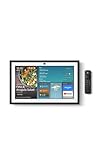
Overview: The Echo Show 15 is a large-format 15.6” display tailored for kitchens or family command centers, combining organization tools, Fire TV entertainment, and smart home management in a wall-mountable design.
What Makes It Stand Out: The expansive Full HD screen excels at displaying multiple widgets (calendars, weather, to-do lists) simultaneously. Built-in Fire TV with included remote provides direct streaming access, while Active Media enables seamless multi-room audio. The 3.3x zoom camera enhances video calls.
Value for Money: Justifies its premium price with space-efficient organization and dedicated entertainment. Fire TV integration adds value over basic displays, though streaming subscriptions remain extra. Ideal for families needing a centralized info hub.
Strengths and Weaknesses: Strengths: Unmatched screen real estate for organization, Fire TV convenience, robust multi-room audio, elegant photo slideshow. Weaknesses: Bulky for small kitchens, requires wall mounting for optimal use, higher price than smaller Shows.
Bottom Line: The definitive family organizer and kitchen companion. Worth the investment for households prioritizing shared calendars and entertainment, but overkill for single users or compact spaces.
5. Amazon Echo Show 8, With Spatial Audio, Smart Home Hub, ideal for open living spaces, Designed for Alexa+, Glacier White

Overview: Identical to Product 3 but in Glacier White, this Echo Show 8 offers the same 8” display, spatial audio, and smart hub functionality in a brighter, modern finish suited for minimalist or light-themed interiors.
What Makes It Stand Out: Beyond the aesthetic shift, it retains all key features: 13MP auto-framing camera, spatial audio for immersive media, and built-in Zigbee/Matter/Thread hub. The white finish blends seamlessly into contemporary kitchens or living areas where charcoal might feel stark.
Value for Money: Priced the same as the Charcoal model, the Glacier White variant offers identical functionality with enhanced decor flexibility. No performance differences, but the color choice adds tangible value for design-conscious buyers.
Strengths and Weaknesses: Strengths: Same robust features as Charcoal model, stylish neutral appearance, adaptive photo displays. Weaknesses: Prone to visible smudges (like all white electronics), identical limitations in brightness/audio range as Charcoal version.
Bottom Line: A purely aesthetic upgrade over the Charcoal Show 8, equally recommended for living spaces. Choose Glacier White if matching your room’s palette matters—functionally, it’s a perfect tie.
6. Aeotec Smart Home Hub, Works as a SmartThings Hub, Z-Wave, Zigbee, Matter Gateway, Compatible with Alexa, Google Assistant, WiFi
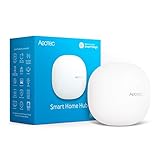
Overview: The Aeotec Smart Home Hub (specifically the Smart Home Hub v3+) functions as an official SmartThings hub, serving as a central nervous system for diverse smart home ecosystems. It supports multiple wireless protocols including Z-Wave Plus (v3 model), Zigbee, WiFi, and Matter, enabling control of thousands of compatible devices for lighting, security, climate, and more via the SmartThings app or voice assistants. What Makes It Stand Out: Its standout feature is exceptional protocol compatibility (Z-Wave, Zigbee, Matter, WiFi) in a single hub, future-proofing your setup. Local automation execution (no cloud dependency for many routines) significantly boosts speed and reliability. Seamless integration with SmartThings, Alexa, and Google Assistant offers flexible control options, while dual connectivity (WiFi/Ethernet) ensures stable placement. Value for Money: Priced competitively against dedicated Z-Wave/Zigbee hubs, its value shines through Matter gateway functionality and official SmartThings certification, eliminating the need for separate bridges. While cheaper single-protocol hubs exist, the Aeotec provides superior long-term versatility and avoids vendor lock-in, justifying its cost for expanding smart homes. Strengths and Weaknesses: Strengths: Broad device compatibility; reliable local processing; easy SmartThings app setup; dual network options; Matter support. Weaknesses: Requires SmartThings account (no standalone app); Z-Wave Plus only on v3 model; initial setup slightly more complex than basic hubs; limited built-in storage for advanced automations. Bottom Line: An excellent, versatile hub for users deeply invested in or planning a multi-protocol SmartThings ecosystem. Its Matter support and local execution make it a future-proof, high-value investment for serious smart home builders seeking reliability and broad compatibility.
7. Smart Home Starter Kit | Includes Echo Hub, Amazon Smart Plug and 4 Amazon Basics Smart Bulbs, Designed for Alexa+
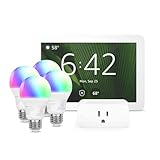
Overview: This Amazon-curated kit provides an effortless entry point into smart home automation, bundling the Echo Hub (central controller), a Smart Plug, and four Smart Bulbs. Designed specifically for Alexa users, it enables immediate control of lighting and plug-in devices through voice commands or the Alexa app, simplifying initial smart home setup. What Makes It Stand Out: The kit’s magic lies in its seamless, guided unboxing and setup process – truly “out of the box” ready. The Echo Hub acts as a robust central controller supporting Zigbee and Matter Thread, reducing Wi-Fi load. Including four bulbs immediately creates a noticeable impact (e.g., simulating presence) far beyond single-bulb kits, enhancing perceived value instantly. Value for Money: Excellent bundled value. Purchasing these components individually often costs more than the kit price. It eliminates guesswork for beginners, ensuring compatible, working devices right away. While advanced users might prefer piecemeal choices, the convenience and immediate functionality for core lighting/plug control offer significant savings and time for newcomers. Strengths and Weaknesses: Strengths: Extremely easy setup; comprehensive starter bundle (hub + multiple bulbs + plug); strong Alexa integration; immediate whole-room lighting impact; Zigbee hub reduces Wi-Fi congestion. Weaknesses: Limited to Alexa ecosystem (less ideal for Google/Apple users); Amazon Basics bulbs lack advanced features like tunable white; Echo Hub requires 2.4GHz Wi-Fi; no Z-Wave support. Bottom Line: The ideal, hassle-free starting point for Alexa-centric households. Its unbeatable ease of use, immediate functionality with multiple lights, and strong bundled value make it the top recommendation for smart home novices prioritizing simplicity and quick results.
8. Google Nest Hub Max 10" Smart Display with Google Assistant - Chalk

Overview: The Google Nest Hub Max is a premium 10-inch smart display blending a vibrant touchscreen, Google Assistant, and a front-facing camera. Positioned as a versatile hub for information, entertainment, and home monitoring, it excels at voice-controlled tasks, video calls, streaming media, and acting as a digital photo frame or security monitor viewer. What Makes It Stand Out: Its standout features are the high-quality 10-inch HD touchscreen with excellent color reproduction and the integrated adjustable Nest Cam (with Hub Max only). This enables hands-free video calls, personalized glanceable info (calendar, weather), seamless YouTube/Google Photos integration, and using the camera for Face Match (personalized results) or home monitoring. Value for Money: Priced higher than basic smart displays, its value comes from the superior screen, built-in camera functionality (unlike the standard Nest Hub), and robust Google Assistant integration. While alternatives exist, the combination of display quality, camera utility, and deep Google ecosystem integration justifies the cost for users wanting a central, interactive family hub beyond simple voice control. Strengths and Weaknesses: Strengths: Excellent 10" display; versatile built-in camera for calls/security; powerful Google Assistant; seamless Google service integration (Photos, Calendar, YouTube); good speaker quality. Weaknesses: Requires Google account; camera privacy concerns for some; limited smart home hub protocols (mainly Wi-Fi/Matter, no Zigbee/Z-Wave); subscription needed for some camera features. Bottom Line: A top-tier smart display for Google ecosystem users seeking a central interactive hub with a great screen and camera. Its strengths in media, information, and video calling make it highly recommended, though those needing extensive local hub protocols should look elsewhere.
9. Amazon Echo Show 21 (newest model), Full HD 21" kitchen hub for home organization, with built-in Fire TV, Designed for Alexa+

Overview: Amazon’s Echo Show 21 is a massive 21-inch Full HD smart display designed as a central family command center, particularly for kitchens. It combines Alexa voice control, a large interactive touchscreen, built-in Fire TV for streaming, and robust smart home management capabilities into a single, wall-mountable unit. What Makes It Stand Out: The sheer 21-inch screen size is its defining feature, enabling exceptional visibility for recipes, calendars, video calls, and streaming content from a distance. The integrated Fire TV experience (with included remote) and “Active Media” for multi-room audio are unique. Customizable widgets turn it into a powerful, always-visible family organization dashboard. Value for Money: Positioned as a premium large-format display, its value lies in replacing multiple devices: a smart display, streaming box, and family bulletin board. While expensive, the all-in-one nature (Fire TV built-in, large screen, smart hub) offers savings versus buying separate components. Ideal for those wanting a dominant, multi-functional hub in a common area. Strengths and Weaknesses: Strengths: Unmatched 21" viewing experience; built-in Fire TV simplifies streaming; excellent for family organization/widgets; strong multi-room audio features; vibrant sound; wide viewing angle. Weaknesses: Very large footprint; requires significant counter/wall space; primarily Alexa/Amazon ecosystem dependent; Fire TV interface can feel cluttered; premium price point. Bottom Line: The ultimate large-screen hub for Amazon-centric households focused on kitchen organization, streaming, and family coordination. Its size and integrated features are compelling, though its scale and ecosystem lock-in mean it’s best suited for users fully invested in Alexa and needing maximum visibility.
10. Google Nest Hub Max 10" Smart Display with Google Assistant - Chalk (Renewed)
Overview: This Renewed version of the Google Nest Hub Max offers the same core functionality as the new model – a 10-inch smart display with Google Assistant, built-in camera, and premium features – but is professionally refurbished, tested, and certified to work like new, often at a significant discount, with global language/power compatibility. What Makes It Stand Out: The key differentiator is the “Renewed” status, providing substantial savings (typically 25-40% off new) while maintaining full functionality. Crucially, it includes global features: universal power adapter, multi-language support out-of-the-box, and international manuals, making it ideal for travelers, expats, or eco-conscious buyers seeking value without sacrificing the premium Max experience. Value for Money: Exceptional value proposition. You get the full Nest Hub Max feature set (10" screen, camera, Assistant, Face Match) at a lower cost. The certified refurbished status ensures reliability, while the global compatibility adds unique utility for international users, making it arguably a better value than the new model for many, especially outside North America. Strengths and Weaknesses: Strengths: Significant cost savings vs. new; identical performance/features to new model; global power/language support; eco-friendly choice; retains camera/smart display benefits. Weaknesses: May have minor cosmetic blemishes; typically shorter warranty than new; no original retail packaging; still lacks extensive local smart home hub protocols (Zigbee/Z-Wave). Bottom Line: Highly recommended for budget-conscious or globally mobile users wanting the full Nest Hub Max experience. The Renewed model delivers outstanding value with its discount, global features, and certified reliability, making it a smarter buy than new for most scenarios where the latest color isn’t critical.
Why a Screen Makes All the Difference in Centralized Control
The shift towards hubs with integrated displays addresses fundamental limitations of purely voice or app-based control. A screen provides essential context that voice alone cannot, turning vague commands into clear actions and reducing the cognitive load of managing numerous devices.
The Critical Role of Visual Feedback
Voice assistants often leave you guessing – did the command register? Was the light dimmed correctly? A screen eliminates this uncertainty. Instant visual confirmation shows the status of your locks, thermostats, or security cameras, providing peace of mind without requiring follow-up questions. It transforms abstract interactions into concrete, understandable outcomes, especially crucial for complex routines involving multiple devices.
Reducing Reliance on Mobile Devices
Constantly reaching for your phone to check a sensor status or adjust a scene disrupts the flow of daily life. A strategically placed hub screen acts as a persistent information portal. Glance at the weather forecast on your way out the door, see who’s at the front gate without pulling out your phone, or quickly adjust the living room ambiance while entertaining – all without interrupting your current activity. This constant, hands-free visibility is a game-changer for true integration.
Simplifying Complex Commands and Routines
Setting up multi-step automations via voice alone can be cumbersome and error-prone. A touchscreen interface allows for drag-and-drop routine creation, visual scheduling, and easy grouping of devices. Want the “Good Morning” scene to gradually brighten lights, start the coffee maker, and read the news at 7 AM? Doing this visually is significantly faster and more intuitive than navigating nested voice menus, making sophisticated automation accessible to everyone.
Evaluating the Core Operating System and Ecosystem
The software platform powering your hub is arguably more important than the hardware itself. It dictates compatibility, user experience longevity, and the depth of features available. Choosing the right ecosystem foundation is paramount for future-proofing.
Understanding Platform Longevity and Support
Not all smart home platforms are created equal in terms of commitment. Investigate the developer’s track record: How frequently do they release meaningful software updates? Do they actively support older hardware models, or do devices become obsolete after 18 months? A platform with a proven history of long-term support ensures your hub remains functional, secure, and gains new capabilities for years, not just until the next model drops.
Cross-Platform Compatibility Beyond the Obvious
While major platforms (like those from leading tech companies) offer broad compatibility, true future-proofing requires looking deeper. Does the hub support emerging universal standards like Matter over Thread? Can it integrate seamlessly with popular third-party smart home platforms (like open-source options) for maximum flexibility? Prioritize hubs that act as true bridges, not walled gardens, ensuring your existing and future devices from any brand can communicate.
Customization Depth and User Interface Fluidity
A beautiful screen is useless with clunky software. Evaluate how deeply you can personalize the interface: Can you rearrange widgets, prioritize specific device controls, or create custom dashboards for different rooms? Does the UI feel responsive, with minimal lag when switching views or adjusting settings? A fluid, adaptable interface tailored to your most-used functions is essential for daily usability and avoiding frustration.
Screen Specifications: Beyond Just Size
The display is your primary interaction point, so its quality and capabilities directly impact daily usefulness. Don’t just focus on inches; consider how the screen performs in real-world home environments.
Optimal Screen Size and Viewing Angles for Placement
A 5-inch screen might suffice on a bedside table but disappears on a busy kitchen counter. Consider where you’ll use it most: larger screens (8-10 inches) offer better visibility for at-a-glance info in common areas, while smaller, higher-resolution displays work well in bedrooms. Crucially, test viewing angles – can you clearly see the screen when approaching from the side in your intended location? Wide-angle IPS panels are generally superior for shared spaces.
Brightness, Glare Resistance, and Ambient Light Adaptation
A screen that washes out in daylight or blinds you at night is worse than useless. Look for displays with high peak brightness (500+ nits) for sunlit rooms and effective anti-glare coatings. Even better are hubs with automatic ambient light sensors that dynamically adjust brightness and color temperature, ensuring readability from dawn to dusk without manual tweaking.
Touch Responsiveness and Durability Considerations
Kitchen splatters, dusty shelves, or curious toddler fingers are realities. A screen needs responsive touch technology that works reliably even with slightly damp fingers and a durable, scratch-resistant surface (like Gorilla Glass). Consider if the hub offers optional physical buttons for critical functions as a backup, especially in environments where touch might be impractical.
Voice Assistant Integration and Performance
While the screen is key, voice remains a primary control method. The quality of the built-in microphones and the intelligence of the voice processing are non-negotiable for a seamless experience.
Microphone Array Quality and Far-Field Recognition
Effective voice control hinges on the hub hearing you clearly from across the room, even with background noise (TV, music, appliances). Look for hubs featuring multi-microphone arrays (4+ mics) with advanced noise cancellation and beamforming technology. This focuses on your voice direction while suppressing ambient sound, drastically improving “Hey [Assistant]” detection accuracy in real homes.
On-Device Processing vs. Cloud Reliance
Hubs relying solely on cloud processing for every command suffer from latency and fail completely during internet outages. Prioritize models with significant on-device processing capabilities. This enables faster responses for basic commands (like “Turn on lights”), maintains core functionality offline, and enhances privacy by keeping sensitive audio processing local whenever possible.
Multi-Assistant Support: Flexibility or Fragmentation?
Some hubs allow switching between major voice assistant platforms. While appealing for flexibility, this can sometimes lead to inconsistent experiences or delayed feature rollouts compared to a dedicated single-assistant hub. Honestly assess which assistant’s capabilities (smart home control, media, general knowledge) align best with your needs before prioritizing multi-assistant support, as it’s not always a pure benefit.
Connectivity and Future-Proofing Your Hub
Your hub is the central router for your smart home traffic. Robust, versatile connectivity ensures it can handle current devices and integrate seamlessly with the next generation of technology arriving in 2026 and beyond.
Essential Wireless Protocols: Wi-Fi 6/6E, Bluetooth, and Thread
Wi-Fi 6 or 6E is non-negotiable for handling numerous devices without network congestion. Bluetooth Low Energy (BLE) is crucial for proximity-based automations (like unlocking doors when you arrive). Thread support, especially over Matter, is rapidly becoming essential for creating a reliable, low-power mesh network for battery-operated devices (sensors, locks), ensuring rock-solid connectivity even if your main Wi-Fi stutters.
The Non-Negotiable Importance of Matter over Thread
Matter is the universal language for smart homes. A hub acting as a Matter border router (via Thread) is critical for true interoperability. This means devices from different brands just work together securely, simplifying setup and reducing compatibility headaches. By 2026, this won’t be a “nice-to-have”; it’s the foundation for a stable, scalable ecosystem. Verify the hub’s role as a Thread border router.
Wired Ethernet: The Stability Lifeline
While Wi-Fi is convenient, a wired Ethernet port is a massive advantage for the central hub. It provides a rock-solid, high-bandwidth connection less susceptible to interference or dropouts than Wi-Fi, ensuring your command center remains online and responsive even during peak network usage. This small feature significantly boosts overall system reliability.
Privacy, Security, and Physical Design
Entrusting a device with constant audio access and control over your home’s systems demands serious consideration of security practices and physical design choices.
Transparent Privacy Controls and Data Handling
Demand clear, accessible privacy settings. Can you easily see when the microphone is active (physical mute switch + clear LED)? Does the manufacturer provide detailed information on what voice data is stored, how it’s used, and offer options to delete recordings? Prioritize companies with strong, transparent privacy policies and a commitment to on-device processing where feasible.
Robust Security Features and Update Cadence
Your hub is a prime security target. Ensure it receives regular, automatic security patches. Look for features like secure boot, hardware-based encryption for stored data, and the ability to segment the hub’s network traffic (via VLAN support on your router). A hub that hasn’t received a security update in over six months is a significant risk.
Form Factor, Placement Flexibility, and Aesthetics
Hubs live in your living space, so design matters. Consider footprint size, stand options (swivel, tilt), and wall-mounting capability for optimal placement. Does it blend with your decor, or is it an eyesore? Can it be positioned vertically or horizontally? A hub that’s easy to integrate visually into your home is more likely to be used consistently and not relegated to a closet.
Power Consumption and Environmental Impact
As always-on devices, hubs contribute to your home’s energy footprint. Smart choices here matter for both your bill and the planet.
Understanding Standby and Active Power Draw
Research the hub’s typical power consumption in standby (listening mode) and active (screen on) states. While individual savings are small, inefficient always-on devices add up across a household and over years. Look for hubs with efficient power adapters and aggressive sleep modes that minimize draw when idle, without compromising wake-on-voice responsiveness.
Manufacturer Sustainability Commitments
Consider the brand’s broader environmental stance. Do they use recycled materials in construction? Offer robust recycling programs for old devices? Commit to reducing packaging waste? While not the primary factor, supporting companies with genuine sustainability efforts aligns with responsible tech consumption as smart homes become ubiquitous.
Integration with Security and Monitoring Systems
For many, the hub is the natural centerpiece for home security. Seamless integration is vital for a cohesive safety experience.
Centralized Security Dashboard Functionality
The ideal hub screen should aggregate critical security info: camera feeds (live or snapshots), door/window sensor status, alarm system state, and motion detection alerts – all on one intuitive screen. Avoid hubs where security feels like a bolt-on feature requiring constant app switching; deep integration is key for rapid awareness and response.
Emergency Alert Routing and Visual Confirmation
In a security event, visual confirmation on the hub screen is crucial. Does it provide clear, unambiguous alerts with actionable options (e.g., “Front Door Open - View Camera / Close Door”) directly on the display? Can it route critical alerts to your phone and provide immediate local visual feedback on the hub itself, ensuring you’re notified even if your phone is across the house?
The Evolving Role of AI and Predictive Automation
By 2026, basic automation is table stakes. The next frontier is hubs that learn and anticipate your needs, using the screen to present helpful insights proactively.
Moving Beyond Simple Schedules to True Context Awareness
The most advanced hubs will leverage on-device AI to understand patterns: recognizing when you’re typically home, noticing unusual activity, or learning preferred settings based on time, weather, or presence. The screen becomes the interface for this intelligence, suggesting routines (“Looks like rain, enable ‘Rainy Day Arrival’ routine?”) or highlighting anomalies (“Unusual motion detected in basement at 3 AM - View?”).
Personalized Insights and Energy Usage Optimization
Future hubs will analyze device usage to provide actionable insights directly on the screen: “Your living room lights were left on for 3 hours yesterday,” or “Based on usage, setting the thermostat to 68°F at night could save ~$X monthly.” This transforms the hub from a controller into a proactive advisor for comfort, convenience, and efficiency.
Frequently Asked Questions
Frequently Asked Questions
Can a smart home hub with a screen completely replace my smartphone for controlling devices?
While it significantly reduces phone reliance for common tasks and provides essential at-a-glance info, your smartphone remains vital for remote access when away from home and managing complex settings. The hub excels as your primary in-home control center.
How important is the screen resolution for everyday use?
High resolution (Full HD or better) ensures text and icons are sharp and easy to read, especially from a few feet away. While not needing 4K, a clear, crisp display prevents eye strain and makes the interface much more pleasant to use daily.
Will these hubs become obsolete quickly as technology advances?
Prioritizing hubs with strong Matter/Thread support, regular software updates, and a track record of manufacturer commitment significantly extends lifespan. Hardware focused on core connectivity and upgradable software is less likely to become obsolete than proprietary, closed systems.
Are hubs with screens more vulnerable to hacking than screenless ones?
Security depends on the manufacturer’s practices, not solely the screen. Choose hubs with robust security features (regular updates, encryption, privacy controls) regardless of display presence. A screen itself isn’t a vulnerability; poor security implementation is.
Can I use multiple hubs with screens throughout my house?
Yes, most platforms support multiple hubs. Strategically placing them in key areas (kitchen, living room, master bedroom) creates localized control points. Ensure they sync seamlessly to show consistent system-wide status and allow control of devices in other zones.
Do I need a separate smart display if I already have a hub with a screen?
Generally, no. A dedicated hub with a screen is designed to be the central command center, offering deeper smart home integration and control than a typical voice-focused smart display. It consolidates functionality.
How do I manage screen glare in a sunny room?
Look for hubs with high brightness (500+ nits), matte anti-glare coatings, and automatic ambient light adjustment. Positioning the hub away from direct sunlight and using window treatments can also help, but strong hardware features are the primary solution.
Will the hub’s screen stay on all the time, wasting energy?
Most offer configurable screen timeout settings and ambient modes (like showing time/weather with reduced brightness). Quality hubs enter low-power states quickly when not in active use, minimizing unnecessary energy consumption while remaining instantly responsive.
Can these hubs control non-Wi-Fi smart devices like Z-Wave or Zigbee?
This depends entirely on the hub’s built-in radios. Check specifications carefully – many modern hubs include Thread (for Matter) and Bluetooth, but support for older protocols like Z-Wave or Zigbee often requires a separate hub or bridge unless explicitly stated.
Is setting up a hub with a screen more complicated than a basic voice assistant?
Initial setup involving multiple device pairings might take slightly longer, but the visual interface typically makes the ongoing management and creation of automations significantly easier and more intuitive than voice-only setup, saving time in the long run.