Basements represent one of the most vulnerable areas in any home when it comes to unexpected water intrusion. That slow drip from a faulty sump pump, the silent seepage around foundation cracks after heavy rain, or the catastrophic burst pipe behind a storage shelf – these scenarios can transform a dry, functional space into a costly disaster zone overnight. The insidious nature of basement leaks means damage often escalates significantly before it’s even noticed, potentially ruining stored belongings, compromising structural integrity, and creating hazardous mold conditions that threaten both property value and family health. Ignoring this risk isn’t just careless; it’s an invitation for financial strain and immense stress down the line.
Thankfully, proactive homeowners today have powerful allies in the fight against water damage: sophisticated water leak sensor kits. These aren’t the clunky, single-point alarms of the past. Modern systems offer intelligent, multi-sensor networks designed specifically for the unique challenges of basement environments – from high humidity levels to hard-to-reach corners. Choosing the right system isn’t about picking the flashiest gadget; it’s about understanding the critical features that deliver genuine peace of mind and robust protection tailored to your home’s specific layout and vulnerabilities. Let’s dive into what truly matters when selecting a water leak detection solution for your basement sanctuary.
Top 10 Water Leak Sensor Kits
Detailed Product Reviews
1. X-Sense Wi-Fi Water Leak Detector Kit, Smart Water Sensor Alarm with App Alerts and Ultra-Slim Design, Water Alarm Leak Detector for Basements, 4 Water Sensors and 1 Base Station, Model SWS0A41

Overview:
The X-Sense SWS0A41 kit offers Wi-Fi-connected water leak detection with four sensors and a base station, targeting homeowners seeking remote monitoring. It relies on 2.4 GHz Wi-Fi (excluding 5 GHz networks) and integrates via the X-Sense app for real-time alerts.
What Makes It Stand Out:
Its ultra-slim profile (0.7 inches thick) fits tight spaces like under sinks, while dual-sided sensors detect leaks as shallow as 0.4 mm from above or below. The 100 dB base station alarm pairs with app notifications, low-battery alerts, and customizable mute timers (10 min–12 hrs), ensuring awareness even when away.
Value for Money:
Priced mid-range, it justifies cost through reliability and thoughtful app features. While lacking offline functionality, its compact design and dual-probe sensors outperform basic battery-only alarms, making it ideal for renters or Wi-Fi-reliant users unconcerned about internet outages.
Strengths and Weaknesses:
Strengths: Exceptionally slim; intuitive app with history tracking; strong local alarm; easy placement. Weaknesses: Wi-Fi dependency (no cellular/LoRa backup); incompatible with 5 GHz networks; base station required for app sync; no direct shutoff valve integration.
Bottom Line:
A solid choice for space-constrained installations needing app alerts, but avoid if your home has poor Wi-Fi coverage or you require offline protection. Best for supplemental monitoring in leak-prone areas like basements.
2. YoLink Water Leak Starter Kit: Hub + 4 Leak Sensor 1 (Silent), LoRa Long-Range, App/SMS/Email Alerts, D2D Offline Triggers, 2 AAA Up to 5-Year Battery, Compatible with Alexa/IFTTT/Home Assistant

Overview:
YoLink’s Sensor 1 kit delivers whole-home leak detection using LoRa wireless technology. It includes a hub and four silent sensors, emphasizing offline functionality and scalability for tech-savvy users prioritizing reliability over audible alarms.
What Makes It Stand Out:
LoRa enables 1/4-mile range (ideal for large properties) and critical Device-to-Device (D2D) triggers that activate sirens or shutoff valves without internet. Five-year battery life per sensor and triple-alert options (app/SMS/email) ensure low maintenance and urgent notifications.
Value for Money:
Excellent value for expansive or remote installations where Wi-Fi falters. The silent design encourages pairing with YoLink’s SpeakerHub (sold separately), while D2D functionality justifies the premium over Wi-Fi kits by preventing damage during outages.
Strengths and Weaknesses:
Strengths: Industry-leading range; offline D2D automation; 5-year batteries; scalable to 300+ devices; flexible alerting. Weaknesses: Silent sensors require add-ons for local alarms; hub sold separately in some bundles; SMS alerts limited to 5 free/month.
Bottom Line:
Highly recommended for large homes, workshops, or areas with spotty internet. Opt for this if you plan to integrate sirens/shutoffs later, but choose Sensor 4 kits if immediate loud alarms are essential.
3. YoLink Water Leak Starter Kit: Hub + 6 Leak Sensor 4 (105 dB Siren), LoRa Long-Range, App/SMS/Email Alerts, D2D Offline, 2 AAA Up to 5-Year Battery, Compatible with Alexa/IFTTT/Home Assistant

Overview:
This YoLink kit features six sensors with built-in 105 dB sirens, a hub, and LoRa connectivity, providing immediate on-site alarms alongside remote alerts. It’s designed for comprehensive coverage in homes where loud, instant warnings are non-negotiable.
What Makes It Stand Out:
Each sensor combines local 105 dB alarms with D2D offline triggers (e.g., auto-shutoff valves) and 5-year batteries. The six-sensor count covers more zones than competitors, while LoRa ensures reliability in metal-rich or distant areas like basements or garages.
Value for Money:
Superior value for maximum coverage: six sensors outpace most kits (typically 2–4) at a similar price point. The integrated siren eliminates add-on costs, and D2D functionality provides insurance against internet failures, justifying a slight premium over silent-sensor models.
Strengths and Weaknesses:
Strengths: Built-in loud alarms; six sensors for broad coverage; robust offline D2D; long battery life; scalable ecosystem. Weaknesses: Sirens can’t be muted remotely (requires physical access); bulkier than silent sensors; SMS alerts capped monthly.
Bottom Line:
Ideal for families or large properties needing urgent, localized alerts without hub dependency. The six-sensor bundle is cost-effective for whole-home protection—choose this over Sensor 1 if immediate noise-based warnings are critical.
4. YoLink Water Leak Starter Kit: Hub + 4 Leak Sensor 4 (105 dB Siren), LoRa Long-Range, App/SMS/Email Alerts, D2D Offline, 2 AAA Up to 5-Year Battery, Compatible with Alexa/IFTTT/Home Assistant

Overview:
YoLink’s Sensor 4 kit (four sensors + hub) delivers loud, local 105 dB alarms via LoRa-connected sensors, balancing coverage and affordability. It targets users needing reliable, offline-capable leak detection without the six-sensor scale of Product 3.
What Makes It Stand Out:
Like Product 3, it features built-in sirens and D2D automation but at a lower entry point. LoRa’s 1/4-mile range and offline valve/siren triggers ensure functionality during outages, while 5-year batteries minimize maintenance in hard-to-reach spots.
Value for Money:
Offers the best entry into YoLink’s siren-equipped ecosystem. Cheaper than the six-sensor kit, it’s perfect for small-to-medium homes. The included hub supports future expansion (up to 300 devices), making it a smarter long-term investment than Wi-Fi alternatives.
Strengths and Weaknesses:
Strengths: Instant 105 dB local alarms; offline D2D protection; easy hub-based expansion; Alexa/Home Assistant support. Weaknesses: Fewer sensors than Product 3; sirens require manual silencing; SMS limits apply; hub not cellular-enabled by default.
Bottom Line:
The optimal pick for compact homes or budgets prioritizing loud, offline-ready alerts. If you need fewer than six sensors, this kit outperforms Wi-Fi models in reliability—skip only if maximum coverage (six sensors) is essential.
5. YoLink DIY Automatic Water Leak Detection & Shut-Off Starter Kit, EVO Valve Operator, Wireless Valve Controller, (3) Leak Sensors, Hub
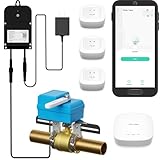
Overview:
This advanced YoLink kit integrates three leak sensors, a hub, and an EVO valve controller for automatic water shutoff. It’s engineered for proactive damage prevention, targeting homeowners seeking hands-off emergency response.
What Makes It Stand Out:
The EVO valve operator enables automatic shutoff via D2D triggers—no internet required—when leaks are detected. Combined with LoRa range (1/4 mile), SMS/app alerts, and 5-year sensor batteries, it creates a self-sustaining emergency system.
Value for Money:
High initial cost is justified by potential flood damage savings. The valve controller eliminates plumber fees for shutoff installation, while D2D ensures functionality during outages. Free monthly SMS alerts (30 total) enhance accessibility versus paid services.
Strengths and Weaknesses:
Strengths: Automatic shutoff prevents major damage; robust offline operation; long-range LoRa; third-party smart home integration; included valve manipulator. Weaknesses: Complex setup vs. basic alarms; valve compatibility not universal; premium pricing.
Bottom Line:
Essential for high-risk properties (e.g., vacation homes) or those with aging plumbing. While overkill for minimal setups, the shut-off capability offers unmatched peace of mind—invest here if preventing catastrophic damage is your top priority.
6. GoveeLife Water Leak Detector 5 Pack with 105dB Adjustable Alarm, Water Alarm with Dual Sets Sensor Probes Leaks and Floods. Suit for Home, Basement, and Kitchen(Cannot Connect to Wi-Fi Directly)

Overview: This 5-pack of standalone water leak detectors offers physical alerting for critical areas like basements, kitchens, and near appliances. Requiring no Wi-Fi or hub (though app monitoring needs a separate gateway), it prioritizes immediate, on-site detection of leaks and floods through audible alarms and sensor probes.
What Makes It Stand Out: Dual sensor probes per unit ensure early detection sensitivity, while the 105dB alarm with four adjustable volume levels caters to diverse environments. The standout feature is the built-in 5-year battery, eliminating frequent replacements, coupled with a rugged IP67 waterproof rating for reliable operation in damp zones.
Value for Money: Priced competitively for a 5-pack, it delivers exceptional longevity and physical alerting without ongoing subscription costs. While the lack of direct app integration (requiring a separate $30+ gateway for remote alerts) adds expense, the core leak detection value for basic protection is strong for the cost.
Strengths and Weaknesses:
Strengths: 5-year battery life; loud, customizable alarm; dual probes per sensor; IP67 durability; cost-effective multi-pack.
Weaknesses: No native app/Wi-Fi; requires separate (non-included) gateway for remote alerts; physical alarm only on-site.
Bottom Line: An excellent, hassle-free choice for localized, immediate leak detection where remote alerts aren’t essential. Ideal for renters or budget-conscious homeowners needing robust physical alarms without smart features.
7. X-Sense Smart Water Leak Detector, Wi-Fi Water Sensor, an Accessory for SWS54 Water Sensor Kit, Single Pack, Model SWS51, 3-Pack

Overview: The X-Sense SWS51 is a Wi-Fi accessory sensor designed exclusively for use with the X-Sense SBS50 base station (sold separately). It enables remote water leak monitoring via app notifications but cannot function independently, targeting users expanding an existing X-Sense SWS54 ecosystem.
What Makes It Stand Out: It delivers real-time phone push notifications and family sharing capabilities when paired with the base station. The high sensitivity from six probes (2 top, 4 bottom) ensures early leak detection, while the 110dB simultaneous alarm from both sensor and base station provides robust on-site alerting, mappable via the app.
Value for Money: Value is contingent on already owning the SBS50 base station (~$50). As a 3-pack accessory, it offers affordable expansion for large properties (up to 50 devices) with excellent range (1,700 ft). However, the mandatory base station investment reduces value for new users compared to all-in-one kits.
Strengths and Weaknesses:
Strengths: Real-time remote alerts; high probe count; loud 110dB alarm; easy pairing; extensive device network support.
Weaknesses: Useless without separate base station; 2.4GHz Wi-Fi only; no physical standalone functionality.
Bottom Line: A smart, high-value add-on only for existing X-Sense SWS54 ecosystem owners. Not recommended as a starting point due to the essential, non-included base station requirement.
8. YoLink Smart Home Starter Kit: SpeakerHub & Water Leak Sensor 4 with 105dB Audio Alarm 3-Pack, SMS/Text, Email & Push Notifications, Freeze Warning, LoRa Up to 1/4 Mile Open-Air Range, w/Alexa, IFTTT

Overview: This complete starter kit includes a central SpeakerHub and three Water Leak Sensor 4 units, leveraging LoRa wireless technology for long-range communication. It provides local audio alarms, app alerts, SMS/email notifications, and freeze warnings without relying on standard Wi-Fi.
What Makes It Stand Out: The industry-leading 1/4 mile (1,320 ft) open-air LoRa range is revolutionary, effortlessly covering basements, sheds, and large properties where Wi-Fi fails. It offers true standalone operation with SMS/email alerts (no paid subscription), Alexa/IFTTT support, and freeze detection—features rare at this price point.
Value for Money: Excellent value as a comprehensive, self-contained system. The included hub and three sensors eliminate hidden gateway costs. While the upfront cost is higher than basic alarms, the exceptional range, cellular backup notifications, and lack of subscriptions justify the investment for whole-home or challenging property coverage.
Strengths and Weaknesses:
Strengths: Unmatched LoRa range; no Wi-Fi dependency; SMS/email/cellular alerts; freeze warning; IP66 durability; no subscription.
Weaknesses: Hub required (included); app-centric setup; slightly lower alarm volume (105dB) vs. some competitors.
Bottom Line: The top recommendation for large homes, properties with poor Wi-Fi, or users needing reliable remote alerts without subscriptions. A future-proof, versatile smart leak detection solution.
9. 3PCS WiFi Water Leak Detector Kit, 80dB Water Sensor Alarm, Sump Pump Leakage Alarm, TUYA APP Free Remote Monitoring for Water Leakage, SMS and Phone Notification Can Be Enabled, AAA Battery Powered

Overview: This budget-friendly 3-pack offers direct Wi-Fi connectivity (Tuya app) without needing a separate hub, providing basic remote monitoring via app alerts, SMS, and an 80dB local alarm for common leak-prone areas like basements and under sinks.
What Makes It Stand Out: Its standout feature is true plug-and-play Wi-Fi setup—no gateway required—and the long 5.9-foot cable probe allows flexible placement away from the main sensor unit. Free remote monitoring via Tuya app with SMS/phone call options adds accessibility, while low-battery app alerts enhance usability.
Value for Money: Highly cost-effective for entry-level smart leak detection. The direct Wi-Fi connection avoids extra hardware costs, and the Tuya ecosystem offers broad compatibility. However, the lower 80dB alarm volume and reliance on stable 2.4GHz Wi-Fi limit its effectiveness as a primary alert in noisy or large spaces.
Strengths and Weaknesses:
Strengths: No hub needed; flexible cable probes; free SMS/call alerts; easy Tuya app setup; affordable 3-pack.
Weaknesses: Weak 80dB alarm; Wi-Fi range limitations; 2.4GHz only; less rugged build than IP67 competitors.
Bottom Line: A solid, affordable choice for small homes or apartments with reliable Wi-Fi, prioritizing remote alerts over powerful local alarms. Best for supplementary monitoring where budget is key.
10. GoveeLife Upgraded Smart Water Leak Detector 1s with 1804ft Ultra-Long Range, WiFi Water Sensor with SMS/Email/APP Push and Sound Alarm, 5-Year Battery Life, Suit for Home, Basement, Kitchen, 3 Pack
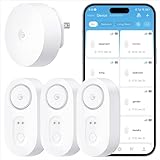
Overview: The GoveeLife 1s 3-pack leverages Sub-1GHz wireless technology for exceptional range (1,804 ft/550m), offering direct remote alerts via SMS, email, and app push notifications alongside a 105dB local alarm. It targets users needing reliable coverage across sprawling properties without Wi-Fi extenders.
What Makes It Stand Out: The breakthrough 1,804-foot range through walls is unmatched, ensuring signals reach deep basements or detached structures. Combined with free SMS/email alerts (no subscription), 5-year battery life, four-level volume adjustment via app, and IP67 durability, it delivers comprehensive, low-maintenance protection.
Value for Money: Premium-priced but justifies cost with its unique long-range reliability and robust notification suite. The included 3-pack and elimination of gateway fees or subscriptions offer strong long-term value for large homes or vacation properties where standard Wi-Fi sensors fail.
Strengths and Weaknesses:
Strengths: Industry-leading 1,804ft range; free SMS/email/app alerts; 5-year battery; 105dB adjustable alarm; IP67 rating.
Weaknesses: Higher initial cost; Sub-1GHz hub required (included); app dependency for full features.
Bottom Line: The premier choice for expansive or challenging properties demanding guaranteed remote alerts and exceptional range. Worth the investment for whole-property peace of mind where connectivity is critical.
Understanding Basement-Specific Water Risks
Basements present unique challenges that demand specialized detection strategies compared to other home areas. Their below-grade location makes them natural collection points for groundwater pressure, condensation, and runoff. Recognizing these specific threats is the first step toward effective prevention.
The Hidden Dangers of Groundwater Seepage
Groundwater constantly exerts hydrostatic pressure against foundation walls and floors. Tiny cracks, porous concrete, or faulty drainage systems can allow this moisture to silently infiltrate, often starting as dampness that evolves into significant leakage over time. Sensors placed directly on the floor near walls are crucial for catching this insidious threat early.
Condensation and Humidity Challenges
Cold basement surfaces meeting warmer, humid air create significant condensation, especially on pipes, ductwork, and windows. While not always a “leak” in the traditional sense, persistent moisture fosters mold growth and damages stored items. Sensors monitoring ambient humidity levels alongside physical water contact provide a more complete picture of the basement’s moisture environment.
Common Culprit Sources Requiring Vigilance
Focus sensor placement strategically around known high-risk zones: sump pump pits (and their discharge lines), water heater connections, washing machine hoses, HVAC drain pans, and where plumbing pipes enter the foundation. Don’t forget utility shutoff valves – a leak here can go undetected for hours if sensors aren’t positioned correctly downstream.
Essential Features for Effective Basement Protection
Not all water leak sensors are created equal, especially when deployed in the demanding basement environment. Prioritizing the right technical specifications ensures your system performs reliably when it matters most, minimizing false alarms and maximizing detection accuracy.
Sensor Type and Detection Technology
Understand the difference between point-in-water sensors (requiring direct contact with liquid) and moisture-absorbing tape sensors (detecting spread across a wider area). Basements often benefit from a combination, using point sensors near specific appliances and tape sensors along foundation walls or under potential leak paths for broader coverage of slow seepage.
Power Source Reliability and Longevity
Battery life is non-negotiable. Look for sensors boasting multi-year battery warranties (5+ years is ideal) using standard, easily replaceable lithium batteries. Avoid systems requiring frequent, inconvenient battery changes, especially for sensors placed in hard-to-access corners or behind stored items. Consider systems with low-battery alert features integrated into the main notification stream.
Connectivity and Alert Delivery Mechanisms
Real-time alerts are the system’s core value. Ensure robust connectivity – Wi-Fi for direct smartphone notifications and cloud backups, or a dedicated hub using protocols like Z-Wave/Zigbee for better range through basement walls. Critical alerts should offer multiple delivery paths: push notifications, loud local sirens, and SMS/call backups in case your phone is offline. Delayed alerts defeat the purpose of early detection.
Strategic Sensor Placement for Maximum Coverage
Simply having sensors isn’t enough; their location determines whether you catch a leak in time. A thoughtful placement strategy, considering your basement’s unique layout and vulnerabilities, transforms a basic system into a comprehensive safety net.
Mapping Your Basement’s Vulnerability Zones
Conduct a thorough walkthrough. Identify every potential water source: plumbing lines (hot/cold, supply/drain), appliance connections, foundation walls (especially after rain), sump pits, window wells, and areas prone to condensation. Sketch a rough map noting these zones – this becomes your sensor placement blueprint.
Avoiding Common Placement Pitfalls
Don’t place sensors directly under a water heater or appliance where a sudden large leak could submerge and disable the sensor before it triggers. Position them slightly offset, downstream of potential leak paths. Avoid placing sensors directly on cold water pipes where condensation is constant – this causes false alarms. Elevate sensors slightly off concrete floors in areas prone to minor condensation if the system isn’t designed for it.
Optimizing for Multi-Sensor Network Efficiency
If using multiple sensors, space them logically to cover entry points and potential flow paths. Place sensors at the lowest points in the basement floor (water flows downhill!), near interior walls adjacent to exterior walls, and at the “downstream” corner from major appliances. Ensure sensors are within the specified wireless range of the hub or access point, potentially requiring a signal repeater for larger basements.
Integration with Smart Home Ecosystems
A standalone alarm is helpful, but integrating your leak detection system with your broader smart home unlocks powerful automated responses that can significantly mitigate damage before you even arrive home.
Triggering Automatic Water Shut-Off Valves
This is the ultimate damage prevention feature. When a sensor detects water, the system can instantly signal a compatible smart main water shutoff valve to close the home’s primary water supply. This requires careful setup and valve compatibility but represents a massive leap from mere notification to active protection, stopping the flow at the source.
Leveraging Existing Smart Home Routines
Connect leak alerts to other smart devices. Trigger bright overhead lights in the basement for immediate visibility upon your arrival. Send an alert directly to a trusted neighbor’s phone if you’re away. Integrate with security systems to treat a major leak event with the same urgency as a break-in, potentially notifying monitoring services.
Utilizing Cloud Logging and Historical Data
Choose systems that store leak event history and sensor readings (like humidity trends) in the cloud. This data helps identify recurring moisture issues (like seasonal seepage in one corner), provides evidence for insurance claims, and allows you to fine-tune sensor sensitivity or placement based on actual performance over time.
Installation and Ongoing Maintenance Considerations
The effectiveness of your system hinges on correct installation and consistent upkeep. Skipping these steps can render even the most advanced sensors useless when a leak occurs, leaving your basement unprotected.
Assessing DIY Feasibility vs. Professional Help
Many modern kits are designed for straightforward DIY installation – simply peel-and-stick sensors and plug in a hub. However, integrating with a main water shutoff valve often requires plumbing expertise. If your basement has complex wiring, significant concrete obstacles affecting signal strength, or you lack confidence, professional installation ensures optimal sensor placement, connectivity, and valve integration.
Calibration and System Testing Protocols
Never assume sensors work perfectly out of the box. Most systems have a test mode; use it immediately after installation and quarterly thereafter. Gently introduce a small amount of water (using an eyedropper) to each sensor’s detection point to verify the full alert chain functions – local alarm, hub notification, and smartphone alert. Check hub connectivity and battery statuses regularly through the app.
Long-Term Sensor Care and Environmental Factors
Keep sensor contacts clean; dust or grime can impede detection. In dusty basements, wipe contacts gently with a dry cloth every few months. Be mindful of extreme temperature fluctuations or prolonged high humidity, which can impact battery life and sensor electronics. Replace batteries proactively per the manufacturer’s schedule, not just when the low-battery alert appears.
Evaluating Total Cost of Ownership
While upfront price is a factor, focusing solely on the initial kit cost ignores the true value proposition. A comprehensive cost analysis considers long-term reliability, feature set, and potential damage prevention savings.
Beyond the Initial Purchase Price
Factor in the cost of potential add-ons: extra sensors for comprehensive coverage (basements often need 4-6+), a signal repeater for large spaces, or a compatible smart water valve. Subscription fees for cloud storage, advanced alerts, or professional monitoring services add recurring costs – determine if the features justify the monthly or annual fee for your needs.
Calculating Potential Damage Prevention Value
Consider the average cost of basement water damage remediation – easily thousands of dollars for cleanup, mold remediation, and replacing ruined items. A reliable sensor system that prevents just one moderate leak event typically pays for itself many times over. View the system not as an expense, but as a critical, cost-effective insurance policy for your home’s most vulnerable space.
Warranty and Support Reliability
Prioritize manufacturers offering substantial warranties (3+ years) on both sensors and hubs. Investigate the quality of customer support – responsive technical help is invaluable during setup or if a sensor malfunctions. Read user reviews specifically mentioning long-term reliability and support experiences, not just initial impressions.
Adapting to Evolving Technology Trends
Water leak detection technology continues to advance rapidly. Understanding current and emerging trends helps ensure your investment remains relevant and leverages the latest capabilities for enhanced basement safety.
Advancements in AI-Powered Leak Analysis
Next-generation systems are moving beyond simple “wet/dry” detection. Some now incorporate AI algorithms that analyze sensor data patterns over time to distinguish between a minor condensation event and a genuine, escalating leak, drastically reducing false alarms and increasing trust in the system’s alerts.
Enhanced Environmental Sensing Capabilities
Future-proof systems increasingly bundle water detection with broader environmental monitoring. Look for kits that also track temperature extremes (preventing frozen pipes) and precise humidity levels, providing holistic basement health data and enabling proactive measures before moisture problems escalate.
Improved Mesh Networking for Basement Penetration
Basement walls and concrete foundations are notorious for blocking wireless signals. Newer systems utilize more robust mesh networking protocols (like Thread or advanced Z-Wave) where sensors relay signals to each other, creating a self-healing network that reliably transmits alerts even from the deepest, most signal-challenged corners of your basement.
Frequently Asked Questions
Frequently Asked Questions
How much should I realistically budget for a comprehensive basement water leak sensor system? Expect to invest between $150 and $400 for a reliable multi-sensor kit covering a typical basement, including necessary extras like additional sensors. Factor in potential costs for a smart shutoff valve ($300-$600 installed) and any subscription services if desired.
Can these systems prevent all types of basement water damage? While highly effective for detecting active leaks from plumbing, appliances, or seepage, they won’t prevent issues like surface flooding from severe storm surges overwhelming drainage. They are crucial for the most common, insidious leaks but work best as part of a broader water management strategy.
How often do I need to replace the sensors themselves? Quality sensors typically last 5-10 years with regular battery changes. Their lifespan depends on environmental conditions (extreme humidity, temperature) and usage. Monitor performance and replace any sensor showing signs of reduced sensitivity or frequent errors.
Will high basement humidity trigger false alarms? Reputable systems differentiate between ambient humidity and actual liquid water contact. Proper placement (avoiding constant condensation spots) and choosing sensors designed for damp environments minimizes humidity-related false alarms. Check product specifications for humidity tolerance.
Is professional installation really necessary, or can I do it myself? Most basic sensor kits are DIY-friendly. However, integrating an automatic main water shutoff valve almost always requires a licensed plumber. If your basement has complex layout issues affecting signal strength, professional help ensures optimal coverage and reliability.
How quickly will I receive an alert after a leak is detected? The best systems deliver alerts within 5-15 seconds of detection. Prioritize systems with strong local processing (hub-based) and multiple alert pathways (push + SMS) to ensure you get notified instantly, even if your primary phone is offline.
Can these sensors detect very slow seepage or just major floods? Yes, high-quality point sensors and moisture tapes are specifically designed to detect even minute amounts of water, like slow foundation seepage or condensation buildup, triggering alerts long before a major flood occurs.
Do I need a subscription for basic leak alerts to work? Many systems offer core leak detection and smartphone alerts without a subscription. However, advanced features like cloud history, video verification, or professional monitoring usually require a monthly or annual fee. Verify the essential functionality is included upfront.
Where is the absolute worst place to put a water sensor in a basement? Avoid placing sensors directly under appliances where a large leak could immediately submerge and disable them, or in areas with constant condensation (like directly on cold pipes) which causes chronic false alarms. Placement should be strategic, not haphazard.
How many sensors do I realistically need for an average-sized basement? A typical 800-1000 sq ft basement usually requires a minimum of 4-6 sensors. Focus on covering all major water sources (water heater, washing machine, sump pit), lowest floor points, foundation wall perimeters, and potential entry points like window wells for effective coverage.