In an era where your thermostat learns your schedule, your security cameras never sleep, and your voice assistant controls everything from lighting to lawn irrigation, a single internet outage can transform your smart home from a seamless automation paradise into a collection of expensive paperweights. The average smart home now contains over 20 connected devices, each expecting constant connectivity to function properly. When your primary broadband connection drops—whether from construction accidents, weather damage, or ISP maintenance—your entire digital lifestyle grinds to a halt. This is where 5G failover routers emerge as the unsung heroes of modern home networking, providing an intelligent safety net that automatically switches your entire ecosystem to cellular backup before you even notice something’s wrong.
Unlike the crude 4G hotspots of yesterday, today’s 5G failover solutions offer fiber-like speeds and millisecond-level responsiveness that can genuinely support 4K streaming, video conferencing, and real-time IoT communication without compromise. But not all failover routers are created equal, and choosing the right one requires understanding a complex interplay of cellular technology, network architecture, and smart home-specific optimizations. This guide cuts through the marketing jargon to equip you with the knowledge to select a 5G failover system that truly delivers always-on connectivity for your connected castle.
Top 10 5G Failover Routers for Smart Homes
Detailed Product Reviews
1. GL.iNet GL-XE3000 (Puli AX) 5G Router with Dual SIM Card Slot, Wi-Fi 6 Cellular Routers, Built-in Battery, Multi-WAN, VPN, OpenWrt, Secure 5G Router for Office, Retail, Events, Business
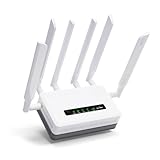
Overview: The GL.iNet GL-XE3000 Puli AX is a professional-grade 5G mobile router engineered for business continuity and remote connectivity. This portable powerhouse combines cellular 5G connectivity with WiFi 6 speeds, creating a secure networking hub that operates independently of traditional broadband infrastructure. Designed for construction sites, mobile offices, and events, it delivers enterprise features in a compact, battery-powered form factor that keeps teams connected anywhere.
What Makes It Stand Out: The built-in 6400mAh battery providing 8 hours of uptime sets this apart from stationary routers, ensuring connectivity during power outages. Its dual-SIM 5G capability with automatic failover guarantees uninterrupted service, while OpenWrt firmware offers unmatched customization. The multi-WAN architecture seamlessly integrates cellular, Ethernet, and repeater modes with intelligent load balancing. Pre-installed VPN support (OpenVPN/WireGuard) with 150-300Mbps throughput ensures secure remote access without additional configuration.
Value for Money: At $409.99, this premium device justifies its cost for business users who require mobile connectivity. Compared to consumer hotspots or tethering solutions, it offers superior range, security, and management features. The battery backup alone can prevent costly downtime, making it cheaper than redundant internet services for small businesses that depend on constant connectivity for operations.
Strengths and Weaknesses: Strengths include true portability, dual-SIM 5G flexibility, OpenWrt customization, robust VPN performance, and excellent failover capabilities. Weaknesses involve carrier certification limitations (AT&T/T-Mobile only), complex setup for non-technical users, and premium pricing that may exceed home user budgets. Real-world speeds vary significantly based on cellular signal strength and network congestion.
Bottom Line: The GL-XE3000 is an exceptional choice for mobile professionals, event organizers, and businesses needing reliable, secure internet anywhere. Its battery-powered design and dual-SIM redundancy make it worth the investment for those who cannot afford connectivity interruptions.
2. InHand 5G Router FWA02, Ultra-Fast Wi-Fi 6 Mesh Router, Dual 2.5G Ports, Support Cellular Failover & Load Balancing, High-Gain Antennas 5G Gateway for Business Office and Home, Unlocked

Overview: The InHand FWA02 is an enterprise-focused 5G gateway designed to deliver fiber-like speeds wirelessly for business and home office environments. This robust router leverages next-generation 5G networks with WiFi 6 AX3600 technology to support bandwidth-intensive applications across large spaces. With dual 2.5Gbps Ethernet ports and high-gain antennas, it’s built for scenarios demanding both wireless mobility and wired performance for critical operations.
What Makes It Stand Out: The router’s blistering 4.76Gbps download capability transforms 5G into a primary internet source, not just a backup. Its dual 2.5Gbps switchable WAN/LAN ports provide future-proofed wired throughput for NAS devices or mesh nodes. Supporting 128 simultaneous devices with low latency makes it ideal for smart offices. The advanced failover system automatically switches between 5G and wired connections, while enterprise-grade IPsec/L2TP VPN and firewall protection secure sensitive data without third-party services.
Value for Money: Priced at $369, it competes aggressively with business-class routers offering fewer features. For locations lacking fiber infrastructure, it eliminates costly installation fees. Compared to dual-WAN enterprise routers without cellular, it adds 5G redundancy at a modest premium, delivering exceptional value for SMBs requiring 24/7 uptime and high-performance connectivity.
Strengths and Weaknesses: Strengths include incredible 5G speeds, dual 2.5G ports, massive device capacity, carrier flexibility (unlocked), and built-in enterprise security. Weaknesses are the lack of a battery backup, limited brand recognition among consumers, and potential overheating under sustained max throughput. Setup requires networking knowledge and manual optimization for best performance.
Bottom Line: The FWA02 is a powerful 5G gateway for businesses treating cellular as a primary or critical backup connection. Its dual 2.5G ports and enterprise features justify the price for professional environments needing reliable, high-speed connectivity without traditional broadband dependencies.
3. GL.iNet GL-BE9300 (Flint 3) Tri-Band WiFi 7 Router, High-Speed 6GHz Gaming WiFi Router for Wireless Internet, Long Range, 5 x 2.5G VPN Routers for Fiber Optic Modem, Computer Routers, Home & Business

Overview: The GL.iNet Flint 3 represents the cutting edge of consumer WiFi technology as a tri-band WiFi 7 router built for high-performance gaming, streaming, and smart home connectivity. With 6GHz band support and five 2.5Gbps Ethernet ports, this $199.99 device brings enterprise-grade features to home users. It combines future-proof wireless standards with robust VPN capabilities and ad-blocking in a package that undercuts competitors significantly while delivering premium performance.
What Makes It Stand Out: WiFi 7’s Multi-Link Operation (MLO) technology delivers unprecedented speeds and reduced latency by simultaneously utilizing multiple bands. The 680Mbps VPN throughput (both OpenVPN and WireGuard) is exceptional for a consumer router, enabling secure gaming and streaming without bandwidth sacrifice. AdGuard Home integration provides network-wide ad blocking with an intuitive interface. Supporting over 100 devices with tri-band load distribution ensures stable connections in dense device environments.
Value for Money: At $199.99, this is arguably the best value in WiFi 7 routers. Competitors with similar specs cost $300-400. The inclusion of five 2.5G ports, advanced VPN performance, and built-in ad-blocking makes it cheaper than assembling separate solutions. For users wanting to future-proof without breaking the bank, it’s unmatched in the current market for features per dollar.
Strengths and Weaknesses: Strengths include WiFi 7 readiness, tri-band flexibility, exceptional VPN speeds, AdGuard integration, and generous 2.5G port count. Weaknesses involve no cellular connectivity, complex advanced features for novices, and limited WiFi 7 client device availability currently. The 6GHz range is shorter than 5GHz, requiring strategic placement.
Bottom Line: The Flint 3 is the ideal router for tech enthusiasts, gamers, and remote workers wanting cutting-edge performance today. Its WiFi 7 capabilities and VPN prowess at this price point make it a future-proof investment that outperforms many pricier alternatives on the market.
4. UOTEK 5G CPE Router with SIM Card Slot, NSA SA WiFi 6 5G Router Dual Band Cellular Modem for Home Office Indoor Wireless Internet Modem

Overview: The UOTEK 5G CPE Router offers an accessible entry point into 5G home internet with its minimalist design and solid feature set. This $289 device combines NSA/SA 5G support with WiFi 6 technology to deliver gigabit speeds without requiring traditional broadband installation. Its built-in antenna design prioritizes aesthetics while providing adequate coverage for apartments and small offices, making it an attractive alternative to cable internet for modern households.
What Makes It Stand Out: The router’s true 5G NSA/SA compatibility ensures broad carrier support and future-proofing as networks evolve. Dual-band 4x4 MIMO configuration delivers up to 1800Mbps bandwidth, sufficient for 4K streaming and gaming. The mesh networking capability through mixed backhaul (wired/wireless) allows easy expansion without dead zones. Its minimalist white housing with internal antennas eliminates clutter, a refreshing departure from bulky external antenna designs common in cellular routers.
Value for Money: At $289, it positions itself as a mid-range 5G solution, costing less than premium business routers while offering essential features. For users in 5G-covered areas seeking to escape cable monopolies, it pays for itself within months. Compared to cheaper 4G LTE routers, the 5G capability justifies the premium, though it lacks advanced business features found in pricier alternatives.
Strengths and Weaknesses: Strengths include clean minimalist design, true 5G NSA/SA support, WiFi 6 efficiency, mesh expandability, and straightforward setup. Weaknesses are the lack of a battery backup, limited VPN capabilities compared to competitors, unknown brand longevity, and no multi-WAN advanced features. Internal antennas may limit range versus external options in weak signal areas.
Bottom Line: The UOTEK 5G CPE is perfect for apartment dwellers and home offices wanting clean aesthetics and 5G connectivity without complexity. It delivers solid performance for the price, though businesses should consider more robust alternatives with better support and advanced management features.
5. TP-Link AC1900 Smart WiFi Router (Archer A8) -High Speed MU-MIMO Wireless Router, Dual Band Router for Wireless Internet, Gigabit, Supports Guest WiFi

Overview: The TP-Link Archer A8 is a budget-conscious WiFi 5 router that delivers reliable dual-band connectivity for basic home networking needs. Priced at just $49.99, this AC1900 device provides Wave 2 MU-MIMO technology and gigabit Ethernet ports for users prioritizing affordability over cutting-edge features. It’s designed for small homes and apartments requiring stable internet for streaming, browsing, and light gaming without advanced requirements or high bandwidth demands.
What Makes It Stand Out: The Archer A8’s primary standout feature is its incredible value proposition from a trusted networking brand. OneMesh compatibility allows seamless expansion with TP-Link extenders, creating a whole-home network affordably. Beamforming technology improves range and reliability beyond basic routers in this price class. The three simultaneous data streams and full gigabit ports provide adequate performance for typical households, while TP-Link’s mature firmware ensures stability and regular security updates.
Value for Money: At $49.99, this is among the cheapest routers from a major manufacturer. It outperforms many no-name brands while providing reliable support and firmware updates. For users with internet plans under 500Mbps, it eliminates unnecessary spending on over-spec’d hardware. The cost savings could fund mesh extenders or other network upgrades, making it a smart budget allocation.
Strengths and Weaknesses: Strengths include unbeatable price, brand reliability, OneMesh expandability, stable firmware, and sufficient performance for basic needs. Weaknesses are outdated WiFi 5 standard, no USB port for network storage, limited range for large homes, and lack of advanced features like VPN or QoS controls. The 600+1300Mbps speed rating won’t saturate gigabit internet connections.
Bottom Line: The Archer A8 is the ideal choice for budget-focused users needing reliable WiFi without frills. It’s perfect for grandparents, small apartments, or as a temporary solution, though tech-savvy users should invest in WiFi 6 or 7 for future-proofing and better performance with multiple devices.
6. UOTEK 5G SIM Card Router CPE, WiFi 6 5G Modem Dual Band NSA SA with SIM Card Slot for Smarthome Office Indoor High Speeed Wireless Router

Overview: The UOTEK 5G SIM Card Router positions itself as a versatile cellular networking solution for modern smart homes and offices. This dual-band WiFi 6 router eliminates the need for traditional broadband by leveraging 5G cellular networks through a simple SIM card insertion. With support for both NSA and SA 5G architectures, it promises gigabit speeds without cable infrastructure. The device targets users seeking flexible, high-speed internet alternatives or backup connectivity solutions.
What Makes It Stand Out: This router’s most compelling feature is its dual SIM card slots with automatic failover capability, ensuring uninterrupted connectivity when one network degrades. The eight-antenna array (four 4G and four 5G) represents a robust hardware commitment to signal reception. WiFi 6 enhancements like OFDMA and DL MU-MIMO technology enable simultaneous multi-user scheduling, reducing latency for bandwidth-intensive applications. The 1800Mbps bandwidth across four spatial streams supports UHD streaming and competitive gaming.
Value for Money: At $349, this UOTEK model sits in the mid-tier range for 5G routers. While more expensive than traditional WiFi 6 routers, it offers cellular connectivity that eliminates monthly cable bills. Compared to similar 5G CPE devices, the dual-SIM functionality and eight-antenna design justify the premium. However, the price point assumes consistent 5G coverage in your area—otherwise, performance may not match the investment.
Strengths and Weaknesses: Strengths: Dual SIM auto-switching provides excellent reliability; comprehensive antenna array maximizes signal strength; WiFi 6 technology ensures efficient multi-device handling; true 5G NSA/SA compatibility future-proofs the investment.
Weaknesses: Brand lacks TP-Link’s established reputation; firmware maturity uncertain; requires strong 5G signal for optimal performance; no mention of advanced security features or VPN support; limited documentation on mesh capabilities.
Bottom Line: The UOTEK 5G router suits users in well-covered 5G areas needing reliable, cable-free internet. Its dual-SIM redundancy makes it ideal for home offices requiring constant uptime. However, those in marginal coverage zones should verify signal strength before purchasing. Consider this if cellular failover is a priority over brand recognition.
7. KuWFi 5G Cellular Router with Dual SIM Slot, WiFi 6 Dual-Band 3000Mbps,2.5G Ethernet,Fan Cooling,WireGuard VPN,M2M/IoT Global Frequency Bands for Apartment & RV Rural Area
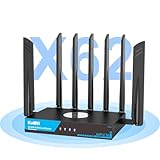
Overview: The KuWFi RM503Qpro is a premium 5G cellular router engineered for global deployment and demanding mobile applications. With AX3000 WiFi 6 speeds, dual SIM redundancy, and enterprise-grade features, it targets digital nomads, RV owners, and businesses requiring bulletproof connectivity. The inclusion of a 2.5G Ethernet port and active cooling distinguishes it from consumer-focused alternatives, positioning it as a professional-grade solution for both stationary and mobile environments.
What Makes It Stand Out: This router’s global frequency band support ensures compatibility across North America, Europe, and Asia, making it truly travel-ready. The built-in fan cooling system prevents thermal throttling during continuous 24/7 operation—a critical feature for RVs and industrial IoT deployments. Enterprise VPN capabilities come pre-configured with WireGuard, OpenVPN, and IPsec, enabling secure remote access without complex setup. The dual SIM auto-switching with multi-WAN backup creates a connectivity fortress, seamlessly falling over to broadband or satellite if cellular fails.
Value for Money: Priced at $369, the KuWFi commands a premium but delivers corresponding value. For RV travelers or rural users lacking reliable broadband, this single device replaces multiple pieces of equipment. The 2.5G Ethernet port and active cooling system—features typically found in enterprise hardware—justify the cost over cheaper 5G routers. When compared to installing separate cellular modems, routers, and cooling solutions, the all-in-one design offers significant savings.
Strengths and Weaknesses: Strengths: True global compatibility; active cooling for sustained performance; enterprise VPN suite ready; dual SIM with multi-WAN failover; 2.5G Ethernet port; supports 256 simultaneous devices.
Weaknesses: Highest price in this category; overkill for average apartment dwellers with cable access; fan noise may be noticeable in quiet environments; complex features may overwhelm non-technical users.
Bottom Line: The KuWFi is the top choice for mobile professionals and rural users who treat connectivity as mission-critical. Its global bands and cooling system make it unbeatable for RV travel and remote work. Apartment users should only consider this if building a robust backup system. For those who need internet that simply works anywhere, the premium is justified.
8. TP-Link Dual-Band AX3000 Wi-Fi 6 Router Archer AX55 | Wireless Gigabit Internet Router for Home | EasyMesh Compatible | VPN Clients & Server | HomeShield, OFDMA, MU-MIMO | USB 3.0 | Secure by Design

Overview: The TP-Link Archer AX55 brings WiFi 6 performance to the mainstream home market at an accessible price point. Delivering 2402 Mbps on the 5 GHz band and 574 Mbps on 2.4 GHz, this router handles modern streaming, gaming, and smart home demands without requiring cellular connectivity. As a traditional broadband router, it focuses on optimizing conventional internet service rather than replacing it, making it ideal for users with stable cable or fiber connections.
What Makes It Stand Out: TP-Link’s EasyMesh compatibility allows seamless expansion with additional units, creating a scalable whole-home network. HomeShield provides robust parental controls and security features often absent in budget routers. The USB 3.0 port enables network storage or printer sharing, adding versatility. Beamforming technology and four high-gain antennas deliver reliable coverage without the aesthetic intrusion of eight external antennas. The improved cooling design prevents performance degradation during heavy usage.
Value for Money: At $79.99, the AX55 represents exceptional value—less than one-quarter the price of 5G routers while delivering comparable WiFi speeds. For users with existing broadband, it eliminates the need for costly cellular data plans. TP-Link’s firmware reliability and regular security updates provide peace of mind that lesser-known brands cannot match. The feature set rivals routers costing twice as much, making it a smart choice for budget-conscious households.
Strengths and Weaknesses: Strengths: Outstanding price-to-performance ratio; established brand with reliable support; EasyMesh scalability; comprehensive security suite; efficient cooling design; USB 3.0 connectivity.
Weaknesses: No cellular backup capability; limited to 1Gbps Ethernet ports; not suitable for mobile or rural applications without broadband; lower total bandwidth than premium WiFi 6E models.
Bottom Line: The Archer AX55 is the sensible choice for 95% of home users. If you have reliable cable or fiber internet, this delivers all the WiFi 6 benefits without unnecessary cellular complexity. It’s perfect for apartments and homes where mobility isn’t a factor. Only consider 5G alternatives if you lack broadband options or need mobile connectivity. For pure home networking value, this is nearly unbeatable.
9. Wiflyer 5G SA NSA AX3000 WiFi 6 CPE Router for Global Countries, Dual Band Dual SIM Card 5G Cellular Router, Whole Home WiFi 6 Mesh System,Z8105AX-C-RM520NGL

Overview: The Wiflyer Z8105AX positions itself as an affordable entry point into 5G home networking, offering dual-band AX3000 speeds with dual SIM flexibility. Supporting both SA and NSA 5G modes, it delivers up to 3400Mbps downlink speeds while maintaining backward compatibility with 4G LTE networks. The router targets users seeking to cut the cable cord or establish robust internet backup, with particular emphasis on T-Mobile compatibility in the US market.
What Makes It Stand Out: The band locking feature provides advanced users granular control over network selection, optimizing for stability or speed based on local tower conditions. This level of customization is rare at this price point. The dual SIM with automatic failover ensures continuous connectivity, while the mesh system capability allows whole-home coverage expansion. The explicit T-Mobile compatibility note helps US customers avoid common APN configuration frustrations, though it requires manual setup.
Value for Money: At $279.99, the Wiflyer undercuts most competitors by $50-100 while maintaining AX3000 WiFi 6 performance. For T-Mobile users, the streamlined setup adds further value. The band locking feature effectively gives users a professional tool to maximize marginal signals, potentially saving money on external antennas. However, the brand’s limited recognition and support infrastructure compared to KuWFi or UOTEK introduces some risk.
Strengths and Weaknesses: Strengths: Competitive pricing; band locking for signal optimization; dual SIM failover; mesh network support; high 5G downlink speeds; explicit carrier compatibility guidance.
Weaknesses: T-Mobile limitation may concern multi-carrier users; lesser-known brand with uncertain long-term support; no mention of cooling system or VPN features; potential firmware stability questions.
Bottom Line: The Wiflyer is an excellent budget 5G router for technically inclined users who can leverage band locking. T-Mobile customers get the smoothest experience, while others should verify compatibility. It’s ideal for apartments and small homes wanting to experiment with 5G internet without breaking the bank. Choose this if you value customization over brand reputation and have strong 5G coverage.
10. UOTEK 5G SIM Card Router CPE, WiFi 6 5G Cellular Modem Dual Band NSA SA with SIM Card Slot for Smarthome Office Indoor High Speeed Wireless Router

Overview: This UOTEK model offers a refined take on their 5G router lineup, emphasizing mesh networking capabilities at a more competitive price point. Like its sibling product, it provides dual-band WiFi 6 connectivity through 5G cellular networks, eliminating cable dependency. The addition of seamless roaming and mixed backhaul mesh support addresses whole-home coverage challenges, making it better suited for larger indoor environments than the basic UOTEK model.
What Makes It Stand Out: The seamless roaming functionality ensures stable connections as you move throughout your home—critical for video calls and streaming. Mixed backhaul mesh support allows flexible deployment using wired or wireless connections between nodes, adapting to various home layouts. The eight-antenna design persists, providing robust signal reception. WiFi 6 enhancements like OFDMA and MU-MIMO maintain efficient multi-device handling, while the understated black aesthetic blends into home environments.
Value for Money: At $299, this model is $50 cheaper than the other UOTEK offering while adding mesh capabilities. This represents better value for users needing extended coverage. The price positions it competitively against the Wiflyer, though without band locking. For multi-story homes or those with coverage dead zones, the mesh features alone justify choosing this over the pricier UOTEK variant. However, it still requires strong 5G signal to deliver promised speeds.
Strengths and Weaknesses: Strengths: Mesh networking with seamless roaming; $50 savings over similar UOTEK model; eight-antenna design; dual-band 4 spatial streams; mixed backhaul flexibility; more attractive price point.
Weaknesses: No dual SIM capability mentioned; lacks band locking feature; brand support remains a question mark; no VPN or advanced cooling mentioned; still needs strong 5G coverage.
Bottom Line: Choose this UOTEK model over its pricier sibling if you have a larger home requiring mesh coverage. The $50 savings and added roaming features make it the better value proposition within the UOTEK family. It’s ideal for smart homes with many IoT devices spread across multiple rooms. Ensure your 5G signal strength is adequate, and consider this a feature-rich alternative to traditional mesh systems if you’re ready to cut the cable cord.
Understanding 5G Failover Technology
The concept of network redundancy isn’t new, but 5G has revolutionized what’s possible for residential applications. A 5G failover router serves as an intelligent gateway that continuously monitors your primary internet connection and instantly routes traffic through a 5G cellular network the moment it detects degradation or complete failure. This transition happens in under a second—fast enough to maintain active video calls, prevent security camera disconnections, and keep your smart locks responsive.
Why Traditional Broadband Fails Modern Smart Homes
Your smart home’s vulnerability extends beyond simple inconvenience. When your primary connection drops, you’re not just losing Netflix—you’re compromising security systems that rely on cloud AI for person detection, climate controls that use real-time weather data, and health monitoring devices that transmit critical data. Traditional broadband lacks redundancy by design; a single fiber cut or node failure cascades into total system failure. Moreover, ISP repair windows often stretch 4-8 hours, during which your home reverts to a pre-digital state at best, or becomes a security risk at worst.
How 5G Failover Preserves Your Connected Lifestyle
Premium 5G failover routers operate in a state of constant readiness, maintaining an active connection to cellular towers while your primary link handles normal traffic. This “hot standby” mode enables sub-second failover that preserves TCP connections, keeps VPN tunnels intact, and prevents IP address changes that would disrupt cloud services. The best implementations use session persistence technology to ensure your smart home hub doesn’t even register the switch—your devices think they’re still on the same connection, maintaining their cloud handshakes and real-time synchronization.
Key Features That Define Premium 5G Failover Routers
When evaluating failover solutions, certain capabilities separate enterprise-grade reliability from consumer-grade disappointment. Focus on these architectural elements rather than flashy specifications that sound impressive but deliver little practical value.
Multi-WAN Capabilities and Automatic Failover
Look for routers supporting at least three WAN inputs: primary broadband (fiber/cable), cellular 5G, and a tertiary option like a secondary ISP or even satellite. The failover logic should be programmable—allowing you to set latency thresholds, packet loss triggers, and jitter sensitivity rather than relying on simple ping tests. Advanced models implement deep packet inspection to detect application-layer failures that basic connectivity checks miss, ensuring your smart home switches over before your devices start throwing errors.
5G Modem Specifications and Carrier Aggregation
The modem inside your router determines real-world performance more than any other component. Prioritize devices supporting 5G NR (New Radio) with 4x4 MIMO antenna arrays and carrier aggregation across at least four component carriers (4CC). This allows the router to combine multiple frequency bands simultaneously, achieving speeds over 1Gbps even on congested towers. Sub-6 GHz support is non-negotiable for building penetration, while mmWave capability offers future-proofing for urban deployments where line-of-sight becomes viable.
Ethernet Port Configuration and PoE Support
Your failover router sits at the network core, so port configuration matters immensely. Demand at least four Gigabit Ethernet ports with VLAN support to segregate IoT traffic from personal devices. Power over Ethernet (PoE+) ports are critical for connecting wireless access points and security cameras directly to the router, ensuring they remain powered during outages when you’re running on UPS backup. Some premium models offer 2.5GbE or even 10GbE ports for future fiber upgrades.
Wi-Fi Standards and Mesh Integration
The router’s Wi-Fi capabilities must extend beyond basic coverage. Wi-Fi 6E or Wi-Fi 7 support with 160MHz channel width ensures your smart home devices have the airtime they need, especially in dense IoT environments. Crucially, the failover router should function as a mesh network controller, seamlessly integrating with satellite nodes to provide whole-home coverage that doesn’t collapse when switching to cellular backhaul. Look for EasyMesh certification or proprietary systems that support wired and wireless backhaul simultaneously.
Network Performance Metrics That Matter
Understanding your smart home’s actual bandwidth and latency requirements prevents overspending on unnecessary capacity while ensuring critical systems remain functional during failover events.
Bandwidth Requirements for Smart Home Ecosystems
A common misconception is that smart home devices consume minimal bandwidth. While individual sensors use little data, the aggregate picture tells a different story. A typical 4K security camera streams at 8-16 Mbps. Multiply by four cameras, add a gigabyte daily of cloud backup, firmware updates for 30+ devices, video doorbell streams, and media streaming, and you’re easily exceeding 100 Mbps sustained during peak hours. Your 5G failover connection should provide at least 200 Mbps down and 50 Mbps up to maintain normal operations without throttling device communications.
Latency Sensitivity and Real-Time Device Communication
Smart lighting systems like Philips Hue and Lutron require sub-100ms latency for responsive control. Video doorbells need under 150ms to feel natural. Security systems with AI person detection often have sub-200ms thresholds before they downgrade video quality or miss events entirely. Premium 5G failover routers maintain latency below 50ms to the nearest tower, but your total latency budget includes tower-to-internet routing. Look for routers that support QoS (Quality of Service) profiles prioritizing IoT device traffic over background updates during failover scenarios.
Carrier Compatibility and SIM Flexibility
Your failover router is only as good as the cellular network it connects to, making carrier strategy a critical planning component.
Understanding 5G Bands and Your Local Coverage
5G operates across three spectrum ranges: low-band (600-900 MHz) for coverage, mid-band (1.7-2.5 GHz) for balanced speed and penetration, and high-band/mmWave (24-40 GHz) for extreme speed. Use carrier coverage maps to identify which bands dominate your area, then verify your router’s modem supports those specific frequencies. A router supporting n77 (C-band) but living in an area where your carrier only deployed n71 (low-band) will underperform. Some routers include band-locking features to force connection to less congested frequencies.
Multi-Carrier Support and SIM Card Strategies
The most resilient setups use multi-IMSI SIM cards or dual-SIM routers that can switch between carriers based on signal quality. This protects against carrier-specific outages and tower maintenance. Look for routers with unlocked modems that accept any carrier’s SIM, rather than carrier-locked devices. eSIM support is emerging as a valuable feature, allowing you to provision backup carriers digitally without physically swapping cards. Consider prepaid data plans with 12-month expiration to avoid monthly fees while maintaining readiness.
Security Architecture for Uninterrupted Protection
Security becomes more complex with dual-path connectivity. Your failover router must maintain consistent protection across both primary and cellular connections without introducing vulnerabilities.
VPN Integration and Secure Tunneling
Your smart home devices communicate with cloud services using encrypted connections, but your router should add another layer of security. Look for hardware-accelerated VPN clients that maintain persistent tunnels to privacy-focused DNS services and can route all IoT traffic through the VPN regardless of which WAN is active. This prevents your ISP and cellular carrier from profiling device behavior. Split-tunneling capabilities let you exclude latency-sensitive devices like gaming consoles from VPN overhead while keeping security cameras protected.
Firewall Capabilities and Threat Management
Enterprise-grade failover routers include stateful packet inspection firewalls with intrusion detection systems (IDS) that learn normal IoT device behavior and flag anomalies. During failover, these systems must preserve their rule sets and continue blocking malicious traffic. Some advanced models include DNS filtering to block known malicious domains and prevent IoT devices from being hijacked into botnets. Ensure the router receives regular security updates for at least five years—check the manufacturer’s track record for firmware support before purchasing.
Installation and Placement Optimization
Even the best hardware underperforms with poor installation. Cellular signal propagation follows different rules than Wi-Fi, requiring strategic placement.
Antenna Considerations for Maximum Signal Strength
Internal antennas suffice for strong signal areas, but most homes benefit from external antennas mounted near windows or rooftops. Look for routers with detachable antennas using standard SMA or TS-9 connectors, allowing you to install high-gain directional antennas aimed at the nearest tower. MIMO antennas should be spaced at least 6 inches apart to prevent interference. Some premium systems include phased-array antennas that electronically steer signals without physical movement, adapting to changing tower loads throughout the day.
Power Management and UPS Integration
During outages, your failover router must remain powered along with your modem, switches, and critical IoT hubs. Calculate your total power draw—typically 15-30 watts for a complete network stack—and size a UPS accordingly. Pure sine wave UPS units prevent flickering in sensitive electronics. Advanced routers include USB-C power inputs that can run directly from portable power stations for extended outages, or PoE-powered options that receive power from a central switch with battery backup, simplifying wiring.
Cost Analysis and Value Proposition
The true cost of a 5G failover system extends beyond the router’s price tag. Understanding the total investment helps justify the expense against the cost of outages.
Total Cost of Ownership Beyond Hardware
A quality 5G failover router ranges from $300 to $800, but factor in external antennas ($50-200), professional installation ($100-300), and a UPS system ($150-400). Monthly cellular data costs vary from $10 for a 1GB standby plan to $50-80 for unlimited failover data. Compare this against the cost of a single outage: lost productivity from remote work ($100-500), security system vulnerabilities (incalculable), and smart home downtime (significant inconvenience). Most households find the system pays for itself after 2-3 significant outages.
Data Plan Strategies for Failover Scenarios
Avoid traditional smartphone plans with throttling and deprioritization. Instead, seek IoT-specific or business-grade data plans that offer truly unlimited data without speed caps during failover events. Some carriers offer “data pooling” across multiple devices, letting you share a single large data allowance between your failover router and family phones. Set aggressive data limits on the router itself—capping video streaming to 720p during failover—to prevent bill shock from accidental primary link failures that go unnoticed for days.
Future-Proofing Your Failover Investment
Technology evolves rapidly, and your router should accommodate tomorrow’s standards without requiring complete replacement.
5G Advanced and Network Evolution
5G Advanced (3GPP Release 18+) introduces features like enhanced carrier aggregation, AI-driven network slicing, and improved power efficiency for IoT devices. Ensure your router’s modem firmware is upgradeable to support these upcoming standards. Some manufacturers offer modem module replacement programs, letting you swap the 5G radio without replacing the entire router when 6G eventually emerges. Check for at least 4GB of RAM and a modern quad-core processor to handle future firmware complexity.
Smart Home Protocol Support and IoT Optimization
The Matter standard and Thread protocol are becoming ubiquitous in smart homes. Your failover router should include a built-in Thread border router or support for adding one via USB dongle, ensuring low-power IoT devices maintain mesh connectivity during WAN switches. Zigbee and Z-Wave USB support through the router’s ports centralizes hub functionality, reducing points of failure. Look for routers that can run Docker containers, allowing you to host Home Assistant or Node-RED directly on the network gateway for ultimate reliability.
Troubleshooting and Maintenance Best Practices
Even the most robust systems require periodic attention to maintain peak performance and reliability.
Establish a monthly routine of manually testing failover by disconnecting your primary ISP line—don’t just rely on the router’s self-tests, which may miss subtle degradation. Log into the router’s management interface to review signal metrics: RSRP (Reference Signal Received Power) should exceed -100 dBm, and SINR (Signal-to-Interference-plus-Noise Ratio) should stay above 10 dB for reliable operation. Update firmware during low-usage windows, and always backup your configuration before changes. Set up SNMP monitoring or use the router’s API to feed metrics into home automation systems, creating dashboards that alert you to signal degradation before it causes problems.
Frequently Asked Questions
1. Will a 5G failover router work with my existing ISP equipment?
Yes, most premium 5G failover routers connect to your existing modem or gateway via Ethernet, operating in bridge or pass-through mode. This setup preserves your current network configuration while adding redundancy. Some routers can even replace your ISP’s equipment entirely if you have a direct fiber or Ethernet handoff.
2. How quickly does failover actually occur?
Enterprise-grade routers achieve failover in 200-500 milliseconds using hot standby cellular connections. Consumer models typically take 5-30 seconds. For true always-on performance, insist on routers with sub-second failover that maintain session persistence, preventing smart home hubs from disconnecting and requiring reboots.
3. Can I use my existing phone plan’s SIM card for failover?
Technically yes, but it violates most carrier terms of service and risks account suspension. Phone plans lack the quality-of-service guarantees and static IP options that make failover reliable. Invest in a dedicated IoT or business data plan designed for router use to ensure consistent performance and avoid throttling.
4. Do 5G failover routers consume data when in standby mode?
Minimal standby consumption occurs—typically 50-200MB monthly—from keep-alive packets, tower handshakes, and firmware checks. Disable cloud management features and telemetry to reduce this background usage. Some routers offer a “cold standby” mode that powers down the cellular modem entirely until needed, though this increases failover time to 10-15 seconds.
5. Will my smart home devices need reconfiguration?
No, properly implemented failover appears transparent to your devices. The router handles IP address translation and maintains the same LAN subnet, so IoT devices never know the WAN path changed. Ensure your router supports NAT loopback and consistent DNS servers across both connections to prevent discovery protocol failures.
6. What happens if both my primary ISP and cellular network fail simultaneously?
While rare, this can occur during widespread power outages or natural disasters. For ultimate resilience, some routers support three-WAN configurations with satellite backup or a secondary cellular carrier. Alternatively, implement local automation rules in Home Assistant that function without cloud connectivity for critical functions like lighting and security.
7. Can I limit which devices use cellular failover?
Absolutely. Quality routers offer policy-based routing that lets you specify which devices or VLANs failover to cellular. Keep bandwidth-hungry but non-critical devices like smart TVs on primary-only connections, while ensuring security cameras and hubs always have backup access. This prevents cellular data overages during extended outages.
8. How do I know if my area has good 5G coverage for failover?
Use carrier apps like OpenSignal or CellMapper to identify tower locations and measured speeds at your address. Test with a prepaid 5G hotspot during peak evening hours (7-10 PM) when congestion is highest. A signal strength of -95 dBm or better on mid-band frequencies indicates reliable failover capability.
9. Are there any security risks with cellular failover?
Cellular connections use carrier-grade NAT, which can obscure your network but also prevents direct inbound connections. Ensure your router’s firewall remains active on cellular and use a VPN for remote access. Disable IPv6 on the cellular interface if your carrier doesn’t support it properly, as this can leak traffic around your firewall rules.
10. How long will a 5G failover router remain relevant?
With proper firmware support, a quality 5G router should serve reliably for 5-7 years. The cellular modem itself may become obsolete as networks evolve, but routers with modular designs allow modem upgrades. Invest in models with Wi-Fi 6E or Wi-Fi 7 and 2.5GbE ports to ensure the wired and wireless components remain current through multiple cellular generations.