Gone are the days when a simple deadbolt and a spare key under the doormat constituted adequate home security. Today’s multi-generational households, shared living spaces, and digitally-connected families face a complex web of access challenges that traditional locks simply cannot solve. Whether you’re managing access for teenage children, elderly parents, housekeepers, dog walkers, or overnight guests, the modern home demands a more sophisticated approach to entry management.
Access control panels represent the evolutionary leap from basic locking mechanisms to intelligent, centralized security command centers. These systems transform your home from a static fortress into a dynamic, responsive environment where every entry and exit is managed, monitored, and optimized for both security and convenience. For multi-user homes, they’re not just a luxury—they’re becoming essential infrastructure for peaceful cohabitation and robust protection.
Top 10 Access Control Panels for Multi-User Homes
Detailed Product Reviews
1. OBO HANDS Multi-Door Network Access Control Panel Board with Software Communication Protocol TCP/IP Board Wiegand Reader (4 Door)
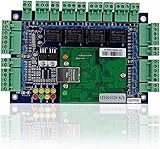
Overview: The OBO HANDS Multi-Door Network Access Control Panel Board delivers essential 4-door access control at an entry-level price point. This TCP/IP-enabled controller supports up to 20,000 users and 100,000 event logs, making it suitable for small to medium-sized installations. Compatible with standard Wiegand 26-bit readers from major brands like HID, EM, and Mifare, it provides fundamental security management without frills.
What Makes It Stand Out: At $62.99, this board stands alone as the most budget-conscious option in its class. The TCP/IP network communication eliminates the need for serial connections, enabling modern network integration. Its capacity matches premium alternatives—20k users and 100k events—offering professional-grade data handling at a fraction of typical costs. The broad reader compatibility ensures flexibility in hardware selection.
Value for Money: Exceptional value for technically proficient buyers who only need the core controller. However, the true cost rises significantly when adding a separate power supply, enclosures, readers, and locks. Compared to bundled kits, you’ll spend more time sourcing compatible components, but save money if you have spare hardware.
Strengths and Weaknesses: Pros: Unbeatable price; TCP/IP connectivity; standard capacity; wide reader compatibility. Cons: Board-only—no power supply or accessories; limited to Wiegand 26-bit (no 34-bit support); minimal documentation mention; requires technical expertise for installation.
Bottom Line: Ideal for experienced installers or DIY enthusiasts comfortable building a system piecemeal. If you need a bare-bones, reliable controller and already have ancillary components, this delivers professional capabilities at a DIY price.
2. MENGQI-CONTROL 4 Doors Access Control System Core Control Components Metal 5A 110V-240V Power Supply Box and 4 Doors TCP/IP Access Control Panel Wiegand Controller,Computer Based Software,Remote Open

Overview: The MENGQI-CONTROL 4-Door Access Control System provides core components for professional installations, bundling a robust TCP/IP control panel with a dedicated 5A power supply box. Supporting 20,000 users and 100,000 records, this system handles entry via card swipe and exit via button or card. The metal power enclosure simplifies wiring and provides clean, organized installation.
What Makes It Stand Out: Unlike bare boards, this includes a purpose-built 110-240V power supply cabinet, saving sourcing headaches. The dual Wiegand 26/34-bit reader support offers broader compatibility with HID and advanced RFID systems. The manufacturer’s 20-year industry experience and direct support contact inspire confidence. The “swipe 4 times to keep door open” feature adds convenient override capability for deliveries or events.
Value for Money: At $169.99 ($42.50 per door), this mid-tier package balances cost and completeness. You still need locks and readers, but the integrated power solution eliminates a major procurement step. Compared to buying components separately, the bundled pricing offers modest savings with significantly reduced integration complexity.
Strengths and Weaknesses: Pros: Includes power supply enclosure; flexible exit options; Wiegand 26/34 support; excellent Windows compatibility (Win7-11); experienced manufacturer support. Cons: Still requires additional hardware; no smartphone app; limited advanced features.
Bottom Line: A solid foundation for professional installers seeking reliable core components with proven support. The included power supply and flexible configuration justify the premium over bare-bones alternatives.
3. MENGQI-CONTROL TCP/IP 4 Door Entry Access Control Panel Kit Electric Strike Fail Secure NO Mode Lock Enroll RFID USB Reader 110-240V Power Supply Box RFID Reader Phone APP remotely Open Door

Overview: This MENGQI-CONTROL TCP/IP 4-Door Kit elevates access control with smartphone integration and comprehensive hardware. The package includes an electric strike lock (fail-secure NO mode), desktop USB card reader, and mobile app support for iOS and Android. Managing 20,000 users and 100,000 logs, it combines modern convenience with robust security for commercial environments.
What Makes It Stand Out: The smartphone app for remote door operation distinguishes this from basic systems. The included USB reader streamlines card enrollment—eliminating manual data entry. Comprehensive video guides and promised lifetime live support demonstrate commitment to user success. Sub-0.2-second response time and 5-10cm read range ensure smooth, reliable operation.
Value for Money: At $339.99 ($85 per door), this kit commands premium pricing but includes tangible value: electric strike lock ($50-80 value), USB reader ($30-40), and app development costs. For buyers wanting guided setup and modern features without sourcing components, the convenience justifies the cost.
Strengths and Weaknesses: Pros: Smartphone app; USB enrollment reader; detailed video tutorials; included electric strike; fast response time. Cons: Higher price point; only one lock type included; electric strike may not suit all door types.
Bottom Line: Perfect for small businesses wanting app-enabled access without complex integration. The video guidance and included hardware make this the best choice for non-technical buyers seeking a complete, modern solution.
4. MENGQI-CONTROL Professional 4 Doors TCP/IP Network Wiegand 26/34 bit Access Control Board Panel Access Controller

Overview: The MENGQI-CONTROL Professional 4-Door Access Control Board targets experienced installers needing reliable, protocol-flexible control. This TCP/IP network controller supports Wiegand 26/34-bit readers and manages 20,000 users with 100,000 event records. As a board-only solution, it provides the digital backbone for custom security installations without bundled hardware constraints.
What Makes It Stand Out: Professional-grade software and dual Wiegand protocol support differentiate this from entry-level boards. The 20-year manufacturer experience ensures firmware stability and long-term availability. Comprehensive Windows compatibility (Win7 through Win11, 32/64-bit) guarantees integration flexibility. The “auto-open during office time” feature simplifies scheduling for commercial applications.
Value for Money: At $102, this board sits between budget options and premium kits. It offers better protocol support than the OBO Hands board but lacks included accessories. For professionals who maintain inventory of power supplies and enclosures, this provides quality without paying for redundant components.
Strengths and Weaknesses: Pros: Wiegand 26/34-bit support; professional management software; excellent OS compatibility; proven manufacturer reliability. Cons: Board-only—requires separate power supply, readers, locks; no smartphone app; higher price than basic alternatives.
Bottom Line: An excellent choice for security professionals who standardize on MENGQI-CONTROL and maintain their own hardware inventory. The enhanced protocol support justifies the modest premium over entry-level controllers.
5. MENGQI-CONTROL 4 Door Access Control System with 600lbs Magnetic Lock Entry Access Control Panel 110V Power Supply Box RFID Reader Exit Button Enroll USB Reader RFID Card Key Fob APP Remote Open Lock

Overview: The MENGQI-CONTROL 4-Door Complete System delivers turnkey access control with premium components. This $469.99 kit includes a 600-lb magnetic lock, waterproof RFID reader, exit button, USB enrollment reader, and smartphone app control. Supporting 20,000 users and 100,000 logs, it provides everything needed for professional-grade installation out of one box.
What Makes It Stand Out: This is the only kit with a heavy-duty 600-lb magnetic lock included, ensuring high-security applications are covered. The waterproof reader expands installation options to exterior doors. Combined with smartphone app control, USB enrollment, and detailed wiring diagrams, it eliminates guesswork. The manufacturer’s 20-year experience backs every component.
Value for Money: While the highest-priced option, calculating individual components (magnetic lock $80-120, readers $60, power supply $50, board $100, accessories $50) shows genuine bundle savings. For buyers wanting a single purchase solution with matched components, this eliminates compatibility risks and multiple shipping costs.
Strengths and Weaknesses: Pros: Complete turnkey solution; high-security magnetic lock; waterproof reader; smartphone app; video guides; USB enrollment. Cons: Premium pricing; may include hardware not needed for all installations; magnetic lock requires precise door alignment.
Bottom Line: The ultimate convenience package for installers and end-users wanting everything matched and supported. If you need a complete, high-security system without component hunting, this justifies every dollar.
6. MENGQI-CONTROL 2 Doors Access Control System Core Control Components with Metal 5A 110V-240V Power Supply Box TCP/IP Network Access Control Panel Wiegand Controller,Computer Based Software,Remote Open

Overview: The MENGQI-CONTROL 2-Door Access Control System delivers professional-grade security management for commercial environments. This TCP/IP-enabled controller supports up to 20,000 users and 100,000 event records, making it suitable for mid-sized businesses. The system includes a robust metal power supply box (110-240V input, 5A output) that houses the control board, ensuring reliable operation and clean installation. Designed for flexibility, it accommodates Wiegand 26/34 compatible readers including RFID, Mifare, and HID technologies.
What Makes It Stand Out: This system excels with its enterprise-level capacity and network integration capabilities. The auto open/close scheduling allows precise access control during specific timeframes, while the four-swipe continuous unlock feature provides convenience for high-traffic periods. Its fire-retardant metal enclosure and power-failure data protection ensure reliability in critical applications. The ability to define exactly who can access which door and when provides granular security control that residential systems simply cannot match.
Value for Money: At $155.99, this core component offers exceptional value for commercial applications. Comparable systems with similar capacity typically retail for $200-$300, making this a cost-effective choice for integrators and facility managers. The included 5A power supply eliminates the need for separate purchases, further enhancing value. While it requires additional components (readers, locks, exit buttons), the price is justified by its professional feature set and 20-year manufacturer experience.
Strengths and Weaknesses: Strengths include high user capacity, reliable data retention during power loss, versatile reader compatibility, network remote management, and robust metal construction. The system supports complex access rules and provides detailed audit trails.
Weaknesses include the lack of included peripherals (readers, locks must be purchased separately), Windows-only software limitation, and potential complexity for DIY installers without technical background.
Bottom Line: This is an excellent foundation for businesses requiring reliable, scalable access control. It’s best suited for professional installation but offers unmatched capacity and features at this price point. Contact the manufacturer for complete kit options.
7. TCP IP Communication Multi-Door Control Panel Intercoms Networked Access Control System Fire Alarm Work attendance Offline Operation (Double Door Two-Way)

Overview: This budget-friendly TCP/IP access control panel provides essential multi-door management capabilities for cost-conscious buyers. Supporting two-way communication for double doors, it integrates fire alarm systems and offers offline operation for reliability. The controller includes attendance management and consumption tracking software, making it versatile for small businesses, retail locations, and light commercial applications where basic security and employee tracking are priorities.
What Makes It Stand Out: The fire alarm interface is a standout feature rarely found at this price point, ensuring safety compliance. Multiple unlocking modes—including timed, multi-card, card+password, and remote unlocking—provide operational flexibility. High-speed memory protection guarantees record preservation during power interruptions. The system supports real-time monitoring and offline operation, maintaining security even during network outages. Its pin-interface wiring simplifies installation compared to more complex systems.
Value for Money: Priced at just $55.41, this panel delivers remarkable value. Entry-level TCP/IP controllers typically cost $100-$150, making this an exceptional budget option. The inclusion of attendance and consumption management software adds significant value for small business owners. While it may lack some premium features, the core functionality and safety integration make it a smart investment for those prioritizing affordability without sacrificing essential capabilities.
Strengths and Weaknesses: Strengths include ultra-low cost, fire alarm integration, diverse unlocking methods, offline capability, memory protection, and included management software. The system is suitable for banks, prisons, and telecommunications stations as advertised.
Weaknesses include potentially limited documentation, the need for an expansion board for hardware alarms (software alarms only without it), unspecified exact user capacity, and basic build quality expected at this price point.
Bottom Line: An outstanding value for small businesses needing basic networked access control with fire safety integration. Ideal for technically-inclined DIY installers or budget-restricted projects. Professional installation recommended for complex deployments.
8. AMOCAM Door Access Control System, Stand-Alone Password Keypad + 5PCS Key Fobs Keychains for Entry Home Security Access Controller

Overview: The AMOCAM standalone access control system offers an affordable, all-in-one solution for residential and small office security. This compact keypad controller supports 1,000 users and includes five pre-programmed key fobs, providing immediate out-of-the-box functionality. Operating independently without requiring network connectivity or computer software, it’s designed for straightforward installation on single doors where simple but effective access restriction is needed.
What Makes It Stand Out: Complete standalone operation sets this apart—programming is done entirely through the keypad interface, eliminating complex software setups. The ABS fire-retardant shell with hard rubber film provides safety and durability uncommon in sub-$20 systems. Power-off data protection ensures settings aren’t lost during outages. The included key fobs come pre-coded with printed numbers, simplifying user registration. Its ability to directly drive electric locks and support external doorbells adds installation flexibility.
Value for Money: At $19.88 for a complete kit, this represents exceptional value. Standalone systems with similar features typically cost $30-$40, and adding five key fobs would increase costs further. The price-per-user is extremely low, making it economical for small-scale deployments. For homeowners or small businesses needing basic access control without recurring fees or network infrastructure, this is arguably the best value available.
Strengths and Weaknesses: Strengths include unbeatable price, complete kit inclusion, standalone simplicity, fire-retardant construction, direct lock control, and easy programming. The system is versatile for apartments, offices, and restricted areas.
Weaknesses include the 1,000-user limit (insufficient for larger facilities), lack of network connectivity or remote management, no audit trail mentioned, and basic security features compared to commercial systems. Range is limited to 5-10cm.
Bottom Line: Perfect for budget-conscious users seeking simple, reliable door access control without technical complexity. Ideal for residential properties, small offices, and rental units. Delivers impressive functionality at an unbeatable price point.
9. RenoEZ Access Panel For Drywall - 12x12 inch - No Tools Required - Wall Hole Cover - Access Doors For Drywall - Spring Loaded for Wiring | HVAC | Plumbing - Textured White (1)

Overview: The RenoEZ 12x12 access panel revolutionizes drywall utility access with its innovative tool-free design. Engineered for quick installation without screws, silicone, or framing, this spring-loaded panel provides convenient access to wiring, HVAC, and plumbing systems. Made from impact-resistant HDPE plastic, it offers a practical solution for both new construction and retrofits where maintaining wall integrity and minimizing installation time are priorities.
What Makes It Stand Out: The patent-pending spring-loaded mechanism eliminates traditional installation hassles, allowing push-fit mounting that won’t damage drywall. This unique design enables removal and reinstallation without wall repair—a game-changer for maintenance access. The paintable, textured surface seamlessly blends with existing décor, whether used on walls or ceilings. Its lightweight yet durable HDPE construction resists cracking, warping, and fading better than many metal alternatives.
Value for Money: At $15.99, this panel is competitively priced against traditional framed access doors while saving significant labor costs. Professional installation of standard panels can cost $50-$100, making the tool-free design valuable for DIYers and contractors alike. Comparable tool-free alternatives retail for $20-$25, positioning RenoEZ as a cost-effective choice. The time saved on installation and future maintenance access provides ongoing value.
Strengths and Weaknesses: Strengths include revolutionary tool-free installation, damage-free removal, paintable finish, durable HDPE construction, spring-loaded convenience, and versatile sizing for small access points. It’s ideal for renovations and upgrades.
Weaknesses include plastic construction that may feel less premium than metal panels, limited load-bearing capacity, 12x12 size may be small for some applications, and it’s unsuitable for high-security fire-rated installations requiring metal assemblies.
Bottom Line: An excellent innovation for anyone needing convenient drywall access without installation headaches. Perfect for DIY enthusiasts, maintenance professionals, and contractors prioritizing speed and wall preservation. Delivers exceptional convenience at a fair price.
10. MENGQI-CONTROL Security Wiegand TCP/IP RFID 4 Doors Access Control System Kit Metal AC110-240V Power Supply Box No-Touch Exit+Weather Proof Reader

Overview: The MENGQI-CONTROL 4-Door Kit provides a comprehensive access control solution for properties requiring robust security across multiple entry points. This complete system includes weatherproof RFID readers, infrared no-touch exit buttons, and a metal power supply box—everything needed for professional installation. Supporting 20,000 users and 100,000 logs, it combines enterprise capacity with DIY-friendly features like USB programming and detailed video guides.
What Makes It Stand Out: This is a rare complete kit that includes weatherproof readers and touchless infrared exit buttons, perfect for indoor/outdoor applications. The USB reader simplifies user registration by allowing direct card number import into software. Infrared exit buttons provide hygienic, contactless egress and mount cleanly on standard US electrical boxes. With <0.2-second read speed and 5-10cm proximity range, performance matches commercial-grade systems costing significantly more.
Value for Money: Priced at $279.99, this kit delivers substantial savings over purchasing components separately, which would easily exceed $350. The included weatherproof readers ($40-$60 each) and infrared exits ($20-$30 each) add significant value. For a complete 4-door system with professional features, this represents mid-range pricing with high-end capabilities. The DIY-friendly documentation reduces installation costs, making it economical for small businesses.
Strengths and Weaknesses: Strengths include complete kit convenience, weatherproof construction, touchless exit buttons, high user capacity, USB programming, comprehensive guides, fast read speeds, and network remote management. The metal power supply ensures reliability.
Weaknesses include higher cost than basic systems, may be excessive for single-door needs, Windows-only software limitation, and requires network infrastructure for full functionality. Technical knowledge is still needed despite DIY guides.
Bottom Line: An outstanding all-in-one solution for 4-door access control. The weatherproof readers and touchless exits make it ideal for mixed indoor/outdoor installations. Professional features and included components justify the investment for serious security needs.
Understanding Access Control Panels in Residential Settings
What Defines a Multi-User Access Control Panel
At its core, a residential access control panel is the central processing unit that authenticates credentials and controls entry points throughout your property. Unlike standalone smart locks that operate independently, these systems create a unified network where all doors, gates, and even garage entries communicate through a single management interface. The “multi-user” designation means the system is architected from the ground up to handle dozens of unique credentials, permission levels, and access schedules simultaneously—capabilities that go far beyond what consumer-grade smart locks offer.
Think of it as the difference between a single-user computer and a network server. While a basic smart lock might handle 10-20 codes adequately, a true multi-user panel can manage 50, 100, or even more individual users without performance degradation. This scalability is crucial for households with extended family, frequent visitors, service providers, and property management needs.
How Residential Systems Differ from Commercial Solutions
Commercial access control systems—like those found in office buildings—prioritize corporate security protocols, HR integration, and regulatory compliance. Residential panels, by contrast, emphasize user-friendliness, family-centric features, and integration with home automation ecosystems. They’re designed for homeowners, not security directors, with interfaces that reflect daily life rather than corporate policy.
Residential systems typically offer more flexible scheduling options tailored to family routines, temporary access features for guests and service providers, and integration with smart home devices like lighting and thermostats. They also operate on household power and networking infrastructure rather than requiring dedicated server rooms or commercial-grade wiring. The key is finding a system that brings commercial-level reliability without commercial complexity.
Why Multi-User Homes Need Specialized Access Solutions
The Limitations of Traditional Keys in Shared Spaces
Physical keys create a cascade of problems in multi-user environments. Duplication is uncontrolled—anyone can make a copy at a hardware store without your knowledge. When a key goes missing, your only recourse is rekeying the entire home, an expensive and time-consuming process. There’s no audit trail, no way to know who entered or when. For households with multiple entry points, key management becomes a logistical nightmare of tracking which key opens which door.
Consider the scenario: your teenager loses their house key at school. Suddenly, you’re facing a security vulnerability that could affect everyone in the home. Do you wait to see if it turns up? Immediately rekey all locks? Hope it wasn’t labeled with your address? These stressors multiply with each additional household member and visitor.
Modern Family Dynamics and Access Challenges
Today’s households are more complex than the nuclear family model. You might have adult children returning home temporarily, aging parents moving in, regular cleaning services, dog walkers, tutors, and package delivery personnel—all requiring different levels of access at different times. Multi-generational living, in particular, creates unique challenges: elderly residents may struggle with technology while young children need restricted access to certain areas.
Shared custody arrangements, home-based businesses, and short-term rental hosting further complicate the picture. Each scenario demands granular control over who can enter which spaces and when. A specialized multi-user system transforms these challenges into manageable, customizable solutions that adapt to your family’s evolving needs rather than forcing you to compromise on security or convenience.
Core Components of a Home Access Control System
The Controller Unit: Your System’s Brain
The controller is the heart of your access control system—a dedicated hardware unit, typically wall-mounted in a utility room or closet. This device processes all authentication requests, stores user databases, executes access schedules, and communicates with your network. Quality residential controllers feature redundant memory, encrypted storage, and the processing power to handle multiple simultaneous authentication attempts without lag.
When evaluating controllers, consider the number of entry points it can manage (doors, gates, garages), its user capacity, and its integration capabilities. A robust controller should support expansion—allowing you to add more doors or users without replacing the entire unit. Look for devices with built-in battery backup connections and the ability to operate independently of internet connectivity for core functions.
Readers and Keypads: The Entry Points
Readers are the physical interfaces where users present their credentials. These range from simple PIN pads to sophisticated biometric scanners. For multi-user homes, you’ll want readers with diverse authentication options—perhaps a fingerprint reader for family members, a keypad for guests, and Bluetooth proximity detection for mobile credentials. Outdoor readers must carry IP65 or higher weatherproof ratings and vandal-resistant construction.
Consider the user experience: elderly family members may prefer large, backlit buttons, while tech-savvy users appreciate sleek touchscreen interfaces. The best systems support multiple reader types on the same controller, allowing you to customize each entry point based on its location and typical users. A front door might have a full-featured biometric reader, while a side entrance uses a simple, durable keypad.
Electric Locks and Strikes: Physical Security
Your access control panel is only as secure as the physical locks it controls. Electric strikes replace traditional strike plates, allowing doors to be released electronically while maintaining the ability to lock and unlock manually from inside. Magnetic locks provide strong holding force for high-security areas but require constant power. Electrified locksets integrate the electronic control directly into the door hardware.
For residential applications, fail-secure locks (which remain locked during power failures) are typically preferred for perimeter doors, while fail-safe locks (which unlock when power is lost) may be appropriate for interior safety exits. The key is matching the lock type to the specific security and safety requirements of each door. Quality electric locks should integrate seamlessly with your controller, providing status feedback and tamper alerts.
Credentials: Keys of the Digital Age
Credentials are the digital “keys” your system recognizes. In a multi-user environment, you’ll want support for multiple credential types simultaneously. PIN codes offer simplicity but can be shared or observed. RFID cards and fobs provide contactless convenience but can be lost or stolen. Biometric credentials (fingerprints, facial recognition) are unique to each user but require higher-quality readers. Mobile credentials leverage smartphones through Bluetooth, NFC, or app-based authentication.
The power of a multi-user system lies in mixing credential types based on user needs. Family members might use fingerprints for convenience, while a housekeeper gets a time-limited PIN, and guests receive temporary mobile credentials. Look for systems that allow you to assign multiple credentials to a single user and easily revoke or modify access without affecting other users.
Authentication Methods: From Traditional to Cutting-Edge
PIN Codes and Passwords
Despite being one of the oldest electronic authentication methods, PIN codes remain relevant in multi-user homes due to their simplicity and universal accessibility. Modern systems support PINs from 4 to 8+ digits, with advanced features like duress codes (a special PIN that grants access but silently alerts authorities) and one-time codes for visitors.
For enhanced security, consider systems that support scrambled PIN entry—where numbers shift position on touchscreen keypads, preventing pattern recognition from wear marks or shoulder surfing. You can also implement PIN + credential two-factor authentication for sensitive areas like home offices or gun safes. The key is enforcing strong PIN policies: no sequential numbers, no birthdates, and regular rotation for service providers.
RFID Cards and Fobs
Radio-frequency identification offers contactless convenience—users simply wave a card or fob near the reader. For multi-user homes, RFID is ideal for children who might struggle with PINs, elderly users who appreciate simplicity, and service providers who need quick access. Modern systems use encrypted 13.56 MHz credentials rather than the easily-cloned 125 kHz proximity cards found in older systems.
The downside is physical loss or theft. Mitigate this by choosing systems that allow instant credential deactivation through the management interface. Some advanced readers can detect “card presence” even while still in a purse or pocket, enabling true hands-free entry for authorized users while maintaining security. Consider color-coding fobs for different access levels—blue for family, red for service providers, green for temporary guests.
Biometric Recognition: Fingerprints and Beyond
Biometric authentication provides the highest security level because credentials cannot be lost, stolen, or shared. Fingerprint recognition is the most common residential biometric, with modern optical and capacitive sensors offering fast, reliable recognition even with dirty or slightly wet fingers. For multi-user homes, look for readers that store templates locally on the device rather than transmitting raw biometric data across networks.
Advanced systems now offer facial recognition, iris scanning, and even vein pattern recognition. While these sound futuristic, they’re becoming viable for residential use, especially for households with members who have worn fingerprints from manual labor or age. The key consideration is template capacity—ensure the reader can store enough biometric templates for your entire user base plus growth, typically 100+ for family-oriented systems.
Mobile Credentials and Bluetooth Technology
Smartphones have become the ultimate universal credential. Bluetooth Low Energy (BLE) allows phones to communicate with access readers from several feet away, enabling automatic unlocking as you approach. NFC (Near Field Communication) provides tap-to-unlock functionality similar to contactless payment. App-based systems generate time-limited digital keys that can be shared via text or email.
For multi-user homes, mobile credentials solve the “lost key” problem while providing rich data—users receive entry notifications, can remotely grant access to visitors, and never need to remember a code. The challenge is ensuring compatibility across iOS and Android devices and managing situations where family members don’t have smartphones (young children, elderly relatives). The best systems treat mobile credentials as one option in a multi-credential strategy, not the only solution.
Scalability Considerations for Growing Households
Planning for Family Expansion
When selecting an access control system, think beyond your current needs. That system supporting 20 users might seem adequate today, but will it handle your household in five years? Adult children moving back home, new partners joining the family, additional service providers, or even home-based business employees can quickly expand your user base. Look for systems with user capacities of 50-100+ even if you don’t need them immediately.
Consider entry point expansion as well. You might start with just the front door, but eventually want to secure a home office, wine cellar, garage, or exterior gate. Choose a controller with surplus capacity—perhaps supporting 4 doors initially but expandable to 8 or 16 through add-on modules. This future-proofs your investment and avoids costly controller replacements as your needs evolve.
Adding New Entry Points
The modular nature of quality access control systems allows incremental expansion. When adding a new door, you’ll need a reader, electric lock, and wiring back to your controller. Wireless readers have made this significantly easier, using encrypted RF communication or Power-over-Ethernet (PoE) to reduce wiring complexity. Some systems support hybrid configurations where critical doors use hardwired connections for maximum reliability while secondary entrances use wireless for installation convenience.
Plan your reader placement strategically. Secondary entrances like mudrooms or garage doors might need simpler readers than your main entry. Consider environmental factors—outdoor gates require weatherproof readers with extended temperature ranges, while interior doors can use more aesthetically pleasing but less rugged hardware. Each new entry point should integrate seamlessly with your existing user database and permission structures.
Managing Increased User Loads
As user counts grow, system performance becomes critical. A quality multi-user panel maintains sub-second authentication times even with 100+ active users and complex access schedules. The management interface should remain responsive when loading user lists or generating audit reports. Database backups become essential—look for systems with automated cloud backup or easy local export functions.
Consider the administrative burden. With many users, you’ll want bulk import/export capabilities, template-based permission sets (e.g., “family member,” “service provider,” “temporary guest”), and automated credential expiration. Some advanced systems offer self-service portals where family members can manage their own credentials within admin-defined parameters, reducing the load on the primary system administrator.
Integration with Smart Home Ecosystems
Compatibility with Voice Assistants
Modern access control panels should integrate with Alexa, Google Assistant, and Siri for voice-controlled locking and status checks. Imagine saying “Alexa, lock all doors” before bed or “Hey Google, is the front door locked?” while cooking dinner. For multi-user homes, voice integration must support multiple accounts, ensuring each family member can only control doors they’re authorized to manage.
Be cautious with voice unlocking—most systems wisely restrict this to prevent unauthorized entry through open windows. However, status checks and locking commands provide tremendous convenience. Look for systems that support voice announcements when specific users arrive home, using their credentials to trigger customized greetings or automation routines. This transforms your access system from a passive security tool into an active home automation trigger.
Synchronization with Security Cameras
True security requires more than just controlling entry—it demands visual verification. Integration with IP camera systems allows automatic recording when doors are accessed, thumbnail snapshots attached to access logs, and live video pop-ups when someone rings a video doorbell reader. For multi-user homes, this creates accountability and provides peace of mind when teenagers arrive home late or service providers access the property.
Advanced integration enables rules-based recording: continuous recording for unknown credentials, snapshot-only for family members, and extended recording for after-hours access. Some systems support two-way audio through reader-integrated cameras, letting you speak with visitors before granting entry. When evaluating integration, ensure the system supports ONVIF-compliant cameras for maximum compatibility and doesn’t lock you into a proprietary camera ecosystem.
Lighting and Climate Control Integration
Your access control system can become the ultimate occupancy sensor. When the last person leaves and locks up, the system can trigger “away” scenes—turning off lights, adjusting thermostats, and arming security systems. When the first person arrives home, welcome scenes activate pathway lighting and comfortable temperatures. For multi-user homes with varying schedules, this automation saves energy while enhancing convenience.
Consider granular control: perhaps the cleaning service’s credentials only activate lights in common areas, while family codes enable whole-house climate control. Advanced systems use geofencing combined with access events to distinguish between someone stepping out briefly versus leaving for the day. The goal is creating a home that responds intelligently to who is present and how they’re using the space, all triggered securely through authenticated access events.
Mobile App Management and Remote Access
Real-Time Notifications and Alerts
In a multi-user home, knowing what’s happening at your property provides peace of mind. Quality mobile apps deliver instant push notifications for access events: “Sarah unlocked the front door at 3:45 PM,” “Garage door left unlocked for 10 minutes,” or “Invalid code attempted on side entrance.” Customizable alert rules let you filter noise—perhaps you only want notifications for after-hours access or when specific high-security doors are used.
Look for apps that support multiple notification profiles. Parents might want alerts for all children’s entries, while another household member only cares about their private office access. Critical alerts like tamper detection, forced entry attempts, or system offline status should be elevated with SMS or phone call backup. The best systems also send proactive reminders, like notifying you when a temporary guest code is about to expire.
Remote Locking and Unlocking
The ability to control your home from anywhere transforms how you manage access. Locked out? Unlock the door from your app. Housekeeper arrives early? Let them in remotely. Teenager forgot their code? Grant one-time access until they get home. For multi-user homes, remote management means the primary administrator isn’t burdened with every access issue—multiple admins can share responsibility.
Evaluate the app’s speed and reliability. Quality systems establish direct, encrypted connections that respond within 1-2 seconds, not 10-15 seconds like some cloud-dependent locks. Consider offline functionality—if your internet goes down, can the app still control doors through local Wi-Fi or Bluetooth? Also assess security: remote unlocking should require biometric authentication on your phone or a PIN, preventing unauthorized access if your phone is stolen.
Multi-Admin Capabilities
Single-administrator systems create bottlenecks in busy households. Modern access control panels support multiple admin accounts with tiered permissions. Perhaps both parents have full admin rights, while an older teen can manage their friends’ temporary access but can’t modify family members’ credentials. This distributes administrative burden while maintaining oversight.
Look for audit trails of administrative actions—who created that new user, who modified the front door schedule, who deleted the housekeeper’s code. This accountability prevents unauthorized changes and helps troubleshoot issues. Some systems offer time-limited admin delegation, perfect for when you’re on vacation and need to grant temporary management rights to a house sitter without permanently elevating their permissions.
User Permission Levels and Granular Control
Creating Custom Access Schedules
The real power of multi-user access control lies in time-based permissions. Your teenage children might have codes that work from 3 PM (after school) until 10 PM (curfew) on weekdays, with extended hours on weekends. Housekeepers get access only during their scheduled hours—Monday and Thursday from 9 AM to 1 PM. Dog walkers can enter between 11 AM and 2 PM, but only on days you’ve scheduled walks.
Advanced systems support holiday schedules, school break exceptions, and temporary schedule overrides. You can create recurring patterns like “every other Tuesday” or “first Saturday of the month.” For households with shift workers, schedules can be complex—perhaps one family member’s code works 24/7, while another’s is restricted to daytime hours due to work-from-home needs. The management interface should make these schedules visual and intuitive, perhaps showing a weekly grid where you can drag and drop time blocks.
Restricting Access to Specific Areas
Not every user needs access to every door. A comprehensive multi-user system allows you to define door-specific permissions. Children might access the front door and their bedrooms but not the home office or wine cellar. Tenants in a multi-family property get access to their unit and common areas but not other residents’ spaces. Service providers only access the areas they need—cleaning staff get most doors, but the plumber only gets the basement entrance.
Consider creating access zones: perimeter doors (front, back, garage), private zones (bedrooms, offices), utility zones (basement, mechanical rooms), and storage zones (wine cellar, gun safe). Assign users to zones based on need-to-know principles. This compartmentalization contains security breaches—if a housekeeper’s credential is compromised, the intruder can’t access your home office where sensitive documents are stored.
Admin vs. Standard User Roles
Clear role definition prevents chaos. Admin roles can add/delete users, modify schedules, view all audit logs, and change system settings. Standard users can typically view their own access history, perhaps manage their personal credentials (like updating their PIN), and receive notifications for their entries. Some systems offer intermediate roles—like “manager” who can oversee a subset of users or doors.
For families with teenagers, consider a “junior admin” role that can grant temporary access to their friends but can’t modify family schedules. In homes with domestic staff, a “service manager” role might handle all service provider credentials while being restricted from family-only areas. The system should log all admin actions, creating accountability and making it easy to revert unauthorized changes.
Temporary Access and Visitor Management
One-Time PINs for Service Providers
The plumber needs access today at 2 PM, but you can’t be home. One-time PINs solve this elegantly: generate a single-use code valid only for a 2-hour window. After it’s used once, it automatically expires. For recurring services, you can create limited-use codes—valid for 10 entries over the next month, then automatically deleted. This eliminates the security risk of sharing your permanent code or hiding a physical key.
Advanced systems generate these codes through the mobile app in seconds, sending them directly to the service provider via SMS or email. You receive confirmation when the code is used, and some systems even require the service provider to press a doorbell button first, allowing you to speak with them through an integrated intercom before they enter the code. This combination of convenience and verification ensures security isn’t compromised for accessibility.
Time-Limited Guest Credentials
Hosting weekend guests? Create credentials active only for their stay—perhaps Friday 4 PM through Sunday 6 PM. The system automatically activates and deactivates them, so you don’t have to remember to delete codes afterward. For recurring guests like grandparents who visit monthly, set up codes that work only on weekends, preventing accidental activation during the work week.
Consider credential type based on guest tech-savviness. Younger guests might appreciate mobile credentials sent to their phone, while older relatives receive a simple 4-digit PIN written on a welcome card. The best systems allow you to set different expiration rules for each credential type—perhaps the mobile credential expires automatically, while the PIN requires manual deletion as a backup.
Delivery Personnel Access Solutions
Package theft is a growing concern, but sharing your garage code with delivery drivers creates security risks. Modern access control systems integrate with smart package boxes or garage delivery doors. When a delivery arrives, the driver scans a package barcode that temporarily unlocks a secure drop-off compartment. Alternatively, systems like Amazon Key integrate directly, verifying the driver’s identity and granting one-time access to a specific area.
For high-value deliveries, you can require the driver to ring a video doorbell first, allowing you to verify their identity before remotely unlocking a delivery door. The system logs the entry with a timestamp and can trigger a camera recording. Some advanced setups even send you a photo of the delivered package automatically. This creates a secure chain of custody while eliminating the need to rush home for important deliveries.
Audit Trails and Activity Monitoring
Understanding Access Logs
Every access event—successful or failed—should be logged with timestamp, user ID, door location, and authentication method. In a multi-user home, these logs provide accountability and peace of mind. You can verify your teenager arrived home safely from school, confirm the housekeeper stayed for their full scheduled time, or investigate that suspicious noise at 2 AM by checking which doors were accessed overnight.
Quality systems present this data intuitively: calendar views showing daily access patterns, user-specific timelines, and door-centric activity reports. Look for systems that store logs locally on the controller (so they’re not lost if internet fails) while syncing to cloud storage for remote access. Log retention policies vary—some systems store 30 days locally with unlimited cloud storage, while others require manual export. For households with legal considerations (custody arrangements, tenant disputes), exportable, tamper-evident logs are essential.
Exporting Data for Analysis
Beyond simple monitoring, audit trails can reveal patterns. Export logs to spreadsheet format to analyze household traffic patterns—perhaps you’ll discover the side door is used 90% of the time, justifying a higher-end reader there. You might identify that certain family members consistently forget to lock up, prompting automated reminders. For home-based businesses, access logs can serve as timeclock verification for employees.
Some systems offer built-in analytics: heat maps showing door usage by time of day, user activity summaries, and anomaly detection that flags unusual patterns (like a code being used at 3 AM for the first time). When evaluating systems, test the export process—can you easily filter by date range, user, or door? Are exports in standard formats like CSV or PDF? Can they be automatically emailed daily or weekly to designated administrators?
Privacy Considerations in Multi-User Homes
With great monitoring power comes great responsibility. In households with teenagers or adult children, excessive surveillance can feel invasive and erode trust. Establish clear policies about log access—perhaps parents can view all logs, but teens can only see their own entries. Some systems support “privacy mode” where certain users’ access events are only logged for security breaches, not routine monitoring.
Be transparent about what data is collected and who can view it. Consider local-only log storage if cloud privacy concerns you. For homes with renters or domestic staff, understand legal obligations regarding surveillance and data retention. The goal is security, not spying. The best systems balance comprehensive logging with granular privacy controls, allowing you to maintain security without creating a surveillance state that damages household relationships.
Power Backup and Fail-Safe Mechanisms
Battery Backup Systems
Access control systems are security devices—they must work during power failures. Quality panels include battery backup connections for 12V sealed lead-acid or lithium battery packs. Calculate your power requirements: a typical controller plus two readers and electric strikes draws 2-4 amps at 12VDC. A 7Ah battery provides 2-4 hours of operation, while larger 18Ah batteries can last 8+ hours.
For extended outages, consider systems that can connect to external UPS units or even whole-home battery systems like Tesla Powerwall. Some advanced controllers feature intelligent power management, shutting down non-essential functions during battery operation to extend runtime. Test your backup system quarterly—power down the main supply and verify all doors operate normally on battery. Also check low-battery alerts; you should receive mobile notifications when battery voltage drops, not just when the system dies.
Mechanical Override Keys
Even the most sophisticated electronic system needs a mechanical backup. All electric locks should retain manual operation from inside for safety (egress), and perimeter doors should have keyed cylinders that override the electronic control. This isn’t a design flaw—it’s a safety requirement for fire codes and common sense. Store override keys securely, perhaps in a lockbox that trusted neighbors or family can access in emergencies.
The relationship between electronic and mechanical systems matters. Fail-secure locks remain locked when power fails, requiring a key for entry but allowing free egress—ideal for exterior doors. Fail-safe locks unlock when power fails, appropriate for interior safety exits but problematic for perimeter security. Some advanced locks offer “fail-secure with mechanical override,” combining electronic security with manual key backup. When planning your system, map each door’s safety requirements and security needs to choose the appropriate fail mode.
Network Independence Features
Internet outages shouldn’t lock you out of your home. Quality access control panels operate independently—credentials are stored locally, schedules execute on-device, and basic functions work without cloud connectivity. You should be able to unlock doors with PINs, cards, or biometrics even when your internet is down. Mobile app control might require local Wi-Fi connectivity rather than cloud relay.
Evaluate the system’s behavior during network failures. Does it queue events for later sync, or are logs lost? Can you still add temporary users through a local web interface or direct Bluetooth connection? Some systems offer cellular modem add-ons for critical notifications during extended outages. The goal is layered resilience: local operation for daily use, cloud connectivity for remote management, and backup communication paths for emergencies.
Installation Options: Professional vs. DIY
When to Call a Professional Installer
Complex multi-door systems with integration requirements demand professional installation. Certified installers understand low-voltage wiring, door frame reinforcement, and network configuration. They can assess whether your doors need structural modifications to accommodate electric strikes, properly seal outdoor readers against weather, and ensure all components communicate reliably. Professional installation typically includes system programming, user training, and warranty support.
Consider professional installation if you’re integrating more than three doors, need custom wiring runs through finished walls, or want seamless integration with existing alarm or home automation systems. Installers can also obtain necessary permits and ensure code compliance, particularly important for rental properties or homes in communities with strict HOA rules. The cost—typically $100-200 per door plus programming fees—often pays for itself in avoided frustration and warranty protection.
DIY-Friendly Systems for Tech-Savvy Homeowners
The rise of Power-over-Ethernet (PoE) and wireless technologies has made DIY installation feasible for simpler systems. PoE provides both power and data through a single Ethernet cable, eliminating complex low-voltage wiring. Wireless readers use encrypted RF communication, requiring only power connections. Many modern controllers feature web-based setup wizards and mobile app configuration, reducing technical barriers.
DIY installation works best for single-door upgrades, retrofitting existing smart locks into a unified system, or homes with accessible attic/crawl spaces for running wires. You’ll need basic tools: drill, wire strippers, voltage meter, and patience. The satisfaction of building your system is significant, and you’ll gain intimate knowledge of its operation. However, be realistic about your skills—improperly installed electric strikes can damage door frames, and inadequate weatherproofing will fail within months.
Hybrid Installation Approaches
The sweet spot for many homeowners is a hybrid approach: professional installation for the controller and initial doors, with DIY expansion later. Have an installer set up the main system, program initial users, and establish integration with your smart home platform. They can install the most complex door (often the front entrance) as a demonstration, then you add secondary doors yourself using the same techniques.
This approach gives you the foundation of professional expertise while saving costs on additional doors. Many installers offer “consultation-only” services where they design the system, specify components, and provide a programming tutorial, leaving the physical installation to you. This costs $200-400 but prevents costly mistakes. Ensure your installer is willing to support this model—some require full installation for warranty coverage. Get clarity on what’s covered if you DIY subsequent doors.
Wiring and Connectivity Considerations
Power-over-Ethernet (PoE) vs. Wireless
PoE has revolutionized access control installation, delivering 15-30 watts of power plus data over standard Cat5e/Cat6 cable. This simplifies wiring dramatically—one cable from your network switch to each reader provides everything needed. PoE also enables centralized battery backup through a UPS-protected network switch, rather than batteries at each door. For multi-user homes with network infrastructure already in place, PoE offers the most reliable, cleanest installation.
Wireless systems eliminate wiring entirely for data, using encrypted 900MHz or 2.4GHz communication between readers and controller. This is ideal for retrofitting historic homes where running wires is impractical. However, each reader still needs local power, often requiring an electrician to install outlets near each door. Wireless also introduces potential interference from Wi-Fi, Bluetooth, and other devices. For reliability, choose systems that use frequency-hopping spread spectrum and have robust error correction.
Network Requirements and Bandwidth
Your access control system becomes part of your home network, with implications for security and performance. Isolate the system on a separate VLAN if your network hardware supports it, preventing potential security breaches from compromising your main devices. A typical access control system uses minimal bandwidth—perhaps 10-50 KB per access event—but the controller needs stable, low-latency connectivity for real-time mobile app control.
For cloud-connected systems, ensure your internet upload speed is adequate—512 Kbps is typically sufficient, but 1 Mbps provides headroom. Consider a dedicated internet connection for security devices if you have frequent bandwidth contention from streaming or gaming. Most importantly, use wired Ethernet connections for the controller itself, not Wi-Fi. The controller is the system’s brain; it must remain online even if your wireless network hiccups.
Outdoor Installation Challenges
Exterior readers face extreme conditions: temperature swings from -20°F to 120°F, rain, snow, UV exposure, and physical tampering. Look for IP65 or IP67 weatherproof ratings, UV-stabilized polycarbonate construction, and operating temperature ranges that match your climate. In cold regions, heated readers prevent ice formation on sensors. In hot, sunny locations, sun shields prevent touchscreen overheating.
Mounting height matters—readers should be installed at 48-54 inches for comfortable access by adults and children. Consider vandal resistance: some readers feature recessed mounting, tamper alarms, and reinforced steel backing plates. For gates and detached garages, you’ll need readers with extended-range wireless communication or plan for trenching Ethernet cable. Lightning protection is essential for outdoor devices—install surge suppressors on all outdoor wiring to protect your indoor controller from voltage spikes.
Budget Planning and Total Cost of Ownership
Initial Hardware Investment
Entry-level multi-user access control panels start around $400-600 for a controller and single door kit, supporting up to 20 users. Mid-range systems with 50-100 user capacity, mobile app control, and integration capabilities run $800-1,500 for the controller plus $200-400 per door. High-end systems with facial recognition, advanced analytics, and enterprise features can exceed $2,500 for the controller alone.
Don’t forget ancillary costs: electric strikes ($50-150 each), power supplies ($50-100), battery backup ($50-100), wiring and conduit ($50-200 per door), and installation tools if DIYing. For a typical three-door home with professional installation, budget $2,000-3,500 total. While this exceeds the cost of three standalone smart locks ($600-900), the unified management, enhanced security, and integration capabilities justify the premium for serious multi-user applications.
Subscription Fees and Cloud Services
Many modern systems require ongoing subscriptions for cloud storage, remote access, and advanced features. These typically cost $3-10 per month for basic remote management and log storage, or $10-30 per month for premium features like facial recognition, advanced analytics, and priority support. Some systems offer local-only operation with no fees, but you lose remote management capabilities.
Evaluate what you’re paying for. Cloud backup of access logs is valuable—local storage can be lost to fire or theft. Remote management is essential for many users. But some fees seem gratuitous, like charging for basic mobile app functionality. Calculate five-year total cost: a $5/month subscription adds $300 over five years, potentially doubling the cost of a budget system. Some manufacturers offer “lifetime” subscriptions for $200-300 upfront, which may be economical long-term.
Maintenance and Upgrade Costs
Access control systems require minimal maintenance but aren’t maintenance-free. Electric strikes need annual lubrication and alignment checks. Reader lenses require cleaning, especially biometric scanners that accumulate skin oils. Battery backups need replacement every 3-5 years. Budget $50-100 annually in supplies and occasional replacement parts.
Technology evolves rapidly. A system purchased today may lack features like Matter protocol support or advanced AI analytics that become standard in three years. Some controllers support firmware updates that add features, while others require hardware replacement. When budgeting, consider the manufacturer’s track record—do they regularly update older systems, or abandon them for new models? A system with a five-year hardware warranty and history of firmware updates offers better long-term value than a cheaper unit likely to be obsolete in two years.
Security Best Practices and Common Vulnerabilities
Regular Firmware Updates
Your access control panel is a network-connected computer and needs regular security patches. Reputable manufacturers release quarterly firmware updates addressing vulnerabilities and adding features. Enable automatic updates if the system supports them, or schedule monthly manual checks. Before updating, back up your configuration—updates occasionally reset settings or cause compatibility issues with older readers.
Be wary of manufacturers with sparse update histories or those that charge for updates. Security is not a one-time purchase but an ongoing process. Subscribe to security mailing lists for your system’s manufacturer to stay informed about vulnerabilities. For critical security fixes, apply patches within days, not weeks. Remember, your access control system protects your entire home—it’s worth the time to keep it current.
Strong Credential Management
The strongest system fails with poor credential practices. Enforce PIN complexity rules: minimum 6 digits, no repeating numbers, no sequential patterns. Change service provider codes quarterly, even if they haven’t been compromised. For biometric systems, enroll multiple fingers per user (both index fingers, perhaps a thumb as backup) to ensure reliable recognition.
Never label credentials with your address or door location. If a fob is lost, immediately deactivate it through the mobile app—don’t wait to see if it turns up. For high-security households, implement a two-person rule for sensitive areas: both a PIN and biometric scan required for access. Periodically audit your user list, removing inactive accounts. That contractor from last year’s renovation probably doesn’t still need access.
Physical Tamper Protection
Electronic security begins with physical security. Mount your controller in a locked enclosure, not exposed on a garage wall. Run wiring through conduit to prevent tampering or cutting. Install readers with tamper detection that triggers alarms if someone attempts to remove them. For exterior doors, consider security screws that require special tools for reader removal.
Evaluate the system’s cyber-physical integration. Can a hacker who gains network access unlock doors? Ensure the controller uses encrypted communication, requires authentication for all commands, and has physical override protection against remote unlocking. Some systems include “duress detection” that recognizes forced entry attempts (like multiple rapid invalid code entries) and triggers silent alarms. Your access control system should be a security asset, not a vulnerability.
Frequently Asked Questions
What’s the difference between access control panels and smart locks?
Smart locks are standalone devices that replace your deadbolt and typically support 10-20 user codes with basic scheduling. Access control panels are centralized systems that manage multiple doors, support 50-500+ users, offer granular permissions, integrate with other security systems, and provide enterprise-level audit trails. Think of smart locks as single-user devices versus access control panels as multi-user security networks. For households with more than two regular users, service providers, or integration needs, panels offer capabilities smart locks simply cannot match.
How many users can a typical residential access control system support?
Entry-level residential systems support 20-50 users, suitable for small families with minimal service providers. Mid-range systems handle 50-200 users, ideal for extended families, regular service personnel, and frequent guests. High-end residential systems can manage 500+ users, appropriate for large estates, multi-generational compounds, or home-based businesses. When sizing your system, plan for 2-3x your current user count to accommodate growth. Remember that “users” includes every person with credentials: family members, guests, cleaners, maintenance staff, and temporary visitors.
Can I integrate access control with my existing smart home setup?
Most modern access control panels offer integration with major smart home platforms like SmartThings, Hubitat, Home Assistant, and Control4. This typically requires the access control system to support either Z-Wave/Zigbee protocols or provide an open API. For voice assistants, look for Alexa Skills and Google Actions that enable door status queries and locking commands. Integration depth varies—some systems offer basic on/off triggers, while others provide full user management through smart home dashboards. Before purchasing, verify specific integration capabilities through user forums, not just marketing materials, as compatibility claims can be exaggerated.
What happens to the system during a power outage?
Quality access control panels include battery backup that maintains operation for 4-24 hours depending on system size and battery capacity. During outages, all authentication methods (PINs, cards, biometrics) continue working normally. Mobile app control may be limited if internet is also down, but local Wi-Fi control often remains functional. Electric locks default to their fail-safe or fail-secure configuration—perimeter doors typically remain locked (fail-secure) for security, while interior safety exits unlock (fail-safe) for egress. Mechanical override keys always work, providing absolute backup access. Test your backup power quarterly to ensure reliability when needed.
Are these systems vulnerable to hacking?
Any network-connected device has potential vulnerabilities, but reputable access control systems employ multiple security layers: AES-256 encryption for data transmission, TLS for cloud communication, secure boot to prevent firmware tampering, and regular security patches. The most common attack vector isn’t sophisticated hacking—it’s weak passwords, unpatched firmware, or physical tampering. Mitigate risks by isolating the system on a separate VLAN, using strong admin passwords with two-factor authentication, disabling unused features like Telnet or SSH, and applying firmware updates promptly. For maximum security, choose systems that support local-only operation without cloud dependency.
Do I need professional installation or can I DIY?
DIY installation is feasible for single-door systems using wireless readers and PoE connectivity if you’re comfortable with basic networking and low-voltage wiring. Multi-door installations, integration with existing alarm systems, or outdoor gate access typically require professional expertise. Professional installers ensure proper door reinforcement, weatherproofing, code compliance, and system optimization. Many homeowners opt for hybrid approaches: professional installation of the controller and primary door, then DIY addition of secondary doors. Consider your technical skills, tool availability, and the value of your time—professional installation typically costs $100-200 per door but includes warranty protection and training.
How do I handle temporary access for guests or service providers?
Modern systems excel at temporary access management. Generate time-limited PINs valid only for specific date/time windows—perfect for weekend guests or one-day service calls. For recurring providers like cleaners, create weekly scheduled credentials active only during their contracted hours. Mobile credentials can be sent via text/email and automatically expire. Some systems support “visitor QR codes” that guests scan at the reader for one-time entry. Always set explicit expiration times rather than indefinite access, and configure notifications so you know when temporary credentials are used. After expiration, the system automatically deletes them, eliminating security risks from forgotten codes.
What about renters, Airbnb guests, or home-sharing situations?
Access control panels are ideal for rental scenarios. Create a unique credential for each tenant or guest that automatically activates at check-in and deactivates at check-out. Integration with property management software can automate this process. For long-term renters, you can provide app-based management of their own guests while retaining override access for emergencies. Always check local landlord-tenant laws regarding entry notification and key control—electronic systems make compliance easier through timestamped logs. For Airbnb, look for systems with dedicated hospitality features like automatic code generation synced to reservation calendars and cleaning staff access scheduled between guest stays.
How often should I update or change access codes?
Family member codes should be updated only when compromised—frequent changes create security risks from written-down passwords. However, enforce changes when someone moves out, after a breakup, or if a phone with mobile credentials is lost. Service provider codes should rotate quarterly or whenever staff changes. PINs should be changed immediately if you suspect shoulder-surfing or if a user reports their code may have been observed. Biometric templates rarely need updating unless the user’s fingerprints change due to injury or age. Implement a policy of reviewing all active credentials every six months, removing unused accounts. The system’s audit logs will reveal which credentials are actively used versus dormant.
What’s the realistic lifespan of a residential access control system?
The controller unit typically lasts 7-10 years before becoming obsolete due to technology advances rather than hardware failure. Readers and electric locks have 5-7 year lifespans depending on usage and environmental exposure. Biometric readers may need replacement sooner as sensor technology improves. Software support is the limiting factor—manufacturers often end firmware updates after 5-7 years, leaving aging systems vulnerable. Plan for a 7-year replacement cycle, budgeting $100-200 annually for upgrades and maintenance. Battery backups need replacement every 3-5 years. While the initial investment is significant, a well-maintained system provides reliable service for nearly a decade, making it more cost-effective than replacing standalone smart locks every 3-4 years.