Living in a rental property shouldn’t mean compromising on safety, convenience, or style. Yet for millions of renters, the mere thought of installing traditional motion-sensing lights conjures images of drilling into walls, negotiating with landlords, and kissing their security deposit goodbye. Enter battery-powered motion lights—the unsung heroes of temporary living that deliver powerful illumination without permanent alterations or complicated wiring.
These ingenious devices have evolved far beyond the clunky, dim porch lights of yesteryear. Today’s battery-powered motion lights combine sophisticated sensor technology, impressive battery efficiency, and designs sleek enough to complement any modern rental. Whether you’re illuminating a dark apartment hallway, securing a balcony entrance, or simply trying to navigate to the bathroom without fumbling for switches, this guide will walk you through everything you need to know to make an informed decision that respects both your lease agreement and your peace of mind.
Top 10 Battery-Powered Motion Lights for Renters
Detailed Product Reviews
1. EJ’s SUPER CAR Battery Operated Motion Sensor Cabinet Strip Lights, 3 Pack 4.92FT 3000K Counter Closet Strip Light, Motion & Night Sensor Safe Tape Light for Stairs Wardrobe Kitchen (Warm White)

Overview: These EJ’s SUPER CAR strip lights offer a three-pack of battery-powered LED strips designed for discreet under-cabinet and closet illumination. Each 4.92-foot strip delivers 3000K warm white light using COB technology, creating a seamless glow without visible LED dots. The peel-and-stick installation makes them ideal for renters and temporary setups anywhere from kitchen counters to camper interiors.
What Makes It Stand Out: The COB (Chip on Board) technology eliminates the “dotted” appearance common with LED strips, producing a continuous, professional-looking light beam that designers love. The ultra-sensitive motion sensor activates in 0.1 seconds with a 120° wide angle and 10-foot detection range, while the night sensor ensures lights only trigger in darkness. At 320 LEDs per meter with CRI>90+, these strips render colors accurately—perfect for showcasing glassware or pantry items.
Value for Money: At $5.50 per strip ($16.49 for three), this kit costs less than a single wired under-cabinet fixture. You avoid electrician fees and permanent installation, making it exceptionally cost-effective for renters. The battery operation eliminates electricity costs, though you’ll need to factor in periodic battery replacements.
Strengths and Weaknesses: Strengths include seamless COB lighting, renter-friendly installation, high color accuracy, and dual motion/night sensors. Weaknesses involve unspecified battery life, potential adhesive failure over time on textured surfaces, and limited brightness for task lighting. The 30-second auto-shutoff may be too brief for some applications.
Bottom Line: Perfect for renters and DIY enthusiasts seeking designer-quality accent lighting without permanent wiring. Best suited for cabinets, closets, and decorative displays rather than primary task lighting. The seamless COB output justifies the price premium over basic LED strips.
2. FLITI Battery Powered Motion Sensor Security Light,5000K 1000LM High Brightness,6 -Month Battery Life,No Wiring Installation,49FT Sensing Distance,Indoors or Outdoor Used,2-Year Warranty

Overview: The FLITI security light delivers professional-grade illumination without wiring constraints. This battery-powered floodlight produces an impressive 1000 lumens at 5000K daylight temperature, making it suitable for both indoor and outdoor security applications. Powered by three D-cell batteries, it promises six months of operation with typical use.
What Makes It Stand Out: Its 49-foot detection range and 160° sensing angle far exceed typical battery lights, covering large driveways or yards effectively. The adjustable settings offer three lighting durations (15/30/60 seconds) and three sensitivity levels, allowing customization for specific environments. IP65 waterproofing and a two-year warranty provide confidence for outdoor mounting in any weather.
Value for Money: At $25.49, this light costs significantly less than wired security fixtures requiring professional installation. The six-month battery life means only 1-2 replacements annually, saving electricity costs long-term. Compared to solar alternatives, it performs reliably regardless of weather or sunlight exposure.
Strengths and Weaknesses: Strengths include exceptional brightness, industry-leading detection range, weatherproof durability, and flexible settings. Weaknesses are the lack of included batteries, reliance on relatively expensive D-cells, and potential overkill for small indoor spaces. The 1000LM output may be too intense for cozy residential interiors.
Bottom Line: An excellent choice for outdoor security where wiring is impractical. The detection range and brightness rival hardwired systems at a fraction of the cost. Ideal for driveways, sheds, and large indoor spaces like warehouses. Budget for quality D-cell batteries to maximize the six-month lifespan.
3. STAR-SPANGLED 6.3” Motion Sensor Ceiling Light Indoor AA or D-Cell Battery Operated for Hallway, Stairs, Basement, Garage, Laundry Area, Closet, Natural White, AA to D Battery Adapters Included

Overview: This compact 6.3-inch ceiling light from STAR-SPANGLED offers flexible battery operation for under $10. Delivering 200 lumens of natural white light, it automatically illuminates hallways, closets, and basements when motion is detected within 16 feet. The included AA-to-D adapters provide unprecedented power flexibility.
What Makes It Stand Out: The dual-power capability sets this apart—use either three D-cells for maximum longevity or three AA batteries with the included adapters for convenience. The anti-glare panel diffuses light evenly, while the light sensor prevents daytime activation, conserving battery life. Two installation methods (ceiling mount or hanging) adapt to various spaces.
Value for Money: At $9.99 with three free battery adapters, this is among the most affordable motion ceiling lights available. The adapters alone typically cost $3-5, making this a exceptional deal. It eliminates electrician costs and works immediately out of the box, delivering practical lighting on the tightest budget.
Strengths and Weaknesses: Strengths include unbeatable price, flexible power options, simple installation, and smart light sensing. Weaknesses involve modest 200-lumen output insufficient for large areas, shorter AA battery runtime, and basic plastic construction. The 20-second shutoff might feel abrupt for some users.
Bottom Line: A budget champion for small, dark spaces where basic illumination is needed. Perfect for closets, laundry rooms, and stairwells where convenience outweighs brightness. The included adapters make it a no-brainer for those wanting to use readily available AA batteries. Don’t expect to light up a garage, but it’s ideal for targeted spots.
4. 2-Pack Battery Operated Motion Sensor LED Ceiling Light, 7.2inch Flush Mount Light Fixture 6000K, Wireless Motion Activated Ceiling Lamp in 400LM for Closet Pantry Laundry Stair(Battery Not Included)

Overview: This two-pack of 7.2-inch flush mount ceiling lights provides cool white illumination for larger indoor spaces. Each fixture produces 400 lumens at 6000K with 80 LEDs, activated by a PIR motion sensor detecting movement from 10-16 feet away. The wireless design promises five-minute installation without electrical work.
What Makes It Stand Out: The remarkable 360-day battery life (at 10 daily activations) dramatically reduces maintenance compared to competitors requiring monthly changes. Dual-mode operation (Auto/ON) provides constant light when needed, while the frosted diffuser softens the cool white output. The larger 7.2-inch diameter covers more area than typical puck lights.
Value for Money: At $17.50 per fixture, these lights cost less than most hardwired alternatives while eliminating installation expenses. The year-long battery lifespan translates to minimal operating costs. For closets, pantries, and hallways, they deliver consistent performance without the premium pricing of smart lighting systems.
Strengths and Weaknesses: Strengths include exceptional battery longevity, simple installation, dual operating modes, and appropriate brightness for medium spaces. Weaknesses involve the cool-only 6000K temperature (no warm option), requirement for six batteries per light (12 total for the pack), and lack of remote control or adjustable settings. Battery costs add up initially.
Bottom Line: Ideal for homeowners wanting reliable, long-lasting ceiling lights without wiring. Perfect for closets, basements, and utility areas where cool white task lighting is appropriate. The year-long battery life is the real selling point—set it and forget it. Just stock up on batteries before installation.
5. PopoIron Motion Sensor Outdoor Light, 10000mAh Rechargeable 600 Lumen Battery Operated Outdoor Light with 3 Modes, 3 Color Temperatures, Waterproof Outdoor Security Lights for House, Fences, Patio
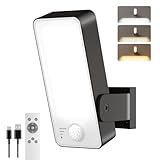
Overview: The PopoIron outdoor light combines rechargeable convenience with versatile security lighting. Its massive 10000mAh battery delivers up to 120 days of operation per charge, while the 600-lumen output offers three color temperatures (3000K-6000K) and stepless dimming. Designed for outdoor durability, it includes a remote control for easy adjustments.
What Makes It Stand Out: Rechargeability eliminates ongoing battery costs—USB-C charging takes just 8-10 hours for months of use. The adjustable head (270° vertical, 150° horizontal) provides precise illumination control unmatched by fixed lights. Three modes (ON/AUTO/SECURITY) plus remote operation offer genuine flexibility, while the memory function retains settings after power cycles.
Value for Money: At $25.49, it’s priced competitively with high-end battery lights but saves $20-30 annually in battery replacements. The three-in-one color temperature flexibility replaces multiple single-temperature lights. Compared to solar units, it guarantees performance regardless of weather, making it more reliable for security applications.
Strengths and Weaknesses: Strengths include rechargeable battery, remote control, adjustable angles, color temperature options, and weatherproof design. Weaknesses involve the need to periodically recharge, remote requiring separate AAA batteries, and 600 lumens being less bright than some non-rechargeable competitors. Installation requires aiming the IR receiver for remote function.
Bottom Line: Excellent for tech-savvy users wanting customizable outdoor lighting without battery waste. Perfect for patios, fences, and entryways where adjustable angles and color temperatures enhance ambiance and security. The rechargeable design pays for itself within a year. Just remember to bring it indoors for charging every few months.
6. Energizer Motion-Activated LED Path Light, Wireless, 20 Lumens, Battery Powered, White, Ideal for Hallway, Entryway, Stairs, Pathway, Night Light, 38183

Overview: The Energizer Motion-Activated LED Path Light offers a simple, battery-powered lighting solution for both indoor and outdoor spaces. Delivering 20 lumens of soft white light, this compact unit activates via motion detection up to 15 feet away, making it ideal for hallways, staircases, entryways, and pathways. The wireless design runs on three AA batteries (not included) and includes multiple mounting options—magnetic bracket and double-sided tape—for tool-free installation.
What Makes It Stand Out: This product leverages the trusted Energizer brand name with a focus on reliability and straightforward functionality. The dual indoor/outdoor rating provides versatility rare in this price category, while the manual on/off mode offers flexibility beyond standard motion-only operation. The easy-access battery compartment simplifies maintenance, and the magnetic mounting system allows for quick repositioning without surface damage.
Value for Money: At $11.28 for a single unit, this light sits in the mid-range for basic motion lights. While not the brightest option available, the reputable brand backing and weather-resistant design justify the premium over no-name alternatives. However, the 20-lumen output means you’ll need multiple units for adequate illumination in larger spaces, potentially increasing total investment.
Strengths and Weaknesses: Pros include trusted brand reputation, versatile mounting options, simple operation, and indoor/outdoor capability. Cons feature modest 20-lumen brightness, battery cost over time, and motion detection range shorter than some competitors at just 15 feet.
Bottom Line: This Energizer path light is a reliable choice for targeted accent lighting and basic safety illumination. Best suited for consumers prioritizing brand trust and simplicity over maximum brightness, it’s ideal for small-scale applications where durability matters more than lumens.
7. STAR-SPANGLED 3 Pack 7” Motion Sensor Lights Indoor Battery Operated, Stick on LED Light for Closet, Stairs, Under Cabinet, Cool White
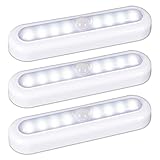
Overview: This three-pack of STAR-SPANGLED motion sensor lights delivers practical illumination for indoor spaces at an aggressive price point. Each 7-inch bar produces 80 lumens of cool white light through eight high-efficiency LEDs, automatically activating within a 120-degree arc and 16-foot range in low-light conditions. The units power down after 20 seconds of no motion, running on three AAA batteries per light (not included).
What Makes It Stand Out: The adjustable 90-degree rotating light bar sets these apart from fixed-direction competitors, allowing users to direct illumination precisely where needed. The anti-glare panel and high CRI (Color Rendering Index) of 90 ensure comfortable, accurate lighting that protects eyes while providing superior brightness. The split design enables easy battery replacement without removing the entire mount.
Value for Money: At $9.99 for three units ($3.33 each), this represents exceptional value. Comparable single units often cost more than this entire pack. The 80-lumen output per light offers four times the brightness of basic alternatives while maintaining energy efficiency, making it economical for large-scale deployment throughout a home.
Strengths and Weaknesses: Strengths include outstanding price-per-unit value, adjustable angle, high CRI LEDs, simple installation, and intelligent light-sensing technology that prevents daytime activation. Weaknesses involve battery replacement costs for three units, plastic construction that may lack long-term durability, and cool white temperature that some may find too harsh for living spaces.
Bottom Line: An unbeatable value for budget-conscious buyers needing multiple motion lights. Perfect for closets, under-cabinet task lighting, and stairwells where adjustable direction and high light quality matter. The cool white output suits utility areas better than bedrooms.
8. KINDEEP Motion Sensor Ceiling Light: Wireless Closet Light Battery Operated, Cordless Overhead Shower Light for Bathroom, Garage, Hallway, 3 Color Temperatures Dimmable, White Shade 1Pack

Overview: The KINDEEP Motion Sensor Ceiling Light elevates battery-powered lighting with premium features typically found in wired fixtures. This ultra-thin square unit offers three color temperatures (3000K/4500K/6500K), dimming capabilities, and a remote control for customization. The motion sensor detects movement up to 26 feet away across a 120-degree field, while the magnetic installation system eliminates drilling.
What Makes It Stand Out: Unlike basic motion lights, this model provides three operational modes: Daytime sensor for anytime activation, Light sensor for nighttime-only illumination, and continuous lighting for safety. The remote-controlled color temperature and brightness adjustment offer unprecedented flexibility in a battery-powered format. The 26-foot detection range significantly exceeds most competitors.
Value for Money: At $16.99, this single unit costs more than multi-pack alternatives but delivers features unavailable elsewhere in this category. The ability to function as a ceiling-mounted overhead light, combined with smart energy-saving modes that extend battery life by 50%, creates long-term value that offsets the initial investment.
Strengths and Weaknesses: Advantages include versatile color temperature options, remote control convenience, extended motion range, elegant low-profile design, and three intelligent modes. Drawbacks include higher upfront cost, single-unit packaging, and reliance on keeping track of the remote control for full functionality.
Bottom Line: A sophisticated solution for those wanting customizable, overhead lighting without wiring. Ideal for renters, bathroom showers, garages, and hallways where color temperature control and extended range justify the premium price. The smartest battery light in its class.
9. STAR-SPANGLED 3 Pack 7” Motion Sensor Lights Indoor Battery Operated, Stick on LED Light for Closet, Stairs, Under Cabinet, Warm White

Overview: This three-pack from STAR-SPANGLED mirrors its cool white counterpart but delivers 80 lumens of warm white illumination for softer ambient lighting. Each 7-inch bar features eight high-CRI LEDs that activate via motion and light sensors within a 120-degree, 16-foot range, shutting off after 20 seconds of inactivity. The units run on three AAA batteries each (not included) and mount via ultra-adhesive pads.
What Makes It Stand Out: The warm white temperature (approximately 3000K) differentiates this offering, creating a cozy atmosphere suitable for living areas and bedrooms where harsh lighting is undesirable. The 90-degree adjustable light bar, anti-glare panel, and 90+ CRI maintain the series’ focus on quality and user customization. The split design allows tool-free battery changes.
Value for Money: Priced identically to the cool white version at $9.99 for three, this pack delivers the same outstanding value proposition—roughly $3.33 per unit. The warm white option may command a slight premium in some markets, making this pricing particularly attractive for those preferring softer illumination. The energy-efficient design maximizes battery life across all three units.
Strengths and Weaknesses: Pros include exceptional multi-pack value, warm light temperature ideal for residential spaces, adjustable angle, high CRI for color accuracy, and intelligent sensors that prevent unnecessary activation. Cons comprise ongoing battery costs for three devices, potential adhesive failure on textured surfaces, and moderate brightness that may not suffice for primary task lighting.
Bottom Line: The perfect choice for homeowners wanting multiple motion lights with warm, inviting illumination. Excellent for bedrooms, hallways, and living spaces where ambiance matters. The adjustable angle and high light quality make this three-pack a budget-friendly winner for comprehensive home coverage.
10. LEPOWER Battery Powered LED Flood Light Outdoor,1500LM Motion Sensor Security Lights, IP65 Waterproof,Wireless Flood Light Battery Operated,3 Head Motion Detector Light for Garage,Yard,Porch(Black)

Overview: The LEPOWER Battery-Powered LED Flood Light is a high-performance security solution delivering an impressive 1500 lumens of natural white light. Designed for outdoor use, this rugged unit features three adjustable heads and a 180-degree motion sensor detecting movement up to 72 feet away. Powered by four D batteries (not included), it offers three operational modes and IP65 weatherproofing for reliable performance in harsh conditions.
What Makes It Stand Out: The extreme 72-foot detection range and 1500-lumen output place this in a different league than standard battery lights. Three independently adjustable heads provide customizable 220-degree coverage, while the Eco Mode extends battery life by dimming rather than completely shutting off. The IP65 rating ensures resilience against rain, snow, and dust.
Value for Money: At $31.99, this represents significant value for a high-output security light requiring no wiring. Comparable wired flood lights often cost more when installation is factored in. While D batteries represent a recurring expense, the three-mode operation helps manage power consumption effectively, making it economical for intermittent security use.
Strengths and Weaknesses: Major strengths include exceptional brightness, industry-leading motion range, flexible head adjustment, robust weatherproofing, and battery-powered convenience for remote locations. Weaknesses involve substantial battery requirements (four D cells), heavier weight requiring secure mounting, and potential overkill for small residential applications.
Bottom Line: An outstanding wireless security solution for properties lacking electrical access. Ideal for large yards, detached garages, and rural settings where maximum illumination and detection range are priorities. The adjustable heads and weatherproof design make it a professional-grade option at a consumer price point.
Why Battery-Powered Motion Lights Are a Renter’s Best Friend
The No-Wiring Advantage
The single greatest benefit for renters is the complete elimination of electrical work. Battery-powered motion lights operate independently of your rental’s electrical system, meaning no circuit breaker puzzles, no wire fishing through walls, and absolutely no need to hire an electrician. This autonomy not only saves you hundreds in installation costs but also keeps you firmly within the bounds of most lease agreements that prohibit electrical modifications. You can mount them in locations that would be prohibitively expensive or impossible with hardwired alternatives—think closets without overhead lighting, stairwells in older buildings, or exterior walls where running conduit would be a non-starter.
Temporary Solutions That Don’t Sacrifice Security
There’s a misconception that “temporary” equals “ineffective.” Modern battery-powered motion lights debunk this myth entirely. Many units now achieve brightness levels of 500+ lumens—comparable to traditional wired fixtures—while offering features like adjustable detection zones and smartphone connectivity. The key is that they provide layered security: deterring package thieves on your porch, preventing falls on poorly lit walkways, and creating the illusion of occupancy when you’re away. For renters who can’t install permanent security systems, these lights represent a powerful, portable deterrent that moves with you from one home to the next.
Understanding Motion Sensor Technology
PIR vs. Microwave Sensors: What’s the Difference?
Most battery-powered motion lights use one of two sensor types: Passive Infrared (PIR) or microwave. PIR sensors detect heat signatures—specifically, the infrared energy emitted by humans and animals. They’re incredibly energy-efficient because they remain in a low-power standby state until triggered, making them ideal for battery operation. However, they can be less effective at detecting movement through glass or in extreme temperature conditions.
Microwave sensors, by contrast, emit continuous microwave pulses and measure reflection patterns. They’re more sensitive and can detect motion through thin barriers, but this hypersensitivity often leads to false triggers from swaying branches or passing cars. More importantly, they consume significantly more power, which can drain batteries 3-5 times faster than PIR counterparts. For most renters, PIR sensors offer the best balance of reliability and battery longevity.
Detection Range and Angle Explained
When manufacturers claim a “30-foot detection range,” they’re not telling the whole story. That range typically represents optimal conditions—direct approach, moderate temperature, no obstructions. The detection angle matters equally: a 120-degree sensor covers a wide swath but may miss movement directly beneath it, while a 180-degree sensor provides broader coverage but increases false triggers from peripheral activity.
Consider your specific use case. For a narrow apartment hallway, a 90-degree sensor with 15-foot range prevents neighbor-triggered activations. For a balcony or entryway, 120-180 degrees ensures comprehensive coverage. Pay attention to adjustable detection zones—some advanced models let you “mask” areas where you don’t want detection, like busy sidewalks or neighbor’s windows.
Battery Types and Power Considerations
Alkaline vs. Lithium: Which Lasts Longer?
The battery chemistry you choose dramatically impacts both performance and operating costs. Alkaline batteries (AA or AAA) remain the most common and affordable option, typically lasting 6-12 months under normal use. However, their voltage drops steadily as they deplete, causing lights to dim gradually before failing completely.
Lithium batteries—particularly lithium iron disulfide (Li-FeS2)—cost 3-4 times more but deliver consistent voltage until nearly depleted, resulting in brighter, more reliable illumination. They also excel in temperature extremes, performing reliably from -40°F to 140°F, making them ideal for outdoor installations. In cold climates, lithium batteries can last up to 8 times longer than alkaline. For high-traffic areas where reliability is paramount, the lithium premium pays for itself in reduced maintenance and peace of mind.
Rechargeable Options for Eco-Conscious Renters
Rechargeable battery-powered motion lights typically use built-in lithium-ion or lithium-polymer cells charged via USB-C or micro-USB. While convenient and environmentally friendly, they require a different mindset. Instead of replacing batteries annually, you’ll need to bring the unit indoors for charging every 2-4 months, depending on usage. Some models offer removable rechargeable cells, letting you swap in a spare while charging the depleted one.
Consider your willingness to maintain a charging routine. For lights in hard-to-reach locations (like second-story eaves), disposable batteries might be more practical. For easily accessible indoor locations, rechargeables eliminate ongoing costs and reduce environmental waste—a compelling trade-off for many urban renters.
Understanding Battery Life Claims
Manufacturers’ battery life estimates are marketing numbers based on idealized conditions: 10 activations per day, 20 seconds per activation, moderate temperatures. Your reality will differ. High-traffic areas might see 50+ activations daily. Cold weather can cut battery life by 60%. Lights with always-on dusk-to-dawn sensors drain batteries even without motion.
A realistic formula: Divide the claimed battery life by 3 for high-traffic outdoor locations, by 2 for moderate use, and trust the claim only for low-traffic indoor applications. Always check user reviews for real-world battery performance in scenarios similar to yours. And remember: lights that use more batteries (4x AA vs. 2x AA) often last proportionally longer but cost more to replace.
Brightness Levels: How Many Lumens Do You Really Need?
Decoding Lumens vs. Watts
Forget watts—they measure energy consumption, not brightness. Lumens measure actual light output. A traditional 60-watt incandescent bulb produces about 800 lumens, but LED motion lights achieve this with just 8-10 watts of battery power. For renters, this efficiency is crucial: more lumens per watt means longer battery life.
The sweet spot for most applications falls between 200-600 lumens. Under 200 lumens provides gentle pathway lighting but won’t deter intruders. Over 600 lumens can be overpowering for small spaces and drains batteries rapidly. Look for models with adjustable brightness settings, letting you customize intensity based on location and time of day.
Matching Brightness to Your Space
Consider the purpose and location. Indoor closets and cabinets need only 50-100 lumens—enough to identify objects without blinding you. Apartment hallways and stairwells benefit from 200-400 lumens to prevent trips and falls. Exterior entryways and balconies require 400-700 lumens for security purposes. For pathways and large balconies, consider multiple 200-lumen units spaced apart rather than one ultra-bright light, which creates harsh shadows and dark pockets.
Remember that perceived brightness doubles with each 60-80 lumen increase, not linearly. Two 300-lumen lights often provide better coverage than one 600-lumen unit, while extending battery life since each unit activates independently.
Installation Options for Rental Properties
Adhesive Mounting: Pros and Cons
Modern 3M VHB (Very High Bond) adhesive strips can support surprising weight—up to 5 pounds on clean, flat surfaces. They’re the renter’s go-to for damage-free installation. Success depends entirely on surface preparation: clean with isopropyl alcohol, ensure the surface is dry, and apply firm pressure for 30 seconds. Avoid textured walls, wallpaper, and surfaces that experience temperature fluctuations, which can cause adhesive failure.
The downside? Removal isn’t always damage-free. On painted drywall, the adhesive may peel paint if removed incorrectly. Always use dental floss or fishing line to “cut” the adhesive bond behind the mount, then roll the remaining adhesive off with your finger. Never pull straight out. And keep the original packaging—many manufacturers include extra adhesive pads for repositioning.
Magnetic Solutions for Metal Surfaces
For renters in industrial-style lofts or homes with metal door frames, magnetic mounts offer infinite adjustability without any adhesive residue. These typically use rare-earth neodymium magnets that can support 2-3 pounds securely. The light detaches easily for battery changes or charging, making maintenance trivial.
The limitation is obvious: they only work on ferrous metal surfaces. Test your surface with a refrigerator magnet first. For non-magnetic metals like aluminum, adhesive-backed metal plates can create a mounting point, though this reintroduces potential wall damage. Magnetic mounts excel for temporary testing—try different positions before committing to a permanent-feeling adhesive installation.
Screw-Free Bracket Systems
Some manufacturers have engineered clever tension-based or gravity-mounted brackets that require zero drilling. These might wedge into window frames, clip onto gutters, or strap around posts. For balcony railings, clamp-style mounts grip securely without tools. For interior doors, over-the-door hooks with integrated light mounts work brilliantly.
These solutions shine in their specificity—they solve particular mounting challenges beautifully but lack versatility. Before purchasing, measure your specific mounting surface: gutter thickness, railing diameter, door thickness. A solution perfect for a 2-inch railing will fail on a 1-inch or 3-inch one. Always check maximum weight ratings and consider how wind or frequent contact might affect stability.
Weather Resistance and Durability
IP Ratings Demystified
That “IP65” rating isn’t just marketing jargon—it’s crucial for outdoor installations. IP (Ingress Protection) codes have two digits: the first for dust protection (0-6), the second for water protection (0-9). For renters mounting lights on uncovered balconies or near sprinklers, IP65 is the minimum: dust-tight and protected against water jets from any direction. IP67 offers temporary immersion protection—overkill for most but essential for flood-prone ground-floor patios.
Indoor lights can get away with IP20 (finger-safe, no water protection), but consider IP44 for bathroom or kitchen installations where steam and splashes occur. The “X” in ratings like IPX4 means the manufacturer didn’t formally test dust protection—common in consumer products but worth noting for dusty desert climates.
Indoor vs. Outdoor Considerations
Outdoor battery-powered motion lights face challenges beyond rain: UV degradation yellows plastic housings, temperature swings stress battery contacts, and insects crawl into sensor lenses. Look for UV-stabilized polycarbonate housings and insect-resistant sensor covers. For cold climates, lithium batteries are non-negotiable—alkaline cells can lose 50% capacity at 20°F.
Indoor units prioritize aesthetics over ruggedization. They’re often slimmer, available in more finishes, and operate within comfortable temperature ranges. However, don’t assume indoor lights can’t work outdoors. A covered porch with minimal direct rain exposure might be perfect for a stylish indoor-rated unit, especially if you prioritize design over maximum durability. Just understand you’re voiding any weather-related warranty claims.
Smart Features Worth Considering
App Connectivity and Remote Control
Bluetooth-enabled motion lights let you adjust settings from your phone without climbing ladders. Change detection sensitivity, brightness, and timer duration from your couch. Some advanced models log activation history, helping you identify patterns—like that raccoon triggering your balcony light at 3 AM.
Wi-Fi connectivity takes this further, enabling remote access from anywhere. Check if packages arrived, receive notifications of unexpected activity, or simulate presence while traveling. The trade-off? Wi-Fi models consume more standby power, reducing battery life by 20-40%. They also require a stable 2.4GHz network—many apartment complexes have congested Wi-Fi spectrums that cause connectivity issues.
Integration with Existing Smart Home Ecosystems
If you already use Alexa, Google Home, or Apple HomeKit, look for compatible motion lights. They can trigger other devices: turn on additional lights, activate cameras, or send announcements to smart speakers. This creates a cohesive security ecosystem without permanent wiring.
However, battery-powered smart lights often have limited integration compared to wired counterparts. They may not support all automation features due to power conservation needs. Check specifically whether the light can function as a trigger for other devices, or only be controlled as an endpoint. Some budget “smart” lights merely offer app control without true ecosystem integration—read specifications carefully to avoid disappointment.
Adjustability and Customization
Sensitivity Settings: Avoiding False Triggers
Nothing drains batteries faster than a light triggered by every passing car, swaying plant, or heat vent cycling on. Quality motion lights offer adjustable sensitivity—usually a dial or app setting from 10 to 30 feet. Start low and increase gradually until you achieve reliable human detection without nuisance triggers.
For apartment dwellers, directional sensitivity is even more valuable. Some lights let you mask detection zones, preventing neighbor-triggered activations in tight spaces. Test sensitivity at different times of day; afternoon sun heating a wall can make PIR sensors hyper-sensitive, while cold mornings might require higher settings.
Timer Settings: From 15 Seconds to 5 Minutes
Timer duration affects both usability and battery life. A 15-second timer works for closets and cabinets but feels rushed for entryways. One to two minutes is ideal for most applications—enough time to unlock a door, climb stairs, or locate keys. Longer durations (5+ minutes) are overkill for battery operation unless you’re hosting an outdoor gathering.
Look for lights with “smart timers” that reset with continued motion. Without this feature, the light shuts off after the set time regardless of movement, leaving you in darkness. Smart timers keep the light on as long as you remain active in the detection zone, then start the countdown when motion ceases—far more practical and battery-efficient than unnecessarily long fixed timers.
Dusk-to-Dawn Sensors
Many motion lights include photocells that prevent daytime activation, extending battery life by 50-70%. However, not all photocells are created equal. Cheap sensors might activate under overcast conditions or bright indoor lighting, while quality units use multi-level light detection with adjustable thresholds.
For indoor use, dusk-to-dawn sensors can be problematic. A light in a windowless closet might never activate if the sensor thinks it’s always “night.” Look for models that let you disable the photocell or adjust its sensitivity. Some advanced lights use time-based blocking instead of light sensing—perfect for renters who want the light active only during sleeping hours.
Design Aesthetics for Modern Rentals
Sleek Minimalist Options
Gone are the days of bulky, utilitarian motion lights that scream “security device.” Contemporary designs feature slim profiles under 2 inches deep, matte finishes in black, white, or metallic tones, and diffused lenses that eliminate harsh glare. These lights blend seamlessly with modern rental aesthetics rather than detracting from them.
Consider the light’s profile from multiple angles. A unit that looks sleek head-on might have visible battery compartments or mounting hardware from below. Look for designs that conceal these functional elements without compromising accessibility. Some premium models use magnetic battery covers that snap flush with the housing, maintaining clean lines while allowing tool-free battery changes.
Blending with Your Decor
Your motion light shouldn’t look like an afterthought. Many manufacturers now offer interchangeable faceplates or skins to match your rental’s aesthetic. White for minimalist apartments, bronze for traditional spaces, or even wood-grain finishes for rustic lofts. Some renters use vinyl wraps or removable wallpaper to customize plain housings further—just ensure ventilation slots remain uncovered.
Consider the light quality itself. Cool white (5000K+) feels harsh and institutional, while warm white (2700-3000K) creates a welcoming ambiance. For security applications, a neutral 4000K provides good visibility without the sterile feel. Some advanced models offer adjustable color temperature, letting you fine-tune the ambiance for different times or moods.
Cost Analysis and Budget Planning
Initial Investment vs. Long-Term Value
Budget battery-powered motion lights start around $15-25, while premium smart models can exceed $100. The initial price tells only part of the story. A $20 light requiring battery changes every 3 months might cost $40 annually in alkaline cells, while a $60 light with 2-year battery life and lithium cells costs only $10/year to operate.
Factor in your time and hassle. Changing batteries in a hard-to-reach outdoor location quarterly is far more burdensome than an annual change for an indoor unit. Premium models often include features like low-battery indicators (preventing sudden darkness) and battery level reporting in their apps. For renters planning to stay 2+ years, investing in quality units pays dividends in reliability and reduced maintenance.
Hidden Costs to Watch For
The sticker price rarely includes essential accessories. Adhesive mounts may require separate purchase of heavy-duty strips rated for your specific surface. Rechargeable models might need a long USB cable or outdoor-rated extension cord for charging. Smart lights could require a hub for full functionality.
Consider disposal costs too. Some municipalities charge for battery recycling. Rechargeable models eventually need battery replacement (typically after 3-5 years), and proprietary battery packs can cost 30-50% of the original light price. Check whether the manufacturer sells replacement batteries and their cost before buying. Lights using standard AA or AAA cells offer more flexibility and potentially lower long-term costs.
Troubleshooting Common Issues
Dealing with False Alarms
False triggers are the bane of battery-powered motion lights. Start by identifying the trigger source. Does the light activate at the same time daily? Check for HVAC vents, automatic sprinklers, or sunlight patterns. Random triggers? Look for moving objects: curtains near heating vents, plants in drafts, or reflections from passing cars.
Solutions vary by trigger type. For heat-related false alarms, reposition the light away from vents or adjust its angle upward. For moving objects, reduce sensitivity or mask detection zones. Insect-triggered activations may require cleaning the sensor lens with compressed air and applying a thin ring of petroleum jelly around the sensor housing to deter crawling bugs. As a last resort, some renters install a small hood or shield above the sensor to narrow its field of view.
Maximizing Battery Performance
If your batteries die prematurely, first verify you’re using the correct type. Mixing alkaline and lithium, or old and new batteries, causes rapid drain. Clean battery contacts with a pencil eraser to ensure good connections. In cold weather, consider insulating the battery compartment with foam tape (being careful not to block vents).
Check for firmware updates if you have a smart light—manufacturers often release power-saving optimizations. Reduce brightness by 25% and timer duration by 30 seconds; these small changes can double battery life with minimal impact on usability. If all else fails, the light may have a parasitic drain from a faulty component. Quality manufacturers will replace units under warranty if battery life falls significantly short of specifications.
Legal and Lease Considerations
What Your Landlord Actually Cares About
Most lease agreements prohibit “alterations” to the property, but interpretations vary. The primary landlord concerns are: damage to surfaces, safety hazards, and aesthetic changes visible from outside. Battery-powered motion lights address all three when installed responsibly. No wiring means no electrical code violations. Proper adhesive installation prevents wall damage. And most exterior lights are considered personal property, not fixtures.
Still, review your lease for specific language about “exterior attachments” or “security devices.” Some luxury buildings have strict aesthetic guidelines. When in doubt, a brief email to your landlord describing your plan (“installing a battery-powered light with removable adhesive strips”) often gets tacit approval. Document their response—written permission, even informal, protects your security deposit.
Documenting Installations for Your Security Deposit
Protect yourself with photographic evidence. Before installation, take date-stamped photos of the pristine wall surface. During installation, photograph the adhesive strips or mounting hardware clearly showing they’re non-damaging. Save product manuals showing installation methods. When it’s time to move, photograph the removal process and the undamaged wall.
For adhesive mounts, keep the original packaging with instructions for damage-free removal. Some manufacturers provide landlord-friendly documentation explaining their products are “renter-safe.” If a dispute arises, this documentation proves you used reasonable care. For high-end rentals, consider a small wall protector plate—a thin, paintable plastic disc that adheres to the wall first, then accepts the light mount. It adds one more layer of protection and costs less than a single hour of your time spent arguing over deposit deductions.
Moving Day: Taking Your Lights With You
Removal Best Practices
The key to damage-free removal is patience and the right technique. Never yank adhesive mounts directly away from the wall. Instead, use dental floss or fishing line in a sawing motion behind the mount to cut through the adhesive foam. Then, roll the remaining adhesive residue into a ball using your finger—never scrape with tools.
For stubborn residue, apply heat with a hair dryer set to low for 30 seconds to soften the adhesive, then roll it off. Avoid chemical adhesive removers unless absolutely necessary; they can damage paint. If paint does peel, keep a small container of matching paint for touch-ups—many renters keep paint samples from each rental for this exact purpose. Most landlords accept small touch-ups as normal wear and tear.
Preparing Lights for Transport
Remove batteries before packing to prevent corrosion and accidental activation during transit. Keep original packaging if possible; it protects the sensor lens and housing. If you’ve discarded it, wrap lights in microfiber cloths and pack them in rigid containers to prevent damage. Label the box “FRAGILE - SENSORS” so movers handle it carefully.
Before reinstalling in your new rental, test each light and clean the sensor lens with a microfiber cloth. Check battery contacts for corrosion, especially if the light saw outdoor use. Update any Wi-Fi settings or location-based automations in your smart home apps. This fresh start ensures optimal performance in your new space and prevents carrying over any configuration issues from your previous installation.
Alternative Power Sources to Consider
Solar-Assisted Battery Lights
Hybrid solar-battery models combine a small solar panel with rechargeable batteries, theoretically offering unlimited battery life. In practice, they work best in sunny locations with at least 6 hours of direct daily sunlight. Apartment balconies with southern exposure are ideal; north-facing or heavily shaded locations will see minimal benefit.
The solar panel typically extends battery life by 30-70% rather than eliminating charging entirely. In winter or cloudy periods, they revert to standard battery operation. Look for detachable solar panels that let you position them optimally while keeping the light in a more functional location. For renters in sunny climates, these hybrids significantly reduce maintenance, but they’re not truly “set and forget” solutions.
Hybrid Models for Maximum Flexibility
The ultimate in renter flexibility is a light that accepts multiple power sources: disposable batteries, rechargeable cells, and optional AC adapter. These “triple-power” units let you adapt to any situation. Use disposables during a power outage, rechargeables for daily use, and plug into an outlet (if available) for permanent locations like closets.
The trade-off is size and cost. Multi-power lights are bulkier to accommodate different battery formats and charging circuitry. They also cost 50-100% more than single-source models. For renters who move frequently between properties with varying electrical access, this flexibility justifies the premium. For stable living situations, a simpler single-source light is more economical.
Environmental Impact and Disposal
Responsible Battery Recycling
Single-use batteries contain heavy metals that shouldn’t enter landfills. Many renters don’t realize that big-box retailers, libraries, and municipal recycling centers accept batteries for free. Keep a small container in a closet for dead cells, then make a quarterly recycling run. Some manufacturers offer mail-back programs—save shipping boxes and batch returns.
Rechargeable batteries also require proper end-of-life disposal. Lithium-ion cells can cause fires if punctured in trash compactors. Most electronics retailers participate in the Call2Recycle program, accepting rechargeables at no cost. Document your recycling efforts; some municipalities require proof of proper disposal for apartment dwellers. It’s a small effort that prevents significant environmental harm.
Choosing Sustainable Materials
Beyond batteries, consider the light’s entire lifecycle. Aluminum housings are infinitely recyclable and more durable than plastic. Lights with modular designs allow replacement of individual components (sensor, LED panel, battery compartment) rather than discarding the entire unit when one part fails. Some manufacturers now use recycled ocean plastics in their housings—a meaningful choice for environmentally conscious renters.
Check the company’s repair policy. Brands offering replacement parts and repair guides support a circular economy. Avoid lights with sealed housings that can’t be opened for battery replacement—when the internal cells die, the entire unit becomes e-waste. The most sustainable light is one you’ll use for many years across multiple rentals, so prioritize durability and repairability over trendy designs.
Frequently Asked Questions
Can my landlord legally prohibit battery-powered motion lights?
Generally, no—if they don’t damage property or violate aesthetic clauses. Since these lights require no wiring and use removable mounting, they’re typically considered personal property like furniture. However, exterior lights visible from common areas might fall under “decorative guidelines” in luxury buildings. Always check your lease and consider getting written permission for exterior installations to avoid disputes.
How long do batteries actually last in real-world conditions?
Expect 6-12 months for alkaline batteries with moderate use (10-15 activations daily), and 12-24 months for lithium. High-traffic areas or extreme temperatures can reduce this by 50-75%. Rechargeable internal batteries typically need charging every 2-4 months. Always check reviews for real-world performance in similar applications, as manufacturer claims are based on idealized testing conditions.
Will adhesive mounting damage my walls when I move out?
Properly installed high-quality adhesive strips on painted drywall cause minimal to no damage when removed correctly using the floss-and-roll technique. However, removal from wallpaper, textured walls, or poorly painted surfaces can cause peeling. Test in an inconspicuous area first, and consider using wall protector plates in rentals with delicate finishes. Document the original condition with photos.
What’s the difference between lux and lumens, and why does it matter for motion lights?
Lumens measure total light output from the source, while lux measures illuminance on a surface (lumens per square meter). For renters, lux matters more because it determines how well-lit your space actually appears. A 500-lumen light focused narrowly might create 50 lux on a pathway, while the same lumens diffused widely might only provide 10 lux. Look for beam angle specifications alongside lumen ratings to understand real-world brightness.
Can I use battery-powered motion lights outdoors in winter?
Yes, but choose lithium batteries and look for lights rated for your climate. Alkaline batteries lose capacity dramatically below 32°F, while lithium performs reliably down to -40°F. Check the operating temperature range in specifications. Also consider that snow accumulation can block sensors, so mount lights under eaves or angled downward. Some renters install small shelters above lights to protect from ice and snow buildup.
Are smart motion lights worth the extra cost for renters?
Smart features add 50-150% to the price but offer genuine benefits: remote adjustment without ladders, activation logs for security, and integration with other devices. The value depends on your tech comfort and installation height. For lights mounted high or in hard-to-reach spots, app-based adjustment saves significant hassle. For easily accessible indoor locations, manual controls are often sufficient. Consider whether you’ll use the features regularly or just once during initial setup.
How do I prevent my neighbor’s movement from triggering my light?
Position the light to face away from shared spaces and use sensitivity adjustment to narrow the detection zone. Many advanced models offer zone masking or directional shields that block detection in specific areas. Mount the light lower than typical (6-7 feet instead of 8-10) to reduce range. As a last resort, install a small physical shield on the sensor side facing the neighbor’s space—just ensure it doesn’t block your desired detection area.
What’s the best height and angle for mounting motion lights?
Mount 7-9 feet high for optimal detection of human movement while avoiding small animals. Angle the sensor 45-60 degrees downward to create a detection zone starting 5-10 feet from the mounting point. This prevents immediate ground-level triggers from pets while maximizing human detection range. For pathway lighting, angle the light head downward to minimize light pollution to neighbors—a courtesy that prevents complaints in close-quarter rentals.
Can I take my motion lights when I move to another country with different voltage?
Absolutely—battery-powered lights are voltage-agnostic since they don’t plug into mains power. However, if you have rechargeable models, check the charger compatibility. USB chargers are generally universal (100-240V), but you may need a plug adapter. Smart lights using Wi-Fi might face compatibility issues with different regional Wi-Fi channels or smart home ecosystems. Always verify app availability and server access in your destination country before moving internationally.
How do I dispose of old motion lights at the end of their life?
Treat them as electronic waste due to circuit boards and batteries. Remove any disposable batteries for separate recycling. The main unit can go to e-waste collection events, retailer take-back programs (Best Buy, Staples), or municipal hazardous waste facilities. Some manufacturers offer mail-back recycling—contact customer service. Never put them in regular trash as lithium components can cause fires in waste processing facilities. Document the disposal for your records, especially if the light contained a proprietary rechargeable battery.