Your gaming setup isn’t just a collection of hardware—it’s your personal arena, your digital sanctuary, your command center. Every component, from your mechanical keyboard to your monitor’s refresh rate, has been carefully chosen for peak performance. But there’s one element that transforms a functional rig into an immersive experience: lighting. Not just any lighting, but intelligent, responsive color-changing light strips that breathe life into your setup, reduce eye strain, and sync with your virtual adventures.
Whether you’re streaming to thousands or grinding ranked matches at 2 AM, the right ambient lighting can elevate your performance, enhance your mood, and create that jaw-dropping aesthetic that makes your setup Instagram-worthy. But with a dizzying array of options flooding the market, how do you separate marketing fluff from genuinely game-changing features? This guide cuts through the noise, giving you the expert knowledge to choose light strips that match your gaming style, technical requirements, and budget—without falling for specs that sound impressive but deliver little real-world value.
Top 10 Color-Changing Light Strips for Gaming Setups
Detailed Product Reviews
1. Govee RGBIC LED Strip Lights, Smart LED Lights for Bedroom, Bluetooth LED Lights APP Control, DIY Multiple Colors on One Line, Color Changing LED Strip Lighting Music Sync, Home Decor, 16.4ft

Overview:
The Govee RGBIC LED Strip Lights deliver a 16.4-foot smart lighting solution that transforms bedroom ambiance through advanced color technology. Unlike conventional RGB strips, these display multiple colors simultaneously on a single line, creating dynamic gradient effects impossible with older technology. Controlled exclusively via Bluetooth through the Govee Home App, this system provides extensive customization without requiring a hub or Wi-Fi bridge.
What Makes It Stand Out:
The RGBIC technology is the definitive star, enabling rainbow waves, gradient flows, and multi-color segments that traditional strips cannot replicate. With 64+ preset scenes, 16 million DIY colors, and 11 music sync modes, creative possibilities are virtually endless. The high-sensitivity microphone delivers accurate audio-visual synchronization perfect for gaming or parties. An active app community shares custom themes, while regularly updated AI-generated content provides fresh inspiration, creating an ecosystem beyond mere hardware.
Value for Money:
At $0.82 per foot, this sits in the mid-range but delivers premium features that justify the investment. The RGBIC capability alone warrants the price premium over basic RGB strips. While the lack of Alexa/Google support is a notable limitation, the robust app control and scene variety rival products costing twice as much. For users prioritizing visual sophistication over voice commands, the return on investment is excellent.
Strengths and Weaknesses:
Strengths: Advanced RGBIC multicolor display; intuitive app with community features; reliable music sync; extensive preset scenes; straightforward installation
Weaknesses: No smart assistant integration; Bluetooth range limitations; adhesive may weaken on textured surfaces over time
Bottom Line:
Perfect for users wanting sophisticated lighting effects without premium pricing. The Govee RGBIC strip delivers professional-grade ambiance for bedrooms, gaming setups, or content creation. Those unconcerned with voice control will find the visual payoff undeniable and the feature set remarkably comprehensive for the price point.
2. Ledagic Led Lights for TV, 13.2ft TV Led Backlight 32-65 Inch, USB Led Light Strip with Remote, App Control, RGB Led Strip Lights Music Sync Color Changing Led Lights for Bedroom, Gaming Accessories

Overview:
The Ledagic TV LED Backlight provides a budget-conscious 13.2-foot lighting solution specifically engineered for 32-65 inch televisions. This USB-powered strip enhances viewing experiences while reducing eye strain through ambient backlighting. Dual control options via the Mohuan app and 24-key remote offer surprising versatility at an entry-level price, making smart TV lighting accessible to every consumer.
What Makes It Stand Out:
Its ultra-low $5.99 price point democratizes TV backlighting technology. The USB-powered design draws power directly from the TV, power banks, or laptops, eliminating adapter clutter. Featuring upgraded 5050 LED beads at 15 per meter, it delivers higher brightness than typical budget alternatives. With 21 dynamic music modes, the audio-visual synchronization exceeds expectations for this tier, providing robust reactive lighting that enhances movies and gaming.
Value for Money:
This represents exceptional value—costing less than a fast-food meal while including both app and remote control. The per-foot pricing is highly competitive, and the feature set punches dramatically above its weight class. While build quality and LED density don’t match premium brands, the functionality-to-price ratio is outstanding. It’s an ideal entry point for smart lighting newcomers or secondary TV setups.
Strengths and Weaknesses:
Strengths: Incredibly affordable; versatile USB power; high-brightness 5050 LEDs; dual control methods; easy installation; good music sync options
Weaknesses: Non-waterproof; adhesive quality concerns; limited to 13.2ft; app reliability issues reported; shorter potential lifespan
Bottom Line:
An unbeatable value proposition for budget-conscious buyers wanting TV backlighting. The Ledagic strip delivers core features without frills, perfect for dorm rooms, apartments, or first-time smart lighting users. Manage expectations regarding long-term durability, but enjoy impressive functionality that makes premium features accessible to everyone.
3. Under Monitor RGB Light Bar, LED Light for Desk Gaming Setup, USB Powered Keyboard Light, 12 Inch 5V, 353 Color Change Modes, Wireless Remote, LED Ambient Lights for Room Decor, Desk Setup, PC
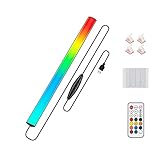
Overview:
This 12-inch Under Monitor RGB Light Bar reimagines desk lighting with a compact, focused design that departs from traditional flexible strips. The aluminum-bodied bar delivers targeted illumination for keyboard areas or ambient wall washing behind monitors. USB-powered with both wireless remote and switch control, it’s engineered for seamless integration into gaming and productivity setups where precision and convenience matter most.
What Makes It Stand Out:
The light bar form factor provides directed light with professional aesthetics that diffuse strips cannot match. With 353 dynamic modes and 12 static colors, variety is staggering. The wireless remote enables instant mode switching without disrupting workflow. A memory function recalls last settings, while the aluminum housing ensures superior heat dissipation and durability compared to plastic alternatives. The included cable management clips demonstrate thoughtful design for clean installations.
Value for Money:
At $14.99 for 12 inches, the per-foot cost exceeds strips, but you’re investing in specialized design and premium materials. The aluminum construction and focused optics justify the premium for desk-specific applications. Unlike 16-foot strips that require complicated routing and produce waste, this delivers exactly what desk gamers need—no more, no less. The build quality ensures longevity that cheap strips lack.
Strengths and Weaknesses:
Strengths: Premium aluminum build; wireless remote convenience; memory function; targeted illumination; 353 dynamic modes; excellent heat dissipation; compact design
Weaknesses: Limited length; higher per-foot cost; adhesive mounting may fail on some surfaces; remote requires line-of-sight; no smart home integration
Bottom Line:
Ideal for desk-bound users seeking professional-grade ambient lighting without clutter. The light bar format and wireless control create a superior user experience for monitor and keyboard illumination. While not the cheapest option, its specialized design and build quality make it worth every penny for dedicated gaming or work setups where form meets function.
4. 32.8Ft Neon Rope Lights,Flexible Led Rope Lights Control with App/Remote,Multiple Modes RopeLights,IP65 Outdoor RGB Led Neon Lights NonWater Resistant,Music Sync Gaming Led NeonLight Strip

Overview:
These 32.8-foot Neon Rope Lights deliver a bold aesthetic departure from traditional LED strips through flexible, diffused neon-style tubing. The continuous, dot-free glow enables DIY sign creation and architectural accent lighting. With IP65 rating and dual app/remote control, this versatile solution suits indoor and outdoor applications, from gaming rooms to patio parties, offering creative freedom that flat strips cannot match.
What Makes It Stand Out:
The neon rope design bends into shapes and letters impossible with traditional strips, unlocking true creative expression. At 32.8 feet, it’s the longest option reviewed, while IP65 rating handles moisture and dust. The “Lotus Lantern” app includes timer functions that sync with morning alarms, and music sync adds dynamic energy. Cut-to-length capability ensures custom installations without waste, making it ideal for permanent installations.
Value for Money:
At $0.72 per foot, it’s competitively priced for a specialty product. Traditional neon signs cost hundreds; this delivers a similar aesthetic for under $25. The durability and weather resistance add significant value for outdoor users. While brightness doesn’t match high-density strips, the unique visual effect and versatility justify the investment for creative projects and themed environments.
Strengths and Weaknesses:
Strengths: Unique neon aesthetic; highly flexible and cuttable; IP65 weather resistance; generous 32.8ft length; timer functionality; excellent for DIY signs; dual control
Weaknesses: Lower brightness than traditional strips; neon effect may not suit all decors; app learning curve; adhesive challenges on curves; IP65 doesn’t mean fully waterproof
Bottom Line:
Perfect for creative users wanting neon’s look without glass tubing’s cost or danger. Excellent for themed rooms, businesses, or outdoor accent lighting where flexibility is paramount. The length and versatility make it a powerhouse for imaginative installations. If you want standard strip lighting, look elsewhere—but for neon effects and DIY creativity, this is unbeatable value.
5. hyrion 50ft USB-Powered RGB LED Strip Lights, Music Sync & Sound-Reactive Color Changing Lights for Bedroom, TV Backlight, Gaming Setup, Bluetooth, IR Remote & Smart App Control

Overview:
The hyrion 50-foot USB-Powered RGB LED Strip Lights provide maximum coverage at minimum cost, transforming entire rooms into immersive environments. This ultra-long strip creates comprehensive ambient lighting for gaming, movies, or mood setting. With USB power compatibility, IR remote, and smart app control, it maintains plug-and-play simplicity while offering extensive features and a reassuring 12-month warranty rare in budget-tier products.
What Makes It Stand Out:
The 50-foot length at $12.99 is unprecedented value, covering entire perimeters where competitors require multiple kits. USB power enables direct connection to TVs, computers, or power banks, eliminating AC adapter clutter. The sound-reactive music sync responds to environmental audio without complex setup. DIY cutting allows precise customization, while the included warranty provides confidence typically absent in ultra-budget lighting.
Value for Money:
At $0.26 per foot, this is the cheapest option reviewed by a significant margin. The value proposition is staggering—entire room lighting for the price of a pizza. While LED density and adhesive quality are reduced compared to premium brands, the sheer length and warranty mitigate concerns. For large spaces, rentals, or first-time experiments, it’s practically risk-free, delivering functional smart lighting at disposable pricing.
Strengths and Weaknesses:
Strengths: Unbeatable per-foot pricing; extreme 50ft length; USB power versatility; 12-month warranty; DIY cuttable; music sync; dual control methods
Weaknesses: Lower LED density; potential adhesive failures; brightness uniformity issues over length; app reliability concerns; no advanced RGBIC effects; variable customer support
Bottom Line:
The ultimate budget choice for maximum coverage. Perfect for dorm rooms, rentals, or anyone wanting large-scale lighting experimentation on a shoestring budget. While not premium quality, the length and price create a no-brainer proposition for cost-conscious buyers. Set realistic expectations about longevity and brightness, and you’ll be thrilled with the transformative results this ultra-long strip delivers.
6. Tenmiro Led Lights for Bedroom 100ft (2 Rolls of 50ft) Music Sync Color Changing Strip Lights with Remote and App Control RGB Strip, for Room Home Party Decoration

Overview: The Tenmiro 100ft LED strip light kit offers extensive coverage for large-scale bedroom or party decoration, splitting the length into two manageable 50-foot rolls. Controlled via both remote and smartphone app, these RGB strips deliver music-sync capabilities that pulse with your audio, creating dynamic ambient lighting for any occasion.
What Makes It Stand Out: The sheer value proposition is remarkable—100 feet of addressable lighting at under ten dollars. The dual-roll configuration provides installation flexibility, allowing you to illuminate separate walls or combine for continuous runs. Music synchronization transforms your space into a responsive environment, while the dual-control system ensures accessibility whether you prefer physical remotes or digital app interfaces.
Value for Money: At $9.98 for 100 feet ($0.10 per foot), this is among the most affordable LED strip options available. Competitors typically charge $15-25 for similar lengths. While premium brands offer superior build quality, Tenmiro delivers essential features—color changing, music sync, and smart control—at a fraction of the cost, making it ideal for budget-conscious decorators.
Strengths and Weaknesses: Strengths include exceptional length-to-price ratio, dual control methods, music synchronization, and easy peel-and-stick installation. The two-roll design enhances versatility. However, weaknesses may involve adhesive longevity on textured surfaces, potential brightness inconsistency across such a long run, and basic app functionality compared to premium alternatives. The low price may reflect shorter lifespan and limited LED density.
Bottom Line: For those seeking maximum coverage on minimal budget, Tenmiro delivers impressive functionality. Accept some quality trade-offs for the extraordinary value. Perfect for dorm rooms, temporary installations, or experimental setups where cost matters more than longevity.
7. AILBTON 50FT Led Neon Rope Lights Control with App/Remote,Flexible Led Rope Light,Multiple Modes,IP65 Outdoor RGB Lights Waterproof,Music Sync Gaming Led Neon Strip Light for Bedroom Decor (50FT)

Overview: AILBTON’s 50-foot neon rope light delivers a premium lighting experience with its flexible, waterproof design and modern neon aesthetic. Unlike traditional flat LED strips, this rope-style lighting creates a continuous, fluid glow perfect for gaming setups, bedroom accents, or outdoor installations. The IP65 rating ensures durability in various environments.
What Makes It Stand Out: The neon rope format provides 360-degree light diffusion, eliminating the dotted effect common with standard strips. Its remarkable flexibility allows for creative shaping and DIY neon sign creation. IP65 waterproofing extends usability to outdoor patios, bars, and bathroom installations. Music synchronization and extensive app controls via “Lotus Lantern” offer professional-grade customization for streamers and content creators.
Value for Money: At $39.99 for 50 feet ($0.80 per foot), this positions itself in the mid-to-premium segment. While significantly pricier than basic strips, the neon aesthetic, waterproof construction, and superior flexibility justify the cost. Comparable neon rope lights from Philips or Govee often exceed $60, making AILBTON a compelling value for those prioritizing style and durability.
Strengths and Weaknesses: Strengths include authentic neon appearance, IP65 waterproof rating, exceptional bendability for custom designs, robust music sync, and energy-efficient operation. The rope format produces smooth, professional lighting. Weaknesses involve higher price point, potentially complex installation for intricate shapes, and the 50-foot length may be excessive for smaller spaces. The app ecosystem, while functional, lacks the polish of major brands.
Bottom Line: AILBTON excels for users wanting neon aesthetics without traditional neon costs or hazards. Ideal for gaming rooms, outdoor decoration, or creative DIY projects. The waterproofing and flexibility make it versatile enough to justify the premium over basic strips. Recommended for style-conscious buyers.
8. Monster Smart RGB+IC LED Strip Lights 10ft – Sound Reactive Strip Lights for Bedroom, App & Voice Control, RGB Light Strip for Room, Alexa Google Home, Razer Chroma Sync - 90 RGB+IC LED Lights

Overview: Monster’s 10-foot smart strip distinguishes itself with RGB+IC technology, enabling individual LED control for advanced multicolor chasing effects. Designed for tech enthusiasts and gamers, this compact strip integrates with major smart home ecosystems and Razer Chroma for synchronized gaming experiences. Despite its shorter length, it packs impressive smart capabilities.
What Makes It Stand Out: The integrated IC chips allow segment-specific color control, creating flowing rainbow effects impossible with standard RGB strips. Razer Chroma compatibility provides immersive gaming integration, reacting to in-game events in real-time. Voice control via Alexa and Google Home, combined with the Monster Smart app, offers multiple interaction methods. Sound-reactive mode adds audio-visual synchronization for entertainment.
Value for Money: At $13.48 for 10 feet ($1.35 per foot), this commands a premium over basic strips but undercuts most RGB+IC alternatives. Competitors like Govee’s DreamColor series cost $20-30 for similar lengths. The Razer Chroma integration and smart home compatibility add significant value for gamers, justifying the price for those who’ll utilize these features.
Strengths and Weaknesses: Strengths include advanced RGB+IC technology, Razer Chroma sync, comprehensive smart home integration, responsive sound reactivity, and quality brand reputation. The segment control creates stunning visual effects. Weaknesses center on the short 10-foot length limiting coverage, higher per-foot cost, and potential complexity for non-technical users. The limited length requires careful planning for placement.
Bottom Line: Perfect for gamers and smart home enthusiasts wanting premium features without flagship pricing. The RGB+IC technology and Razer integration deliver exceptional immersion. While short on length, it’s long on capabilities. Best suited for desk setups, monitor backlighting, or accent lighting rather than whole-room coverage.
9. CHARKEE LED Lights 100ft USB-Powered, Music Sync RGB LED Strip Lights for Bedroom/TV Backlight/Gaming Lighting, Color Changing Bluetooth Led Lights IR Remote&App Control

Overview: CHARKEE’s 100-foot USB-powered strip offers unprecedented flexibility through its universal power compatibility and extensive length. Designed for modern setups, these lights connect directly to TVs, computers, or power banks, eliminating bulky adapters. The combination of Bluetooth app control and IR remote provides versatile operation for bedroom, gaming, or TV backlight applications.
What Makes It Stand Out: USB power delivery enables installation anywhere with a USB port—perfect for behind-TV mounting or portable gaming setups. The 100-foot length at such a low price point is exceptional. Bluetooth connectivity ensures reliable smartphone control without Wi-Fi dependency. Music synchronization via built-in microphone creates dynamic lighting that responds to entertainment audio.
Value for Money: At $11.99 for 100 feet ($0.12 per foot), this rivals Tenmiro as a budget champion. The USB power adds unique versatility absent in AC-powered competitors. While build quality may not match premium brands, the feature set—length, power flexibility, music sync, and dual control—delivers outstanding value. Comparable USB-powered strips often cost $20+ for half the length.
Strengths and Weaknesses: Strengths include USB power versatility, extraordinary length, low cost, music synchronization, Bluetooth/IR dual control, and safety-focused low-voltage design. Easy DIY customization with cutting marks. Weaknesses involve potential brightness limitations from USB power (5V), adhesive challenges on some surfaces, and possible voltage drop over extreme lengths. USB power may be insufficient for maximum brightness.
Bottom Line: An excellent choice for TV backlighting, computer desks, or portable installations where USB power is advantageous. The value is undeniable for budget shoppers. Best for users prioritizing convenience and length over maximum brightness. Ideal for dorm rooms and temporary setups.
10. KSIPZE LED Lights for TV, 16.5ft TV led Backlight for 45-75 Inch TVs RGB TV Backlight Behind Music Sync Smart APP & Button Control TV LED Strip Lights USB Powered for Bedroom/Gaming

Overview: KSIPZE specializes in TV backlighting with this 16.5-foot kit designed specifically for 45-75 inch screens. The USB-powered strip reduces eye strain during viewing while adding immersive ambient lighting. With both app and physical button control, it balances modern convenience with simple operation, making it an accessible upgrade for any entertainment setup.
What Makes It Stand Out: Purpose-built TV optimization sets this apart from generic strips. The length perfectly matches large-screen proportions, and the three-button controller provides quick adjustments without app dependency. Music sync mode enhances movie and gaming audio, while the low-voltage USB design integrates seamlessly with TV USB ports for automatic on/off functionality. The flexible adhesive conforms to curved and flat screens.
Value for Money: At $8.99 for 16.5 feet ($0.54 per foot), this offers excellent TV-specific value. Generic strips require measurement and cutting, while KSIPZE provides ready-to-use sizing for most TVs. Competing TV backlight kits from Luminoodle or Govee cost $15-25. The included Bluetooth controller and tailored length make this a cost-effective, hassle-free solution for home theater enhancement.
Strengths and Weaknesses: Strengths include TV-optimized length, dual control methods, USB power convenience, music synchronization, easy installation, and eye-protection benefits. The three-button controller is intuitive. Weaknesses involve limited versatility for non-TV applications, potential USB port compatibility issues with older TVs, and basic app features compared to premium smart strips. The 16.5-foot length may not suit smaller TVs.
Bottom Line: A purpose-built solution that excels at its intended job. Perfect for anyone wanting instant TV backlighting without complexity. The price point and TV-specific design make it a smarter choice than generic strips for home theater use. Highly recommended for movie enthusiasts and console gamers seeking reduced eye strain and enhanced immersion.
Why Lighting Matters More Than You Think in Gaming Setups
Ambient lighting isn’t just about looking cool—though it absolutely does that. The psychological and physiological impacts of colored lighting directly affect your gaming performance. Proper bias lighting behind your monitor reduces eye fatigue during marathon sessions by decreasing the contrast between your bright screen and dark room. Color temperature influences your circadian rhythm; warmer tones help you wind down after intense competitive matches, while cooler blues can maintain alertness during daytime play.
The “halo effect” created by well-placed LED strips also enhances perceived contrast and black levels on your monitor, making dark scenes in horror games genuinely terrifying and vibrant titles like cyberpunk adventures literally pop off the screen. For streamers, dynamic lighting becomes part of your brand identity, creating visual cohesion that professional broadcasts demand.
Understanding the Technology Behind Color-Changing LED Strips
At their core, these devices use surface-mounted LEDs controlled by microchips that regulate color output through pulse-width modulation (PWM). The quality of this modulation determines how smoothly colors transition—cheap strips suffer from visible flickering at lower brightness levels, which can cause headaches and ruin immersion. Premium options operate at much higher PWM frequencies, making transitions buttery smooth even when dimmed to 5% brightness.
The controller’s bit depth is crucial: 8-bit controllers produce 16.7 million colors, while 16-bit controllers generate over 281 trillion color variations. For gaming, 8-bit is sufficient, but enthusiasts seeking perfect color accuracy for content creation should consider higher bit depths. The IC (integrated circuit) type on addressable strips determines how individually controllable each LED segment is—some allow per-LED control, others group them in clusters of 3-6 LEDs, affecting animation smoothness.
Key Features That Separate Premium from Budget Options
The gap between $20 and $200 light strips reveals itself in subtle but critical ways. Premium strips feature thicker copper PCBs (printed circuit boards) that dissipate heat better and maintain consistent brightness across the entire length. Budget options often use paper-thin copper that creates voltage drop, making the far end of a 5-meter strip noticeably dimmer than the start.
Color rendering index (CRI) is another differentiator—budget strips might have a CRI of 70-80, making colors look washed out and artificial. High-end gaming strips achieve 90+ CRI, preserving the integrity of your game’s color palette. Water resistance ratings (IP65, IP67) matter even for indoor use; IP65 protects against dust and water splashes, while IP67 can withstand temporary immersion—useful if you ever spill energy drinks during clutch moments.
RGB vs. RGBIC vs. RGBW: Decoding the Color Alphabet Soup
Standard RGB strips mix red, green, and blue diodes to create colors, but they can’t produce pure white—attempting to do so creates a murky, purple-tinted mess. RGBW adds dedicated white LEDs, giving you clean, bright white for task lighting and pastel colors that RGB alone can’t achieve. This matters when you want your setup to transition from intense gaming reds to clean, minimal whites for productivity.
RGBIC (RGB + Independent Control) strips contain multiple ICs that allow different sections to display different colors simultaneously. This enables wave effects, rainbow patterns, and screen-matching technology that standard RGB strips simply can’t replicate. For gaming, RGBIC is the gold standard—imagine your backlights pulsing red when you take damage in-game or glowing gold when you level up.
Density and LED Count: Why More Isn’t Always Better
LED density, measured in LEDs per meter, typically ranges from 30 to 144 LEDs/m. Higher density creates smoother, more uniform light without the “dot effect” where individual LEDs become visible. However, cramming more LEDs generates more heat and draws significantly more power—a 144 LEDs/m strip can consume 28.8 watts per meter versus 7.2 watts for a 30 LEDs/m version.
For monitor backlighting, 60 LEDs/m is the sweet spot, providing even illumination without excessive heat behind your display. Desk edge lighting benefits from 90-120 LEDs/m for that seamless glow. Anything beyond 144 LEDs/m enters dimming returns territory—the human eye can’t perceive the difference in most gaming scenarios, and you’ll need expensive aluminum channels with active cooling to prevent thermal throttling.
Connectivity Options: Wi-Fi, Bluetooth, and Beyond
Bluetooth-only strips are simple but limited by range and can’t integrate with smart home ecosystems. Wi-Fi connectivity (2.4GHz, rarely 5GHz due to power constraints) enables cloud control, voice commands, and crucially, LAN-based control that doesn’t depend on internet connectivity—essential when your network is saturated by game downloads or streaming uploads.
The real game-changer is USB-C power + data connectivity. These strips can draw power from your gaming PC and sync directly with motherboard software like MSI Mystic Light, ASUS Aura Sync, or Gigabyte RGB Fusion, creating hardware-level synchronization with zero latency. Some cutting-edge strips even support data-over-powerline, using your home’s electrical wiring for control—perfect for setups where Wi-Fi is unreliable.
Software Ecosystem and Gaming Integration
A strip’s hardware is only as good as its software. Look for ecosystems offering open APIs that community developers can extend—this ensures compatibility with future games and platforms. The best software provides screen sampling at 30+ fps, capturing your display’s colors in real-time with minimal performance impact (less than 1% CPU usage).
SDK availability is critical for streamers. Platforms like OBS and Streamlabs should be able to trigger lighting events based on chat commands, donations, or subscriber alerts. Some advanced ecosystems integrate with popular titles through plugins that expose in-game events—your lights could flash when your ultimate ability is ready or pulse with your heartbeat in survival horror games. Always verify the software’s update frequency; abandoned apps become security risks and lose compatibility with new OS versions.
Length, Cut Points, and Expandability
Most strips come in 5-meter reels, but cut points determine flexibility. Quality strips have cut points every 2.5-5cm, marked clearly on the PCB. Avoid strips with cut points wider than 10cm—they’re difficult to customize for irregular desk shapes or multi-monitor arrays.
Expandability through connectors is often overlooked. Premium strips use locking connectors that maintain electrical contact even when bent, while budget options rely on fragile pin-and-socket systems that fail after a few reconnections. Consider whether you’ll want to add extensions later—some brands use proprietary connectors that lock you into their ecosystem. Universal 3-pin or 4-pin JST connectors offer maximum flexibility for DIY enthusiasts.
Power Requirements and Voltage Considerations
5V strips are common for USB-powered setups but suffer from severe voltage drop beyond 2 meters, requiring power injection at multiple points. 12V strips offer better efficiency for medium-length runs (3-5 meters) but need dedicated power bricks. For whole-room installations, 24V strips maintain brightness consistency up to 10 meters without injection.
Calculate your power supply needs by multiplying watts per meter by total length, then add 20% headroom. A 5-meter strip drawing 14.4W/m needs at least a 90W power supply. Undersized power supplies cause flickering, color inaccuracies, and premature LED failure. Look for UL-certified or CE-marked adapters—cheap, uncertified supplies pose fire risks and introduce electrical noise that can interfere with sensitive gaming peripherals.
Adhesive Quality and Mounting Solutions
The included adhesive makes or breaks your installation. 3M 300LSE adhesive is the industry gold standard, bonding permanently to clean surfaces. Cheaper foam adhesives fail within months, especially on textured surfaces or when exposed to heat from high-density LEDs. For monitor backlighting, consider strips with thermal tape that conducts heat away while sticking firmly.
For permanent installations, plan to supplement adhesive with aluminum channels. These extrusions diffuse light, protect the strip from dust, and act as heat sinks, extending LED lifespan from 25,000 to 50,000+ hours. Magnetic mounting solutions are emerging as a flexible alternative—perfect for renters or anyone who reconfigures their setup frequently. These use ferrous strips with 3M backing and magnetic LED channels that snap on/off without residue.
Diffusion and Light Quality: Avoiding the Dreaded Dot Effect
Raw LED strips produce harsh points of light that create ugly reflections on glossy monitors and distract from gameplay. Diffusion solves this by spreading light evenly. Silicone sleeves offer basic diffusion and IP65 protection but yellow over time from UV exposure and heat. Polycarbonate channels with opal diffusers provide superior, long-lasting light quality.
The diffusion material’s light transmission percentage matters—85-90% transmission maintains brightness while effectively hiding LED dots. For monitor backlighting, position the strip 2-4cm from the wall surface; closer creates hot spots, further reduces intensity. The wall’s color dramatically affects results: white walls reflect 80-90% of light, while dark walls absorb it. If you have dark paint, increase LED density or brightness by 30-50% to compensate.
Syncing with Your Games: Understanding HDMI and Software Capture
True real-time game sync requires either software screen sampling or hardware HDMI capture. Software solutions like screen sampling capture your display buffer, analyzing dominant colors. This adds 20-50ms latency—imperceptible for ambient lighting but noticeable if you’re trying to sync lights to precise in-game events like muzzle flashes.
Hardware solutions intercept your HDMI signal before it reaches the monitor, analyzing colors with zero performance impact and sub-10ms latency. These boxes sit between your GPU and display, splitting the signal. However, they add complexity and cost, and may limit you to HDMI 2.0 bandwidth (4K@60Hz) instead of HDMI 2.1 (4K@120Hz+). For competitive gamers, the latency trade-off of software sampling is preferable to bandwidth limitations.
Smart Home Integration and Voice Control
Gaming setups increasingly double as content creation spaces, making smart home integration valuable. Look for strips compatible with Matter, the new universal smart home standard that ensures future compatibility across platforms. Matter-enabled strips work with Alexa, Google Home, Apple HomeKit, and SmartThings simultaneously without cloud bridges.
Voice control during gaming is surprisingly useful—“Alexa, set gaming lights to focus mode” can instantly switch from rainbow effects to static warm white when you need to concentrate. Webhook support takes this further, allowing Discord bots or streaming alerts to trigger lighting scenes automatically. The most advanced setups use presence detection—your lights automatically activate when you sit down and dim when you leave, conserving power and extending LED lifespan.
Installation Best Practices for a Professional Look
Plan your layout before peeling any adhesive. Use painter’s tape to mock up strip placement, then live with it for a few days to ensure it feels right. Clean surfaces with isopropyl alcohol, not just water—oils from your fingers prevent proper adhesion. For monitor backlighting, measure the distance from the screen’s edge to ensure even coverage; most setups benefit from leaving 1-2cm gaps at corners to avoid light bleeding around the display’s edges.
Cable management separates amateur from professional installations. Route power cables behind monitor arms or desk frames, using cable raceways that match your wall color. For multi-monitor arrays, calculate power injection points—running strips in parallel from a central power source prevents voltage drop better than daisy-chaining. Always leave service loops: extra 5-10cm of strip at each end for future adjustments or replacements.
Troubleshooting Common Issues and Maintenance Tips
Flickering usually indicates inadequate power supply or loose connections. Check your power supply’s wattage first, then inspect connectors for corrosion—especially in humid environments. If colors appear incorrect, one of the RGB channels may be failing; test by setting pure red, green, and blue individually to isolate the problem.
Color drift occurs as LEDs age, with blue diodes typically degrading fastest. Calibrate your strips every 6-12 months using the manufacturer’s software, which adjusts PWM values to compensate for brightness loss. For strips that won’t respond, perform a factory reset—usually by unplugging and replugging power five times rapidly. This clears corrupted memory states without affecting your saved presets.
Safety Certifications and What They Actually Mean
UL certification (or ETL, which uses UL standards) ensures the power supply meets strict safety requirements for fire and shock hazards. CE marking is self-declared by European manufacturers and less rigorous. For gaming setups, look for UL 2108 certification specifically for low-voltage lighting systems.
RoHS compliance means the strip is free from hazardous materials like lead and mercury—important if you have pets that might chew cables. FCC certification indicates the strip won’t interfere with Wi-Fi or Bluetooth, which is crucial when your gaming headset and controller rely on wireless connectivity. Beware of fake certifications; verify UL numbers in the official UL database—legitimate manufacturers list them prominently.
Future-Proofing Your Investment: Emerging Technologies
Mini-LED strips are entering the market, packing thousands of smaller LEDs into the same space for unprecedented brightness and color accuracy. While currently expensive, they promise 100,000-hour lifespans and near-OLED color performance. Wi-Fi 6E support is emerging, reducing latency for cloud-controlled strips and enabling more devices on congested networks.
The next frontier is Li-Fi (Light Fidelity), where LEDs transmit data through imperceptible flickering. Future strips could sync with your games without any network connection—just line-of-sight to your monitor. AI-driven lighting that learns your gaming schedule and automatically adjusts circadian-friendly color temperatures is already in beta. When choosing a system, prioritize brands with strong firmware update histories to ensure compatibility with these emerging standards.
Frequently Asked Questions
1. Can I cut and reconnect LED strips to fit my specific desk shape?
Yes, but only at designated cut points marked on the strip. After cutting, you’ll need either soldered connections or compatible connectors. Soldering provides the most reliable connection, while snap-on connectors are easier but may loosen over time from vibration. Always seal cut ends with silicone to prevent corrosion.
2. Will gaming LED strips slow down my PC or affect game performance?
Properly designed software uses less than 1% CPU overhead through GPU-accelerated screen sampling. Hardware HDMI solutions use zero PC resources. The only performance impact comes from poorly coded apps that run at low priority—stick to reputable brands with active development communities.
3. How do I prevent light strips from reflecting on my glossy monitor?
Position strips 3-5cm behind your monitor, angled away from the screen. Use aluminum channels with deep opal diffusers to soften the light source. Matte screen protectors also help, but the best solution is proper diffusion and distance—never mount raw strips directly visible from your seating position.
4. What’s the ideal brightness level for monitor backlighting?
Aim for 10-15% of your monitor’s maximum brightness. Too bright creates glare and defeats the bias lighting purpose. Most software includes an ambient light sensor that auto-adjusts based on room conditions. For HDR gaming, dynamic brightness that responds to on-screen content works best.
5. Can I mix different brands of LED strips in one setup?
Technically yes, but they’ll require separate controllers and won’t sync seamlessly. Different brands use varying RGB color orders (RGB vs. GRB) and voltage requirements. For a unified look, stick to one ecosystem. If mixing, use a central hub like Home Assistant to coordinate them through individual integrations.
6. How long do gaming LED strips actually last before needing replacement?
Quality strips last 30,000-50,000 hours (11 years at 8 hours daily). However, adhesive fails sooner—expect 2-3 years before resticking becomes necessary. Blue LEDs degrade fastest, causing color shift after 15,000 hours. Replace when colors no longer calibrate correctly or brightness drops below 70% of original output.
7. Are there any health risks from prolonged exposure to LED gaming lights?
Blue light exposure is minimal compared to monitors. Quality strips use PWM frequencies above 1kHz, invisible to the eye and safe. Flickering from cheap strips can trigger headaches or eye strain. Stick to certified brands and avoid staring directly at raw LEDs. Some people with photosensitive epilepsy should avoid rapid flashing effects.
8. What’s the difference between addressable and non-addressable strips for gaming?
Non-addressable strips show one color at a time across the entire length. Addressable (RGBIC) strips control segments individually, enabling animations, screen mirroring, and complex effects. For gaming immersion, addressable strips are essential—they’re the only type that can sync with on-screen action in meaningful ways.
9. Can I power LED strips directly from my gaming PC’s USB ports?
USB ports provide 5V at 0.5-0.9A (2.5-4.5W), enough for 1-2 meters of low-density strips. For longer runs, you’ll need a powered USB hub or dedicated power supply. Some motherboards have high-power USB ports delivering 1.5-3A, but check specs carefully. Voltage drop makes USB power impractical for setups over 2 meters.
10. How do I sync lights with console gaming (PlayStation, Xbox, Switch)?
Consoles lack direct lighting control APIs. Use a capture card to send console video to your PC, then run screen sampling software. Alternatively, HDMI sync boxes work independently of PCs, analyzing the video signal directly. Some newer TVs have built-in ambient lighting sync that works with console output—check if your display supports Philips Hue Sync or similar protocols.