If you’re running a household where the sink seems perpetually full and the dish rack is always at capacity, you already know that a standard dishwasher often feels like bringing a teaspoon to a potluck. For families of five, six, or more, dishwashing isn’t just a chore—it’s a daily logistical challenge that can make or break your kitchen workflow. Smart dishwashers have revolutionized this reality, offering not just larger capacities but intelligent systems that adapt to your family’s unique rhythms. But with connectivity features, sensor technologies, and capacity ratings that sound like car specifications, how do you separate genuine game-changers from flashy gimmicks?
This guide cuts through the marketing noise to focus specifically on what large families need to know before investing in a smart dishwasher. We’re talking about the difference between a machine that merely survives your dinner rush and one that actively makes your life easier through intelligent load management, predictive maintenance, and seamless integration with your already-busy household ecosystem. Whether you’re building a new home or retrofitting your kitchen, understanding these core principles will save you thousands of dollars and countless headaches.
Top 10 Smart Dishwashers for Large Families
Detailed Product Reviews
1. Sharp SDW6888JS 42 dBA Stainless Fully Integrated Built-in Smart Dishwasher

Overview: The Sharp SDW6888JS represents premium built-in dishwasher technology with its ultra-quiet 42dBA operation and comprehensive smart features. This fully integrated model seamlessly blends into modern kitchens while delivering advanced cleaning capabilities through its Power Wash sprayer and flexible rack system. Designed for homeowners seeking luxury appliances, it offers six wash cycles and seven options to handle everything from delicate glassware to heavily soiled casserole dishes.
What Makes It Stand Out: Library Quiet technology sets this unit apart, making it quieter than most premium competitors. The deep third rack with adjustable positioning maximizes capacity for flatware and utensils, while Alexa integration enables voice commands through the Amazon app. Bright LED interior lighting illuminates the stainless steel tub, and the heated dry option ensures spotless, dry results every time. The Power Wash sprayer specifically targets baked-on food, eliminating pre-rinsing.
Value for Money: At $799, this dishwasher sits in the upper-mid-range category. The combination of whisper-quiet operation, smart connectivity, and premium features like LED lighting and a third rack justify the investment compared to basic models lacking these conveniences. While more expensive than entry-level options, it offers significant upgrades that enhance daily usability and kitchen ambiance.
Strengths and Weaknesses: Pros include exceptional 42dBA silence, versatile third rack, effective Power Wash system, smart Alexa controls, and quality stainless steel interior. Cons involve higher price point, potential complexity for users wanting simple operation, and reliance on stable WiFi for full smart functionality.
Bottom Line: Ideal for tech-savvy homeowners prioritizing quiet operation and flexibility, the Sharp SDW6888JS delivers premium performance worth the premium price. Its smart features and cleaning power make it a worthwhile investment for modern kitchens.
2. BLACK+DECKER 24" Built-In Dishwasher, 12-Place Setting Capacity with Stainless Steel Tub, Dish Washer with 5 Wash Programs and Smart Wash Cycle, ENERGY STAR Certified, BDW100MW, White

Overview: The BLACK+DECKER BDW100MW built-in dishwasher offers practical functionality at an accessible price point. With 12-place setting capacity and tall tub design, it handles family-sized loads efficiently. The white finish provides classic styling while the stainless steel interior ensures durability. Five wash programs plus Smart Wash adapt to various soil levels, making it a versatile workhorse for busy households.
What Makes It Stand Out: The adjustable top rack that moves up to two inches provides exceptional flexibility for tall items, while fold-down tines in the lower rack accommodate awkward serving pieces. The Smart Wash system automatically adjusts water usage and cycle time based on soil sensors, optimizing cleaning while conserving resources. Energy Star certification guarantees reduced utility bills without sacrificing performance.
Value for Money: Priced at $554, this model delivers excellent value for budget-conscious families needing reliable performance. It lacks premium smart features but compensates with practical adjustability and efficient operation. Compared to basic models, the Smart Wash and flexible racks justify the modest premium, offering near-mid-range capabilities at entry-level pricing.
Strengths and Weaknesses: Strengths include flexible loading options, soil-sensing Smart Wash, Energy Star efficiency, spacious capacity, and straightforward operation. Weaknesses are absence of third rack, no smart connectivity, louder operation than premium models, and limited wash cycle options compared to high-end units.
Bottom Line: A solid choice for families seeking reliable, efficient cleaning without frills. The BLACK+DECKER BDW100MW balances capacity, performance, and affordability, making it a smart purchase for practical households.
3. BLITZHOME Portable Dishwasher Countertop, WIFI Smart Dishwasher, Compact Dishwashers with 5L Built-in Water Tank, 6 Programs, 360° Dual Spray, High-Temp& Air-Dry Function, Fruit Cleaning

Overview: The BLITZHOME Portable Countertop Dishwasher brings full-sized convenience to compact spaces. Perfect for apartments, dorms, or RVs, this WiFi-enabled unit operates via built-in 5L tank or direct faucet connection. Holding 4-6 place settings, it features six programs including specialized Fruit mode and 167°F high-temperature cleaning with air-dry function for sanitized, ready-to-use dishes.
What Makes It Stand Out: Dual water inlet modes eliminate installation hassles, offering true portability. The smart app control allows remote monitoring and scheduling from anywhere, a rare feature at this price point. 360° dual spray arms ensure thorough cleaning coverage, while the dedicated fruit wash cycle adds versatility beyond standard dishware. The high-temperature drying function provides hygienic results typically found in premium models.
Value for Money: At $209, this dishwasher delivers remarkable value, combining smart features, portability, and performance typically costing twice as much. The flexibility of water source options saves installation costs, making it ideal for renters. While capacity is limited compared to full-size units, the feature set punches far above its weight class.
Strengths and Weaknesses: Pros include excellent portability, smart app integration, dual water supply, high-temp sanitization, and affordable pricing. Cons involve smaller capacity, countertop space requirements, potentially longer cycle times, and dependence on manual water refilling when using tank mode.
Bottom Line: An outstanding solution for small spaces and renters wanting smart convenience without permanent installation. The BLITZHOME portable model offers impressive features and cleaning power at an unbeatable price point.
4. Silonn Portable Countertop Dishwasher | Smart App Control, Triple-Jet Cleaning, Built-In Water Tank & Dual Supply | Compact for Dorm, Apartment, RV

Overview: The Silonn Portable Countertop Dishwasher packs premium features into a compact 16.8" x 17.9" frame designed for small households. Accommodating four place settings, this smart-enabled unit offers triple spray arm technology for superior cleaning. With 6+2 wash programs including baby-care and fruit modes, plus 85-hour storage capability, it delivers versatility that belies its small footprint.
What Makes It Stand Out: Patented triple-jet cleaning with three spray arms provides exceptional coverage, outperforming standard portable units. The 85-hour storage function maintains dish freshness long after cycles complete, while baby-safe high-temperature cleaning makes it ideal for sanitizing bottles. Smart app control enables remote operation, and dual water supply options maximize placement flexibility.
Value for Money: At $204, this model offers exceptional bang-for-buck with features rivaling $400+ units. The triple spray system and extended storage capability differentiate it from basic countertop models. For apartment dwellers or small families, it eliminates hand-washing drudgery without costly kitchen renovations, delivering premium functionality at budget pricing.
Strengths and Weaknesses: Advantages include superior triple-jet cleaning, smart connectivity, versatile water options, baby-specific features, and innovative storage mode. Drawbacks are limited 4-place capacity, countertop space consumption, and smaller interior volume compared to standard dishwashers.
Bottom Line: Perfect for small families and new parents, the Silonn portable dishwasher combines advanced cleaning technology with smart convenience. Its baby-safe features and storage capability make it a standout choice for compact living situations.
5. SHARP SDW6767HS Smart Dishwasher Works with Alexa. Includes LED Interior lights, Stainless Steel interior, Heated Dry with Fan Assist, Wash Zone cleans half load on either rack, Adjustable Third Rack
Overview: The SHARP SDW6767HS smart dishwasher balances premium features with practical efficiency for modern connected homes. Operating at a quiet 45dBA, this built-in model integrates seamlessly with Alexa ecosystems for voice-controlled operation. The adjustable third rack and innovative Wash Zone technology allow half-load cleaning on either rack, while LED interior lighting and fan-assisted heated dry deliver premium results.
What Makes It Stand Out: Wash Zone capability enables running partial loads without water waste, a feature rarely found in this price range. Zero-touch Alexa setup simplifies smart home integration, allowing commands like “Alexa, turn on Child Lock” for added safety. The adjustable third rack optimizes utensil capacity, while fan-assisted drying ensures completely dry dishes, including plastics. Library Quiet operation maintains peaceful kitchen environments.
Value for Money: At $728, this Sharp model competes directly with premium smart dishwashers. The Wash Zone feature and seamless Alexa integration justify the price over non-smart alternatives. While slightly louder than the 42dBA SDW6888JS, it offers comparable features at a modest discount, representing strong value for smart home enthusiasts.
Strengths and Weaknesses: Pros include intelligent Wash Zone system, effortless Alexa setup, quiet 45dBA operation, flexible third rack, and effective fan-assisted drying. Cons include premium pricing, reliance on Amazon ecosystem, and fewer wash options than flagship models.
Bottom Line: An excellent choice for Alexa-centric households wanting smart convenience and efficiency. The SHARP SDW6767HS delivers premium features with innovative half-load capability, making it a worthwhile investment for tech-forward kitchens.
6. BLITZHOME WiFi Countertop Portable Mini Dishwasher, Smart 9 Programs,167℉ High-Temp, Hot Air Drying, Air Refresh, 360° 3 Spray, 24H Timing, LED Light, 5.2L Built-in Water Tank for Apartments RVs

Overview:
The BLITZHOME WiFi Countertop Portable Mini Dishwasher brings full-sized intelligence to compact living spaces. Designed for apartments, RVs, and small kitchens, this unit eliminates installation headaches while delivering premium features typically found in built-in models. At $369.99, it targets users seeking convenience without permanent plumbing modifications.
What Makes It Stand Out:
Nine specialized wash programs—from Baby Care to Fruit washing—provide unmatched versatility for a countertop unit. The smart app integration offers remote monitoring, temperature tracking, and error notifications, while the dual water supply modes (5.2L tank or faucet connection) adapt to any environment. The 72-hour air refresh function maintains hygiene between cycles, a feature rarely seen in portable models.
Value for Money:
While pricier than basic countertop units, the BLITZHOME justifies its cost through comprehensive smart features and flexibility. Comparable built-in smart dishwashers start at $600+, making this an economical alternative for renters. The elimination of installation costs and portability factor adds significant value for transient lifestyles.
Strengths and Weaknesses:
Strengths include exceptional program variety, true smart connectivity, high-temp sanitization (167°F), and flexible water sourcing. The PTC hot air drying ensures completely dry dishes. Weaknesses involve limited capacity (4-6 place settings), significant countertop footprint, and a price point approaching entry-level full-size models. The reliance on manual tank filling can be cumbersome for daily use.
Bottom Line:
Ideal for apartment dwellers, RV enthusiasts, and small households prioritizing smart features over capacity. The BLITZHOME delivers legitimate convenience and cleaning power, making it worth the premium for those unable to install traditional dishwashers.
7. Smart Built-In Dishwasher with AutoRelease Dry & StormWash+, Samsung Black Stainless Steel

Overview:
Samsung’s Smart Built-In Dishwasher represents the premium tier of kitchen appliances, combining sophisticated engineering with elegant design. The black stainless steel finish and fingerprint-resistant coating deliver contemporary aesthetics, while the 42dBA operation ensures near-silent performance. At $849.12, this model targets discerning homeowners seeking brand prestige and advanced functionality.
What Makes It Stand Out:
The AutoRelease door automatically opens after cycles to enhance drying performance—a signature Samsung innovation that prevents moisture buildup. The StormWash+ system provides intensive cleaning power for heavily soiled items. Whisper-quiet operation at 42dBA makes it one of the quietest models available, suitable for open-concept living spaces where noise matters.
Value for Money:
Positioned in the premium segment, this Samsung commands a high price justified by brand reputation, advanced drying technology, and superior quiet operation. While feature details are sparse in the listing, Samsung’s ecosystem integration and build quality typically outperform budget brands. However, comparable models from LG or Bosch offer similar features at competitive prices.
Strengths and Weaknesses:
Strengths include exceptional quietness, innovative AutoRelease drying, premium aesthetics, and reliable brand support. The fingerprint-resistant finish maintains appearance. Weaknesses center on the high price point and limited feature transparency in the product description—lacking specifics on capacity, wash programs, or smart features that competitors highlight. The premium may not justify the cost for budget-conscious buyers.
Bottom Line:
Best suited for homeowners invested in the Samsung ecosystem or those prioritizing ultra-quiet operation and premium design. While expensive, it delivers genuine quality for those willing to pay for brand assurance and innovative drying technology.
8. SD-6505SS: 24″ Built-In Stainless Steel Tall Tub Dishwasher w/Smart Wash System, Heated Drying & ENERGY STAR – Stainless Steel

Overview:
The SD-6505SS Built-In Dishwasher offers practical functionality for budget-conscious homeowners seeking reliable performance. This 24-inch tall tub model provides up to 12 place settings across adjustable upper and lower racks, accommodating family-sized loads. At $525.92, it balances essential features with ENERGY STAR efficiency, targeting value-focused buyers.
What Makes It Stand Out:
The Smart Wash System automatically detects soil levels and optimizes cycles for maximum efficiency—an intelligent feature uncommon at this price point. The dedicated top cutlery rack provides secure placement for delicate utensils, while the adjustable upper rack adds loading flexibility. ENERGY STAR certification ensures lower utility bills without sacrificing cleaning power.
Value for Money:
This model excels in price-to-performance ratio. Built-in dishwashers with smart sensors typically start at $650+, making the SD-6505SS a compelling value. The 12-place setting capacity matches mid-tier models, while heated drying and five wash programs cover essential needs. For homeowners wanting reliable automation without premium costs, this represents smart budgeting.
Strengths and Weaknesses:
Strengths include generous capacity, intelligent soil detection, energy efficiency, and thoughtful rack design. The heated drying function performs adequately for most loads. Weaknesses involve limited program variety (only five cycles) and absence of smart connectivity—features increasingly standard in newer models. The stainless steel tub is tall but build quality may not match premium brands. Noise levels aren’t specified, potentially indicating louder operation.
Bottom Line:
An excellent choice for families seeking straightforward, efficient cleaning without frills. The SD-6505SS delivers core functionality at a competitive price, making it ideal for first-time homeowners or rental property installations where reliability trumps cutting-edge features.
9. Portable Dishwasher Countertop, WIFI Smart Dishwasher, Compact Mini Dishwashers with 5L Built-in Water Tank, 6 Programs, 360° Dual Spray, High-Temp& Air-Dry Function, Fruit Cleaning

Overview:
This Portable Countertop Dishwasher democratizes smart cleaning technology at an accessible $289.99 price point. Designed for micro-living situations, it combines WiFi connectivity with practical washing capabilities in a compact footprint. The unit serves apartment dwellers, students, and RV owners who want automated dishwashing without installation costs or space commitment.
What Makes It Stand Out:
Six versatile programs including dedicated Fruit and Drying modes provide surprising flexibility for the price. The smart app enables remote monitoring and timer settings—features typically reserved for models $100+ more expensive. Dual water inlet options (5L tank or faucet) maximize placement versatility, while 360° dual spray arms ensure comprehensive coverage despite the compact size.
Value for Money:
This dishwasher redefines budget expectations by delivering legitimate smart features at entry-level pricing. Competitors with similar connectivity start at $350+, making this exceptional value. The capacity for 4-6 place settings suits singles or couples perfectly. While build quality may not match premium brands, the feature set exceeds price expectations, eliminating manual washing time worth far more than the purchase price.
Strengths and Weaknesses:
Strengths include unbeatable price-point smart functionality, flexible water sourcing, high-temperature sanitization (167°F), and compact portability. The six programs cover essential needs adequately. Weaknesses involve smaller capacity, potentially shorter lifespan due to cost-saving materials, and limited brand recognition for service support. The 29-minute Quick cycle is slower than some competitors’ rapid options.
Bottom Line:
The best budget smart dishwasher available. Perfect for students, renters, or anyone prioritizing connectivity and convenience over capacity. While not built for decades of use, it delivers outstanding immediate value and legitimate time-saving automation.
10. BLITZHOME WiFi Countertop Portable Dishwasher, Smart 9 Programs, 167℉ High-Temp, 360° 3Spray, 24H Timing, Hot Air Drying, Air Refresh, Baby-Care, LED Light, 5.2L Built-in Water Tank for Apartments RVs
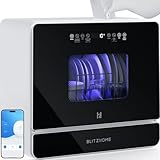
Overview:
The BLITZHOME WiFi Countertop Portable Dishwasher refines compact cleaning with family-focused features. At $369.99, it mirrors its sibling model but emphasizes the specialized Baby Care program—making it particularly attractive to parents of infants. This unit serves the same apartment, RV, and small kitchen market while adding hygiene peace of mind for sensitive family members.
What Makes It Stand Out:
Nine comprehensive programs include the standout Baby Care cycle with extended high-temperature washing for bottle sterilization. The 72-hour air refresh function maintains sterile conditions long after cycles complete—crucial for infant accessories. Like other BLITZHOME models, it offers true smart app control with scheduling, device sharing, and real-time monitoring, plus dual water supply modes for ultimate flexibility.
Value for Money:
Positioned identically to similar BLITZHOME models, the value proposition centers on specialized family features rather than general versatility. For parents, the Baby Care functionality alone justifies the premium over basic countertop units. Compared to separate bottle sterilizers ($50-100) plus a standard portable dishwasher, the integrated approach offers convenience and space savings worth the investment.
Strengths and Weaknesses:
Strengths include exceptional program variety, genuine smart features, family-focused hygiene functions, and flexible installation. The three spray arms and 167°F cleaning ensure thorough sanitization. Weaknesses mirror other countertop units: limited capacity, countertop space requirements, and a price approaching entry-level built-in models. The complexity of nine programs may overwhelm users wanting simplicity.
Bottom Line:
An excellent choice for young families in compact living situations. The Baby Care specialization adds unique value, while core performance matches full-featured portable models. Worth the investment if infant hygiene is a priority, otherwise consider more basic alternatives.
Why Smart Dishwashers Are a Game-Changer for Large Households
The jump from standard to smart dishwashers represents more than just Wi-Fi connectivity—it’s a fundamental shift in how the appliance serves your household. For large families running multiple loads daily, these machines transform from passive tools into active kitchen partners. Smart sensors detect how dirty your dishes are and adjust water usage accordingly, preventing the common problem of underwhelming cleaning after a messy breakfast or over-washing lightly soiled glasses.
Remote monitoring means you can start a load while at soccer practice and receive alerts when it’s done, eliminating that “did I run the dishwasher?” mental load. Perhaps most importantly for big families, smart diagnostics can predict filter clogs or spray arm issues before they cascade into full breakdowns—because a dishwasher failure doesn’t just mean hand-washing; it means a backlog that can take days to recover from.
Decoding Capacity: What Place Settings Really Mean for Your Family
Manufacturers love to tout “16 place settings” or “18 place settings,” but these numbers exist in a perfect-world laboratory setting that rarely matches reality. A place setting technically includes a dinner plate, dessert plate, soup bowl, glass, tea cup, and five pieces of cutlery. For large families, this metric becomes misleading because it doesn’t account for your actual usage patterns—mixing bowls, casserole dishes, toddler cups with lids, and the inevitable mountain of water bottles.
Real-world capacity for large families depends on rack flexibility more than the raw number. A true family-sized dishwasher needs vertical clearance for tall pots, horizontal space for baking sheets, and dedicated zones for awkward items. When evaluating capacity, mentally map your family’s dirtiest load—think Sunday dinner aftermath or post-baking chaos—and visualize whether the interior configuration can handle it without requiring a second cycle.
The 24-Inch vs. 18-Inch Debate for Large Families
While 24-inch models are the standard for family use, some households consider adding an 18-inch secondary unit. For families exceeding six members, this dual-dishwasher strategy can be revolutionary—one unit for daily dishes, another for bottles, prep dishes, and overflow. Smart features become even more valuable in this setup, allowing you to monitor and coordinate both units from a single app interface.
Must-Have Smart Features for High-Volume Dishwashing
Not all smart features deliver equal value for large families. Focus on capabilities that address volume and frequency challenges. Automatic door opening after cycles prevents condensation buildup when you’re running back-to-back loads. Load size detection ensures you’re not wasting water on half-empty runs during snack time. Cycle time estimation helps you plan kitchen workflows around real schedules, not guesswork.
Look for models with “favorite cycle” memory functions that can be activated with one touch or voice command—essential when multiple family members operate the machine. Leak detection with automatic shutoff provides crucial peace of mind in households where the dishwasher runs overnight or while everyone’s out. Zone-specific washing lets you target heavily soiled pots in the lower rack while gently cleaning delicate glasses above, maximizing efficiency.
App Connectivity and Remote Management: A Practical Overview
The difference between a gimmicky app and a genuinely useful one lies in its depth of control and reliability. Basic apps let you start cycles remotely; sophisticated ones allow you to customize every parameter—water temperature, number of rinses, drying intensity—and save these as family-specific presets. For large families, the ability to monitor cycle progress in real-time eliminates the “is it done yet?” kitchen traffic.
Push notifications should be customizable: alerts for cycle completion, rinse aid refills, filter cleaning reminders, and even “dishes clean for 2 hours” warnings when someone forgets to unload. Look for apps that track usage patterns over time, helping you identify your family’s peak dish-generating moments and optimize run schedules around electricity rate fluctuations. True smart integration means the dishwasher can notify you via smart speakers or displays, not just your phone.
Interior Configurations: Flexibility for Oversized Items
Large families don’t just generate more dishes—they generate bigger ones. Stock pots, roasting pans, and commercial-sized sheet trays become daily items that can cripple a poorly designed dishwasher. Smart models excel here with motorized or easily adjustable racking systems that don’t require engineering degrees to reconfigure.
Examine the fold-down tine patterns carefully. Can you create a wide-open lower rack for a Dutch oven without sacrificing all plate space? Do the upper rack’s stemware holders retract completely to accommodate reusable water bottles? Some advanced models feature split middle racks that let you lower one half for tall glasses while keeping the other half elevated for plates—perfect for mixed loads that large families constantly run.
Silverware Management Beyond the Basic Basket
The third-rack cutlery tray versus traditional basket debate intensifies with large families. Third racks free up lower rack space but can be cumbersome for serving spoons and toddler utensils. The sweet spot often lies in hybrid systems with a shallow third rack for knives and serving pieces plus a reduced-height basket for everyday cutlery. Smart dishwashers sometimes include adjustable dividers in these systems that automatically suggest optimal loading patterns through the app.
Third Rack vs. Adjustable Middle Rack: Making the Right Choice
This decision fundamentally shapes your loading strategy. Third racks maximize capacity for flat items and cutlery but steal vertical space from the middle rack. For families who primarily use plates and bowls, this trade-off works beautifully. However, if your household regularly cleans tall glasses, blender pitchers, or baby bottles, an adjustable middle rack that can be raised or lowered offers more versatility.
Some premium smart models feature both—a slim third rack for cutlery and a middle rack with 3-inch height adjustment range. The intelligence comes into play with sensors that detect rack positions and adjust water pressure accordingly. If you opt for a third rack model, ensure it has dedicated spray arms; otherwise, you’re essentially adding a shelf that blocks water from reaching dishes below.
Performance Benchmarks: What Cleaning Power Ratings Indicate
Cleaning performance metrics can be cryptic. Energy Star ratings focus on efficiency, not power. The key spec is wash arm design and water pressure delivery. Look for models with dedicated spray zones—separate water delivery systems for the upper, middle, and lower racks. This ensures that even when every rack is packed, each item receives adequate water force.
Soil sensors should detect not just presence of food particles but also type—starchy residues require different handling than protein-based messes. The best smart dishwashers learn from each cycle, refining their detection algorithms based on your family’s typical dirty dishes. Some models even display a “cleaning confidence” score post-cycle, so you know whether that lasagna pan truly got the treatment it needed.
Water and Energy Consumption: Efficiency at Scale
Large families face a unique paradox: you need to run more cycles, but each cycle must be maximally efficient to keep utility bills manageable. Smart dishwashers excel at micro-optimizations that compound across hundreds of cycles annually. Look for models that display real-time water usage per cycle in the app—this data helps you identify which family members are running half-empty loads and coach better habits.
Heat pump drying technology, while more expensive upfront, can reduce energy use by 50% compared to traditional heating elements. For households running 2-3 cycles daily, this pays for itself within 3-4 years. Smart grid integration is emerging as a killer feature, allowing your dishwasher to automatically run during off-peak electricity hours, potentially cutting energy costs by 30% in markets with time-of-use pricing.
Noise Levels: Decibel Ratings Explained for Open-Concept Homes
That 44 dB rating looks impressive on paper, but what does it mean during dinner cleanup while kids do homework at the kitchen island? The decibel scale is logarithmic, so a 42 dB machine is significantly quieter than a 46 dB one. For open-concept homes where the dishwasher runs during family time, aim for 42 dB or lower.
Smart features add nuance to noise management. Some models automatically delay the drain cycle if they detect conversation through built-in microphones. Others offer “quiet modes” that extend cycle times but reduce pump noise—perfect for running during family movie night. The app should display current noise output in real-time, so you know exactly when the loudest phases (draining, water fill) will occur.
Installation Requirements: Space, Plumbing, and Electrical
Large-capacity smart dishwashers often have different installation needs than standard models. The insulation required for quiet operation can add 1-2 inches to depth, potentially preventing door closure in tight kitchens. Smart water lines with leak detection sensors may require dedicated electrical outlets near the water connection point.
Check your hot water supply temperature—these units perform best with 120°F incoming water, but many large homes have tankless heaters set higher. Smart dishwashers can adjust, but you’ll waste energy. Some models include internal water heaters that boost temperature precisely, but this requires a dedicated 20-amp circuit rather than the standard 15-amp. For families planning dual dishwasher setups, ensure your electrical panel can handle two smart units simultaneously without tripping breakers.
Sensor Technology: How Auto Cycles Adapt to Your Load
The magic of smart dishwashers lies in their sensor arrays. Turbidity sensors measure water cloudiness to determine soil levels. Pressure sensors detect load size by measuring how water circulates. Advanced models add optical sensors that can identify residue types and even read QR codes on dishwasher-safe items to select optimal cycles.
For large families, this means you can load breakfast dishes, dinner pots, and baby bottles in the same cycle without pre-rinsing everything to a uniform soil level. The dishwasher automatically runs a pre-wash, analyzes the runoff, then customizes the main wash duration, temperature, and water changes. Over time, machine learning algorithms recognize that your household’s “normal” cycle on Tuesday evenings is lighter than Sunday mornings, adjusting default settings accordingly.
Maintenance Automation: Self-Cleaning and Diagnostic Features
Large families push dishwashers to their maintenance limits. Filters clog faster, spray arms collect debris more quickly, and seals wear from constant use. Smart maintenance features shift from reactive cleaning to predictive care. Automatic filter cleaning systems flush debris into the disposal, while spray arm monitoring detects reduced rotation speed indicating blockages.
The app should provide maintenance dashboards showing filter status, rinse aid levels, and even water hardness impact on performance. Some models run monthly self-diagnostic cycles that test every component and generate health reports. When issues arise, smart dishwashers can transmit error codes directly to manufacturer support, often diagnosing problems before a technician arrives. This predictive approach prevents the catastrophic failures that leave large families drowning in dirty dishes for days.
The True Cost of Ownership: Beyond the Purchase Price
That $1,200 smart dishwasher represents only 60% of its 10-year cost for a large family. Water, energy, detergent, and maintenance compose the rest. Calculate cost per cycle based on your actual usage—if you’re running 700 cycles annually versus a typical household’s 200, efficiency differences compound dramatically.
Smart features that extend component lifespan directly impact total ownership costs. Soft water sensors that adjust detergent dosing prevent premature pump failure. Load balancing algorithms reduce motor strain. Extended warranty programs that include annual professional servicing can be worth the premium for high-usage families. Factor in potential utility rebates—many municipalities offer $100-300 for smart, water-efficient models that connect to home energy management systems.
Smart Home Integration: Voice Control and Automation Routines
Voice commands like “start the dishwasher” are convenient, but true integration goes deeper. Link your dishwasher to your smart water heater to ensure optimal incoming temperature. Connect it to occupancy sensors so it runs only when the kitchen is empty, maximizing quiet efficiency. Integration with meal planning apps can trigger specialized cycles based on what you cooked—baked-on casseroles get intensive treatment while salad nights trigger quick eco cycles.
For families with smart energy monitors, the dishwasher can automatically schedule itself during solar panel peak production or lowest grid rates. Some systems even integrate with grocery delivery services, adding dishwasher detergent to your shopping list when the app detects low levels. The goal is creating a kitchen ecosystem where the dishwasher doesn’t just respond to commands but anticipates needs based on your family’s patterns.
Troubleshooting Common Large Family Dishwasher Challenges
Even the smartest dishwasher faces unique challenges in high-volume households. Dishes not drying properly often stems from overloading blocking steam release—smart sensors should detect this and extend drying time. Persistent odors indicate the filter needs attention more frequently than the standard 30-day recommendation; some apps now prompt cleaning every two weeks for heavy-use households.
White film on glasses typically means water softening issues. Advanced models can adjust regeneration cycles based on actual water hardness data from your smart home system. When family members complain about “clean” dishes still having residue, check whether the smart soil sensor is being fooled by pre-rinsing habits—teach your household to scrape, not rinse, for optimal sensor performance.
Warranty and Support: What Matters Most for Heavy Users
Standard warranties cover 1 year parts and labor, but large families should prioritize extended coverage specifically for pumps, seals, and control boards—the components that wear fastest under high-frequency use. Look for manufacturers offering 5-10 year warranties on racks and tub components, as these withstand constant loading.
Support quality becomes critical when you’re facing a backlog of 50+ dirty dishes. Prioritize brands with 24/7 smart diagnostic support that can remotely assess issues and overnight critical parts. Some premium programs include loaner units during major repairs—a lifesaver for families dependent on their dishwasher. Check whether the warranty requires professional installation; self-installation can void coverage on smart models with complex calibration needs.
Frequently Asked Questions
How many place settings do large families actually need?
For families of 6+, look for 16+ place settings as a baseline, but prioritize interior flexibility over raw numbers. Your real-world capacity depends more on rack adjustability and third-rack design than the stated place setting count. Families often find that a well-designed 16-place-setting model outperforms a cramped 18-place-setting unit.
Are smart dishwashers worth the premium for families on a budget?
The value proposition depends on your cycle frequency. If you’re running 2+ cycles daily, smart features that reduce water usage by 15% and energy by 20% typically pay for the $200-400 premium within 3 years. The predictive maintenance alone can prevent a $150 service call, making it financially sensible for high-usage households.
Can I run a smart dishwasher without using the app features?
Yes, all smart dishwashers function as traditional units via the control panel. However, you’ll lose access to usage analytics, maintenance reminders, and remote monitoring—the features that provide the most value for busy families. Consider starting with basic app functions and expanding as you become comfortable.
What’s the ideal cycle time for large family use?
There’s no universal answer. Normal cycles of 2-3 hours offer the best cleaning-to-energy ratio for full loads. However, smart dishwashers with 30-minute quick cycles for lightly soiled dishes prevent the “waiting for a full load” problem that leads to sink pile-ups. The best approach is having multiple viable cycle options.
How do I prevent my family from overloading the smart sensors?
Modern sensors are surprisingly resilient, but teach household members to avoid nesting bowls or stacking plates that block water spray. The app often includes loading guides with photos. Some advanced models even use interior cameras to detect poor loading and send gentle correction suggestions to your phone.
Do smart dishwashers require special detergent?
No, standard detergents work fine, but smart dosing features perform best with single-dose pods or automatic dispensers. Avoid bargain detergents with excessive fillers—they can confuse soil sensors. Many apps now recommend optimal detergent amounts based on your local water hardness and typical load composition.
Can smart dishwashers handle baby bottles and delicate items simultaneously?
Absolutely. Look for models with dedicated gentle zones or adjustable pressure settings. The smart feature here is separate water delivery systems that can apply gentle spray to the upper rack while power-washing pots below. Some units include specialized bottle wash jets in the upper rack that target baby bottles without subjecting them to lower-rack intensity.
What happens to smart features during a power outage?
Most models retain basic settings and resume cycles when power returns. Advanced units include battery backups that save cycle progress and send outage notifications to your phone. However, Wi-Fi connectivity obviously drops until your router reboots. Consider a smart dishwasher compatible with whole-home battery systems if outages are frequent.
How often should I clean the filter in a high-use smart dishwasher?
While standard recommendations suggest monthly cleaning, large families should clean filters every 10-14 days. Smart sensors will remind you, but proactive cleaning prevents performance degradation. The cleaning process takes 90 seconds and prevents the buildup that forces the dishwasher to work harder, extending its lifespan significantly.
Will my smart dishwasher become obsolete as technology advances?
Most manufacturers provide firmware updates for 5-7 years post-purchase, adding features and security patches. The core mechanical components remain relevant far longer. Focus on models with robust basic features and treat smart capabilities as valuable but secondary. The dishwasher should excel at cleaning first; connectivity is the enhancement, not the foundation.