Mornings in a busy household are a symphony of chaos—backpacks flying, breakfast negotiations escalating, and someone always yelling about being late. In that rush, security often becomes an afterthought. Did the kids lock the door on their way to the bus? Was it re-locked after the dog walker came? These aren’t just minor worries; they’re the kind of mental load that exhausts parents before noon. Smart locks with auto-lock timers don’t just eliminate that anxiety—they fundamentally transform how families interact with their homes, turning forgetfulness into a non-issue and giving you one less thing to orchestrate.
Unlike traditional locks that depend on human memory, auto-lock timers create a safety net that adapts to your family’s rhythm. Whether you’re juggling toddlers, teenagers, or aging parents who visit regularly, these intelligent systems ensure your door secures itself after a customizable interval. But not all auto-lock features are created equal, and families have unique needs that go beyond simple timer settings. This guide dives deep into what makes a smart lock truly family-friendly, helping you navigate the technical landscape without getting overwhelmed by jargon or marketing fluff.
Top 10 Smart Locks for Busy Families
Detailed Product Reviews
1. TEEHO TE012W WiFi Smart Lock, Fingerprint Door Lock with Built-in Wi-Fi, Keyless Entry Keypad Smart Deadbolt, App Remote Control, Alexa Compatible, IP55 Waterproof for Front Door – Satin Nickel

Overview: The TEEHO TE012W delivers comprehensive smart lock functionality at an accessible price point. This BHMA-certified deadbolt offers five entry methods and built-in WiFi connectivity, making it ideal for homeowners seeking reliable keyless entry without complexity. Its IP55 rating ensures durability across weather conditions, from snow to heavy rain.
What Makes It Stand Out: Built-in WiFi eliminates hub requirements, connecting directly to 2.4GHz networks for true remote access. The anti-peep PIN technology allows random digits before/after your real code, while automatic lockout after 10 failed attempts provides robust security. AES-128 encryption with local data storage addresses privacy concerns that plague cloud-dependent competitors, keeping your access data secure on-device.
Value for Money: At $55.99, this lock significantly undercuts premium brands while delivering core smart features. The eight-month battery life on AA batteries reduces maintenance costs. Compared to Bluetooth-only models requiring separate gateways, the integrated WiFi represents exceptional value for remote access capability without hidden expenses.
Strengths and Weaknesses: Pros: True built-in WiFi without hub; BHMA certification ensures durability; IP55 weather resistance; Strong encryption with local storage; Five versatile unlock methods; Anti-peep PIN protection Cons: Fingerprint capacity limited to 20 users; App ecosystem less established than major brands; No Z-Wave integration for advanced smart home setups
Bottom Line: The TEEHO TE012W offers outstanding value for budget-conscious buyers wanting full WiFi smart lock capabilities. It’s a reliable choice for single-family homes, though larger households may find its fingerprint limitations restrictive.
2. IBLOG Smart Lock, Fingerprint Keyless Entry Door Lock App Control, Electronic Touchscreen Keypad, Auto Locking, IP54 Weatherproof, Easy Install Digital Deadbolt for Front Door
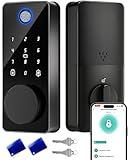
Overview: The IBLOG Smart Lock prioritizes affordability and versatility, offering Bluetooth-based smart functionality with optional WiFi expansion. This 5-in-1 lock caters to renters and homeowners seeking keyless convenience without premium pricing. Its adaptability makes it suitable for various property types, from apartments to single-family homes.
What Makes It Stand Out: The unlimited one-time PIN generation provides exceptional flexibility for guests and deliveries. Adaptive fingerprint technology learns and improves recognition over time, delivering consistent 0.3-second unlocking. The extensive auto-lock range (1-180 seconds) offers personalized security timing rarely seen in budget locks, accommodating everything from quick errands to extended loading times.
Value for Money: At $46.99, it’s the most economical option here. While requiring a separate G2 gateway for remote access adds cost, the base Bluetooth functionality covers most daily needs. This modular approach lets users pay only for features they require, making it ideal for cost-sensitive buyers who don’t need constant remote monitoring.
Strengths and Weaknesses: Pros: Extremely affordable; Unlimited one-time PINs; Adaptive fingerprint sensor; Flexible auto-lock timing; One-touch locking; Voice control ready Cons: No built-in WiFi (gateway sold separately); IP54 rating less robust than competitors; Fingerprint capacity not specified; Relies on Smart Life app ecosystem
Bottom Line: The IBLOG lock excels for budget-focused users comfortable with Bluetooth control. It’s perfect for rentals or secondary doors, but those needing reliable remote access should factor in the gateway cost before purchasing.
3. Philips Built-in WiFi Smart Lock + 2 Levels, Smart Locks for Front Door, Digital Keypad Deadbolt with Handle, Fingerprint, PIN Code, App Remote Control & Voice Unlock, Keyless Entry, Auto Locking
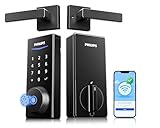
Overview: Philips brings its reputation for quality to the smart lock market with this feature-rich deadbolt. Designed for discerning homeowners, it combines robust security with sophisticated access management. The built-in WiFi and premium construction justify its higher price point, targeting users who trust established brands for critical home security.
What Makes It Stand Out: The 0.3-second fingerprint recognition stores up to 50 users—more than double most competitors. Hands-free voice control integrates seamlessly with Alexa and Google Assistant. Philips’ flexible PIN system includes periodic and recurring codes, perfect for regular service providers, dog walkers, or rental scenarios requiring scheduled access without manual intervention.
Value for Money: At $149.99, this lock commands a premium but delivers brand reliability and advanced features. The comprehensive app, superior fingerprint capacity, and refined user experience rival locks costing $200+. For those prioritizing brand trust and advanced scheduling capabilities, it offers strong ROI compared to similarly priced alternatives with fewer features.
Strengths and Weaknesses: Pros: Premium brand reputation; 50-fingerprint capacity; Multiple PIN types including recurring; Fast 0.3s recognition; Built-in WiFi; Professional app experience Cons: Highest price in comparison; No mention of weather rating; Limited to 2.4GHz WiFi; May be overkill for simple residential needs
Bottom Line: The Philips smart lock suits buyers seeking brand assurance and advanced features. It’s ideal for tech-savvy families and property managers who’ll leverage its sophisticated access scheduling and high user capacity.
4. OKIBB Smart Front Door Lock Set, Built-in WiFi, Keyless Entry Deadbolt with App Remote Control, Electronic Digital Touchscreen Keypad with Lever Handle, Fingerprint/Passcode/Fob/Key Unlock, Auto Lock

Overview: The OKIBB lock set distinguishes itself by including a coordinating handle, creating a unified front door aesthetic. This built-in WiFi lock balances functionality with design, storing up to 200 credentials. Its power-saving approach targets users wanting remote access without frequent battery changes, addressing a common smart lock frustration.
What Makes It Stand Out: WiFi activates only when the doorbell is pressed, significantly extending battery life—a clever solution to power drain issues. The massive 200-user capacity accommodates large families, small businesses, or multi-tenant properties. The included lever handle eliminates the need to match separate components, ensuring a cohesive look out of the box.
Value for Money: At $109.99 with integrated handle, it offers excellent component value. While the conditional WiFi activation may delay remote access by seconds, the trade-off for battery longevity benefits users prioritizing convenience over instant response. It competes well against buying lock and handle separately, saving $30-50.
Strengths and Weaknesses: Pros: Includes matching handle; 200-user capacity; Smart WiFi power management; Customizable auto-lock (5-60s); One-touch buttons; Door closure reminders Cons: WiFi only active when doorbell pressed; No IP rating mentioned; Shorter auto-lock range than some; Brand less recognized than Philips
Bottom Line: The OKIBB set excels for those wanting a complete hardware solution with minimal battery maintenance. It’s perfect for multi-user environments where immediate remote access isn’t critical but credential capacity is essential.
5. Fingerprint Smart Door Lock with Handle: Keyless Entry Keypad Lock for Front Door, Nyboer Electronic Digital Lock, Lockset Replacement for Exterior Doors

Overview: Nyboer’s one-piece lockset addresses aesthetic concerns by covering both deadbolt and handle holes with a single 9.25-inch panel. This design-forward approach simplifies installation on doors with existing double-hole configurations. The 7-in-1 functionality provides comprehensive access options for modern households and rental properties.
What Makes It Stand Out: The full-panel design eliminates patching and gap issues common when upgrading traditional locksets. It supports both single and double-hole installations, offering unmatched retrofit flexibility. The seven access methods include fobs and remote options, catering to diverse user preferences from tech-averse seniors to smartphone-dependent millennials.
Value for Money: At $149.99, the premium covers design innovation rather than brand name. For homeowners with double-hole doors, it saves significant installation effort and provides a clean, professional finish. However, requiring a separate WiFi gateway for remote access reduces its value proposition compared to built-in WiFi competitors at similar prices.
Strengths and Weaknesses: Pros: Seamless one-piece design; Covers double-hole installations; 7 unlock methods; Rental-friendly features; Flexible installation; Professional aesthetic Cons: WiFi gateway not included; No weather resistance rating; Fingerprint capacity unspecified; Brand recognition limited
Bottom Line: Nyboer is ideal for aesthetic-focused upgrades on double-hole doors. Choose it for rental properties or when appearance matters most, but budget for a gateway if remote access is essential for your use case.
6. Philips WiFi Keypad Door Lock with Handle, Built-in WiFi, APP Remote Control, Voice & Fingerprint Unlock, Smart Locks for Front Door with Auto Lock, Digital Front Door Lock Set, Keyless Entry Deadbolt
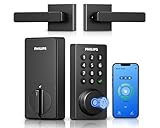
Overview: The Philips 4200 Series WiFi Door Lock brings reputable brand engineering to the keyless entry market with a built-in 2.4GHz WiFi connection that eliminates the need for additional hubs. This comprehensive smart deadbolt integrates fingerprint recognition, app-based management, and voice assistant compatibility into a single unit designed for modern households. The 0.3-second biometric access and sophisticated passcode system make it particularly suitable for families and Airbnb hosts who need flexible, reliable security.
What Makes It Stand Out: Philips distinguishes itself with enterprise-level access control features at consumer pricing. The versatile passcode framework supports permanent, one-time, periodic, and recurring PINs—offering granularity rarely seen outside commercial systems. Real-time monitoring through the Philips Home Access App delivers detailed entry logs and instant door status updates, providing exceptional oversight for property managers.
Value for Money: At $113.99, this lock occupies the middle ground between budget alternatives and premium offerings from Yale or Schlage. The price premium is justified by Philips’ quality assurance, robust app ecosystem, and dependable customer support. Similar feature sets from established brands typically retail for $150+, making this an intelligent value proposition.
Strengths and Weaknesses: Pros: True hub-free operation; Rapid fingerprint authentication; Superior passcode flexibility; Trusted manufacturer; Live access monitoring Cons: 2.4GHz-only WiFi limitation; App interface lacks polish; Battery specifications not advertised
Bottom Line: The Philips 4200 Series excels for users prioritizing brand reliability and versatile access management. Its rental-friendly features and solid construction make it a wise investment for property owners and security-conscious families.
7. Fingerprint Smart Deadbolt with Keypad – Keyless Entry Lock for Home, Apartment, Office, Airbnb, Rental, Kids & Seniors, App & Code Access, Auto-Lock, Easy DIY Install, Compatible with Alexa & Google

Overview: This versatile fingerprint smart deadbolt targets the DIY installation market with an impressive quintet of entry methods and tool-free setup. Engineered for rentals, apartments, and multi-generational homes, it offers fingerprint, keypad, smartphone app, fob, and traditional key access. The sub-$90 price point makes it highly accessible, though full remote functionality requires an optional Sifely Gateway.
What Makes It Stand Out: Five unlocking mechanisms and capacity for 100+ fingerprints and codes deliver remarkable flexibility at this tier. The screwdriver-only installation accommodates both left and right-handed doors without professional assistance. Security enhancements like anti-peep coding and privacy mode provide layers of protection uncommon in budget-friendly locks.
Value for Money: At $89.99, this lock delivers exceptional bang-for-buck. While premium brands charge double for comparable features, this model offers standalone operation or optional smart home integration via an affordable gateway. For Airbnb hosts, rental managers, and cost-conscious families, the feature-to-price ratio is compelling.
Strengths and Weaknesses: Pros: Highly affordable; Five-minute DIY installation; Multiple authentication methods; High user capacity; Rental-optimized features Cons: Remote access requires separate gateway purchase; Brand recognition limited; App experience is basic
Bottom Line: An outstanding entry-level smart lock that sacrifices minimal features for its attractive price. Accept the gateway compromise for remote management, and you’ll own a capable, economical security solution ideal for rental properties and smart home newcomers.
8. ULTRALOQ Bolt Smart Lock, Built-in Wi-Fi, Matter Over Thread, Works with Apple Home, Alexa, Google, 7-in-1 Keyless Entry Deadbolt with Fingerprint ID, App, Keypad, Remote Control, 18 Months Battery
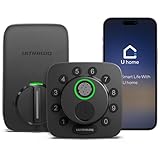
Overview: The ULTRALOQ Bolt represents bleeding-edge smart lock technology with Matter-over-Thread certification, ensuring seamless integration across Apple Home, Alexa, and Google ecosystems. Its 7-in-1 entry system and integrated WiFi provide comprehensive access options, while Thread networking delivers up to 18 months of battery life. Priced at $119.99, it bridges premium capabilities with mainstream accessibility.
What Makes It Stand Out: Matter compatibility is the defining feature—this lock avoids ecosystem lock-in through universal smart home standards. Thread’s low-power mesh architecture ensures reliable connectivity and exceptional energy efficiency. Managing 50 access codes and sharing eKeys remotely through multiple platforms establishes new interoperability benchmarks.
Value for Money: While costlier than basic models, the ULTRALOQ Bolt justifies its premium through future-proofing. As Matter becomes the universal smart home protocol, this lock remains compatible with emerging platforms. The 18-month battery lifespan reduces maintenance costs and inconvenience, delivering long-term value for tech-forward homeowners.
Strengths and Weaknesses: Pros: Matter/Thread native support; Industry-leading battery life; True cross-platform compatibility; Hub-free operation; Seven entry methods Cons: Higher initial investment; Thread requires compatible border routers; Setup complexity for novices
Bottom Line: For smart home enthusiasts committed to Matter standards, the ULTRALOQ Bolt is a forward-looking investment. Its universal compatibility and extended battery life make it a premium choice that will remain relevant as smart home technology evolves.
9. WiFi Fingerprint Smart Lock for Front Door - Keyless Entry Door Lock with Handle Set | No Bridge Required Electronic Digital Keypad Deadbolt with APP Control,Auto-Lock,USB-C Charging Port

Overview: This WiFi-enabled fingerprint smart lock prioritizes convenience with six entry methods and a rare USB-C emergency charging port—addressing dead battery anxiety directly. Built-in WiFi eliminates hub requirements, while 0.3-second biometric recognition ensures rapid access. At $100.03, it targets users seeking premium utility without flagship pricing.
What Makes It Stand Out: The USB-C charging port provides critical backup power, a feature absent from most competitors. Six unlocking options—including WiFi unlock, app control, fingerprint, touchscreen keypad, physical keys, and fobs—offer unmatched flexibility. QR video guides in the package demonstrate a customer-centric approach, simplifying installation for non-technical users.
Value for Money: Positioned between entry-level and premium tiers, this lock delivers compelling value. The USB-C port alone warrants the modest price increase over basic models. Combined with 18 months of warranty and round-the-clock customer support, total ownership costs remain low despite mid-range pricing.
Strengths and Weaknesses: Pros: USB-C emergency charging; Six versatile unlock methods; Hub-free design; Swift fingerprint sensor; Comprehensive warranty and support Cons: Manufacturer brand recognition unknown; App stability unverified; Lacks Matter protocol support
Bottom Line: A practical, user-focused smart lock ideal for households prioritizing backup access options. The USB-C charging capability provides peace of mind that competitors cannot match, making it perfect for users wanting reliable entry under any circumstances.
10. Veise VE027-K Built-in WiFi Smart Lock with 2 Knob, Fingerprint Keyless Entry Door Lock Handle Set for Front Door, App Remote Control, Electronic Digital Keypad Deadbolt, IP65 Waterproof, Satin Nickel
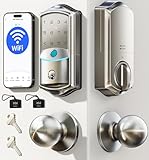
Overview: The Veise VE027-K smart lock merges affordability with exceptional durability, featuring an IP65 waterproof rating and eight entry methods—the most versatile in this comparison. Built-in 2.4GHz WiFi enables hub-free remote management, while 0.2-second fingerprint recognition delivers industry-leading speed. At $85.48, it challenges budget leaders while offering superior weather resistance.
What Makes It Stand Out: IP65 waterproofing ensures reliable operation in extreme weather conditions where standard locks fail. Eight authentication methods—including voice control, IC cards, and user authorization—provide unprecedented flexibility. Storing 100 custom passcodes plus unlimited one-time passwords makes it ideal for high-traffic households and short-term rental properties.
Value for Money: This lock redefines budget smart lock expectations. For under $86, you receive premium features like IP65 rating, extensive entry options, and robust app management typically found in $150+ models. The durability and versatility combination at this price point is exceptional, particularly for exterior doors exposed to harsh elements.
Strengths and Weaknesses: Pros: IP65 weatherproof rating; Eight entry methods; Ultra-fast 0.2s fingerprint; Outstanding affordability; Hub-free operation Cons: Brand establishment still building; Battery specifications not detailed; Long-term durability unproven
Bottom Line: The Veise VE027-K is the definitive choice for exterior doors facing weather exposure. Its waterproof rating and multiple authentication options make it a standout budget solution that refuses to compromise on features or environmental resilience.
Why Auto-Lock Timers Are a Game-Changer for Household Security
The psychological burden of door security disproportionately falls on parents. Auto-lock timers function like an invisible safety partner, automatically engaging the deadbolt after a predetermined period—typically ranging from 10 seconds to 30 minutes. For families with children who come and go independently, this feature eliminates the risk of an accidentally unlocked door becoming an invitation to trouble. More importantly, it removes the need for constant vigilance, allowing you to focus on actual family moments rather than security checks.
Understanding How Auto-Lock Technology Actually Works
Auto-lock functionality relies on a combination of position sensors, motor-driven deadbolts, and intelligent timing algorithms. When the door closes, a sensor detects the shut position and triggers a countdown timer. Advanced models incorporate gyroscopes and accelerometers to confirm the door is properly aligned before extending the bolt. This prevents the lock from engaging prematurely against a misaligned door frame—a common issue in older homes where doors settle over time. Understanding this mechanism helps you evaluate whether a lock’s auto-lock feature is robust enough for your specific door conditions.
Key Security Certifications That Matter for Families
Beyond convenience, security ratings tell you how well a lock withstands forced entry. Look for ANSI/BHMA Grade 1 or Grade 2 certifications—these indicate the lock has been tested against picking, drilling, and kick-in attempts. For families, Grade 2 offers an excellent balance of residential security and cost-effectiveness. Additionally, verify the lock uses AES 128-bit or higher encryption for digital communications. Some manufacturers also undergo UL testing for fire safety, ensuring the lock doesn’t jam during emergencies when you need to exit quickly.
Installation Realities: Will It Fit Your Door?
Before falling in love with any smart lock, measure your door’s thickness (standard is 1-3/8" to 2"), backset distance (2-3/8" or 2-3/4"), and existing deadbolt bore hole diameter. Many smart locks require a minimum door thickness to accommodate the motor housing. If you have a mortise-style lock or an integrated handle-deadbolt combo, your options may be limited. Check whether the auto-lock mechanism requires a specific strike plate depth—some need deeper recesses to prevent the bolt from grinding against the plate during automatic engagement.
Power Management: Battery Life with Auto-Lock Enabled
Auto-lock features are the biggest battery drain on smart locks, as the motor engages multiple times daily. Most family-use locks require battery changes every 6-12 months with auto-lock active. Lithium batteries outperform alkaline by 40% in cold weather and provide more consistent voltage as they deplete. Look for locks with dual power sources—some offer 9V battery terminals on the exterior for emergency jump-starts. Pro tip: Enable “battery saver” modes that reduce LED brightness and notification frequency to extend life between changes.
Connectivity Protocols: Choosing Your Family’s Digital Backbone
Wi-Fi enabled locks provide remote auto-lock control and real-time notifications but consume more power. Bluetooth-only models offer longer battery life but require you to be within 30 feet to adjust settings. Z-Wave and Zigbee locks create mesh networks through a central hub, providing reliability even during internet outages. For future-proofing, investigate Matter-compatible locks—the emerging standard promises seamless integration across Apple, Google, and Amazon ecosystems without hub dependency. Your choice affects whether teenagers can receive auto-lock alerts on their phones or only primary account holders.
Mobile App Management for Multi-User Households
The companion app becomes your family’s command center. Evaluate whether it supports multiple admin users—crucial for two-parent households. Can you create geofenced auto-lock rules that adjust timing based on who’s home? The best family apps offer activity logs showing which user code triggered an unlock, when auto-lock engaged, and if any failed attempts occurred. Look for customizable notifications: you might want instant alerts for auto-lock failures but only daily summaries for successful locks. Some apps even integrate with family calendars, automatically extending auto-lock delays on cleaning service days.
User Access Hierarchies: From Toddlers to Teenagers
While toddlers can’t use keypads, older children need age-appropriate access methods. Consider locks offering multiple credential types: PIN codes for teens, key fobs for younger kids, and smartphone access for adults. The auto-lock timer should reset differently based on user—perhaps a 2-minute delay for your teen’s code but immediate lock after the dog walker’s one-time code. Advanced systems let you schedule access windows (weekdays 3-4 PM for the kids) with auto-lock forced at the window’s end. This prevents teenagers from disabling auto-lock for late-night sneaking.
Smart Home Integration That Actually Simplifies Life
A truly family-friendly smart lock talks to other devices. When your security system arms, the lock should verify auto-lock status. Integration with video doorbells can trigger auto-lock if motion is detected and the door remains unlocked. Voice assistants should allow you to ask “Is auto-lock enabled?” without opening an app. The most sophisticated setups create routines: when the last family member’s phone leaves the geofence, verify auto-lock is set to 30 seconds; when anyone returns, extend it to 5 minutes for unloading groceries.
Weather Resistance for All-Season Reliability
Families need locks that perform in extreme conditions. Check IP ratings—IP65 means dust-tight and water-resistant from rain, crucial for unprotected doors. Operating temperature ranges matter: -22°F to 150°F covers most climates. In coastal areas, look for marine-grade stainless steel internals to prevent salt corrosion. Cold weather affects battery performance and motor speed; some locks automatically adjust auto-lock timing in low temperatures to ensure full bolt extension. UV-resistant finishes prevent touchscreen keypads from cracking and becoming unreadable after two summers.
Aesthetic Considerations That Don’t Compromise Function
Your lock should match your home’s style without sacrificing features. Slim-profile designs work better on doors with narrow stiles. Touchscreen keypads offer sleek looks but can be finicky with wet fingers—crucial for rainy climates. Traditional button keypads provide tactile feedback for kids and work with gloves. Consider visibility: backlit keypads should have adjustable brightness so they don’t become a neighborhood beacon at night. The auto-lock indicator light should be subtle enough for curb appeal but visible enough for quick status checks.
Privacy and Data Security in the Connected Home
Your lock knows when your family comes and goes—valuable data that needs protection. Investigate whether the manufacturer uses end-to-end encryption and offers local data storage options. Some locks store access logs only on the device, syncing to the cloud only when you manually request it. Review privacy policies for data retention periods and third-party sharing. For families, locks that comply with COPPA (Children’s Online Privacy Protection Act) provide extra assurance that your kids’ usage patterns aren’t being monetized.
Total Cost of Ownership Beyond the Purchase Price
Budgeting for a smart lock means looking past the sticker price. Factor in potential hub costs ($50-$150) if choosing Z-Wave/Zigbee. Some manufacturers charge subscription fees for advanced auto-lock scheduling or extended activity history. Professional installation runs $100-$200 if your door needs modification. Calculate battery costs: premium lithium cells might add $15 annually but prevent mid-winter failures. Some insurance companies offer 5-10% discounts for smart locks with auto-lock—contact your provider to see if the feature qualifies.
Troubleshooting Auto-Lock Failures Before They Frustrate You
The most common auto-lock problems stem from door alignment. A sagging door or loose hinges prevent the sensor from detecting a proper close. Seasonal wood swelling can cause the bolt to scrape, triggering auto-lock aborts. Learn to interpret error codes: three beeps might mean obstruction, while a red flash could indicate low battery insufficient for motor torque. Keep your door’s strike plate adjusted and consider smart locks with “learn mode” that calibrates auto-lock force based on your door’s resistance profile.
Future-Proofing Your Investment Against Technology Shifts
Smart home technology evolves rapidly. Choose locks with over-the-air firmware update capabilities and a manufacturer track record of supporting products for 5+ years. Modular designs allow you to replace the interior component while keeping the exterior hardware, preserving your finish investment. Look for locks with “protocol bridge” capabilities—devices that can switch between Bluetooth, Thread, and Wi-Fi through software updates. This prevents your auto-lock timer from becoming obsolete when your current hub standard fades.
Professional Installation vs. DIY: Making the Right Call
While many smart locks boast 15-minute DIY installation, families often benefit from professional assessment. A locksmith can identify pre-existing door issues that will sabotage auto-lock reliability. They’ll ensure proper deadbolt alignment and may reinforce your door frame—a critical upgrade if auto-lock’s motor force is stronger than your manual turning pressure. DIY makes sense if you’re comfortable with a screwdriver and your door is relatively new. However, if you need to drill new holes or your door has a non-standard thickness, professional installation prevents warranty-voiding mistakes.
Warranty and Support: Your Safety Net
Family life is hard on hardware. Look for warranties covering at least 2 years of mechanical defects and 1 year of electronic components. Some premium brands offer “no-fault” warranties that cover damage from normal family wear—like kids hanging on the lever. Evaluate support channels: 24/7 phone support matters when auto-lock fails at 11 PM. Check user forums and Reddit communities for real-world responsiveness. Companies that provide advanced replacement units minimize your home’s vulnerability during warranty claims.
Frequently Asked Questions
What happens if the auto-lock engages while someone is still inside? Most smart locks detect interior manual thumb-turn movement and abort auto-lock if the door is actively being operated. You can also press any interior button or hold the thumb-turn to disable the countdown temporarily. Always test this feature during installation to ensure family members can’t get accidentally locked inside.
Can auto-lock timers be disabled temporarily for gatherings? Yes, quality smart locks allow you to disable auto-lock through the app for specified durations—perfect for parties where guests frequently step outside. Some locks automatically re-enable after 24 hours to prevent you from forgetting. Voice commands like “disable auto-lock for two hours” work with integrated assistants.
How do auto-lock timers work with children who come home from school? Program unique codes for each child with extended auto-lock delays (5-10 minutes) to give them time to unload backpacks before the door secures. You’ll receive notifications when their code is used, confirming arrival. Some locks can trigger different auto-lock timers based on which user code was entered last.
Will auto-lock work during a power outage? Smart locks run on batteries, so power outages don’t affect auto-lock functionality. However, Wi-Fi connectivity drops, preventing remote notifications or schedule changes. Bluetooth and Z-Wave locks continue normal operation locally. Keep spare batteries charged, as outages often coincide with extreme weather that increases door usage.
Can I set different auto-lock timers for different times of day? Advanced locks support time-based rules: shorter timers (30 seconds) during nighttime hours for security, longer timers (5 minutes) during after-school hours for convenience. This requires either a Wi-Fi connection or a smart home hub. Basic Bluetooth models typically offer only a single global timer setting.
What if my door doesn’t close properly—will it still auto-lock? Smart locks with position sensors won’t auto-lock if the door isn’t fully shut. However, a slightly ajar door might still register as “closed” if sensors are misaligned. Some locks include “door ajar” alerts that notify you if the door remains slightly open after an unlock. Regular door maintenance prevents this issue.
Are auto-lock timers secure against burglars? Auto-lock actually enhances security by eliminating human error. However, burglars may attempt to jam the bolt mid-extension. Quality locks detect obstruction and retract, alerting you to tampering. Never set auto-lock timers longer than 5 minutes in high-traffic areas, as this creates a vulnerability window.
How often will I need to replace batteries with auto-lock enabled? Expect 6-9 months with alkaline batteries and 12-18 months with lithium, assuming 10-15 auto-lock cycles daily. Heavy family use with kids constantly coming and going can reduce this by 30%. Enable battery optimization features and disable unnecessary LED animations to maximize life.
Can I control auto-lock settings when I’m traveling internationally? Wi-Fi locks allow global control through cloud servers. Ensure your lock’s manufacturer has servers in your region for reliable access. Some countries block smart home services—verify compatibility before travel. Set up a trusted family member as a secondary admin who can adjust settings locally if cloud access fails.
Do auto-lock timers affect my home insurance premiums? Many insurers offer discounts of 5-15% for smart locks with auto-lock, viewing them as burglary deterrents. Provide your insurance company with the lock’s ANSI grade certification and auto-lock documentation. Some require professional installation documentation to qualify. Always confirm discount eligibility before purchasing.