Picture this: it’s the height of summer, your patio bar is buzzing with friends, and instead of constantly running inside to grab another round, you’re pulling perfectly chilled, expertly carbonated draft beer with the tap of a finger—or even a voice command. That’s the magic of a smart outdoor kegerator, the ultimate fusion of convenience, technology, and serious entertaining prowess. These aren’t your college-era keg boxes; they’re sophisticated appliances engineered to withstand the elements while connecting seamlessly to your smart home ecosystem.
But here’s the reality check: choosing the right smart outdoor kegerator for your patio bar involves far more than picking the shiniest model with the most bells and whistles. From understanding IP ratings and compressor types to navigating the labyrinth of smart features that actually matter versus gimmicks that’ll collect digital dust, the landscape is complex. This guide cuts through the noise, giving you the expert-level insights you need to make a decision that’ll have you pouring perfect pints for years to come—without the buyer’s remorse that comes from overlooking critical details.
Top 10 Smart Outdoor Kegerators for Patio Bars
Detailed Product Reviews
1. HCK Kegerator, 24 Inch Outdoor Kegerator for Patio with 3 Taps, Full Size Beer Dispenser and Beverage Refrigerator with Auto Defrost & Reversible Stainless Steel Door, Ideal for Home Bars
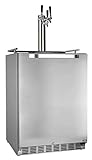
###1. HCK Kegerator, 24 Inch Outdoor Kegerator for Patio with 3 Taps, Full Size Beer Dispenser and Beverage Refrigerator with Auto Defrost & Reversible Stainless Steel Door, Ideal for Home Bars
Overview: The HCK 24-Inch Outdoor Kegerator delivers impressive versatility for patio entertainment and home bars. This 3-tap system accommodates one full-size, two quarter, or three sixth-barrel kegs, and converts to a refrigerator holding 161 cans. With a temperature range of 32-50°F and auto-defrost functionality, it maintains optimal beverage conditions in outdoor environments.
What Makes It Stand Out: The 2-in-1 conversion capability sets this unit apart, offering year-round utility beyond beer dispensing. The triple-tap system serves multiple brews simultaneously, perfect for entertaining. Auto-defrost and power outage temperature recovery ensure consistent performance without manual intervention. The included complete kit—D-system tap, guard rail, drip tray, casters, and shelves—eliminates additional purchases.
Value for Money: At $1,699.99, this kegerator positions itself in the mid-range category while offering premium features. The 3-tap configuration and refrigerator conversion provide exceptional flexibility that many competitors lack. Comparable single-tap units often cost only slightly less, making this a smart investment for serious entertainers.
Strengths and Weaknesses: Strengths include versatile 2-in-1 design, triple-tap dispensing, complete accessory package, mobility with locking casters, and solid warranty coverage (1-year parts, 3-year compressor). Weaknesses are the 24-hour initial setup requirement and that kegs are not included. Some users may find the stainless steel finish requires regular maintenance to prevent outdoor wear.
Bottom Line: Perfect for homeowners who entertain frequently and value versatility. The HCK kegerator’s ability to switch between kegerator and refrigerator modes, combined with triple-tap dispensing, makes it an excellent choice for dynamic outdoor spaces.
2. Bull Outdoor Products Outdoor Rated Kegerator – 304 Stainless Steel Single Tap Beer Fridge with Digital Temperature Control, Front Venting, and Locking Door – Built-In or Freestanding

Overview: The Bull Outdoor Products Kegerator represents premium engineering in outdoor beverage dispensing. Constructed entirely from 304 stainless steel inside and out, this single-tap unit withstands harsh weather while maintaining precise temperature control from 32-50°F. ETL, DOE, and CE certifications validate its year-round outdoor capability.
What Makes It Stand Out: Uncompromising 304 stainless steel construction ensures exceptional corrosion resistance and longevity. The digital thermostat provides precise temperature management, while dual-fan front venting enables seamless built-in or freestanding installation. The locking door adds security in shared outdoor spaces.
Value for Money: At $2,790.22, this is a premium investment justified by professional-grade materials and certifications. While significantly pricier than entry-level models, the all-stainless construction eliminates rust concerns that plague lesser units. For outdoor kitchens where durability is paramount, the cost reflects long-term value.
Strengths and Weaknesses: Strengths include superior 304 stainless construction, outdoor certifications, flexible front-venting design, precise digital controls, and security features. The primary weakness is the single-tap configuration, limiting variety for entertainers. The premium price may deter budget-conscious buyers, and the lack of conversion accessories reduces versatility.
Bottom Line: Ideal for discerning buyers prioritizing durability and weather resistance over capacity. This Bull kegerator excels in harsh climates and high-end outdoor kitchens where performance and longevity justify the premium price tag.
3. Kegco 15" Wide Single Tap Stainless Steel Built-In Outdoor Commercial Kegerator HK-15-SS

Overview: The Kegco 15-Inch Outdoor Kegerator offers commercial-grade performance in a space-saving design. At under 15 inches wide, this unit fits compact outdoor kitchens while accommodating 5-gallon Sankey or homebrew kegs. The stainless steel construction and all-stainless contact components ensure durability and beverage integrity.
What Makes It Stand Out: Its narrow 15-inch width makes it uniquely suitable for space-challenged environments where standard 24-inch units won’t fit. The commercial-grade designation promises robust performance, while 100% stainless contact components prevent flavor contamination and resist corrosion in outdoor settings.
Value for Money: Priced at $1,169.44, this represents one of the most affordable entries into outdoor kegerators. The commercial build quality at this price point is impressive, though the single-tap configuration and limited capacity reflect the cost savings. For small-scale dispensing, it delivers professional features without premium pricing.
Strengths and Weaknesses: Strengths include compact footprint, commercial-grade construction, stainless contact components, and attractive pricing. Weaknesses are limited to single-tap dispensing and 5-gallon capacity, restricting output for large gatherings. The narrow design may not accommodate larger keg formats, and accessories like CO₂ tanks require separate purchase.
Bottom Line: An excellent choice for compact spaces and homebrew enthusiasts. The Kegco 15-inch model proves that commercial quality doesn’t require commercial-sized footprints or budgets, making it ideal for smaller outdoor entertaining areas.
4. Bull Outdoor Products Premium Components for Outdoor Kitchen BBQ Island Finishing Frame for Kegerator with Reveal
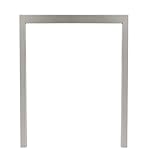
Overview: The Bull Stainless Steel Finishing Frame transforms a functional kegerator into a polished outdoor kitchen centerpiece. Designed specifically for Bull kegerators, this reveal-style frame creates seamless integration within BBQ islands and outdoor bars, elevating aesthetic appeal while maintaining durability. It bridges the gap between appliance and cabinetry.
What Makes It Stand Out: The innovative reveal design adds architectural sophistication that standard trim kits lack. Meticulously crafted from high-quality stainless steel, it provides a professional, built-in appearance that masks gaps and creates clean lines. This frame turns an appliance into a design element, enhancing the entire outdoor entertainment area’s cohesion.
Value for Money: At $119.00, this finishing frame represents a modest investment for significant visual impact. While purely cosmetic, it completes the high-end outdoor kitchen look that can increase overall entertainment space value. For Bull kegerator owners, it’s the difference between installed and integrated.
Strengths and Weaknesses: Strengths include premium stainless steel construction, modern reveal aesthetic, seamless integration, and brand-specific precision fit. The primary weakness is exclusivity to Bull kegerators, limiting compatibility. It adds no functional performance, representing pure aesthetic cost. Installation may require professional help for perfect alignment.
Bottom Line: Essential for Bull kegerator owners seeking professional outdoor kitchen aesthetics. This frame delivers designer-level finishing touches that justify its price, transforming a standard installation into a custom-built appearance worthy of luxury outdoor spaces.
5. EdgeStar KC1500SSOD 15" Built-In Outdoor Kegerator

Overview: The EdgeStar KC1500SSOD 15-Inch Built-In Outdoor Kegerator combines advanced cooling technology with compact design. This single-tap unit employs forced-air refrigeration to maintain consistent temperatures from keg to tap, while front ventilation enables seamless undercounter installation. Digital controls and soft LED interior lighting enhance both functionality and efficiency.
What Makes It Stand Out: Forced-air cooled beer tower technology ensures the entire dispensing system maintains uniform temperature, eliminating warm spots that cause excessive foam. The soft LED lighting illuminates contents without heat generation, preserving temperature stability. Front ventilation design maximizes installation flexibility in tight outdoor kitchen configurations.
Value for Money: At $1,529.00, this EdgeStar model positions itself in the mid-range for compact outdoor kegerators. The advanced cooling system and LED lighting justify the premium over basic models, though single-tap configuration limits output. For those prioritizing pour quality and temperature consistency, the features deliver strong ROI.
Strengths and Weaknesses: Strengths include superior forced-air cooling, digital temperature precision, heat-free LED lighting, flexible front-venting installation, and compact footprint. Weaknesses include single-tap limitation and restricted capacity due to 15-inch width. The unit may require additional accessories for complete setup, increasing total investment.
Bottom Line: An excellent performer for space-conscious buyers who refuse to compromise on pour quality. The EdgeStar’s forced-air system and thoughtful design make it ideal for smaller outdoor kitchens where temperature consistency and installation flexibility are paramount.
6. EdgeStar BR7001SSOD Full Size Built-In Outdoor Kegerator Conversion Refrigerator Only - Stainless Steel

Overview: The EdgeStar BR7001SSOD is a specialized outdoor-rated kegerator conversion refrigerator engineered for built-in installations. With front ventilation and a temperature range of 32-60°F, this unit serves as the foundation for a custom draft beer system in outdoor kitchens. The stainless steel construction ensures durability against elements, while included casters provide mobility for flexible placement.
What Makes It Stand Out: This unit’s front-venting design allows seamless integration into outdoor kitchen islands without overheating concerns. The extensive keg configuration flexibility accommodates everything from full-size commercial kegs to multiple Cornelius homebrew kegs. The interior fan specifically directs cold air to cool the tower—a critical feature preventing foamy pours in outdoor heat that lesser units miss.
Value for Money: At $1,739, this premium investment targets serious enthusiasts. While expensive compared to indoor units, the outdoor rating and built-in capability justify costs for dedicated outdoor kitchens. Note this is a conversion unit only; taps, lines, and CO2 systems must be purchased separately, adding $300-500 to the total investment.
Strengths and Weaknesses:
- Front ventilation for built-in applications
- True outdoor-rated construction
- Versatile keg configurations
- Safety lock and casters included
- Interior tower cooling fan
- Expensive for conversion-only unit
- Taps and draft components not included
- Curbside delivery only with phone requirement
- Limited to 120-watt power draw
Bottom Line: Ideal for custom outdoor kitchen projects, the BR7001SSOD delivers professional-grade cooling performance and flexibility, but budget for complete tap system components and professional installation.
7. EdgeStar KC7000SSODTRIP Full Size Tower Cooled Triple Tap Built-In Outdoor Kegerator - Stainless Steel

Overview: The EdgeStar KC7000SSODTRIP represents a complete professional outdoor kegerator solution with triple tap capability. This all-in-one unit includes everything needed for serving three different beers simultaneously in outdoor environments. The front-venting design and tower cooling system ensure consistent pours, while the reinforced stainless steel floor handles heavy kegs with ease.
What Makes It Stand Out: Triple tap configuration with active tower cooling distinguishes this model, allowing three distinct beers at optimal temperature. The air-cooled beer tower prevents line warming—a common issue in outdoor setups. The package includes all draft components, drip tray, guard rail, and professional handle, eliminating guesswork for installation.
Value for Money: Priced at $2,269, this premium unit commands significant investment but includes $400-600 worth of tap hardware. For outdoor entertainment enthusiasts wanting variety without piecing together components, the convenience justifies the cost. Comparable commercial units cost 30-40% more.
Strengths and Weaknesses:
- Complete triple tap system included
- Active air-cooled tower technology
- True outdoor-rated construction
- Professional-grade stainless steel cabinet
- Multiple keg configuration options
- Highest price point in consumer market
- Complex initial setup required
- Curbside delivery limitations
- Requires dedicated 120V outlet
Bottom Line: The KC7000SSODTRIP is the ultimate outdoor entertaining centerpiece for beer aficionados seeking professional quality and variety, delivering exceptional performance despite its premium price tag.
8. Keter Pacific Cool Bar Outdoor Patio Furniture and Hot Tub Side Table with 7.5 Gallon Beer and Wine Cooler, Dark Grey
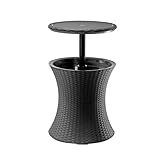
Overview: The Keter Pacific Cool Bar cleverly combines outdoor furniture with beverage cooling functionality. This hybrid design functions as both a stylish side table and a hidden 7.5-gallon cooler, accommodating up to forty 12-oz cans. The pop-up mechanism raises the lid 10 inches, transforming it into a convenient bar height table perfect for poolside or hot tub use.
What Makes It Stand Out: Dual-purpose functionality defines this product—seamlessly transitioning from coffee table to cooler to bar height serving station. The weather-resistant resin construction mimics rattan while avoiding rust, peeling, or denting issues. The built-in drainage plug simplifies post-party cleanup significantly compared to traditional coolers.
Value for Money: At $66.82, this represents exceptional value for versatile outdoor furniture with integrated cooling. Comparable patio tables cost $50-80 without cooling capability, making the beverage function essentially free. It’s an accessible entry point for casual entertainers not ready to invest in powered refrigeration.
Strengths and Weaknesses:
- Innovative dual-purpose design
- Excellent weather resistance
- Easy drainage system
- Lightweight and portable
- Attractive rattan-look aesthetic
- Limited 7.5-gallon capacity
- No active cooling—relies on ice
- Lid requires manual lifting
- Not suitable for large gatherings
- Ice melts relatively quickly
Bottom Line: Perfect for small patios and casual entertaining, the Pacific Cool Bar delivers surprising versatility and value, though serious hosts will need supplementary cooling for larger events.
9. Keter Outdoor Rolling Patio Cooler and Insulated Beverage Cart 89.8 Quart Capacity with Fold Down Shelf for Glassware with Built in Bottle Opener

Overview: The Keter Rolling Patio Cooler is a mobile beverage station designed for large-scale outdoor entertaining. With 89.8-quart capacity and thoughtful features like a built-in bottle opener and fold-down glassware shelf, this cart prioritizes serving convenience. The swiveling wheels with locks provide excellent mobility across patios and decks.
What Makes It Stand Out: Mobility combined with substantial capacity distinguishes this unit from static coolers. The multi-position divider organizes different beverages, while dual fold-out side shelves create expanded serving space. The Evotech resin composite construction convincingly resembles wood without maintenance concerns, elevating aesthetic appeal beyond typical plastic coolers.
Value for Money: At $361.99, this sits in the mid-range for large-capacity coolers. While pricier than basic plastic coolers, the mobility features, serving accessories, and furniture-grade appearance justify the premium. Comparable metal rolling coolers cost $450-600 but offer better insulation for extended ice retention.
Strengths and Weaknesses:
- Large 89.8-quart capacity
- Excellent mobility with locking wheels
- Built-in bottle opener convenience
- Fold-down shelves for serving
- Attractive wood-look resin construction
- Not heavily insulated for extended ice retention
- Plastic wheels may wear on rough surfaces
- Divider system limits irregular-sized items
- Assembly required
- Drain plug placement could be better
Bottom Line: An excellent choice for mobile entertaining at large gatherings, this Keter cooler balances capacity, mobility, and style, though its insulation performance won’t match premium metal alternatives.
What Exactly Is a Smart Outdoor Kegerator?
Let’s start with the fundamentals. A smart outdoor kegerator is a weather-resistant draft beer dispensing system that integrates IoT (Internet of Things) connectivity, allowing you to monitor and control functions remotely via smartphone apps, voice assistants, or home automation platforms. Unlike standard indoor kegerators, these units feature reinforced insulation, corrosion-resistant components, and sealed electrical systems designed to handle humidity, temperature swings, and occasional splashes. The “smart” element transforms a simple cooling box into a data-driven beverage management system that tracks consumption, monitors CO2 levels, and alerts you to maintenance needs before they become catastrophic failures.
Why Your Patio Bar Needs a Smart Kegerator
The shift from traditional to smart outdoor kegerators represents more than just technological flexing—it’s about elevating your entire entertaining experience while reducing the cognitive load of manual management. Imagine receiving a notification that your keg is running low before your party runs dry, or adjusting the temperature from your lounge chair when the afternoon sun hits your patio. These units eliminate the guesswork that plagues conventional setups, where foamy pours, temperature fluctuations, and mysterious CO2 leaks can ruin an otherwise perfect gathering. For the serious patio bar enthusiast, smart features aren’t luxuries; they’re insurance policies against the most common draft system disasters.
Essential Features That Define Premium Smart Kegerators
Temperature Control Precision
The difference between a mediocre pour and a perfect pint often comes down to a single degree. Premium smart outdoor kegerators utilize digital thermostats with accuracy within ±1°F, compared to the ±3-5°F swing common in basic models. Look for units offering dual-zone temperature control if you plan to dispense different beer styles simultaneously—lagers demand 38-40°F while stouts shine at 42-45°F. The smart component means you can program temperature schedules that automatically adjust for day versus night service, or even sync with outdoor temperature sensors to compensate for heat waves.
Connectivity and Smart Home Integration
Not all “smart” labels are created equal. True smart outdoor kegerators offer native integration with major platforms like Apple HomeKit, Google Home, and Amazon Alexa, plus dedicated apps that don’t require a computer science degree to navigate. Bluetooth-only connectivity is a red flag—it limits your range to roughly 30 feet, defeating the purpose of remote monitoring. Wi-Fi enabled units with cloud connectivity let you check status from anywhere, receive push notifications, and even share access with family members or bar staff. Check for Matter protocol support, the emerging standard that ensures your investment won’t become obsolete as smart home ecosystems evolve.
Weatherproofing and Outdoor Durability
This is where outdoor-specific engineering separates the wheat from the chaff. Look for IPX4 ratings minimum, which guarantees protection from water splashes from any direction. Premium units boast IPX5 or higher, handling direct water jets—essential if your patio bar lacks overhead coverage. The chassis should be 304-grade stainless steel, not the cheaper 430-grade that rusts when exposed to coastal air or pool chemicals. Inspect door seals: they should be automotive-grade rubber with magnetic closures, not flimsy fridge strips. Internal components like evaporator coils should be coated with anti-corrosion treatments specifically formulated for outdoor HVAC applications.
Capacity Considerations for Your Entertaining Style
Smart features amplify the importance of capacity planning. A 24-inch unit typically houses one full-size (½ barrel) keg or multiple smaller Sixth Barrel (5.16 gallon) kegs. If your patio bar sees regular multi-keg parties, consider 36-inch models that accommodate two full-size kegs with independent temperature zones. The smart advantage? Inventory tracking becomes exponentially more valuable with multiple kegs, letting you monitor which beers are flowing fastest and adjust orders accordingly. Don’t forget to factor in CO2 tank storage—integrated compartments keep everything contained, but reduce keg space slightly.
Installation Requirements: What You’re Really Getting Into
Electrical and Power Considerations
Your standard 15-amp outdoor outlet won’t cut it for most smart outdoor kegerators. These units require dedicated 20-amp circuits with GFCI protection, and many larger models need 220V service. The smart components—Wi-Fi modules, digital displays, sensors—add 10-15% to power consumption versus non-smart models. During installation, consider adding a smart outlet or energy monitor before the kegerator to track real-time power draw and detect anomalies that might indicate compressor issues. Pro tip: install a battery backup (UPS) for the control board; a power flicker can wipe out your temperature settings and require a complete recalibration.
Ventilation and Clearance Needs
Smart outdoor kegerators generate more heat than you expect—up to 300 BTUs per hour in direct sunlight. Manufacturers typically specify 2-3 inches of side clearance and 4-6 inches of rear clearance, but outdoor installations demand more. In enclosed patio bars or outdoor kitchens, you need active ventilation: consider louvered panels or a small exhaust fan triggered by temperature sensors. The smart features themselves can help here—some units monitor internal component temperatures and will alert you if ventilation is insufficient, preventing premature compressor failure.
Drainage and Water Line Connections
Even “dry” kegerators produce condensation—up to a gallon daily in humid climates. Smart units often include automated defrost cycles that melt frost buildup, generating even more water. Your installation must include a drain line to a proper waste outlet, not just a bucket you’ll forget to empty. Some premium models feature condensate pumps that can push water uphill to a remote drain. For the ultimate patio bar, consider units with optional water line connections for integrated glass rinsers, which improve head retention and look incredibly professional. Smart leak detectors placed near connections can alert you to problems before your deck rots.
Smart Features Decoded: Separating Gimmicks from Game-Changers
Remote Monitoring and Temperature Adjustment
This is the baseline smart feature that actually delivers value. Quality apps provide real-time temperature graphs showing trends, not just current readings. You should be able to adjust setpoints, switch between Celsius and Fahrenheit, and receive alerts for temperature excursions. The best systems log data over time, helping you identify patterns—like that afternoon sun blast that spikes internal temps—and adjust your patio shading accordingly. Avoid units that only allow monitoring without control; that’s just a thermometer with Wi-Fi, not a smart appliance.
Pour Tracking and Inventory Management
Here’s where smart kegerators justify their premium pricing. Using flow meters in the beer lines, these systems track every ounce dispensed, calculate remaining volume, and can even estimate days-until-empty based on consumption patterns. Advanced models integrate with barcode scanners or RFID tags on kegs to automatically identify beer brands and styles, logging them in your digital inventory. This data becomes invaluable for planning parties, managing costs per pour, and preventing the dreaded mid-event keg blowout. Some systems can even auto-reorder from participating distributors when you hit 20% remaining.
Predictive Maintenance Alerts
The smartest feature nobody thinks about until it’s too late. These systems monitor compressor run times, door open durations, CO2 pressure trends, and line resistance to predict failures before they happen. If your CO2 pressure drops faster than expected, the system alerts you to a potential leak. If the compressor runs continuously, it warns of a seal failure or refrigerant issue. This shifts maintenance from reactive (cleaning up the mess) to proactive (fixing a $20 seal before it ruins a $200 keg). Look for systems that provide actionable advice in alerts, not just cryptic error codes.
Voice Control Integration
“Alexa, pour me a beer” doesn’t actually work—yet. But voice control has legitimate uses: “Hey Google, set kegerator temperature to 39 degrees,” or “Siri, how much beer is left in the IPA keg?” The key is natural language processing that understands context. Basic integrations require rigid command structures; premium systems use AI to interpret casual requests. Consider privacy implications—some units process voice commands locally, while others send audio clips to the cloud. For patio bars, voice control shines when your hands are full of grilling tools or you’re socializing away from the unit.
Design and Aesthetics: Blending Form with Function
Finish Options and Material Quality
Your smart outdoor kegerator will be a focal point, so appearance matters. Brushed 304 stainless steel remains the gold standard for durability and timeless appeal, but premium manufacturers now offer powder-coated finishes in custom colors that withstand UV degradation and salt air. Avoid chrome-plated or painted surfaces—they’ll peel within two seasons. The smart display panel should be UV-resistant and readable in direct sunlight; cheap LCDs wash out and become unusable. Consider fingerprint-resistant coatings if you have kids or particularly enthusiastic guests.
Custom Paneling and Built-in Versus Freestanding
Smart outdoor kegerators come in two philosophies: statement piece or seamless integration. Freestanding units showcase the appliance itself, often featuring glass doors with LED lighting and prominent digital displays. Built-in models accept custom panels to match your outdoor kitchen cabinetry, hiding the technology. Smart features complicate this choice—built-in units need Wi-Fi antenna extenders since metal panels block signals, and glass-door models can create screen glare issues. Some manufacturers offer “panel-ready” units with removable front frames, giving you flexibility to change aesthetics without replacing the entire appliance.
Lighting and Display Features
LED lighting isn’t just for show—it serves functional purposes. UV-free cool white LEDs illuminate the interior without skunking your beer (hop compounds are light-sensitive). Smart systems let you adjust brightness, set schedules (dim during romantic dinners, bright for game days), and even sync with music for parties. External displays should be discreet yet informative; the best units use e-ink displays that remain visible in any lighting while consuming minimal power. Avoid units with always-on bright screens that attract insects and create light pollution in your outdoor oasis.
Performance Metrics: What the Specs Actually Mean
Cooling Systems: Compressor vs. Thermoelectric
For outdoor use, compressor-based systems are non-negotiable. Thermoelectric cooling can’t handle ambient temperatures above 80°F—useless for summer patios. The real differentiator is compressor quality: inverter compressors adjust speed based on demand, reducing energy consumption by 30-40% and operating more quietly than traditional on/off compressors. Smart kegerators optimize this further by learning your usage patterns, pre-cooling before anticipated high-use periods, and entering low-power modes during typical downtime. Ask about compressor warranty—premium units offer 5-year coverage, while budget options might be 1-year.
Energy Efficiency Ratings
That Energy Star label means less outdoors than indoors. Outdoor efficiency depends on insulation quality (look for high-density foam with R-15 rating or higher), door seal integrity, and smart power management. The most efficient units consume 280-320 kWh annually—about $35-40 in electricity costs. Smart features can reduce this by 15-20% through adaptive scheduling and eco-modes that reduce cooling intensity during low-use periods. Some units even integrate with home solar systems, prioritizing operation when surplus energy is available.
Noise Levels and Operation
Your patio bar should be conversational, not sound like a truck idling. Quality smart outdoor kegerators operate at 35-42 decibels—comparable to a quiet library. The smart aspect helps here: noise often indicates compressor strain, and predictive algorithms can detect bearing wear before it becomes audible. Some units feature “quiet hours” modes that reduce compressor cycling during dinner parties or late-night conversations. Pay attention to where the condenser fan exhausts—rear-exiting units can reflect noise off walls, while side-exiting designs dissipate sound more effectively in open spaces.
Maintenance and Longevity: Protecting Your Investment
Regular Cleaning Protocols
Smart features don’t eliminate cleaning; they optimize it. Most units alert you when it’s time to clean lines (every 2 weeks for home use, weekly for heavy entertaining). The best systems include clean-in-place (CIP) connectors that let you run cleaning solution through the entire system without disassembly. Smart sensors can detect biofilm buildup by monitoring line resistance and flow rate changes, alerting you to clean before off-flavors develop. For the exterior, avoid abrasive cleaners that damage stainless steel finishes; smart displays often include cleaning mode that locks the screen while you wipe.
CO2 Management and Leak Prevention
A single CO2 leak can empty a 5-pound tank overnight, costing you $20-30 and leaving you serving flat beer. Smart regulators with pressure sensors detect abnormal drop rates and send immediate alerts. Some systems integrate with secondary CO2 monitors that measure ambient CO2 levels—if levels rise in your kegerator cabinet, you know there’s a leak before it’s catastrophic. The smartest setups include automatic shutoff valves that close when a leak is detected. Always use food-grade CO2 and check that smart sensors are calibrated for CO2 specifically, not generic pressure changes.
Winterization and Seasonal Storage
Unless you live in a frost-free zone, winterization is critical. Smart kegerators simplify this with one-touch winterization modes that drain water lines, purge moisture from the system, and disable cooling while maintaining connectivity for monitoring. The app should guide you through each step, ensuring you don’t forget critical components. For year-round use in cold climates, look for units with integrated heaters that prevent internal temperatures from dropping below freezing—beer expands when frozen, and a burst keg creates a mess that no smart feature can fix. The control board itself needs freeze protection; some units include heating elements to keep electronics operational in sub-zero conditions.
Cost Analysis: Understanding True Value Beyond the Price Tag
Initial Investment vs. Long-term Savings
Entry-level smart outdoor kegerators start around $1,800, while premium models exceed $4,500. The price delta reflects more than smart features—it’s materials, compressor quality, and warranty support. Calculate your break-even point: if you’re buying craft beer at $16 per six-pack, a $200 keg (equivalent to 7 cases) saves you $112. At that rate, a $2,500 kegerator pays for itself in 22 kegs. Smart features accelerate this by reducing waste—pour tracking typically cuts over-pouring and foam losses by 15-20%, saving an additional $30-40 per keg. Factor in your entertaining frequency; occasional users may never break even, while weekly hosts see ROI in under two years.
Hidden Costs to Factor In
The sticker price is just the beginning. Professional installation (electrical, drainage, gas lines) can add $500-1,500. You’ll need a CO2 tank ($75-150), regulator ($50-200), and initial cleaning supplies ($50). Smart features bring subscription costs—some manufacturers charge $5-10 monthly for advanced analytics and cloud storage. Replacement parts are pricier for smart units; a Wi-Fi module can cost $150 versus $20 for a mechanical thermostat. Factor in a 20% premium on homeowners insurance for outdoor appliances, and budget $200 annually for maintenance parts (seals, lines, cleaning chemicals). The smart play? Buy a unit with a 5-year comprehensive warranty that covers electronics.
Common Mistakes That Ruin Outdoor Kegerator Experiences
The biggest error is treating an outdoor kegerator like an indoor unit moved outside. Even “outdoor-rated” models fail when placed in direct sun without adequate ventilation—internal temperatures can hit 140°F, overwhelming any cooling system. Another frequent mistake is underestimating Wi-Fi strength; outdoor signals are weaker, and metal enclosures block connectivity. Test your signal strength with your phone before installation. Many users skip the drain line, leading to mold and electrical shorts. Perhaps most costly is ignoring elevation—at altitudes above 5,000 feet, CO2 pressure requirements change dramatically, and smart systems need manual recalibration. Finally, don’t assume all smart features work out of the box; firmware updates are often required, and some units need 24-48 hours of “learning” time before algorithms function accurately.
Future-Proofing: Emerging Technologies on the Horizon
The next generation of smart outdoor kegerators will integrate with blockchain-based “beer passports” that verify authenticity and freshness of craft kegs. AI-driven flavor profiling is in development—sensors will analyze pour characteristics and suggest optimal CO2 pressure and temperature for each specific beer. We’re seeing prototypes with integrated nitro taps and smart gas blenders that automatically adjust CO2/nitrogen ratios for stouts and coffee. Solar integration is becoming standard, with panels built into the unit’s top surface. Perhaps most exciting is the emergence of peer-to-peer keg sharing networks, where your smart kegerator could connect with local breweries for just-in-time deliveries based on your consumption patterns. When shopping now, prioritize units with over-the-air firmware update capabilities and open API access—these will adapt as these technologies mature.
Frequently Asked Questions
1. Can I convert my indoor kegerator for outdoor use with a smart conversion kit?
While conversion kits exist, they’re Band-Aid solutions that can’t match purpose-built outdoor engineering. Indoor units lack weather-sealed control boards, adequate insulation for temperature swings, and corrosion-resistant components. The smart conversion would be limited to external sensors that can’t integrate with the internal cooling system. You’re better off investing in a dedicated outdoor unit; the cost difference is less than replacing a ruined indoor unit after one season.
2. How reliable are smart features in extreme weather conditions?
Quality outdoor-rated smart kegerators operate reliably from -10°F to 110°F ambient temperatures. The weak link is usually the Wi-Fi module, which can fail in sustained heat above 95°F. Premium units locate the module in a thermally isolated compartment with its own cooling. For coastal areas, ensure the unit has salt-air certification (ASTM B117 testing). Cold weather reliability depends on integrated heating elements that protect electronics; without these, displays freeze and connectivity drops in sub-freezing temperatures.
3. What’s the real battery life of wireless temperature sensors in kegs?
Most wireless sensors claim 6-12 months, but real-world outdoor use reduces this to 3-6 months due to temperature extremes accelerating battery drain. Rechargeable sensors with solar top-ups are emerging but still rare. The smart approach is using hardwired sensors in the tower and shank that draw power from the main unit, supplemented by battery-powered keg sensors that you replace during routine cleaning. Always keep spare batteries; a dead sensor defeats the purpose of smart monitoring.
4. Do smart kegerators work without internet connectivity?
Basic cooling and dispensing function normally without internet, but you lose all remote capabilities. Most units store 24-48 hours of data locally and sync when reconnected. However, firmware updates, cloud-based analytics, and remote alerts require constant connectivity. Some premium units can connect via cellular backup (requires subscription), ensuring alerts reach you even during Wi-Fi outages. For critical events like temperature failures, look for units with SMS notification capability that doesn’t rely solely on app push notifications.
5. How accurate are the pour tracking and inventory estimates?
Flow meter accuracy typically ranges from ±2-5% for quality units. Calibration is key—you’ll need to “teach” the system by dispensing known volumes initially. Foamy pours skew data, so proper temperature and pressure setup is essential. Inventory estimates become highly accurate after the system learns your consumption patterns over 2-3 kegs. The AI can account for variations like happy hour rush versus slow weekday use, improving day-until-empty predictions to within ±6 hours after a month of data collection.
6. Are there cybersecurity risks with smart kegerators?
Any connected device presents risks, but reputable manufacturers use encrypted communications (TLS 1.3) and regular security patches. The real vulnerability is default passwords—always change them during setup. Some units offer two-factor authentication for app access. Isolate your kegerator on a guest network, not your main home network, to limit potential access to other devices. Be wary of budget brands that haven’t undergone third-party security audits; a compromised kegerator is annoying, but a compromised home network is catastrophic.
7. What’s the learning curve for non-tech-savvy users?
The best smart kegerators offer “simple mode” interfaces that hide advanced features until needed. Initial setup typically takes 30-45 minutes, including Wi-Fi pairing and sensor calibration. After that, day-to-day use is largely automated. Voice integration is often the easiest for less tech-inclined users; “Alexa, check the kegerator” is simpler than navigating an app. Look for manufacturers offering video tutorials and live chat support, which dramatically reduces frustration. Many units also include physical buttons as backup, so you’re not completely dependent on the app.
8. How do smart features impact warranty and repair costs?
Smart components often have shorter warranty periods (1-2 years) than the main cooling system (5 years). A failed Wi-Fi module might cost $150-250 to replace out of warranty, while a mechanical thermostat replacement is $20-40. Some manufacturers bundle all electronics under the main warranty—this is a major value-add. DIY repairs are riskier with smart units; one wrong move can brick the entire control system. Factor in potential service call premiums; technicians certified on smart appliances charge 20-30% more than standard appliance repair techs.
9. Can I integrate a smart kegerator with my existing patio automation system?
Most premium units offer IFTTT integration or open APIs for systems like Control4, Crestron, or Savant. This lets you create scenes like “Party Mode” that dims patio lights, starts music, and illuminates the kegerator tap simultaneously. Check for Matter protocol support, which ensures compatibility with future devices. Some units also integrate with smart irrigation systems to use condensate water for plant watering, and with security cameras to log who poured what when. The key is verifying API documentation quality; poorly documented integrations are nearly impossible to implement reliably.
10. What’s the environmental impact of smart versus traditional kegerators?
Smart kegerators are surprisingly greener. Precise temperature control and adaptive cooling reduce energy consumption by 15-25% compared to traditional units. The real environmental win is waste reduction: pour tracking cuts beer waste by an average of 18%, and predictive maintenance extends unit lifespan from 7-10 years to 12-15 years. However, the manufacturing impact is higher due to electronic components. Look for units with EPEAT certification for sustainable electronics. The keg system itself is inherently eco-friendly, eliminating single-use bottles and cans—smart features simply maximize that advantage by ensuring every ounce gets poured, not dumped.