If your kitchen counter is starting to look like a small appliance store, you’re not alone. Between the air fryer, toaster oven, convection oven, and that smart device you bought last Black Friday, modern cooking has become a game of culinary Tetris. Enter the smart oven with air fry mode—a single appliance that promises to consolidate your countertop chaos while adding a layer of intelligence to your cooking routine. These aren’t just fancy toaster ovens with a new label; they represent a fundamental shift in how we approach home cooking, combining rapid-air technology with Wi-Fi connectivity, precision sensors, and algorithms that can turn even the most kitchen-phobic person into a confident home chef.
But here’s the thing: not all smart air fry ovens are created equal. The market is flooded with options that range from genuinely revolutionary to glorified marketing gimmicks. This guide cuts through the noise to help you understand what truly matters when investing in one of these multi-functional powerhouses. We’ll explore the technology, decode the features that actually impact your daily cooking, and arm you with the knowledge to choose an appliance that fits your lifestyle—not just your countertop.
Top 10 Smart Ovens with Air Fry Mode
Detailed Product Reviews
1. Breville BOV900BSS Smart Oven Air Fryer Pro and Convection Oven, Brushed Stainless Steel

Overview: The Breville BOV900BSS Smart Oven Air Fryer Pro represents the pinnacle of countertop cooking technology, offering a comprehensive solution that replaces multiple appliances. This flagship model combines air frying, convection baking, and dehydrating in a premium brushed stainless steel package designed for serious home cooks who demand precision and versatility.
What Makes It Stand Out: The Element iQ System with five independent quartz elements and digital PID temperature control creates a truly intelligent cooking environment that eliminates cold spots. The super convection technology reduces cooking time by up to 30%, while the dedicated dehydrate function handles four trays simultaneously. With 13 cooking functions including proofing and slow cooking, it’s essentially a second oven that excels at specialized tasks.
Value for Money: At $399.95, this is a significant investment, but it justifies its premium pricing through build quality and performance that rivals built-in appliances. Comparable dual-function ovens cost $300-350, while separate air fryers and dehydrators would exceed $450 combined. For those who regularly use its advanced features, the cost-per-use becomes very reasonable.
Strengths and Weaknesses: Strengths include exceptional temperature accuracy, spacious interior accommodating 9x13 pans, rapid preheating, and versatile cooking modes. The interior light and non-stick interior enhance usability. Weaknesses are its large countertop footprint, steep learning curve for all functions, and premium price point that may exceed casual users’ needs.
Bottom Line: Ideal for culinary enthusiasts seeking professional-grade performance, this oven delivers unmatched versatility and precision. While overkill for basic reheating, it’s a worthwhile investment for those who will leverage its full capabilities daily.
2. Breville Smart Oven Air Fryer Compact, Brushed Stainless Steel

Overview: The Breville Smart Oven Air Fryer Compact distills the brand’s intelligent cooking technology into a space-efficient design perfect for smaller kitchens. This model delivers impressive air frying and convection performance without monopolizing countertop real estate, making it an excellent choice for couples, small families, or apartment dwellers seeking premium features in a manageable size.
What Makes It Stand Out: The innovative Crispy Reheat mode sets this apart, using super convection and radiant heat to restore leftovers’ crunch without drying them out. The Element iQ System intelligently distributes power across independent heating elements, while five dedicated air fry modes provide specialized control. Despite its compact footprint, it maintains Breville’s signature precision temperature management.
Value for Money: Priced at $249.95, this positions itself in the mid-premium segment. You’re paying for Breville’s engineering excellence and reliability rather than maximum capacity. Alternatives with similar features from lesser brands cost $180-220, but lack the Element iQ system’s sophistication. For those prioritizing performance over size, it offers strong returns.
Strengths and Weaknesses: Strengths include rapid heating, consistent results, intuitive controls, and excellent build quality. It handles everyday tasks like toasting, baking, and air frying admirably. Weaknesses include limited interior space (won’t fit larger pans), fewer cooking functions than the Pro model, and a price that still exceeds basic competitors.
Bottom Line: A smart compromise between performance and practicality, this compact oven excels for users with moderate cooking needs and limited space. It delivers Breville quality without the flagship price tag.
3. Nuwave Bravo Air Fryer Toaster Smart Oven, 12-in-1 Countertop Convection, 30-QT XL Capacity, 50°-500°F Temperature Controls, Top and Bottom Heater Adjustments 0%-100%, Brushed Stainless Steel Look

Overview: The Nuwave Bravo Air Fryer Toaster Smart Oven positions itself as a feature-packed powerhouse at a competitive price point. With 30-quart capacity and 12 cooking functions, this model targets users who want maximum flexibility and control without breaking the bank, offering professional-level customization in a home appliance.
What Makes It Stand Out: The ability to adjust top and bottom heaters independently from 0-100% provides unprecedented control for tasks like perfecting pizza crusts. The integrated digital temperature probe eliminates guesswork by automatically stopping cooking at target internal temperatures. Linear T Technology maintains precise temperatures within 5°F increments, while 112 presets cover virtually any dish.
Value for Money: At $240.79, this undercuts many premium competitors while offering more features. Comparable ovens with probe functionality and dual heater control typically cost $300+. The extensive preset library and on-the-fly adjustment capability deliver exceptional value for experimental cooks who want versatility without premium pricing.
Strengths and Weaknesses: Strengths include remarkable customization, accurate temperature probe, huge capacity, and intuitive digital controls. The shatter-proof glass door and quality accessories enhance durability. Weaknesses include a steeper learning curve due to feature density, potentially overwhelming number of presets, and brand reputation that doesn’t match Breville’s longevity track record.
Bottom Line: An excellent choice for tech-savvy cooks seeking maximum control and features per dollar. While it may lack the refinement of premium brands, its functionality and flexibility are hard to beat at this price.
4. Café Couture Oven with 14 essential cooking modes, including Air Fry, CrispFinish, Bake, Broil, Roast, Toast, Pizza, WiFi & Smart Connected, Voice Control, Countertop Small Appliances, Matte White

Overview: The Café Couture Oven merges sophisticated cooking technology with modern smart home integration in a striking matte white finish. This WiFi-enabled countertop oven targets design-conscious consumers who want both culinary excellence and seamless connectivity, offering 14 cooking modes controlled via app or voice commands for the ultimate convenient cooking experience.
What Makes It Stand Out: Voice control through Alexa/Google and remote programming via the SmartHQ app set this apart from traditional ovens. The CrispFinish feature adds a final crisping phase to any cooking mode, while six heating elements enable rapid preheating and precise temperature control from 80°F to 450°F. Its large capacity accommodates 12-inch pizzas and 9x13 pans despite its stylish compact appearance.
Value for Money: At $348.96, you’re paying a premium for connectivity and design. Non-smart ovens with similar cooking performance cost $250-300. The value proposition depends entirely on smart home integration utility; if you’ll use remote start and voice commands regularly, the premium is justified. Otherwise, you’re paying for aesthetics and convenience features.
Strengths and Weaknesses: Strengths include elegant design, generous capacity, intuitive LCD display, and genuinely useful smart features. The 14 cooking modes cover virtually any need. Weaknesses include dependency on app updates, potential connectivity issues, higher price for features some may never use, and limited color options for non-white kitchens.
Bottom Line: Perfect for smart home enthusiasts who prioritize convenience and style. The cooking performance is solid, but the premium is primarily for connectivity and design rather than culinary innovation.
5. Nuwave Bravo XL Pro Air Fryer Toaster Oven with Grill Combo, 2025 New Ultra-Fast Convection System, 35% Crispier, 2X More Even, 142 Presets, 50-500F, Smarter Probe, PFAS Free, 30QT, Stainless Steel

Overview: The 2025 Nuwave Bravo XL Pro Air Fryer Toaster Oven with Grill Combo represents the brand’s latest engineering leap, combining ultra-fast convection with an integrated grill plate for authentic char-grilled results indoors. This model targets users wanting the newest technology and maximum versatility, offering 142 presets and professional-level customization at a mid-range price point.
What Makes It Stand Out: The reversible grill/griddle plate with ceramic non-stick coating delivers true char-grilled flavor and marks, a unique feature in this category. The 2025 Ultra-Fast Convection System cooks 3X faster with 35% crispier results and 2X more even heat distribution than competitors. Being PFAS-free addresses health concerns, while 142 presets and 30 memory slots provide unmatched programming flexibility.
Value for Money: At $249.99, this offers bleeding-edge features at a competitive price. Similar performance from premium brands would cost $350-400. The grill combo functionality alone typically adds $50-100 to competing models. For those wanting the latest technology without paying early-adopter premiums, this delivers exceptional value.
Strengths and Weaknesses: Strengths include remarkable cooking speed, authentic grilling capability, precise temperature control (50-500°F), and comprehensive preset library. The adjustable heater ratio and fan speed enable true cooking zone customization. Weaknesses include being a new model with limited long-term reliability data, potentially overwhelming options for casual users, and Nuwave’s shorter brand heritage compared to established competitors.
Bottom Line: An outstanding value for feature-focused buyers wanting the latest innovations. The grill combo and ultra-fast convection differentiate it meaningfully from the competition at a price that’s hard to beat.
6. Café Couture Oven with 14 essential cooking modes, including Air Fry, CrispFinish, Bake, Broil, Roast, Toast, Pizza, WiFi & Smart Connected, Voice Control, Countertop Small Appliances, Steel Silver

Overview: The Café Couture Oven in Steel Silver revolutionizes countertop cooking with 14 versatile modes and comprehensive smart connectivity. This WiFi-enabled powerhouse accommodates 12-inch pizzas, 9x13-inch cake pans, and 2-quart casserole dishes, making it perfect for family dinners and party fare. Voice control compatibility with Alexa and Google Home, plus remote programming via the SmartHQ app, delivers genuine smart kitchen convenience.
What Makes It Stand Out: The proprietary CrispFinish feature sets this oven apart, adding signature crispy textures to any meal. Six heating elements enable rapid preheating and precise temperature control from 80°F proofing to 450°F air frying. The bright LCD display and intuitive controls simplify complex cooking sequences, and over-the-air firmware updates continuously improve functionality without requiring new hardware.
Value for Money: Priced at $303.99, this oven significantly undercuts competitors like the Ninja Prestige while offering more cooking modes and superior connectivity. It effectively replaces multiple appliances—air fryer, toaster oven, dehydrator, and slow cooker—delivering exceptional value compared to purchasing separate devices. The steel finish provides the same performance as pricier color variants.
Strengths and Weaknesses: Pros: Unmatched versatility with 14 modes, reliable WiFi connectivity, spacious interior, even heating performance, voice control integration. Cons: SmartHQ app occasionally experiences connectivity issues, steeper learning curve for non-tech users, matte black version costs more for identical performance.
Bottom Line: An outstanding choice for modern home chefs seeking maximum functionality and smart features at a competitive price. The steel finish offers premium performance without the color-upcharge premium.
7. Ninja Prestige Smart XL with Pro Cook System 10-in-1 Air Fry Digital Countertop Convection Toaster Oven with Air Fry, Air Roast, Broil & Bake, Pro Cook Thermometer, 1800 Watts, Stainless Steel, DT551

Overview: The Ninja Prestige Smart XL elevates countertop cooking with its integrated Pro Cook System and substantial family-sized capacity. This 10-in-1 convection oven delivers 1800 watts of power and accommodates up to a 12-pound turkey or nine slices of toast, making it ideal for large households. The Smart Surround Convection technology ensures even cooking without rotation or flipping.
What Makes It Stand Out: The revolutionary Pro Cook System with Auto Temp Detect Intelligence eliminates guesswork, achieving perfect doneness from rare to well-done at the touch of a button. The integrated thermometer provides professional-level precision, while two-level even cooking maximizes capacity without compromising results. This combination of automation and accuracy is rare in countertop ovens.
Value for Money: At $429.95, this premium oven commands a higher price but delivers professional-grade features competitors lack. The built-in thermometer alone justifies $50-100 over basic models, while the XL capacity replaces a full-sized oven for many tasks. It’s cheaper than the Café Couture matte black version yet offers superior precision cooking capabilities.
Strengths and Weaknesses: Pros: Exceptional precision with Pro Cook System, genuine two-level cooking, massive capacity, powerful 1800W performance, intuitive operation. Cons: Fewer cooking modes (10 vs 14), no WiFi connectivity, highest price point in this comparison, bulky footprint requires substantial counter space.
Bottom Line: Ideal for serious home cooks prioritizing precision and capacity over smart features. The Pro Cook System makes it worth the premium for those who frequently cook meats and large meals.
8. Café Couture Oven with 14 essential cooking modes, including Air Fry, CrispFinish, Bake, Broil, Roast, Toast, Pizza, WiFi & Smart Connected, Voice Control, Countertop Small Appliances, Matte Black

Overview: The Café Couture Oven in Matte Black delivers identical performance to its steel sibling but with a sophisticated aesthetic upgrade. This WiFi-enabled smart oven offers 14 cooking modes, voice control integration, and a spacious interior accommodating 12-inch pizzas and 9x13-inch pans. Six heating elements ensure rapid, even cooking from 80°F proofing to 450°F air frying, maintaining consistent results.
What Makes It Stand Out: Beyond the premium matte black finish that complements modern kitchen aesthetics, the CrispFinish feature adds signature texture to any dish. The SmartHQ app enables remote programming and firmware updates, while compatibility with Alexa and Google Home provides hands-free operation. The bright LCD display and intuitive controls make complex cooking accessible for everyday users.
Value for Money: At $348.96, the matte black variant commands a $45 premium over the steel version for purely cosmetic differences. While the finish is undoubtedly premium and fingerprint-resistant, budget-conscious buyers might prefer the steel model. However, it remains competitively priced against non-smart premium ovens and costs less than the Ninja Prestige while offering more cooking modes.
Strengths and Weaknesses: Pros: Stunning matte black finish, comprehensive 14 cooking modes, reliable smart connectivity, large capacity, even heating performance. Cons: Identical performance to cheaper steel version, app occasionally disconnects, learning curve for smart features, limited color options.
Bottom Line: Choose this model if matte black matches your kitchen aesthetic and the $45 premium is justified by design cohesion. Otherwise, the steel version offers better value for identical functionality.
9. Typhur Sync Oven with Smart AI Wireless Meat Thermometer Probe, 12‑in‑1 Countertop Air Fryer Toaster Oven Combo, 360° Turbo Convection, Dehydrator, Recipe & 5 Accessories, Large 27QT, Stainless Steel
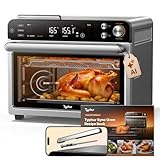
Overview: The Typhur Sync Oven pioneers precision cooking with the world’s first built-in wireless meat thermometer probe. This 12-in-1 convection oven combines a NIST-verified probe with five sensors delivering ±0.5°F accuracy, automatically stopping at desired doneness. The 27QT capacity and 360° Turbo Convection system with dual heating elements and 2400 RPM fan cooks up to 30% faster than traditional ovens.
What Makes It Stand Out: The integrated wireless probe eliminates wires, pairing, and guesswork, while the new Smart AI Recipe Generation feature creates custom recipes from ingredient photos or dish names. A built-in signal booster maintains stable readings even through light foil. The Typhur app provides real-time monitoring and control, making this the most technologically advanced oven in its class.
Value for Money: At $299.99, the Typhur Sync undercuts most competitors while offering superior innovation. The built-in probe alone saves $50-100 versus aftermarket solutions, and the AI recipe feature adds unique value. It matches the Café steel’s capacity while adding cutting-edge technology for less money, making it the best value for tech-forward buyers.
Strengths and Weaknesses: Pros: Revolutionary wireless probe, AI recipe generation, excellent 27QT capacity, powerful 360° convection, competitive pricing. Cons: Newer brand with unproven long-term reliability, potential software bugs, fewer cooking modes (12 vs 14), limited brand recognition.
Bottom Line: Perfect for tech enthusiasts and precision cooking advocates who value innovation over brand heritage. The wireless probe and AI features make it a compelling choice at this price point.
10. Breville BOV860BSS Smart Oven Air Fryer and Convection Oven, 0.8 Cubic Feet Capacity, Brushed Stainless Steel

Overview: The Breville BOV860BSS Smart Oven Air Fryer leverages the proven Element iQ System with five independent quartz elements and smart algorithms for precise cooking. This 11-function convection oven uses super convection technology to reduce cooking time by up to 30%, delivering crispy air-fried foods and evenly cooked meals. The 0.8 cubic feet capacity handles most countertop cooking tasks for small families.
What Makes It Stand Out: Breville’s digital PID temperature control eliminates cold spots, while the dedicated air fry setting combines high heat with maximized airflow for superior crisping. The Element iQ System intelligently directs power where needed, creating tailored cooking environments. As an established brand, Breville offers reliability and refinement that newer competitors can’t match, plus excellent customer support.
Value for Money: At $349.95, this oven positions itself between the Café models and the Ninja Prestige. While it lacks WiFi connectivity, the build quality and proven performance justify the price. It costs $45 more than the Café steel but offers superior brand trust and element control. The 11 functions cover essential needs without overwhelming users with rarely-used options.
Strengths and Weaknesses: Pros: Exceptional build quality, proven Element iQ technology, precise temperature control, super convection performance, trusted brand heritage, compact footprint. Cons: No smart connectivity, fewer cooking modes than Café, smaller capacity than some competitors, premium pricing for non-smart features.
Bottom Line: The reliable choice for quality-conscious buyers who prioritize proven performance over smart features. Breville’s engineering excellence makes it worth the modest premium for those valuing durability.
What Exactly Is a Smart Oven with Air Fry Mode?
A smart oven with air fry mode is essentially a convection oven that’s been optimized for rapid air circulation and enhanced with digital connectivity. Unlike traditional toaster ovens that simply heat elements, these appliances use powerful fans to create a tornado of superheated air that cooks food quickly while creating a crispy exterior—mimicking deep-frying without the oil bath. The “smart” component adds Wi-Fi or Bluetooth connectivity, app control, voice assistant integration, and often AI-driven cooking algorithms that adjust time and temperature in real-time based on what you’re cooking.
The Technology Behind the Magic: How Smart Air Fry Ovens Work
Understanding the mechanics helps you appreciate why these ovens command premium prices. At their core, they combine three key technologies:
High-Velocity Fan Systems
The best models feature brushless DC motors driving fans at speeds up to 2,500 RPM, creating air velocities that would make a hairdryer jealous. This rapid circulation eliminates cold spots and ensures every surface of your food gets hit with consistent heat. Some advanced models use dual-fan configurations with independent speed controls for different cooking phases.
Precision Temperature Management
Forget the 25-degree temperature swings of basic toaster ovens. Smart ovens employ PID (Proportional-Integral-Derivative) controllers—the same technology used in espresso machines and laboratory equipment. These microprocessors continuously monitor internal temperature through multiple sensors and make millisecond adjustments to heating elements, maintaining accuracy within ±5°F.
Smart Sensor Arrays
Top-tier models don’t just measure temperature; they detect humidity levels, calculate food weight through internal scales, and even use infrared sensors to map surface temperatures. This data feeds into cooking algorithms that can distinguish between a frozen pizza and fresh dough, adjusting cook times automatically.
Why Choose a Smart Oven Over Standalone Appliances?
The consolidation argument goes beyond mere space-saving. A quality smart oven with air fry mode can genuinely replace your toaster, conventional oven for small meals, dehydrator, and yes—even your standalone air fryer. The key advantage is versatility without compromise: you’re not sacrificing air fry performance for toasting quality, or vice versa.
Consider the economic angle. Running a full-sized oven for 45 minutes uses approximately 2.3 kWh, while a smart oven accomplishes the same task in 25 minutes using 0.8 kWh. That’s a 65% energy reduction for everyday cooking. Factor in the cost of three separate appliances (quality air fryer: $120, toaster oven: $80, dehydrator: $60) versus one smart oven, and the math becomes compelling.
Key Features That Define the Best Smart Air Fry Ovens
Precise Temperature Control and Rapid Heating
Look for models that reach 400°F in under 5 minutes. This isn’t just about convenience—preheating speed directly impacts cooking quality. The best units use quartz heating elements with infrared capabilities that heat food directly, not just the air around it. This dual-action approach means frozen french fries start crisping within 90 seconds.
Advanced Air Circulation Systems
Pay attention to fan placement and venting design. Side-mounted fans create horizontal airflow patterns that excel at dehydrating and baking, while top-down configurations prioritize broiling and air frying superiority. The elite models offer adjustable fan speeds—low speeds for delicate pastries, high speeds for maximum crisping.
Smart Connectivity and App Integration
True smart functionality extends beyond remote start/stop. The best apps offer visual doneness indicators, recipe syncing that automatically transfers time and temperature settings, and push notifications when your food reaches specific internal temperatures. Some even integrate with fitness apps to log nutritional data based on what you actually cooked.
Multi-Function Cooking Programs
The magic happens when functions combine. Look for programs that automatically sequence cooking methods—an initial steam phase to keep chicken moist, followed by high-velocity air frying for crispy skin, finished with a broil for color. These automated sequences separate sophisticated appliances from basic multi-cookers.
Size Matters: Finding Your Perfect Capacity
Smart ovens typically range from 0.6 to 1.2 cubic feet, but capacity numbers can be misleading. A 1.0 cubic foot model might claim it fits a 12-inch pizza, but if the heating elements are too close to the top, you’ll burn the cheese before the crust crisps.
Consider your household size and cooking habits realistically. A family of four needs at least 0.8 cubic feet to cook a complete meal simultaneously—think a pound of chicken wings on one rack and roasted vegetables on another. If you regularly cook for one or two, a compact 0.6 cubic foot model heats faster and uses less energy for small portions.
Don’t forget vertical space. Models with multiple rack positions should maintain at least 3 inches of clearance between racks for proper air circulation. Otherwise, you’re just stacking food in a hot box.
Smart Home Integration: Beyond Basic Wi-Fi
The difference between “Wi-Fi enabled” and “smart home integrated” is massive. Basic Wi-Fi lets you control the oven from your phone. True integration means your oven talks to other devices.
Imagine saying, “Alexa, start dinner,” and your oven preheats while smart lights dim to “cooking mode” and your Nest thermostat compensates for the extra kitchen heat. Look for Matter compatibility—the new universal smart home standard that ensures your appliance won’t become obsolete when you switch phone ecosystems.
Some advanced models integrate with smart fridges to suggest recipes based on ingredients you have, or sync with your calendar to have dinner ready when you get home from work. These aren’t gimmicks; they’re practical time-savers for busy households.
Understanding Cooking Presets and Customization Options
Presets are only useful if they’re accurate. The best smart ovens don’t just have 15 presets—they allow you to fine-tune and save your own. After cooking the perfect batch of sweet potato fries at 385°F for 18 minutes with 80% fan speed, you should be able to save that as “Sarah’s Sweet Potato Fries” for one-touch perfection next time.
Look for ovens that learn from your adjustments. If you consistently add 2 minutes to the “frozen pizza” preset, a truly smart oven will start suggesting that modification automatically. This adaptive behavior separates intelligent appliances from those with static programming.
Material Quality and Build Considerations
The interior material dramatically impacts performance and longevity. Stainless steel interiors reflect heat efficiently and resist staining but can be noisy at high fan speeds. Non-stick coatings make cleaning easier but degrade over time and can’t handle high-heat broiling.
Door construction matters more than you’d think. Triple-pane glass with low-emissivity coatings keeps exterior surfaces cooler and improves energy efficiency. Hinges should feel substantial—flimsy doors leak heat and eventually fail.
Heating element quality is crucial. Quartz elements heat faster and last longer than metal calrods but cost more. Look for models with easily replaceable elements; even the best ovens will need element replacement after 5-7 years of heavy use.
Energy Efficiency: Saving Power While Cooking Smarter
Smart ovens with air fry mode can be surprisingly energy-efficient, but efficiency varies dramatically. Check the EnergyGuide label and look for models with active energy monitoring in their apps. The best units display real-time wattage consumption and calculate cost-per-cook.
Insulation quality is the hidden efficiency factor. Models with 1.5-inch thick insulation batts maintain temperature with 30% less energy than thinly-insulated counterparts. Some premium ovens use phase-change materials in their walls that absorb and release heat like a thermal battery, smoothing out temperature fluctuations.
Price Ranges and Value Propositions
Smart air fry ovens typically fall into three tiers:
$150-$250: Entry-level smart features with solid air frying. Expect basic app control and decent performance, but limited sensor technology and plastic-heavy construction. These are perfect for testing whether you’ll actually use the smart features.
$250-$400: The sweet spot for most buyers. You get reliable connectivity, multiple heating elements, quality materials, and genuine cooking versatility. These models offer 80% of premium performance at half the cost.
$400+: Professional-grade appliances with advanced sensors, superior build quality, and sophisticated app ecosystems. Worth it for serious home cooks who’ll use the oven daily and appreciate nuanced control.
Remember: a higher price doesn’t always mean better air frying. Some expensive models prioritize smart features over cooking performance. Read independent thermal tests, not just app reviews.
Maintenance and Cleaning: Keeping Your Investment Pristine
Daily maintenance impacts longevity more than any other factor. Look for models with removable crumb trays that slide out from the front—no more turning the oven upside down. Interior walls with a slight texture hide fingerprints better than mirror finishes.
The self-cleaning cycle is a game-changer but implement it wisely. Pyrolytic cleaning (high-heat ash reduction) works brilliantly but consumes significant energy. Steam cleaning cycles are gentler and sufficient for regular maintenance.
App-based maintenance reminders for decalcifying water reservoirs (if equipped) or deep-cleaning fans separate thoughtful designs from basic appliances. Some models even track usage hours and notify you when it’s time to replace air filters or inspect heating elements.
Safety Features to Look For
Overheat protection is standard, but the implementation varies. The best models use multiple redundant sensors that cut power if internal temperatures exceed safe limits by even 10 degrees. Look for UL certification specifically for air fryer functionality—it’s a separate standard from basic toaster ovens.
Automatic shutoff should be customizable, not just a fixed timer. If you’re dehydrating beef jerky for 8 hours, you don’t want the oven shutting off after 2 hours “for safety.”
Cool-touch exteriors are non-negotiable. Quality models keep surface temperatures below 120°F even during 450°F air frying. This isn’t just about avoiding burns—it indicates superior insulation that improves efficiency.
Common Pitfalls and How to Avoid Them
The Wi-Fi Dropout Problem: Many smart ovens lose connection when your microwave runs or when the oven itself gets hot. Look for models with external antennae and 5GHz Wi-Fi support for more reliable connectivity.
The “Jack of All Trades” Trap: Some ovens try to do everything but excel at nothing. Prioritize air fry performance first, then toasting quality, then other functions. Read reviews that specifically test each function independently.
App Abandonment: Manufacturers often release apps then stop updating them. Check the app’s last update date in the App Store. If it hasn’t been updated in 6 months, the company may have moved on.
Inaccurate Temperature Claims: Some ovens claim they reach 450°F but only in specific modes. Verify the maximum temperature across all functions, especially air fry mode, which sometimes caps at 400°F.
Maximizing Your Smart Oven: Tips and Best Practices
Preheat isn’t always necessary. For air frying frozen foods, starting cold can actually produce better results—the gradual temperature increase renders fat more effectively. But for baking, always preheat to ensure proper rise.
Don’t overcrowd the basket. Air fry mode needs space to work its magic. For maximum crispiness, food should be in a single layer with at least 1/4 inch between pieces. Use multiple batches rather than filling every rack position.
Experiment with rack positioning. The middle rack isn’t always optimal. For air frying, the top rack often crisps better due to proximity to the heating element. For baking, the lower rack prevents over-browning.
Use the app’s camera feature if available. Some ovens have internal cameras that let you monitor browning without opening the door. This isn’t just cool—it’s practical, as each door opening can drop temperature by 50°F.
Frequently Asked Questions
What’s the real difference between air fry mode and traditional convection? Air fry mode uses significantly higher fan speeds—typically 2-3 times faster than standard convection—creating more aggressive air circulation. It also often employs top-down heating elements positioned closer to food, mimicking deep-frying oil turbulence. While both use fans, air fry mode is optimized for rapid moisture removal and surface crisping, while convection prioritizes even heat distribution for baking.
Will a smart oven with air fry mode make my standalone air fryer obsolete? For 90% of users, yes. Modern smart ovens match or exceed the performance of most basket-style air fryers, especially those above the $250 price point. The only exception is if you exclusively cook for one and prefer the smaller capacity and faster preheating of a compact 2-quart air fryer. Otherwise, the smart oven’s superior temperature control and larger capacity make it a complete replacement.
How reliable are the smart features? Do they actually improve cooking? Smart features are most valuable for remote monitoring and precision. Getting a notification when your roast hits 135°F internal temperature prevents overcooking more effectively than a standard timer. However, basic remote start/stop is a gimmick you’ll rarely use. Focus on ovens where connectivity provides actionable data—like humidity levels and real-time temperature graphs—rather than just remote button pushing.
What’s the learning curve for someone used to traditional appliances? Expect a 2-3 week adjustment period. The speed difference is the biggest factor—foods cook 20-30% faster than conventional ovens. Start with built-in presets and make small adjustments. Most quality apps include “first-time user” guides that walk you through the differences. Within a month, you’ll likely find traditional ovens frustratingly slow.
Are these ovens worth the premium over non-smart air fryer ovens? If you cook more than three times a week, absolutely. The energy savings alone typically recoup the $50-$100 premium within 18 months. Add in the convenience of automated cooking programs and remote monitoring, and the value proposition becomes clear. For occasional users who just want to air fry frozen snacks a few times monthly, save your money and buy a basic model.
Can a smart oven truly replace my microwave? Not entirely. While they excel at reheating pizza and crisping leftovers, they can’t match a microwave’s speed for heating liquids or defrosting. However, many users find they use their microwave 80% less after getting a smart oven. Consider keeping a compact, inexpensive microwave for beverages and quick defrosting while using the smart oven for everything else.
How noisy are these appliances during operation? Fan noise varies from 55 dB (quiet conversation level) to 70 dB (vacuum cleaner territory). Premium models use brushless motors and acoustic damping to stay under 60 dB even at maximum fan speed. If noise is a concern, look for “sleep mode” cooking programs that trade slightly longer cook times for quieter operation—perfect for late-night snack preparation.
What’s the typical lifespan of a smart air fry oven? With proper maintenance, expect 5-7 years of reliable service. Heating elements usually fail first, followed by fan motors. The smart components (Wi-Fi module, sensors) often outlast the mechanical parts. Look for models with replaceable element designs and solid warranty coverage (at least 2 years). Avoid ovens where the app is required for basic functions—if the company goes under, you don’t want a bricked appliance.
Can I cook a full meal for a family of four simultaneously? Yes, but capacity planning is crucial. A 1.0 cubic foot model can handle 2 pounds of protein and vegetables on separate racks if you stagger start times. Use the app to program sequential alerts—start the vegetables 10 minutes after the protein. For true simultaneous cooking, invest in a 1.2 cubic foot+ model with independent zone control, though these typically start around $350.
What happens if my Wi-Fi goes down mid-cook? Quality ovens are designed with fail-safes. If connectivity drops, the oven continues its current program using onboard memory. You lose remote monitoring and adjustments, but cooking proceeds normally. The appliance stores your custom presets locally, so you’re not dependent on cloud servers. Avoid models that require constant cloud connectivity—check reviews for “offline mode” functionality before buying.