Transforming your kitchen into a culinary command center starts with the right centerpiece. In today’s connected homes, the humble range has evolved from a simple heating element into a sophisticated smart appliance that anticipates your needs, perfects your technique, and integrates seamlessly with your lifestyle. Smart slide-in ranges represent the pinnacle of this evolution—offering built-in aesthetics, professional-grade performance, and intelligent features that make every cooking session more intuitive and precise.
Whether you’re renovating your dream kitchen or simply upgrading your most-used appliance, understanding the landscape of smart slide-in technology is crucial. These ranges don’t just connect to your Wi-Fi; they fundamentally change how you interact with your cooking space, offering remote monitoring, guided recipes, automated adjustments, and diagnostic capabilities that were science fiction just a decade ago. This comprehensive guide will walk you through everything you need to know to make an informed decision—no brand bias, no sponsored recommendations, just pure expertise to help you identify the perfect smart slide-in range for your upgraded kitchen.
Top 10 Smart Slide-In Ranges for Upgraded Kitchens
Detailed Product Reviews
1. GE Profile PHS930YPFS 30 Smart Slide Electric Front Control Induction and Convection Range with 5.3 cu. ft. Capacity Glide Touch Controls Wi-Fi Connect Stainless Steel

Overview: The GE Profile PHS930YPFS represents the pinnacle of modern kitchen technology, combining induction cooking with smart connectivity. This 30-inch slide-in range delivers professional-level performance with a guaranteed exact fit for hassle-free replacement of your existing range. The 5.3 cubic foot convection oven and advanced cooktop features cater to serious home chefs who demand precision and speed.
What Makes It Stand Out: Induction technology revolutionizes cooking with lightning-fast heat response, boiling water in just 101 seconds using the 3700-watt element. The innovative Glide Touch controls offer intuitive temperature adjustment with a simple finger swipe. Wi-Fi connectivity enables remote monitoring and control via smartphone, while synchronized elements allow seamless griddle cooking across two 8-inch burners.
Value for Money: At $2,249, this premium range justifies its price through energy efficiency, cutting-edge features, and build quality. Comparable professional-style induction ranges often exceed $3,000, making this a competitive option. The fit guarantee eliminates installation headaches, potentially saving hundreds in modification costs.
Strengths and Weaknesses: Strengths:
- Blazing-fast induction heating with precise temperature control
- Smart Wi-Fi connectivity for remote operation
- Synchronized dual-element cooking for large cookware
- Guaranteed exact fit replacement promise
- Sleek, modern aesthetic with fingerprint-resistant stainless steel
Weaknesses:
- Requires induction-compatible cookware (ferromagnetic)
- Steep learning curve for those new to induction
- Premium price point may exceed casual cooking needs
- Complex electronics could mean costlier repairs
Bottom Line: Ideal for tech-savvy cooking enthusiasts seeking restaurant-quality performance, the GE Profile PHS930YPFS delivers exceptional value despite its premium price. The combination of speed, precision, and smart features makes it a worthwhile investment for serious home kitchens.
2. GE 30" Slide In Elec Range SS

Overview: The GE JS645SLSS offers a straightforward, dependable electric cooking solution for budget-conscious homeowners. This no-frills 30-inch slide-in range focuses on essential functionality without the complexity of smart features or convection cooking. It serves as an ideal direct replacement unit, maintaining GE’s reputation for reliability in a simple, accessible package.
What Makes It Stand Out: Its primary distinction lies in simplicity and brand trustworthiness. The model provides hassle-free installation for standard 30-inch cutouts, making it perfect for straightforward replacements. GE’s established service network and parts availability ensure long-term support, while the clean stainless steel finish complements most kitchen aesthetics without overwhelming the space.
Value for Money: Priced at $1,109, this range sits in the entry-level category for slide-in models. While lacking advanced features, it delivers core cooking capabilities at nearly half the cost of feature-rich alternatives. For buyers prioritizing basic electric cooking over technology, it represents solid value, though competitors may offer convection at similar price points.
Strengths and Weaknesses: Strengths:
- Affordable entry point for slide-in electric ranges
- Trusted GE brand with reliable service network
- Simple controls with minimal learning curve
- Guaranteed fit for standard 30-inch spaces
- Straightforward maintenance and cleaning
Weaknesses:
- No convection oven capability
- Lacks modern smart connectivity features
- Basic coil or radiant elements (not specified)
- Limited warranty information provided
- Few premium features compared to similarly priced competitors
Bottom Line: A practical choice for renters or homeowners seeking a basic, reliable electric range without frills. The GE JS645SLSS excels at simplicity but falls short for those wanting modern cooking technology. Consider only if budget strictly limits options and advanced features aren’t priorities.
3. Empava Gas Range, 18K BTU Triple Ring Burner, 4.3 Cu.Ft Convection Oven, Stainless Steel Freestanding/Slide-in Stove, Anti-Tip Safety, 36 Inch, CSA Certified

Overview: The Empava 36-inch gas range brings commercial-kitchen power to residential settings. Featuring a potent 18,000 BTU triple-ring burner and natural convection oven, this CSA-certified appliance targets serious home chefs who prefer gas cooking. The versatile freestanding/slide-in design adapts to various kitchen layouts while prioritizing safety with anti-tip technology.
What Makes It Stand Out: Five sealed burners deliver exceptional versatility, from the high-heat triple-ring burner for searing to a gentle 5,000 BTU simmer burner. The natural convection system ensures even baking without fans, while comprehensive safety features including flame failure detection and anti-tip bracket provide peace of mind. The 12-hour LCD timer and precise 150°F–500°F temperature control offer professional-grade command.
Value for Money: At $1,999, this range undercuts many premium 36-inch gas models by $500-$1,000. The commercial-style features, robust construction, and safety certifications justify the investment. While not a luxury brand, Empava delivers professional capabilities that rival higher-priced competitors, making it an excellent value for performance-focused buyers.
Strengths and Weaknesses: Strengths:
- Powerful 18K BTU triple-ring burner for rapid heating
- Five versatile sealed burners with wide BTU range
- Comprehensive safety features including anti-tip bracket
- Flexible installation: freestanding or slide-in
- Natural convection ensures even baking
Weaknesses:
- Gas efficiency lower than induction alternatives
- Brand less established than GE or KitchenAid
- May require professional gas line installation
- Oven capacity smaller (4.3 cu.ft) than some competitors
- Natural convection slower than fan-assisted systems
Bottom Line: Perfect for passionate cooks seeking commercial power without premium brand pricing. The Empava 36-inch range excels in performance and safety, though gas efficiency concerns remain. Highly recommended for those prioritizing burner power over smart technology.
4. StoveShelf 30" Length Stainless Steel Finish Magnetic Shelf for Kitchen Stove - Kitchen Storage Solution with Zero Installation - Over Stove Spice Rack Organizer

Overview: The StoveShelf transforms wasted space above your stove into functional storage without tools or installation. This 30-inch magnetic shelf attaches instantly to most metal stoves, providing a convenient home for spices, oils, and cooking essentials. Built in the USA from premium stainless steel, it offers a simple yet effective kitchen organization solution for renters and homeowners alike.
What Makes It Stand Out: Zero-installation design sets it apart from traditional shelving. Silicone-encased neodymium magnets deliver powerful grip while protecting your stove’s finish. The repositionable magnets accommodate both flat and slightly curved stove tops, ensuring a custom fit. Its rust-resistant construction guarantees longevity, while the sleek stainless steel aesthetic upgrades your kitchen’s appearance instantly.
Value for Money: At $39.99, this shelf costs a fraction of built-in cabinetry or wall-mounted racks. It eliminates installation expenses and potential wall damage, making it particularly valuable for renters. The durable construction ensures years of use, representing exceptional ROI compared to temporary adhesive solutions that fail over time.
Strengths and Weaknesses: Strengths:
- Instant, tool-free installation
- Protects stove finish with silicone-encased magnets
- Adjustable magnet positions for custom fit
- Rust, odor, and stain-resistant stainless steel
- Affordable alternative to permanent shelving
Weaknesses:
- Requires magnetic stove surface (test before purchase)
- Limited weight capacity compared to bolted shelves
- 3.5-inch depth restricts storage space
- May collect grease and require frequent cleaning
- Not compatible with all stove designs
Bottom Line: An ingenious solution for small kitchens and rental properties. The StoveShelf 30" delivers impressive functionality at an unbeatable price, provided your stove is magnetic. It’s a must-have for anyone seeking instant, damage-free storage expansion.
5. StoveShelf 20" Apartment Length Black Magnetic Shelf for Kitchen Stove - Kitchen Storage Solution with Zero Installation - Over Stove Spice Rack Organizer
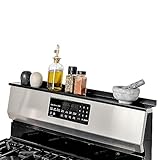
Overview: The 20-inch black StoveShelf caters specifically to apartment dwellers and compact kitchens. This shorter version of the original magnetic shelf provides the same zero-installation convenience in a space-saving format. Built in the USA with durable materials, it offers instant storage for spices and condiments without drilling or adhesives, making it ideal for renters with limited stove width.
What Makes It Stand Out: Its apartment-friendly dimensions distinguish it from the standard 30-inch model, fitting narrower stoves common in smaller living spaces. The black finish provides an alternative aesthetic that blends with darker appliances. Like its larger sibling, silicone-encased neodymium magnets ensure secure attachment while protecting stove finishes, and the repositionable design accommodates slight curvatures.
Value for Money: Priced at $44.99, the 20-inch model costs slightly more per inch than the 30-inch version but remains an exceptional value for small-space solutions. It eliminates installation costs and potential security deposit deductions for renters. The premium construction ensures durability, making it a one-time investment that outlasts temporary adhesive alternatives.
Strengths and Weaknesses: Strengths:
- Compact 20-inch length perfect for apartments
- Tool-free, instant magnetic installation
- Protective silicone-encased magnets
- Black finish complements dark appliances
- Repositionable magnets for custom fit
- Made in USA with lifetime durability
Weaknesses:
- Higher cost per inch than larger model
- Limited storage space due to compact size
- Requires magnetic stove surface (compatibility varies)
- May accumulate cooking residue
- 3.5-inch depth restricts larger items
Bottom Line: The StoveShelf 20" is a smart, space-efficient storage hack for apartment residents. Despite the slightly higher relative cost, its convenience, durability, and renter-friendly design make it an excellent purchase for small kitchens with magnetic stoves.
6. StoveShelf 24" Apartment Length Black Magnetic Shelf for Kitchen Stove - Kitchen Storage Solution with Zero Installation - Over Stove Spice Rack Organizer
Overview: The StoveShelf offers renters and homeowners a brilliant zero-installation storage solution for kitchen essentials. Measuring 24" x 3.5" x 1.5", this magnetic shelf attaches directly to the top of your stove, creating instant space for spices, oils, and condiments without a single drill hole. Its stainless steel construction promises durability while the silicone-encased magnets protect your appliance’s finish.
What Makes It Stand Out: Unlike traditional shelving that requires permanent installation, this USA-made innovation uses powerful neodymium magnets that can be repositioned to fit both flat and slightly curved stoves. The silicone casing is a thoughtful touch that prevents scratches while maintaining a secure hold. Its rust and stain-resistant design stands up to kitchen humidity and heat exposure, making it a true “set it and forget it” organizer for apartment dwellers wary of damaging walls.
Value for Money: At $44.99, the StoveShelf sits in the mid-range for kitchen organizers. While cheaper adhesive shelves exist, they often fail under heat and weight. Permanent spice racks cost $60-100 plus installation time and tools. For renters especially, this shelf eliminates landlord concerns and potential repair costs, offering solid value for the convenience and build quality.
Strengths and Weaknesses: Strengths include truly tool-free installation, sturdy magnetic hold, protective silicone coating, versatile sizing for different stove types, and easy cleaning. The stainless steel resists corrosion and odors effectively. Weaknesses: it only works on magnetic stove surfaces, has limited depth (3.5") for larger items, and heat from cooking may affect some stored products. The 24" length may be too short for wider stoves.
Bottom Line: Perfect for renters, apartment residents, or anyone seeking temporary yet sturdy kitchen storage, the StoveShelf delivers on its promise of zero-installation convenience. It’s a worthwhile investment if your stove is magnetic and you need quick access to cooking essentials without committing to permanent fixtures.
7. GE GRS600AVWW 5.3 Cu. Ft. White Slide-In Smoothtop Smart Electric Range

Overview: The GE GRS600AVWW brings smart technology and healthier cooking options to the modern kitchen. This 5.3 cubic foot slide-in electric range combines traditional oven performance with innovative features like no-preheat air frying and WiFi connectivity. Its white smoothtop design offers a clean aesthetic while providing flexible cooking surfaces and a spacious oven cavity for family meals.
What Makes It Stand Out: The standout feature is the integrated Air Fry mode that requires no preheating, saving time and energy while delivering crispy results. The EasyWash oven tray simplifies cleanup—a major pain point for most cooks. Built-in WiFi with SmartHQ app integration lets you monitor cooking remotely, receive notifications, and control settings from your smartphone, bringing genuine convenience to busy households.
Value for Money: Priced at $1,029, this range competes directly with other mid-tier smart appliances. Comparable models from Samsung or LG with air fry capabilities often start at $1,200+. While basic slide-in ranges can be found for $700-800, they lack the smart features and specialized cooking modes. For tech-savvy families prioritizing convenience and healthier cooking, the premium is justified.
Strengths and Weaknesses: Strengths include the time-saving no-preheat air fry, app-controlled monitoring, generous oven capacity, and the innovative EasyWash tray that reduces scrubbing. The slide-in design provides a built-in look. Weaknesses: the white smoothtop shows spills and scratches more than darker finishes, smart features require reliable WiFi, and the learning curve may frustrate traditional cooks. Some users report the app can be buggy.
Bottom Line: Ideal for tech-comfortable families wanting healthier cooking options without the premium price of high-end brands, this GE range balances innovation with value. If you value remote monitoring and air frying convenience, it’s a smart buy. Traditional cooks may not fully utilize its connected features.
What Defines a “Smart” Slide-In Range?
A smart slide-in range transcends basic digital controls by embedding connectivity and intelligence directly into its core functionality. Unlike traditional models with simple timers and temperature dials, these appliances feature integrated Wi-Fi modules, microprocessors, and sensor arrays that enable two-way communication between you and your oven. The “slide-in” designation refers to the installation style—designed to fit flush between cabinets with controls on the front, creating a seamless, built-in aesthetic without the cost of fully custom cabinetry.
The intelligence layer means your range can receive firmware updates, communicate with other smart home devices, learn your cooking patterns, and even self-diagnose potential issues before they become problems. This isn’t just about controlling your oven from your phone; it’s about creating a responsive cooking environment that adapts to your skill level, preferences, and schedule.
Why Slide-In Design Matters for Modern Kitchens
The slide-in configuration has become the gold standard for upgraded kitchens because it solves multiple design challenges simultaneously. Unlike freestanding ranges with raised backsplashes and controls, slide-ins create a continuous countertop line that makes your kitchen appear larger and more cohesive. The front-mounted controls eliminate the need to reach over hot pots and pans, significantly improving safety and ergonomics.
From a resale value perspective, slide-in ranges signal a higher-end renovation. They suggest thoughtful design planning and a commitment to quality appliances—two factors that resonate strongly with homebuyers. The unfinished sides require precise cabinet installation, which means you’re committing to a true built-in look that integrates with premium countertops, backsplashes, and ventilation systems.
Essential Smart Features to Prioritize
Wi-Fi Connectivity & App Control Architecture
The foundation of any smart range is its connectivity ecosystem. Look for models that offer 2.4 GHz and 5 GHz dual-band Wi-Fi support, ensuring stable connections even in crowded network environments. The companion app should provide more than basic on/off functionality—seek out platforms that allow multi-stage cooking programming, temperature curve monitoring, and historical cooking data review.
Advanced systems enable remote start with safety confirmations, meaning you can preheat your oven while commuting home, but only after verifying the door is closed and no cookware is inside. The best implementations also include offline functionality, so your range remains fully operational even if your internet connection fails.
Voice Assistant Integration Depth
Beyond simple Alexa or Google Assistant commands, premium smart ranges offer nuanced voice control that understands cooking terminology. You should be able to say “Set the oven to convection roast at 375 degrees for 45 minutes” rather than just “Turn on the oven.” The integration should also support routine creation—imagine saying “Start dinner mode” to preheat the oven, adjust kitchen lighting, and queue your cooking playlist simultaneously.
Consider whether the voice integration requires a separate smart speaker or if the range has a built-in microphone array. The latter offers convenience but raises privacy considerations that manufacturers address with physical mute switches and local processing options.
Remote Monitoring & Proactive Notifications
True intelligence means your range tells you what you need to know before you ask. Advanced models feature internal cameras that let you visually check your roast from your phone, but more importantly, they send contextual alerts: “Your chicken has reached 160°F—consider removing it for carryover cooking.” Look for customizable notification hierarchies that distinguish between informational updates and critical alerts like preheat completion or potential safety issues.
The notification system should integrate with your phone’s do-not-disturb settings and offer smartwatch compatibility for glanceable updates when your hands are covered in dough. Some systems even provide multi-user access, so both partners receive alerts about the Thanksgiving turkey status.
Guided Cooking & Recipe Ecosystem
The most transformative smart feature is integrated culinary guidance. Premium ranges partner with recipe databases to automatically download cooking parameters directly to your appliance. When you select “Beef Wellington” from the app, the range configures the proper convection settings, temperature probes, and cooking sequence without manual input.
Evaluate whether the recipe platform is proprietary or open-source. Proprietary systems often feature chef-curated content with video tutorials and guaranteed results, while open platforms allow you to import recipes from popular cooking websites. The best implementations combine both, offering thousands of tested recipes plus the flexibility to save custom cooking programs for family favorites.
Fuel Type Decisions: Beyond Gas vs. Electric
The Dual Fuel Advantage for Serious Cooks
Dual fuel configurations pair a gas cooktop with an electric oven, giving you the responsive heat control chefs prefer on the stovetop and the precise, even heating of electric elements in the oven. For smart ranges, this combination becomes even more powerful—electric ovens offer more granular temperature control that’s essential for automated cooking programs and convection systems.
The gas cooktop component should feature sealed burners with electronic ignition that integrates with smart timers. Imagine a burner that automatically reduces to simmer after your pasta water reaches a boil, or one that shuts off if the range detects a pot has boiled dry. These safety and convenience features require the precision that smart dual fuel systems provide.
Induction Technology as the Smart Choice
Induction cooktops represent the smartest fuel option available, and when paired with a smart electric oven, they create the ultimate connected cooking appliance. Induction’s electromagnetic heating is inherently more controllable than gas or traditional electric, allowing for exact wattage adjustments and instant response to temperature changes.
Smart induction ranges can detect the size and shape of your cookware, automatically adjusting the heating zone for maximum efficiency. They can also sense when a pan is removed and pause heating, resuming automatically when the pan returns. For safety, induction surfaces remain relatively cool, and smart systems can detect accidental object placement—a metal spoon left on the cooktop won’t trigger heating.
Size, Capacity & Configuration Nuances
Standard Dimensions vs. True Built-In Fit
While most slide-in ranges advertise a 30-inch width, the actual cutout requirements vary significantly between manufacturers. Some models require exactly 30 inches, while others need up to 30 1/8 inches for proper installation. The critical measurement is often the depth—standard cabinets are 24 inches deep, but ranges can extend 25-27 inches, affecting how flush they sit with your countertops.
Smart ranges often require additional clearance for ventilation of electronic components. Check the specifications for “zero-clearance” ratings if you’re installing adjacent to combustible materials. The height adjustability range is also crucial—premium models offer up to 2 inches of vertical adjustment to match non-standard countertop heights.
Oven Capacity & Multi-Zone Cooking
Smart ranges maximize interior space through advanced insulation and compact component design. Look for ovens exceeding 5.0 cubic feet that still maintain precise temperature control. The real innovation lies in multi-zone cooking—some models feature dividers that create two independent temperature zones, effectively giving you a double oven when needed.
Consider the rack system flexibility. Smart ranges should include telescoping glides that integrate with the app to suggest optimal rack positions based on your selected cooking mode. Some feature internal LED lighting that adjusts brightness automatically for camera visibility or can be controlled remotely for checking progress without opening the door.
Precision Cooking Technologies Explained
Convection System Variations
Not all convection is created equal. True convection (also called European convection) adds a third heating element around the fan, ensuring consistent temperatures regardless of rack position. Smart ranges take this further with variable-speed fans that adjust based on what you’re cooking—gentle air movement for custards, powerful circulation for roasts.
Look for ovens with multi-point temperature sensors (at least three probes throughout the cavity) that feed data to the control system. This allows the range to compensate for temperature variations in real-time and provide accurate readings to your smartphone. The best systems also feature rapid preheat modes that use predictive algorithms to reach target temperature faster while minimizing energy consumption.
Integrated Temperature Probe Intelligence
Basic probes simply display internal food temperature. Smart probes communicate wirelessly with the range and app, allowing you to monitor multiple dishes simultaneously. Advanced systems feature preset doneness levels for various proteins, automatically adjusting oven temperature to prevent overcooking once the target temperature is reached.
Some ranges now offer probe storage solutions that charge the probe and calibrate it automatically, ensuring accuracy every time. The app should provide temperature graphs showing the cooking curve, helping you understand how heat penetrates different foods—valuable data for perfecting your technique.
Specialized Cooking Modes & Automation
Beyond bake, broil, and roast, smart ranges offer dozens of specialized modes: dehydrate, proof, air fry, steam bake, and sous vide (using precise low-temperature control). The intelligence comes from how these modes interact—some ranges can automatically sequence modes, starting with steam injection for crust development, switching to convection for even baking, then finishing with broiler caramelization.
Evaluate whether the range can learn your preferences. If you consistently reduce recommended temperatures by 25 degrees, a truly smart system will remember this adjustment and apply it automatically to future recipes.
Design Integration & Kitchen Aesthetics
Control Panel Ergonomics & Display Quality
The control panel is your primary interface, so its design significantly impacts daily satisfaction. Premium smart ranges feature high-resolution TFT color displays that remain visible in bright kitchen lighting and show real-time cooking graphics. The touch response should work with wet fingers and be intuitive enough that guests can operate it without a tutorial.
Consider the physical knob integration—the best designs combine traditional tactile controls for burners with digital displays showing exact flame levels or induction wattage. Some models feature knobs that retract when not in use, creating a sleeker appearance and easier cleaning. The panel should tilt slightly upward for better visibility when standing, not flat which requires you to lean over the cooktop.
Finish Options & Smudge Resistance
Stainless steel remains popular, but smart ranges now offer fingerprint-resistant finishes that use nano-coating technology to repel oils and water. Black stainless provides a modern alternative but verify its scratch resistance—some finishes show wear more readily than traditional stainless.
For truly seamless integration, consider panel-ready models that accept custom cabinet fronts. These hide the appliance entirely but ensure the ventilation grilles are designed to handle the heat output without damaging adjacent cabinetry. The smart features remain accessible through a hidden display or solely via app.
Installation Requirements & Considerations
Electrical & Gas Hookup Specifications
Smart ranges demand more robust electrical service than traditional models. Even gas versions require a 120V outlet for the control systems, displays, and Wi-Fi modules. Dual fuel and electric models often need 240V/50-amp circuits—verify your current service before purchasing, as upgrading electrical can add significant cost.
For gas models, the smart components require a clean, stable gas supply. Consider installing a sediment trap and pressure regulator to protect the electronic gas valves. The gas connection location varies—some require rear connections, others offer side or bottom access for easier installation in tight spaces.
Ventilation & Make-Up Air Requirements
Smart ranges produce just as much heat and combustion byproducts as traditional models, but their flush installation can complicate ventilation. Downdraft systems integrated into the cooktop offer a sleek solution but reduce burner efficiency. Overhead hoods remain most effective—plan for CFM ratings of at least 300 for electric and 600+ for gas or dual fuel.
Modern building codes often require make-up air systems for powerful range hoods. Smart ranges can integrate with these systems, automatically activating make-up air dampers when the cooktop turns on. Some even communicate with smart ventilation to adjust fan speed based on detected heat output or smoke levels.
Smart Home Ecosystem Compatibility
Your smart range shouldn’t exist in isolation. Evaluate how it integrates with your existing smart home platform—Samsung SmartThings, Apple HomeKit, Google Home, or Amazon Alexa. The deepest integrations allow you to create complex routines: “Start preheating the oven to 425°F, set kitchen lights to cooking mode, and play my dinner party playlist when I say ‘Entertain guests.’”
Consider data privacy policies. Some manufacturers store your cooking data in the cloud to improve recipe recommendations, while others process everything locally. If you have a Hubitat or Home Assistant setup, look for ranges with local API access that don’t require cloud connectivity for full functionality.
Understanding Price Tiers & Value
Smart slide-in ranges typically fall into three categories. Entry-level smart models ($1,500-$2,500) offer basic Wi-Fi control and app notifications but limited recipe integration. Mid-tier options ($2,500-$4,000) add guided cooking, voice control, and better sensor arrays. Premium models ($4,000-$7,000+) feature internal cameras, advanced automation, superior build quality, and professional-grade components.
The value proposition extends beyond features. Consider the manufacturer’s software update commitment—some brands provide new cooking modes and security patches for 5+ years, while others abandon models after 2 years. Extended warranties covering electronic components are wise investments, as control boards and displays can cost $500+ to replace.
Maintenance & Self-Care Capabilities
Smart ranges should simplify maintenance, not complicate it. Look for models with self-cleaning cycles that communicate progress to your phone, alerting you when the door lock releases. Steam cleaning options use less energy and are gentler on electronic components.
The app should track usage patterns and alert you to maintenance needs: “You’ve baked 200 hours since last calibration—consider running an oven temperature verification.” Some systems monitor component health, warning you if a heating element is drawing unusual current or if the door seal temperature indicates gasket failure.
Energy Efficiency & Sustainability Features
Smart technology enables significant energy savings. Precise preheat algorithms reduce wasted energy by calculating exactly how long heating elements need to run. Some ranges integrate with utility smart grids, delaying start times to off-peak hours when electricity rates are lower.
Look for induction models with power management systems that learn your cooking schedule and optimize energy draw. The best systems provide monthly energy reports showing consumption by cooking mode, helping you identify opportunities to reduce usage. Solar-ready models can prioritize operation when your home’s solar panels are producing excess power.
Advanced Safety Features
Smart ranges offer safety layers impossible with traditional appliances. Automatic shut-off features use motion sensors to detect if you’ve left the kitchen with the cooktop active, turning off burners after a customizable timeout. Pan detection prevents heating empty zones, while tilt sensors can detect if a pot is about to boil over and reduce heat preemptively.
For families, look for robust child lock systems that integrate with your phone—you can lock the entire appliance remotely or set PIN requirements for temperatures above 400°F. Some models feature emergency contact integration, automatically texting a designated person if the smoke alarm triggers while the range is in use.
Troubleshooting Smart Range Issues
When smart features malfunction, basic cooking functionality should remain intact. Premium ranges include diagnostic modes that generate error codes readable via the app, often with video guides for simple fixes. Before purchasing, verify the manufacturer’s support infrastructure—do they offer live chat with appliance specialists, or just generic call centers?
Common issues include Wi-Fi dropouts (often resolved by 5 GHz band switching), app synchronization problems, and sensor calibration drift. The best manufacturers provide user-accessible calibration routines for temperature probes and oven sensors, documented clearly in the app rather than buried in a manual.
Future-Proofing Your Investment
Technology evolves rapidly, so consider upgradeability. Some ranges feature modular control boards that can be swapped for newer versions. USB ports (properly sealed and heat-protected) may allow for hardware add-ons like advanced air quality sensors or camera upgrades.
Evaluate the manufacturer’s track record with legacy support. Companies that maintain active user communities and release regular feature updates demonstrate commitment to long-term value. Open-source or documented APIs indicate the range can integrate with future smart home standards that don’t exist yet.
Frequently Asked Questions
Can I install a smart slide-in range myself, or do I need a professional?
While technically possible for experienced DIYers, professional installation is strongly recommended. Smart ranges require precise leveling for proper door sealing, exact electrical connections to protect sensitive electronics, and gas hookups that must meet code requirements. Professional installers also perform initial calibration and connectivity setup, ensuring all smart features function correctly from day one.
Will my smart range work if my internet goes down?
Yes, all cooking functions operate normally without internet connectivity. However, remote monitoring, notifications, and voice control require an active connection. Premium models cache your most-used settings locally, so favorite cooking modes remain accessible. Some features like time adjustments and temperature changes through the app won’t work until connectivity restores.
How secure are smart ranges from hacking?
Reputable manufacturers implement bank-level encryption for data transmission and regular security updates. Look for ranges with WPA3 Wi-Fi support and the ability to disable cloud features while retaining local network control. Most vulnerabilities come from weak home networks rather than the appliance itself, so ensure your router uses strong passwords and firmware updates.
Do smart ranges really save time and energy?
Independent testing shows 15-20% energy savings through optimized preheating and reduced cooking times from precise temperature control. Time savings vary—remote preheating saves 10-15 minutes when arriving home, while guided cooking reduces trial-and-error for complex recipes. The real value is consistency: fewer ruined dishes and more predictable results.
What’s the lifespan of a smart range compared to traditional models?
Mechanical components (burners, hinges, door seals) last similarly to traditional ranges: 13-15 years with proper care. Electronic components typically have 7-10 year lifespans, though manufacturers often stock replacement control boards for 15+ years. The key difference is obsolescence—smart features may feel dated after 5-7 years, even if the range cooks perfectly.
Can I use my own cookware with an induction smart range?
Induction requires magnetic cookware—test yours with a fridge magnet. If it sticks firmly, it will work. Smart induction ranges detect incompatible cookware and alert you via the app, suggesting optimal placement for even heating. Many manufacturers partner with cookware brands, but any induction-compatible pot or pan functions equally well regardless of brand.
How often do smart ranges receive software updates?
Leading manufacturers release updates quarterly, adding features like new cooking modes, recipe partnerships, and security patches. These typically install automatically during off-hours. Before purchasing, check user forums for feedback on update frequency and quality—some brands promise updates but deliver inconsistently.
Are smart ranges worth the premium over non-smart models?
Value depends on your cooking style. If you frequently use your oven, entertain guests, or juggle multiple dishes, smart features provide significant convenience and quality improvements. For occasional cooks who primarily use the stovetop, a high-quality non-smart range may offer better value. Consider the premium typically 20-30% over comparable non-smart models.
What happens if the manufacturer discontinues my smart range model?
Most smart functionality is cloud-based, so discontinued models typically retain full features for 5-7 years post-discontinuation. After that, basic cooking remains unaffected, but app support may diminish. Choose manufacturers with strong track records of supporting legacy products, and prefer ranges that offer local API access as a backup if cloud services eventually sunset.
Can smart ranges integrate with my existing smart home setup?
Most smart ranges work with major platforms (Alexa, Google Home, SmartThings), but integration depth varies. Before purchasing, verify specific capabilities through the manufacturer’s compatibility list rather than generic “Works with” badges. For advanced setups using Home Assistant or Hubitat, search community forums for existing integrations—these often provide more functionality than official partnerships.