Energy bills have a sneaky way of climbing higher each month, often leaving homeowners wondering which devices are the real power hogs. While smart switches have revolutionized how we control lighting and appliances, the real game-changer lies in their ability to pull back the curtain on your home’s energy consumption. Energy monitoring smart switches don’t just turn things on and off—they transform everyday wall switches into intelligent data-gathering tools that can save you hundreds of dollars annually while reducing your carbon footprint.
This comprehensive guide dives deep into everything you need to know about selecting, installing, and maximizing smart switches with built-in energy monitoring capabilities. Whether you’re building a fully integrated smart home or simply want to stop vampire loads from draining your wallet, understanding these sophisticated devices will empower you to make informed decisions that pay dividends for years to come.
Top 10 Smart Switches for Energy Monitoring
Detailed Product Reviews
1. Kasa Matter Smart Plug w/ Energy Monitoring, Compact Design, 15A/1800W Max, Super Easy Setup, Works with Apple Home, Alexa & Google Home, UL Certified, 2.4G Wi-Fi Only, White, KP125M (4-Pack)

Overview: The Kasa KP125M 4-Pack delivers Matter-certified smart plugs with comprehensive energy monitoring at an accessible price point. These compact outlets transform traditional appliances into intelligent devices controllable through any major smart home platform. Operating exclusively on 2.4GHz Wi-Fi, they offer 15A/1800W capacity suitable for most household electronics, from lamps to coffee makers.
What Makes It Stand Out: True Matter certification ensures these plugs work seamlessly across Apple Home, Alexa, Google Home, and SmartThings without platform lock-in. The standout LAN control capability allows devices to communicate locally when internet connectivity fails—a rare feature in this price bracket. The UL-certified flame-retardant construction and compact design that won’t block adjacent outlets demonstrate thoughtful engineering. Energy monitoring provides granular usage data to identify power-hungry appliances.
Value for Money: At $9.48 per plug, this 4-pack undercuts many competitors while delivering premium features. Individual Matter plugs often retail for $12-15, making this bundle particularly attractive. The energy monitoring capability typically commands a $5-10 premium per device, yet Kasa includes it at no extra cost. Considering the 2-year warranty and UL certification, the value proposition is compelling for whole-home automation.
Strengths and Weaknesses: Strengths: Matter multi-platform support; offline LAN control; energy monitoring; compact non-blocking design; UL certified; excellent app integration. Weaknesses: 2.4GHz Wi-Fi only (no 5GHz); initial setup can be finicky; requires Kasa account; no Bluetooth backup connectivity.
Bottom Line: The KP125M 4-Pack is an exceptional choice for anyone building a Matter-based smart home. The combination of cross-platform compatibility, offline reliability, and energy monitoring at under $10 per plug makes it a top-tier value. Despite minor setup quirks, these plugs deliver professional-grade features for mainstream users.
2. TP-Link Tapo Smart Switch, Single-Pole/3-Way/4-Way, Matter Compatible, Energy Monitoring, Neutral Wire Required, Works with Alexa, Siri, Google Home, SmartThings, UL Certified, 2.4GHZ Wi-Fi, Tapo S515

Overview: The TP-Link Tapo S515 is a versatile smart switch supporting single-pole, 3-way, and 4-way configurations for controlling lights from multiple locations. This Matter-certified device integrates into any major smart home ecosystem while providing detailed energy monitoring. Installation requires a neutral wire and 2.4GHz Wi-Fi, making it suitable for modern electrical systems. At just over fifteen dollars, it brings professional-grade lighting control to DIY installers.
What Makes It Stand Out: The multi-way compatibility sets this apart from standard smart switches, eliminating the need for separate 3-way and 4-way solutions. Matter certification ensures seamless operation across Apple HomeKit, Alexa, Google Home, and SmartThings with a single device. The energy monitoring feature tracks lighting consumption patterns, helping identify inefficient fixtures. Custom scheduling allows alignment with daily routines, while voice control through four major platforms provides true hands-free operation.
Value for Money: At $15.12, the S515 significantly undercuts competitors like Lutron and Leviton, which often exceed $40 for similar functionality. The inclusion of energy monitoring—a feature typically reserved for premium switches—adds considerable value. While professional installation might increase costs for those lacking neutral wires, the switch itself offers exceptional capability per dollar. For homes with proper wiring, it’s among the most cost-effective multi-way smart switches available.
Strengths and Weaknesses: Strengths: Multi-way configuration support; Matter certification; energy monitoring; affordable pricing; broad voice assistant compatibility; UL certified. Weaknesses: Requires neutral wire (not compatible with older homes); 2.4GHz only; installation complexity for novices; limited to lighting loads.
Bottom Line: The Tapo S515 is an outstanding value for modern homes with neutral wiring. Its multi-way flexibility and Matter support make it ideal for comprehensive lighting automation. While installation demands basic electrical knowledge, the feature set and price point are unbeatable for compatible setups.
3. Govee Smart Plug with Energy Monitoring, WiFi Bluetooth Plug Work with Alexa and Google Assistant, 15A Smart Outlets with Timer & Group Controller, No Hub Required, ETL&FCC Certified for Home, 4 Pack

Overview: Govee’s 4-pack smart plugs combine WiFi and Bluetooth connectivity with comprehensive energy monitoring at a budget-friendly price. These 15A outlets support high-power appliances while providing real-time power, current, and voltage tracking through the Govee Home App. Compatible with Alexa and Google Assistant, they enable voice control and remote management without requiring a hub. The ETL and FCC certifications ensure safety standards are met.
What Makes It Stand Out: The dual WiFi and Bluetooth connectivity provides reliable access even when network coverage is spotty, offering more stable connections than WiFi-only alternatives. Real-time energy monitoring displays detailed electrical parameters—not just cumulative usage—allowing precise device diagnostics. The group control feature simplifies managing multiple devices simultaneously, while minute-level scheduling provides exceptional automation granularity. Fire-resistant materials and full certification make these suitable for high-draw appliances like coffee makers and space heaters.
Value for Money: At $7.20 per plug, this 4-pack represents one of the lowest price points for energy-monitoring smart plugs. Competitors typically charge $10-15 for similar features, making Govee’s offering particularly attractive for whole-home deployments. The inclusion of Bluetooth as a backup connectivity option adds reliability typically found in more expensive devices. While limited to Alexa and Google (no Siri/SmartThings), the savings are substantial for users within those ecosystems.
Strengths and Weaknesses: Strengths: Exceptional price; dual WiFi/Bluetooth connectivity; detailed real-time energy monitoring; group control; high 15A capacity; ETL/FCC certified. Weaknesses: No Matter support; limited to Alexa/Google; 2.4GHz WiFi only; Govee app less polished than competitors; no local LAN control.
Bottom Line: Govee’s 4-pack is perfect for Alexa/Google users seeking maximum value. The energy monitoring depth and dual connectivity exceed expectations at this price. While platform support is narrower than Matter alternatives, the cost savings and feature set make it an excellent choice for targeted smart home expansions.
4. Govee Smart Plug with Energy Monitoring, WiFi Bluetooth Plug Work with Alexa and Google Assistant, 15A Smart Outlets with Timer & Group Controller, No Hub Required, ETL&FCC Certified for Home, 2 Pack

Overview: This 2-pack variant of Govee’s smart plugs delivers the same robust feature set as the 4-pack but in a smaller quantity for more modest automation needs. These outlets provide real-time energy monitoring of power, current, and voltage, plus dual WiFi and Bluetooth connectivity for reliable remote control. Compatible exclusively with Alexa and Google Assistant, they support 15A loads and offer minute-level scheduling. ETL and FCC certifications ensure safe operation with high-draw appliances.
What Makes It Stand Out: The dual connectivity approach remains a key differentiator, providing Bluetooth backup when WiFi signals weaken—a feature uncommon in budget smart plugs. The granular energy data helps diagnose appliance issues before they become costly problems. Group control functionality allows creating scenes across both plugs, while the timer function enables precise automation down to the minute. The fire-resistant construction safely handles demanding devices like air conditioners and heaters.
Value for Money: At $9.50 per plug, the 2-pack costs 32% more per unit than the 4-pack, making it less economical for larger deployments. However, it’s still competitively priced against single plugs from premium brands. For users needing only one or two smart outlets, this avoids the overcommitment of a 4-pack while delivering the same technical capabilities. The value proposition shines for targeted applications like monitoring a specific appliance or automating a single room.
Strengths and Weaknesses: Strengths: Dual WiFi/Bluetooth; detailed energy monitoring; high 15A capacity; compact design; ETL/FCC certified; precise scheduling. Weaknesses: Higher per-unit cost than 4-pack; no Matter/Siri/SmartThings; 2.4GHz only; Govee ecosystem lock-in; no offline control.
Bottom Line: Govee’s 2-pack suits users needing selective smart control with premium monitoring features. While the 4-pack offers better value, this smaller bundle prevents over-purchasing. It’s ideal for apartment dwellers or single-room automation where Alexa/Google integration suffices and detailed energy tracking is prioritized.
5. TP-Link Tapo Smart Plug P210M, Wi-Fi in-Wall Outlet, Matter Compatible, Energy Monitoring, 15A/1800W Max, Works with Alexa, Apple Home, Google Home, SmartThings, Voice/Remote Control, ETL Certified

Overview: The TP-Link Tapo P210M reimagines the smart plug as an in-wall outlet, providing two independently controllable sockets without sacrificing wall space. This Matter-certified device integrates seamlessly with all major platforms including Apple Home, Alexa, Google Home, and SmartThings. Energy monitoring tracks consumption for each outlet individually, while overcharge prevention automatically cuts power when devices reach full battery. Installation requires neutral wiring and 2.4GHz Wi-Fi.
What Makes It Stand Out: The in-wall design eliminates plug clutter while doubling capacity—a game-changer for permanent installations. Independent outlet control allows simultaneously managing a lamp and charger from one device. Matter certification ensures future-proof cross-platform compatibility, while the unique overcharge prevention feature extends battery lifespan for phones and tablets. This addresses a common pain point that standard smart plugs ignore. The clean, built-in aesthetic suits modern homes better than external adapters.
Value for Money: At $19.98 for dual independently-controlled outlets, the P210M matches the cost of two premium smart plugs while offering superior integration. Comparable in-wall smart outlets from Legrand or GE cost $30-45, making this remarkably affordable. The overcharge prevention adds value for device-heavy households, potentially saving replacement costs. However, installation requires electrical work, which may add expense for those hiring professionals—factor this into total cost.
Strengths and Weaknesses: Strengths: Dual independent outlets; in-wall clean installation; Matter certification; overcharge prevention; per-outlet energy monitoring; broad platform support. Weaknesses: Requires neutral wire; installation complexity; 2.4GHz only; fixed location lacks plug portability; no Bluetooth backup.
Bottom Line: The P210M is perfect for homeowners planning permanent smart home infrastructure. Its dual-outlet design and Matter support make it a future-proof investment. While installation demands electrical comfort, the clutter-free result and overcharge protection justify the effort. It’s a sophisticated alternative to external plugs for committed smart home enthusiasts.
6. TP-Link Tapo Smart 3 Way Dimmer Switch KIT, Matter Compatible, Energy Monitoring, Neutral Wire Required, Works with Alexa, Siri, Google Home, SmartThings, UL Certified, 2.4GHZ Wi-Fi, Tapo S515D KIT

Overview: The TP-Link Tapo S515D KIT delivers smart 3-way dimming control for lighting fixtures controllable from two locations. This dual-pack kit transforms traditional hallways, stairways, and living room setups into intelligent lighting systems. Requiring neutral wiring and 2.4GHz Wi-Fi, it automates complex 3-way configurations after simple installation that mirrors your existing switch wiring. Matter certification ensures broad smart home ecosystem compatibility, while full 0-100% dimming control lets you create perfect ambiance for any occasion.
What Makes It Stand Out: This kit’s standout feature is its Matter certification, guaranteeing seamless interoperability across Amazon Alexa, Apple HomeKit, Google Home, and Samsung SmartThings platforms—a rarity in the 3-way dimmer category. The automated 3-way configuration eliminates complicated wiring logic, making installation surprisingly straightforward. Integrated energy monitoring provides consumption data for connected lights, enabling eco-conscious adjustments. Voice control through multiple assistants and remote app access via Tapo App complete its comprehensive feature set.
Value for Money: At $33.16 for two switches ($16.58 each), this kit undercuts many competing 3-way smart dimmers that often exceed $25 per unit. The Matter certification future-proofs your investment, while built-in energy monitoring eliminates need for separate monitoring devices. For multi-location lighting control, this represents exceptional value compared to purchasing individual smart bulbs or more expensive proprietary systems.
Strengths and Weaknesses: Strengths include Matter certification for universal compatibility, true 3-way dimming automation, comprehensive energy monitoring, and straightforward installation that replicates existing wiring. The dual-pack format saves money for paired installations. Weaknesses are the neutral wire requirement (challenging in older homes), 2.4GHz-only Wi-Fi limitation, and dependence on Tapo App for initial setup. Some users report occasional lag with simultaneous voice commands.
Bottom Line: The Tapo S515D KIT is an excellent choice for anyone seeking reliable, certified 3-way smart dimming without ecosystem lock-in. Its Matter compatibility and competitive pricing make it ideal for modern homes with neutral wiring. For multi-location lighting projects, this kit delivers professional-grade features at DIY prices.
7. 30A Hight Power WiFi Wireless Smart Switch with Energy Monitoring, DIY Switch for Smart Home Automation, Tuya APP Remote Control, Timer, Compatible with Alexa & Google Home

Overview: This heavy-duty 30A smart switch tackles high-power appliances that standard smart plugs can’t handle. Designed for air compressors, pool pumps, water heaters, and other demanding equipment, it supports up to 3000W resistive and 800W inductive loads. The Tuya/Smart Life App provides remote control and real-time energy monitoring of power, current, and voltage, with historical data review up to one year. Voice control via Alexa and Google Home enables hands-free operation.
What Makes It Stand Out: The 30A capacity distinguishes this from typical 15A smart switches, making it suitable for serious appliances. Real-time energy monitoring with daily, monthly, and annual data visualization helps identify inefficiencies. Three timer types—scheduled, countdown, and cyclic—offer sophisticated automation beyond simple on/off scheduling. The DIY-friendly design appeals to technically inclined homeowners comfortable with electrical installations.
Value for Money: At $18.99, this switch costs less than many standard 15A smart switches while delivering triple the capacity. Energy monitoring capabilities typically cost $10-15 as standalone devices, making this an integrated bargain. For controlling high-power equipment, it’s substantially cheaper than commercial automation solutions. The price per ounce metric is unusual but irrelevant to its core value proposition.
Strengths and Weaknesses: Strengths include high 30A capacity, comprehensive energy monitoring with long-term data storage, versatile timer options, and broad voice assistant compatibility. The Tuya ecosystem offers extensive automation possibilities. Weaknesses include requiring 2.4GHz Wi-Fi only, no Matter certification limiting future compatibility, and the need for careful installation with high-voltage equipment. Documentation can be sparse for non-technical users, and there’s no UL certification mentioned.
Bottom Line: Perfect for DIY enthusiasts needing to automate high-power appliances on a budget. Its robust capacity and monitoring features excel in garages, utility rooms, and outdoor applications. However, hire an electrician if you’re unsure about installation, and consider alternatives if you need Matter support.
8. THIRDREALITY ZigBee Smart Plug 4 Pack with Real-time Energy Monitoring,15A Outlet, Zigbee Repeater,ETL Certified,ZigBee Hub Required,Work with Home Assistant,Compatible Echo Devices and SmartThings
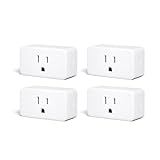
Overview: The THIRDREALITY ZigBee Smart Plug 4-Pack provides reliable smart control for standard appliances through ZigBee 3.0 protocol. Requiring a compatible hub like Echo (4th Gen), SmartThings, or Home Assistant, these plugs offer real-time energy monitoring and serve as ZigBee repeaters to strengthen mesh networks. The space-saving design prevents blocking adjacent outlets, while ETL certification ensures safety. Voice control works through Alexa and Google Home when paired with appropriate hubs.
What Makes It Stand Out: These plugs function as ZigBee repeaters, actively improving network reliability—an often-overlooked benefit. The automatic device discovery with compatible Echo devices (“Alexa, discover my devices”) simplifies setup remarkably. Real-time energy monitoring integrates seamlessly with Home Assistant, SmartThings, and THIRDREALITY’s hub. The customizable power-on state adds safety, ensuring devices remain off after outages if desired.
Value for Money: At $38.99 for four plugs ($9.75 each), this pack offers excellent value for ZigBee ecosystem users. Individual ZigBee plugs often cost $12-15, making this bulk pricing attractive. The repeater functionality adds network value beyond simple switching. However, requiring a hub represents a hidden cost for newcomers. For existing ZigBee households, this is a cost-effective expansion.
Strengths and Weaknesses: Strengths include ZigBee mesh networking with repeater capability, space-efficient design, ETL certification, easy Echo integration, and comprehensive energy monitoring on supported platforms. The 15A rating handles most appliances. Weaknesses include mandatory hub requirement (no Wi-Fi fallback), limited energy monitoring platform support, and no Matter certification. ZigBee dependency means it won’t work standalone.
Bottom Line: Ideal for established ZigBee smart homes using Home Assistant, SmartThings, or compatible Echo devices. The repeater function and four-pack value make it perfect for expanding mesh coverage. Skip if you lack a hub or prefer Wi-Fi/Matter devices for simplicity.
9. TP-Link Tapo Smart Plug Mini, Matter Compatible, Compatible with Alexa, Google Home & Samsung SmartThings, Energy Monitoring, 15A, UL Certified, 2.4G Wi-Fi Only, Tapo P110M(4-Pack)

Overview: The TP-Link Tapo P110M 4-Pack delivers Matter-certified smart plugs with advanced energy management features in a compact mini design. These 15A plugs work across all major platforms—Alexa, Google Home, Apple HomeKit, and Samsung SmartThings—without ecosystem lock-in. The Tapo App provides detailed energy statistics with cost visualization when integrated with billing systems. Overcharge prevention automatically cuts power based on thresholds, protecting devices and conserving energy.
What Makes It Stand Out: Matter certification ensures these plugs remain compatible as smart home standards evolve. The billing integration for cost visualization is unique, helping users understand real monetary impact. Overcharge prevention with power limit shutdowns protects valuable electronics—a feature rarely seen in budget plugs. Programmable scheduling for off-peak hour operation can yield actual utility bill savings. Voice control works across all major assistants seamlessly.
Value for Money: At $26.99 for four plugs ($6.75 each), this is aggressively priced for Matter-certified devices. Individual Matter plugs typically cost $10-15, making this pack exceptional value. Energy monitoring, overcharge protection, and billing integration are premium features at entry-level pricing. For those starting with Matter or expanding existing setups, cost per feature is outstanding.
Strengths and Weaknesses: Strengths include Matter certification for universal compatibility, comprehensive energy monitoring with cost estimation, overcharge protection, compact mini size, and UL certification. The four-pack offers excellent bulk value. Weaknesses are 2.4GHz Wi-Fi only limitation, requiring Tapo App for advanced features, and no power-on state customization. Some users report occasional connectivity hiccups with HomeKit.
Bottom Line: The best value Matter smart plug pack available today. Perfect for anyone building a future-proof smart home with serious energy management needs. The overcharge protection makes it ideal for charging stations and valuable electronics. Buy with confidence for broad compatibility and advanced features at an unbeatable price.
10. WiFi Smart Energy Monitor Switch Meter, Compatible with Alexa Google Home, Remote Control with Smart Life/Tuya App, Din Rail Tester Current Voltage Amperage Power Meter AC 110-230V 60A Multimeter

Overview: This DIN rail-mounted smart energy monitor switch provides industrial-grade power measurement and control for entire circuits. Measuring voltage, current, active power, and energy simultaneously, it handles up to 60A—substantially more than standard smart plugs. Installation in electrical panels enables monitoring of heavy appliances or branch circuits. The Smart Life/Tuya App provides remote control, timer scheduling, and historical consumption charts. Voice control via Alexa and Google Home adds convenience.
What Makes It Stand Out: The DIN rail form factor and 60A capacity target whole-circuit monitoring, not just individual devices. This professional-grade approach suits technically savvy homeowners and electricians. Historical data visualization in charts helps identify consumption patterns. Family sharing features allow multiple users to monitor and control devices. The multimeter-level accuracy exceeds typical consumer smart plugs.
Value for Money: At $33.99, this device costs less than many standalone energy monitors while adding smart switching capability. Professional energy monitors with similar specs often exceed $50. For those comfortable with electrical panel work, it delivers exceptional capability per dollar. However, installation complexity may require professional help, adding cost.
Strengths and Weaknesses: Strengths include high 60A capacity, DIN rail mounting for clean installation, comprehensive multimeter functions, family sharing, timer settings, and voice control. The Tuya ecosystem offers broad compatibility. Weaknesses are complex installation requiring electrical knowledge, no UL certification mentioned, 2.4GHz Wi-Fi only, and absence of Matter support. Not suitable for novices or renters.
Bottom Line: Excellent for technically-inclined homeowners wanting whole-circuit monitoring and control. Its professional features and capacity justify the price for the right user. Hire a licensed electrician for installation unless you’re experienced. For simple plug-and-play needs, consider standard smart plugs instead.
What Are Smart Switches with Energy Monitoring?
Smart switches with energy monitoring represent the evolution of traditional light switches into intelligent home automation devices that provide real-time electrical consumption data. Unlike standard smart switches that only offer remote control and scheduling, these advanced units contain integrated sensors and microprocessors that measure voltage, current, and power factor to calculate precise energy usage. They seamlessly blend the convenience of app-based control with the analytical power of a home energy management system, giving you unprecedented visibility into how individual circuits consume electricity throughout your day.
How Energy Monitoring Technology Works
These devices employ current transformers (CTs) or shunt resistors to measure electrical flow without interrupting power delivery. The onboard microcontroller samples data thousands of times per second, then aggregates this information into meaningful metrics like watts, kilowatt-hours, and estimated cost. Most units calculate true power (accounting for power factor) rather than apparent power, ensuring accuracy even with modern electronics that create reactive loads. This data gets transmitted via your home network to companion apps or smart home hubs, where it’s visualized through intuitive dashboards and historical graphs.
Why Energy Monitoring Matters for Modern Homes
Understanding granular energy consumption patterns is the first step toward meaningful efficiency improvements. While your utility bill shows total monthly usage, energy monitoring smart switches reveal exactly which rooms, appliances, or lighting circuits contribute most to your costs. This visibility enables targeted interventions rather than guesswork-based conservation efforts. Studies show that households with real-time energy feedback can reduce consumption by 5-15% simply through awareness and behavior changes, before implementing any automation strategies.
The Hidden Cost of Phantom Loads
Phantom loads—electricity drawn by devices in standby mode—account for 5-10% of residential energy use, translating to $100-200 wasted annually in the average home. Energy monitoring switches excel at identifying these silent consumers by tracking minute power draws even when devices appear “off.” That seemingly innocent coffee maker, gaming console, or cable box might be consuming 15-30 watts continuously, information you’d never discover without circuit-level monitoring. Armed with this data, you can automate complete power cutoff or make informed decisions about which devices truly need standby capability.
Key Features to Look for in Energy Monitoring Smart Switches
When evaluating options, prioritize switches offering high sampling rates (at least 1,000 samples/second) for accuracy with fluctuating loads like motors and compressors. Look for devices that measure both active and reactive power to handle modern electronics properly. Voltage monitoring capabilities help identify power quality issues that affect both efficiency and device longevity. The best units offer configurable data retention periods, exportable reports, and customizable dashboards that let you focus on the metrics most relevant to your goals.
Real-Time vs. Historical Data Tracking
Real-time monitoring displays instantaneous power draw, invaluable for identifying usage spikes and testing device efficiency. However, historical data tracking reveals patterns over days, weeks, and months, showing you seasonal variations and long-term trends. Premium switches offer both granular minute-by-minute data for recent periods and aggregated daily/monthly views extending back a year or more. This dual approach lets you answer both “What’s happening right now?” and “How has my usage changed since installing LED bulbs?” Consider how much historical data storage you need—some devices store data locally for privacy, while cloud-based systems offer unlimited retention but require ongoing subscriptions.
Accuracy and Calibration Standards
Accuracy specifications typically range from ±1% to ±5% of the measured value. For meaningful analysis, aim for ±2% or better. Reputable manufacturers calibrate their devices against reference standards and may offer user-calibration features to fine-tune readings against your utility meter. Some advanced switches can self-calibrate by detecting when the controlled load is in a known state (like a 60-watt incandescent bulb). Understand that accuracy can vary across the measurement range—devices often perform best at 20-80% of their maximum rated load. For circuits with highly variable loads, look for switches that maintain accuracy across the full spectrum from standby to peak consumption.
Wattage Capacity and Load Types
Most residential smart switches support 15-amp circuits (1,800 watts at 120V), but heavy-duty models handle 20 amps (2,400 watts) for appliances or high-wattage lighting. Crucially, verify compatibility with your specific load type: incandescent, LED, CFL, fluorescent ballasts, motor loads (fans), and inductive loads (appliances). Switches with inductive load ratings include snubber circuits that protect against voltage spikes when motors turn off. LED compatibility is particularly important—many switches require a minimum load (often 10-25 watts) to function properly, which can be problematic with ultra-efficient LED bulbs. Look for switches with “no minimum load” or “low-load” specifications if you’ll control small LED arrays.
Connectivity Protocols: WiFi, Zigbee, Z-Wave, and Matter
Your choice of connectivity protocol profoundly impacts reliability, range, and integration possibilities. WiFi switches connect directly to your router, offering straightforward setup but competing for bandwidth with other devices. They may become unreachable if your router struggles with many connections. Zigbee and Z-Wave create mesh networks where each device extends the signal, providing superior reliability in larger homes but requiring a compatible hub. Matter, the emerging standard, promises seamless interoperability across ecosystems while maintaining local network operation for enhanced privacy and responsiveness.
Understanding Mesh Networks for Reliable Monitoring
Mesh topology means each powered device acts as a repeater, creating redundant pathways for data. This is particularly valuable for energy monitoring, where consistent data flow prevents gaps in your consumption records. In a well-designed mesh, switches in distant rooms can relay through intermediate devices to reach your hub. However, battery-powered sensors don’t repeat signals—only mains-powered switches do. Plan your network density accordingly: a Zigbee or Z-Wave switch every 30-40 feet ensures robust connectivity. Consider that some protocols have device limits (Z-Wave supports 232 devices per network, while Zigbee can handle thousands), important if you’re building a comprehensive monitoring system.
Smart Home Ecosystem Compatibility
A switch that doesn’t integrate with your existing smart home platform creates a frustrating siloed experience. Before purchasing, verify compatibility with your hub (SmartThings, Hubitat, Home Assistant, etc.) or ecosystem (Apple HomeKit, Google Home, Amazon Alexa). Native integration ensures energy data appears in your central dashboard alongside other sensors, enabling powerful cross-device automations. Check whether the switch exposes all features—including energy data—through the integration or only basic on/off functionality. Some manufacturers limit data access to their proprietary apps, reducing the value for whole-home automation enthusiasts.
Voice Assistant Integration
Voice control adds convenience, but energy monitoring introduces additional considerations. Ask whether you can query energy usage verbally (“Alexa, how much power is the kitchen using?”) and receive spoken responses. Some integrations allow you to set up voice-activated energy reports or receive alerts through smart speakers when usage exceeds thresholds. However, ensure voice assistants can’t accidentally control critical circuits—most platforms offer PIN protection or disable certain switches from voice control while still allowing monitoring.
Third-Party App and Platform Support
Beyond native integrations, investigate support for third-party platforms like IFTTT, Node-RED, or MQTT for advanced automation. These tools let you create sophisticated rules: “If the washing machine finishes (power drops below 5W), then send a notification and flash the kitchen lights.” Energy data accessible via API opens possibilities for custom dashboards, integration with home energy management systems, or even feeding data into machine learning platforms for predictive analysis. Open-source-friendly switches that support local MQTT publishing give you maximum flexibility and data ownership.
Installation Requirements and Considerations
Successful installation hinges on understanding your home’s wiring and electrical capacity. Most smart switches require a neutral wire to power their electronics—a challenge in pre-1980s homes where neutrals weren’t consistently run to switch boxes. Some newer “no-neutral” designs exist but may have limitations with energy monitoring accuracy or minimum load requirements. Verify your switch box depth, as smart switches are deeper than traditional ones. Measure clearance to ensure wires can be neatly tucked without strain. Consider whether you need single-pole (controlling a load from one location) or three-way/multi-way configurations (controlling from multiple switches).
Single-Pole vs. Three-Way Configurations
Single-pole installations are straightforward—one switch controls one load. Three-way setups, common for staircases or large rooms, involve two switches controlling the same load. Energy monitoring in three-way configurations requires careful planning: only one switch should contain the monitoring electronics to avoid double-counting consumption. Look for “three-way compatible” switches that work with existing dumb switches or companion smart switches. Some systems use auxiliary switches that communicate via traveler wires or wirelessly, maintaining energy monitoring at the primary location. For four-way or more complex setups, ensure your chosen ecosystem supports the required number of companion devices.
Neutral Wire Requirements
The neutral wire provides the return path for the small amount of current the switch needs to operate. Without it, switches must leak a tiny current through the load to stay powered, which can cause LED ghosting (faint glow when off) and may affect monitoring accuracy. No-neutral designs often measure load characteristics differently, sometimes estimating rather than directly measuring current. If your home lacks neutrals, consider having an electrician run them—it’s a worthwhile investment for reliability and expands your device options significantly. Alternatively, look for switches specifically engineered for no-neutral operation that maintain monitoring accuracy through advanced sensing techniques.
Professional vs. DIY Installation
While many smart switches are marketed as DIY-friendly, energy monitoring units involve more complex wiring and calibration. DIY installation is feasible if you’re comfortable working with line voltage, understand how to identify hot, neutral, and ground wires, and can safely test circuits. However, professional installation ensures proper load matching, verifies your electrical panel can handle the additional standby consumption, and often includes network optimization. Electricians can also identify pre-existing wiring issues—like swapped hot/neutral or missing ground—that could affect safety and monitoring accuracy. Factor installation cost into your budget, typically $50-150 per switch, and consider bundling multiple installations to reduce per-unit costs.
Data Privacy and Security Considerations
Your energy data reveals intimate details about your lifestyle—when you’re home, what appliances you use, even your sleep patterns. Understand where this data resides and who can access it. Some manufacturers transmit all data to cloud servers, creating potential privacy risks and dependency on their continued operation. Others process data locally on the switch or hub, sending only anonymized metadata to the cloud. Review privacy policies carefully: look for explicit statements about data ownership, sharing with third parties, and retention periods. Consider whether the switch continues functioning locally if the manufacturer’s servers go offline.
Local vs. Cloud-Based Processing
Local processing keeps your energy data within your home network, accessible even during internet outages and immune to company shutdowns. Home Assistant and Hubitat excel at local control, while some proprietary hubs offer hybrid models. Cloud-based systems provide easier remote access and often superior mobile apps but create latency and potential data bottlenecks. Evaluate whether you can access raw data locally via API or MQTT—this ensures you can export your history and integrate with local systems. For maximum privacy, choose switches that support local-only operation with optional cloud features, allowing you to disable external communication entirely.
Advanced Features and Automation Potential
Beyond basic monitoring, sophisticated switches offer features that transform data into action. Look for customizable alerts when usage exceeds thresholds or deviates from normal patterns—useful for detecting appliances running inefficiently or forgetting to turn off high-wattage devices. Some switches include power factor monitoring, helping you identify reactive loads that increase your electric bill without performing useful work. Integration with utility time-of-use rates allows the switch to calculate costs accurately based on when you use power, not just how much.
Setting Up Energy Alerts and Thresholds
Effective alert configuration requires understanding your baseline consumption. Start by monitoring for a week to establish normal patterns, then set thresholds slightly above typical peaks. Configure different alert types: immediate notifications for dangerous overloads, daily summaries for unusual consumption, and weekly reports tracking progress toward conservation goals. Advanced systems support machine learning that adapts thresholds based on seasonal patterns. Consider alert delivery methods—push notifications, email, SMS, or even visual indicators like smart bulb color changes—to ensure you notice them without alert fatigue.
Creating Energy-Saving Routines
The true power of monitoring emerges when you automate responses to consumption data. Create routines that automatically turn off entertainment centers when power drops to standby levels for 30 minutes, or schedule pool pumps to run during off-peak hours based on real-time rate data. Use geofencing to cut power to non-essential circuits when everyone leaves home, automatically restoring them upon return. For maximum impact, combine monitoring switches with smart thermostats and water heaters to create a holistic energy management system that optimizes whole-home consumption based on your actual usage patterns.
Understanding Energy Reports and Analytics
Raw data becomes actionable through thoughtful presentation. Quality companion apps break down consumption by time of day, day of week, and month, helping you identify patterns like weekend spikes or seasonal HVAC loads. Look for apps that correlate usage with external factors like weather—did that cold snap drive up your heater’s consumption? Advanced analytics can disaggregate loads, distinguishing between the refrigerator’s compressor cycle and the microwave’s brief spikes. Export capabilities in CSV or JSON formats let you perform custom analysis in spreadsheet software or feed data into broader home automation platforms.
Interpreting kWh, Cost, and Carbon Footprint Data
Kilowatt-hours (kWh) represent actual energy consumed, but translating this into cost requires accurate rate configuration. Input your utility’s tiered or time-of-use rates for precise calculations. Some apps automatically pull utility rates via API. Carbon footprint estimates based on your regional grid’s energy mix add environmental context—seeing that your air conditioning generated 50 pounds of CO2 last week might motivate behavior change more than dollar savings. Understand the assumptions behind these calculations: carbon intensity varies by time of day as utilities switch between solar, wind, and fossil fuel sources. The most sophisticated switches can track this variability if they receive grid carbon data.
Common Pitfalls and How to Avoid Them
Many enthusiasts dive into energy monitoring without a strategic plan, ending up with fragmented data and disappointing results. Avoid installing monitors on circuits with constantly changing, mixed loads where you can’t identify individual devices—this creates noise without insight. Don’t overlook the impact of poor WiFi coverage; a switch that can’t reliably transmit data is worthless for monitoring. Be wary of switches with proprietary data formats that lock you into a single ecosystem. Finally, resist the temptation to monitor every circuit immediately—start with your highest-consumption areas, learn the system, then expand strategically.
Network Dependency Issues
Energy monitoring requires consistent connectivity, yet many homes have WiFi dead spots precisely where switches are located—garages, basements, or exterior walls. Before installation, verify strong signal strength at each location using a WiFi analyzer app. For mesh protocols, ensure adequate repeater density. Consider creating a dedicated IoT network to prevent congestion from streaming devices and computers. Some switches buffer data locally during network outages, transmitting it when connectivity returns—crucial for maintaining complete records. Test this behavior before relying on the data for billing reconciliation or appliance diagnostics.
Compatibility Mistakes
Nothing’s more frustrating than discovering your new switch won’t report energy data through your preferred platform. Always test integration during the return period. Verify that the switch’s firmware version supports the features you need—manufacturers sometimes remove functionality in updates. Check community forums for your smart home platform to see if other users report issues with specific switch models. Pay attention to voltage requirements; while most North American switches support 120V, some are designed for 240V circuits or have limited compatibility with split-phase systems. For homes with smart meter demand response programs, investigate whether switches can receive utility signals to automatically reduce load during peak events.
Maximizing Your Investment: Best Practices
Strategic deployment multiplies your return on investment. Begin by monitoring circuits representing at least 60% of your typical electric bill—usually HVAC, water heating, major appliances, and outdoor lighting. Place monitors where they’ll reveal actionable insights: your water heater circuit to detect element degradation, the refrigerator to catch door seal failures, or home office circuits to quantify work-from-home costs. Document your baseline consumption before making efficiency upgrades; this proves ROI when you install LED retrofits or new appliances. Regularly review your data—set a monthly calendar reminder to check for anomalies and trends.
Strategic Placement for Whole-Home Monitoring
Complete home monitoring doesn’t require a switch on every circuit. Focus on high-wattage dedicated circuits (HVAC, water heater, dryer, oven) and circuits serving multiple devices where you can infer individual usage through pattern analysis. For lighting circuits, monitor representative samples rather than every switch—if your bedroom lights consume 45 watts, similar rooms likely match this. Consider using smart plugs with energy monitoring for plug-in devices, reserving hardwired switch monitors for permanently installed loads. This hybrid approach provides comprehensive coverage at lower cost while maintaining the reliability of wired monitoring for major consumers.
Combining with Other Smart Home Devices
Energy monitoring switches become exponentially more powerful when integrated with occupancy sensors, smart thermostats, and weather stations. Create logic that correlates HVAC energy use with outdoor temperature and occupancy—are you heating an empty house? Use door/window sensors to cut power to climate control circuits when windows are open. Combine with water leak detectors to shut off power to water heaters or pumps when leaks occur. The most advanced setups use AI platforms that ingest data from all sensors to optimize energy consumption proactively, learning your preferences while minimizing waste.
Frequently Asked Questions
Do I need a neutral wire for energy monitoring smart switches? Most energy monitoring switches require a neutral wire to power their electronics and maintain accurate measurements. While some no-neutral models exist, they often compromise on monitoring precision or require a minimum load to operate. If your home lacks neutrals, consider having them professionally installed or choose switches specifically engineered for no-neutral operation that maintain measurement accuracy through advanced sensing algorithms.
How accurate are smart switch energy monitors compared to utility meters? Quality smart switches typically achieve ±1-2% accuracy when properly calibrated, compared to ±0.5% for utility meters. While slightly less precise, this accuracy is more than sufficient for identifying consumption patterns, detecting appliance issues, and tracking conservation efforts. Factors affecting accuracy include power factor correction, sampling rate, and calibration drift over time. Periodically compare your switch’s cumulative readings against your utility meter to verify ongoing accuracy.
Can I monitor energy usage when the switch is off? Yes, most energy monitoring switches track standby consumption even when the load is switched off. They accomplish this by keeping their monitoring electronics powered while the relay controlling the load remains open. This capability is crucial for identifying phantom loads from devices that appear off but continue drawing power. However, switches in “air gap” mode (physically disconnecting power) cannot monitor standby consumption until restored to normal operation.
Will these switches work without internet connectivity? This depends on the protocol and configuration. WiFi switches typically lose remote access but may continue logging data locally, uploading it when connectivity returns. Zigbee, Z-Wave, and Matter switches operating through a local hub (Home Assistant, Hubitat) function fully without internet, though cloud-dependent features like mobile app access and remote notifications will be unavailable. Choose local-first platforms if internet independence is a priority.
What’s the difference between a smart switch and a smart plug for monitoring? Smart switches monitor and control hardwired fixtures and appliances directly connected to your home’s electrical circuits, while smart plugs monitor devices that plug into outlets. Switches are ideal for overhead lighting, ceiling fans, and permanently installed appliances. Plugs work better for portable devices and renters who can’t modify wiring. For comprehensive monitoring, use both strategically—switches for major built-in loads, plugs for devices you might relocate.
How many switches do I need to monitor my entire home? Start with 5-7 switches covering your highest-consumption circuits, which typically account for 60-70% of total usage. Focus on HVAC, water heating, kitchen appliances, and major lighting zones. Add more switches only if data reveals unexpected consumption or if you need device-level granularity. A targeted approach is more cost-effective than monitoring every circuit, especially since you can infer usage patterns on similar circuits from representative samples.
Can energy monitoring smart switches help reduce my electric bill? Absolutely. Users typically see 5-15% reductions through behavior changes alone—turning off forgotten lights, eliminating standby power waste, and shifting usage to off-peak hours. Additional savings come from identifying inefficient appliances needing repair or replacement, optimizing HVAC schedules based on actual consumption patterns, and automating responses to high usage. The payback period usually ranges from 1-3 years depending on your baseline consumption and local electricity rates.
Do these switches consume energy themselves? Yes, but minimally—typically 0.5-2 watts per switch. This “vampire” cost is offset by the savings they enable within weeks. A switch consuming 1 watt continuously costs about $1-2 annually to operate, yet can identify and eliminate 50+ watts of standby waste from a single entertainment center. Over a year, the net savings far exceed the device’s operational cost. Mesh protocol switches often consume slightly less than WiFi models since they don’t maintain constant high-power radio connections.
Are there privacy concerns with energy monitoring data? Energy data reveals detailed information about your daily routines, making it potentially sensitive. Mitigate risks by choosing switches that process data locally rather than in the cloud, using strong network segmentation (separate IoT network), and reviewing manufacturer privacy policies. Disable features you don’t need, and consider platforms like Home Assistant that keep all data within your home. Be cautious about granting third-party app permissions, and regularly audit which services can access your energy information.
What happens to my data if the manufacturer goes out of business? This risk varies by architecture. Cloud-dependent switches may become expensive dumb switches if servers shut down, losing monitoring capabilities entirely. Locally-controlled devices continue functioning regardless of manufacturer status, though firmware updates and support cease. Research company stability before investing heavily in a proprietary ecosystem. Open-standard devices using Zigbee, Z-Wave, or Matter provide insurance against obsolescence—you can migrate to a different hub while keeping your switches operational. Always verify you can export historical data in standard formats to preserve your records.