Picture this: you’ve just returned from a weekend vineyard tour with a few prized bottles, but your kitchen fridge is already packed with groceries and maintains a temperature that would murder a delicate Pinot Noir. Enter the smart wine cooler—a game-changing appliance that once seemed reserved for serious collectors with deep pockets. Today, the under-$300 category has exploded with options that blend app-controlled convenience with genuine wine preservation technology, making proper storage accessible to casual enthusiasts and budding sommeliers alike.
But here’s the challenge: not all “smart” features are created equal, and navigating the sea of thermoelectric versus compressor cooling, single versus dual zones, and connectivity promises can feel like decoding a wine label in a foreign language. This comprehensive guide cuts through the marketing jargon to equip you with expert-level knowledge, ensuring you invest in a unit that protects your wine, integrates seamlessly with your smart home, and delivers maximum value without draining your bank account.
Top 10 Smart Wine Coolers Under $300
Detailed Product Reviews
1. Electactic 37 Bottle Wine Fridge,Freestanding 145 Can Beverage Refrigerator with Smart Temperature Control,4.5 CU FT Quiet Mini Fridge with Child Lock Panel for Family Restaurant Bar, Black

Overview: The Electactic 37 Bottle Wine Fridge offers impressive capacity in a compact 4.5 cubic foot design, accommodating 37 wine bottles or 145 cans. With smart temperature control ranging from 32℉ to 61℉, this freestanding unit delivers precise cooling for wines and beverages. The black finish and glass door provide modern aesthetics suitable for home bars, restaurants, or family spaces. Child lock functionality adds family-friendly security.
What Makes It Stand Out: This model’s standout feature is its child lock panel, rare in this price category. The versatile storage system includes one wavy wine rack and three chrome racks, all removable for customization. The high-performance compressor ensures even cooling while maintaining ideal humidity levels, preventing cork dryness and protecting wine from vibration damage.
Value for Money: At $289.98, this refrigerator strikes an excellent balance between capacity and features. Competing units with similar bottle counts often lack the child lock or quiet operation. The dual functionality for wine and canned beverages increases utility, making it a smart investment for multi-purpose use compared to specialized wine-only coolers.
Strengths and Weaknesses: Strengths include generous capacity, child safety lock, quiet compressor cooling, removable shelving, and wide temperature range. The LED lighting enhances visibility. Weaknesses are the lack of Wi-Fi connectivity, no mention of UV protection for the glass door, and basic controls compared to smart-enabled competitors.
Bottom Line: Ideal for families and entertainment spaces prioritizing safety and capacity, this Electactic model delivers reliable performance. The child lock makes it superior for households with young children, while the flexible storage handles diverse collections. A solid mid-range choice that foregoes smart features for practical functionality.
2. Electactic 26 Bottle Wine Cooler 130 Can Beverage Refrigerator, Small Freestanding Cabinet Wine Cellar with 32℉-61℉ Temperature Control Glass Door, Black
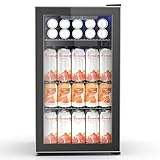
Overview: The Electactic 26 Bottle Wine Cooler provides compact beverage storage in a 3.2 cubic foot frame, holding 26 wine bottles or 130 cans. This versatile unit functions as freestanding or built-in appliance with smart temperature control from 32℉ to 61℉. The reversible door design offers installation flexibility, while the glass door and black finish complement any space. Perfect for apartments, small homes, or office environments.
What Makes It Stand Out: Its reversible door sets this model apart, allowing left or right-side opening to fit any layout. The convertible installation option maximizes placement possibilities. Precise temperature control protects wine quality, while adjustable chrome racks accommodate various bottle sizes. The compact footprint delivers substantial storage without dominating floor space.
Value for Money: Priced at $231.08, this represents excellent entry-level value. The reversible door and dual installation modes typically appear in more expensive units. While capacity is modest, the feature set exceeds expectations for the price point, making it an intelligent choice for budget-conscious buyers needing reliable wine storage.
Strengths and Weaknesses: Strengths include affordable pricing, reversible door, flexible installation, compact design, and adequate temperature range. Removable racks offer customization. Weaknesses involve smaller capacity, absence of child lock, no Wi-Fi capabilities, and potentially less efficient cooling than larger compressor models. The single-pane glass may compromise insulation.
Bottom Line: Perfect for beginners or those with limited space, this Electactic cooler prioritizes flexibility over capacity. The reversible door and dual installation options make it uniquely adaptable. While lacking premium features, its affordability and reliable performance make it a smart starter unit for casual wine enthusiasts.
3. Ivation 34 Bottle Compressor Wine Cooler Refrigerator with Wi-Fi Smart App Control Cooling System | Large Freestanding Wine Cellar Fridge For Red White Champagne or Sparkling, Black Glass Door & Lock
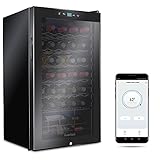
Overview: The Ivation 34 Bottle Wine Cooler revolutionizes wine storage with Wi-Fi smart app control, allowing remote temperature management from your smartphone. This freestanding compressor unit maintains precise temperatures from 41°F to 64°F, accommodating everything from sparkling whites to robust reds. The sleek black design with double-paned glass door holds 34 bottles, while advanced features cater to serious collectors. Integration with the My Ivation app provides unprecedented monitoring capabilities.
What Makes It Stand Out: Wi-Fi connectivity distinguishes this model, enabling temperature adjustments and monitoring anywhere. The UV-resistant double-paned thermopane glass offers superior protection against harmful light that degrades wine. Compressor technology ensures temperature stability unaffected by external heat sources, while the built-in fan maintains consistent internal conditions throughout the cabinet.
Value for Money: At $349.99, the premium is justified for tech-savvy enthusiasts. Smart features typically appear in units costing $400+, making this competitively priced. The UV protection and compressor cooling alone warrant the cost, while app control adds convenience that prevents costly wine spoilage, delivering long-term value.
Strengths and Weaknesses: Strengths include Wi-Fi app control, UV-resistant glass, stable compressor cooling, consistent temperature distribution, soft LED lighting, removable racks, and wide temperature range. Weaknesses are the higher price point, smaller capacity than some non-smart competitors, and reliance on app connectivity for full feature utilization.
Bottom Line: For serious collectors wanting modern convenience, this Ivation model is outstanding. The smart features provide peace of mind, while UV protection preserves wine integrity. The price premium over basic models is justified by technology that safeguards valuable collections. Highly recommended for tech-oriented wine lovers.
4. Ivation 28 Bottle Compressor Wine Cooler Refrigerator with Wi-Fi Smart App Control Cooling System | Large Freestanding Wine Cellar Fridge For Red White Champagne or Sparkling, Black Glass Door & Lock

Overview: The Ivation 28 Bottle Wine Cooler delivers the same smart technology as its larger sibling in a more compact package. Wi-Fi enabled with app control via My Ivation, this compressor refrigerator maintains 41°F to 64°F temperatures for optimal wine preservation. The freestanding design holds 28 bottles behind UV-resistant double-paned glass. Smart features include remote monitoring, temperature adjustments, and system alerts, all accessible from Android or Apple devices.
What Makes It Stand Out: This model offers identical premium features to the 34-bottle version—Wi-Fi control, UV-resistant thermopane glass, compressor cooling, and stable temperature management—in a space-saving footprint. The technology package is comprehensive, providing professional-grade wine storage with modern convenience for smaller collections.
Value for Money: At $339.99, this represents questionable value, being only $10 less than the 34-bottle model while holding six fewer bottles. The cost per bottle storage is significantly higher. While features remain excellent, the minimal price difference makes the larger model more economical unless space constraints dictate this smaller size.
Strengths and Weaknesses: Strengths mirror the 34-bottle model: Wi-Fi control, UV protection, stable compressor technology, consistent internal temperature, soft LED lighting, and removable racks. Weaknesses include poor value proposition compared to the slightly larger model, reduced capacity, and the same reliance on app connectivity.
Bottom Line: Only consider this model if space is severely limited. The features are excellent, but the pricing strategy makes little sense when the 34-bottle version costs virtually the same. For most buyers, upgrading to the larger capacity is the smarter choice. Choose this only when dimensions are non-negotiable.
5. COWSAR 37 Bottle Wine Fridge, Freestanding Commercial Beverage Refrigerator with Smart Temp Control, 4.45 Cu.Ft Mini Fridge Wine Cooler with Child Lock& Wavy Wire Shelves for Kitchen Bar, Black

Overview: The COWSAR 37 Bottle Wine Fridge combines commercial-grade construction with residential convenience in a 4.45 cubic foot freestanding unit. Holding 37 bottles, this ETL-approved refrigerator offers smart temperature control from 32°F to 61°F. The double-paned glass door provides insulation while displaying your collection. Wavy wire shelves and removable racks enable flexible storage configurations for wine, beverages, or snacks, making it versatile for kitchens, bars, or offices.
What Makes It Stand Out: ETL certification ensures rigorous safety and performance standards, distinguishing it from uncertified competitors. The vibration-free cooling system operates exceptionally quietly, ideal for bedrooms, studios, or offices where noise matters. The wave-style wine rack cradles bottles securely while optimizing space, and the double-paned glass door provides better insulation than single-pane alternatives.
Value for Money: At $282.65, this positions between budget and premium options. The ETL certification and ultra-quiet operation justify the modest premium over basic models. While lacking smart features, the build quality and safety credentials offer excellent value for discerning buyers prioritizing reliability and peace of mind over connectivity.
Strengths and Weaknesses: Strengths include ETL safety certification, whisper-quiet vibration-free operation, double-paned glass, flexible storage with wavy racks, wide temperature range, and LED lighting. Weaknesses are the absence of Wi-Fi capabilities, no child lock mentioned, lesser-known brand, and potentially less precise temperature control than Ivation’s compressor system.
Bottom Line: An excellent choice for noise-sensitive environments and safety-conscious buyers. The COWSAR excels where quiet operation and certified construction matter most. While not the cheapest or smartest option, its ETL approval and silent running make it ideal for offices, studios, or bedrooms. A reliable mid-range performer.
6. Ivation 18 Bottle Compressor Wine Cooler Refrigerator with Wi-Fi Smart App Control Cooling System | Large Freestanding Wine Cellar Fridge For Red White Champagne or Sparkling, Black Glass Door & Lock
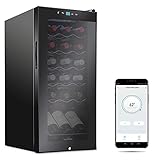
Overview: The Ivation 18-bottle wine cooler brings smartphone convenience to wine storage, targeting tech-savvy enthusiasts who value remote monitoring. This freestanding unit combines compressor cooling technology with modern connectivity, offering precise temperature control from 41°F to 64°F—suitable for everything from bold reds to sparkling whites. The sleek black design with UV-resistant glass makes it an attractive addition to any kitchen, dining room, or home bar.
What Makes It Stand Out: The standout feature is undoubtedly the Wi-Fi smart app control, allowing users to monitor and adjust temperatures remotely via the My Ivation app. The compressor technology ensures stable temperatures unaffected by external conditions, while the double-paned thermopane glass provides superior insulation and UV protection. The integrated lock adds security for valuable collections, and the touch-sensitive LCD controls offer intuitive operation. Energy-efficient LED lighting gently illuminates bottles without the label-damaging effects of fluorescent bulbs.
Value for Money: At $299.99, this cooler sits at the premium end of the 18-bottle category. The price is justified by its smart connectivity and robust compressor system—features typically found in larger, more expensive units. While non-smart alternatives cost $50-100 less, the convenience of remote monitoring and alerts provides tangible value for serious collectors who travel frequently or store expensive wines.
Strengths and Weaknesses: Strengths include exceptional temperature stability, smartphone integration, UV protection, quiet operation, and the security lock. The removable racks accommodate various bottle shapes. Weaknesses are the limited 18-bottle capacity for growing collections, potential app connectivity issues, and the premium price point. Some users may find the smart features unnecessary overhead.
Bottom Line: Perfect for technology enthusiasts with modest collections, the Ivation offers peace of mind through remote monitoring. If you value connectivity and security as much as temperature precision, this smart wine cooler delivers compelling functionality despite its limited capacity.
7. 2026 Valentines Day Gifts,5-in-1 Electric Wine Decanter with Aerator,Smart Liquor Dispenser Adjustable Dosing, Whiskey Pourer,Automatic Liquor Bottle Pump,Birthday Gifts for Her/Him/Women/Men(Black)

Overview: Marketed as the quintessential Valentine’s Day gift, this 5-in-1 electric wine decanter promises to revolutionize your wine service. Combining aeration, precise pouring, decanting, dosing, and dispensing in a single device, it targets wine lovers who value both convenience and precision. The sleek black design and touch controls make it an attractive bar accessory for romantic dinners or entertaining guests.
What Makes It Stand Out: The versatility is unmatched—aerating wine in seconds rather than 45 minutes, dispensing precisely measured pours from 1-999ml, and adapting to virtually any bottle with three silicone adapters (18-30mm). The one-handed operation is genuinely innovative, allowing effortless pouring even when multitasking. The auto-stop function prevents spills, while the extendable tube accommodates bottles from 165mm to 385mm tall, making it compatible with wine, whiskey, gin, and vodka bottles.
Value for Money: At $85.99, this gadget sits in the premium accessories category. Considering separate quality aerators ($20-40), electric dispensers ($30-60), and decanters ($30+), the 5-in-1 consolidation offers reasonable value. However, it’s still a luxury—manual methods cost nothing but time. For frequent entertainers or those with mobility issues, the convenience justifies the investment.
Strengths and Weaknesses: Strengths include rapid aeration, exceptional dosing accuracy, universal bottle compatibility, effortless one-handed operation, and impressive gift appeal. The touch controls are intuitive. Weaknesses include incompatibility with carbonated or syrupy beverages, potential battery life limitations (not specified), and reliance on electronic components that could fail. Some purists may argue it removes the ritual from wine service.
Bottom Line: An excellent gift for gadget-loving wine enthusiasts who prioritize convenience over tradition. While not essential, it delivers on its promises and makes wine service significantly easier, particularly for those with limited hand strength or who entertain frequently.
8. EUHOMY 45 Bottle Wine Cooler Refrigerator, Small Wine Fridge for Red, White and Champagne, 4.5 Cu.ft Mini Fridge with Adjust Temperature, Black

Overview: The EUHOMY 45-bottle wine cooler positions itself as the capacity king of the mid-range category, offering substantial storage in a compact 4.5 cubic foot footprint. This freestanding unit targets serious collectors who need flexibility for mixed collections of reds, whites, and champagnes. With removable shelves and adjustable legs, it adapts to various spaces and bottle configurations, making it suitable for kitchens, home bars, or offices.
What Makes It Stand Out: The exceptional 45-bottle capacity at $279.99 is the primary differentiator—most competitors offer 28-35 bottles at this price. The powerful compressor cooling system maintains temperatures from 32°F to 61°F with minimal fluctuations, while operating quietly enough for living spaces. The double-layer stainless steel tempered glass door provides UV protection and vibration dampening. The one-touch digital temperature control and premium LED lighting add convenience and showcase appeal.
Value for Money: This cooler delivers outstanding value, offering 50-60% more capacity than similarly priced units. At under $6.25 per bottle of storage, it beats most competitors on pure capacity-to-dollar ratio. The 12-month warranty and specialized refrigeration expertise provide additional peace of mind. While it lacks smart features, the focus on core functionality and capacity makes it a practical choice for growing collections.
Strengths and Weaknesses: Strengths include massive capacity, quiet operation, wide temperature range suitable for most wines, flexible shelving, UV protection, and stable compressor cooling. The adjustable legs accommodate uneven floors. Weaknesses include the 32-61°F range, which barely reaches sparkling wine temperatures, lack of a security lock, and no smart connectivity. The brand, while specialized, lacks the recognition of premium competitors.
Bottom Line: For collectors prioritizing capacity and quiet operation over connectivity, the EUHOMY is a standout choice. It offers exceptional storage density and reliable performance at a competitive price, making it ideal for those whose collections have outgrown smaller units.
9. BODEGACOOLER 28 Bottle Compressor Wine Cooler for Home and Kitchen, Freestanding Mini Fridge with Digital Touchscreen, LED Display,Split Storage for Red & White Wines,Matte Black Refrigerator Home Bar

Overview: The BODEGACOOLER 28-bottle wine cooler strikes a balance between capacity and footprint, offering a mid-size solution for enthusiastic collectors. This freestanding unit features a sleek matte black finish that complements modern home bars and kitchens. With a temperature range of 41°F to 64.4°F, it accommodates reds, whites, and sparkling wines, while the built-in fan ensures consistent temperatures throughout the cabinet.
What Makes It Stand Out: The smart memory chip is a thoughtful addition, automatically restoring settings after power outages—crucial for long-term storage. The quiet compressor cooling system maintains stable temperatures without disrupting living spaces. The double-paned thermopane glass provides excellent UV protection, while the soft LED lighting elegantly displays your collection. The split storage design concept helps organize different varietals effectively.
Value for Money: At $259.99, this cooler occupies the sweet spot between budget 18-bottle units and larger 40+ bottle models. It offers $9.30 per bottle storage cost, reasonable for compressor-cooled units with UV protection. While lacking smart features, the memory function and reliable cooling provide excellent core value. It’s priced competitively against similar capacity models from established brands.
Strengths and Weaknesses: Strengths include the smart memory function, quiet operation, adequate temperature range for most wines, UV-resistant glass, compact dimensions (16.9"W x 17.7"D x 33.07"H), and elegant matte finish. The built-in fan maintains consistent temperatures. Weaknesses include limited capacity for serious collectors, no smartphone connectivity, and the 41°F minimum may be marginal for some sparkling wines. The brand’s market presence is still growing.
Bottom Line: A reliable, well-designed cooler for moderate collectors seeking quality over flashy features. The memory function demonstrates attention to wine preservation fundamentals, making it a smart choice for those who want dependable performance without premium pricing.
10. Electactic Mini Fridge 130 Can Beverage Refrigerator Cooler, 3.2 Cu.Ft Drink Fridge for Soda Wine Beer, Adjustable Temperature Control for Home Office, Black

Overview: The Electactic Mini Fridge takes a versatile approach, positioning itself as a beverage center rather than a dedicated wine cooler. With 3.2 cubic feet of space accommodating 130 standard cans or mixed bottles, it targets homeowners seeking flexible drink storage for parties, man caves, or offices. The adjustable temperature range of 32°F to 61°F handles sodas, beers, and wines with equal aplomb.
What Makes It Stand Out: The sheer capacity for its compact under-counter dimensions is impressive, offering significantly more storage than wine-specific coolers at this price. The four adjustable wire racks provide versatile configuration for cans, beer bottles, or wine bottles. The high-performance compressor delivers reliable cooling while maintaining quiet operation suitable for living spaces. The glass door with LED lighting creates an attractive display while providing good insulation.
Value for Money: At $189.99, this is the most affordable option in the lineup, delivering exceptional value at under $1.50 per can capacity. While it lacks wine-specific features like UV-resistant glass or vibration dampening, the versatility justifies the price for casual collectors. It’s perfect for those prioritizing beverage variety over wine preservation perfection, costing 30-50% less than comparable wine-focused units.
Strengths and Weaknesses: Strengths include outstanding capacity, versatile storage options, under-counter compatibility, quiet operation, and excellent price point. The precise temperature control and glass door are welcome features. Weaknesses include wire racks that may not cradle wine bottles optimally, lack of UV protection specifics, and temperature stability less precise than dedicated wine coolers. It’s not designed for serious long-term wine aging.
Bottom Line: Ideal for casual wine drinkers and party hosts who need flexible beverage storage. While not a substitute for a dedicated wine cellar, it offers unbeatable capacity and versatility at this price point, making it perfect for man caves, game rooms, and multipurpose entertaining spaces.
Understanding Smart Wine Coolers: What Makes Them “Smart”?
The term “smart” gets thrown around liberally in appliance marketing, but genuine smart wine coolers offer functionality that transcends simple digital displays. At their core, these devices combine precise temperature management with connectivity that lets you monitor and control conditions remotely. Unlike traditional units that require manual adjustments and periodic checking, smart coolers actively communicate with you through dedicated apps, sending alerts when temperatures fluctuate or doors remain ajar.
True intelligence also manifests in adaptive learning capabilities—some models analyze your usage patterns to optimize cooling cycles and energy consumption. However, at the sub-$300 price point, you’ll primarily encounter foundational smart features rather than AI-driven sophistication. The key is distinguishing between gimmicky app interfaces and genuinely useful connectivity that enhances wine preservation.
The $300 Sweet Spot: Why This Price Point Matters
Three hundred dollars represents a fascinating inflection point in wine cooler economics. Below this threshold, manufacturers must make strategic compromises, often sacrificing build quality or advanced features. Above it, you enter territory where premium materials and brand prestige drive prices upward. At exactly $300, you’re positioned to capture the best intersection of essential smart functionality and reliable cooling performance.
This budget range forces manufacturers to prioritize what truly matters: stable temperature control, basic WiFi connectivity, and adequate capacity. You’ll rarely find dual-zone cooling or premium compressors here, but you can secure single-zone units with legitimate smart credentials. Understanding this economic reality helps set realistic expectations while revealing where hidden value often lies.
Essential Features That Define Quality in Budget Smart Coolers
When evaluating smart wine coolers under $300, certain non-negotiable features separate worthwhile investments from expensive mistakes. Temperature stability trumps all other considerations—a unit that fluctuates even 2-3 degrees can accelerate aging and compromise flavor profiles. Look for models advertising temperature variance of less than 1°F, which indicates quality thermostat sensors and insulation.
UV-protected glass doors become critical if your cooler will sit in a lit room, as light exposure degrades wine through a process called “light strike.” Even budget models should offer tempered glass with some level of UV filtration. Similarly, vibration dampening—though rarely advertised in this price range—can be assessed through user reviews mentioning noise levels, since excessive vibration often correlates with audible compressor hum.
Temperature Control Precision: The Heart of Wine Preservation
Wine preservation operates on a simple principle: consistency matters more than exact temperature. While 55°F represents the ideal cellaring temperature for most wines, maintaining a stable 57°F beats a unit that swings between 52°F and 58°F daily. In sub-$300 smart coolers, precision depends heavily on sensor quality and insulation density.
Digital thermostats with LED displays are standard, but true precision requires thermoelectric sensors rather than basic bimetallic strips. Probe your potential purchase by checking specification sheets for “temperature range” details—quality units specify narrow ranges like 40-65°F rather than broad 35-72°F spans. The narrower range indicates more controlled cooling capability, essential for proper wine storage.
Connectivity Options: WiFi, Bluetooth, and App Integration
Budget smart coolers typically offer WiFi or Bluetooth, rarely both. WiFi connectivity provides remote access from anywhere, letting you adjust temperatures while traveling or receive alerts at work. Bluetooth limits control to within approximately 30 feet of the unit—fine for home use but restrictive if you want monitoring capabilities beyond your living space.
App quality varies dramatically and often determines whether smart features feel helpful or frustrating. Premium apps offer temperature history graphs, door-open alerts, and customizable notifications. Budget-tier apps might only provide basic temperature adjustment and on/off controls. Before purchasing, download the companion app and check recent reviews—manufacturers frequently update apps, and recent feedback reveals current functionality better than older reviews referencing outdated software versions.
Capacity Considerations: Finding Your Perfect Size
The under-$300 category typically offers capacities between 12 and 28 bottles, though advertised numbers assume standard Bordeaux bottles. In reality, Burgundy or Champagne bottles reduce capacity by 20-30% due to their wider diameters. When calculating your needs, consider your collection’s composition and growth trajectory.
A 12-bottle unit suits casual drinkers who rotate stock weekly, while 18-20 bottles accommodate budding collectors who buy by the case. Beyond 28 bottles at this price point, expect significant compromises in cooling technology or build quality. Remember that empty space in a partially filled cooler reduces efficiency—choose a size you’ll realistically fill to 60-80% capacity for optimal performance.
Thermoelectric vs. Compressor Cooling: The Technical Breakdown
The cooling mechanism fundamentally defines your wine cooler’s performance, noise level, and energy consumption. Thermoelectric coolers use the Peltier effect—passing electrical current through two dissimilar metals to create a temperature differential. This solid-state technology contains no moving parts except fans, resulting in whisper-quiet operation and minimal vibration.
Compressor systems function like miniature refrigerators, using refrigerant gas compression and expansion cycles. This traditional approach delivers superior cooling power and works efficiently in varied ambient temperatures but introduces mechanical noise and vibration that can disturb wine sediment.
Pros and Cons of Thermoelectric Cooling in Budget Models
Thermoelectric coolers dominate the sub-$300 smart category for good reason: they’re cheaper to manufacture and silent enough for living spaces. Their simplicity means fewer components that could fail, potentially extending lifespan. However, they struggle in environments warmer than 75°F, losing efficiency as ambient temperature rises. They also typically offer less precise temperature control, with wider variance bands.
For apartment dwellers or those placing coolers in climate-controlled rooms, thermoelectric units represent excellent value. Just understand their limitations: they can’t cool more than 20-25°F below room temperature, making them unsuitable for garages or spaces without air conditioning in summer months.
Pros and Cons of Compressor Cooling Under $300
Finding compressor-based smart wine coolers under $300 requires careful searching, but they exist and offer distinct advantages. Compressor systems maintain consistent temperatures regardless of external conditions, making them ideal for garages, basements, or kitchens with fluctuating temperatures. They recover temperature faster after door openings and generally last longer with proper maintenance.
The trade-offs include audible operation—typically 35-45 decibels, comparable to a quiet refrigerator—and slight vibration that could disturb delicate wines over years of storage. At this price point, compressor units often come from lesser-known brands, making warranty support crucial. They also consume marginally more electricity, though the difference rarely exceeds $5-10 annually.
Single Zone vs. Dual Zone: Making the Right Choice
Dual-zone coolers, offering separate temperature compartments for reds and whites, rarely appear under $300 with legitimate smart features. Manufacturers might advertise “dual temperature” capabilities, but these often involve a minor temperature gradient rather than truly independent zones. Genuine dual-zone cooling requires separate cooling systems, pushing costs beyond budget constraints.
Single-zone coolers at this price point deliver superior value and performance. The wine storage secret most enthusiasts learn eventually: you can store both reds and whites together at 55°F, then chill whites for 30 minutes before serving. This approach preserves wine integrity better than maintaining whites at 45°F for months, which can dull flavors. Invest in a single-zone smart cooler with excellent temperature stability, and use your kitchen fridge for pre-service chilling.
Design Elements That Maximize Value and Aesthetics
Visual appeal matters, especially when your wine cooler becomes a kitchen or dining room focal point. Under $300, stainless steel trim and black metal cabinets dominate, offering neutral integration with most décor. Check door hinge quality—flimsy hinges sag over time, compromising the seal. Reversible door hinges provide flexibility for space planning, a feature worth prioritizing.
Interior LED lighting should be switchable, not permanently on. Blue LEDs create attractive displays but can affect wine if left illuminated constantly. Look for units with auto-shutoff lights or manual controls. Slide-out wood shelves feel premium and minimize label damage compared to wire racks, though they’re rare in budget models. If available, they signal thoughtful design worth the slight price premium.
Freestanding vs. Built-In Installation: What Your Space Demands
Most sub-$300 smart coolers are freestanding units requiring ventilation space—typically 2-3 inches on sides and back, and often above. Attempting to build in a freestanding unit without proper ventilation causes compressor overheating and premature failure. Some models offer front-venting designs suitable for built-in installation, but verify specifications carefully.
Measure your space twice, accounting for door swing clearance and electrical outlet location. Smart coolers require continuous power for connectivity; plugging into switched outlets defeats remote monitoring capabilities. Consider ambient temperature stability of the location—avoid placing units near ovens, direct sunlight, or exterior walls in extreme climates.
Energy Efficiency and Operating Costs: The Long-Term Perspective
That $279 price tag tells only part of the story. Energy efficiency impacts your wallet for years. Check Energy Guide labels or manufacturer specifications for annual kilowatt-hour (kWh) estimates. Most 18-bottle thermoelectric units consume 200-250 kWh annually, costing roughly $25-35 depending on local electricity rates.
Compressor units in this category often use 300-400 kWh annually, translating to $40-55 per year. The difference rarely justifies choosing thermoelectric based solely on energy costs, especially if ambient temperatures compromise thermoelectric efficiency. Smart features themselves consume minimal power—WiFi modules use less than 5 watts, adding maybe $5 annually to operating costs.
Understanding Noise Levels: Decibel Ratings Explained
Manufacturers rarely publish decibel ratings for budget coolers, forcing you to rely on user reviews. Thermoelectric units should operate below 30 decibels—essentially silent in quiet rooms. If reviews mention audible humming or fan noise, avoid that model. Compressor units will produce 35-45 decibels of cyclic noise as the compressor kicks on and off.
Consider placement context: a 40-decibel cooler in a busy kitchen goes unnoticed, but the same unit in a studio apartment bedroom becomes a sleep disturbance. Look for reviews specifically mentioning bedroom or living room placement. Some smart apps include “quiet mode” settings that reduce fan speed, though this impacts cooling efficiency and is rarely effective in budget models.
Smart Features Worth Paying For (And Those That Aren’t)
Not all smart capabilities deliver equal utility. Temperature alerts rank as the most valuable feature—receiving a notification when your cooler rises above 60°F during a power outage can save an entire collection. Door-open alerts prevent accidental temperature spikes from kids or guests browsing your selection.
Conversely, features like “smart inventory management” where you photograph bottles rarely work reliably in budget apps. Integration with broader smart home platforms sounds appealing but often provides limited functionality—turning your cooler on/off remotely helps little when wine requires continuous stable storage. Prioritize core monitoring and alerting features over flashy but impractical capabilities.
App Functionality: What to Expect from Budget Smart Coolers
Download the companion app before purchasing and test its interface. Quality apps offer intuitive temperature adjustment, alert customization, and multi-unit support for future expansion. Check app store ratings from the past six months—developers frequently abandon budget apps, leaving users with non-functional smart features after iOS or Android updates.
Beware apps requiring excessive permissions or mandatory account creation with personal data collection. Reputable manufacturers provide guest modes or minimal registration. Offline functionality matters too; if your home internet fails, the app should still control the cooler via local network connection rather than requiring cloud access.
Voice Control Integration: Alexa, Google, and Beyond
Voice control compatibility often gets advertised as premium, but its utility proves limited for wine coolers. “Alexa, set wine cooler to 55 degrees” sounds convenient until you realize most people set temperature once and rarely adjust it. Voice integration adds cost without addressing core wine preservation needs.
If voice control matters to your smart home ecosystem, verify specific commands supported. Many budget integrations only support on/off commands, not temperature adjustment. The most practical voice application involves status checks: “Hey Google, what’s the wine cooler temperature?” provides peace of mind without opening the app. Treat voice control as a bonus, not a deciding factor.
Maintenance and Longevity: Protecting Your Investment
A $300 wine cooler should last 5-7 years with proper care. Annual maintenance includes vacuuming dust from rear vents and checking door seal integrity. Place a dollar bill in the door closure—if it slides out easily, the seal has degraded and requires replacement. Clean interior surfaces with mild soap solution every six months, avoiding harsh chemicals that could odor-contaminate wine.
Smart feature longevity depends on manufacturer support. Established brands typically provide app updates for 3-5 years, while obscure brands may abandon software within 12-18 months. Check warranty terms specifically covering electronic components; some policies exclude smart modules after the first year, leaving you with a “dumb” cooler if WiFi fails.
Common Installation Mistakes That Void Warranties
Manufacturers void warranties for several preventable errors. Using extension cords instead of direct wall outlet connections tops the list—voltage fluctuations damage compressor start relays and thermoelectric control boards. Placing freestanding units in enclosed cabinets without ventilation causes overheating, a failure mode specifically excluded from coverage.
Failing to level the unit properly stresses door seals and compressor mounts. Use a bubble level during installation, adjusting feet until perfectly horizontal. Some warranties require professional installation for built-in units; DIY installation without certified technician sign-off can nullify coverage. Read warranty documentation before unboxing—the fine print often contains surprising exclusions.
Maximizing Your Budget: Getting Premium Features for Under $300
Timing your purchase unlocks additional value. Major shopping holidays—Black Friday, Prime Day, Memorial Day—see prices drop 20-30% on previous-year models with identical functionality. Retailers clear inventory in late spring and early fall, making these ideal times to hunt for deals.
Consider refurbished units from manufacturer outlets. Factory-refurbished coolers undergo testing exceeding new unit quality control, often include full warranties, and save 30-40%. The smart features remain identical, and any initial software bugs have typically been resolved. Open-box returns at big-box retailers offer similar savings—inspect carefully for door damage but expect pristine interiors.
Wine Storage Best Practices: Beyond Just Cooling
Your smart cooler maintains temperature, but proper wine storage requires holistic thinking. Store bottles horizontally to keep corks moist, preventing oxidation. Even with smart monitoring, place a separate, calibrated thermometer inside to verify accuracy—factory sensors can drift ±2°F over time, and independent verification provides peace of mind.
Humidity control remains the Achilles’ heel of budget coolers. While ideal cellars maintain 60-70% humidity, most sub-$300 units lack active humidity management. Combat dry conditions by placing a small, open container of distilled water inside, replenishing monthly. This simple trick prevents cork drying in arid climates or during winter heating seasons.
Group wines by intended drinking window rather than varietal. Your smart alerts become more meaningful when you know the 2018 Cabernet section needs immediate attention if temperature spikes, while the everyday white wine zone faces less risk. This organization maximizes both storage efficiency and the practical value of your cooler’s monitoring capabilities.
Frequently Asked Questions
Can I store both red and white wines together in a single-zone smart cooler under $300?
Absolutely. Store both at 55°F, the universal cellaring temperature. Chill whites for 20-30 minutes before serving rather than maintaining them at refrigerator temperatures long-term, which can mute flavors. This approach delivers better wine quality than budget dual-zone units with imprecise temperature separation.
Will a thermoelectric cooler work in my garage during summer?
Only if your garage stays below 75°F consistently. Thermoelectric systems cool 20-25°F below ambient temperature, so a 90°F garage yields interior temperatures of 65-70°F—too warm for proper storage. For uncontrolled environments, seek compressor-based models that maintain set temperatures regardless of external heat.
How reliable are smart features in budget wine coolers?
Core features like temperature alerts and remote monitoring prove highly reliable. Flashier functions like inventory tracking or voice control often disappoint. Focus on models with simple, well-reviewed apps that prioritize stability over feature bloat. Check recent app store reviews to gauge current reliability.
Do I need a dedicated circuit for a wine cooler?
Generally no—most units draw less than 150 watts, similar to a laptop. However, avoid plugging into circuits shared with high-draw appliances like microwaves or space heaters, which can cause voltage dips. Never use extension cords; the voltage drop across long cords damages electronic components over time.
How accurate are the temperature displays on budget smart coolers?
Factory displays typically show ±2°F accuracy. For critical collections, place a calibrated thermometer inside and compare readings weekly for the first month. Some smart apps allow temperature offset calibration, letting you correct display inaccuracies. This small step ensures your wine actually experiences the temperature you intend.
Can I build my freestanding wine cooler into cabinetry?
Only if specifications explicitly state “front-venting” or “built-in capable.” Standard freestanding units require rear and side ventilation; enclosing them causes compressor overheating and premature failure. The heat buildup also forces the unit to work harder, increasing energy costs and temperature instability.
What’s the real difference between a $200 and $300 smart wine cooler?
The $100 difference typically buys better insulation (thicker walls), more precise temperature control (quality sensors), and superior app development (ongoing support). Build quality improvements like metal shelves versus wire racks and sturdier door hinges also appear at the $300 ceiling. These upgrades significantly impact longevity and performance.
How often should I replace the charcoal filter in my wine cooler?
Most budget models under $300 lack charcoal filters entirely. If yours includes one, replace it annually to prevent odor transfer. Units without filters benefit from placing an open box of baking soda inside, replaced every three months. This absorbs ambient odors that could penetrate corks and affect wine quality.
Will my smart wine cooler work during a power outage?
The cooler itself won’t operate without power, but smart features can alert you to temperature rises if the unit reconnects to WiFi when power returns. Some advanced apps store outage duration data. For true protection, connect your cooler to an uninterruptible power supply (UPS) rated for at least 300 watts, providing 2-4 hours of runtime during outages.
Are extended warranties worth it for sub-$300 wine coolers?
Generally, no. Extended warranties cost 20-30% of the purchase price and often duplicate manufacturer coverage. Instead, purchase with a credit card offering extended warranty protection—many cards automatically double the manufacturer warranty up to one additional year at no cost. Save the warranty money for your next wine purchase.