Growing plants indoors is both an art and a science, but even the most green-thumbed cultivators will tell you that consistency beats talent every time. When you’re working within the confined ecosystem of a grow tent, Mother Nature doesn’t lend a helping hand—you become the weather system. Manual climate management might work for a single plant on your windowsill, but scale that to a productive grow tent and you’ll quickly find yourself chained to thermometers, hygrometers, and exhaust timers, constantly adjusting and second-guessing.
This is where climate control automation transforms from a luxury into a necessity. By implementing an intelligent automation system, you’re not just buying convenience; you’re investing in precision, repeatability, and the freedom to step away without your garden missing a beat. Modern automation technology acts as your 24/7 digital cultivation partner, maintaining optimal conditions while you sleep, work, or simply enjoy life away from your grow space. Let’s explore how to build a system that works smarter, not harder, delivering consistent harvests while giving you back your time.
Top 10 Climate Control Automation for Home Grow Tents
Detailed Product Reviews
1. AC Infinity Controller 69 PRO, Smart Environmental Controller with Temperature, Humidity, VPD, Timer, Cycle, Schedule Controls, for Grow Tent Cooling Ventilation Lighting

Overview: The AC Infinity Controller 69 PRO is a sophisticated digital command center designed to transform your grow tent into a fully automated ecosystem. This intelligent device orchestrates up to four AC Infinity products simultaneously, creating optimal conditions through precise environmental monitoring and responsive adjustments.
What Makes It Stand Out: Its VPD (Vapor Pressure Deficit) tracking sets it apart from standard controllers, allowing plants to transpire efficiently. The ability to program each device independently with custom transitions, minimum baselines, and dynamic responses to temperature and humidity fluctuations demonstrates remarkable flexibility. Bluetooth and WiFi connectivity unlock advanced programming, real-time alerts, and comprehensive climate data visualization through the intuitive app.
Value for Money: At $99, this controller strikes an excellent balance between capability and cost. While basic timers cost under $30 and high-end PLC systems exceed $300, the 69 PRO delivers professional-grade automation without the premium price tag. The energy savings from optimized fan and light cycles alone can offset the investment within a single growing season.
Strengths and Weaknesses: Strengths include seamless AC Infinity ecosystem integration, granular control over environmental parameters, and robust app functionality with data logging. The primary weakness is its brand-specific compatibility—non-AC Infinity devices require additional adapters. Four ports may prove limiting for expansive setups, and some users report occasional app connectivity hiccups.
Bottom Line: For hobbyists and serious growers invested in the AC Infinity ecosystem, the Controller 69 PRO is an indispensable tool that delivers precision climate control and peace of mind. It’s a worthwhile upgrade from manual management that pays dividends in plant health and yield consistency.
2. AC Infinity THERMOFORGE T3, Environmental Grow Tent Heater with VPD Temperature Controller, 10-Level PTC Heating and Included Extension Hose for Tents, Rooms, Greenhouses

Overview: The AC Infinity THERMOFORGE T3 redefines grow space heating as the first heater engineered specifically for horticultural precision. This isn’t a repurposed space heater—it’s a purpose-built climate management tool that integrates seamlessly into controlled environment agriculture setups, delivering targeted warmth with scientific accuracy.
What Makes It Stand Out: Its groundbreaking VPD-triggered operation automatically adjusts heat output based on plant transpiration needs, not just air temperature. The 10-level PTC heating system with PWM control provides granular 0-100% output modulation, eliminating the inefficient on/off cycling of conventional thermostats. The included 4-foot extension hose enables directed heat placement, preventing hot spots while maintaining uniform canopy temperatures.
Value for Money: At $129, the T3 commands a premium over basic $40 heaters, but its precision pays for itself. Traditional heaters waste energy and create temperature swings that stress plants. The T3’s efficient PWM operation and integration with UIS controllers reduce energy consumption while optimizing growth conditions, making it cost-effective for serious cultivators.
Strengths and Weaknesses: Strengths include unmatched temperature precision, VPD-based automation, flexible hose positioning, and ecosystem synergy. Weaknesses are its niche focus—casual growers may not need this sophistication—and reliance on AC Infinity controllers for full functionality. The price may deter budget-conscious gardeners, and PTC heaters can be slower to warm large spaces.
Bottom Line: For dedicated growers managing sensitive cultivars or operating in challenging climates, the THERMOFORGE T3 is a game-changer. Its intelligent heating preserves plant health and maximizes yields, justifying every penny for those who demand environmental perfection.
3. VIVOSUN AeroFlux Smart Grow Tent Heater with Thermostat, 700W PTC Heating, Compact & Portable with VPD, APP Control & Overheat Protection, Included Extension Hose for Grow Tents, Rooms, Greenhouses

Overview: The VIVOSUN AeroFlux Smart Heater emerges as a formidable competitor in the precision grow heating market, packing 700W of power into a compact, safety-focused design. This unit targets growers seeking intelligent climate control with robust built-in protections and modern app connectivity.
What Makes It Stand Out: Its 40% power advantage over standard models translates to faster warm-up times and more stable temperatures in compact spaces. The high-precision VPD sensor continuously monitors transpiration conditions, automatically modulating output across five distinct levels. Comprehensive safety features—including V0 flame-retardant materials, tip-over protection, and overheat shutoff—demonstrate VIVOSUN’s commitment to grower peace of mind.
Value for Money: Priced at $113.99, the AeroFlux undercuts the AC Infinity T3 while offering comparable smart features. The 700W output provides more bang for your buck in spaces up to 4x4 feet. While it lacks the T3’s 10-level granularity and deep ecosystem integration, its standalone app control and superior safety profile make it an excellent value for independent operators.
Strengths and Weaknesses: Strengths include powerful heating capacity, multi-layered safety systems, intuitive app interface, and compact footprint. Weaknesses are its five-level system (versus competitors’ 10-level precision) and limited third-party integration. The app occasionally experiences lag, and the shorter warranty period reflects its newer market entry.
Bottom Line: The VIVOSUN AeroFlux excels for safety-conscious growers wanting smart heating without ecosystem lock-in. It’s a powerful, reliable choice that prioritizes plant and property protection while delivering precise environmental control.
4. AC Infinity Controller 69 PRO+, Smart Environmental Controller 8-Port with Temp, Humidity, VPD, Timer, Cycle, Schedule Controls, for Grow Tent Cooling Ventilation Lighting (Bluetooth + WiFi, 8-Port)

Overview: The AC Infinity Controller 69 PRO+ builds upon its PRO sibling by doubling connectivity, offering eight independent ports for comprehensive grow room orchestration. This expanded hub maintains the same intelligent environmental management while accommodating more complex setups without requiring multiple controllers.
What Makes It Stand Out: The eight-port architecture allows simultaneous control of fans, lights, humidifiers, and heaters with individualized programming per device. Each port supports independent VPD, temperature, and humidity triggers with custom transitions. The unified interface eliminates the clutter and confusion of managing multiple controllers, while the robust app provides centralized monitoring and alerts across all connected equipment.
Value for Money: At $139, the PRO+ commands a $40 premium over the four-port model. For growers running more than four devices, this represents significant savings compared to purchasing a second controller ($99). The price per port drops from $24.75 to $17.38, making it economical for expanders. However, hobbyists with modest setups won’t justify the extra cost.
Strengths and Weaknesses: Strengths include scalable architecture, streamlined single-controller management, and identical feature set to the PRO. Weaknesses mirror the PRO: AC Infinity device exclusivity and potential app connectivity issues. The price jump stings for small-scale growers, and the learning curve steepens with eight programmable devices.
Bottom Line: The Controller 69 PRO+ is a strategic investment for serious cultivators planning expansion. If your setup exceeds four devices, the PRO+ delivers unmatched convenience and value. For compact tents, stick with the standard PRO.
5. AC Infinity CLOUDFORGE T5, Warm Mist Plant Humidifier 9L with VPD Humidity 10-Level Controls, Hot/Cold Vaporizer for All Climates, Continuous Water Purifying, Extendable Targeted Hose for Grow Tents
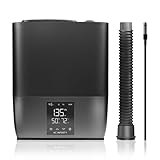
Overview: The AC Infinity CLOUDFORGE T5 revolutionizes grow space humidification by introducing intelligent warm mist technology to combat dry, cold environments. This 9-liter powerhouse delivers precision moisture control while purifying its water supply, addressing two common indoor growing challenges simultaneously.
What Makes It Stand Out: Its warm mist capability proves three times more efficient in cold conditions, maintaining VPD targets with significantly less water waste than cool-mist alternatives. The integrated light spectrum purification system continuously sterilizes the reservoir, preventing biofilm and pathogen buildup—a common issue in stagnant humidifier tanks. Ten distinct output levels paired with VPD automations provide surgical humidity control.
Value for Money: At $149, the T5 sits at the premium end of the humidifier spectrum. Basic ultrasonic models cost $30-50, but lack smart controls and purification. For growers in cold climates struggling with low winter humidity, the warm mist efficiency and water savings justify the investment. The extended targeted hose ensures precise vapor delivery, reducing waste and improving canopy-level effectiveness.
Strengths and Weaknesses: Strengths include exceptional cold-weather performance, self-cleaning technology, large tank capacity, and granular control. Weaknesses include overkill for warm climate growers, larger footprint than cool-mist units, and premium pricing. The warm mist feature adds complexity and energy consumption that may not suit all setups.
Bottom Line: The CLOUDFORGE T5 is indispensable for cultivators battling cold, dry conditions. Its intelligent warm mist and purification features deliver unparalleled humidity management. For temperate climate growers, more affordable cool-mist options suffice.
6. DAOTAILI 4-Inch Grow Tent Inline Duct Fan, Automatic Temperature & Humidity Sensing Control, Ventilation System for Grow Tents, Greenhouses

Overview: The DAOTAILI 4-Inch Inline Duct Fan offers an affordable entry into automated climate control for small-scale growing operations. This compact ventilation system monitors both temperature (50-140°F) and humidity (1-99% RH) through its integrated sensor probe, automatically activating when conditions exceed your preset thresholds. Designed for grow tents, greenhouses, and enclosed spaces, it provides hands-free environmental management without the premium price tag of high-end brands.
What Makes It Stand Out: The intelligent automatic mode sets this fan apart from basic models. Once configured, it independently maintains optimal growing conditions without constant manual adjustment. The LCD display provides real-time monitoring of temperature and humidity, making it easy to track environmental changes at a glance. Flexible operation modes allow both manual override and fully automated control, while the included stainless steel mounting hardware supports wall or hanging installation. The low-voltage DC power system ensures energy efficiency and safe operation in moist environments.
Value for Money: At $39.99, this fan delivers exceptional value for hobbyist growers. Comparable smart fans typically cost 2-3 times more, making this an accessible option for beginners or those with limited budgets. While it lacks WiFi connectivity and advanced app features, the core automation functionality rivals more expensive units. For small tents under 4x4 feet, it provides sufficient ventilation without overinvesting in equipment.
Strengths and Weaknesses: Pros: Highly affordable smart climate control; automatic temperature and humidity sensing; clear LCD display; versatile mounting options; energy-efficient low-voltage operation; suitable for multiple applications.
Cons: Lower airflow capacity unsuitable for larger spaces; no WiFi or app integration; build quality may not match premium brands; limited advanced programming options; sensor probe durability could be questionable.
Bottom Line: The DAOTAILI 4-Inch Fan is an excellent budget-conscious choice for novice growers or small tent operations. It delivers reliable automated ventilation where manual fans fall short, though serious cultivators will eventually want more power and connectivity.
7. INTER HUT Digital Thermostat Controller 15A/1500W, Temperature Controller for Heat Mat, Grow Tent, Greenhouse, Seedling, Fermentation, Brewing, -4-108°F, IPX4, 1 Pack, Green

Overview: The INTER HUT Digital Thermostat Controller is a specialized heating control device designed to regulate temperature for various applications including seed starting, brewing, and reptile care. This ETL-certified unit handles up to 15A/1500W and operates across an impressive -4°F to 108°F range. Unlike combined fan systems, this dedicated controller focuses exclusively on managing heating equipment with precision and reliability, making it essential for operations requiring consistent warmth.
What Makes It Stand Out: Built with reinforced plastic and IPX4 splash resistance, this thermostat withstands harsh growing environments. The simple four-button interface eliminates learning curves, while LED status indicators provide visibility even in dark grow spaces. The built-in handle adds portability for multi-purpose use. Its broad temperature range accommodates everything from cold-weather seed starting to fermentation processes, and the ETL certification ensures safe operation with heating mats, lamps, and greenhouse heaters.
Value for Money: Priced at $24.99, this thermostat offers outstanding value for growers needing precise heat control. Dedicated temperature controllers with similar specifications typically range from $30-$50, making this a budget-friendly yet reliable option. The 1-year warranty and ETL certification provide peace of mind that cheaper uncertified units lack. For those already owning fans but needing heat regulation, it’s far more economical than replacing an entire ventilation system.
Strengths and Weaknesses: Pros: ETL certified for safety; IPX4 water resistance; intuitive four-button controls; wide temperature range (-4°F to 108°F); high 15A/1500W capacity; LED indicators for dark environments; versatile application compatibility; affordable pricing.
Cons: Controls heating only—no cooling or humidity functions; lacks smart/WiFi connectivity; requires separate purchase of heating equipment; basic display without advanced data logging; greenhousing probe quality varies.
Bottom Line: The INTER HUT Thermostat is a must-have for growers using heat mats or lamps who need reliable, safe temperature regulation. It’s a cost-effective, purpose-built solution that excels at its singular job, though you’ll need additional equipment for complete climate management.
8. AC Infinity CLOUDLINE PRO T6, Quiet 6” Inline Duct Fan with Temperature Humidity VPD Controller, WiFi Integrated App Control - Ventilation Exhaust Fan for Heating Cooling, Grow Tents, Hydroponics
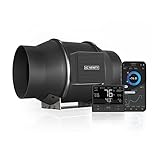
Overview: The AC Infinity CLOUDLINE PRO T6 represents the pinnacle of smart ventilation technology for serious indoor growers. This 6-inch inline fan delivers 402 CFM of airflow while maintaining whisper-quiet 32 dBA operation through its PWM-controlled EC motor. Integrated WiFi connectivity and a comprehensive app provide remote monitoring and control of temperature, humidity, and VPD, making it ideal for grow tents, hydroponic systems, and AV closets requiring precise environmental management.
What Makes It Stand Out: The T6’s dynamic programming capabilities include timers, grow cycle scheduling, and minimum speed settings that adapt to your plants’ life stages. The WiFi-enabled app grants remote access to advanced programs, real-time climate data, and automation from anywhere. Its mixed-flow design and EC-motor technology achieve remarkable energy efficiency while remaining nearly silent. Dual ball bearings ensure longevity, and the unit seamlessly integrates with other AC Infinity equipment for centralized control of entire grow room operations.
Value for Money: At $149.00, the T6 commands a premium but justifies every dollar through superior performance and features. Comparable smart fans with lower CFM ratings cost $120-$180, while the T6’s build quality and app sophistication exceed most competitors. For growers running 4x4 tents or larger, the 402 CFM capacity eliminates the need for multiple fans, potentially saving money long-term. The energy savings from the EC motor offset operational costs over time.
Strengths and Weaknesses: Pros: Exceptional 402 CFM airflow; ultra-quiet 32 dBA operation; advanced WiFi app control; VPD monitoring and programming; energy-efficient EC motor; robust build quality; dual ball bearings for durability; comprehensive automation features.
Cons: Premium price point may deter beginners; requires stable WiFi for full functionality; app learning curve for some users; overkill for very small tents; controller not detachable from fan unit.
Bottom Line: The CLOUDLINE PRO T6 is the ultimate ventilation solution for dedicated growers who demand precision, power, and silence. While expensive, its performance and smart features make it a worthwhile investment for medium to large-scale operations where climate control directly impacts yields.
9. VIVOSUN G4 4" Inline Duct Fan & Temperature Humidity Controller, E42A WiFi-App Control AeroZesh Grow Tent Fan& Smart Thermostat, 195 CFM EC Motor Exhaust Fan for Heating Cooling, Greenhouse Accessory

Overview: The VIVOSUN G4 integrates a 4-inch inline fan with the E42A GrowHub platform, offering smartphone-controlled climate management for modern growers. This system combines a 195 CFM EC motor with WiFi connectivity, delivering energy-efficient ventilation with comprehensive monitoring capabilities. Designed for grow tents and greenhouses, it tracks temperature, humidity, and VPD while allowing stage-specific automation through its dedicated app, positioning itself as a mid-range smart solution.
What Makes It Stand Out: The unified GrowHub E42A platform centralizes control of all compatible VIVOSUN devices, creating a cohesive ecosystem for automated growing. The system calculates VPD for both interior and exterior environments, providing data-driven insights for optimal plant health. Stage-specific schedules for seedling, vegetative, and flowering phases enable true hands-free operation. The premium EC motor with PWM control achieves 30% energy savings over traditional AC fans while operating at just 28 dB, making it ideal for living-space installations.
Value for Money: Priced at $87.99, the G4 strikes an excellent balance between affordability and advanced features. It undercuts the AC Infinity T6 by over $60 while offering comparable smart functionality, though with less airflow. For 2x4 or 3x3 tents, the 195 CFM is perfectly matched, preventing overspending on unnecessary capacity. The inclusion of a temperature/humidity probe and WiFi controller adds value that would cost $40+ as separate components.
Strengths and Weaknesses: Pros: WiFi app control with VPD monitoring; unified device ecosystem; quiet 28 dB operation; energy-efficient EC motor; stage-specific automation; included probe for accurate readings; competitive mid-range pricing.
Cons: Lower 195 CFM limits larger tent use; app occasionally experiences connectivity issues; ecosystem lock-in with VIVOSUN products; setup requires smartphone; fewer advanced programming options than premium competitors.
Bottom Line: The VIVOSUN G4 is an outstanding choice for tech-savvy growers seeking smart automation without breaking the bank. It delivers reliable performance and excellent app integration for small to medium tents, making it a strong value proposition in the mid-range market.
10. VIVOSUN T4 4" Inline Duct Fan & Temperature Humidity Controller, E42A+ WiFi-App Control AeroZesh Grow Tent Fan& Smart Thermostat, 210 CFM EC Motor Exhaust Fan for Heating Cooling, Greenhouse Accessory

Overview: The VIVOSUN T4 builds upon the G4 platform with enhanced airflow and the upgraded E42A+ controller, delivering 210 CFM for growers needing slightly more ventilation power. This 4-inch inline fan maintains the same smart features—WiFi app control, VPD monitoring, and stage-specific automation—while providing a modest performance boost. The EC motor ensures quiet 28 dB operation and 30% energy savings, making it suitable for residential grow spaces where noise and efficiency matter.
What Makes It Stand Out: The T4’s E42A+ platform retains the GrowHub ecosystem’s unified control while supporting the additional airflow capacity. Like its sibling, it calculates VPD inside and outside the tent, offering comprehensive environmental insights. The mixed-flow design maintains powerful, directed airflow for efficient ventilation. Stage-specific schedules automate equipment throughout growth cycles, while remote management via WiFi allows adjustments from anywhere. The system integrates seamlessly with other VIVOSUN smart devices for holistic grow room management.
Value for Money: At $115.99, the T4 commands a $28 premium over the G4 for just 15 additional CFM. While the performance increase is marginal, the price reflects the updated E42A+ controller platform rather than raw power gains. For growers already maxing out a 195 CFM fan, this slight boost might prevent needing a larger 6-inch system. However, most users will find the G4 sufficient, making the T4’s value proposition questionable unless you specifically need that extra capacity.
Strengths and Weaknesses: Pros: Enhanced 210 CFM airflow; whisper-quiet EC motor operation; comprehensive WiFi app control; VPD monitoring and automation; unified GrowHub ecosystem; energy-efficient performance; stage-specific programming.
Cons: Minimal CFM increase over cheaper G4 model; premium price for marginal performance gain; ecosystem lock-in; app-dependent operation; still limited for tents larger than 4x4; setup complexity for beginners.
Bottom Line: The VIVOSUN T4 is a solid upgrade for growers who’ve outgrown the G4 but don’t need a 6-inch fan. While the price premium is steep for the performance gain, its smart features and quiet operation make it a worthwhile consideration for specific mid-sized tent applications.
Why Climate Control Automation is a Game-Changer for Grow Tents
The difference between hobbyist yields and professional-grade harvests often comes down to environmental stability. Plants thrive on predictable cycles—consistent temperature ramps during “daylight” hours, steady humidity levels that prevent pathogen pressure, and air circulation that strengthens stems while preventing microclimates. Manual control introduces human error, forgetfulness, and the inevitable lag between problem detection and correction.
Automation eliminates these variables by creating a closed-loop system where sensors continuously feed data to controllers that adjust equipment in real-time. This isn’t just about convenience; it’s about creating optimal growing conditions that maximize photosynthetic efficiency, nutrient uptake, and overall plant health. When your VPD (Vapor Pressure Deficit) stays locked in the sweet spot and temperature differentials between day and night remain consistent, your plants can direct all their energy toward growth and resin production rather than stress response.
The Four Pillars of Grow Tent Climate Management
Temperature: The Heartbeat of Your Garden
Temperature dictates metabolic rate. Every enzymatic process within your plants—from photosynthesis to respiration—operates within specific thermal windows. Automated temperature control goes beyond simple on/off switching. Modern systems use predictive algorithms that learn your tent’s thermal inertia, anticipating temperature spikes before they occur. This means your exhaust fan might ramp up gradually as lights approach peak output, rather than waiting for heat to accumulate.
Consider the thermal mass of your pots, the heat signature of your lighting system, and even the ambient temperature fluctuations in the room housing your tent. A robust automation setup monitors multiple zones within the tent, recognizing that canopy temperature often differs significantly from floor-level readings. This granular control prevents the dreaded “heat shock” that can stunt growth or trigger hermaphroditic responses in sensitive cultivars.
Humidity: Balancing the Moisture Equation
Relative humidity management is where most manual growers falter. The relationship between temperature and humidity is dynamic—warm air holds more moisture, so a 5°F temperature swing can drastically alter your RH percentage. Automated systems maintain VPD, the true measure of transpiration efficiency, by coordinating humidifiers, dehumidifiers, and ventilation in a synchronized dance.
During vegetative growth, higher humidity supports vigorous leaf development, while flowering stages demand drier conditions to prevent bud rot and encourage resin production. An automated controller can execute these transitions seamlessly, gradually shifting humidity setpoints over days rather than making abrupt changes that stress plants. Advanced systems even factor in leaf surface temperature to calculate real-time VPD, adjusting conditions based on actual plant transpiration rather than just ambient air readings.
Air Circulation: The Breath of Your Plants
Stagnant air is the enemy of healthy growth. Automated circulation management ensures fresh CO2 reaches leaf stomata while removing oxygen and water vapor that accumulates around dense canopies. Oscillating fans connected to variable speed controllers can ramp up during peak photosynthetic periods and dial back during dark cycles, mimicking natural wind patterns.
The sophistication comes in layering your airflow strategy. Exhaust fans handle macro air exchange, but internal circulation fans prevent microclimates where humidity pockets form. Smart automation can detect these pockets through sensor arrays and activate targeted airflow only where needed, reducing energy waste and preventing wind burn from excessive fan speeds.
CO2 Enrichment: The Advanced Growth Accelerator
While not essential for beginners, CO2 supplementation represents the pinnacle of climate automation. When integrated with lighting and ventilation controllers, CO2 systems can maintain atmospheric concentrations at 800-1200 ppm during photosynthetically active periods, then purge the tent during dark cycles. This requires precise timing—enriching when lights are on and ventilation is minimal, then flushing before humidity spikes overnight.
Automation prevents dangerous CO2 accumulation that can harm both plants and humans. Safety shutoffs tied to occupancy sensors ensure enrichment only occurs when the grow space is sealed and unoccupied, while emergency ventilation triggers activate if concentrations exceed safe thresholds.
Understanding Controller Types and Their Capabilities
Basic Timer-Based Systems
The entry point into automation, timer controllers offer scheduled on/off functionality for lights, fans, and pumps. While rudimentary, quality digital timers with battery backup provide reliable photoperiod control—the foundation of any automated system. Look for models with multiple outlets and minute-level precision. The limitation is their inability to respond to environmental feedback; they execute commands regardless of actual conditions.
Environmental Controllers
These dedicated units represent the sweet spot for most home growers. They integrate temperature and humidity sensors directly, controlling exhaust fans, humidifiers, and heaters based on real-time data. Quality units feature separate day/night setpoints, differential settings (hysteresis) to prevent equipment cycling, and configurable alarm outputs. The best models include data logging capabilities, allowing you to review environmental trends and fine-tune your parameters.
Smart Wi-Fi Enabled Controllers
The modern standard for serious hobbyists, these cloud-connected devices offer remote monitoring and control through smartphone apps. Beyond convenience, they provide data visualization, push notifications for alerts, and firmware updates that improve functionality over time. The true power lies in conditional logic—“if temperature exceeds X and humidity is below Y, then activate exhaust at Z% speed.” This programming flexibility creates truly responsive ecosystems.
Programmable Logic Controllers (PLCs) for Advanced Users
For growers managing multiple tents or pursuing cutting-edge techniques, industrial PLCs offer unlimited customization. These ruggedized computers accept virtually any sensor input and control any 120/240V device through relay modules. Programming requires learning ladder logic or similar coding languages, but the payoff is complete system integration—from nutrient dosing to climate control—in one unified platform. The learning curve is steep, but the precision is unmatched.
Essential Sensors: The Eyes and Ears of Automation
Your automation system is only as good as its sensor array. Temperature and humidity sensors should be shielded from direct light and positioned at canopy height. Dual sensor setups—one near the canopy, one near the intake—provide differential readings that help optimize airflow patterns.
CO2 sensors require periodic calibration and should be placed away from direct ventilation streams to avoid false readings. Light sensors (PAR meters) can trigger supplemental lighting when natural sunlight through windows falls below thresholds, while occupancy sensors add safety layers for CO2 systems.
Soil moisture sensors and electrical conductivity (EC) probes, when integrated with climate controllers, create powerful correlations. A sudden drop in soil moisture might trigger increased humidity to reduce transpiration stress, while EC spikes could indicate nutrient lockout requiring temperature adjustments to improve uptake.
Key Features to Evaluate Before Investing
When evaluating controllers, prioritize units with adjustable hysteresis—the gap between on and off setpoints. A 2-3°F differential prevents rapid equipment cycling that burns out motors and creates unstable conditions. Seek controllers with separate day/night temperature differentials; most plants benefit from a 10-15°F drop during dark periods.
Look for units offering multiple sensor inputs and expandable relay capacity. Your needs will evolve, and a controller that grows with you saves replacement costs. Data export capabilities in CSV format allow you to analyze long-term trends and correlate environmental data with harvest metrics.
Consider failure modes: what happens if the controller loses power or a sensor fails? Quality units revert to safe defaults—exhaust fans run continuously, CO2 shuts off—or include redundant sensor validation where two sensors must agree before critical actions occur.
Integration Strategies: Building a Cohesive Ecosystem
The magic happens when devices communicate. Your exhaust fan shouldn’t just respond to temperature—it should coordinate with your humidifier and dehumidifier. When temperature rises, humidity typically drops. An integrated system might delay dehumidifier activation if the exhaust fan is already working to cool the space, preventing conflicting equipment from fighting each other.
Start with a master controller that accepts multiple sensor inputs and provides enough relay outputs for all primary equipment. Use smart power strips for secondary devices like oscillating fans and UV sanitizers, creating a hierarchy of control. The master controller manages macro conditions while subordinate timers handle routine cycles.
Consider voltage compatibility. Many high-quality exhaust fans require 0-10V or PWM signals for variable speed control, while standard outlets provide simple on/off switching. Ensure your controller matches your equipment’s control protocols, or invest in compatible relay interfaces.
The Setup Process: From Installation to Optimization
Begin by mapping your tent’s thermal and humidity patterns. Place data loggers at multiple heights for 48 hours before installing permanent sensors. This baseline reveals hot spots, dead air zones, and how quickly conditions change when lights cycle. Mount sensors on adjustable stands rather than fixed positions, allowing repositioning as plants grow.
Wire your controller’s relay outputs to contactors for high-amperage devices like air conditioners and heaters. This protects the controller from electrical noise and allows easy equipment swapping. Label every wire and create a schematic diagram—future troubleshooting becomes infinitely easier.
Program conservative setpoints initially. It’s better to let temperatures drift slightly out of ideal range while you observe system behavior than to create violent oscillations from aggressive programming. Run your automation in “monitor only” mode for several days, reviewing how the system would respond before allowing it to actually control equipment.
Calibration Protocols for Precision Performance
Sensors drift over time. Calibrate temperature sensors quarterly using an NIST-traceable reference thermometer in an ice bath (32°F/0°C) and boiling water (212°F/100°C). Humidity sensors require saturated salt solution calibration—magnesium chloride for 33% RH and sodium chloride for 75% RH references.
CO2 sensors need fresh air calibration monthly. Take the sensor outdoors (away from exhaust vents) and calibrate to 400 ppm atmospheric baseline. Some advanced controllers perform automatic background calibration during dark cycles when CO2 levels naturally drop to ambient.
Verify sensor placement seasonally. As your ducting configuration evolves or you upgrade lighting, thermal patterns shift. A sensor perfectly positioned for a 400W HPS setup may give false readings under a 600W LED array with different heat distribution.
Troubleshooting Common Automation Issues
Rapid equipment cycling usually indicates hysteresis set too tight or sensor placement issues. If your exhaust fan turns on and off every 30 seconds, widen the temperature differential and ensure the sensor isn’t in direct line of the fan’s airflow, causing it to cool artificially.
Persistent humidity problems despite equipment running constantly suggest your equipment is undersized or your tent has air leaks. Automation can’t overcome physics. Use a smoke pencil to check for leaks around zippers and duct ports. Calculate your dehumidifier’s pint-per-day rating against your plants’ transpiration rate—mature plants can release gallons of water daily.
If your controller displays erratic readings, check for electrical interference. Keep sensor cables away from ballasts and high-amperage power cords. Use shielded cable for runs longer than 10 feet, and ensure your controller shares a common ground with your equipment to prevent ground loop noise.
Energy Efficiency: Maximizing Performance While Minimizing Costs
Automation shines in energy optimization. Use your controller’s scheduling to run power-intensive equipment during off-peak utility hours. Program dehumidifiers to operate primarily when lights are on and heat is available, using waste heat to improve efficiency. Set exhaust fans to variable speed rather than on/off cycling—running at 60% continuously often uses less power than 100% bursts with constant starting current spikes.
Integrate a kilowatt meter into your controller’s monitoring. Track energy consumption against environmental stability to find your efficiency sweet spot. Sometimes a 2°F wider temperature band reduces compressor cycles enough to cut electricity costs by 15% without measurably impacting growth rates.
Consider thermal mass strategies. Large containers of water within the tent act as heat sinks, absorbing warmth during lights-on and releasing it during dark periods. Your automation system can leverage this thermal battery, reducing heater runtime in winter and delaying exhaust activation during summer peaks.
Safety Protocols and Best Practices
Never let automation replace awareness. Install independent high-temperature cutoffs that kill power to lights if temperature exceeds safe thresholds, bypassing the main controller entirely. Use smoke detectors rated for high-humidity environments, connected to shunt-trip breakers that cut all power if smoke is detected.
Water and electricity are a dangerous combination in humid grow tents. Mount all controllers outside the tent when possible, or use waterproof enclosures with cable glands. Install GFCI protection on all circuits, and test them monthly. Your automation should include leak detection sensors near reservoirs that shut off pumps and trigger alarms.
Create manual override switches for every automated function. When a sensor fails at 2 AM, you need to be able to run the exhaust fan manually without disassembling your control panel. Label these switches clearly and test them regularly—automation is a tool, not a crutch.
Scaling Your System: From Single Tent to Multi-Room Operations
As you expand, centralized control becomes critical. A master controller can manage multiple zones, each with independent setpoints but shared data logging. This allows you to run one tent for vegetative growth (warm and humid) while another flowers (cool and dry), all monitored from a single dashboard.
Use Modbus or similar industrial protocols to network controllers. This creates a robust communication backbone that doesn’t rely on Wi-Fi stability. Each tent becomes a “zone” with its own controller, but the master unit coordinates shared resources like water chillers or CO2 generators, allocating them based on priority and need.
Consider environmental redundancy. When running multiple tents, stagger dark periods so your dehumidifier and AC never face peak load from all tents simultaneously. This levels power consumption and allows smaller equipment to handle larger total canopy area. Your automation system becomes an orchestra conductor, ensuring no single device becomes a bottleneck.
Frequently Asked Questions
How much should I budget for a reliable climate automation system?
A solid entry-level system with temperature and humidity control starts around $200-400, including a quality controller and basic sensors. Mid-range Wi-Fi enabled systems with data logging and multiple relay outputs typically run $500-800. Professional-grade setups with PLC controllers and industrial sensors can exceed $1,500 but offer unlimited expansion and precision.
Can I automate my existing equipment, or do I need to buy all new gear?
Most quality grow equipment is automation-compatible. Exhaust fans with variable speed controllers, humidifiers with humidistats, and heaters with thermostats can integrate with external controllers. The key is identifying control interfaces—0-10V, 4-20mA, or simple relay contacts—and selecting a controller that matches these protocols.
What’s the single most important sensor to automate first?
Temperature. It’s the foundation all other controls build upon. Temperature affects relative humidity, VPD, and plant metabolism directly. A quality temperature controller with a good sensor will give you the biggest immediate improvement in stability and plant health.
How do I prevent automation failures from ruining my crop?
Implement redundant safety devices that operate independently of your main controller. High-temperature kill switches, humidity alarms with audible alerts, and manual override capabilities are essential. Check your system daily, even with automation, and have a backup plan—like a battery-powered fan—for power outages.
Will automation reduce my electricity bills?
Absolutely. Smart automation reduces waste by running equipment only when needed and at optimal levels. Variable speed control alone can cut fan energy use by 30-40%. Coordinating dehumidification with lighting schedules and using thermal mass strategies typically reduces overall consumption by 15-25% while improving environmental stability.
How complicated is programming a smart controller?
Modern Wi-Fi controllers use app-based interfaces with intuitive sliders and conditional logic builders. If you can set up a smart thermostat, you can program a grow tent controller. PLC systems require technical learning, but most growers never need that level of complexity.
Can automation help with pest and disease prevention?
Indirectly but significantly. Stable humidity prevents the wet/dry cycles that trigger fungal spores. Automated airflow prevents stagnant zones where pests like spider mites thrive. Some advanced systems integrate UV sterilizers that activate during dark cycles, and automated sticky trap monitors that count pests and alert you to population spikes.
How often do sensors need replacement?
Quality sensors last 2-3 years with proper calibration. Humidity sensors tend to drift fastest due to contamination. Replace sensors when calibration fails to bring them within accuracy specs, or if you notice erratic readings that troubleshooting can’t resolve. Budget for sensor replacement every 2-3 years as part of your operational costs.
Is Wi-Fi connectivity reliable enough for critical grow functions?
Use Wi-Fi for monitoring and non-critical adjustments, but core climate control should run locally on the controller. Quality systems continue operating perfectly during internet outages, syncing data when connection resumes. Never rely solely on cloud-based control for life-sustaining functions like temperature regulation.
What’s the biggest mistake beginners make with automation?
Over-control. Setting tolerances too tight creates equipment wear and unstable conditions. Plants benefit from slight natural variation. A 3-5°F temperature swing and 5-10% humidity variation is often healthier than rock-solid conditions that require constant equipment cycling. Start wide, observe, then tighten gradually based on plant response.