Picture this: it’s 2 PM on a scorching summer afternoon, and your neighbor’s sprinkler system is valiantly spraying water across their sidewalk while dark storm clouds gather overhead. Meanwhile, your water bill has mysteriously ballooned, and you’ve noticed your pump running overtime—again. This scene plays out in millions of yards annually, wasting billions of gallons of water and countless kilowatt-hours of electricity. Enter the energy-efficient smart sprinkler controller: the unsung hero of sustainable landscaping that doesn’t just save water, but dramatically slashes the hidden energy costs of irrigation.
These intelligent devices represent one of the most impactful upgrades you can make to your home’s infrastructure, yet they remain one of the least understood. Unlike basic timers, modern smart controllers function as sophisticated environmental computers that respond to real-time data, learning your landscape’s unique needs while optimizing the energy consumption of pumps, valves, and water pressure systems. Whether you’re managing a modest suburban lawn or a complex multi-zone garden, understanding how these systems work will transform not just your utility bills, but your entire approach to landscape management.
Top 10 Energy-Efficient Smart Sprinkler Controllers
Detailed Product Reviews
1. Orbit 57946 B-hyve 6-Zone Smart Indoor/Outdoor Sprinkler Controller

Overview: The Orbit 57946 B-hyve delivers smart irrigation control for medium-sized landscapes, supporting six zones with flexible indoor/outdoor installation. This controller automatically adjusts watering based on weather conditions, helping maintain healthy plants while conserving water. The system integrates with drip irrigation setups and offers remote management through a wireless connection, making it a practical upgrade from traditional timer-based systems.
What Makes It Stand Out: The dual indoor/outdoor rating sets this apart in the mid-range category, giving homeowners installation freedom that many competitors restrict. Its weather-responsive programming automatically skips cycles during rain or freezing conditions without requiring a separate rain sensor. The B-hyve platform’s compatibility with drip irrigation systems makes it particularly versatile for mixed landscapes combining lawns, flower beds, and vegetable gardens.
Value for Money: At $89.95, this controller positions itself as a budget-friendly alternative to premium brands like Rachio, offering approximately 60% of the functionality at less than half the price. For homeowners with moderate irrigation needs, it delivers essential smart features without the premium cost. The weather adjustment capabilities alone can recoup the investment through water bill savings within a single season.
Strengths and Weaknesses: Pros include flexible placement, weather-based automation, drip irrigation compatibility, and strong affordability. The six-zone capacity covers most suburban yards adequately. Cons involve a less refined app experience compared to Rachio, occasional connectivity hiccups, and fewer advanced customization options. The weather data accuracy may not match patented premium systems.
Bottom Line: This controller excels for cost-conscious homeowners wanting reliable smart irrigation without premium pricing. It’s ideal for medium yards where indoor/outdoor flexibility matters more than cutting-edge app features.
2. Rachio WiFi Smart Sprinkler Controller (8-Zone Irrigation Remote Control) – App-Based Scheduling, Local Weather Intelligence, Rain Skips, Easy DIY Install
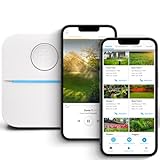
Overview: Rachio’s 8-zone smart controller represents the premium tier of residential irrigation management, combining sophisticated weather intelligence with an intuitive app experience. This system automatically adjusts watering schedules based on local forecasts, skipping cycles for rain, wind, and freeze conditions without manual intervention. The DIY-friendly installation and polished interface make it accessible for homeowners seeking professional-grade water management.
What Makes It Stand Out: The patented Weather Intelligence technology is Rachio’s crown jewel, analyzing multiple forecast parameters to optimize watering with precision that generic weather-skip features can’t match. The app’s user experience sets industry standards, offering detailed usage tracking, grow-in schedules for new plantings, and seamless integration with smart home ecosystems. Flexible scheduling lets users choose full automation or maintain manual control.
Value for Money: At $196.01, this is a significant investment that pays dividends through substantial water savings—typically 20-50% reduction in irrigation usage. For environmentally conscious homeowners or those in areas with tiered water pricing, the controller can justify its cost within two years. Compared to basic smart controllers, you’re paying for superior algorithms and reliability.
Strengths and Weaknesses: Pros include best-in-class weather intelligence, exceptional app design, reliable performance, and comprehensive water usage analytics. The system adapts seamlessly to seasonal changes. Cons center on the premium price point, indoor-only installation limiting placement options, and potential overkill for simple landscapes that don’t require nuanced weather analysis.
Bottom Line: Choose Rachio if you prioritize water conservation, app quality, and set-it-forget-it automation. It’s worth the premium for tech-savvy homeowners committed to maximizing efficiency in medium to large yards.
3. Orbit 57915 B-hyve 4-Zone Indoor Smart Sprinkler Controller
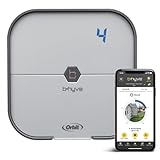
Overview: The Orbit 57915 B-hyve offers an affordable entry point into smart irrigation, managing four zones for indoor installation scenarios. This compact controller provides WiFi and Bluetooth connectivity, allowing remote scheduling and monitoring through a user-friendly app. Designed for small gardens, landscaped courtyards, or indoor plant collections, it automates watering with precision that basic timers cannot match, ensuring consistent moisture even during vacations.
What Makes It Stand Out: This unit’s aggressive pricing makes smart irrigation accessible to renters and homeowners with modest needs. The dual WiFi and Bluetooth connectivity ensures reliable access even in areas with weak wireless signals. Its four-zone capacity perfectly matches small urban landscapes or segmented garden beds, eliminating the complexity and expense of larger systems. The DIY installation process is straightforward enough for complete beginners.
Value for Money: At $45.06, this represents the lowest-cost entry into legitimate smart irrigation technology. It delivers core convenience—remote access and basic scheduling—for less than the cost of a quality hose timer. While it lacks advanced weather intelligence, the manual scheduling still saves water compared to fixed timers. For small spaces, paying more yields diminishing returns.
Strengths and Weaknesses: Pros include unbeatable price, simple setup, dual connectivity options, and adequate performance for small applications. The compact design fits anywhere. Cons are limited to four zones, indoor-only placement, no automatic weather skipping, and a basic app feature set. It won’t handle complex watering schedules or large properties effectively.
Bottom Line: Perfect for beginners, renters, or small-space gardeners wanting smart convenience on a minimal budget. It’s a practical, no-frills solution that delivers essential remote control without unnecessary complexity.
4. Orbit 57950 B-hyve 12-Zone Smart Indoor/Outdoor Sprinkler Controller
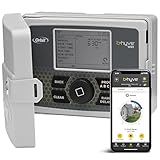
Overview: The Orbit 57950 B-hyve scales the B-hyve platform to accommodate larger residential properties, supporting twelve zones with the same indoor/outdoor flexibility as its smaller sibling. This controller automatically adjusts watering schedules based on weather conditions, making it suitable for complex landscapes with diverse plantings requiring different irrigation strategies. The system handles everything from lawn zones to delicate drip irrigation circuits simultaneously.
What Makes It Stand Out: Twelve-zone capacity at this price point is exceptional, making sophisticated irrigation control accessible for large properties that would otherwise require commercial-grade equipment. The weather-responsive automation works across all zones independently, while the indoor/outdoor rating provides installation freedom. This model bridges the gap between basic residential controllers and expensive professional systems, offering a rare combination of capacity and affordability.
Value for Money: At $117.00, it delivers remarkable value for large yards, costing significantly less than half of a comparable Rachio 16-zone system. The weather adjustment features provide meaningful water savings that compound across twelve zones, potentially recovering the investment faster than smaller systems. For properties requiring extensive coverage, this is the sweet spot between capability and cost.
Strengths and Weaknesses: Pros include high zone count, indoor/outdoor versatility, weather-based automation, and strong affordability for large installations. The B-hyve ecosystem remains user-friendly. Cons involve occasional app glitches reported at scale, less sophisticated weather algorithms than premium competitors, and limited advanced reporting features. The plastic housing may degrade faster in harsh sun than metal alternatives.
Bottom Line: Ideal for large residential properties needing extensive zone control without premium pricing. It capably manages complex landscapes while delivering genuine smart features and solid water savings.
5. Rachio WiFi Smart Sprinkler Controller (16-Zone Irrigation Remote Control) – App-Based Scheduling, Local Weather Intelligence, Rain Skips, Easy DIY Install

Overview: Rachio’s 16-zone flagship controller delivers maximum capacity for complex residential estates and elaborate landscapes. This premium system employs the same patented Weather Intelligence as its smaller sibling, automatically optimizing watering across sixteen independent zones based on hyperlocal forecast data. The sophisticated app provides granular control over each zone’s parameters, making it possible to fine-tune irrigation for diverse plantings, soil types, and sun exposures throughout a large property.
What Makes It Stand Out: Managing sixteen zones with Rachio’s precision algorithms represents the pinnacle of residential irrigation technology. The system can handle dramatically different watering needs simultaneously—mature trees, vegetable gardens, lawn areas, and flower beds each receive customized schedules. The usage tracking becomes particularly valuable at this scale, helping identify inefficiencies across a large property. Integration with advanced smart home platforms enables voice control and automation scenarios lesser systems can’t match.
Value for Money: At $249.00, this is a substantial investment justified only for properties that will leverage its full capabilities. For large estates, the 20-50% water savings multiply across extensive landscaping, potentially delivering hundreds of dollars in annual savings. Compared to professional irrigation management services, it pays for itself within a year. However, for properties needing fewer than ten zones, the premium is harder to justify.
Strengths and Weaknesses: Pros include maximum zone capacity, superior weather intelligence, exceptional app depth, and comprehensive analytics. The system scales reliably. Cons are the high price, indoor-only placement, requirement for robust WiFi coverage across large properties, and complexity that may overwhelm casual users. It’s over-engineered for simple landscapes.
Bottom Line: The definitive choice for large estates and complex landscapes where premium water management delivers measurable returns. For massive zone counts and sophisticated automation, no residential alternative matches its capabilities.
6. Smart Sprinklers Controller WiFi, Irrigation Controller Easy Use App Enabled, 4 Zone + 16 Plans, Save Water Auto Skip Rain, Freeze & Wind, 10 Minutes Install (Light Blue)

Overview:
The HiOazo Smart Sprinkler Controller delivers intelligent irrigation management for modest-sized landscapes at an accessible price point. This 4-zone system connects via 2.4GHz WiFi and supports up to 16 customizable watering plans, allowing precise control over your lawn and garden hydration. Designed for straightforward installation in about 10 minutes, it replaces outdated manual controllers with modern app-based convenience.
What Makes It Stand Out:
The weather-smart functionality automatically suspends watering during rain, freeze, or wind conditions, preventing waste and plant stress without manual intervention. The dual irrigation modes—Standard and Soak—provide flexibility for different soil types and plant needs. The inclusion of “HiOazo 5 Years Leading Care” suggests extended manufacturer support, rare in this price bracket.
Value for Money:
At $39.99, this controller dramatically undercuts premium brands like Rachio and Orbit while delivering core smart features. The water savings from weather skipping alone can recoup the investment within a single season. For homeowners with 4 or fewer zones, it eliminates the need for expensive professional systems.
Strengths and Weaknesses:
Strengths include exceptional affordability, intelligent weather-based skipping, flexible scheduling, quick installation, and claimed 5-year support. Weaknesses are the limitation to 4 zones, 2.4GHz WiFi only (no 5GHz), reliance on a lesser-known brand with unproven long-term reliability, and potential app stability concerns compared to established competitors.
Bottom Line:
An outstanding budget-friendly entry into smart irrigation for small to medium yards. If you have four or fewer zones and want automated water savings without breaking the bank, this HiOazo controller delivers impressive functionality despite its modest price.
7. Smart Sprinklers Controller WiFi, Irrigation Controller Easy Use App Enabled, 6 Zone + 16 Plans, Save Water Auto Skip Rain, Freeze & Wind, 10 Minutes Install

Overview:
Building on the same platform as its 4-zone sibling, this HiOazo Smart Sprinkler Controller expands coverage to 6 zones while maintaining the same aggressive $39.99 price point. It offers identical WiFi app control, weather intelligence, and scheduling flexibility, but accommodates larger properties without added cost. The system supports 16 distinct watering plans across six independent zones.
What Makes It Stand Out:
The most compelling feature is the additional two zones at no premium—effectively 50% more coverage for the same investment. It retains all the intelligent weather-skipping capabilities (rain, freeze, wind) and dual irrigation modes that make the series attractive. The 5-year care promise provides peace of mind for budget-conscious buyers.
Value for Money:
This represents the sweet spot in the HiOazo lineup. Competing 6-zone controllers from major brands typically cost $80-$150, making this an exceptional value proposition. The ability to manage more garden sections, flower beds, or lawn areas without upgrading to a premium-priced unit makes it ideal for moderately complex landscapes.
Strengths and Weaknesses:
Strengths include unbeatable zone-per-dollar ratio, comprehensive weather intelligence, flexible 16-plan scheduling, and simple installation. Weaknesses mirror the 4-zone version: 2.4GHz-only connectivity, uncertain long-term brand reliability, potentially less polished user experience than premium alternatives, and limited expandability beyond 6 zones.
Bottom Line:
The best value in budget smart irrigation for yards requiring 5-6 zones. It delivers core smart features without the premium price tag, making it a wise choice for cost-conscious homeowners with moderately sized properties.
8. Orbit 57985 B-hyve XR 8-Zone Smart Indoor/Outdoor Sprinkler Controller

Overview:
The Orbit B-hyve XR 8-Zone Controller represents the premium tier of smart irrigation, offering robust construction and advanced features from a trusted brand in watering solutions. Designed for both indoor and outdoor installation, this unit manages up to 8 zones with sophisticated water optimization technology. Its weatherproof housing and proven reliability make it suitable for serious gardeners and larger properties.
What Makes It Stand Out:
Unlike budget alternatives, the B-hyve XR features true indoor/outdoor weatherproofing, allowing garage or exterior mounting without additional protection. Orbit’s established ecosystem provides reliable app performance, proven weather data integration, and regular firmware updates. The 8-zone capacity supports complex landscapes with multiple plant types and watering needs.
Value for Money:
At $127.56, it’s roughly three times the cost of budget controllers, but delivers professional-grade reliability and features. The investment pays dividends through superior water savings algorithms, durable construction, and brand-backed support. For properties exceeding 6 zones or requiring outdoor installation, the premium is justified over cheaper indoor-only units that might fail in harsh conditions.
Strengths and Weaknesses:
Strengths include trusted brand reputation, weatherproof design, 8-zone capacity, advanced water management algorithms, and reliable long-term support. Weaknesses are the significantly higher price point, potentially excessive features for simple yards, and complexity that may overwhelm users seeking basic smart control.
Bottom Line:
A worthwhile investment for dedicated gardeners and larger properties. The Orbit B-hyve XR justifies its premium price through durability, expandability, and proven performance. Choose this over budget options if you need outdoor installation or manage a complex, multi-zone landscape.
9. Smart Sprinklers Controller 2.4GHz WiFi, Irrigation Controller Easy Use App Enabled, 4 Zone + 16 Plans, Save Water Auto Skip Rain, Freeze & Wind, 10 Minutes Install (Deep Grey)

Overview:
Functionally identical to the light blue 4-zone HiOazo controller, this deep grey variant offers the same smart irrigation capabilities in a more neutral color scheme. It manages four zones with up to 16 customizable watering plans via 2.4GHz WiFi connection. The system emphasizes its 99% compatibility with existing sprinkler controllers, making replacement nearly universal.
What Makes It Stand Out:
Beyond color choice, this version explicitly highlights its broad compatibility and stable 2.4GHz WiFi requirement—important details for buyers with older systems or specific router configurations. The same weather-smart skipping (rain, freeze, wind) and dual irrigation modes (Standard and Soak) are included, along with the 10-minute installation promise.
Value for Money:
At $39.99, it delivers identical value to its light blue counterpart, positioning itself as an ultra-affordable smart irrigation solution. The color option allows better aesthetic integration in darker garages or utility spaces where light blue might clash. Performance-per-dollar remains exceptional compared to brand-name alternatives costing 3-4 times more.
Strengths and Weaknesses:
Strengths include color choice flexibility, universal compatibility claims, intelligent weather features, flexible scheduling, and budget price. Weaknesses are the same 4-zone limitation, 2.4GHz-only WiFi, unknown long-term brand reliability, and potential app ecosystem immaturity compared to market leaders.
Bottom Line:
Choose between this and the light blue version purely on aesthetic preference. Both deliver remarkable smart irrigation value for small yards. If four zones suffice and you prefer a neutral color, this deep grey model offers identical performance and savings at the same compelling price point.
10. Insoma WiFi Water Timer for Garden Hose, Smart Sprinkler Timer, APP Remote Control WiFi Hose Timers, Voice Control with Alexa, Rain Delay and Manual Mode for Yard Lawn Watering

Overview:
The Insoma WiFi Water Timer diverges from in-ground systems, offering smart control for garden hoses and outdoor faucets. This single-outlet timer connects directly to 2.4GHz WiFi without requiring a gateway hub, enabling remote control through the Smart Life app. It’s designed for hose-based watering of gardens, lawns, and container plants rather than traditional sprinkler zones.
What Makes It Stand Out:
The gateway-free WiFi connection ensures reliable remote access from anywhere, solving a common frustration with Bluetooth-dependent timers. Voice control compatibility with Alexa and Google Assistant provides hands-free operation. The manual mode allows on-demand watering from 1 minute to 24 hours without disrupting programmed schedules, while weather delay offers 24-72 hour pause options.
Value for Money:
At $39.99, it competes directly with other smart hose timers but adds premium features like voice control and extended manual watering typically found in more expensive units. For renters or those with hose-based irrigation, it’s far more practical and affordable than installing an in-ground controller. The 20-schedule capacity (10 normal + 10 cycle/soak) exceeds many competitors.
Strengths and Weaknesses:
Strengths include hub-free WiFi, voice assistant integration, flexible 20-schedule programming, manual override, weather delay, and broad PSI compatibility (7.26-116). Weaknesses are single-outlet limitation, hose-only application (not for in-ground systems), and 2.4GHz-only connectivity. The Smart Life app ecosystem may be less intuitive than dedicated irrigation apps.
Bottom Line:
An excellent choice for hose-based watering needs. If you water via garden hoses, this offers unmatched convenience and smart features at a competitive price. Don’t purchase for traditional in-ground sprinkler systems, but for patio gardens, container plants, or rental properties, it’s a top-tier solution.
What Are Smart Sprinkler Controllers and How Do They Conserve Energy?
Smart sprinkler controllers are network-connected irrigation management systems that automatically adjust watering schedules based on environmental conditions, soil moisture levels, and plant water requirements. But here’s what most people miss: their energy efficiency goes far beyond just saving water. Every gallon your pump doesn’t move translates directly to reduced electricity consumption. These systems minimize pump runtime, optimize pressure requirements, and eliminate the energy waste from overwatering runoff and evaporation.
The core principle is demand-responsive operation. Traditional controllers run on fixed schedules regardless of weather, meaning your 2-horsepower pump might be working full-tilt during a rainstorm, pushing water through already-saturated soil. Smart controllers break this inefficient cycle by continuously analyzing multiple data streams to determine precisely when and how much to water, ensuring your pump only runs when absolutely necessary and at the most energy-efficient times of day.
The Hidden Energy Cost of Traditional Irrigation Systems
Your irrigation system’s energy consumption is like an invisible leak in your utility budget. A typical residential 1.5 HP well pump uses approximately 1.1 kW per hour of operation. If you’re running a standard 30-minute cycle across six zones daily, that’s 3.3 kWh per day—roughly 1,205 kWh annually. In many regions, this single system can account for 10-15% of a home’s total electricity usage.
But the waste multiplies. Overwatering forces your pump to work harder against already-saturated soil, increasing pressure and energy draw. Poorly timed watering during peak evaporation hours (10 AM to 6 PM) means you’re moving up to 40% more water to achieve the same root penetration. Factor in the embedded energy in municipal water treatment and distribution—approximately 0.004 kWh per gallon—and the true energy footprint of inefficient irrigation becomes staggering.
How Smart Controllers Transform Water Management
The transformation begins with predictive rather than reactive management. Smart controllers integrate hyperlocal weather data, including precipitation forecasts, humidity, wind speed, and solar radiation. They calculate exactly how much moisture your soil will lose to evaporation and plant transpiration over the next 24-48 hours, then schedule irrigation only to replenish that deficit.
This precision eliminates the “set it and forget it” mentality that plagues traditional systems. Instead of running Zone 1 for 20 minutes every Tuesday and Friday, your smart controller might water for 12 minutes at 5:30 AM on Thursday when soil moisture hits 40% capacity, then skip the next three cycles because rainfall is predicted. This dynamic adjustment reduces pump cycles by 30-50% while maintaining healthier plants that develop deeper, more drought-resistant root systems.
Key Features That Define Energy-Efficient Smart Sprinkler Controllers
Weather Sensing Technology
True energy efficiency demands more than just rain delay buttons. Advanced controllers pull data from multiple weather services and on-site sensors, analyzing not just precipitation but evapotranspiration rates, wind patterns, and temperature forecasts. Look for systems that offer “weather intelligence plus” capabilities, which automatically adjust watering percentages based on a calculated evapotranspiration (ET) deficit. This prevents the energy waste of post-rain watering and pre-storm irrigation.
Soil Moisture Monitoring
Soil moisture sensors are the unsung heroes of energy conservation. By providing real-time data from the root zone, these sensors create a closed-loop system that stops irrigation when moisture reaches optimal levels. This prevents the energy-intensive cycle of pump runtime wasted on already-saturated soil. The best systems use capacitance-based sensors that measure volumetric water content rather than cheap resistive sensors that corrode and provide inaccurate readings.
Evapotranspiration (ET) Calculations
ET represents the gold standard for irrigation efficiency. Controllers using ET algorithms calculate the exact amount of water lost from soil and plants, replacing only what’s necessary. The Penman-Monteith equation is the most accurate method, considering solar radiation, wind, humidity, and temperature. Systems implementing ET-based scheduling can reduce pump energy consumption by up to 40% while improving plant health, as they encourage deeper root growth that accesses naturally cooler, moister soil layers.
Zone-by-Zone Customization
Energy waste multiplies when you treat sun-baked turf the same as shaded perennial beds. Advanced controllers allow independent scheduling for each zone based on plant type, soil composition, slope, sun exposure, and sprinkler head type. This means your high-spray rotor zone with sandy soil might run for 8 minutes every three days, while your drip-irrigated shrub zone runs for 45 minutes weekly. This granular control prevents overwatering some areas to compensate for under-watering others, optimizing overall system pressure and pump efficiency.
Understanding EPA WaterSense Certification
The EPA WaterSense label is your shortcut to identifying genuinely efficient controllers. To earn certification, devices must demonstrate they reduce water usage by at least 15% compared to standard controllers while maintaining plant health. But the energy benefits are equally significant. WaterSense-certified controllers undergo rigorous testing for weather-based scheduling, water budgeting capabilities, and sensor integration.
The certification process includes third-party verification that the controller can adjust for rainfall, freeze conditions, and soil moisture. This translates directly to energy savings: less pump runtime, reduced pressure fluctuations, and elimination of emergency winterization cycles. Many water utilities offer rebates of $100-300 for WaterSense-certified controllers, dramatically improving your ROI timeline.
Installation: DIY vs Professional Setup
Electrical Requirements and Safety
Most smart controllers require a standard 120V outlet and include a 24VAC transformer for valve operation. Before installation, verify your existing system’s amperage draw and transformer capacity. A controller supporting 8-16 zones typically needs a 1A transformer, while larger systems may require 1.5A. Undersized transformers force the pump relay to work harder, creating energy waste and premature failure.
If you’re replacing an existing controller, photograph the wiring configuration and use a multimeter to verify voltage. The common wire (usually white) must be securely connected—loose connections cause voltage drops that make valves sluggish, increasing pump pressure and energy consumption. For hardwired installations, consider adding a dedicated GFCI circuit to prevent nuisance trips that could interrupt efficient watering cycles.
Wiring Compatibility with Existing Systems
Legacy systems often use proprietary rain sensor wiring that doesn’t directly translate to smart controllers. Most modern units accept normally closed (NC) sensor circuits, but some older systems use normally open (NO) configurations. Using the wrong sensor type can cause the controller to bypass weather data, running pumps during rainfall and wasting energy.
Check valve solenoid resistance (should be 20-60 ohms). High resistance indicates failing solenoids that draw excess current and create inefficient pump operation. Replace aging solenoids during controller upgrade to maximize energy savings. For systems with a pump start relay, verify the controller’s pump circuit rating matches your relay’s coil voltage—most require 24VAC, but some booster pumps use 110VAC relays.
Smart Home Integration and Connectivity Options
Wi-Fi vs. Bluetooth vs. Proprietary Protocols
Wi-Fi connectivity is essential for true energy optimization. Controllers that rely solely on Bluetooth limit you to on-site adjustments and can’t access real-time weather data, defeating their smart capabilities. Look for dual-band Wi-Fi (2.4/5 GHz) with strong antenna gain (3+ dBi) to ensure reliable connections through exterior walls.
Some premium systems use proprietary mesh protocols like Zigbee or LoRaWAN for sensor connectivity while maintaining Wi-Fi for cloud access. This separation reduces Wi-Fi congestion and allows sensors to operate on low-power networks, extending battery life to 2+ years. Avoid controllers that require constant cloud connectivity for basic operation—they waste energy on unnecessary data transmission and fail during internet outages.
Voice Assistant Compatibility
While voice control is convenient, its energy-saving potential lies in integration routines. Connect your controller to smart home platforms to create scenes like “Vacation Mode” that reduces watering frequency and pump runtime while you’re away. Advanced integrations can link soil moisture data to trigger whole-home energy reports, showing exactly how irrigation impacts your monthly consumption.
The Role of AI and Machine Learning in Modern Systems
The newest generation of controllers employs machine learning to analyze your landscape’s response patterns. They track how quickly each zone depletes moisture after watering, learning the unique hydrology of your soil and root systems. Over 2-3 weeks, these systems optimize not just duration but timing, shifting cycles to early morning hours when water pressure is highest and evaporation is lowest.
This AI-driven optimization can identify inefficiencies like leaking valves or clogged heads by detecting abnormal flow rates. Some systems integrate with utility smart meters, correlating pump electricity usage with water consumption to diagnose pressure issues. The result is a self-tuning system that continuously refines its energy efficiency without manual intervention.
Calculating Your Return on Investment
Water Bill Reduction Metrics
The average household uses 30,000 gallons annually for irrigation, costing $300-600 depending on region. Smart controllers typically reduce this by 20-50%, saving $60-300 yearly. But the energy savings are equally compelling. Reducing pump runtime by 40% saves approximately 480 kWh annually—worth $60-120 at average electricity rates. Combined, you’re looking at $120-420 in annual savings.
Energy Savings Breakdown
Calculate your specific savings by timing your pump’s actual runtime over a week with your old controller, then compare after 30 days with a smart system. Most users find their pump runs 15-20 hours weekly with traditional timers versus 8-12 hours with smart scheduling. At 1.1 kW per hour, that’s a monthly reduction of 13-35 kWh per zone. For a 6-zone system, annual energy savings can exceed 1,000 kWh.
Rebates and Incentive Programs
Check with your water utility for rebate programs—over 400 US utilities offer incentives. Many electric cooperatives also provide rebates for devices that reduce peak demand. The Database of State Incentives for Renewables & Efficiency (DSIRE) lists regional programs. Some utilities even offer time-of-use rates that make off-peak irrigation 20-30% cheaper, which smart controllers can automatically leverage.
Seasonal Adjustment Strategies for Maximum Efficiency
Spring startup requires gradual ramp-up schedules to encourage deep root growth. Program your controller to water deeply but infrequently as temperatures rise, building drought tolerance before summer stress. This prevents the energy spike of daily watering during July heat waves.
In fall, use the controller’s “seasonal adjust” feature to reduce watering by 10% weekly as temperatures drop. This prevents the common mistake of maintaining summer schedules into October, which wastes pump energy on dormant grass. For winter, enable freeze skip features that automatically suspend watering when temperatures drop below 35°F, protecting pipes while eliminating unnecessary pump cycles.
Troubleshooting Common Performance Issues
If your pump runs but no zones activate, check the controller’s transformer output (should read 24-28VAC). Low voltage causes valves to chatter, increasing energy draw without delivering water. For systems that water during rain, verify the weather station is set to your exact location—controllers using zip codes can miss microclimates. If water usage seems high despite smart scheduling, inspect for leaks: a single leaking valve can waste 500+ gallons daily, forcing your pump to cycle continuously.
Connectivity drops can cause controllers to revert to dumb timer mode, running inefficient fixed schedules. Install a Wi-Fi range extender near your controller or upgrade to a system with cellular backup. Some advanced units store 14 days of weather forecasts locally, maintaining efficiency even when offline.
Maintenance Best Practices for Long-Term Efficiency
Quarterly, clean your controller’s terminals with contact cleaner to prevent voltage drop. Annually, test each zone’s amperage draw using the controller’s diagnostic mode—valves drawing more than 0.4A are failing and wasting energy. Replace backup batteries every two years; low batteries can cause settings to reset to factory defaults, often triggering wasteful daily schedules.
Calibrate soil moisture sensors each spring by testing them in dry, then saturated soil, and adjusting the controller’s reading accordingly. Clean weather sensor housings monthly—spider webs and debris can block rain gauges, causing false readings that waste pump energy. For controllers with flow sensors, verify accuracy by comparing readings to your water meter quarterly.
Environmental Impact Beyond Your Backyard
The energy-water nexus means your irrigation choices have cascading environmental benefits. Water treatment and distribution consume approximately 4% of total US electricity usage. By reducing demand, smart controllers help utilities avoid pumping and treating unnecessary gallons. This translates to lower greenhouse gas emissions—saving 30,000 gallons annually prevents about 120 pounds of CO2 from water system energy use.
Moreover, reduced runoff means less fertilizer and pesticide pollution entering waterways. Overwatering washes these chemicals into storm drains, requiring additional energy-intensive treatment. Smart irrigation creates healthier soil biology that sequesters carbon more effectively, turning your yard into a minor climate solution rather than a contributor to resource waste.
Future Trends in Irrigation Technology
The next frontier is grid-interactive controllers that communicate directly with utility demand response programs. These systems will automatically delay watering during peak energy hours (typically 4-9 PM), shifting pump operation to times when renewable energy is abundant and electricity is cheapest. Some pilot programs offer additional rebates for this capability.
Solar-powered controllers with integrated battery storage are emerging for remote zones, eliminating electrical grid dependency entirely. We’re also seeing development of micro-dosing systems that apply water in 2-3 minute pulses throughout the night, maintaining perfect moisture while using smaller, more efficient booster pumps. As water scarcity intensifies, expect controllers to integrate with greywater recycling systems, automatically switching sources based on availability and energy cost.
Making the Final Decision: A Buyer’s Checklist
Before purchasing, verify the controller supports your zone count plus 20% expansion capacity. Confirm it includes both Wi-Fi and local control options. Check that the app provides detailed energy and water usage analytics, not just basic scheduling. Ensure it supports multiple weather data sources and allows custom ET adjustments.
Look for firmware update history—manufacturers that regularly update their software continuously improve efficiency algorithms. Verify rebate eligibility in your area before buying, as some programs require pre-approval. Finally, consider the ecosystem: does it integrate with your existing smart home platform, and does the manufacturer offer compatible soil sensors and flow meters? A controller that grows with your system’s sophistication will deliver better long-term energy savings.
Frequently Asked Questions
How much electricity does a smart sprinkler controller actually save compared to a traditional timer?
Most households see pump energy reductions of 30-50%, translating to 400-800 kWh annually for a typical 6-zone system. The controller itself uses minimal power (5-10 watts), but the real savings come from reduced pump runtime—your pump is the energy hog, not the controller.
Will a smart controller work with my existing well pump and pressure tank?
Absolutely. Smart controllers are compatible with any standard 24VAC pump start relay. For well systems, look for controllers with flow sensor inputs to detect when your well is running dry, preventing pump damage. Some advanced models can even interface with variable frequency drive (VFD) pumps to optimize pressure and energy use further.
Do I need soil moisture sensors for the controller to be energy-efficient?
While not strictly required, they significantly boost efficiency. Weather-based scheduling alone reduces pump runtime by about 30%, but adding soil moisture sensors can push savings to 50% by preventing irrigation when subsurface moisture is adequate. Think of sensors as the difference between a smart guess and knowing exactly when to water.
How reliable are weather-based adjustments? Can they handle microclimates?
Quality controllers use weather stations within 1-2 miles of your property and adjust for your specific elevation and slope. For unique microclimates (e.g., shaded valleys), supplement with local temperature/humidity sensors. The best systems allow you to fine-tune weather sensitivity, essentially calibrating the algorithm to your yard’s specific response patterns.
What happens to my watering schedule during internet outages?
Premium controllers store 7-14 days of weather forecasts and continue smart scheduling offline. Basic models may revert to a simple backup program. For uninterrupted efficiency, choose a system with local memory and cellular backup, or at minimum, a controller that maintains its last smart schedule until connectivity returns.
Are there any energy efficiency rebates specifically for the controller itself, not just water savings?
Yes, many electric utilities offer rebates under “smart home energy management” or “demand response” programs. These typically range from $50-150. Check with your utility’s energy efficiency department, as they may require enrollment in a time-of-use rate plan to qualify.
How difficult is it to program ET-based watering schedules?
Modern controllers automate ET calculations—you simply input your plant types, soil composition, and sprinkler head styles. The controller handles the complex math. However, you should review and adjust the initial settings after 2-3 weeks based on plant response. The interface should show you the calculated ET value and resulting schedule in plain language.
Can smart controllers reduce wear and tear on my pump, extending its lifespan?
Definitely. By reducing total runtime and eliminating short-cycling (frequent on/off cycles), smart controllers decrease mechanical wear. The gradual ramp-up schedules in spring also prevent thermal shock to pump motors. Most users report 30-40% longer pump life, saving $500-1,500 in replacement costs over a decade.
What’s the payback period when considering both water and energy savings?
Typical payback is 12-24 months. A $200-300 controller saves $120-420 annually in combined utilities. Add in potential rebates of $100-300, and your net investment may be recovered in the first year. The payback is faster for larger properties, well pump systems, or areas with high water/electricity rates.
Do smart controllers work with drip irrigation and other low-flow systems?
Yes, and they’re particularly beneficial. Drip systems run longer but at lower pressure, making them ideal for smart scheduling during off-peak hours. Look for controllers with “cycle and soak” features that break long drip cycles into shorter intervals, preventing runoff on slopes while maximizing pressure efficiency. Many controllers have dedicated drip zone settings that adjust ET calculations for the higher efficiency of point-source watering.