Imagine returning home after a long day, arms full of groceries, and your gate swings open seamlessly as you approach—no fumbling for keys, no dead batteries, no monthly electric bill for that remote access you barely use. This isn’t some far-off smart home fantasy; it’s the reality that solar-powered smart locks are delivering to homeowners right now. These ingenious devices combine cutting-edge security technology with renewable energy independence, specifically engineered to withstand the unique challenges of outdoor gate and fence installations where traditional smart locks simply can’t survive.
But here’s what most people don’t realize: not all solar smart locks are created equal, and the difference between a reliable, decade-long investment and a frustrating piece of tech that leaves you locked out in the rain comes down to understanding some critical nuances. From deciphering IP ratings that actually matter in hurricane zones to calculating solar panel wattage based on your specific shade patterns, this guide will walk you through everything you need to know before mounting hardware to your perimeter. Whether you’re securing a rural property’s driveway gate or adding convenience to a suburban side yard entrance, we’re diving deep into the technical specifications, installation strategies, and long-term maintenance that separate the merely functional from the truly exceptional.
Top 10 Gate Locks with Solar Panels
Detailed Product Reviews
1. Pedestrian Gate Lock (BULLDOG)

Overview: The BULLDOG Pedestrian Gate Lock is a robust access control solution designed for securing walk-through gates in commercial and residential settings. Priced at $271.39, this FM145 Kit operates on four AA batteries and features an extensive twenty-five digital keypad—far more comprehensive than standard four-digit systems. Engineered specifically for horizontal mounting on pedestrian gates, it’s ideal for pools, condominiums, schools, and other high-traffic areas requiring controlled access.
What Makes It Stand Out: The standout feature is undoubtedly the twenty-five digit keypad capacity, allowing for complex access codes suitable for multiple users. The solar compatibility option (1 Watt 9V panel) provides flexibility for locations without convenient power access. Additionally, the integration capability with a door bell push button enables easy exit from inside the property—a thoughtful safety feature missing from many competitors.
Value for Money: At this premium price point, you’re investing in commercial-grade construction and versatile power options. While battery operation keeps installation simple, the solar compatibility reduces long-term operating costs. Comparable keypad systems typically cost $150-$250, but few offer the same code capacity and dual power flexibility, justifying the higher cost for security-conscious property managers.
Strengths and Weaknesses: Strengths include exceptional code capacity, solar compatibility, exit button integration, and weather-resistant design for outdoor use. The horizontal-only mounting limits some applications, and the battery requirement means ongoing maintenance. The price may deter residential users with basic needs.
Bottom Line: This lock excels for commercial applications needing sophisticated access control. If you require multiple user codes and flexible power options for a pedestrian gate, the BULLDOG delivers professional-grade security worth the investment.
2. Mighty Mule FM145 Automatic Gate Lock with Keypad for Pedestrian Walk-Through Gates, Keypad Entry System, Secure Outdoor Lock, Weather-Resistant, Easy Installation

Overview: The Mighty Mule FM145 offers keyless convenience for pedestrian gates at a competitive $220.14 price point. This automatic gate lock provides secure access control for homes, gardens, and pool areas through its weather-resistant keypad entry system. Designed for straightforward DIY installation, it fits most standard pedestrian walk-through gates without requiring professional assistance or complex wiring.
What Makes It Stand Out: The weather-resistant design truly distinguishes this lock, built to withstand harsh rain, sun, and snow conditions without compromising functionality. The automatic locking mechanism ensures your gate remains secured until deliberately unlocked—a critical feature for pool safety and property security. The universal compatibility with most gate types eliminates guesswork during purchase.
Value for Money: Priced $50 below the BULLDOG equivalent, this represents solid mid-range value. The included hardware and clear instructions save approximately $100-$150 in professional installation costs. While it lacks solar compatibility, the straightforward battery operation minimizes long-term expenses. For residential users seeking reliable security without commercial-grade complexity, this hits the sweet spot.
Strengths and Weaknesses: Strengths include excellent weatherproofing, simple installation, broad compatibility, and dependable automatic locking. Weaknesses are limited power options (batteries only), basic keypad capacity compared to commercial models, and no exit button integration. The plastic components may wear faster than metal alternatives in high-traffic scenarios.
Bottom Line: For homeowners wanting reliable, keyless gate access without installation headaches, the Mighty Mule FM145 delivers exceptional value. It’s an ideal choice for residential security where weather resistance and simplicity matter more than advanced features.
3. GC GHOST CONTROLS Solar Heavy-Duty Automatic Gate Opener Kit for Driveway Swing Gates with Long-Range Solar Gate Opener Remote - Model TSS1XP

Overview: The GC GHOST CONTROLS TSS1XP transforms manual driveway gates into automated, solar-powered entrances for $668.00. Designed for single swing gates up to 20 feet or 900 pounds, this DIY kit includes everything needed except the 12V battery. It accommodates various gate styles—decorative, chain link, tube, plantation, and wood—making it versatile for residential applications seeking modern convenience without trenching for power.
What Makes It Stand Out: The remarkable 1,000-foot remote range provides convenience unmatched by many competitors, allowing gate operation from far down your driveway. The solar panel inclusion eliminates electrical costs and complex wiring. Smart compatibility offers future-proofing through smartphone app integration (sold separately), while the tube gate brackets simplify installation on common gate types.
Value for Money: This kit represents strong value for solar automation under $700. Comparable systems often exceed $800-$1,000 when adding solar panels separately. The DIY design saves $300-$500 in professional installation. However, the required 12V deep-cycle marine battery adds $80-$150 to the total cost. For properties lacking electrical access, it’s significantly cheaper than trenching power lines.
Strengths and Weaknesses: Strengths include impressive remote range, complete solar setup, easy installation, and broad gate compatibility. Weaknesses are the battery not included, unsuitability for solid panel gates (wind resistance issues), and additional cost for smart features. The 10W panel may struggle in low-sunlight regions without supplemental charging.
Bottom Line: This opener excels for rural or long-driveway properties needing solar automation. If you have a compatible gate and value DIY installation with excellent range, the TSS1XP delivers professional performance at a consumer-friendly price.
4. Ghost Controls TDS2XP Heavy-Duty Solar Dual Automatic Gate Opener Kit for Swing Gates Up to 20 Feet
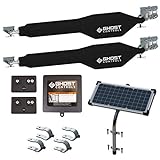
Overview: The Ghost Controls TDS2XP extends automation to dual swing gates for $966.00, handling two leaves up to 12 feet each (24 feet total) and 900 pounds. This comprehensive kit includes two opener arms, a 10-watt monocrystalline solar panel, control box, two remotes, and mounting hardware—everything except the required 12V battery. It supports the same gate types as the single version, offering symmetrical automation for elegant dual-gate entrances.
What Makes It Stand Out: The synchronized dual-arm operation ensures both gates open and close in perfect harmony, creating a sophisticated entrance experience. The push-to-open bracket compatibility (sold separately) accommodates outward-swinging gates that open away from the property. Like its single-gate sibling, it maintains the impressive 1,000-foot remote range and smart device compatibility for modern control.
Value for Money: Priced $300 more than two single kits would cost, the TDS2XP actually delivers better value through integrated control and simplified wiring. Professional dual-gate installation typically runs $1,500-$2,500, making this DIY kit a significant savings. The 10W solar panel adequately powers both arms in most climates. Factor in $100-$150 for the battery and potential bracket upgrades.
Strengths and Weaknesses: Strengths include seamless dual-gate synchronization, comprehensive hardware package, excellent remote range, and solar efficiency. Weaknesses are the premium price point, battery not included, and potential need for additional brackets ($50-$100) for outward-swinging configurations. Installation complexity increases with dual arms and gate alignment.
Bottom Line: For properties with dual swing gates, this kit offers the best balance of performance and value. The integrated control and solar power make it ideal for homeowners wanting a premium entrance experience without premium installation costs.
5. TOPENS AD8S Automatic Solar Gate Opener for Heavy Duty Dual Swing Gates Up to 18ft per Arm, Dual Swing Gate Operator Battery Powered with Remote Control Kit Gate Motor Solar Panel Included

Overview: The TOPENS AD8S brings 25 years of automation expertise to dual swing gates at a competitive $599.00 price point. This heavy-duty system operates gates up to 18 feet or 880 pounds per leaf with two stable 24VDC 80W motors. The kit includes a solar panel and emphasizes safety with multiple protective features, making it suitable for residential, ranch, and farm applications where reliability and security are paramount.
What Makes It Stand Out: The powerful dual-motor design delivers ultra-quiet operation with soft start/stop functionality that extends motor lifespan. Advanced TOPENS code technology prevents unauthorized remote access, while the electromagnetism limit switch enables precise adjustment. The stop-and-reverse obstacle detection and auto-close features provide comprehensive safety. Crucially, it supports both pull-to-open and push-to-open configurations without requiring additional bracket purchases.
Value for Money: This undercuts the Ghost Controls dual system by $367 while offering more included features. The manual release key comes standard (often a separate purchase), and the flexible installation saves $50-$100 in brackets. With professional-grade motors and comprehensive safety systems at a mid-range price, it delivers exceptional value. The 25-year brand heritage suggests reliable long-term support.
Strengths and Weaknesses: Strengths include powerful quiet motors, comprehensive safety features, flexible installation options, included manual release key, and superior value. Weaknesses are slightly lower weight capacity than competitors (880 vs 900 lbs) and less brand recognition in North America. The instruction manual may be less detailed for novice DIYers compared to Ghost Controls.
Bottom Line: The TOPENS AD8S is the value champion for dual swing gate automation. If you want professional-grade safety features, quiet operation, and installation flexibility without paying premium prices, this system outperforms competitors costing significantly more.
6. JUJIANG Solar Gate Opener with Batteries & Solar Panel + Electric Gate Lock for Single Swing Gates Up to 440lb per Arm Automatic Gate Openers with Remote Complete Kit Light Duty PKM-C01
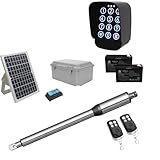
Overview: The JUJIANG PKM-C01 is a comprehensive solar-powered gate automation kit designed for light-duty single swing gates weighing up to 440 pounds or spanning 12 feet. This complete package includes two 12V7Ah batteries, a 30W solar panel, wireless keypad, and remote controls, offering an off-grid solution for remote locations or power outage resilience. The system operates on clean solar energy while storing excess power in batteries for consistent performance day and night.
What Makes It Stand Out: The standout feature is the TKM-01 wireless keypad with dual password channel storage—Channel 1 holds 8 passwords for single-gate operation while Channel 2 stores 3 passwords for dual-gate control. This provides flexible access management for family, service providers, or guests without physical keys. The 40W motor delivers robust performance for light-duty applications, and the solar charging capability eliminates electrical wiring costs and monthly utility expenses.
Value for Money: At $399.99, this kit undercuts professional wired installations by hundreds of dollars while providing energy independence. Comparable solar systems often exceed $500. The included wireless keypad (typically $60-80 separately) and dual-channel password system add significant value, making it cost-effective for properties needing multiple user access levels without recurring fees.
Strengths and Weaknesses: Strengths include true solar independence, flexible password management, straightforward DIY installation, and powerful 40W motor. The 30-day return policy and 12-month warranty provide purchase confidence. Weaknesses involve the “light duty” limitation—gates near 440lbs may strain the system. The product description confusingly references “dual swing gates” despite the single-gate title. Battery requires full initial charge, and intermittent operation signals low power.
Bottom Line: Ideal for budget-conscious homeowners seeking keyless, solar-powered convenience on light-duty single gates. The dual-password keypad makes it perfect for properties requiring tiered access. Ensure your gate is well under the 440lb limit for optimal longevity.
7. JUJIANG Solar Gate Opener with Batteries & Solar Panel + Electric Gate Lock for Single Swing Gates Up to 440lb per Arm Automatic Gate Openers with Remote Complete Kit Light Duty PKM-C01

Overview: This JUJIANG kit mirrors Product 6 but emphasizes the included DS-02 Electric Gate Lock, making it a security-focused solar automation solution for single swing gates up to 440lbs or 12 feet. The system integrates automatic locking/unlocking synchronized with gate operation, providing enhanced stability during harsh weather and preventing forced entry. Solar panels charge dual 12V7Ah batteries for reliable off-grid performance.
What Makes It Stand Out: The integrated electric gate lock automatically engages when closed and releases before opening, eliminating manual locking and adding critical security for gates exceeding 7 feet. The system supports up to 120 remote controls with 100-foot range—exceptional for large households or small commercial settings. The 40W high-efficiency motor handles light-duty gates reliably, while the electromagnetism limit switch enables precise adjustment.
Value for Money: Priced at $409.99—just $10 more than Product 6—this version includes the electric lock, which typically retails for $90-120 separately. This represents outstanding value for longer gates requiring automatic security. The solar power eliminates electrical installation costs (often $300+), making the total investment significantly cheaper than grid-tied alternatives with similar features.
Strengths and Weaknesses: Strengths include integrated automatic locking, massive remote capacity, solar independence, and robust motor power. The lock provides peace of mind for pet owners and security-conscious users. Weaknesses are the light-duty classification despite the lock suggesting heavier applications, and the minimal price difference may confuse buyers. Like Product 6, battery management is critical—insufficient charge causes intermittent operation.
Bottom Line: The automatic lock makes this the superior choice for gates over 7 feet or those prioritizing security. For only $10 more than the base kit, the integrated locking mechanism is a no-brainer upgrade. Perfect for residential driveways needing convenience and protection.
8. TOPENS A3S Automatic Solar Gate Opener for Light Duty Single Swing Gates Up to 12ft, Single Swing Gate Operator Battery Powered with Remote Control Kit Gate Motor Solar Panel Included

Overview: The TOPENS A3S leverages 25 years of gate automation expertise to deliver a refined solar-powered opener for light-duty single swing gates up to 300 pounds or 12 feet. This battery-powered system includes a 24VDC 30W ultra-quiet motor, solar panel, and remote kit. Designed for DIY installation with basic tools, it offers both Pull-to-Open and Push-to-Open configurations for inward or outward swinging gates.
What Makes It Stand Out: The A3S excels in safety and refinement. TOPENS code technology secures remotes against unauthorized cloning, while the electromagnetism limit switch ensures precise positioning. The stop-and-reverse function detects obstacles, preventing damage or injury. Soft-start and soft-stop technology extends motor life and reduces noise. The auto-close feature secures property automatically after entry, and the manual release key provides backup access during power issues.
Value for Money: At $329.00, the A3S undercuts most competitors while offering premium safety features typically found in $400+ systems. The 25-year brand heritage ensures reliable support and parts availability. For gates under 300lbs, this delivers professional-grade functionality without professional installation costs, saving hundreds in labor and wiring expenses.
Strengths and Weaknesses: Strengths include whisper-quiet operation, comprehensive safety suite, brand reputation, straightforward installation, and excellent price point. The multiple protection systems provide peace of mind for families with children or pets. Weaknesses include the 300lb capacity limitation—insufficient for solid wood or heavy steel gates. The 30W motor is less powerful than some alternatives, and the kit lacks an integrated electric lock.
Bottom Line: The A3S is the value champion for light-duty gates where safety and quiet operation matter. TOPENS’ engineering pedigree shows in the refined features. Choose this for residential applications under 300lbs; upgrade to the A5S for heavier gates.
9. TOPENS A5S Automatic Solar Gate Opener for Medium Duty Single Swing Gates Up to 16ft, Single Swing Gate Operator Battery Powered with Remote Control Kit Gate Motor Solar Panel Included

Overview: The TOPENS A5S upgrades the A3S platform for medium-duty single swing gates, handling up to 550 pounds or 16 feet with a more powerful 24VDC 50W motor. This solar-powered system retains the brand’s signature safety features while delivering robust performance for heavier residential, ranch, or light commercial gates. The complete kit includes batteries, solar panel, remotes, and all mounting hardware for DIY installation.
What Makes It Stand Out: The 50W motor provides 67% more power than the A3S, enabling smooth operation of substantial gates without strain. It maintains all premium safety features: obstacle detection with stop-and-reverse, adjustable auto-close (0-120 seconds), soft-start/stop technology, and TOPENS encrypted remote controls. The electromagnetism limit switch allows precise travel adjustment, and the manual release ensures emergency access.
Value for Money: At $359.00—only $30 more than the A3S—the capacity jump from 300lbs to 550lbs and 12ft to 16ft represents exceptional value. Competing medium-duty systems typically start at $450+. This positions the A5S as the sweet spot for most residential driveways, offering headroom for solid wood or steel gates without overpaying for heavy-duty commercial units.
Strengths and Weaknesses: Strengths include superior power-to-price ratio, comprehensive safety systems, quiet operation, brand reliability, and flexible installation options. The 550lb capacity covers nearly all residential needs. Weaknesses include solar dependency—frequent cycles may require additional battery capacity. The electric lock is sold separately (ET24, $99), adding cost for gates over 5 feet. Some users may find the remote range limiting for large properties.
Bottom Line: The A5S is TOPENS’ most versatile residential offering, balancing power, safety, and value. For gates between 300-550lbs, this is the clear winner. The modest price premium over the A3S buys significant performance headroom and future-proofing.
10. TOPENS ET24 Automatic Electric Gate Lock for DC 24V Swing Gate Opener Gate Operator System Device Safe Security Gate Lock

Overview: The TOPENS ET24 is a dedicated electric gate lock designed to integrate with 24VDC swing gate openers, including TOPENS A3S/A5S and most third-party 24V systems. This accessory automatically locks gates when closed and unlocks before opening, eliminating manual security measures. Constructed from Q235 steel with a weather-resistant plastic-sprayed finish, it provides robust reinforcement against forced entry and wind damage.
What Makes It Stand Out: The ET24 activates automatically through your existing opener—no separate remote or wiring needed. It eliminates gate “wiggle room” that develops over time, preventing pets from squeezing through and stopping gates from swinging in high winds. The Q235 steel construction balances strength with reduced weight at the gate end. Manual backup keys ensure access during power failures, and the clever design enables straightforward DIY installation.
Value for Money: Priced at $99.00, the ET24 is reasonably positioned against generic locks ($70-90) while offering proven TOPENS compatibility and quality. For gates over 5 feet (1.5 meters), it’s strongly recommended and costs less than integrated lock kits. If you already own a 24V opener, this adds professional-grade security without replacing your entire system.
Strengths and Weaknesses: Strengths include universal 24V compatibility, automatic operation, sturdy weather-resistant construction, manual backup keys, and brand-backed warranty. Installation is straightforward with included instructions. Weaknesses require an existing 24VDC opener—it’s not standalone. The lock adds installation complexity and may need periodic adjustment. For non-TOPENS systems, compatibility verification is essential.
Bottom Line: An essential upgrade for any 24V swing gate opener on gates exceeding 5 feet. The automatic integration and robust construction justify the cost. Purchase this with your opener or add it later—either way, it’s a worthwhile security investment that enhances safety and stability.
Understanding Solar-Powered Smart Locks for Gates and Fences
The Evolution of Outdoor Security Technology
Traditional gate locks have always faced a fundamental problem: power. Mechanical locks lack convenience, while hardwired electronic systems require costly trenching and ongoing electrical costs. Battery-powered options seemed promising until homeowners realized that changing batteries in a rain-soaked keypad every few months is nobody’s idea of progress. The convergence of low-power microprocessors, efficient photovoltaic cells, and robust weatherproofing has finally cracked this code. Modern solar smart locks draw inspiration from marine and aerospace engineering, where reliability in harsh conditions isn’t optional—it’s mission-critical. Today’s systems operate on a fraction of the power their predecessors required while delivering sophisticated features like biometric authentication, encrypted cloud connectivity, and real-time access logs that would have seemed like science fiction a decade ago.
How Solar-Powered Smart Locks Actually Work
At its core, a solar-powered smart lock functions as a self-contained microgrid. The photovoltaic panel—typically monocrystalline for its superior efficiency in partial shade—harvests photons even on overcast days, converting them to direct current that trickle-charges an internal lithium-ion battery pack. This isn’t the same battery technology from your smartphone; these are deep-cycle cells designed for thousands of charge cycles and extended temperature ranges from -20°F to 140°F. The lock’s power management system is the unsung hero, intelligently rationing energy by putting non-essential components into sleep mode and waking them instantly when motion sensors detect approach. Most quality units require only 2-4 hours of indirect sunlight daily to maintain operation, storing excess energy in capacitor banks for those stretches of gloomy weather that would doom lesser devices.
Key Benefits of Solar-Powered Gate Locks
Uninterrupted Power Supply and Energy Independence
The most compelling advantage is freedom from the power grid’s whims. During outages that leave your neighbors’ electric gates frozen, your solar lock continues functioning normally. This independence proves invaluable for vacation properties where electrical service might be intermittent or for rural gates located hundreds of feet from the nearest utility connection. The system’s battery typically provides 30-90 days of autonomous operation even in complete darkness, creating a buffer that hardwired systems simply can’t match. For security-conscious homeowners, this means your perimeter remains protected when you need it most—during storms, infrastructure failures, or other vulnerabilities.
Environmental Impact and Cost Savings
While the green credentials appeal to eco-conscious buyers, the financial math is equally persuasive. A standard electric gate opener consumes 100-200 watts daily, translating to $50-100 annually in electricity costs. Solar eliminates this entirely, with the panels typically paying for themselves within 18-24 months. More significantly, you avoid the $500-2,000 trenching expense required to run line voltage to remote gates. The lithium batteries in quality solar locks last 5-7 years versus 6-12 months for alkaline batteries in non-solar models, reducing hazardous waste and replacement costs dramatically over the system’s lifespan.
Enhanced Security Features for Remote Access
Solar power enables always-on connectivity that battery-only locks must ration. This continuous power budget supports features like 24/7 video integration, instant mobile notifications, and automatic firmware updates that patch security vulnerabilities. Advanced models maintain low-energy Bluetooth beacons that wake the WiFi radio only when authorized users approach, creating a seamless experience without draining reserves. The result is a lock that’s actually smarter—capable of learning your family’s patterns, detecting anomalous access attempts, and integrating with broader security ecosystems rather than functioning as an isolated gadget.
Critical Features to Evaluate Before Buying
Solar Panel Efficiency and Battery Capacity
Don’t be seduced by wattage numbers alone. A 5-watt high-efficiency monocrystalline panel with a 6,000mAh battery often outperforms a 10-watt polycrystalline panel paired with a 3,000mAh cell. Look for panels with at least 20% conversion efficiency and batteries rated for 5,000+ charge cycles. The critical spec is “days of autonomy”—how long the lock operates without sun. For regions with frequent overcast weather, target 60+ days. Pay attention to charge controllers; MPPT (Maximum Power Point Tracking) technology extracts 30% more energy from panels than cheaper PWM controllers, especially in variable light conditions.
Weather Resistance and Durability Ratings
That IP65 rating might suffice for a doorbell, but gates face horizontal rain, pressure washing, and temperature swings that demand IP67 or IP68 certification. The “6” indicates complete dust protection, while the “7” or “8” means submersion resistance—critical when your lock sits at the bottom of a hill where water pools. Look for UV-stabilized polymers or marine-grade 316 stainless steel housings. Salt spray testing (ASTM B117) matters for coastal installations; if the manufacturer doesn’t mention it, assume the lock won’t survive three years near the ocean. Gasket quality separates the professionals from the amateurs—silicone O-rings with compression fittings outperform foam seals that degrade in sunlight.
Connectivity Options: WiFi, Bluetooth, and Beyond
WiFi connectivity seems obvious until you realize your gate might be 200 feet from your router. Dual-band WiFi (2.4GHz and 5GHz) with external antenna options provides flexibility, but LoRaWAN or Z-Wave Long Range might serve distant gates better, consuming less power while maintaining reliable connections through obstacles. Bluetooth Low Energy (BLE) 5.0 or newer offers 4x the range of older versions and enables passive entry without draining the battery. The sweet spot? A hybrid system that uses BLE for daily access and wakes WiFi only for remote management or firmware updates, optimizing both power consumption and functionality.
Locking Mechanisms: Deadbolts, Latches, and Magnetic Locks
Your gate’s swing direction, weight, and frame material dictate the appropriate lock type. Deadbolt-style locks excel for solid wood or metal gates, providing 1,000+ pounds of holding force and working with existing mechanical key overrides. Latch bolts suit lighter vinyl gates but require precise alignment. Magnetic locks offer incredible strength (up to 1,200 lbs) and no moving parts to wear out, but they’re fail-safe—meaning they release during power loss, which might not suit security-focused applications. For most residential gates, a motorized deadbolt with anti-cut plating and a clutch mechanism that disengages under forced entry provides the best security-convenience balance.
Access Methods and User Management
Beyond PIN codes and smartphone apps, evaluate the breadth of credential support. NFC (Near Field Communication) cards work reliably for children or guests without smartphones. Biometric fingerprint readers add convenience but ensure they use capacitive sensors (not optical) that work with wet or dirty fingers—essential outdoor functionality. The backend management system matters as much as the hardware. Look for systems allowing temporary codes with granular scheduling (weekdays only, 9 AM-5 PM), automatic expiration, and audit trails showing exactly who accessed your gate and when. The ability to revoke access instantly without physical reprogramming transforms how you manage contractors, dog walkers, or Airbnb guests.
Installation Considerations for Different Gate Types
Wooden Gates: Mounting and Reinforcement
Wood’s natural flexing and moisture expansion create unique challenges. Never mount directly to untreated wood; use a metal reinforcement plate spread across at least three vertical boards to distribute force. Stainless steel carriage bolts with backup washers prevent the lock from tearing free as the wood ages. Position the solar panel to avoid drip lines from the gate’s top rail—constant moisture exposure will eventually compromise seals. For swing gates, mount the lock on the hinge side to minimize frame flex during operation. Remember that wood gates sag over time; include 1/4-inch adjustment shims in your installation to compensate for future settling.
Metal and Wrought Iron Gates: Special Requirements
Metal gates conduct heat and cold, stressing electronic components. Thermal isolation pads between the lock body and gate frame prevent extreme temperatures from shortening battery life. Wrought iron’s decorative scrollwork often lacks flat mounting surfaces; custom L-brackets fabricated from matching metal maintain aesthetics while providing secure attachment. Galvanic corrosion occurs when dissimilar metals touch in moist environments—use nylon washers to separate stainless steel hardware from aluminum gates. For tubular steel gates, verify wall thickness; lightweight tubing may require internal reinforcement with wood blocking to prevent the lock from crushing the frame when torque is applied.
Vinyl and Composite Gates: What You Need to Know
These materials expand and contract dramatically with temperature—up to 1/8 inch per foot between seasons. Use slotted mounting holes rather than fixed holes to allow movement without stressing the lock body. Vinyl’s flexibility demands the lock and strike plate align perfectly; even 1/16-inch misalignment causes binding. Composite gates often contain hollow cores; fill mounting areas with expanding foam and insert threaded inserts before the foam cures. This creates solid anchor points without the weight penalty of full wood blocking. Avoid overtightening; vinyl creeps under constant pressure, so use torque-limiting screws and recheck alignment seasonally.
Solar Panel Positioning and Sunlight Optimization
Understanding Shade Patterns and Seasonal Changes
That sunny spot in July might be shaded by December’s low sun angle behind your neighbor’s oak tree. Use a solar pathfinder app to map shade patterns across all four seasons before finalizing panel placement. Morning sun is actually more valuable than afternoon sun; panels charge more efficiently in cooler morning temperatures, and you’ll bank energy for evening use. Consider reflective surfaces—light-colored house siding or a pool can increase effective irradiance by 15-20%. For gates under trees, bifacial solar panels that capture reflected light from underneath can harvest 30% more energy than traditional monofacial designs, turning a suboptimal location viable.
Adjustable Mounting Solutions for Maximum Exposure
Fixed mounts look clean but sacrifice 40% potential energy compared to adjustable systems. Look for ball-and-socket mounts allowing 180-degree rotation and 90-degree tilt adjustment without tools. This lets you optimize the panel angle seasonally—steeper in winter when the sun is low, flatter in summer. For gates that open inward, mount the panel on a hinged arm that swings clear of the gate’s path. Some advanced systems include motorized sun-tracking mounts that automatically follow the sun’s arc, boosting daily harvest by 25-35%. While pricey, these pay for themselves in reliability for gates in marginal sunlight locations.
Integration with Smart Home Ecosystems
Compatibility with Alexa, Google Home, and Apple HomeKit
Voice control sounds gimmicky until you’re carrying groceries and can say “Alexa, unlock the side gate” without breaking stride. However, compatibility layers matter. Native HomeKit integration offers superior privacy—your access codes stay encrypted on your Apple devices rather than a cloud server. Google Assistant and Alexa require cloud processing, so verify the manufacturer’s privacy policy and data retention practices. Look for Matter certification, the new industry standard ensuring interoperability across ecosystems. Be wary of locks requiring proprietary hubs; they add cost and another point of failure. The best systems connect directly to your existing WiFi or thread network, appearing natively in your smart home app without additional hardware.
IFTTT and Third-Party Automation
True smart home integration means your lock participates in broader automations. IFTTT (If This Then That) support allows creative workflows: automatically lock the gate at sunset, send a text when the gardener arrives, or flash your porch lights if someone enters the wrong code three times. Webhook support enables integration with professional security systems like Hubitat or Home Assistant for advanced users. Evaluate the lock’s API documentation; open APIs indicate a manufacturer confident in their security and committed to long-term support. Closed systems might work today but become paperweights if the company discontinues service. The gold standard is local control capability—your lock should function even if the manufacturer’s cloud service shuts down.
Security Standards and Encryption Protocols
Understanding AES Encryption and Two-Factor Authentication
Your gate lock protects your perimeter, making it a high-value target for sophisticated attacks. Insist on AES-256 encryption for all wireless communications—the same standard protecting government secrets. Anything less is vulnerable to brute-force attacks. Two-factor authentication (2FA) for the management app is non-negotiable; without it, a stolen phone becomes a key to your property. Time-based one-time passwords (TOTP) via apps like Google Authenticator are more secure than SMS codes, which can be intercepted via SIM swapping. The lock’s firmware should support secure boot, cryptographically verifying that only authorized software runs on the device, preventing malicious firmware injection.
Physical Tamper Resistance and Anti-Theft Features
Solar panels are theft targets; look for tamper-proof Torx screws and steel security cables anchoring the panel to the gate frame. The lock itself should include accelerometers that trigger alerts if someone attempts to pry it off. Internal magnetic switches detect when the housing opens, immediately logging the event and notifying you. Strike plates should include anti-shim designs preventing credit card-style bypass attempts. For maximum security, choose locks with dual-factor authentication at the device level—requiring both a valid credential and a Bluetooth proximity signal from your phone, preventing code theft from being useful to remote attackers.
Maintenance and Troubleshooting
Cleaning Solar Panels and Weatherproof Seals
Dust, pollen, and bird droppings can reduce panel efficiency by 30% in a single month. Clean panels monthly with deionized water and a microfiber cloth—tap water leaves mineral deposits that etch the glass over time. Never use abrasive cleaners or pressure washers; they destroy the anti-reflective coating. Inspect weatherproof seals quarterly, looking for UV cracking or compression set. Apply dielectric grease to O-rings annually; this prevents drying and maintains the waterproof barrier. In snowy climates, panels should be mounted vertically enough to shed snow naturally; never scrape ice as it damages the cells. The best maintenance is preventive—applying a hydrophobic coating like Rain-X every six months causes water and dirt to bead off, maintaining peak efficiency.
Battery Health Monitoring and Replacement
Lithium batteries don’t fail suddenly; they degrade gradually. Quality locks report battery health percentage in the app—replace when capacity drops below 70% to avoid being caught off-guard. Extreme temperatures accelerate degradation; if your lock regularly exceeds 120°F internally (common on metal gates in direct sun), expect 3-4 year lifespans rather than 5-7. Replacement should be user-serviceable with plug-and-play battery packs; sending the entire lock back to the manufacturer is unacceptable. Store spare batteries at 50% charge in cool, dry locations—full charge storage stresses cells. When installing a new battery, perform a full charge-discharge cycle to calibrate the lock’s fuel gauge, ensuring accurate capacity reporting.
Common Connectivity Issues and Solutions
That “weak signal” warning usually isn’t about distance—it’s about interference. Metal gates create Faraday cages; external antennas with coaxial extension cables can relocate the radio outside the metal enclosure. For WiFi locks, create a separate 2.4GHz network with 20MHz channel width; this provides better range than 5GHz and avoids congestion. Bluetooth locks that drop connection may be experiencing WiFi coexistence interference; disabling WiFi on the lock and using a dedicated hub often solves this. If the lock goes offline every night, it’s likely not a connectivity issue but a power problem—the battery dips below the radio’s minimum voltage threshold. Increase panel size or add a supplementary battery pack rather than chasing phantom network problems.
Legal and Neighborhood Considerations
HOA Regulations and Local Ordinances
Homeowners associations wield surprising power over gate modifications. Many HOAs restrict visible solar panels for aesthetic reasons, though some states have “solar rights” laws preventing unreasonable restrictions. Submit detailed drawings showing panel size, color, and mounting location before purchasing. Historic districts often require approval for any visible changes; surface-mounted panels are usually denied, but integrated panels built into the lock housing often pass muster. Local building codes may classify powered gates as “access control systems” requiring permits and inspections. Check if your installation triggers requirements for safety sensors or emergency release mechanisms—adding a solar lock to a manual gate sometimes reclassifies it as automatic, invoking a web of regulations.
Insurance Implications of Smart Locks
Your insurance company cares deeply about anything affecting perimeter security. Some carriers offer 5-10% discounts for smart locks with audit trails, viewing them as risk reduction. Others consider them “untested technology” and may deny claims if a lock failure contributes to a burglary. Document your installation with photos and keep purchase receipts showing UL or CE certification. Maintain mechanical backup keys; insurers may argue that purely electronic access voids coverage. Most importantly, notify your agent in writing—undisclosed modifications can be grounds for claim denial. The sweet spot is a smart lock with a mechanical override that you never use but satisfies insurance requirements while enjoying smart features daily.
Cost Analysis: Upfront Investment vs. Long-Term Savings
A quality solar smart lock system ranges from $300-600, roughly double a basic battery-powered unit. However, factor in the $200-400 you’ll spend on batteries over five years for non-solar models, plus the convenience cost of lockouts due to dead batteries. Professional installation adds $150-300, but DIY is feasible for handy homeowners. The real savings emerge over time: zero electricity costs, no trenching, and increased property value. Real estate studies show smart security features add 3-5% to home valuations, making the lock essentially free at resale. For rental properties, the ability to remotely manage access without driving to rekey locks saves $100-200 annually in locksmith fees alone. Calculate your payback period based on electricity rates, battery replacement costs, and your time value—the typical homeowner sees full ROI in 18-30 months.
Frequently Asked Questions
How long do solar-powered gate locks last on cloudy days?
Quality systems store enough energy for 30-90 days of typical use without direct sunlight. The key is battery capacity and power management, not just panel size. During extended gloomy periods, most locks enter power-save mode, disabling non-essential features while maintaining core locking functionality.
Can I install a solar smart lock on a gate that doesn’t get direct sunlight?
Yes, but with caveats. High-efficiency monocrystalline panels harvest energy from ambient light, though you’ll need larger panels and battery capacity. Consider remote panel mounting with 10-20 feet of low-voltage cable, positioning the panel on a nearby fence post or structure that receives better exposure. Bifacial panels that capture reflected light can also improve performance in shady locations.
What happens if the battery completely dies?
Premium locks include emergency power contacts where you can connect a 9V battery or USB power bank to temporarily energize the system. Mechanical key overrides remain the gold standard for backup access. Avoid locks with neither feature, as you’ll be forced to cut your way in during a failure.
Are solar smart locks secure against hacking?
Modern units use AES-256 encryption and secure boot processes that make remote hacking extremely difficult. The bigger risk is physical tampering or weak passwords. Enable two-factor authentication, use unique 8+ digit PINs (not 1234), and choose locks that encrypt credentials locally rather than storing them in the cloud.
Will extreme cold or heat affect performance?
Temperature extremes impact battery chemistry more than electronics. Below -4°F, lithium batteries temporarily lose capacity but recover when warmed. Above 140°F internal temperatures (common on dark metal gates), battery degradation accelerates permanently. Choose locks with thermal insulation and batteries rated for your climate extremes.
Do I need to turn off the lock during vacation to conserve power?
Absolutely not. Quality locks use less than 1% battery daily in standby. Turning them off often causes more problems, including lost time settings and reconnection headaches. Instead, enable vacation mode, which maintains security but reduces non-essential checks and notifications, actually extending battery life slightly.
Can solar panels power both the lock and a gate opener?
Generally no—gate openers are power-hungry motors drawing 200-500 watts during operation. Solar smart locks consume 0.1-0.5 watts continuous. While you might find integrated systems, they require substantially larger panels and batteries. For most applications, separate systems are more reliable and cost-effective.
How difficult is DIY installation compared to traditional locks?
If you can install a deadbolt and mount a mailbox, you can handle most solar smart lock installations. The complexity lies in solar panel positioning and ensuring weatherproof cable connections. Budget 2-4 hours versus 30 minutes for a mechanical lock. The hardest part is often running wires cleanly; surface-mount conduit designed for irrigation systems works perfectly for gate applications.
What maintenance is required versus regular locks?
Monthly panel cleaning, quarterly seal inspection, and annual battery health check via the app. That’s it. Compare this to lubricating mechanical locks seasonally and replacing corroded components every few years. Solar locks actually require less maintenance than traditional hardware once properly installed.
Will my homeowner’s insurance cover a smart lock failure?
Coverage varies dramatically. Some policies explicitly exclude electronic lock failures, while others offer discounts for smart security. The key is documentation: keep installation records, certification documents, and maintenance logs. Most importantly, maintain mechanical backup keys—insurers view purely electronic access as higher risk and may deny claims if you can’t demonstrate a physical override option existed.