Tired of battling over the thermostat? You’re not alone. The promise of personalized comfort in every room has made HVAC zoning one of the most sought-after upgrades for modern homes, but the real magic happens when you pair intelligent zone controllers with responsive smart vents. This powerful integration transforms your heating and cooling system from a blunt instrument into a precision instrument, delivering exactly the right temperature to exactly the right spaces at exactly the right time.
But here’s the thing: slapping smart vents onto your existing ductwork without proper zone-controller integration is like buying a sports car and never taking it out of first gear. The real efficiency gains, comfort improvements, and energy savings only materialize when these two technologies communicate seamlessly. This guide will walk you through everything you need to know—from underlying principles to practical installation considerations—so you can make informed decisions about creating a truly intelligent climate control system for your home.
Top 10 HVAC Zone-Controller Smart Vents
Detailed Product Reviews
1. Flair Smart Vent 4x10 (White), AC Vent Cover for Floors, Walls and Ceilings.…

Overview: The Flair Smart Vent 4x10 transforms traditional HVAC registers into intelligent airflow controllers, offering room-level climate management without invasive installation. This battery-powered vent cover integrates with central heating and cooling systems to automatically adjust airflow based on temperature data from sensors, addressing uneven temperatures throughout your home. Designed as a modular system component, it requires a Flair Bridge (sold separately) and at least one temperature sensor per room—either a Flair Puck, compatible smart thermostat, or third-party sensor.
What Makes It Stand Out: The vent’s true innovation lies in its zero-wire installation; simply remove your existing 4x10 register and drop in the Flair unit. The hvacOS software platform enables sophisticated 7-day scheduling for individual rooms, allowing you to heat or cool only occupied spaces while marking unused rooms as inactive for energy savings. Voice assistant compatibility adds convenient hands-free control, and the app provides clear step-by-step setup guidance.
Value for Money: At $129, the vent itself is reasonably priced for smart home hardware, but the total system cost escalates quickly when adding the required Bridge ($99+) and Pucks ($99 each). Compared to traditional zoning systems requiring ductwork modification, Flair offers a renter-friendly alternative, though whole-home coverage becomes expensive.
Strengths and Weaknesses: Strengths include effortless installation, intelligent automation, and compatibility with existing thermostats. Weaknesses are the mandatory additional purchases, battery maintenance requirements, and that it only controls airflow rather than creating true zones.
Bottom Line: Ideal for renters or homeowners seeking targeted temperature control without construction, but budget for the complete ecosystem before committing.
2. SmartZone-3X : 3 Zone HVAC Controller KIT w/ Temp Sensor; Dual Climate Control to Replace Honeywell HZ322, EWC, Zonefirst, Zonex, Durozone & More

Overview: The SmartZone-3X represents the third generation of universal HVAC zone controllers, delivering professional-grade multi-zone climate management for residential systems. This kit includes the control panel and a crucial supply air temperature sensor that protects equipment by preventing staging when temperatures are unsafe. Designed to replace legacy panels from Honeywell, EWC, Zonefirst, and others, it supports three independent zones with dampers (not included) to create true HVAC zones rather than just adjusting airflow.
What Makes It Stand Out: Every terminal features an LED indicator for instant troubleshooting visibility, while the digital display provides comprehensive system status at a glance. Universal compatibility spans single-stage, multi-stage, and variable-speed equipment across gas, electric, and heat pump systems. The 5-year manufacturer warranty demonstrates exceptional confidence in durability and reliability.
Value for Money: Priced at $189.99, the SmartZone-3X undercuts many proprietary systems while offering superior flexibility. The included supply air sensor, typically a separate $30-50 purchase, adds immediate value. For homeowners upgrading from basic single-zone operation, this represents significant savings over complete system replacement.
Strengths and Weaknesses: Strengths include straightforward wiring, clear status indicators, broad equipment compatibility, and robust warranty coverage. The main weakness is that dampers must be purchased separately, and installation requires accessing ductwork, which may challenge novice DIYers. The display, while functional, lacks the polish of touchscreen interfaces.
Bottom Line: An excellent choice for homeowners ready to implement true zoning. The combination of DIY-friendly design, professional features, and strong warranty makes it a top contender for three-zone applications.
3. SmartZone-4X Control - 4 zone controller KIT w/Temp sensor - Universal Replacement for honeywell zoning panel truezone hz432 & more

Overview: The SmartZone-4X controller scales residential zoning to new heights, supporting four immediate zones with expansion capability up to 20—making it suitable for large estates or commercial applications. This premium kit includes a supply air temperature sensor and replaces high-end panels like Honeywell’s TrueZone HZ432. Unlike basic controllers, it integrates advanced features including fresh air ventilation control, economizer functionality for free cooling, ECO mode for energy optimization, and humidity management.
What Makes It Stand Out: The universal thermostat compatibility is unmatched, supporting Nest, Ecobee, Honeywell, Amazon, Sensi, and virtually any 24VAC thermostat without brand lock-in. Built-in sequencing logic manages complex multi-stage and heat pump systems effortlessly. The controller’s ability to handle fresh air dampers and economizers eliminates the need for separate ventilation panels, streamlining installation.
Value for Money: At $269.99, this is a premium-priced controller, but the feature set justifies the cost for appropriate applications. When compared to purchasing separate components for ventilation, humidity, and economizer control, the integrated design offers substantial savings. For homes requiring more than four zones, the expansion capability prevents costly controller replacement.
Strengths and Weaknesses: Strengths include remarkable scalability, advanced environmental controls, universal compatibility, and professional-grade build quality. Weaknesses involve higher upfront cost and complexity that may necessitate professional installation for optimal configuration. The extensive features could be overwhelming for users needing simple two-zone control.
Bottom Line: Perfect for large homes or tech-savvy homeowners wanting comprehensive HVAC automation. The SmartZone-4X delivers commercial-level control in a residential package, making it worth every penny for demanding applications.
4. Flair Smart Vent 6x10 (White), AC Vent Cover for Floors, Walls and Ceilings.

Overview: The Flair Smart Vent 6x10 offers the same intelligent climate control as its 4x10 sibling, but for larger vent openings common in main living areas and master bedrooms. This smart register cover integrates with central HVAC systems to eliminate hot and cold spots by automatically modulating airflow based on room temperature data. Like all Flair products, it requires a separate Bridge for communication and at least one temperature sensor per room—either a Flair Puck, compatible smart thermostat, or approved third-party sensor.
What Makes It Stand Out: The installation remains brilliantly simple: remove your old 6x10 vent and drop in the Flair unit—no wiring, no drilling, no professional help needed. The hvacOS software provides granular 7-day scheduling for each room, energy-saving inactive room settings, and voice assistant integration for convenient control. The app guides users through intuitive setup, while Flair’s support team offers assistance during business hours.
Value for Money: At $139, this larger vent commands a $10 premium over the 4x10 version, which is reasonable for the increased size. However, the total system investment remains significant when factoring the required Bridge and sensors. For renters or homeowners avoiding ductwork modifications, it’s still more cost-effective than traditional zoning for 1-3 rooms, but whole-home deployment becomes expensive.
Strengths and Weaknesses: Strengths include tool-free installation, intelligent automation, flexible scheduling, and broad thermostat compatibility. Weaknesses mirror the smaller version: mandatory additional hardware purchases, battery replacement needs, and limitation to airflow control rather than true zone creation. The 6x10 size also fits fewer applications.
Bottom Line: An excellent solution for selectively controlling larger rooms without renovation. Just ensure you’ve budgeted for the complete Flair ecosystem before purchasing.
5. SmartZone-2: Single-Stage, 2-Zone Controller KIT w/ Temperature Sensor - Replace Honewell, ewc, zonefirst HVAC Zone Control Panels

Overview: The SmartZone-2 positions itself as the budget-conscious entry point into true HVAC zoning, controlling two zones with included supply air temperature sensor for equipment protection. This controller replaces legacy panels from Honeywell, EWC, and Zonefirst while supporting single-stage cooling and two-stage heating equipment across all major fuel types—heat pump, dual fuel, gas, electric, and oil. It delivers core zoning functionality without premium complexity.
What Makes It Stand Out: The “BEST VALUE” claim is supported by universal compatibility that accepts any thermostat and works with virtually any HVAC equipment type. The included supply air sensor prevents costly compressor damage by monitoring temperatures before staging. LED indicators on each terminal simplify troubleshooting, while the straightforward interface avoids overwhelming novice users with unnecessary features.
Value for Money: At $139.99, this is aggressively priced for a two-zone controller, undercutting most competitors while including a supply sensor. For small homes, townhouses, or additions needing basic zoning, it delivers professional results at DIY pricing. The five-year warranty (implied from SmartZone line) adds long-term value.
Strengths and Weaknesses: Strengths include unbeatable price, simple installation, universal equipment compatibility, and essential protective features. The primary weakness is limited zone capacity—homes needing three or more zones must upgrade. Single-stage cooling restriction may not suit all modern systems, and the basic display lacks advanced configuration options.
Bottom Line: The SmartZone-2 is the clear choice for cost-effective two-zone control. It strips away complexity while retaining essential features, making it perfect for small homes or zoning beginners.
6. VELLEE Quiet Register Booster Fan Fits 6" x 10" (DUCT OPENING CUTOUT), 10-Speed Smart Heating Cooling AC Vent Booster Fan w/Remote Control & Thermostat Control (White) - Corded
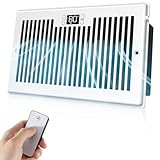
Overview: The VELLEE Quiet Register Booster Fan is a targeted solution for homeowners struggling with weak airflow from specific HVAC registers. Designed to fit a 6" x 10" duct opening, this corded unit actively pulls conditioned air into problematic rooms that run too hot or cold. With a powerful PWM motor delivering up to 200 CFM and intelligent thermostat controls, it works year-round to improve comfort without overhauling your entire system. The included 12-foot power cord and wall adapter ensure flexible placement near any outlet.
What Makes It Stand Out: This booster fan distinguishes itself through genuine smart functionality without app dependency. The high-sensitivity temperature sensor and custom chip enable automatic start/stop based on your settings, creating true set-and-forget convenience. Ten adjustable speed levels let you balance noise and performance, while the 22-year engineering pedigree shows in the whisper-quiet 18 dBA operation at lower speeds. The minimalist remote eliminates confusing button arrays, and installation has been refined based on feedback from 1,000 early adopters.
Value for Money: At $69.97, this sits in the mid-range for booster fans but delivers premium features. The intelligent thermostat control alone justifies the price over basic on/off models, while the 200 CFM capacity handles larger rooms effectively. Compared to $150+ smart vents, it offers similar benefits for single-room problems at less than half the cost, with potential energy savings paying back your investment within a heating/cooling season.
Strengths and Weaknesses: Strengths include near-silent operation, sophisticated auto-controls, high airflow capacity, and genuinely simple installation. The 12-foot cord provides excellent flexibility. Weaknesses: requires nearby outlet (which may limit placement), size-specific design demands careful measurement, and it lacks whole-home integration with platforms like Alexa or Google Home. The white finish may not match all decor.
Bottom Line: The VELLEE booster fan excels for targeted comfort improvements in stubborn rooms. Its smart automation and quiet performance make it a worthwhile upgrade over passive vents or noisy basic boosters, provided you have a power source nearby and measure carefully.
7. Flair Puck Wireless Smart Thermostat for Flair Smart Vents or Mini Split Control

Overview: The Flair Puck serves as the intelligent command center for the Flair smart vent ecosystem or as a standalone wireless controller for mini-split systems. This compact device solves two distinct problems: balancing temperatures across rooms in central HVAC systems via Flair Smart Vents, and bringing smart control to ductless units from over 200 brands including Mitsubishi, Fujitsu, and LG. Its dual-power design runs on AAA batteries or USB power, offering true wireless flexibility.
What Makes It Stand Out: The Puck’s standout feature is its genuine wireless freedom—competitors require constant wall power. For mini-splits, it communicates via infrared without any wiring or professional installation. When paired with the Flair Bridge, it creates the only fully wireless mini-split control solution available. For central systems, it acts as a temperature sensor and controller for individual rooms equipped with Flair Smart Vents, enabling room-by-room climate management without replacing your existing thermostat.
Value for Money: At $119, the Puck represents solid value within the Flair ecosystem. As a mini-split controller, it’s competitively priced against wired alternatives while offering superior placement flexibility. For central HVAC users, it’s essential infrastructure—each room with smart vents needs a sensor. While the cost multiplies across multiple rooms, it’s far cheaper than installing a traditional zoning system, which can run thousands of dollars.
Strengths and Weaknesses: Strengths include true wireless operation, versatile dual-mode functionality, broad mini-split compatibility, and simple setup. The battery option lasts months and eliminates cord clutter. Weaknesses: limited utility without additional Flair products (Bridge, Vents), requires one Puck per mini-split head unit (cost adds up), and central HVAC users must already own compatible smart vents.
Bottom Line: The Flair Puck is an essential component for Flair system adopters and an excellent standalone mini-split controller. Its wireless design and broad compatibility make it a smart investment for targeted climate control, though commitment to the Flair ecosystem is necessary for full benefits.
8. Flair Smart Vent 10x10 (White), AC Vent Cover for Walls and Ceilings.

Overview: The Flair Smart Vent replaces your standard 10" x 10" register with an automated, app-controlled vent that dynamically adjusts airflow to eliminate hot and cold spots. Working in concert with your existing HVAC system—smart or traditional—these vents open and close based on temperature data from Flair Pucks or compatible sensors in each room. The system requires a Flair Bridge (sold separately) and at least one temperature sensor per room, creating an intelligent network that directs conditioned air where it’s needed most.
What Makes It Stand Out: Unlike passive vent covers, Flair’s vents actively manage airflow using real-time temperature data and predictive algorithms. The hvacOS software enables 7-day scheduling for each room individually, and you can mark unused rooms as inactive to save energy. Voice assistant integration adds convenient hands-free control. Installation is tool-free—simply remove the old vent and drop in the Flair unit. The company provides robust support via email, phone, or chat during business hours.
Value for Money: At $159 per vent, this is a premium solution, but cost-effective compared to professional HVAC zoning that costs $2,000-$4,000. The energy savings from not heating or cooling unused rooms can yield payback within 2-3 years for larger homes. However, the required Bridge ($79) and multiple Pucks ($119 each) make the total system investment substantial for whole-home coverage.
Strengths and Weaknesses: Strengths include precise room-level control, excellent software with granular scheduling, easy installation, and compatibility with existing thermostats. The build quality is solid and operation is quiet. Weaknesses: high per-unit cost, requires additional ecosystem purchases, and effectiveness depends on having enough sensors for accurate temperature mapping. Not ideal for renters.
Bottom Line: Flair Smart Vents deliver on their promise of room-by-room climate control with sophisticated automation. While the total system cost adds up quickly, it’s the most elegant retrofitted zoning solution available—perfect for homeowners frustrated with uneven temperatures and willing to invest in genuine smart home climate management.
9. Smart Register Booster Fan Vent with Remote Control - Quiet, Energy-Efficient Airflow Enhancer for Floor, Wall, or Ceiling Vents | Digital Temperature Control & Auto Sensor for Improved Room Comfort.

Overview: This Smart Register Booster Fan offers an affordable entry point into enhanced HVAC airflow for homeowners battling uneven temperatures. Designed to fit most standard floor, wall, or ceiling registers, this universal unit draws additional conditioned air into under-served rooms. The digital display shows current temperature while the included remote allows convenient adjustments from across the room. An auto sensor enables basic smart functionality, automatically activating the fan when temperature thresholds are crossed.
What Makes It Stand Out: The primary appeal is universal compatibility and straightforward operation without ecosystem lock-in. Unlike brand-specific solutions, this fan works with virtually any HVAC system. The digital temperature display provides clear feedback, and the remote control eliminates the need to manually adjust settings at the vent. Installation requires no tools or professional help—simply place it in your existing register opening and plug it in.
Value for Money: At $59.99, this is among the most budget-friendly booster fans with digital controls. It delivers core functionality—enhanced airflow and basic automation—at a price point accessible to most homeowners. While it lacks advanced smart home integration, it provides tangible comfort improvement for less than a dinner out, making it a low-risk investment for testing whether a booster fan solves your problem.
Strengths and Weaknesses: Strengths include affordable pricing, universal fit, simple remote operation, and straightforward temperature display. The auto sensor adds legitimate convenience. Weaknesses: unknown brand reliability, likely louder operation than premium competitors, unspecified CFM rating suggests modest performance, and no app or voice control limits smart home integration. Build quality may not match pricier alternatives.
Bottom Line: This booster fan is a solid budget choice for simple airflow enhancement. It delivers basic smart features and universal compatibility at an attractive price, though noise levels and long-term durability remain question marks. Ideal for renters or homeowners wanting to test the booster fan concept before committing to a premium solution.
10. VELLEE Quiet Register Booster Fan Fits 4" x 12" (DUCT OPENING CUTOUT), 10-Speed Smart Heating Cooling AC Vent Booster Fan w/Remote Control & Thermostat Control (Black) - Corded

Overview: The VELLEE Quiet Register Booster Fan in 4" x 12" size offers the same intelligent climate control as its larger sibling but in a more compact, black-finished package suitable for narrower duct openings. Delivering up to 120 CFM, this corded unit is ideal for smaller bedrooms, offices, or bathrooms that suffer from weak HVAC airflow. The 22-year experienced engineering team has optimized the PWM motor to maintain whisper-quiet operation as low as 18 dBA while providing ten adjustable speed levels for precise comfort control.
What Makes It Stand Out: This model retains all the smart features of the larger version—high-sensitivity temperature sensor, custom smart chip for automatic start/stop, and a minimalist remote—while offering a size and color alternative. The black finish blends better with darker flooring or decor where white would stand out. Installation has been refined based on extensive user feedback, making it genuinely tool-free and straightforward. The included 12-foot cord and wall adapter provide flexible placement options near any outlet.
Value for Money: At $49.97, this represents excellent value for a smart booster fan. While the 120 CFM capacity is lower than the 6" x 10" model, it’s appropriately sized for smaller spaces and costs $20 less. The intelligent thermostat control alone distinguishes it from basic $30 fans, while the quiet operation and quality construction suggest better longevity than budget alternatives. Energy savings from improved efficiency can offset the purchase price within a year.
Strengths and Weaknesses: Strengths include quiet operation, smart automatic controls, appropriate sizing for smaller rooms, easy installation, and the versatile black finish. The 12-foot cord is generous. Weaknesses: requires nearby outlet, size-specific design needs careful measurement, lower airflow limits its use to smaller spaces, and it lacks whole-home smart platform integration.
Bottom Line: The VELLEE 4" x 12" model is an outstanding choice for smaller rooms needing targeted airflow improvement. Its smart automation, quiet performance, and attractive black finish make it a superior alternative to passive vents or noisy budget boosters, delivering professional-grade comfort control at a consumer-friendly price.
What Is HVAC Zoning and Why Does It Matter?
HVAC zoning divides your home into distinct climate areas, each controlled independently rather than treating your entire house as a single monolithic space. Traditional systems blast conditioned air through every vent simultaneously, creating hot and cold spots while wasting energy on unoccupied rooms. Zoning recognizes that your south-facing living room has different heating needs than your basement office or upstairs bedrooms.
The fundamental principle involves using dampers within your ductwork to direct airflow precisely where it’s needed. When integrated properly, these dampers respond to real-time data from temperature sensors and smart thermostats, creating a dynamic system that adapts to your lifestyle patterns, occupancy, and even outdoor weather conditions. The result isn’t just comfort—it’s typically a 20-30% reduction in energy consumption as your system stops working overtime to compensate for inefficient whole-home conditioning.
Understanding Zone Controllers: The Brain of Your Zoned System
Think of a zone controller as the central nervous system of your multi-zone setup. This critical component receives input from various thermostats and sensors throughout your home, processes that information against your programmed preferences, and sends commands to your HVAC equipment and dampers. Without a robust controller, even the smartest vents become simple automated doors opening and closing on a timer.
Modern zone controllers handle complex decisions that go far beyond “room is cold, send heat.” They manage staging for multi-stage equipment, prevent short-cycling that damages compressors, balance airflow to avoid static pressure problems, and coordinate between heating and cooling calls from different zones simultaneously. The controller’s algorithm determines whether to prioritize a bedroom that’s 3 degrees below setpoint or a living room that’s 5 degrees above, all while ensuring your equipment operates within safe parameters.
Smart Vents Explained: More Than Just Automated Dampers
Smart vents represent the evolution of traditional motorized dampers, but calling them “automated dampers” undersells their capabilities. These register replacements house integrated motors, temperature and pressure sensors, wireless communication modules, and onboard processors that enable them to make micro-decisions about airflow regulation. Unlike static dampers that simply open or close based on controller commands, smart vents can modulate their position in increments, respond to local conditions, and report back valuable performance data.
The real differentiator lies in their ability to operate as both independent devices and integrated system components. In standalone mode, they react to local temperature readings and occupancy detection. When properly integrated with a zone controller, they become part of a holistic system where their movements are orchestrated based on whole-home priorities rather than isolated room demands. This distinction is crucial—uncoordinated smart vents can actually increase energy usage by creating pressure imbalances or forcing your HVAC system to work harder to push air through partially blocked pathways.
How Zone Controllers and Smart Vents Work Together
The integration creates a feedback loop that elevates performance beyond what either component could achieve alone. Your zone controller establishes the master plan—determining which zones need conditioning based on thermostat calls, time-of-day schedules, and occupancy patterns. It then communicates target airflow requirements to the smart vents, which execute those commands while simultaneously monitoring local conditions and system pressure.
Here’s where the synergy becomes powerful: if a smart vent detects that closing to 20% has created excessive backpressure in the ductwork, it can report this to the zone controller, which might then adjust the blower speed, open a bypass damper, or recalibrate its airflow model for that zone. This bidirectional communication prevents the common pitfall of over-dampering that strains your HVAC equipment. Advanced integrations even enable predictive adjustments—pre-cooling a west-facing office before afternoon sun hits, based on learned patterns and weather forecasts.
Key Benefits of Integrating Zone Controllers with Smart Vents
Energy efficiency gets the headlines, but the benefits run deeper. Yes, you’ll see substantial utility bill reductions by not conditioning empty guest rooms or over-cooling already-chilly basements. However, the comfort improvements are equally transformative. No more waking up to a freezing bedroom because the downstairs thermostat is satisfied while your upstairs is still calling for heat.
Equipment longevity represents another underappreciated advantage. By eliminating the constant temperature swings and extended run cycles caused by inefficient whole-home conditioning, your HVAC system experiences less wear and tear. The zone controller’s staging capabilities ensure your equipment runs at optimal capacity rather than constantly cycling on and off. Additionally, the pressure monitoring from smart vents protects against ductwork damage and blower motor strain that can occur with improperly balanced static pressure.
Compatibility Considerations: Will It Work With Your System?
Not every HVAC system is ready for zone-controller integration, and this is where many homeowners stumble. Forced-air systems are the most common candidates, but even among these, critical differences exist. Single-stage equipment presents challenges because it can’t modulate its output—your zone controller will need a bypass damper or dump zone to relieve excess pressure when only small zones are calling for conditioning.
Multi-stage and variable-speed systems are ideal partners, as they can ramp down when demand is low. Heat pumps require special consideration for defrost cycles and auxiliary heat coordination. Your ductwork design matters tremendously too: systems with already-restrictive ducts or inadequate return air may need upgrades before zoning makes sense. The age of your equipment isn’t necessarily a dealbreaker—many 15-year-old systems can be zoned successfully—but the efficiency gains will be more dramatic with newer, more adaptable equipment.
Essential Features to Look for in Zone Controllers
When evaluating zone controllers, prioritize models with automatic staging control that can intelligently manage multi-stage equipment without manual programming. Look for comprehensive pressure management features—static pressure monitoring, automatic bypass control, and alerts for blocked ducts. The best controllers include learning algorithms that adapt to your home’s thermal characteristics over time.
Connectivity standards are crucial for smart home integration. Controllers with open APIs or support for major protocols like Zigbee, Z-Wave, or Matter ensure your system won’t become obsolete. Advanced models offer zone weighting capabilities, letting you prioritize critical areas during periods of high demand. Don’t overlook the interface quality—both the physical display and the mobile app should provide clear diagnostics, energy reporting, and intuitive scheduling tools. Firmware update capability is non-negotiable; you want a system that evolves with technology rather than one frozen in time.
Smart Vent Features That Actually Matter
Motor quality and damper seal integrity top the list of critical smart vent features. Cheap motors fail within a couple of years, and poor seals leak conditioned air even when “closed,” defeating the purpose. Look for vents with pressure sensors that measure both sides of the damper—this data is invaluable for system balancing. Battery life varies dramatically; premium models last 2-3 years while budget options might need new batteries every 6 months.
Communication reliability separates the dependable from the frustrating. Vents that create mesh networks rather than relying on direct hub connections maintain functionality even if one device goes offline. Local processing capability ensures vents continue basic operations during internet outages. Temperature accuracy matters more than you’d think—±1°F precision is the minimum for comfortable climate control. Finally, consider the physical design: low-profile models blend better with decor, and vents with manual override options provide peace of mind during power failures.
Installation Insights: Professional vs. DIY Approaches
The DIY route appeals to many homeowners, and it’s certainly feasible for tech-savvy individuals with basic electrical knowledge. Installing smart vents is straightforward—most are simple register replacements. However, zone controller installation involves low-voltage wiring connections to your HVAC equipment, and mistakes here can damage expensive components or create safety hazards. The programming and system balancing phase is where DIYers typically struggle; improper configuration can lead to frozen coils, cracked heat exchangers, or premature equipment failure.
Professional installation brings expertise in ductwork assessment, static pressure calculations, and equipment-specific configurations. A certified technician will evaluate your system’s capacity, identify necessary duct modifications, and properly commission the system with appropriate delays, staging parameters, and safety cutouts. The investment typically pays for itself through optimized performance and avoided equipment damage. Consider a hybrid approach: install smart vents yourself, then hire a pro for the zone controller integration and system tuning.
Wiring and Connectivity: What You Need to Know
Most zone controllers require a dedicated 24VAC power supply and communicate with thermostats via standard HVAC wiring (R, W, Y, G, C wires). Smart vents typically use wireless protocols, eliminating the need for new wires at each register. However, this creates a new consideration: network reliability. Your Wi-Fi or mesh network must provide strong, consistent coverage to every vent location, including basements and far bedrooms where signals often weaken.
For robust installations, consider a wired zone controller that supports both wireless vent communication and hardwired thermostats. This hybrid approach ensures critical control paths remain functional even during network issues. Power over Ethernet (PoE) controllers are emerging for new construction, simplifying installation and improving reliability. When planning connectivity, think about future expansion—choose controllers with spare capacity for additional zones you might add later. Remember that metal ductwork can interfere with wireless signals; some installations benefit from dedicated wireless repeaters placed strategically throughout the duct system.
Programming and Setup: Creating Your Comfort Zones
Effective zone programming starts with realistic expectations. Don’t create zones smaller than 25% of your system’s total capacity unless your equipment can modulate down appropriately. Map zones based on usage patterns rather than just room count—combining a rarely-used formal dining room with an adjacent living area often makes more sense than giving it independent control. Establish temperature setbacks that align with occupancy, but avoid aggressive swings that force your system into recovery mode, which can be less efficient than maintaining a moderate baseline.
The setup wizard on modern zone controllers simplifies initial configuration, but fine-tuning requires patience. Run each zone independently and measure actual airflow with a handheld anemometer to verify damper positions correspond to real-world performance. Set appropriate minimum airflow thresholds for each zone to prevent equipment damage. Configure “safety nets” like temperature limits that automatically open vents if a room approaches freezing or overheating. Most importantly, resist the urge to micromanage—let the system’s learning algorithms observe your habits for at least two weeks before making major adjustments.
Troubleshooting Common Integration Issues
Pressure imbalance symptoms include whistling vents, doors that slam shut when the system runs, or rooms that never reach temperature despite dampers operating correctly. These often indicate insufficient bypass capacity or return air restrictions. Temperature overshoots—where zones exceed setpoints before equipment shuts down—typically stem from improper anticipator settings or lack of communication between the zone controller and equipment’s internal controls.
Smart vents that become unresponsive usually point to network issues, but can also indicate low batteries or firmware conflicts. Before resetting everything, check for interference from newly installed metal objects or changes to your Wi-Fi network. Zone controllers that show “call for cooling” but don’t activate equipment often have safety lockouts engaged due to previous pressure alarms. Address the root cause rather than just clearing the alarm. The most frustrating issues involve timing—when multiple zones call simultaneously, the controller’s arbitration logic determines priority. Understanding this logic helps explain why that guest room sometimes waits despite being several degrees off setpoint.
Maintenance Best Practices for Long-Term Performance
Quarterly inspections should include checking smart vent batteries, cleaning dust from vent sensors with compressed air, and verifying damper movement range. Annually, have a technician measure system static pressure across different operating modes to catch developing restrictions before they cause damage. Recalibrate temperature sensors every six months—a process most controllers automate, but you should verify accuracy with a reference thermometer.
Update firmware proactively, but never during extreme weather when you can’t afford downtime. Keep a log of unusual behaviors—patterns that seem random often reveal predictable issues when tracked over time. Clean your ductwork every 3-5 years; zoning systems make duct cleanliness more critical because restricted airflow affects performance more noticeably. Replace batteries in all smart vents simultaneously during your annual HVAC service to avoid staggered failures. Most importantly, schedule a professional system rebalancing every two years as your home’s thermal characteristics change with aging insulation, new windows, or landscape growth affecting solar gain.
Cost Analysis: Investment vs. Energy Savings
A typical whole-home integration runs $2,000-$4,000 for equipment plus $1,500-$3,000 for professional installation, though costs vary significantly with home size and system complexity. Smart vents alone add $100-$250 per register, while zone controllers range from $300 for basic 3-zone units to $1,500 for advanced models supporting 8+ zones with sophisticated algorithms. The payback period usually falls between 3-7 years depending on your climate, utility rates, and how aggressively you program setbacks.
Beyond direct energy savings, factor in the value of extended equipment life—properly zoned systems often last 3-5 years longer due to reduced cycling. Many utilities offer rebates for zoning installations, sometimes covering 20-30% of costs. The comfort premium is harder to quantify but real; eliminating hot and cold spots improves quality of life and can increase home value by 2-3% according to some real estate studies. Don’t forget maintenance costs—smart vents need battery replacements and occasional motor service that traditional vents don’t require.
Future-Proofing Your Zoned HVAC System
The smart home landscape evolves rapidly, so choose components with open standards and strong manufacturer support records. Controllers that support over-the-air updates and have active developer communities will adapt to new protocols as they emerge. Consider wiring infrastructure during installation—even if using wireless vents now, running conduit to key locations gives you options for future wired sensors or next-generation vent designs.
Emerging integration with utility demand-response programs will soon allow your zone controller to automatically pre-cool during off-peak hours and reduce consumption during grid stress events, potentially earning you additional rebates. Machine learning capabilities are advancing quickly; tomorrow’s systems will predict occupancy with camera-free sensors and integrate with EV charging schedules to optimize whole-home energy use. Design your zoning with expansion in mind—leave capacity for that future home addition or ADU. The most future-proof decision is often investing in a premium controller now, as it’s the hardest component to upgrade later.
Frequently Asked Questions
How many zones can I realistically create in my home?
Most residential zone controllers support 4-8 zones, but practical limits depend on your HVAC system’s capacity. Each zone should represent at least 25% of your system’s airflow capability unless you have a variable-speed unit that can ramp down significantly. Over-zoning creates pressure problems and reduces comfort. Start with broader zones—like “upstairs” versus “downstairs”—and subdivide only if your system can handle the minimum airflow requirements for smaller zones.
Will zoning work with my existing smart thermostat?
It depends on the thermostat’s capabilities and the zone controller’s compatibility. Most zone controllers require dedicated thermostats for each zone, replacing your central thermostat. However, some advanced systems allow you to keep your main smart thermostat as a master control while adding simpler temperature sensors in other zones. Check for compatibility with protocols like Zigbee, Z-Wave, or Wi-Fi Direct. Your existing thermostat might work as one zone’s controller, but you’ll likely need additional units or sensors for full multi-zone functionality.
Can smart vents damage my HVAC system?
Improperly configured smart vents absolutely can damage your system by creating excessive static pressure that strains the blower motor and can cause frozen coils or cracked heat exchangers. This is precisely why integration with a proper zone controller is crucial. The controller manages system-wide pressure and ensures minimum airflow requirements are met. Smart vents operating independently without this oversight pose the greatest risk. Always choose vents that report pressure data and pair them with a controller that can respond to that information.
What’s the difference between a zone controller and a smart thermostat?
A smart thermostat makes decisions for a single zone, turning your equipment on and off based on one location’s temperature. A zone controller manages multiple thermostats or sensors, orchestrating equipment operation and damper positions across all zones simultaneously. It handles complex scenarios like competing heating and cooling calls, pressure management, and equipment staging. Think of smart thermostats as the instruments in an orchestra, while the zone controller is the conductor ensuring they work together harmoniously.
How long do smart vent batteries typically last?
Premium smart vents with lithium batteries and efficient motors typically last 2-3 years under normal use, while budget models may need replacements every 6-12 months. Battery life varies based on how frequently vents adjust, network signal strength (weak signals drain batteries faster), and temperature extremes in the ductwork. Some newer models offer optional wired power adapters that eliminate batteries entirely. Pro tip: replace all batteries simultaneously during your annual HVAC maintenance to avoid staggered failures.
Will zoning solve my upstairs hot/cold problems?
Zoning is the most effective solution for multi-level temperature imbalances, which are caused by stack effect and differing heat loads. By creating separate zones for upstairs and downstairs with independent temperature control, you can direct more cooling upstairs in summer and more heating downstairs in winter. However, success depends on proper ductwork design—if your upstairs supply ducts are undersized, even perfect zoning can’t deliver enough airflow. A professional load calculation should precede any zoning installation.
Do I need a bypass damper with zone control?
Bypass dampers are essential for single-stage systems with small zones that might close most of their dampers simultaneously. They relieve excess pressure by recirculating some supply air back to the return. Multi-stage and variable-speed systems often don’t need bypass dampers because they can reduce airflow to match demand. Some advanced zone controllers use smart vent feedback to modulate blower speed instead of employing a physical bypass. Your installer should perform a pressure test to determine if a bypass is necessary for your specific configuration.
Can I integrate zoning with a heat pump system?
Yes, but heat pumps require special zoning considerations. The zone controller must coordinate with the heat pump’s defrost cycle and auxiliary heat strips, preventing zones from calling for heat during defrost mode. Heat pumps are most efficient when maintaining steady temperatures, so aggressive setbacks can actually increase energy use. Look for zone controllers with specific heat pump modes that manage these complexities. Mini-split heat pumps are inherently zoned, but central ducted heat pumps benefit greatly from smart vent integration.
How much can I realistically save on energy bills?
Most homeowners see 20-30% reductions in heating and cooling costs, with some achieving up to 40% in larger homes with significant unoccupied areas. Savings depend heavily on your climate, utility rates, programming aggressiveness, and how well your home retains conditioned air. Homes with zoned areas that sit unused for large portions of the day (guest wings, home offices, basements) see the fastest payback. Track your energy use for a year before and after installation to get accurate comparisons, as seasonal variations can mask savings.
What happens to my zoning system during a power outage?
Most zone controllers have battery backup that preserves settings but can’t operate dampers or equipment without main power. Smart vents typically default to fully open positions when power fails, ensuring your system can still provide basic heating and cooling once power returns. Some premium systems include supercapacitors that allow vents to close partially during outages to prevent unwanted conditioning of unused zones. Consider a whole-home battery backup or generator if continuous zoning is critical, especially for homes with temperature-sensitive occupants or equipment.