Transform your apartment balcony into a thriving urban oasis without the constant worry of watering schedules. Self-watering smart planters represent a revolutionary leap forward for city dwellers who crave greenery but juggle busy lifestyles, travel frequently, or simply want to optimize their plant care routine. These intelligent containers do far more than hold soil—they create a micro-ecosystem that responds to your plants’ needs in real-time while conserving water and preventing the root rot that plagues so many balcony gardens.
Whether you’re nurturing herbs for your kitchen, cultivating colorful annuals, or attempting your first cherry tomato plant in limited square footage, understanding the technology and features behind these modern growing systems will make the difference between a disappointing brown-thumb experience and a lush, productive balcony retreat. This comprehensive guide breaks down everything you need to know to select, install, and maintain the perfect self-watering smart planter for your specific urban gardening goals.
Top 10 Self-Watering Planters for Apartment Balconies
Detailed Product Reviews
1. Keter Urban Bloomer 12.7 Gallon Raised Garden Bed and Outdoor Herb Garden Planter with Self Watering Gauge and Drainage Plug, Dark Grey

Overview:
The Keter Urban Bloomer is a raised garden bed engineered for urban gardeners seeking low-maintenance herb cultivation. Measuring 32.3" x 14.7" x 30.7" with a 12.7-gallon capacity, this dark grey planter elevates plants to a comfortable working height while integrating intelligent watering technology. The design prioritizes convenience for balcony, patio, or small-yard environments where traditional gardening proves impractical.
What Makes It Stand Out:
The integrated water gauge distinguishes this planter from competitors, providing instant visual feedback on moisture levels without soil probing. Its innovative drainage plug system offers unprecedented control—closed for water retention during vacations or open for heavy rainfall. The built-in reservoir physically separates roots from standing water, effectively preventing root rot while maintaining consistent hydration. The 30.7-inch elevation eliminates back strain during planting and harvesting.
Value for Money:
At $73.25, this sits squarely in the mid-range for self-watering raised beds. The water gauge feature alone justifies a $15-20 premium over basic reservoirs, potentially saving plants from drought stress and reducing daily maintenance. When compared to manual-watering planters that require twice-daily attention in summer, the time savings over one season offset the initial investment.
Strengths and Weaknesses:
Strengths include the visual water gauge, versatile drainage control, substantial reservoir capacity, ergonomic height, and straightforward snap-together assembly. Weaknesses involve fixed dimensions that limit scalability, polypropylene construction that may degrade under intense UV exposure over 3-5 years, and a capacity insufficient for large vegetables like determinate tomatoes. The single-unit design also prevents modular expansion.
Bottom Line:
The Keter Urban Bloomer excels for city dwellers focused on herbs and compact vegetables. Its self-monitoring features make it ideal for busy professionals or novice gardeners prone to over/under-watering. While not the cheapest option, the plant-saving technology and physical comfort make it a worthwhile investment for sustainable urban cultivation.
2. VECELO 5 Tier Vertical Garden Planter, Self Watering Stackable Planters with Wheels for Strawberries, Herbs, Flowers, Vegetables, White

Overview:
The VECELO 5 Tier Vertical Garden Planter maximizes growing capacity through intelligent stacking architecture. This white tower consolidates five individual planting chambers into a minimal footprint, making it exceptionally suited for balconies, patios, and indoor herb gardens. The integrated wheeled base solves the mobility challenges that typically plague vertical systems, allowing effortless repositioning for optimal sun exposure.
What Makes It Stand Out:
The space-maximizing design grows up to 15 plants in the floor space of a single medium pot. The self-draining system automatically channels excess water from upper tiers downward while maintaining ideal moisture retention in each compartment, preventing both waterlogging and drought stress. The four smooth-rolling wheels provide true portability—rare in vertical planters that often become immovable when fully assembled and soil-filled.
Value for Money:
At $39.99 for five tiers, the per-level cost of approximately $8 delivers exceptional value. Comparable vertical growing systems from premium brands cost $60-80 without mobility features. This price point makes vertical gardening accessible to budget-conscious beginners while providing professional-grade functionality for experienced space-challenged growers.
Strengths and Weaknesses:
Advantages include dramatic space efficiency, easy sun-tracking mobility, versatile plant compatibility from strawberries to succulents, and completely tool-free assembly. Disadvantages center on potential stability concerns when fully extended, smaller individual planter volumes requiring more frequent watering than ground beds, and uneven moisture distribution between top and bottom tiers. The lightweight plastic construction may also become brittle after prolonged UV exposure.
Bottom Line:
For apartment dwellers and small-space gardeners, the VECELO tower delivers maximum botanical impact in minimal square footage. Its mobility and price point make it a practical entry into vertical gardening, though serious growers should monitor water distribution and consider anchoring the unit in windy locations. Perfect for patio strawberries and herb collections.
3. Barton 2 Pieces Rolling Garden Bed Brown Plastic w/Self-Watering Design Outdoor Elevated Planter Box Kit Wheels Mobile
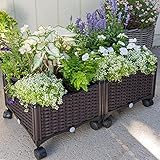
Overview:
The Barton 2 Pieces Rolling Garden Bed offers modular versatility through two independent self-watering planters that can be used separately or combined into custom configurations. Each brown polypropylene unit features a self-watering disk, drainage plugs, and four wheels, enabling tool-free assembly and true layout flexibility. The design supports both indoor and outdoor deployment for herbs, vegetables, and ornamentals.
What Makes It Stand Out:
The card-frame connection system allows creative arrangements—linear, L-shaped, rectangular, or separate placements—unattainable with single-body planters. Each unit includes a self-watering reservoir with side-mounted drain plugs for precise moisture control. The modular approach effectively provides two distinct gardening zones that can be relocated independently, solving the problem of different plants requiring different light or water conditions.
Value for Money:
Priced at $54.95 for two units ($27.48 each), this offers solid value for a mobile, self-watering system. The configurability essentially delivers two products in one, outperforming static single planters at similar price points. For renters who rearrange seasonally, the ability to reshape layouts without new purchases provides long-term cost savings.
Strengths and Weaknesses:
Strengths include exceptional configuration flexibility, smooth multidirectional mobility, lightweight portability, effective self-watering mechanism, and seamless indoor-outdoor transition. Weaknesses involve smaller individual growing area (approximately 2 cubic feet each), potential structural weakness at plastic connection points under heavy soil loads, and wheels that perform poorly on uneven terrain or soft ground. The aesthetic may not suit formal garden designs.
Bottom Line:
Renters and balcony gardeners will prize the Barton’s adaptability. The ability to reconfigure your garden layout within minutes makes it perfect for evolving spaces and experimental plantings. While each unit is modestly sized, the pair’s versatility and mobility make this set a smart choice for dynamic gardening needs and seasonal indoor-outdoor transitions.
4. MQFORU 2 Packs Raised Garden Bed Tomato Planter with Trellis, 57" Tomato Cages for Climbing Vegetables Plant, Self Watering Planters Box for Garden Pots for Patio Greenhouse Indoor Outdoor(2PCS)

Overview:
The MQFORU 2-Pack system specifically targets climbing plants by integrating adjustable trellises with self-watering planter boxes. Each unit includes a four-layer modular cage that reaches 57 inches, supporting tomatoes, peas, beans, and flowering vines. The square planter base employs a siphon-effect watering system with a bottom grid that prevents both drought and saturation through capillary action.
What Makes It Stand Out:
The combination package delivers support structure and self-watering planter at a price where competitors sell just the cage. The adjustable-height trellis layers allow customization from one to four tiers as plants mature. A side water injection port simplifies filling without disturbing soil or roots. The siphon-effect design actively pumps water upward, more efficient than passive wick systems.
Value for Money:
At $35.99 for two complete planter-and-trellis units, this offers remarkable dual-function value. Quality tomato cages alone cost $15-20 each, making the self-watering planters essentially free. This represents one of the most cost-effective solutions for vertical vegetable gardening, particularly for climbers requiring structural support.
Strengths and Weaknesses:
Major strengths include the included adjustable trellis, effective siphon watering system, completely tool-free buckle assembly, multi-season versatility, and exceptional price point. Weaknesses involve the planter’s relatively small soil volume (approximately 3 gallons) limiting root development for large indeterminate tomatoes, trellis stability concerns under heavy fruit loads, and polypropylene construction requiring winter storage in freezing climates to prevent cracking.
Bottom Line:
This is the go-to choice for budget-conscious gardeners growing climbing vegetables in confined patio or balcony spaces. The trellis-planter combination eliminates separate purchases while reducing watering frequency. Perfect for patio tomatoes, peas, and pole beans, though heavy-duty growers should monitor trellis stability during peak production and consider supplemental anchoring.
5. Window Box Planter 6 Pcs, 12.1 Inches Self Watering Plant Pots Rectangle Flower Pots with Drainage Holes and Breathable Trays, Vegetable Planters for Windowsill Patio Garden Balcony Porch Yard (Black)

Overview:
This six-piece set of rectangular self-watering planters targets windowsill and narrow-space gardening. Each 12.1" x 6.4" x 6.3" pot features a 1-liter reservoir, visual water level window, and cotton rope wicking system. The minimalist black design with frosted marble texture suits modern décor while providing practical herb and flower cultivation for kitchens, balconies, and office spaces.
What Makes It Stand Out:
The six-pack quantity enables instant garden scaling at an unprecedented per-unit price. The visual water level window provides monitoring convenience typically reserved for premium self-watering containers. Cotton rope wicks create passive, reliable moisture transfer without mechanical parts. Extensive drainage and aeration holes prevent root rot while the frosted finish disguises soil stains and water marks.
Value for Money:
At $28.49 for six units ($4.75 each), this represents the best per-unit value in self-watering planters. Comparable individual self-watering pots retail for $10-15, making this set 50-70% less expensive. For gardeners wanting multiple small planting zones—kitchen herbs, office succulents, balcony flowers—the quantity discount is unbeatable.
Strengths and Weaknesses:
Advantages include exceptional quantity-to-price ratio, visual water monitoring, effective cotton rope wicking, stylish frosted aesthetics, and versatile placement options from windowsills to porch rails. Disadvantages include lack of mobility (no wheels), 1-liter reservoirs requiring refilling every 5-7 days in hot weather, lightweight construction that may tip with tall plants like rosemary, and no integrated trellis for climbing herbs.
Bottom Line:
For windowsill herb gardens and small-space decoration, this six-pack delivers unmatched value and style. The self-watering system reliably sustains plants during short absences, while the water window prevents overfilling. Perfect for beginners building their first herb collection or anyone wanting to green multiple ledges simultaneously without significant investment. The aesthetic versatility suits both modern apartments and traditional homes.
6. Harrier Hardware 2-Pack Hanging Rail Wall Planter with Self-Watering Resevoir (Red)
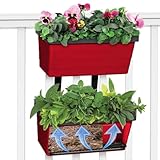
Overview: The Harrier Hardware 2-Pack Hanging Rail Wall Planter delivers a robust vertical gardening solution for space-conscious gardeners. These heavy-duty plastic planters measure 16" x 8" x 7" and feature integrated self-watering reservoirs to reduce maintenance. The included mounting brackets enable installation on diverse surfaces including drywall, wood, metal, and concrete, making them suitable for both indoor and outdoor applications.
What Makes It Stand Out: Versatility is the defining characteristic. The mounting system accepts screws, straps, or alternative fasteners, allowing secure attachment to walls or railings. The self-watering reservoir maintains consistent soil moisture, while the generous dimensions accommodate herbs, vegetables, or flowers. The heavy-duty plastic construction ensures durability across seasons without cracking or fading, providing years of reliable service.
Value for Money: At $39.99 for two complete systems ($20 per unit), this package offers solid value. Comparable wall-mounted planters typically cost $25-35 individually without self-watering capability. The inclusion of mounting brackets and reservoirs eliminates hidden costs, making it an economical choice for establishing a vertical garden without additional hardware purchases.
Strengths and Weaknesses: Strengths include versatile mounting options, durable construction, space-saving vertical design, and effective self-watering system. Weaknesses involve limited color selection (red only), potential installation complexity for novice users, and unclear mounting hardware quality. The 16-inch width may prove too large for compact spaces or narrow railings.
Bottom Line: These planters excel for gardeners seeking low-maintenance vertical growing solutions. The combination of durability, self-watering convenience, and flexible mounting makes them ideal for balconies, patios, or kitchen walls. While color options are limited, the functionality and comprehensive hardware package justify the investment for serious space-conscious gardeners wanting reliable performance.
7. MQFORU 2Pack Raised Garden Bed Planter Boxes with Trellis, 57" Self-Watering Tomato Planter Boxes with Trellis for Climbing Vegetable and Plants, Tomato Cage for Indoor Outdoor Use

Overview: The MQFORU 2-Pack Raised Garden Bed Planter Boxes with Trellis provides a comprehensive vertical growing system for climbing plants. Each unit features a 57-inch adjustable trellis tower and a self-watering reservoir that maintains optimal soil moisture. The tool-free assembly makes setup accessible for gardeners of all skill levels, while the 9.8-inch planting depth supports healthy root development.
What Makes It Stand Out: The innovative 4-corner tower design offers unmatched height adjustability, allowing 1-4 tier configurations based on plant needs. Premium PP material resists UV damage and fading, while the PE trellis supports provide rust-proof durability. The water reservoir automatically eliminates excess moisture, preventing root rot while reducing maintenance frequency for busy gardeners.
Value for Money: At $39.99 for two complete trellis systems, this represents exceptional value. Purchasing separate raised beds and trellises typically costs $60-80. The self-watering feature and adjustable height design add premium functionality at a budget-friendly price, making it accessible for both novice and experienced gardeners seeking professional results without professional costs.
Strengths and Weaknesses: Strengths include adjustable trellis height, self-watering convenience, durable weather-resistant materials, and space-efficient footprint. Weaknesses include limited soil depth (9.6 inches) for larger root systems, potential stability issues with very heavy plants like mature tomatoes, and bulkiness that may overwhelm indoor spaces. The trellis connectors may wear over multiple reconfigurations.
Bottom Line: This system is perfect for tomato and climbing vegetable enthusiasts seeking an affordable, adaptable solution. The combination of self-watering technology and adjustable trellis design maximizes growing potential in minimal space. While not ideal for deep-rooted plants, it excels for its intended purpose of supporting vining crops and delivers professional-grade features at an entry-level price.
8. LaLaGreen Planter Box for Indoor Plants (16 Inch, 2 Pack) Black Rectangular Self Watering Flower Pot, Large Window Boxes Planters with Drainage Decorative Modern Balcony Windowsill Herbs Home Garden

Overview: The LaLaGreen Planter Box set includes two 16-inch black rectangular self-watering planters designed for modern indoor and outdoor spaces. Each unit comprises an inner pot, outer container, and water level indicator, creating an efficient sub-irrigation system. The minimalist aesthetic complements contemporary décor while supporting herbs, flowers, and small vegetables on windowsills, balconies, or tabletops.
What Makes It Stand Out: These planters combine simplicity with sophisticated functionality. The water level indicator eliminates guesswork from plant care, while the classic black design integrates seamlessly into any setting. The removable drainage plug adapts the planters for outdoor use, preventing waterlogging during heavy rain. Their generous size accommodates multiple herbs or flowering plants in a single container.
Value for Money: At $26.99 for two planters ($13.50 each), this set offers outstanding affordability. Comparable self-watering window boxes typically retail for $20-30 individually. The inclusion of water indicators and dual-layer design provides premium features at a budget price, making it an excellent entry point for self-watering container gardening without compromising quality.
Strengths and Weaknesses: Strengths include attractive minimalist design, effective self-watering system, versatile indoor/outdoor use, and exceptional price point. Weaknesses involve potential heat absorption from black color in direct sunlight, plastic construction that may feel less premium than ceramic alternatives, and limited color options. The 16-inch length may not fit all standard windowsills.
Bottom Line: These planters deliver style and function at an unbeatable price. They’re ideal for kitchen herb gardens, balcony flowers, or office plants. While the black color requires careful sun placement, the self-watering convenience and modern aesthetic make them a smart choice for busy plant lovers seeking low-maintenance greenery without sacrificing visual appeal or breaking the budget.
9. Dexceder 31.5 Inch Rattan Self Watering Planter Indoor Outdoor, Thickened Large Rail Flower Plant Pot Window Box with Water Level Indicators (Deep Gray)

Overview: The Dexceder 31.5-Inch Rattan Self-Watering Planter blends rustic aesthetics with advanced irrigation technology. This large window box features a unique sub-irrigation system that maintains soil moisture for over three weeks, while the rattan-patterned exterior adds pastoral charm. The integrated water level indicator and hidden handles enhance usability for indoor and outdoor applications, accommodating flowers, herbs, or small vegetables.
What Makes It Stand Out: The rattan design distinguishes this planter from standard plastic options, offering decorative appeal without sacrificing durability. The sophisticated sub-irrigation system prevents root rot while extending watering intervals significantly. Retractable hidden handles simplify plant replacement, and reserve bracket holes enable conversion to a rail planter, maximizing versatility across different mounting scenarios.
Value for Money: At $59.49 for a single large planter, this represents a premium investment. However, the extended 3+ week watering capacity, durable UV-resistant construction, and dual-purpose design justify the cost. Comparable decorative self-watering planters of this size typically range $70-90, making it competitively priced for its advanced feature set and aesthetic appeal.
Strengths and Weaknesses: Strengths include attractive rattan aesthetic, exceptional watering interval, versatile mounting options, durable UV-resistant materials, and hidden handle convenience. Weaknesses include higher price point, single-unit purchase (no multi-pack option), and rattan pattern that may not suit modern minimalist decors. The 31.5-inch length requires substantial space and may overwhelm compact balconies.
Bottom Line: This planter excels for design-conscious gardeners seeking maximum watering autonomy. The extended reservoir capacity makes it perfect for travelers or those wanting minimal maintenance. While the price exceeds basic models, the combination of style, durability, and advanced self-watering technology delivers genuine value for serious indoor and outdoor gardeners who prioritize both aesthetics and functionality.
10. OurWarm Windowsill Herb Planter Box Indoor Set of 3, 10.5 Inch Self Watering Planter Pots with Visual Water Level Window, Modern Plastic Plant Pots for Herbs, Vegetables, Succulents Plants
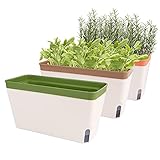
Overview: The OurWarm Windowsill Herb Planter Box set includes three compact 10.5-inch self-watering pots in coffee, orange, and green. Designed specifically for herbs and small plants, these planters utilize cotton rope osmosis to maintain consistent soil moisture. The visible water level window and top injection port simplify monitoring and refilling without disturbing plants, making them ideal for kitchen windowsills or office desks.
What Makes It Stand Out: The triple-pack configuration offers immediate garden diversity, while the color variety adds visual interest to any windowsill. The visible water window provides at-a-glance monitoring, and the injection port allows direct watering without lifting the inner pot. The compact 10.5-inch size fits standard windowsills perfectly, making it ideal for kitchen herb gardens where fresh ingredients are steps away.
Value for Money: At $21.99 for three planters ($7.33 each), this set provides exceptional economy. Individual self-watering pots typically cost $12-18, making this multi-pack a budget-friendly option for starting an herb garden. The included water indicators and cotton rope system deliver reliable performance at an entry-level price that encourages experimentation with multiple plant varieties.
Strengths and Weaknesses: Strengths include unbeatable price for three units, visual water monitoring, convenient injection ports, perfect windowsill sizing, and cheerful color options. Weaknesses involve smaller capacity limiting plant choices to herbs and succulents, plastic construction that may degrade in intense sun, and colors that might clash with some decors. The cotton rope system requires periodic replacement for optimal performance.
Bottom Line: This set is perfect for herb gardening beginners or anyone wanting an affordable windowsill garden. The self-watering system and water-level windows make plant care nearly foolproof. While not suited for large plants, the compact size, triple-pack value, and user-friendly design make it an excellent choice for fresh kitchen herbs and small succulents in any indoor setting.
What Are Self-Watering Smart Planters?
Self-watering smart planters are advanced container gardening systems that combine traditional capillary-action watering reservoirs with digital monitoring and automation technology. Unlike standard pots with separate saucers or basic self-watering containers, these units integrate soil moisture sensors, water level indicators, and often connectivity features that allow you to monitor and sometimes control irrigation through smartphone applications.
The Evolution from Traditional to Smart
The journey from clay pots to intelligent growing systems reflects our changing relationship with urban nature. Traditional self-watering planters, popularized in the 1990s, used simple physics—wicking ropes or soil columns—to draw water upward. Today’s smart versions layer on precision agriculture technology previously available only to commercial greenhouses. The integration of IoT (Internet of Things) sensors means your balcony basil can now communicate its thirst directly to your phone, while built-in algorithms adjust for humidity, temperature, and even forecasted rainfall.
Why Apartment Balconies Need Smart Irrigation
Balcony environments present unique challenges that make smart irrigation particularly valuable. Exposed to wind that accelerates evaporation, limited soil volume that dries out quickly, and microclimates that vary dramatically from ground-level gardens, balcony plants face constant water stress. Smart planters address these issues by creating buffer zones of moisture and providing data-driven insights about your specific growing conditions. They also solve the neighbor-downstairs problem—no more overflow dripping onto the balcony below during heavy rains or overzealous watering sessions.
Water Conservation Benefits
In urban settings where water usage may be monitored or restricted, smart planters can reduce water waste by up to 80% compared to traditional top-watering methods. The closed reservoir system prevents runoff, while precision delivery ensures every drop goes directly to root zones. Many systems include rain delay features that automatically pause scheduled watering when natural precipitation is detected, making them environmentally responsible choices for eco-conscious apartment dwellers.
How Self-Watering Technology Actually Works
Understanding the mechanics helps you make informed decisions and troubleshoot issues effectively. Most systems operate on a three-part principle: a water reservoir at the base, a wicking or aeration chamber in the middle, and the planting area above. The “smart” component adds a layer of electronic monitoring that transforms passive wicking into active, responsive irrigation.
Capillary Action Explained
The core technology relies on capillary action—the same force that draws water up a paper towel when one corner touches a puddle. Soil or specialized wicks extend from the planting zone into the reservoir, creating a continuous moisture column. When the soil dries, it creates negative pressure that pulls water upward. Smart systems enhance this by using aeration screens that prevent soil from becoming waterlogged while maximizing moisture transfer efficiency.
Smart Sensors and Automation
Modern units incorporate capacitive soil moisture sensors that measure water content without corroding like older resistive probes. These sensors feed data to a microcontroller that interprets readings based on your plant type’s specific needs. When moisture drops below a threshold, the system can either alert you via app or activate a small pump to deliver water directly to the root zone. Temperature and light sensors add context, distinguishing between a hot, sunny day that requires more frequent watering and a cool, overcast period where plants need less.
Key Features to Evaluate Before Buying
Not all smart planters offer the same capabilities, and premium features don’t always translate to better performance for your specific situation. Focus on functionality that matches your gardening style and balcony conditions.
Water Reservoir Capacity
Reservoir size determines how long your plants can survive without attention. For apartment balconies, look for systems holding 1-3 gallons for small herb planters and 3-5 gallons for larger vegetable containers. Consider that a mature tomato plant in summer heat might consume a gallon daily. The best designs include overflow drains positioned to prevent root submersion while capturing excess rainwater.
Soil Moisture Sensors
Sensor quality varies dramatically. Seek systems with multiple sensor depths—surface-level probes can give false readings after light rain, while deeper sensors track root zone moisture more accurately. Calibration options are crucial; what registers as “dry” for succulents should differ significantly from moisture-loving basil. Some advanced models allow you to set custom thresholds for different plant zones within the same planter.
Connectivity Options
Wi-Fi connectivity enables remote monitoring but requires stable balcony signal strength. Bluetooth-only models work when you’re physically present but won’t alert you while traveling. Cellular-enabled units offer ultimate reliability but carry subscription costs. Consider whether you need real-time alerts or if weekly data summaries suffice. Offline systems with visual indicators and audible alarms provide simplicity without monthly fees.
Power Supply Considerations
Solar-powered units with battery backup excel on sunny balconies, eliminating cord management issues. USB-rechargeable batteries typically last 2-3 months between charges. Mains-powered options provide unlimited operation but require weatherproof outlet access and cable management to prevent tripping hazards. Some hybrid systems use solar for daily operations while keeping batteries in reserve for cloudy periods.
Sizing Your Planter for Balcony Spaces
Balcony real estate is precious, and every inch matters. Smart planters come in configurations designed to maximize growing area while respecting weight limits and spatial constraints.
Vertical vs. Horizontal Configurations
Stacked vertical systems with shared reservoirs multiply your growing space without increasing floor footprint, perfect for shallow-rooted herbs and strawberries. Horizontal trough-style planters suit railing mounting and provide deeper soil for root vegetables. Measure your balcony’s load-bearing capacity—water weighs 8.3 pounds per gallon, so a 5-gallon reservoir adds over 40 pounds to your setup. Modular systems allow you to start small and expand as your confidence grows.
Material Matters: Durability and Performance
Your planter’s material affects temperature regulation, water retention, and longevity in exposed balcony conditions. Each option presents trade-offs between cost, weight, and performance.
UV-Resistant Plastics
High-density polyethylene (HDPE) with UV inhibitors offers the best durability-to-weight ratio for balconies. These units resist cracking in temperature swings from 20°F to 120°F and won’t leach chemicals into soil. Look for food-grade certifications if growing edibles. Premium models feature double-wall construction that provides insulation, keeping roots cooler in summer and warmer in spring and fall.
Ceramic and Terracotta Options
Natural clay provides excellent breathability and temperature stability but adds significant weight—often 30-50 pounds before soil and water. Smart features integrate through removable sensor pods that fit into specialized ports. The porous nature means more frequent reservoir refills, but many gardeners prefer the aesthetic and natural root-pruning effects. Ensure any ceramic unit is rated for freeze-thaw cycles if left out year-round.
Metal and Fabric Alternatives
Powder-coated aluminum offers modern aesthetics and extreme durability but conducts heat, potentially cooking roots in direct sun. Fabric smart planters (geotextile bags with integrated reservoirs) are lightweight and promote air pruning but may degrade in 2-3 seasons of intense sun. Some innovative designs use fabric outer shells with rigid plastic reservoir inserts, combining benefits while minimizing drawbacks.
Smart Features That Actually Make a Difference
The “smart” label gets applied liberally. Distinguish between gimmicky add-ons and genuinely useful functionality that improves plant health and reduces your workload.
Mobile App Integration
Quality apps provide more than moisture alerts—they offer historical data trends, plant-specific care guides, and photo-based health diagnostics. The best platforms integrate with local weather services to predict water needs and suggest optimal fertilization timing. Check app store reviews for connectivity reliability and update frequency. Avoid systems requiring multiple apps; unified platforms that control multiple planters simplify management.
Weather Response Systems
True smart planters connect to weather APIs to automatically adjust for forecasted rain, wind, or heatwaves. Some advanced units include mini weather stations that measure actual conditions on your balcony rather than relying on regional airport data. This matters enormously—your 15th-floor balcony might experience 15 mph winds while ground-level forecasts show calm conditions, dramatically affecting water consumption.
Nutrient Monitoring
Premium systems add electrical conductivity (EC) sensors that track fertilizer levels in the soil water. These alert you when nutrients deplete, preventing both underfeeding and the fertilizer burn common with guesswork. Look for units that distinguish between organic and synthetic nutrient profiles, as decomposition rates differ significantly.
Installation and Setup Best Practices
Proper setup determines long-term success. Begin by testing sensor accuracy—place the probe in dry soil, then saturated soil, to verify readings. Calibrate using distilled water for baseline measurements. Position planters to ensure stable Wi-Fi connectivity before filling with heavy soil. Most manufacturers recommend a “burn-in” period where you manually water for two weeks while the system learns your soil’s specific drainage characteristics.
For railing-mounted units, verify local building codes and use safety straps rated for at least three times the fully-loaded planter weight. Place reservoirs away from direct sun when possible; algae growth in clear containers can clog sensors and pumps. If unavoidable, add a few drops of hydrogen peroxide monthly to prevent biological buildup.
Maintenance: Keeping Your System Efficient
Smart systems reduce daily care but aren’t maintenance-free. Quarterly deep cleaning prevents sensor drift and pump clogging. Flush reservoirs with diluted vinegar solution to dissolve mineral deposits from tap water. Inspect wicks for algae or salt buildup, replacing them annually or when you notice uneven moisture distribution.
Cleaning and Winterizing
In cold climates, remove electronics and store them indoors before first frost. Most sensors and control units detach easily. Drain reservoirs completely to prevent ice damage. For year-round growing, wrap reservoirs with insulating blankets and consider adding aquarium heaters designed for outdoor ponds to keep water liquid. Clean moisture sensors with isopropyl alcohol, avoiding abrasive materials that damage protective coatings.
Plant Compatibility and Growing Mediums
Not every plant thrives in self-watering systems. Mediterranean herbs like rosemary and lavender prefer dry periods between watering and may develop root rot in constantly moist conditions. Conversely, water-loving vegetables such as cucumbers and tomatoes produce abundantly with consistent moisture. Leafy greens and most annual flowers adapt beautifully.
Use soilless potting mixes specifically formulated for self-watering containers—these contain more perlite and vermiculite than traditional mixes, preventing compaction and ensuring proper capillary action. Avoid garden soil, which becomes dense and waterlogged. Some smart planters work best with proprietary growing media that includes moisture-retention crystals calibrated to the system’s sensors.
Budget Considerations: Finding Your Sweet Spot
Entry-level smart planters ($50-100) offer basic moisture monitoring with visual indicators but limited connectivity. Mid-range options ($100-250) provide reliable app integration, weather responsiveness, and durable construction suitable for most balcony gardeners. Premium systems ($250-500) add nutrient monitoring, multiple sensor zones, and integration with broader smart home ecosystems.
Consider total cost of ownership—replacement sensors ($15-30 annually), proprietary growing media, and potential subscription fees for cellular connectivity. A $150 planter that lasts five years often provides better value than a $75 unit requiring replacement after two seasons of UV exposure.
Common Mistakes Apartment Gardeners Make
Overfilling reservoirs is the most frequent error. More water isn’t better; roots need oxygen as much as moisture. Follow the “fill line” religiously and allow reservoirs to empty completely every 2-3 weeks to prevent anaerobic conditions. Another mistake is ignoring calibration—sensors drift over time, and failing to recalibrate seasonally leads to chronic under or over-watering.
Placing planters where building overhangs block rainfall sensors creates false readings. Ensure weather-exposed placement for accurate automation. Finally, many gardeners forget that smart systems supplement but don’t replace observation. Weekly physical checks for pests, disease, and growth patterns remain essential.
Troubleshooting Guide
If plants show signs of overwatering despite dry sensor readings, check for “channeling”—water creating paths through soil instead of uniform distribution. Repot with fresh mix, gently firming soil to eliminate air pockets. Inconsistent moisture alerts often stem from poor Wi-Fi; install a weatherproof range extender if your balcony is far from your router.
Pump failures usually indicate clogged intake filters. Clean monthly by running a vinegar solution through the system. If sensors read inaccurately after fertilizing, the EC spike may be interfering; most systems have a “fertilizer mode” that temporarily adjusts sensitivity. Algae in reservoirs turns water green and clogs pumps—add a tablespoon of food-grade hydrogen peroxide per gallon as a safe preventive treatment.
Seasonal Adjustments for Year-Round Success
Spring startup requires gradual acclimation. Begin with half-full reservoirs as plants establish roots, increasing capacity as temperatures rise. Summer heat demands daily monitoring of reservoir levels and potential afternoon shade cloth installation to prevent sensor overheating. Autumn is ideal for deep cleaning and sensor calibration before winter dormancy.
Winter growing necessitates insulation strategies. Wrap reservoirs in reflective bubble wrap, leaving sensor ports exposed. Move planters closer to building walls for radiant heat benefit. Reduce watering frequency dramatically—most plants need 50-70% less water in winter, but smart systems may not auto-adjust sufficiently. Manually override settings based on actual soil checks.
Design Integration: Aesthetics Meet Function
Your smart planter should complement your balcony’s style, not dominate it. Modern minimalist designs hide technology within sleek geometric forms. Traditional looks incorporate smart features into classic ceramic finishes. Color matters—dark colors absorb heat, stressing roots in summer, while light colors reflect light but show dirt quickly.
Consider sight lines from both inside your apartment and the street. Railing-mounted planters should be attractive from below; choose designs with decorative reservoir covers. Group planters in odd numbers (threes or fives) for visual appeal, mixing heights and textures while maintaining consistent watering technology for simplified management.
Frequently Asked Questions
How long can self-watering smart planters go without attention?
Most systems provide 1-3 weeks of autonomy depending on plant size, weather, and reservoir capacity. A mature tomato plant in 90°F heat may deplete a 3-gallon reservoir in 4-5 days, while herbs in mild spring weather could last a month. Always test your specific setup before leaving for extended trips.
Do I need Wi-Fi for these planters to work?
No, basic models operate offline using visual indicators and audible alarms. However, Wi-Fi enables remote monitoring, weather integration, and historical data tracking. Bluetooth-only units work locally but won’t alert you when away from home. Choose based on your travel habits and tech comfort level.
Can I use regular potting soil in smart planters?
Standard potting mix often contains too much peat, which stays soggy and impedes capillary action. Use mixes specifically formulated for self-watering containers, typically labeled “moisture-controlled” or “self-watering blend.” These contain higher proportions of perlite, vermiculite, and sometimes coconut coir for optimal moisture distribution.
Are smart planters heavy when full?
Yes, weight is a critical consideration. A 5-gallon reservoir adds over 40 pounds of water weight, plus 20-30 pounds of soil and plant material. Always verify your balcony’s load capacity and use multiple small planters distributed across the space rather than one massive unit concentrated in a single spot.
How accurate are the soil moisture sensors?
Quality capacitive sensors are accurate within 5-10% when properly calibrated. However, soil composition, salt buildup from fertilizer, and temperature extremes can affect readings. Recalibrate quarterly and cross-check with manual finger-tests monthly to ensure accuracy. Replace sensors every 12-18 months as they naturally degrade.
Will smart planters work for succulents and cacti?
Most self-watering systems provide too much consistent moisture for drought-loving plants. However, some advanced models include “desert mode” settings that create extended dry cycles. For best results, use these plants in separate containers with excellent drainage and manual watering control rather than automated systems.
What happens during power outages?
Units with battery backup continue operating for 3-7 days depending on activity levels. Solar-powered models with capacitors function indefinitely during daylight. Mains-powered units without backup simply pause automation but maintain reservoir function—plants continue drawing water through capillary action, though you’ll lose monitoring and alerts until power returns.
How do I prevent mosquito breeding in reservoirs?
Choose designs with sealed reservoir access points and fine-mesh overflow drains. Add mosquito dunks containing Bacillus thuringiensis israelensis (Bti), a natural bacterium lethal to larvae but harmless to plants and humans. Avoid opening reservoirs during dusk when mosquitoes are most active, and completely empty and clean reservoirs every 2-3 weeks.
Can I integrate smart planters with my existing smart home system?
Some premium models offer IFTTT compatibility or direct integration with Alexa, Google Home, and Apple HomeKit. This allows voice commands like “check balcony moisture” or automation such as flashing lights when reservoirs need refilling. Check compatibility before purchasing if smart home integration is important to you.
What’s the typical lifespan of a quality smart planter?
The physical container lasts 5-10 years depending on material and UV exposure. Electronic components typically function 3-5 years before requiring replacement. Moisture sensors need annual replacement, while pumps may last 2-4 years with proper maintenance. Consider warranty length and replacement part availability when investing in premium systems.