That number staring back at you every morning tells only a fraction of the story. While your bathroom scale reveals your total weight, it’s what’s happening inside your body—particularly the hidden fat surrounding your organs—that truly impacts your long-term health. Visceral fat, the dangerous tissue deep within your abdominal cavity, has become a critical biomarker for metabolic health, cardiovascular disease risk, and overall longevity. Fortunately, the latest generation of smart bathroom scales has evolved far beyond simple weight measurement, offering sophisticated bioelectrical impedance analysis that can estimate this crucial metric from the comfort of your home.
Understanding how these devices work, what their numbers actually mean, and how to choose the right one for your health journey requires navigating a complex landscape of technology, accuracy considerations, and data privacy concerns. This comprehensive guide cuts through the marketing noise to provide you with expert-level insights into selecting and using smart scales for visceral fat measurement effectively.
Top 10 Smart Bathroom Scales for Visceral Fat
Detailed Product Reviews
1. GE Scale for Body Weight, Body Fat, BMI, Muscle Mass, Smart Bathroom Scales with 14 Body Composition Metrics with Large Display, Accurate Bluetooth Weighing Machine with Fitness App, 400 lbs

Overview: The GE Smart Bathroom Scale delivers comprehensive body composition analysis at an accessible price point. This Bluetooth-enabled device measures 14 health metrics including weight, BMI, body fat, muscle mass, and metabolic age. Its standout feature is a vibrant 5.3-inch color display that instantly shows eight essential metrics without requiring your phone. Supporting up to 400 lbs with 0.1 lb precision, the scale uses a durable 5mm tempered glass platform with anti-slip texturing for safety across all ages.
What Makes It Stand Out: The large color screen differentiates it from budget competitors that rely solely on app connectivity. You get immediate visual feedback on eight metrics directly on the device—perfect for quick daily check-ins. The GE Fit Profile app offers robust tracking with goal-setting features and historical data visualization across days, weeks, and years. Multi-user support with unlimited profiles makes it genuinely family-friendly, while seamless integration with Apple Health, Samsung Health, and Fitbit keeps your health ecosystem synchronized.
Value for Money: At $39.99, this scale punches above its weight class. You’re getting premium features—color display, 14 metrics, app integration, and multi-user support—typically found in $60+ models. The 0.1 lb accuracy matches professional-grade devices, and the safety-focused anti-slip design adds durability. Compared to basic $20 scales, the modest price increase unlocks a wealth of health insights, making it a smart investment for fitness enthusiasts and health-conscious families seeking meaningful data without overspending.
Strengths and Weaknesses: Strengths: Large color display shows 8 metrics instantly; 14 comprehensive measurements; 0.1 lb high accuracy; Unlimited user profiles; Excellent app integration; Anti-slip safety design; Goal-setting features. Weaknesses: 4-electrode system less precise than 8-electrode; Display may be small for some users; App interface could be more intuitive; Requires smartphone for full feature access.
Bottom Line: The GE Scale hits the sweet spot between functionality and affordability. It’s ideal for users wanting more than basic weight tracking without breaking the bank. The instant-on display and comprehensive metrics make it perfect for families and fitness beginners. While not as clinically precise as 8-electrode systems, it offers reliable data for personal health monitoring. If you value immediate feedback and robust app tracking at a mid-range price, this scale deserves a spot in your bathroom.
2. GE Smart Scale for Body Weight: 8-Electrode Digital Bathroom Scale for Weight Fat BMI Muscle Mass Full Body Composition Analyzer 27 Measurements Bluetooth Highly Accurate Weighing Machine 400lb Black

Overview: The GE 8-Electrode Smart Scale utilizes medical-grade dual-frequency BIA technology to segment your body into five zones for unprecedented accuracy. At $84.99, this professional-tier device delivers 27 comprehensive metrics including visceral fat, skeletal muscle, protein, and metabolic age. The large HD LED display shows seven key measurements directly on the scale, while handheld electrodes capture segmental data from arms, legs, and torso—far surpassing standard foot-only models.
What Makes It Stand Out: The eight-electrode system provides clinical-level precision by measuring each limb and torso separately, eliminating estimation errors common in 4-electrode scales. This gives athletes and serious fitness trackers reliable data to fine-tune training. The scale instantly recognizes up to nine user profiles, perfect for families or small fitness groups. The Fit Profile app’s detailed charts and trend analysis visualize progress over time, while direct display viewing means you don’t need your phone for every weigh-in.
Value for Money: While nearly double basic smart scales, the $84.99 tag is justified for serious health monitoring. Comparable 8-electrode devices from brands like Tanita cost $150+. You’re getting professional-grade segmental analysis, 27 metrics, and robust app integration at a consumer-friendly price. For athletes, bodybuilders, or anyone managing specific health conditions, the precision and depth of data make this a worthwhile investment that could replace periodic professional assessments.
Strengths and Weaknesses: Strengths: 8-electrode segmental analysis for superior accuracy; 27 comprehensive metrics; Direct display of 7 measurements; Supports unlimited users with 9 auto-recognition profiles; Excellent app with detailed tracking; Large, stable platform; Professional-grade technology. Weaknesses: Higher price point; Larger footprint may not suit small bathrooms; Steeper learning curve for non-tech users; Handheld electrodes require proper positioning; Some metrics may overwhelm casual users.
Bottom Line: This GE scale is for serious fitness enthusiasts who demand precision. The 8-electrode system delivers clinically reliable data that justifies the premium price. If you’re an athlete, bodybuilder, or managing health conditions requiring accurate body composition tracking, this is an excellent investment. Casual users may find the depth excessive, but for targeted training and health monitoring, it’s hard to beat at this price point.
3. RENPHO Smart Scale for Body Weight, FSA&HSA Eligible, Digital Bathroom Scale BMI Weighing Bluetooth Body Fat Scale, Body Composition Monitor Health Analyzer with Smartphone App, 400 lbs - Elis 1

Overview: The RENPHO Smart Scale dominates the entry-level market at just $19.99, offering surprising functionality for budget-conscious consumers. This FSA/HSA-eligible device measures 13 body composition metrics including weight, BMI, body fat percentage, and bone mass, syncing seamlessly via Bluetooth to the popular Renpho Health app. The sleek design features four high-sensitive electrodes on a tempered glass platform supporting up to 400 lbs with 0.2 lb increments. While it lacks a display beyond basic weight, its app integration with Apple Health, Samsung Health, and Fitbit makes it a connected health solution.
What Makes It Stand Out: The price-to-performance ratio is unmatched—few sub-$20 scales offer 13 metrics and multi-app compatibility. RENPHO’s established ecosystem, with millions of global users, ensures a mature, reliable app experience. The baby weighing mode is a unique family-friendly feature, allowing parents to weigh infants or pets by subtracting their own weight. Unlimited user profiles and auto-recognition make it genuinely family-ready. The scale’s simplicity is its strength: step on, get your weight, and all other data appears in the app without complex on-device menus.
Value for Money: At $19.99, this is impulse-buy territory, yet delivers legitimate smart scale functionality. You’re getting core body composition tracking that costs 2-4x more from competitors. The 0.2 lb accuracy is slightly less precise than premium models, but adequate for general health monitoring. For budget shoppers, students, or smart home newcomers, it removes financial barriers to entry. The FSA/HSA eligibility is a bonus for those with health spending accounts, effectively making it free for many users.
Strengths and Weaknesses: Strengths: Incredible $19.99 price point; 13 body composition metrics; Excellent app ecosystem; FSA/HSA eligible; Baby/pet weighing mode; Unlimited users; Established brand with millions of users; Simple setup and operation. Weaknesses: No advanced metrics display on scale; 4-electrode system less accurate; 0.2 lb increments less precise; Basic design; App required for all composition data; Customer support can be slow; Build quality reflects price point.
Bottom Line: The RENPHO scale is the clear choice for budget-focused buyers who want smart features without the premium cost. It delivers essential body composition data through a polished app experience that rivals expensive competitors. While not ideal for athletes needing clinical precision, it’s perfect for families, casual fitness trackers, and anyone starting their health journey. At this price, it’s a no-brainer entry point into smart health monitoring.
4. arboleaf Scale for Body Weight, Smart Scale with BMI, Body Fat, Muscle Mass, 26 Metrics Full Body Composition Analyzer, 8-Electrode High Precision Digital Bathroom Scale, Bluetooth Sync, White

Overview: The arboleaf Smart Scale bridges the gap between basic 4-electrode devices and premium 8-electrode systems at $69.99, offering segmental analysis without the highest-tier price tag. This comprehensive analyzer measures 26 body composition metrics using eight electrodes (handheld and foot sensors) to capture data from arms, legs, and torso separately. The large 12.2-inch platform features an extra-large HD LED display that rotates through seven key metrics, eliminating constant phone-checking. Bluetooth auto-syncs data to the Arboleaf app, which generates detailed progress charts and integrates with Apple Health, Google Fit, and Fitbit.
What Makes It Stand Out: The handheld electrode system provides segmental analysis typically found in $100+ scales, delivering more accurate full-body composition than foot-only models. The extra-large display is genuinely useful, showing rotating metrics in bright, easy-to-read format. U.S.-based customer support is a significant advantage over competitors relying on overseas support. The tip-resistant design enhances safety, while unit switching (lb/kg/st) in the app accommodates international users. Eight auto-recognition profiles plus guest mode make it versatile for households.
Value for Money: At $69.99, you’re getting 80% of a professional 8-electrode scale’s functionality for 50% of the cost. The segmental analysis alone justifies the price premium over basic smart scales. Comparable feature sets from brands like Withings or Garmin cost $90-120. The robust app, large display, and domestic support add significant value. For serious fitness enthusiasts who want accurate data but can’t justify $100+ devices, this hits the optimal price-performance ratio.
Strengths and Weaknesses: Strengths: 8-electrode segmental analysis for enhanced accuracy; 26 comprehensive metrics; Extra-large rotating LED display; Handheld + foot electrodes; U.S.-based customer support; Tip-resistant design; Multi-unit switching; 8 user profiles + guest mode. Weaknesses: Handheld unit adds setup complexity; Larger footprint; App interface less polished than major brands; Some users report Bluetooth connectivity issues; Not as clinically precise as medical-grade devices; Limited third-party app integration.
Bottom Line: The arboleaf scale is the value champion for users wanting segmental analysis on a budget. It delivers professional-grade features at a mid-range price, making it ideal for committed fitness enthusiasts. The handheld electrodes provide meaningful accuracy improvements over basic scales, while the large display and U.S. support enhance daily usability. If you want more than foot-only scales offer but balk at $100+ prices, this is your best bet.
5. INEVIFIT EROS Bluetooth Body Fat Scale Smart BMI Highly Accurate Digital Bathroom Body Composition Analyzer with Wireless Smartphone APP 400 lbs 11.8 x 11.8 inch (Black)
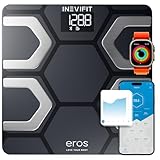
Overview: The INEVIFIT EROS Scale positions itself as a premium lifestyle product at $89.99, emphasizing design and build quality alongside functionality. This smart body composition analyzer tracks 13 key fitness metrics including visceral fat, metabolic age, and protein levels, syncing via Bluetooth to the dedicated Eros Scale app. The Southern California-designed device features a thicker 6mm tempered glass platform and a large 3.6-inch luminous LED display that activates automatically. Upgraded auto-calibrating sensors promise precise measurements up to 400 lbs, while unlimited user profiles accommodate entire families.
What Makes It Stand Out: The design-first approach differentiates it from utilitarian competitors—the scale is crafted to complement home décor rather than look like medical equipment. The 6mm glass platform is notably thicker than standard 5mm scales, suggesting enhanced durability. Real 7-day USA customer support is a standout feature in a market dominated by overseas service. The luminous LED display provides excellent visibility without being overly bright. The app supports unlimited profiles with seamless syncing to Fitbit, Apple Health, and Google Fit, making it family-ready.
Value for Money: At $89.99, it’s priced at the premium end but offers tangible quality improvements. The thicker glass, design aesthetic, and domestic support justify the cost for buyers prioritizing durability and service. However, it uses a 4-electrode system, so you’re paying for build quality and support rather than advanced measurement technology. Comparable 8-electrode scales offer more accurate data at similar prices. This scale targets design-conscious consumers who value customer service over clinical precision.
Strengths and Weaknesses: Strengths: Premium 6mm tempered glass build; Attractive design; Large luminous LED display; Real USA customer support; Unlimited user profiles; Auto-calibrating sensors; Simple app integration; 400 lb capacity. Weaknesses: 4-electrode system less accurate than 8-electrode; High price for technology offered; Limited to 13 metrics; Brand less established than competitors; App has fewer features than major brands; No segmental analysis; Display shows only weight, not composition.
Bottom Line: The INEVIFIT EROS Scale suits buyers prioritizing aesthetics, build quality, and customer service over cutting-edge measurement tech. It’s beautifully designed and well-supported, making it ideal for design-conscious families. However, fitness enthusiasts seeking maximum accuracy should consider 8-electrode alternatives at this price point. If you want a durable, attractive scale with reliable basic composition tracking and excellent support, it’s a solid choice. For data-driven users, better value exists elsewhere.
6. GE Smart Scale for Body Weight, BMI, Fat, Muscle Mass, Digital Bathroom Scales 500lbs Bluetooth 11.8" Large Platform Weighing Machine Health Monitor with App, Dark Blue

Overview: The GE Smart Scale delivers comprehensive body composition tracking in a budget-friendly package from a trusted household name. With its expansive 11.8-inch platform and vibrant 5.33-inch color display, this scale makes daily weigh-ins visually engaging while monitoring 14 key health metrics including weight, BMI, body fat, muscle mass, and metabolic age.
What Makes It Stand Out: The generous 500-pound weight capacity and specialized anti-tip base set this apart from competitors, ensuring stability and accessibility for users of all sizes. The full-color display presents all measurements directly on the scale—no phone required for basic readings—while the Fit Profile app syncs seamlessly with Apple Health and Google Fit for long-term trend analysis.
Value for Money: At $39.99, this scale dramatically undercuts premium brands while offering features often found in $100+ models. The combination of safety engineering, high capacity, and multi-user support delivers exceptional ROI for families or individuals beginning their fitness journey without compromising on data quality.
Strengths and Weaknesses: Strengths include the large colorful display, robust safety features, impressive weight capacity, US-based customer support, and broad app compatibility. The 14-metric suite covers all essentials. Weaknesses involve standard four-electrode technology (less precise than eight-electrode systems) and a less sophisticated app experience compared to flagship competitors.
Bottom Line: An outstanding entry-level choice that doesn’t sacrifice functionality for affordability. Perfect for users seeking reliable, comprehensive tracking with premium display quality and safety features at a fraction of the cost.
7. RENPHO Smart Scale for Body Weight, FSA&HSA Eligible, 8-Electrode Digital Bathroom Scale with BMI Body Fat Muscle Mass, Body Composition Analyzer, Larger Platform, MorphoScan Base

Overview: The RENPHO MorphoScan represents a leap into clinical-grade home monitoring with its eight-electrode segmental BIA technology. This professional-tier scale delivers accuracy within 2% of physician equipment, analyzing body composition across individual body segments rather than providing whole-body estimates alone.
What Makes It Stand Out: Dual-frequency bioelectrical impedance analysis through hand and foot electrodes enables unprecedented precision and segmental breakdowns of fat and muscle distribution. The comprehensive LED display shows BMI, body fat percentage, visceral fat index, and seven-day weight trends for up to eight users without requiring a phone.
Value for Money: At $132.99, this is a premium investment that justifies its cost through medical-level accuracy and detailed printable health reports. For athletes, bodybuilders, or individuals managing health conditions, the segmental analysis provides actionable insights that basic four-electrode scales simply cannot match, making it worth triple the price of entry-level models.
Strengths and Weaknesses: Strengths include exceptional accuracy, segmental body analysis, 130-day battery life, durable construction with a 60-inch cable, and unlimited app profiles. The FSA/HSA eligibility adds financial flexibility. Weaknesses are the higher learning curve, premium price point, and potential overkill for casual users who don’t need segmental data.
Bottom Line: A top-tier choice for serious fitness enthusiasts and health-conscious individuals who demand laboratory-quality data and detailed body composition segmentation. The investment pays dividends for those who will utilize its advanced analytics.
8. arboleaf Smart Scale for Body Weight, 8-Electrode Dual-Frequency BIA Bathroom Scale with 7-in-1 Display for BMI Body Fat Muscle Mass, Segmental Full Body Composition Analyzer, 50+ Metrics in App
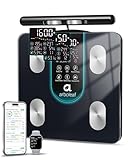
Overview: The arboleaf Smart Scale bridges the gap between basic Bluetooth scales and premium medical devices through its eight-electrode dual-frequency BIA system. Delivering full-body composition analysis with immediate on-screen feedback, this scale caters to data-driven users seeking depth without the highest-tier price tag. Its comprehensive approach makes it ideal for fitness enthusiasts wanting professional insights at home.
What Makes It Stand Out: The integrated 7-in-1 display instantly shows weight, BMI, body fat, muscle mass, water percentage, bone mass, and visceral fat—eliminating phone dependency for daily check-ins. The accompanying app unlocks over 50 metrics including segmental muscle and fat analysis, BMR, and metabolic age, with printable reports for fitness planning.
Value for Money: Priced at $119.99, it undercuts comparable eight-electrode competitors by $10-15 while matching their core functionality. The combination of on-scale display convenience, extensive metric depth, and robust third-party sync (Apple Health, Samsung Health, Fitbit) creates compelling value for tech-savvy households seeking comprehensive analytics.
Strengths and Weaknesses: Strengths include the comprehensive on-screen display, dual-frequency accuracy, unlimited user support with auto-recognition, and exceptional app metric variety. The segmental charts provide professional-level insights. Weaknesses involve a lesser-known brand reputation versus RENPHO or GE, and potential app stability issues reported by some users.
Bottom Line: An excellent mid-range option that delivers premium eight-electrode technology and extensive analytics. Ideal for families and fitness enthusiasts wanting comprehensive data visualization without paying clinical-grade premiums.
9. Etekcity FSA&HSA Eligible Smart Scale for Body Weight Fat, Digital Bathroom Weighing Machine for Accurate BMI Muscle Mass Composition, Home Use Apple Health Compatible Fitness Equipment

Overview: Etekcity’s Wi-Fi-enabled scale brings smart home integration to body composition monitoring, combining FSA/HSA eligibility with cutting-edge connectivity. The Vesync app ecosystem and Alexa compatibility create a hands-free, cloud-synced health tracking experience for the connected lifestyle. This scale prioritizes seamless automation and user experience.
What Makes It Stand Out: Wi-Fi connectivity automatically uploads data without phone proximity, while the vibrant TFT display can be customized to show nine body metrics with motivational messages. Voice control through Alexa enables queries like “How much weight have I lost this month?” creating unparalleled convenience that no Bluetooth-only scale can match. The colorful screen makes daily weigh-ins engaging.
Value for Money: At $79.99, this scale positions itself between budget Bluetooth models and premium eight-electrode systems. The Wi-Fi automation and smart home integration justify the premium over basic scales, though fitness purists might prefer electrode-rich alternatives at this price point. The FSA/HSA eligibility adds financial accessibility for health-conscious consumers.
Strengths and Weaknesses: Strengths include seamless Wi-Fi sync, Alexa voice control, colorful interactive display, FSA/HSA eligibility, and robust privacy protections. The app syncs with major platforms including FitBit and MyFitnessPal. Weaknesses are the standard four-electrode system (less accurate than eight-electrode models) and Wi-Fi dependency that may not suit all users. Some may find the smart features unnecessary for simple tracking.
Bottom Line: The ideal choice for smart home enthusiasts who prioritize convenience and automation over clinical precision. Perfect for users wanting frictionless data tracking integrated into their connected ecosystem without manual syncing.
10. RENPHO Scale for Body Weight, Smart Scale with BMI, Body Fat, Muscle Mass, Bluetooth, 13 Metrics with Large Display, Support App Connection, Black, Elis 2X

Overview: The RENPHO Elis 2X delivers the brand’s trusted quality at an entry-level price point, featuring a sleek ITO-coated surface that enhances accuracy beyond traditional electrode scales. This model balances affordability with essential body composition tracking for households seeking reliable brand recognition and dependable performance.
What Makes It Stand Out: The high-precision ITO (Indium Tin Oxide) coating provides superior measurement accuracy compared to standard four-electrode designs, while the on-scale display shows seven key metrics instantly. Unique pet and baby weighing modes, plus dedicated athlete settings, demonstrate thoughtful versatility for diverse household needs that most competitors overlook.
Value for Money: At $42.94, this offers RENPHO’s app ecosystem and build quality for barely more than generic brands. The ITO technology and specialized modes provide clear advantages over similarly priced competitors, making it an intelligent choice for brand-conscious buyers wanting premium features without premium cost. The 13-metric analysis covers all essential health indicators.
Strengths and Weaknesses: Strengths include the ITO-coated accuracy, immediate on-screen readings, unlimited user profiles, robust app integration, and family-friendly modes. The minimalist design complements modern decor. Weaknesses involve the standard four-electrode limitation (13 metrics versus 14+ on some competitors) and a smaller display than the GE model at a similar price point.
Bottom Line: An excellent entry point into the RENPHO ecosystem, perfect for families and brand-loyal consumers. The specialized modes and ITO accuracy make it particularly attractive for households with pets, babies, or athletes seeking reliable tracking without complexity.
Understanding Visceral Fat: The Hidden Health Threat
What Exactly Is Visceral Fat?
Visceral fat isn’t the soft layer you can pinch between your fingers—that’s subcutaneous fat. Instead, it wraps itself around your internal organs like the liver, pancreas, and intestines, acting as both protective cushioning and, when excessive, a silent threat to your metabolic system. This metabolically active tissue releases inflammatory cytokines and free fatty acids directly into your portal vein, creating a cascade of effects that influence insulin resistance, cholesterol production, and hormone regulation. Smart scales attempt to quantify this invisible adipose tissue using advanced algorithms that extrapolate from your overall body composition data.
Why Visceral Fat Matters More Than Subcutaneous Fat
The location of visceral fat makes it biologically distinct from other fat deposits. Its proximity to vital organs means it directly impacts liver function and glucose metabolism in ways that subcutaneous fat simply doesn’t. Research consistently demonstrates that individuals with higher visceral fat levels face increased risks of type 2 diabetes, heart disease, certain cancers, and even cognitive decline. Unlike subcutaneous fat, which serves as passive energy storage, visceral fat functions as an endocrine organ, secreting hormones and inflammatory markers that can disrupt your entire metabolic profile. This is why health professionals increasingly prioritize visceral fat reduction over simple weight loss.
Health Risks Associated with Elevated Visceral Fat
Chronically elevated visceral fat correlates with a concerning array of health complications. The inflammatory compounds released by this tissue contribute to systemic insulin resistance, often preceding type 2 diabetes by years. Additionally, visceral fat drives dyslipidemia—abnormal cholesterol levels that accelerate atherosclerosis. Studies have linked high visceral fat to increased blood pressure, non-alcoholic fatty liver disease, and heightened cardiovascular event risk. Perhaps most alarmingly, recent research suggests visceral fat accumulation may increase risk for Alzheimer’s disease through inflammatory pathways affecting brain health. Tracking this metric provides early warning signals that simple weight monitoring misses entirely.
How Smart Scales Measure Visceral Fat: The Science Behind Bioelectrical Impedance
Bioelectrical Impedance Analysis (BIA) Explained
Smart scales measure visceral fat through bioelectrical impedance analysis, a technology that sends a harmless, low-level electrical current through your body. Since fat tissue contains less water and conducts electricity poorly compared to muscle, the scale measures resistance to this current. The device combines impedance data with your weight, height, age, and sex to calculate body composition estimates. For visceral fat specifically, advanced algorithms analyze the distribution of resistance patterns across your torso, making educated estimations about internal fat deposits based on validated population data and proprietary formulas.
Multi-Frequency vs. Single-Frequency BIA
Entry-level smart scales typically use single-frequency BIA, which sends one electrical current (usually 50 kHz) through your body. While adequate for basic body fat estimates, this approach struggles with visceral fat specificity. Premium models employ multi-frequency BIA, sending multiple currents at different frequencies. Lower frequencies primarily measure extracellular water and fluid outside cells, while higher frequencies penetrate cell membranes to assess intracellular water. This dual-frequency approach provides more detailed tissue differentiation, allowing algorithms to better isolate trunk-based resistance patterns associated with visceral adipose tissue. The result is improved accuracy and reduced sensitivity to hydration fluctuations.
Algorithms and Estimation: It’s Not Direct Measurement
Crucially, smart scales don’t directly measure visceral fat—they estimate it. The electrical current cannot distinguish between fat surrounding your liver versus fluid in your abdominal cavity. Instead, manufacturers develop proprietary algorithms based on research comparing BIA data to gold-standard measurements like MRI or CT scans. These formulas correlate trunk impedance values with actual visceral fat volumes observed in study populations. This means your reading represents a statistical estimation, not a direct measurement. Algorithm quality varies significantly between manufacturers based on their research depth and validation studies, making this a critical differentiator in scale quality.
Key Features to Look for in Visceral Fat Measuring Scales
Multi-Frequency BIA Technology
When evaluating scales, prioritize models explicitly advertising multi-frequency BIA. This feature typically appears in product specifications as “dual-frequency” or “multi-frequency” analysis. The presence of this technology indicates the manufacturer has invested in more sophisticated measurement capabilities. Look for scales that mention frequencies above 200 kHz, as these higher frequencies provide better cellular-level analysis. Some advanced models even offer tetrapolar systems with eight electrodes—four on the scale platform and four in a handheld unit—for segmental analysis that dramatically improves trunk composition accuracy.
Segmental Analysis Capabilities
Standard scales measure your entire body as a single unit, limiting their ability to isolate visceral fat. Segmental analysis represents a significant advancement, measuring different body regions separately. High-end scales achieve this through multiple electrodes or companion handheld devices. By measuring impedance specifically across your torso, these systems reduce interference from limb composition and provide more targeted visceral fat estimates. While not essential for casual tracking, segmental analysis proves invaluable for serious health monitoring or athletic performance optimization where precision matters.
App Ecosystem and Compatibility
The accompanying smartphone application transforms raw numbers into actionable health insights. Evaluate apps based on data visualization quality, trend analysis capabilities, and export options. The best ecosystems display visceral fat trends over weeks and months rather than daily fluctuations, helping you focus on meaningful patterns. Check compatibility with major health platforms like Apple Health, Google Fit, or Samsung Health, as this enables correlation with other metrics like activity levels, nutrition data, and sleep patterns. Some apps offer educational content explaining what your numbers mean and providing lifestyle recommendations.
Display Options and Readability
While the app provides detailed analysis, the scale’s onboard display matters for daily convenience. Premium models feature large, bright LED or TFT displays showing multiple metrics simultaneously. Some offer customizable displays, allowing you to prioritize visceral fat readings or cycle through different measurements. Consider visibility from standing height and readability in various lighting conditions. Backlit displays prove essential for early morning weigh-ins before sunrise, while high-contrast screens remain visible in bright bathrooms.
Accuracy Considerations: What the Numbers Really Mean
Factors That Influence Accuracy
Smart scale accuracy hinges on consistent measurement conditions. Hydration status dramatically affects BIA readings—dehydration increases impedance, artificially inflating body fat and visceral fat estimates, while overhydration does the opposite. Exercise immediately before measuring elevates blood flow to muscles, altering conductivity. Food consumption changes abdominal fluid distribution, while alcohol affects cellular hydration. For women, menstrual cycle phases influence water retention and readings. Even room temperature impacts measurements, as cold extremities reduce blood flow and alter impedance patterns.
Understanding Margin of Error
Accept that consumer smart scales provide estimates with inherent variability. Research suggests BIA devices exhibit 3-8% error rates for total body fat compared to DXA scans, with visceral fat estimates likely having even wider margins. A single reading proves less valuable than trend data collected under identical conditions. Focus on whether visceral fat values trend downward over months rather than obsessing over daily fluctuations of 0.1-0.3%. Consider your scale a compass indicating direction, not a GPS providing exact coordinates. Weekly averages provide more reliable insights than individual measurements.
Clinical Validation Studies
Reputable manufacturers conduct validation studies comparing their devices to medical-grade imaging. When researching scales, look for published studies or white papers on manufacturer websites. These documents should detail sample sizes, correlation coefficients, and statistical methods. Be skeptical of vague claims like “clinically proven” without supporting data. Transparency about limitations actually indicates credibility—manufacturers acknowledging their device’s margin of error demonstrate scientific integrity. Some brands partner with universities or research institutions, lending additional credibility to their algorithms.
App Integration and Data Tracking: Your Digital Health Dashboard
Data Visualization and Trend Analysis
Effective health tracking requires more than raw numbers—it demands context. Premium apps transform visceral fat data into intuitive graphs showing weekly, monthly, and yearly trends. Look for applications that calculate moving averages to smooth daily noise and highlight genuine progress. The best dashboards correlate visceral fat changes with other metrics like weight, waist circumference, and body fat percentage, helping you understand relationships between different health indicators. Some advanced apps use color-coded zones (green, yellow, red) to contextualize your values against population health standards.
Third-Party Health App Syncing
Your scale represents just one piece of your health puzzle. Integration with comprehensive platforms like Apple HealthKit, Google Fit, or Fitbit creates a unified health profile. This connectivity allows you to overlay visceral fat trends with workout data from fitness trackers, nutrition logs from calorie-counting apps, and sleep quality metrics. Such correlations reveal how lifestyle interventions impact visceral fat—perhaps showing that consistent sleep duration correlates more strongly with visceral fat reduction than exercise frequency. This holistic view enables data-driven lifestyle optimization rather than guesswork.
Goal Setting and Motivation Features
Behavioral psychology research demonstrates that specific, measurable goals improve health outcomes. Quality apps incorporate goal-setting modules where you can target visceral fat reduction percentages over defined periods. Some platforms offer achievement badges, progress celebrations, or gentle reminder notifications when measurements lapse. Advanced systems might integrate AI coaching, providing personalized recommendations based on your trending data. However, avoid apps that create anxiety through excessive notifications or unrealistic targets—sustainable health changes require supportive, not stressful, digital environments.
User Profiles and Multi-User Functionality
Automatic User Recognition Technology
Modern smart scales can distinguish between household members automatically. This feature works by comparing each measurement to stored user profiles, analyzing weight and body composition patterns to identify individuals. When two users have similar weights, the scale may prompt you to select the correct profile via the app. High-end models use more sophisticated algorithms incorporating historical impedance data, making recognition more reliable. This functionality ensures each person’s data remains separate and accurate, preventing cross-contamination of health records.
Guest Mode and Privacy Considerations
Guest mode allows visitors to use the scale without saving their data permanently—useful when friends or family want a one-time measurement. From a privacy perspective, examine how the scale handles unidentified measurements. Some devices automatically assign unknown readings to the primary account, creating data pollution. Better systems either discard unrecognized measurements after 24 hours or require explicit guest mode activation. For households with teenagers or individuals sensitive about health data, consider scales offering private measurement modes where numbers don’t display publicly.
Family and Household Management
If tracking multiple family members, evaluate how many user profiles the scale supports—most accommodate 8-16 users, while some manage unlimited profiles through the app. Parental controls become important when children use the scale, as developing bodies require different interpretation of metrics. Some apps offer family dashboards where parents can monitor children’s growth patterns while maintaining appropriate privacy boundaries. For caregivers tracking elderly parents, remote data access features allow health monitoring from afar, though this requires careful conversation about consent and autonomy.
Design and Build Quality: Beyond Aesthetics
Platform Size and Stability
A stable, generously sized platform ensures consistent foot placement, which directly impacts measurement repeatability. Platforms measuring at least 12x12 inches accommodate various foot sizes and stances comfortably. Textured glass surfaces prevent slipping even with wet feet, while raised edges provide tactile feedback for proper positioning. Weight capacity matters too—most quality scales support 400 pounds, but bariatric users should verify 450-500 pound capacities. The platform should feel rigid without flexing, as structural integrity affects sensor accuracy.
Materials and Durability
Most smart scales use tempered glass platforms for their non-conductive properties and sleek appearance. However, glass thickness varies—5mm tempered glass offers superior durability compared to thinner 3mm versions. Underneath, the internal construction matters: look for scales with sealed electronics to protect against bathroom humidity. IP ratings indicate water resistance—IPX3 handles splashes, while IPX4 withstands directed water jets. Metal frames around the platform perimeter add structural reinforcement. Consider warranty length as a proxy for manufacturer confidence—two-year warranties suggest better build quality than one-year coverage.
Display Visibility and Readability
The display represents your daily interface with the device. LED displays offer excellent brightness but can consume more power. LCD displays with backlighting provide better energy efficiency. Some premium models feature color TFT displays showing multiple metrics simultaneously. Consider viewing angle—can you read the display clearly while standing upright? Automatic brightness adjustment based on ambient light proves valuable. Display refresh rate matters too; slower screens may show blurry numbers as you step off. The best displays maintain readability for 5-10 seconds after you step away, allowing you to record numbers if needed.
Power Options and Battery Life
Battery Types and Expected Longevity
Most smart scales operate on AAA or AA batteries, with typical lifespans of 6-12 months depending on usage frequency and display type. Some premium models use lithium coin cell batteries lasting 18-24 months. Battery life depends heavily on connectivity—Wi-Fi scales drain batteries faster than Bluetooth-only models. Display brightness and auto-on sensitivity also impact consumption. Look for scales with battery level indicators in the app, preventing unexpected power loss. Consider the environmental and cost impact of disposable batteries versus rechargeable options over the device’s lifetime.
USB Rechargeable Options
An emerging trend in premium scales involves built-in lithium-ion batteries with USB-C charging. These eliminate disposable battery costs and environmental waste, typically requiring charging only 2-3 times yearly. However, verify standby time claims—some early rechargeable models lost charge quickly when idle. The convenience of USB charging comes with trade-offs: you’ll need to remember periodic charging, and the internal battery will eventually degrade, potentially shortening the device’s total lifespan compared to battery-powered alternatives. Some models offer solar charging as a hybrid solution, though bathroom lighting may be insufficient for reliable operation.
Power-Saving Features
Intelligent power management extends battery life significantly. Quality scales activate only when sensing weight, then quickly power down after data transmission. Some models enter deep sleep modes between uses, consuming microamps of current. Look for adjustable auto-off timers and display duration settings to optimize power usage. Scales with “always-on” Bluetooth advertising drain batteries faster than those that activate Bluetooth only during measurements. Wi-Fi scales should offer scheduled sync options—updating data once daily rather than immediately after each weigh-in dramatically reduces power consumption while still capturing trends.
Connectivity Options: Bluetooth vs Wi-Fi
Bluetooth Connectivity: Pros and Limitations
Bluetooth scales transmit data directly to your smartphone when in range (typically 30-50 feet). This connection method consumes less power and generally costs less. However, Bluetooth requires your phone to be present and the app running in the background for data capture—if you weigh yourself without your phone, measurements may store temporarily on the scale (limited memory) or be lost entirely. Bluetooth connections can occasionally drop, requiring re-pairing. The advantage is simplicity and lower cost, making Bluetooth scales ideal for single users who always have their phones nearby during morning routines.
Wi-Fi Connectivity: Benefits and Drawbacks
Wi-Fi scales connect directly to your home network, automatically uploading measurements to cloud servers regardless of your phone’s location. This “set it and forget it” convenience ensures no data loss and enables remote monitoring capabilities. Family members can access their data from anywhere. The trade-offs include higher power consumption, increased cost, and more complex initial setup. Wi-Fi scales may also experience connectivity issues with certain router configurations or 5GHz networks. Privacy-conscious users should note that Wi-Fi connectivity means health data leaves their direct control, traveling through manufacturer servers.
Hybrid Connectivity Solutions
Some premium scales offer both Bluetooth and Wi-Fi, automatically selecting the best connection method. These devices might use Bluetooth for quick daily syncs when your phone is nearby, then leverage Wi-Fi for firmware updates or when Bluetooth is unavailable. This redundancy ensures data capture reliability. Advanced models store up to 30 measurements locally when disconnected, then sync automatically when connectivity restores. For users in areas with unreliable internet, this offline capability proves invaluable. When evaluating hybrid models, verify how the scale handles connection priority and whether you can disable Wi-Fi if desired for privacy reasons.
Privacy and Data Security Concerns
Data Encryption and Storage Practices
Your visceral fat data reveals sensitive health information that deserves protection. Reputable manufacturers encrypt data both in transit (using TLS/SSL protocols) and at rest on their servers. Investigate whether companies practice data minimization—collecting only necessary metrics rather than excessive personal information. Some scales process data locally on the device, transmitting only final calculations rather than raw impedance values. This approach limits exposure if servers are breached. Look for end-to-end encryption claims and transparency about data retention policies—how long does the company store your information?
GDPR Compliance and User Rights
Even if you live outside Europe, GDPR compliance indicates robust privacy practices. Compliant companies must provide data portability (exporting your information), right to erasure (deleting your data), and clear consent mechanisms. Check privacy policies for explicit statements about not selling health data to third parties. Some manufacturers anonymize data for research purposes—understand whether you can opt out of this. Beware of “free” apps that monetize user data; paid subscription models often align better with privacy since you’re the customer, not the product.
What to Look for in Privacy Policies
Read privacy policies critically. Legitimate policies clearly state what data is collected, how it’s used, and with whom it’s shared. Red flags include vague language about “improving services” without specifics, mandatory arbitration clauses that prevent class-action lawsuits, and unclear third-party sharing practices. Prefer companies offering two-factor authentication for account access. Some privacy-focused scales store data locally on your phone rather than in the cloud, though this risks data loss if your phone fails. Consider whether the manufacturer has experienced data breaches and how they responded.
Price Ranges and Value Proposition
Budget Tier ($30-$60): What to Expect
Scales in this range typically offer basic BIA with single-frequency analysis and limited algorithm sophistication. They measure visceral fat but with wider margins of error, making them suitable for general trend tracking rather than precise monitoring. Build quality often features thinner glass and plastic components. App integration tends toward basic data logging without advanced analytics. Bluetooth connectivity dominates this tier, with limited user profiles (usually 4-8). While functional, these scales may frustrate users seeking medical-grade insights. Consider this tier if you’re curious about visceral fat tracking but aren’t ready to invest heavily.
Mid-Range ($60-$120): The Sweet Spot
This price range offers the best value for most consumers. Expect multi-frequency BIA, validated algorithms, and robust app ecosystems with trend analysis. Build quality improves with thicker tempered glass, metal reinforcements, and better water resistance. Wi-Fi connectivity appears, along with unlimited user profiles and automatic recognition. App features expand to include goal setting, educational content, and third-party integrations. Accuracy approaches clinically useful levels, with many models publishing validation studies. For committed health trackers, this tier provides professional-level insights without premium pricing.
Premium ($120+): Advanced Features
Premium scales justify their cost through segmental analysis, advanced multi-frequency BIA, and sophisticated apps with AI coaching. Some offer handheld electrodes for superior trunk analysis. Build quality reaches luxury levels with premium materials like aluminum frames and Gorilla Glass. Connectivity includes both Wi-Fi and Bluetooth with extensive offline storage. Apps provide personalized recommendations, integrate with telehealth platforms, and offer detailed export capabilities for sharing with healthcare providers. These scales target users managing chronic conditions, athletes optimizing performance, or biohackers seeking maximum data precision.
Setting Up Your Smart Scale for Optimal Results
Proper Placement and Calibration
Place your scale on a hard, flat surface—tile or hardwood, not carpet. Even slight tilts affect load cell accuracy and BIA readings. Avoid bathrooms with radiant floor heating, as temperature gradients influence measurements. Let the scale acclimate to room temperature for 24 hours before first use. Most scales calibrate automatically, but you can verify accuracy using a known weight (like a 10-pound dumbbell). For BIA calibration, some manufacturers recommend a “learning period” of 5-10 measurements to refine algorithms to your specific body characteristics. During this period, take readings daily under identical conditions.
Creating a Consistent Measurement Protocol
Consistency eliminates variables that corrupt data. Weigh yourself at the same time daily, ideally after waking and using the bathroom but before eating or drinking. Morning measurements minimize hydration variability. Remove shoes and socks, ensuring bare feet contact electrodes directly. Stand still with weight distributed evenly—shifting or talking introduces noise. Wait for the scale to complete its full cycle (usually 10-20 seconds) before stepping off. Record whether you had alcohol, intense exercise, or unusual meals the previous day, as these contextual notes help interpret anomalies. Avoid measuring during illness, as inflammation and dehydration skew results significantly.
User Profile Setup Best Practices
When creating your profile, provide accurate information—height, age, and sex fundamentally affect algorithm calculations. Some scales ask about activity level; be honest, as athlete modes use different formulas. If you become pregnant, update your profile or switch to a pregnancy mode if available, as BIA interpretation changes dramatically during gestation. For users with medical implants like pacemakers, consult your doctor before using BIA scales—the electrical current, though minimal, may interfere with certain devices. Set realistic goals in the app; aggressive targets create frustration, while modest, achievable milestones build sustainable habits.
Interpreting Your Visceral Fat Measurements
Understanding Healthy Reference Ranges
Smart scales typically express visceral fat as a numeric rating or level rather than absolute volume. Common scales use 1-59 or 1-20 scales, where lower numbers indicate less visceral fat. Generally, ratings under 13 (on a 1-59 scale) suggest healthy levels, while values above 15 indicate excess visceral fat warranting lifestyle intervention. However, these ranges vary by sex, age, and ethnicity. Men naturally carry more visceral fat than pre-menopausal women. Athletes may register slightly higher values due to increased abdominal muscle density. Rather than fixating on absolute numbers, compare your values against population percentiles provided in your app’s documentation.
The Importance of Tracking Trends Over Time
A single visceral fat reading provides minimal insight—your menstrual cycle, last night’s dinner, or yesterday’s workout can shift values by 10-20%. True understanding emerges from 4-12 week trends. Calculate weekly averages to smooth daily noise. Look for consistent directional movement: are values gradually decreasing over three months of diet and exercise changes? Plateaus lasting 4-6 weeks suggest your current regimen has lost effectiveness, signaling need for adjustment. Sudden spikes often correlate with lifestyle disruptions—vacations, holidays, stress periods. Export your data monthly to create backup records and share with healthcare providers during checkups.
Correlating with Other Health Markers
Visceral fat shouldn’t exist in isolation. Correlate trends with waist circumference measurements, which provide independent validation—reducing waist size while visceral fat remains stable might indicate measurement error. Blood markers like fasting glucose, HbA1c, and lipid panels offer metabolic confirmation of visceral fat changes. Many users find visceral fat reductions lag behind weight loss by 4-8 weeks, as initial weight loss often involves water and glycogen. If visceral fat remains stubbornly high despite weight loss, investigate hormonal factors like cortisol or testosterone levels with your physician.
Limitations and When to Consult Healthcare Professionals
Consumer vs. Medical-Grade Devices
Understand that no consumer smart scale matches the precision of DEXA scans, MRI, or CT imaging for visceral fat quantification. Medical-grade BIA devices cost thousands and require trained operators. Consumer scales serve as screening tools and trend trackers, not diagnostic instruments. Their algorithms work best for individuals within normal BMI ranges; accuracy degrades for those with BMI over 35 or under 18. Athletes with high muscle mass often receive inflated body fat readings due to algorithm limitations. If your health decisions depend on precise visceral fat measurement, discuss medical testing options with your doctor.
Red Flags That Warrant Medical Attention
While smart scales provide valuable insights, certain scenarios require professional evaluation. If your visceral fat rating remains extremely high (above 20 on standard scales) despite consistent lifestyle efforts, consult a physician to rule out metabolic disorders. Rapid, unexplained increases in visceral fat combined with weight gain might indicate hormonal imbalances like Cushing’s syndrome or medication side effects. Always discuss visceral fat concerns with your doctor if you have diagnosed cardiovascular disease, diabetes, or are planning major dietary changes. Never use scale data to adjust medication dosages or replace medical advice.
Integrating Scale Data with Professional Healthcare
Your smart scale data becomes most powerful when shared with healthcare providers. Most quality apps allow PDF report generation or data export in CSV format. Bring 3-6 months of trend data to annual physicals. Some forward-thinking clinics now accept direct app integrations, allowing them to monitor your progress between visits. However, prepare for skepticism—not all physicians trust consumer device accuracy. Frame the data as “trend information” rather than absolute values. Work with registered dietitians or certified personal trainers who understand body composition analysis and can interpret your numbers within broader health contexts.
Frequently Asked Questions
How accurate are smart scales for measuring visceral fat?
Consumer smart scales estimate visceral fat with approximately 80-85% accuracy compared to MRI reference standards, meaning they excel at tracking trends but shouldn’t be used for clinical diagnosis. Accuracy depends on consistent measurement conditions, multi-frequency BIA technology, and algorithm quality. Daily fluctuations of 0.5-2 rating points are normal due to hydration and food intake. Focus on 4-12 week trends rather than individual readings for meaningful health insights.
What’s the difference between visceral fat and belly fat?
“Belly fat” colloquially describes all abdominal fat, but visceral fat specifically refers to the deeper adipose tissue surrounding internal organs, while subcutaneous fat sits just under the skin. You can pinch subcutaneous fat, but visceral fat lies hidden beneath abdominal muscles. Smart scales attempt to estimate visceral fat based on trunk impedance patterns, whereas waist circumference measures total abdominal fat. Visceral fat poses greater health risks due to its metabolic activity and direct access to your portal vein.
Can a smart scale diagnose health problems?
No, smart scales cannot diagnose medical conditions. They provide screening-level estimates that may indicate increased risk, but cannot detect disease. High visceral fat readings suggest you should consult a healthcare provider for comprehensive evaluation, including blood work and blood pressure measurement. Think of your scale as an early warning system, not a medical device. Always discuss concerning trends with a qualified healthcare professional rather than self-diagnosing based on scale data alone.
How often should I measure my visceral fat?
Daily measurements under identical conditions provide the best data for trend analysis, but weekly tracking suffices for most users. The key is consistency—same time of day, same conditions. Taking readings less than once weekly loses trend resolution, while obsessing over daily fluctuations creates unnecessary anxiety. Calculate weekly averages to smooth variability. Avoid measuring during illness, after heavy alcohol consumption, or following intense exercise, as these conditions produce anomalous readings that don’t reflect true visceral fat levels.
Does hydration level really affect my readings?
Hydration is the single biggest factor affecting BIA accuracy. Dehydration increases electrical resistance, causing the scale to overestimate body fat and visceral fat by up to 20%. Conversely, measuring immediately after drinking large amounts of water underestimates fat values. Standardize your hydration by measuring first thing in the morning after using the bathroom but before drinking. Avoid diuretics like alcohol the evening before. If you wake up unusually thirsty, skip that day’s measurement as dehydration will skew results.
Can multiple people use the same scale accurately?
Yes, modern smart scales support 8-16 user profiles and automatically recognize individuals based on weight and body composition patterns. For households with members of similar weight, the scale may ask you to confirm identity via the app. Each user’s data remains separate and private. For accurate results, each person must create their own profile with correct biometrics. Guest mode allows temporary use without saving data. Regularly verify the scale has assigned measurements to the correct profile, especially after weight changes.
Are Wi-Fi scales better than Bluetooth scales?
Neither is universally superior—choose based on your priorities. Wi-Fi scales offer convenience, automatically syncing data without requiring your phone nearby, making them ideal for families or those who prefer phone-free mornings. Bluetooth scales consume less power, cost less, and give you more direct control over data transmission. Privacy-conscious users may prefer Bluetooth since data stays local until you manually sync. Hybrid models provide the best of both worlds, though at premium prices.
What should I do if my visceral fat reading is high?
First, verify the reading by taking measurements under consistent conditions for two weeks to confirm it’s not a fluke. If elevated readings persist, schedule a checkup with your healthcare provider to assess overall metabolic health through blood tests. Implement evidence-based lifestyle interventions: reduce refined carbohydrates and added sugars, increase soluble fiber intake, engage in regular aerobic exercise plus resistance training, prioritize 7-9 hours of sleep, and manage stress through mindfulness or meditation. Aim for gradual, sustainable changes rather than crash diets, which can paradoxically increase visceral fat through stress hormone elevation.
Can smart scales measure visceral fat in children?
Most manufacturers advise against using BIA scales for children under 18 due to different body water distribution and developing physiology. Pediatric body composition requires specialized algorithms and interpretation. Some scales offer “child modes,” but these provide limited accuracy. Focus on healthy lifestyle habits for children rather than tracking visceral fat specifically. If you have concerns about your child’s weight or health, consult a pediatrician who can provide appropriate assessment tools and guidance.
Do I need to calibrate my smart scale regularly?
Smart scales automatically calibrate when you step on them, but you should verify accuracy monthly using a known weight. Place a 10 or 25-pound dumbbell on the scale—readings within 0.2 pounds are acceptable. For BIA calibration, consistency matters more than manual adjustment. Some apps offer “re-calibration” options after significant weight changes (more than 10 pounds) or body composition shifts. If readings suddenly become erratic, remove and reinsert batteries to reset the system, or check for firmware updates in the app that might improve algorithm accuracy.