Imagine pulling into your driveway after a long day, arms full of groceries, only to watch your garage door glide open automatically as if it anticipated your arrival. No fumbling for remotes, no punching codes into keypads, no “did I remember to close it?” anxiety as you drive away. This isn’t science fiction—it’s the reality of smart garage door controllers with geofencing, a technology that’s quietly revolutionizing how we interact with one of our home’s most critical access points.
While standard smart garage controllers let you operate doors from your phone, geofencing adds an intelligent layer of location-based automation that transforms convenience from a tap on a screen into a truly seamless experience. But with this sophistication comes complexity. Understanding how geofencing works, what features matter most, and how to avoid common pitfalls can mean the difference between a system that feels like magic and one that’s more frustrating than a traditional remote. This guide dives deep into everything you need to know to make an informed decision and get the most from this transformative technology.
Top 10 Smart Garage Door Controllers with Geofencing
Detailed Product Reviews
1. Alpha Smart Garage & Gate Opener with Geofencing, WiFi Remote Controller with App, Compatible with Alexa, Google Home and Assistant, Wireless Door Opener, Door Alert, No Hub Required

Overview: The Alpha Smart Garage & Gate Opener transforms your existing garage door system into a connected smart device for just $24.99. This universal WiFi controller works with most major brands including LiftMaster, Chamberlain, and CAME, allowing you to operate and monitor your garage from anywhere using the free Tuya app on iOS or Android.
What Makes It Stand Out: Geofencing capability sets this apart from budget competitors, automatically triggering your garage as you approach or leave home. The device supports both garage doors and gates, offering rare dual functionality at this price point. With built-in door alerts and multi-user sharing through the app, it provides comprehensive security without subscription fees. The voice control integration with Alexa and Google Home enables hands-free operation.
Value for Money: At $24.99, this represents exceptional value. Competing products with geofencing typically cost $40-60. The absence of monthly fees and hub requirements eliminates ongoing costs, while wide brand compatibility means you won’t need to replace your existing opener. It’s essentially a premium feature set at a budget price point.
Strengths and Weaknesses: Strengths include geofencing, dual garage/gate support, extensive compatibility, no subscription fees, and straightforward installation. The Tuya app is reliable but less polished than brand-specific alternatives. Potential weaknesses include limited customer support documentation and no native Siri integration. Some users report occasional WiFi connectivity issues with certain router configurations.
Bottom Line: An outstanding budget choice for homeowners wanting advanced features like geofencing without the premium price tag. Ideal for those with multiple entry points or mixed-brand setups.
2. CHAMBERLAIN Smart Garage Control - Wireless Garage Hub and Sensor with Wifi & Bluetooth - Smartphone Controlled, myQ-G0401-ES, White
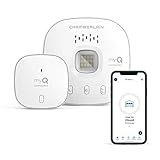
Overview: The Chamberlain myQ Smart Garage Control brings trusted brand reliability to smart garage operation for $29.98. This white wireless hub connects to your existing opener, enabling smartphone control through the myQ app while adding Bluetooth connectivity for more stable local connections. It’s designed to eliminate the classic “did I shut the garage?” anxiety with robust scheduling and monitoring features.
What Makes It Stand Out: As an official Chamberlain product, it offers seamless integration with their ecosystem and exclusive Amazon Key In-Garage Delivery for Prime members. The dual WiFi and Bluetooth connectivity ensures reliable operation even with weak internet signals. The myQ app provides a polished, intuitive experience with advanced scheduling options and real-time status updates you can trust.
Value for Money: Priced at $29.98, it sits in the mid-range but delivers brand-backed reliability. While slightly more expensive than generic alternatives, the Chamberlain name ensures ongoing app support and compatibility updates. The Amazon Key feature alone adds significant value for Prime subscribers who receive regular deliveries, potentially preventing package theft.
Strengths and Weaknesses: Strengths include reputable brand support, Amazon Key integration, reliable dual connectivity, excellent app experience, and proven durability. Weaknesses include limited voice assistant compatibility (no native Siri support), slightly higher price than generic options, and potential incompatibility with some older opener models despite broad claims.
Bottom Line: A reliable, brand-supported solution perfect for Amazon Prime members and those prioritizing stability over cutting-edge features. Worth the small premium for peace of mind.
3. eKyro Smart Garage Door Opener - Universal WiFi Remote Controller Compatible with Alexa, Google Home, iPhone, Siri, Android, Door Left Open Alert, Door Security Systems, Updated Model
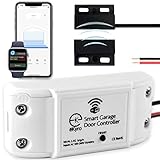
Overview: The eKyro Smart Garage Door Opener positions itself as the versatile choice at $34.99, offering universal compatibility with an optional adapter for problematic models. This updated model supports the full spectrum of voice assistants including Siri, Alexa, and Google Home, making it ideal for mixed-device households. The system provides comprehensive mobile control and security alerts through your existing WiFi network.
What Makes It Stand Out: Siri integration is the headline feature, filling a gap many competitors ignore. The company proactively offers compatibility adapters for challenging opener models, demonstrating commitment to making it work. Support for multiple eKyro units on one account makes it perfect for multi-door homes. Smart watch compatibility adds another layer of convenience for tech-forward users.
Value for Money: At $34.99, it’s the priciest option but justifies the cost through superior voice assistant support and flexibility. The adapter program prevents costly opener replacements, while the absence of subscription fees ensures long-term savings. For Apple-centric households, this is often the only viable sub-$50 option with native Siri support.
Strengths and Weaknesses: Strengths include Siri/Alexa/Google support, adapter program for compatibility, multi-unit management, smart watch integration, and no monthly fees. Weaknesses include higher upfront cost, potential need for adapter (sold separately), and less established brand reputation. The explicit Ryobi incompatibility is a notable limitation.
Bottom Line: The best choice for Apple users or households with diverse voice assistants. The adapter program and multi-unit support make it worth the extra investment.
4. AGSHOME Smart Wi-Fi Garage Door Opener Remote, APP Control, Compatible with Alexa, Google Assistant, No Hub Needed with Smartphone Control
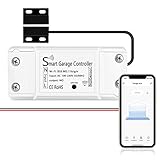
Overview: The AGSHOME Smart Wi-Fi Garage Door Opener Remote delivers essential smart functionality at the lowest price of $21.99. This no-frills controller connects to your existing opener and provides smartphone control through the SmartLife app, along with Alexa and Google Assistant voice commands. It’s designed for straightforward operation without complex features or subscription requirements, making it ideal for smart home beginners.
What Makes It Stand Out: The aggressive $21.99 pricing makes it the most accessible entry point into smart garage control. Guest smartphone control features allow temporary access for visitors, delivery personnel, or service providers. The product emphasizes security with real-time notifications and supports multiple users without additional fees. Step-by-step video instructions simplify installation for non-technical users, and the SmartLife ecosystem integration ensures broad smart home compatibility.
Value for Money: This offers unbeatable value at $21.99, undercutting most competitors by $5-15 while delivering core functionality. The lack of subscription fees and hub requirements keeps costs minimal. While it lacks advanced features like geofencing or Siri support, it covers the essentials that most users actually need. For budget-conscious buyers or those wanting to test smart garage technology, it’s nearly risk-free and provides immediate utility.
Strengths and Weaknesses: Strengths include lowest price, guest access features, straightforward installation, reliable basic operation, and SmartLife app integration. Weaknesses include 2.4GHz WiFi only (no 5GHz), limited compatibility documentation, no geofencing, and no Siri support. Some users report occasional app connectivity issues that require reconnection.
Bottom Line: A fantastic budget option that covers the basics well. Perfect for first-time smart home users or those prioritizing cost savings over advanced features.
5. Smart WiFi Garage Door Opener Remote Controller, Smartphone App Control, Compatible with Alexa, Google Assistant and IFTTT, No Hub Required

Overview: This generic-branded Smart WiFi Garage Door Opener Remote Controller offers a balanced feature set at $28.99, positioning itself as a versatile mid-range option. The device adds smartphone control to existing openers through the Smart Life app and supports all major voice platforms including Alexa, Google Assistant, and Siri. Its IFTTT integration enables advanced automation scenarios beyond basic open/close functions.
What Makes It Stand Out: The detailed compatibility testing method—using a stripped wire or paper clip to check terminals—demonstrates unusual transparency and helps prevent purchase mistakes. IFTTT support allows creative automations like closing the garage when you arm your security system or opening it when your smart doorbell recognizes you. The multi-user notification system provides granular tracking of who operates the door and when, enhancing security awareness.
Value for Money: At $28.99, this hits the sweet spot between budget and premium options. It includes Siri support typically found in pricier models and adds IFTTT integration rarely seen under $30. The proactive compatibility approach saves time and return hassles. While lacking geofencing, it offers automation through IFTTT as a workable alternative, delivering premium features without the premium price tag.
Strengths and Weaknesses: Strengths include IFTTT integration, Siri support, detailed compatibility testing, multi-user tracking, scheduling, and no hub requirement. Weaknesses include generic brand with potentially limited support, no explicit geofencing mention, and reliance on Smart Life app which some users find less intuitive than proprietary alternatives. Documentation quality varies.
Bottom Line: An excellent mid-range choice for tech-savvy users wanting IFTTT automation. The compatibility testing method alone makes it worth considering for uncertain setups.
6. XDTKML Smart Garage Door Opener Smart WiFi Garage Controller Garage Door Opener Controller Compatible with Alexa Google Assistant iPhone Android SmartLife App Remote Control No Hub Required

Overview: The XDTKML Smart Garage Door Opener transforms your existing garage door into a smart device for just $20.99. This budget-friendly controller connects via 2.4GHz WiFi to the SmartLife app, enabling remote operation and voice control through Alexa, Google Assistant, or Siri. Designed for DIY installation, it includes a clever compatibility test where you simply short the garage door terminals with pliers—if the door moves, it’ll work.
What Makes It Stand Out: Its universal compatibility testing method sets it apart from competitors. Rather than searching through lengthy compatibility lists, you can verify functionality in seconds. The multi-user access feature allows family members independent control, while real-time notifications and scheduling provide peace of mind. The system logs every operation, creating an audit trail of garage activity.
Value for Money: At $20.99, this is one of the most affordable smart garage controllers available. It delivers core smart features—remote access, voice control, and notifications—without recurring fees. While it lacks premium sensors or Matter certification, it provides essential functionality at half the price of mid-range alternatives, making it ideal for budget-conscious homeowners.
Strengths and Weaknesses: Pros: Extremely affordable price; simple compatibility verification; supports major voice assistants; no subscription fees; multi-user access. Cons: Limited to 2.4GHz WiFi; basic SmartLife app may lack advanced features; no Bluetooth backup; sensor accuracy may be less reliable than premium options; installation instructions could be clearer.
Bottom Line: For under $21, the XDTKML offers remarkable value for homeowners wanting basic smart garage functionality. It’s perfect if you prioritize affordability over premium features and don’t need HomeKit integration. Test compatibility first, ensure strong WiFi in your garage, and you’ll have reliable remote access without breaking the bank.
7. meross Smart Garage Door Opener Remote, Compatible with Apple HomeKit, Amazon Alexa, Google Assistant, SmartThings, Siri, CarPlay and Android, Universal WiFi Garage Controller, No Hub Required

Overview: The meross MSG100HK represents the premium tier of smart garage controllers at $49.99, specializing in Apple ecosystem integration. This device adds HomeKit, Siri, and CarPlay capabilities to nearly any existing garage door opener (200 brands, 1600 models) using Security+ 1.0 and 2.0 protocols. Your original remotes and wall buttons remain functional, while the highly sensitive wired sensor provides accurate door status monitoring.
What Makes It Stand Out: CarPlay integration is a game-changer, allowing garage door control directly from your vehicle’s dashboard. The wired sensor delivers superior reliability compared to wireless alternatives, eliminating false status readings. Comprehensive smart home support spans HomeKit, Alexa, Google Assistant, and SmartThings simultaneously. The meross app provides detailed operation history and customizable notifications including overnight alerts.
Value for Money: While nearly 2.5x the price of budget options, the premium is justified for Apple users. The robust sensor, extensive compatibility list, and seamless ecosystem integration create a frustration-free experience. Unlike cheaper alternatives, meross offers compatibility accessories at no extra cost, ensuring your specific opener works. For iPhone-centric households, this is the most reliable solution available.
Strengths and Weaknesses: Pros: Full Apple HomeKit and CarPlay support; highly accurate wired sensor; extensive compatibility (200+ brands); free compatibility accessories; stable signal; detailed operation logs; no subscription fees. Cons: Premium pricing; does not support Security+ 3.0; 2.4GHz WiFi only; overkill for non-Apple users; setup can be complex for some openers.
Bottom Line: The meross MSG100HK is the undisputed choice for Apple enthusiasts seeking seamless garage automation. Its premium sensor and CarPlay integration justify the higher cost. If you live in the Apple ecosystem and want rock-solid reliability, this is worth every penny. Android users should consider the non-HomeKit version instead.
8. meross Smart WiFi Garage Door Opener Remote, App Control, Works with Alexa, Google Assistant and SmartThings, No Hub Needed(Non HomeKit Versions)
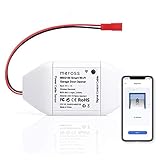
Overview: Priced at $31.53, the non-HomeKit meross Smart WiFi Garage Door Opener delivers the brand’s renowned reliability without Apple ecosystem premiums. It transforms existing openers from 200+ brands into smart devices compatible with Alexa, Google Assistant, and SmartThings. The package includes the same high-sensitivity wired sensor as its pricier sibling, ensuring accurate door status monitoring and stable connectivity.
What Makes It Stand Out: You get meross’s superior hardware—accurate wired sensor, extensive compatibility support, and robust app—at a mid-range price. The sensor eliminates the guesswork common with budget wireless sensors, providing precise open/close status. Multiple notification modes (including overtime and overnight alerts) help prevent security oversights. Operation logs track every movement for security auditing.
Value for Money: This hits the sweet spot between budget and premium options. You’re paying $10 more than generic brands for meross’s proven reliability and compatibility support. The company will ship free accessories to solve compatibility issues, a service budget brands don’t offer. For Android and Alexa-centric homes, it delivers 90% of the premium version’s functionality at 63% of the cost.
Strengths and Weaknesses: Pros: Accurate wired sensor; extensive compatibility (200+ brands); free compatibility accessories; stable connectivity; multiple notification modes; no subscription fees; detailed logs. Cons: No HomeKit/CarPlay support; 2.4GHz WiFi only; not compatible with Security+ 3.0; slightly more expensive than basic alternatives; requires acceptable WiFi strength.
Bottom Line: The meross non-HomeKit version is the smart choice for Android and Alexa households wanting reliability without Apple premiums. Its wired sensor and compatibility support justify the modest price increase over budget options. If you don’t need HomeKit, this delivers professional-grade performance at a consumer-friendly price. Ensure your opener is on the compatibility list before purchasing.
9. Switchbot WiFi Smart Garage Door Opener, Matter Certified, Alexa/Google/Siri/IFTTT/Smartthings Supported, Most Garage Door Supported, App Control, Multiple Notification Modes, No Hub Needed

Overview: The Switchbot WiFi Smart Garage Door Opener at $24.99 brings future-proof Matter certification to garage automation. Supporting over 200 brands—including vintage 1990s models—this controller works with Alexa, Google, Siri, IFTTT, and SmartThings. Its standout feature is Bluetooth backup control when WiFi fails, ensuring you’re never locked out. The two-wire installation simplifies setup for most users.
What Makes It Stand Out: Matter certification ensures seamless integration with current and future smart home ecosystems, making this the most future-proof option under $25. Bluetooth backup connectivity is a unique safety net when WiFi is unavailable. The controller supports both modern and ancient garage door openers, offering exceptional backward compatibility. Multiple user access and comprehensive notification modes keep families informed.
Value for Money: At $24.99, you’re getting premium features—Matter support, Bluetooth backup, and broad compatibility—at a budget price point. This undercuts many non-certified competitors while offering superior interoperability. The lack of subscription fees and free app control makes it a one-time investment in a standard that will be supported for years to come.
Strengths and Weaknesses: Pros: Matter certified for future-proofing; Bluetooth backup connectivity; supports 200+ brands including vintage models; no subscription fees; multiple notification modes; family sharing; easy two-wire install. Cons: Only 2.4GHz WiFi; compatibility still requires verification; sensor type not specified; newer brand with smaller support network; app may be less polished than established competitors.
Bottom Line: The Switchbot is the forward-thinking choice for tech-savvy homeowners wanting Matter compatibility without premium pricing. Its Bluetooth backup provides peace of mind that competitors lack. If you value future-proofing and have spotty garage WiFi, this is your best bet under $25. Verify compatibility first, but the broad support makes success likely.
10. WiFi Smart Garage Door Opener, Universal WiFi Remote Controller, Door Left Open Alert, Smart Life APP Remote Control, Timer, Compatible with Alexa & Google Home, iPhone, Siri, Android

Overview: This $20.99 universal garage door controller offers flexibility through dual wiring methods, accommodating virtually any opener configuration. Connect directly to the motor terminals (except yellow/purple button models) or solder to your existing remote for universal compatibility. The Smart Life app provides remote control, timer scheduling, and door-left-open alerts across both iOS and Android devices, plus voice control via Alexa, Google, and Siri.
What Makes It Stand Out: The two wiring approaches solve compatibility problems that stymie other budget controllers. Direct wiring works for most openers, while the remote-soldering method ensures compatibility with proprietary systems. This adaptability makes it ideal for unusual or older garage door mechanisms. The door-left-open alert provides essential security, and timer functions automate daily routines without subscription costs.
Value for Money: Matching the lowest price point, this controller maximizes versatility. The soldering option requires technical skill but unlocks compatibility with otherwise incompatible openers. For handy homeowners, this delivers premium-level adaptability at a bargain price. The trade-off is installation complexity versus plug-and-play simplicity of pricier alternatives.
Strengths and Weaknesses: Pros: Dual wiring methods for maximum compatibility; lowest price point; door-left-open alerts; timer scheduling; no subscription fees; supports major voice assistants. Cons: Soldering method requires technical skill and tools; not compatible with yellow/purple button openers for direct wiring; 2.4GHz WiFi only; basic Smart Life app; sensor reliability unspecified; no Bluetooth backup.
Bottom Line: This controller suits DIY enthusiasts with non-standard garage door openers who don’t mind getting hands-on. The soldering option is a double-edged sword—powerful but requiring skill. If you have a common opener, choose simpler alternatives. For tricky installations or maximum compatibility on a budget, this is your answer. Ensure you have the tools and expertise before purchasing.
What Are Smart Garage Door Controllers with Geofencing?
At their core, smart garage door controllers with geofencing are devices that bridge your existing garage door opener to your smartphone, using your phone’s GPS, Wi-Fi, and cellular data to create an invisible boundary around your property. When you cross this virtual perimeter, the system triggers predefined actions—typically opening or closing your garage door—without any manual input. Unlike basic smart controllers that require you to actively open an app or issue a voice command, geofencing operates passively in the background, making decisions based on your physical location relative to your home.
The technology represents a significant evolution from traditional garage door automation. While earlier systems relied on timers, sensors, or manual activation, geofencing introduces contextual awareness—your garage door becomes responsive not just to commands, but to your actual presence. This creates a more intuitive, human-centric approach to home automation that adapts to your lifestyle rather than forcing you to adapt to it.
How Geofencing Technology Transforms Garage Access
The Technical Mechanics of Location-Based Automation
Geofencing in garage door controllers relies on a sophisticated triangulation of location data sources. Your smartphone continuously monitors GPS satellites, nearby Wi-Fi networks, and cellular tower signals to determine its position with surprising accuracy—typically within 30-50 feet under optimal conditions. The controller’s companion app registers this location data and compares it against your predefined geofence boundary, which you draw around your property during setup.
When your phone crosses this boundary, the app sends an encrypted signal through your home’s Wi-Fi network (or via cellular data if you’re remote) to the controller unit, which then activates your garage door opener’s motor. The entire process typically takes 2-5 seconds from boundary crossing to door movement. Most systems incorporate “dwell time” logic to prevent immediate triggering, requiring you to remain outside the geofence for 30-60 seconds before activation, which eliminates false triggers from brief GPS signal fluctuations.
Privacy Implications and Data Handling
Location data is among the most sensitive information your smartphone generates, and reputable geofencing systems treat it accordingly. The processing typically happens through several layers: raw GPS coordinates are first anonymized on your device, then encrypted during transmission using TLS 1.2 or higher protocols. Most manufacturers store only anonymized, aggregated location logs rather than precise movement histories, and these are usually retained for no more than 30 days.
You maintain significant control over this data. Quality systems allow you to disable location tracking entirely, limit it to “while using the app” only (though this breaks automatic geofencing), or restrict data sharing with third-party analytics services. Be wary of controllers that require constant background location access without explaining why—this often indicates poor optimization or concerning data monetization practices. Always review the privacy policy specifically for clauses about location data retention and sharing with advertising partners.
Core Benefits That Justify the Investment
True Hands-Free Operation
The most immediate benefit is eliminating the last physical barrier between you and seamless entry. Unlike voice commands that still require speaking, or app controls that demand attention, geofencing works when your phone is in your pocket. This proves invaluable when riding a motorcycle, driving a classic car without integrated smart features, or simply when your hands are occupied. The system becomes an extension of your routine, not another task to manage.
Security Enhancements Beyond Basic Automation
Geofencing introduces intelligent security layers that traditional systems can’t match. Many controllers can differentiate between arriving and departing, automatically closing the door after you leave and confirming it’s secure. Some integrate with home security systems to arm/disarm alarms based on your location. The real power lies in anomaly detection—if your door opens but your phone (and those of authorized family members) isn’t near the property, you receive an immediate alert about a potential unauthorized entry. This contextual awareness transforms your garage from a passive entry point into an active security component.
Energy Savings and Efficiency Gains
While often overlooked, geofencing contributes to home efficiency. By ensuring your garage door closes promptly after departure, you minimize thermal exchange between your garage and outdoors. In extreme climates, this reduces HVAC strain, especially if your garage is attached to your home. Some advanced systems integrate with smart thermostats, delaying temperature adjustments until you’ve actually departed the geofence, preventing unnecessary heating or cooling of an empty house.
Critical Features to Evaluate Before Buying
Garage Door Opener Compatibility Assessment
Before anything else, verify your existing opener’s compatibility. Most controllers work with sectional door openers manufactured after 1993 that feature standard safety sensors. However, compatibility becomes murky with proprietary systems like Chamberlain’s MyQ-only openers, some Genie models with encrypted communication, and commercial-grade operators. Check for “dry contact” compatibility—the controller needs to physically connect to your opener’s wall button terminals. If your opener uses serial communication or encrypted protocols, you may need a manufacturer-specific bridge device, which can limit third-party geofencing options.
Multi-User and Family Management Capabilities
A system that works brilliantly for a single user often fails for families. Look for controllers that support at least 5-10 unique user profiles, each with individually customizable geofence settings. The best systems let you set different radius sizes per user—perhaps a smaller fence for teenagers with bikes, a larger one for parents driving cars. User management should include temporary access codes for guests or service providers, with time-based expiration. Critically, ensure the system can handle multiple users arriving simultaneously without triggering conflicts or security alerts.
Adjustable Geofence Boundaries
Flexibility in defining your geofence is crucial. Avoid systems with fixed-radius circles; you need the ability to draw custom shapes that match your property lines and account for nearby roads. A good controller lets you set multiple geofence zones—perhaps a 500-foot “approach” zone that prepares the system, and a 100-foot “trigger” zone that activates the door. The interface should display your fence overlaid on a satellite map, allowing precise corner placement. Some advanced systems even support “negative zones” where geofencing is disabled, useful if you frequently walk or bike past your home without intending to enter.
Notification Systems and Alert Customization
Granular notification controls separate mediocre systems from excellent ones. You should be able to configure different alert types: push notifications, SMS, email, or even automated phone calls for security events. The system must distinguish between routine operations (arriving home) and anomalies (door opened without geofence trigger). Look for customizable notification schedules—perhaps you want alerts only during sleeping hours, or different recipients for different events. The best controllers include rich notifications with actionable buttons, letting you close the door directly from the alert without opening the full app.
Smart Home Platform Integration Depth
Surface-level integration (“Works with Alexa!”) often means little more than basic voice commands. Deep integration means your garage door becomes a trigger for complex routines. Does the controller expose its geofence status as a condition in platforms like SmartThings, Hubitat, or Home Assistant? Can you use IFTTT to create conditional logic based on who’s home? Check for Matter protocol support—the emerging standard promises better cross-platform compatibility. Integration should be two-way: your garage door’s status should influence other devices, and other sensors should affect garage behavior.
Offline Reliability and Backup Systems
What happens when your internet goes down? The best geofencing controllers include local network processing, where your phone communicates directly with the controller via Wi-Fi when home, bypassing cloud servers. Look for battery backup in the controller itself—some units include rechargeable cells that provide 24-48 hours of operation during power outages. Cellular backup is rare but valuable; a few premium controllers include a SIM card slot for critical notifications even when broadband fails. At minimum, ensure the system defaults to safe states during connectivity loss—doors should stay closed, not open randomly.
Installation Realities: What to Expect
DIY Installation Feasibility
Most geofencing controllers are designed for DIY installation, typically requiring 30-60 minutes and basic tools. The process involves mounting the controller near your opener, connecting two low-voltage wires to the wall button terminals, and pairing with your Wi-Fi network. However, DIY success depends heavily on your opener’s accessibility and your home’s Wi-Fi coverage in the garage. High ceilings, metal garage doors, and thick walls can complicate installation. If your garage lacks strong Wi-Fi, you’ll need to address this first—no amount of controller features matter without reliable connectivity.
Professional Setup Advantages
Professional installation ($100-$200) offers more than convenience. Technicians can identify compatibility issues before purchase, optimize sensor placement, and ensure proper antenna positioning for reliable geofence detection. They’ll handle firmware updates, secure mounting, and often provide extended warranties. Most valuable is their expertise in geofence calibration—professionals use diagnostic tools to map GPS dead zones and Wi-Fi weak spots, creating more reliable boundaries. Consider professional installation if your opener is over 15 years old, if you have a complex multi-door setup, or if you’re not comfortable working with electrical connections.
Geofence Calibration Best Practices
Proper geofence setup requires real-world testing, not just drawing a circle on a map. Start with a conservative radius (200-300 feet) and test it over several days. Use your app’s location history to see exactly where triggers occurred versus where you expected them. Account for GPS drift—tall buildings, dense trees, and atmospheric conditions can shift your apparent location by 50-100 feet. Calibrate separately for different transportation modes; your phone’s location accuracy differs when walking, cycling, or driving. Most importantly, test departure triggers thoroughly—these are more prone to failure since your phone is rapidly moving away from Wi-Fi and may switch between cell towers.
Network Infrastructure Requirements
Geofencing controllers are surprisingly bandwidth-light, typically using under 50MB per month. However, they demand consistent, low-latency connections. Your garage needs at least -70 dBm Wi-Fi signal strength—use a Wi-Fi analyzer app to verify this. Consider a dedicated 2.4GHz network for smart home devices; while slower than 5GHz, its longer range and better wall penetration make it ideal for garage applications. If your router is far from the garage, a mesh node or dedicated access point is non-negotiable. Some advanced controllers support Ethernet-over-powerline adapters, providing rock-solid connectivity through your electrical wiring.
Solving Common Geofencing Challenges
Addressing Delayed or Missed Triggers
Delayed triggers often stem from aggressive phone battery optimization. Both iOS and Android throttle background app activity to save power, which can delay location updates. Add the controller’s app to your device’s “unrestricted” or “protected” apps list. On Android, disable battery optimization specifically for the app; on iOS, ensure Background App Refresh is enabled and Low Power Mode isn’t permanently active. If delays persist, increase your geofence radius to give the system more time to recognize your approach. Missed triggers usually indicate poor GPS signal—ensure your phone’s location services use “High Accuracy” mode, which combines GPS, Wi-Fi, and cellular data.
Minimizing Mobile Device Battery Impact
Well-designed geofencing uses surprisingly little battery—typically 1-3% per day. However, poor implementation can drain 10% or more. The key is efficient location sampling: good apps check location every 2-3 minutes when outside the geofence, then increase frequency when approaching. If you notice excessive drain, check your app’s location permission settings. “Always allow” is necessary, but some apps request unnecessary motion and fitness data that increases sampling frequency. Disable “precise location” if your geofence is large enough to work with approximate location—this can cut battery usage by half. Also, limit the number of geofence-enabled devices; having multiple apps drawing location simultaneously compounds the drain.
Eliminating False Positives
False positives—your door opening when you didn’t intend it—are the most frustrating geofencing issue. They typically occur when your geofence overlaps public roads or neighbor’s properties. Create buffer zones: set your geofence at least 50 feet from any road you might drive past. Use “dwell time” settings requiring you to be inside the zone for 60-90 seconds before triggering. Enable “arrival confirmation” where the system waits for your phone to connect to home Wi-Fi before opening the door—this prevents triggers from GPS glitches. Some advanced systems use Bluetooth beaconing: a small beacon in your garage confirms you’re actually approaching, not just GPS-drifting nearby.
Advanced Automation Strategies
Creating Multi-Trigger Scenarios
The real power emerges when geofencing becomes one condition in a larger automation ecosystem. Combine geofence departure with a “no motion detected for 10 minutes” rule to confirm the house is empty before arming security and adjusting thermostats. Use arrival geofence plus a door/window sensor to trigger different lighting scenes—if the front door opens within 2 minutes of geofence entry, illuminate the entryway; if the garage door opens, light the path to the kitchen. Some platforms support “geofence sequencing” where multiple family members’ locations create complex states: “Everyone has left” versus “Adults gone but teens home” trigger different automation behaviors.
Time-Based Geofencing Rules
Your needs differ at 6 PM versus 2 AM. Advanced controllers support time-based geofence modifications. At night, shrink the geofence radius and add delays to prevent startling neighbors with a suddenly opening door. During work hours, expand the radius so your garage is open by the time you pull in, saving precious minutes. Create “quiet hours” where geofencing triggers only close operations, requiring manual opening. Some systems integrate with your calendar, disabling geofencing during scheduled meetings to prevent accidental triggers if you step out for lunch near home.
Voice Assistant Synergy
While geofencing is inherently automatic, voice integration adds valuable manual override and status capabilities. The key is natural language understanding: “Is the garage secure?” should trigger a status check that considers not just door position but geofence state—are family members’ phones still detected nearby? “Goodnight” routines should verify all geofenced users are home before locking down. Advanced setups let you temporarily disable geofencing via voice (“Pause garage auto-open for 2 hours”) without fumbling through app menus. Ensure your chosen controller supports multiple wake words and doesn’t require precise phrasing—natural speech patterns should work reliably.
Security Hardening Your Smart Garage
Network-Level Protection Measures
Your garage door controller is a network-connected entry point to your home, making it a potential target. Isolate it on a separate VLAN (Virtual Local Area Network) if your router supports it—this prevents a compromised garage controller from accessing computers, NAS drives, or security cameras. Enable WPA3 encryption on your Wi-Fi network; while most controllers still use WPA2, WPA3’s forward secrecy protects against future vulnerabilities. Consider MAC address filtering, allowing only your controller’s specific hardware address to connect. Regularly audit your router’s logs for unusual connection attempts from the controller’s IP address, which might indicate it’s been compromised and is beaconing to external servers.
User Permission Management
Not every family member needs full control. Implement role-based access: adults get full geofencing and remote operation, teens might get geofencing but no remote close (preventing them from accidentally closing the door on someone), and guests get time-limited manual codes only. Review access logs weekly—most quality controllers show not just who operated the door, but from where (geofence trigger versus manual app use versus voice command). Immediately revoke access for any device that hasn’t connected in 30 days. Enable two-factor authentication for the primary account, and never use social logins (Google/Facebook) for critical home security devices—compromising those accounts grants garage access.
Firmware Update Protocols
Outdated firmware is the leading cause of smart home security breaches. Enable automatic updates but schedule them during low-usage windows (e.g., 3 AM). Before any update, manually back up your geofence settings and user configurations—some updates reset these to defaults. Subscribe to security mailing lists for your controller’s manufacturer; they often disclose vulnerabilities before automatic patches roll out. If a critical security flaw is announced and no patch is available within 30 days, consider disconnecting the controller until resolved. For mission-critical security, some users run controllers on isolated networks without internet access, using VPNs for remote access—this prevents cloud-based attacks entirely.
Financial Considerations and ROI
Initial Investment Breakdown
Quality geofencing controllers range from $80 to $250, significantly more than basic smart controllers ($30-$60). This premium covers more sophisticated location algorithms, better security chips, and superior build quality. Professional installation adds $100-$200, but often includes a 1-2 year extended warranty. Don’t forget hidden costs: you may need a Wi-Fi extender ($30-$100), a dedicated smart home hub ($50-$150) for advanced automation, or a backup power solution ($40-$80). Budget an additional 20% for these ancillary expenses. While DIY installation saves money, factor in your time value—if you’re not technically inclined, the frustration cost may exceed professional fees.
Ongoing Costs and Subscription Models
Many manufacturers have shifted to freemium models. Basic geofencing and remote operation are often free, but advanced features—multiple geofences, detailed history logs, priority support—require subscriptions ($3-$10/month or $30-$100/year). Evaluate what’s included free: some controllers limit you to a single user or 7-day history without a subscription. Avoid controllers where geofencing itself requires payment—this should be core functionality. Consider the long-term cost: a $150 controller with a $5/month subscription costs $310 after three years, making a $250 subscription-free model more economical. Some manufacturers offer “lifetime” subscriptions for $150-$200, which can be worthwhile if you plan to stay in your home long-term.
The Evolution of Smart Garage Technology
Machine Learning and Predictive Behavior
Next-generation controllers are moving beyond simple geofencing to predictive arrival. By analyzing your location history, traffic patterns, and even calendar events, these systems predict when you’ll arrive and prepare accordingly. If you typically get home at 6:15 PM but traffic data shows congestion, the system might delay opening until 6:25 PM, saving energy. Some prototypes integrate with vehicle telematics, using your car’s actual speed and route rather than phone location for more precise timing. This predictive approach reduces false triggers and improves energy efficiency, but raises new privacy concerns about behavioral data mining.
Vehicle Integration Protocols
The line between car and home is blurring. Modern vehicles with built-in LTE connectivity (like Tesla, newer BMWs, and Fords with FordPass) can communicate directly with garage controllers, bypassing phones entirely. This uses more accurate vehicle GPS and doesn’t drain phone batteries. The emerging Matter standard promises to standardize this communication, allowing any Matter-certified vehicle to pair with any Matter-compatible garage controller. Some systems already use Bluetooth Low Energy beacons in your car—when the beacon comes within range, the door opens without any cloud communication, providing faster, more reliable triggers that work even during internet outages.
Next-Generation Authentication Methods
Geofencing is increasingly combined with biometric verification for high-security applications. Imagine approaching your garage triggers a notification on your smartwatch; you authenticate with a fingerprint or Face ID, and the door opens. Some experimental systems use gait analysis—your phone’s accelerometer learns how you walk, and only triggers when your movement pattern matches your profile, preventing unauthorized use if your phone is stolen. Ultra-wideband (UWB) technology in newer phones enables centimeter-level accuracy, distinguishing between you standing at your front door versus being in the neighbor’s yard, virtually eliminating false positives.
Frequently Asked Questions
How reliable is geofencing for daily use?
When properly configured, geofencing achieves 95-98% reliability. The key is realistic expectations and proper calibration. You’ll experience occasional missed triggers due to GPS anomalies or phone battery optimization, but these typically occur less than once per week. Most users find that combining geofencing with a backup access method (keypad or traditional remote) covers the rare failures. The reliability improves significantly after the first two weeks as the system learns your phone’s location patterns and you fine-tune the geofence boundaries.
Will geofencing drain my smartphone battery?
A well-optimized geofencing app consumes 1-3% of daily battery life—barely noticeable. However, poor app design or incorrect settings can increase this to 10% or more. The biggest battery saver is setting location accuracy to “balanced” rather than “high precision” if your geofence is large enough. Also, disable unnecessary motion and fitness permissions that some apps request. iPhones generally handle geofencing more efficiently than Android due to Apple’s unified location services, but modern Android phones have caught up significantly. If you notice excessive drain, check that the app is exempt from battery optimization settings.
Can multiple family members use geofencing simultaneously?
Yes, but implementation quality varies. Premium controllers support 5-10 unique user profiles, each with independent geofence settings and notification preferences. The system intelligently handles multiple arrivals—if both parents arrive within minutes, it won’t repeatedly open and close the door. Some systems even track who’s home, enabling automation like “last person to leave closes everything down” or “first to arrive turns on lights.” Be cautious with budget controllers that share a single geofence across all users; these often create conflicts and false triggers in multi-user households.
What happens if I lose my phone or it dies?
Geofencing requires an active, powered smartphone, so a dead battery means no automatic operation. However, this shouldn’t lock you out. All quality systems retain manual control through wall buttons, keypads, and traditional remotes. Most also allow you to log into the app from another device (tablet, family member’s phone) to operate the door remotely. As a precaution, set up a trusted contact who can grant you temporary access if your phone is lost. Some advanced systems support SMS-based commands as a last resort—texting “OPEN” to a dedicated number triggers the door after PIN verification.
How accurate is geofencing technology?
Consumer-grade geofencing is accurate to 30-100 feet under normal conditions. This is sufficient for garage applications but means your door might trigger when you’re still a house or two away. Urban canyons, dense tree cover, and weather can reduce accuracy to 150-200 feet. Ultra-wideband (UWB) technology in newer devices improves this to under 10 feet, but requires compatible hardware on both phone and controller. For most users, the accuracy is “good enough” when you set conservative geofence boundaries and use dwell time settings to filter out GPS drift.
Can geofencing be hacked or spoofed?
While no system is unhackable, geofencing presents a smaller attack surface than many smart home devices. The location data is encrypted end-to-end, and spoofing requires sophisticated GPS simulation equipment that’s impractical for residential targeting. The bigger risk is account compromise—if someone obtains your login credentials, they can disable geofencing or open your door remotely. Protect against this with strong, unique passwords and two-factor authentication. Some high-security systems add a “proof of presence” requirement, like a Bluetooth beacon in your car that must be detected alongside the geofence trigger, making spoofing nearly impossible.
Do I need a strong internet connection for geofencing to work?
Geofencing requires two connections: your phone’s cellular data (for location awareness when away) and your home’s internet (for the controller to receive commands). The cellular connection is more critical—a weak signal can delay location updates. However, the data usage is minimal, so speed isn’t important; consistency is. Your home internet needs to be reliable but not fast; even a 5 Mbps connection suffices. For maximum reliability, some controllers support local network mode, where your phone communicates directly with the controller via Wi-Fi when home, bypassing cloud servers and internet dependency entirely.
Will geofencing work if I have a long driveway?
Long driveways actually make geofencing more reliable by providing a clear approach path. Set your geofence to intersect your driveway 100-200 feet from the garage, giving the system ample time to trigger as you approach. The challenge is preventing false triggers if you walk or bike near your driveway without intending to enter. Solve this by creating a narrow, driveway-focused geofence rather than a wide circle, or by requiring both geofence entry and a minimum speed (detected via phone motion sensors) to trigger opening. For very long driveways (500+ feet), consider a driveway sensor that works in tandem with geofencing—the sensor confirms vehicle presence while geofencing verifies authorized user.
Can I temporarily disable geofencing?
Absolutely, and you should be able to do so easily. Quality controllers offer multiple disable methods: a quick toggle in the app, voice command (“Pause garage auto-open”), or a physical button in the garage. Look for temporary disable options (“Pause for 2 hours”) rather than just on/off switches. Some systems automatically disable geofencing when you’re home for extended periods, like weekends, to prevent accidental triggers from neighborhood walks. Integration with smart home modes is valuable—activating “Away” or “Vacation” mode should automatically suspend geofencing and require manual operation for security.
What’s the difference between geofencing and scheduling?
Scheduling operates on fixed times—your door opens at 6:00 PM daily regardless of where you are. Geofencing responds to your actual location, making it dynamic and personalized. The real power comes from combining them: schedule geofencing to activate only during typical arrival hours (e.g., 4 PM-midnight), preventing false triggers from midnight walks. Or use scheduling as a backup—if geofencing fails to close the door by 10 PM, a scheduled rule closes it automatically. Think of scheduling as reliable but dumb, while geofencing is smart but occasionally fallible. Together, they create a robust automation system.