Imagine stepping into your backyard and knowing not just that a bird visited, but that a Cedar Waxwing just enjoyed your mealworms, or that the same Northern Cardinal has returned for its morning feast three days in a row. This isn’t the future of birding—it’s happening right now. Smart outdoor bird feeders with species recognition are revolutionizing how we connect with wildlife, transforming passive observation into an interactive, data-rich experience that deepens our understanding of local ecosystems.
These intelligent devices combine high-resolution cameras, artificial intelligence, and seamless connectivity to identify visiting species in real-time, delivering insights directly to your smartphone. Whether you’re a seasoned ornithologist documenting migration patterns or a curious homeowner wondering about that colorful visitor, this technology bridges the gap between curiosity and knowledge. But with rapidly evolving features and varying capabilities, choosing the right system requires understanding the technology beneath the feeder.
Top 10 Smart Outdoor Bird Feeders with Species Recognition
Detailed Product Reviews
1. Smart Bird Feeder with Camera - 2K Live Stream, AI Species Recognition, Solar-Powered, Motion Alerts, Squirrel-Proof Weight-Sensor + Large Capacity, Weatherproof Design, Gift for Birds Lover
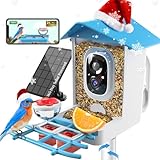
Overview: This entry-level smart bird feeder delivers core birdwatching technology at an accessible price point. With 2K streaming, AI-powered species recognition, and solar operation, it transforms any backyard into an interactive wildlife observation station. The integrated weight sensor adds squirrel-proofing functionality, while weatherproof construction ensures year-round reliability for nature enthusiasts.
What Makes It Stand Out: The combination of a squirrel-proof weight sensor and solar power at this price is compelling. The 30-day AI trial identifies over 10,000 species, providing real-time educational value. Its large capacity reduces refill frequency, and the weatherproof design handles harsh conditions without compromise. The weight-based squirrel deterrent is more sophisticated than basic baffles.
Value for Money: At $69.99, this is the most budget-friendly option in the lineup, offering essential features without major compromises. While resolution is lower than premium models, the core experience—AI recognition, solar power, and alerts—remains intact. It’s ideal for beginners testing smart birdwatching before investing more.
Strengths and Weaknesses: Strengths: Affordable entry point; effective squirrel-proof weight sensor; solar-powered convenience; large seed capacity; robust weatherproofing; straightforward app control.
Weaknesses: 2K resolution lags behind 3K alternatives; 30-day AI trial requires eventual subscription; no included storage card; basic 2.4GHz Wi-Fi only.
Bottom Line: An excellent starter smart feeder that covers all fundamentals. Perfect for casual bird lovers wanting AI identification and live streaming without breaking the bank.
2. 3K HD Smart Bird Feeder with Camera, 2.4GHz WiFi Solar Powered Smart Feeder, AI Bird Species Identification & Real-Time App Alerts, Chew-Proof & Waterproof for Outdoors

Overview: This premium smart bird feeder elevates backyard birdwatching with 3K HD resolution and advanced AI capabilities. Designed for serious enthusiasts, it combines crystal-clear imaging with robust construction. The chew-proof and IP65 waterproof design ensures durability against wildlife and weather, while flexible storage options cater to different user preferences.
What Makes It Stand Out: The 3K HD resolution is the sharpest available, revealing intricate feather details. Its chew-proof construction directly addresses pest damage concerns. The 5000mAh battery paired with a 3W solar panel provides reliable year-round power. Multi-user sharing makes it family-friendly, and the 30-day trial offers flexibility before committing to subscriptions.
Value for Money: At $98.99, it’s the most expensive but justifies the cost with superior resolution, enhanced durability, and chew-proof materials. For dedicated birders wanting the best image quality and build, the premium is worthwhile. However, budget-conscious buyers may find comparable features in cheaper alternatives.
Strengths and Weaknesses: Strengths: Superior 3K video quality; chew-proof design; strong 5000mAh battery; IP65 waterproofing; easy 5-minute installation; multi-user sharing; flexible SD/cloud storage.
Weaknesses: Highest price point; subscription auto-renews after trial; no included SD card; 2.4GHz Wi-Fi only; may be overkill for casual users.
Bottom Line: The top choice for enthusiasts prioritizing image quality and durability. Worth the investment if you demand premium performance and long-term reliability.
3. HARYMOR Bird Feeder with Camera with AI Identify Birds Species Solar Powered, Smart Bird House with Cam, 2K HD Video Live Stream, Instant Arrival Alerts - Green

Overview: The HARYMOR feeder balances performance and power efficiency with its dual solar panel system. Offering 2K resolution and AI identification of over 10,000 species, it’s built for consistent operation. The generous 2L capacity and IP65 waterproofing make it practical for continuous use, while the extended cloud trial adds exceptional value.
What Makes It Stand Out: Dual solar panels (built-in 3W + external 3W) with a 5200mAh battery create unmatched power redundancy. The 2-year cloud storage trial far exceeds competitors’ 30-day offers. A 5dBi external antenna ensures stable connectivity, and 3X magnification reveals fine details. The green color blends naturally into garden settings.
Value for Money: Priced at $89.99, it sits in the mid-high range but delivers extraordinary value through its dual power system and 2-year cloud trial. The enhanced connectivity and magnification justify the cost over basic models. It’s a smart investment for users in areas with variable sunlight.
Strengths and Weaknesses: Strengths: Dual solar panels for reliable power; 5200mAh battery; 2-year cloud trial; 3X magnification; strong Wi-Fi antenna; 2L large capacity; natural aesthetic design.
Weaknesses: 2K resolution not class-leading; subscription required after trial; no included memory card; 2.4GHz Wi-Fi only; slightly complex setup with external panel.
Bottom Line: Ideal for reliability-focused users wanting maximum uptime and storage value. The dual-panel system eliminates power anxiety effectively.
4. Bird Feeder with Camera,Ai Recognition 10000+ Species,3K Video with Noise Reduction,Solar Powered Bird House for Outdoors Bird Watching

Overview: This feature-rich smart bird feeder combines 3K Ultra-HD video with unique audio capabilities. The noise reduction technology and built-in microphone enable real-time interaction with visiting birds. Solar power and dual storage options provide operational flexibility, while AI recognition supports educational birdwatching for families and educators.
What Makes It Stand Out: The noise reduction microphone system is a standout feature, allowing users to hear and speak to birds—creating an immersive experience. 5MP photos capture stunning stills, and the 3K video matches the highest resolution available. Real-time two-way audio transforms passive watching into active engagement, perfect for teaching children about wildlife.
Value for Money: At $89.99, it competes directly with other premium models while offering exclusive audio features. The microphone adds unique value absent in competitors. For users wanting more than just video, this justifies the price. However, those focused solely on visual quality have cheaper options.
Strengths and Weaknesses: Strengths: 3K Ultra-HD video; two-way audio with noise reduction; 5MP photos; solar powered; dual storage; easy installation; interactive educational value.
Weaknesses: Audio feature may have limited practical use; 30-day AI trial; no included storage card; 2.4GHz Wi-Fi only; potentially higher power consumption.
Bottom Line: Perfect for families and educators seeking an interactive birdwatching experience. The audio feature sets it apart if you value immersive wildlife engagement.
5. Bird Feeder with Camera, 2.5K UHD, AI Bird Species Recognition, Solar Powered, Instant Arrival Alerts, Weatherproof Squirrel-Proof Birdhouse with WiFi App Live View, 32GB Card & Accessories Included

Overview: This value-packed smart bird feeder delivers impressive specs at the most aggressive price point. With 2.5K resolution, AI recognition of 11,000 species, and included accessories, it removes common entry barriers. The squirrel-proof design and weatherproof construction provide reliable performance, while the bundled 32GB card offers immediate out-of-box functionality.
What Makes It Stand Out: Including a 32GB SD card and accessories at $56.99 is exceptional value—eliminating hidden costs. The 11,000-species database is slightly more comprehensive than competitors. The squirrel-proof structure and weatherproofing match premium models. Instant arrival alerts ensure you never miss activity, making it perfect for busy users.
Value for Money: Unbeatable value. At $56.99, it undercuts most rivals while including essential accessories and slightly better AI coverage. The 2.5K resolution hits a sweet spot between clarity and efficiency. This is the smart choice for budget-conscious buyers who refuse to compromise on core features.
Strengths and Weaknesses: Strengths: Best price-performance ratio; includes 32GB card and accessories; 11,000 species recognition; squirrel-proof design; solar powered; weatherproof; instant alerts.
Weaknesses: 2.5K resolution below 3K models; unknown battery capacity; likely 2.4GHz Wi-Fi only; build quality may not match premium options; limited trial details.
Bottom Line: The ultimate value pick. If you want maximum features for minimal investment with everything included, this is your best bet.
6. Smart Bird Feeder with Camera with AI Identify Birds Species & Solar Panel, WiFi Birdfeeder with Cam, 2K Live View, Chew-Proof & Waterproof Design, Real-Time App Alerts, Gift for Bird Lovers, Black
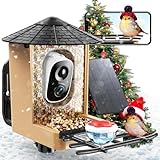
Overview: This $59.98 smart bird feeder delivers 2K HD video, AI identification of over 11,000 species, and robust solar-powered operation via a 5000mAh battery. The IP65 waterproof, chew-proof design withstands harsh weather and persistent wildlife, while real-time alerts and two-way audio create an interactive birdwatching experience for any yard or garden.
What Makes It Stand Out: The two-year free cloud storage trial dramatically exceeds industry norms, offering 3-day loop recording without immediate subscription pressure. Two-way audio is rare at this price, letting you listen to birds or deter pests humanely. The 160° wide-angle lens captures more activity than standard feeders, and the chew-proof construction ensures longevity against squirrels and raccoons.
Value for Money: Exceptional. Competing products with similar AI and solar features typically cost $80-$120. The low entry price makes advanced birdwatching accessible, though a $5/month subscription activates after the trial. For budget-conscious buyers, the extended trial period and included premium features provide tremendous upfront value that rivals can’t match.
Strengths and Weaknesses: Strengths: Unbeatable price point; generous 2-year cloud trial; two-way audio; efficient solar + battery combo; durable chew-proof design; wide 160° viewing angle Weaknesses: Subscription required post-trial; 2.4GHz WiFi only (no 5GHz); SD card not included; night vision specifications not explicitly detailed
Bottom Line: The best budget smart bird feeder available. It delivers core premium features without the premium price tag, making it ideal for first-time users or gift-givers. The two-year cloud trial alone justifies the purchase.
7. TT Nature Upgrade Squirrel-Proof Bird Feeder with Camera, Solar Powered, Smart AI Bird Species Recognition, Instant Notification, CCPA Data Security, Bamboo 3.2L Large Capacity, Ideal Gift
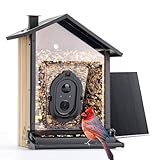
Overview: The TT Nature feeder commands a premium $109.99 with eco-friendly bamboo construction and sophisticated squirrel-proof engineering. It features 2K video, AI species recognition, massive 3.2L seed capacity, and CCPA-compliant data security, targeting discerning enthusiasts who prioritize privacy and sustainability over rock-bottom pricing.
What Makes It Stand Out: The weight-activated perch mechanically closes when squirrels or large birds land, providing physical protection beyond electronic deterrents. Its bamboo housing offers natural aesthetics while being environmentally conscious. CCPA data protection with US-based storage follows strict privacy standards—a unique selling point in today’s data-sensitive climate.
Value for Money: Moderate. While nearly double the price of basic models, the investment delivers tangible benefits: superior materials, genuine squirrel-proofing, larger capacity, and robust privacy protections. For users prioritizing data security and eco-design over raw resolution, the premium is justified. However, similar AI features are available in cheaper alternatives, making this a specialized purchase.
Strengths and Weaknesses: Strengths: Authentic mechanical squirrel-proof design; CCPA data security compliance; large 3.2L capacity; sustainable bamboo build; IP65 weatherproofing Weaknesses: Highest price in category; no 4K option; unclear night vision specifications; subscription details not specified; 2.4GHz WiFi only
Bottom Line: Best suited for privacy-conscious buyers and eco-minded consumers willing to pay for quality materials and mechanical squirrel deterrence. The CCPA compliance and bamboo design distinguish it from plastic competitors, though budget shoppers may find better value elsewhere.
8. Smart Bird Feeder with Camera Solar Powered,4K HD AI Identify Bird Species, Real-Time Alert and Weatherproof, Auto Record Videos, Ideal Gift for Christmas, Tech Lovers and Parents, Blue
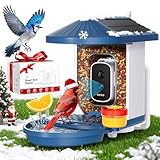
Overview: This $69.99 smart feeder elevates birdwatching with stunning 4K resolution (2880×1616), AI identification of 15,000+ species, and a sleek blue design. Solar-powered with IP66 weatherproofing and a chew-proof cable, it targets tech enthusiasts who demand superior image quality and durability in an elegant package.
What Makes It Stand Out: It’s the only 4K option in this lineup, delivering four times the detail of 1080p feeders. The AI recognizes the most bird species (15,000+), while IP66 rating offers better protection than typical IP65 models. The elegant gift-box packaging makes it presentation-ready for holidays and special occasions, backed by 24/7 technical support.
Value for Money: Outstanding. 4K resolution usually commands $100+ in standalone cameras. Getting 4K video, advanced AI, solar power, and premium build quality for under $70 represents exceptional value. The subscription requirement after the 1-month trial is the main ongoing cost consideration, but the hardware value is undeniable.
Strengths and Weaknesses: Strengths: Superior 4K video clarity; highest species recognition database (15,000+); IP66 weatherproofing; reinforced chew-proof cable; attractive gift packaging; 24/7 technical support Weaknesses: Subscription required for AI/cloud after trial; 130° angle slightly narrower than some competitors; no two-way audio mentioned; 2.4GHz WiFi only
Bottom Line: The definitive choice for tech lovers and videography enthusiasts. If crystal-clear bird footage is your priority, this 4K feeder delivers unparalleled image quality at a surprisingly accessible price. The gift packaging sweetens the deal for present-givers.
9. Bird Feeder with Camera, 2K HD Solar Powered Birdhouse with Cam for Outdoors, AI Identify Birds Species, Auto Capture & Real-time Notifications (Green)

Overview: Priced at $99.99, this smart feeder emphasizes night vision excellence and robust construction. It captures 2K HD video with both infrared and white spotlight illumination for full-color nighttime viewing. The 5200mAh battery promises six months per charge, complemented by a 3W solar panel and metal-reinforced squirrel-resistant cable for maximum durability.
What Makes It Stand Out: Color night vision via a white spotlight is a rare feature that transforms nocturnal birdwatching. The six-month battery life is class-leading, reducing maintenance to nearly zero. The metal-reinforced cable provides superior protection against persistent squirrels compared to standard plastic-sheathed wires, addressing a common failure point.
Value for Money: Good. While not the cheapest, the premium features justify the price. Color night vision and extended battery life are genuinely useful upgrades. The flexible storage options (cloud or SD card) provide user choice. Comparable night vision cameras alone cost $80+, making the integrated package reasonable for serious enthusiasts.
Strengths and Weaknesses: Strengths: Color night vision capability; exceptional 6-month battery life; metal-reinforced anti-squirrel cable; IP65 weatherproofing; flexible storage options; 5200mAh high-capacity battery Weaknesses: Mid-high price point; subscription required after 30-day trial; 2.4GHz WiFi only; no mention of two-way audio functionality
Bottom Line: Ideal for dedicated birders who want round-the-clock observation, especially in low-light conditions. The color night vision and bulletproof build quality make it worth the premium for serious enthusiasts, though casual users may prefer cheaper options.
10. Hummingbird Feeder with Camera Solar Powered, 2K Live Stream Smart AI Bird Species Recognition, Leak-Proof & Ant-Bee Proof, IP65 Outdoor Wireless Bird Feeder

Overview: This specialized $39.99 hummingbird feeder combines 2K video with leak-proof, ant-proof engineering. The 17oz nectar reservoir features a built-in ant moat, bee-proof ports, and dishwasher-safe components. AI recognizes 10,000+ species with 97% accuracy, making it the most affordable camera feeder while solving hummingbird-specific challenges.
What Makes It Stand Out: It’s the only hummingbird-specific design with leak-proof silicone seals and comprehensive insect barriers. The modular, dishwasher-safe construction solves the notoriously difficult cleaning problem nectar feeders present. Full-color night vision and a 150° wide-angle lens provide excellent coverage for these fast-moving birds, with a lower $4.49/month subscription after trial.
Value for Money: Exceptional. As the cheapest option, it democratizes smart hummingbird feeding. The specialized design addresses unique challenges (leaks, ants, bees) that standard seed feeders ignore. The 1-year warranty and affordable subscription make it a low-risk entry point for targeted birdwatching.
Strengths and Weaknesses: Strengths: Lowest price point; hummingbird-specific leak/ant/bee proofing; easy dishwasher cleaning; 150° wide angle; full-color night vision; affordable subscription; 1-year warranty Weaknesses: Limited to hummingbirds; 17oz capacity requires frequent refilling; only 10,000 species (vs 11,000-15,000); no squirrel-proofing mentioned
Bottom Line: A must-have for hummingbird aficionados. The species-specific engineering and unbeatable price make it perfect for attracting and studying these aerial acrobats. While not versatile enough for seed-eating birds, it excels at its specialized purpose.
What Is a Smart Bird Feeder with Species Recognition?
At its core, a smart bird feeder with species recognition is a traditional feeding station enhanced with integrated technology that automatically identifies and logs bird species. Unlike standard trail cameras that simply capture motion-activated footage, these devices use artificial intelligence to analyze visual characteristics—plumage patterns, beak shape, size, and coloration—to match visitors against databases containing hundreds of species. The system processes this information instantly, sending notifications with identified species names, behavioral notes, and sometimes even individual bird recognition capabilities.
How Species Recognition Technology Actually Works
The AI Engine Behind Identification
The magic happens through convolutional neural networks trained on millions of bird images. When a bird lands, the camera captures multiple angles and sends these frames to either a cloud-based or edge-computing processor. The algorithm examines distinctive features: the forked tail of a Barn Swallow, the crest of a Blue Jay, or the eye-ring of a Ruby-crowned Kinglet. Most systems achieve 85-95% accuracy in optimal conditions, though performance varies significantly by manufacturer and training data diversity.
Cloud vs. On-Device Processing
Cloud-based systems offer more powerful processing and continuously updated databases but require stable internet connectivity. On-device (edge) processing prioritizes privacy and works offline but may have limited species libraries and slower learning curves. Hybrid models are emerging, processing basic identification locally while using cloud resources for rare species or confidence verification.
Key Benefits Beyond Simple Bird Watching
Transforming Citizen Science
Your feeder becomes a data collection node for ornithological research. Many platforms anonymize and aggregate sightings, contributing to migration tracking, population studies, and climate impact research. Your backyard observations could help scientists document range shifts or declining species.
Educational Value for Families
Children receive real-time identification, fostering immediate connections with nature. The technology serves as a digital field guide, teaching bird anatomy, behavior, and seasonal patterns through lived experience rather than static images in books.
Behavioral Insights and Pattern Recognition
Beyond naming species, advanced systems track visitation frequency, feeding preferences, territorial behavior, and social dynamics. You might discover that American Goldfinches prefer nyjer seeds in the morning while House Finches dominate afternoon feeding sessions.
Essential Features to Look For
Camera Specifications That Matter
Look beyond megapixel counts. A quality sensor with good low-light performance matters more than raw resolution. Wide dynamic range helps capture details in both bright and shadowed areas—crucial when photographing birds with backlighting. A 120° field of view captures approaching and departing birds, not just those centered at the feeder.
Trigger Speed and Buffering
Professional-grade systems offer sub-0.3-second trigger speeds with pre-buffering technology that captures 2-3 seconds before the motion trigger. This ensures you don’t miss the moment a bird lands, which is essential for identification.
Night Vision Capabilities
Infrared LEDs with 940nm wavelength provide invisible illumination that won’t disturb nocturnal visitors or attract unwanted insects. This extends observation to owls, nighthawks, and early-morning crepuscular species.
AI and Machine Learning: The Brain Behind Recognition
Training Data Diversity
The accuracy depends heavily on the geographic diversity of training images. A system trained primarily on North American eastern seabirds may struggle with southwestern desert species. Inquire about the database size—quality systems maintain libraries of 500+ species with regional variants.
Continuous Learning Features
The best systems improve through user feedback. When you correct a misidentification, that data should feed back into the model, refining future predictions. This crowdsourced improvement creates a more accurate community-wide system.
Confidence Scoring and Uncertainty
Sophisticated AI doesn’t just guess—it provides confidence percentages. A responsible system will label a blurry, distant capture as “Unknown—possible Song Sparrow (62% confidence)” rather than making a definitive incorrect call.
Connectivity Options: Wi-Fi, Cellular, and Local Storage
Wi-Fi Range and Reliability
Standard 2.4GHz Wi-Fi penetrates walls better but offers slower speeds. Dual-band systems provide flexibility, but placement remains critical. Consider mesh network compatibility or feeders with external antenna options for reliable connectivity.
Cellular Plans for Remote Locations
For properties without Wi-Fi reach, cellular-enabled feeders use low-power LTE-M or NB-IoT networks. These consume minimal power but require subscription plans. Data usage varies: 1-3GB monthly for frequent captures, though most systems compress efficiently.
Local Storage Failover
Smart feeders should include SD card slots as backup. When connectivity drops, footage saves locally and uploads when reconnected. This prevents data loss during outages and provides physical control over your recordings.
Power Solutions: Solar, Battery, and Hardwired
Solar Panel Integration
Look for monocrystalline panels with at least 5W output and integrated battery management systems. Panels should tilt for seasonal sun angle optimization. In cloudy regions, consider feeders with detachable panels you can position in sunnier spots up to 10 feet away.
Battery Chemistry and Longevity
Lithium iron phosphate (LiFePO4) batteries outperform standard lithium-ion in temperature extremes and offer 5-7 year lifespans. Cold weather performance is critical—capacity can drop 50% below freezing. Some systems include heating elements that activate only during capture events.
Hardwired Options for Permanent Installations
For serious enthusiasts, POE (Power over Ethernet) provides reliable power and data through a single cable. This eliminates battery concerns and ensures consistent operation, though installation requires more planning.
Weatherproofing and Durability
IP Ratings Explained
IP66 should be the minimum standard—dust-tight and resistant to powerful water jets. IP67 (submersion protection) offers better peace of mind. Check that seals are replaceable; gaskets degrade in UV exposure and should be serviceable after 2-3 years.
UV Resistance and Material Science
ASA (Acrylonitrile Styrene Acrylate) plastic resists yellowing and brittleness better than standard ABS. Metal components should be marine-grade stainless steel or powder-coated aluminum. The lens cover needs hydrophobic coating to repel water droplets that distort images.
Temperature Operating Range
Quality systems function from -20°F to 120°F. In extreme climates, look for active cooling systems—small fans that circulate air to prevent internal condensation and overheating of sensitive electronics.
Data Privacy and Security Considerations
End-to-End Encryption
Your bird footage contains location data and timestamps—valuable information. Ensure the system uses TLS 1.3 encryption for data transmission and AES-256 encryption for stored footage. Avoid systems that upload to public servers without encryption.
Data Ownership and Sharing Policies
Read the terms of service carefully. Some platforms claim ownership of uploaded images for training purposes. Look for systems with opt-in data sharing rather than opt-out, and understand how long footage remains on company servers.
Account Security Features
Two-factor authentication should be mandatory, not optional. Consider feeders that allow local network access without mandatory cloud accounts, giving you full control while sacrificing some AI features.
Mobile App Ecosystem and User Experience
Real-Time Notifications Done Right
The best apps offer customizable notification filters—alert me only for new species, rare visitors, or birds not seen in 30 days. Geofencing capabilities can silence alerts when you’re home, reducing notification fatigue.
Data Visualization and Trends
Beyond simple lists, advanced apps provide heat maps of activity by time of day, species interaction graphs, and year-over-year migration comparisons. Export functionality in CSV or eBird format benefits serious birders.
Community Features and Social Integration
Look for platforms with moderated community forums, regional rarity alerts, and integration with citizen science projects. The ability to share verified sightings directly to eBird or iNaturalist multiplies your impact.
Integration with Birding Communities and Citizen Science
Automated eBird Submission
Some systems can pre-populate eBird checklists with time-stamped, photo-documented sightings. This reduces reporting burden while improving data quality with verifiable evidence. However, always review before submission—AI isn’t infallible.
Rare Bird Alert Systems
Advanced platforms can notify you when a species unusual for your area appears, based on regional occurrence data. This transforms your feeder into a passive rarity detector, though false positives require patient verification.
Data Standardization and Portability
Ensure your system exports data in open formats. Proprietary locked data silos limit long-term research value. CSV exports with standardized taxonomy (e.g., eBird Clements checklist) future-proof your observations.
Installation and Placement Strategies
Optimal Height and Positioning
Mount 5-6 feet high for optimal camera angle and squirrel deterrence. Position 10-12 feet from natural cover to reduce predation while allowing birds quick escape routes. Face north or east to avoid backlighting and overheating.
Background Distraction Minimization
The AI performs best with clean backgrounds. Avoid pointing toward busy foliage, feeders, or water features. A simple plywood backdrop painted neutral gray can dramatically improve identification accuracy.
Multi-Feeder Array Configurations
For comprehensive monitoring, consider multiple feeders at varying distances. Some systems support camera synchronization, creating a mesh network that tracks birds moving between feeding stations, revealing territory patterns.
Maintenance and Troubleshooting
Lens Cleaning Protocols
Bird droppings and seed dust degrade image quality. Use hydrophobic lens pens weekly and deep-clean monthly with isopropyl alcohol. Never use household glass cleaners—they can damage hydrophobic and anti-reflective coatings.
AI Drift and Recalibration
Recognition accuracy can degrade over time due to changing lighting conditions or plumage variations. Recalibrate seasonally by running test captures of known species and submitting corrections through the app.
Connectivity Dropout Solutions
Create a troubleshooting checklist: power cycle sequence, antenna repositioning, Wi-Fi channel congestion scanning, and firmware updates. Some feeders include diagnostic modes that test signal strength and packet loss.
Cost Analysis: Understanding Price vs. Value
Entry-Level vs. Premium Feature Sets
Budget systems ($150-250) offer basic identification for common species with limited storage. Mid-range ($300-500) adds better cameras, solar power, and robust apps. Premium systems ($600+) provide research-grade optics, cellular connectivity, and advanced analytics.
Subscription Model Transparency
Many systems require monthly fees for cloud storage and AI processing ($5-15/month). Calculate total cost of ownership over 3 years. Some offer lifetime subscriptions—evaluate company longevity before committing.
Upgrade Path and Modularity
Consider whether cameras, solar panels, or AI modules are upgradable. A system with interchangeable components protects your investment as technology advances, preventing complete replacement every 2-3 years.
The Future of Smart Bird Feeding Technology
Emerging Biometric Identification
Next-generation systems are developing individual bird recognition through unique plumage patterns and beak markings. This could track specific birds across years, revealing survival rates and site fidelity previously impossible to measure at feeder scale.
Acoustic Integration
Hybrid audio-visual systems are emerging that combine species recognition with song identification. This captures flyovers and hidden birds, building a more complete community picture while filtering out non-avian triggers.
Predictive Analytics and Machine Learning
Future AI won’t just identify—it will predict. Based on weather patterns, historical data, and regional observations, systems may forecast which species will appear and when, transforming feeders into proactive research tools rather than passive monitors.
Frequently Asked Questions
How accurate are species recognition systems in poor weather conditions?
Accuracy typically drops 15-30% in heavy rain, snow, or dense fog due to obscured features and diffused lighting. Most systems include confidence thresholds that automatically flag low-quality captures for manual review rather than guessing. For best results, position feeders under eaves or use rain guards to protect the camera lens.
Can these feeders differentiate between male and female birds of the same species?
Advanced systems can identify sexual dimorphism in species with pronounced differences (like Northern Cardinals or House Finches), but struggle with subtle variations. Accuracy ranges from 60-80% for dimorphic species and drops below 40% for monomorphic birds. The technology is rapidly improving through user-submitted corrections.
What happens to my data if the manufacturer goes out of business?
This depends on the system’s architecture. Cloud-dependent feeders may become expensive paperweights, while those with local processing and SD storage remain functional. Before purchasing, investigate whether the company has open-sourced their AI model or offers data export tools. Some users mitigate risk by setting up automatic local backups.
Are smart feeders harmful to birds or attract more predators?
Current research shows no evidence that cameras or Wi-Fi signals disturb birds. However, the concentrated food source itself can attract predators. Mitigate this by positioning feeders away from ambush cover, using predator guards, and avoiding feeders that broadcast sounds or lights. The benefits of consistent feeding station monitoring often outweigh minimal risks.
How much internet bandwidth do these feeders consume?
Typical usage ranges from 500MB to 3GB monthly depending on activity level and video quality settings. Most systems upload 10-15 second clips rather than continuous streams. Adjust motion sensitivity and schedule “quiet hours” to reduce bandwidth. Some advanced models use on-device AI to filter out non-bird motion before uploading.
Can I use multiple feeders with one subscription?
Most platforms charge per device, though family plans for 3-5 feeders are becoming common ($15-25/month). Some systems allow camera sharing across a single hub, reducing costs. Evaluate whether the subscription includes cloud storage, AI processing, or both—some split these services into separate fees.
Do these systems work for hummingbirds and other small species?
Standard feeders struggle with hummingbirds due to their speed and small size. Specialized hummingbird feeders with high-speed cameras (60+ fps) and macro lenses are emerging but remain niche. For other small birds like kinglets and wrens, ensure the camera has a minimum focus distance under 12 inches and fast shutter speeds to freeze motion.
How do I handle misidentifications without biasing the AI?
Reputable systems use your corrections as training data but weight them against existing consensus. Correct obvious errors through the app, but avoid over-correcting uncertain IDs. The AI learns from patterns, not individual corrections. If you notice systematic misidentification of a particular species, contact support—this may indicate a gap in the training data.
What’s the typical lifespan of a smart bird feeder?
Hardware typically lasts 3-5 years before battery degradation or sensor failure. However, software support often ends sooner. Look for companies with proven track records of 3+ years of firmware updates. Replaceable battery and camera modules can extend functional life to 7-10 years, making modularity a key longevity factor.
Can these feeders integrate with smart home systems?
Integration is limited but growing. Some offer IFTTT support for triggering smart lights when rare species appear, or Alexa/Google Home for audio announcements. True smart home integration (like HomeKit) remains rare due to privacy concerns and processing requirements. Expect this to evolve as standards mature and local processing becomes more powerful.