Your driveway is more than just a path to your garage—it’s the red carpet to your home, the first impression guests receive, and a critical safety corridor for your family. For decades, homeowners settled for basic lanterns that burned through bulbs and electricity, offering little beyond simple illumination. Today’s smart outdoor post lights have fundamentally transformed this essential feature into an intelligent, responsive system that enhances security, slashes energy costs, and elevates your property’s aesthetic appeal with minimal effort on your part.
These sophisticated fixtures do far more than just turn on and off. They anticipate your arrival, deter potential intruders with strategic motion detection, adjust their brightness based on ambient conditions, and seamlessly integrate with your broader smart home ecosystem. Whether you’re building a new driveway or upgrading existing lighting, understanding the nuances of smart post light technology will help you make an investment that pays dividends in convenience, safety, and property value for years to come.
Top 10 Smart Outdoor Post Lights for Driveways
Detailed Product Reviews
1. Kumtin Smart Outdoor Post Lights, Modern Dusk to Dawn Pole Light Fixture, Exterior Post Lantern with Tempered Glass, Anti-Rust Metal Pole Lamp for Yard Driveway Patio Garden, Matte Black, 1-Pack

Overview: The Kumtin Smart Outdoor Post Light delivers automated illumination with its integrated dusk-to-dawn sensor, eliminating manual switching. This matte black fixture combines modern aesthetics with practical functionality for exterior spaces. At 16.5 inches tall with a compact 5.12-inch square profile, it fits standard 3-inch poles and supports E26 bulbs up to 60 watts, making it versatile for pathways, driveways, and garden applications.
What Makes It Stand Out: The built-in high-sensitivity IC sensor automatically activates at sunset and switches off at sunrise, delivering true hands-free operation and measurable energy savings. The tempered glass shade and anti-rust metal construction provide durability against harsh weather, while the ETL wet location rating ensures safety. The manufacturer’s 40-year industry experience shows in the thoughtful design that balances form and function.
Value for Money: At $39.79, this fixture commands a modest premium over manual alternatives, but the automation feature justifies the cost within one year through reduced energy consumption and eliminated hassle. Comparable smart post lights typically retail for $50-$70, positioning this as a competitive mid-range option. The robust build quality suggests a lifespan that amortizes the initial investment effectively.
Strengths and Weaknesses: Pros: True dusk-to-dawn automation, ETL wet location certification, tempered glass for impact resistance, anti-rust metal construction, straightforward DIY installation, and comprehensive accessory package. Cons: Bulb not included, requires separate 3-inch pole/base purchase, compact size may appear undersized for larger properties, and sensor longevity remains unproven beyond warranty period.
Bottom Line: This is an excellent choice for homeowners seeking reliable automated lighting without premium pricing. The dusk-to-dawn sensor delivers genuine convenience, while the quality materials ensure weather resistance. Ideal for illuminating walkways and garden features with minimal maintenance.
2. Kumtin Smart Outdoor Post Light, Pole Lantern, Waterproof Die-Cast Aluminum Pole Light Fixture with Glass, Exterior Post Lamp for Garden Yard Patio Pathway, Matte Black, 1-Pack

Overview: Kumtin’s entry-level post light offers essential illumination without automation, targeting budget-conscious buyers who prefer manual control. The 15-inch fixture features a slightly wider profile than its smart counterpart, constructed from die-cast aluminum with a glass shade. Supporting E26 bulbs up to 60 watts, it provides reliable lighting for gardens, patios, and pathways where constant operation isn’t required.
What Makes It Stand Out: The die-cast aluminum construction delivers superior waterproofing and structural integrity at this price point. While lacking a sensor, its simplicity becomes a strength—fewer electronic components mean fewer potential failure points. The matte black finish maintains the brand’s modern aesthetic, and the included hardware kit facilitates quick installation for DIY enthusiasts.
Value for Money: Priced at $32.79, this represents the most affordable option in Kumtin’s lineup, saving $7 over the automated version. For properties requiring only occasional lighting or where manual control is preferred, this eliminates unnecessary expense. The build quality exceeds typical budget fixtures, offering durability that prevents premature replacement costs.
Strengths and Weaknesses: Pros: Lowest price point, robust die-cast aluminum housing, straightforward manual operation, ETL wet location rated, easy installation with complete hardware, and proven mechanical reliability. Cons: No dusk-to-dawn automation, requires manual switching, bulb and pole base sold separately, limited energy savings potential, and basic feature set compared to smart alternatives.
Bottom Line: A solid, no-frills lighting solution for those prioritizing durability and affordability over automation. Perfect for secondary lighting areas or where manual control is desirable. The quality construction ensures longevity, making it a sensible budget investment for practical homeowners.
3. Kumtin Smart Outdoor Post Lights, Modern Black Pole Light Fixture, Exterior Post Lantern with Tempered Glass, Anti-Rust Metal Pole Lamp for Yard Driveway Patio Garden, 1-Pack

Overview: This mid-tier offering bridges Kumtin’s budget and premium lines, delivering quality materials without smart features. The 16.5-inch fixture mirrors the dimensions of the automated version but operates manually. With tempered glass and anti-rust metal construction, it targets buyers who value build quality over convenience features. The E26 base compatibility ensures flexible bulb choices for customized lighting schemes.
What Makes It Stand Out: The tempered glass shade provides better impact resistance and clarity than standard glass, while the anti-rust metal finish offers enhanced weather protection. This model essentially provides the premium chassis of the smart version without the sensor premium. The 40-year manufacturer experience manifests in consistent construction quality across the product line, ensuring reliable performance in wet locations.
Value for Money: At $37.79, you’re paying $5 more than the basic aluminum model for upgraded materials (tempered glass and anti-rust coating). This represents a sensible middle ground—avoiding the $7 premium for automation while securing better durability than the entry-level option. The price accurately reflects material upgrades rather than technological features.
Strengths and Weaknesses: Pros: Premium tempered glass, anti-rust metal construction, ETL wet location certification, identical dimensions to smart model for aesthetic consistency, straightforward installation, and flexible bulb compatibility. Cons: Lacks dusk-to-dawn automation, manual operation only, bulb and mounting base not included, and costs more than functionally similar alternatives.
Bottom Line: Ideal for homeowners who appreciate quality construction but don’t require automated operation. Excellent for matching with smart models in unified installations while controlling costs. The material upgrades justify the modest price increase over the base model.
4. Kumtin Smart Outdoor Post Lights, Modern Dusk to Dawn Pole Light Fixture, Exterior Post Lantern with Tempered Glass, Anti-Rust Metal Pole Lamp for Yard Driveway Patio Garden, Matte White, 1-Pack

Overview: Functionally identical to the matte black smart model, this white variant offers the same dusk-to-dawn automation in an alternative finish. The 16.5-inch fixture with 5.12-inch square profile integrates a high-sensitivity IC sensor for automatic operation. Tempered glass and anti-rust metal construction ensure durability, while the matte white coating provides design flexibility for lighter-colored exteriors and contemporary landscaping themes.
What Makes It Stand Out: The matte white finish distinguishes this model in a market dominated by black fixtures, enabling cohesive design with white or neutral-colored homes. The identical smart sensor technology delivers the same hands-free convenience and energy efficiency as its black counterpart. This color option demonstrates Kumtin’s attention to design diversity without compromising core functionality.
Value for Money: At $39.79, pricing matches the black smart model exactly, offering pure aesthetic choice without financial penalty. The value proposition remains identical—automation capability at a mid-range price point. For properties where white fixtures complement the architecture better, this eliminates the need for costly custom painting or compromising on design.
Strengths and Weaknesses: Pros: Dusk-to-dawn automation, attractive matte white finish, tempered glass durability, anti-rust metal construction, ETL wet location rating, simple DIY installation, and same proven sensor technology. Cons: Bulb and pole base sold separately, compact size may not suit all applications, white finish may show dirt more readily than black, and limited color-matching options within product line.
Bottom Line: Choose based entirely on color preference—the performance and value mirror the black version exactly. Perfect for white or light-colored exteriors where design cohesion matters. The smart features and build quality make it a reliable, convenient lighting solution.
5. VEVOR 2 Pack Dusk to Dawn Outdoor Post Light, 16.93 in, Waterproof Lamp Post Light Fixtures with 3.5 in Pier Mount Base Glass Shade, Lightning-proof Exterior Pole Column Light for Patio Garden Pathway

Overview: VEVOR’s two-pack offering delivers exceptional value for multi-location lighting needs. Each 16.93-inch fixture features integrated dusk-to-dawn sensors, tempered glass shades, and die-cast aluminum construction. The inclusion of a 3.5-inch pier mount base distinguishes this package, providing mounting flexibility for posts or pedestals. Lightning-proof design adds an extra layer of electrical protection uncommon in this price category.
What Makes It Stand Out: The dual-pack configuration at $22.95 per unit represents the lowest per-fixture cost among reviewed products. The included pier mount base eliminates a separate purchase, saving an additional $10-$15. Lightning-proof circuitry provides surge protection rarely seen in budget fixtures, while supporting both post and pedestal mounting offers installation versatility unmatched by competitors.
Value for Money: At $45.90 for two, the per-unit cost undercuts even manual alternatives while including smart sensors and mounting hardware. This represents a 40% savings versus buying two comparable Kumtin smart lights. The bundled pier mount bases and lightning protection deliver features typically found in premium fixtures costing twice as much. For properties needing multiple lights, this is unequivocally the best financial decision.
Strengths and Weaknesses: Pros: Exceptional two-pack value, included pier mount bases, lightning-proof protection, dusk-to-dawn automation, versatile mounting options, tempered glass durability, and lowest per-unit cost. Cons: Brand recognition lags behind Kumtin, slightly larger profile may not suit all aesthetics, bulb not included, and two-pack commitment may exceed single-fixture needs.
Bottom Line: The definitive choice for illuminating multiple areas economically. VEVOR combines automation, durability, and unbeatable pricing in one package. Highly recommended for larger properties, commercial applications, or anyone needing two or more post lights without sacrificing quality or features.
6. Windben Outdoor Post Light,Waterproof Cast Aluminium Lamp Post Light Fixture,Post Lantern with Pier Mount Base,Matte Black,16.5in,Suitable for Garden,Yard,Driveway,etc
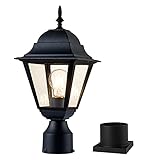
Overview: The Windben Outdoor Post Light delivers reliable hardwired illumination in a compact, weather-resistant package. Measuring 16.5 inches tall with a 7.4-inch square profile, this cast aluminum fixture features clear tempered glass and a matte black finish designed to withstand harsh outdoor conditions. Rated for 110-120V and compatible with E26 bulbs up to 60W, it offers versatile mounting options for both post poles and pier mounts, making it suitable for gardens, driveways, and entryways where consistent, bright lighting is essential.
What Makes It Stand Out: This fixture’s construction quality impresses at its price point. The cast aluminum body receives a high-grade powder coating that resists corrosion, yellowing, and rust, while the tempered glass provides superior impact resistance and thermal stability. UL safety certification ensures peace of mind against electrical hazards, a notable advantage over uncertified competitors. The included pier mount base with 3.5-inch dimensions offers immediate installation flexibility, though it also accommodates standard 3-inch poles.
Value for Money: At $39.99, the Windben represents excellent value for a hardwired, UL-certified fixture. Comparable hardwired post lights typically retail for $50-$70, making this an affordable entry point for homeowners seeking reliable, code-compliant outdoor lighting without sacrificing build quality. The long-term durability of cast aluminum and tempered glass further justifies the investment.
Strengths and Weaknesses: Strengths include robust weather resistance, UL certification, versatile mounting, and corrosion-resistant construction. The tempered glass outperforms plastic lenses in longevity. Weaknesses include the 60W maximum (limiting brightness potential), lack of included bulb, and smaller pier mount base that may not fit all existing posts. The manual operation lacks automatic dusk-to-dawn convenience.
Bottom Line: The Windben Outdoor Post Light is a solid choice for budget-conscious homeowners prioritizing safety certification and durability over smart features. Its hardwired reliability makes it ideal for primary entryway lighting where consistent performance matters more than solar convenience.
7. Rosient Outdoor Post Lights Fixture - Exterior Post Lantern with Seeded Glass in Black Finish - Pillar Light Ideal for Patio, Pathway, and Driveway - Outdoor Pole Lights for Porch Post Lighting, Black

Overview: The Rosient Outdoor Post Light Fixture blends traditional elegance with modern weatherproofing in a compact 13.7-inch lantern design. Featuring a distinctive seeded glass shade and matte black metal construction, this fixture creates atmospheric lighting for pathways, patios, and entryways. Its 7.18" x 6.21" profile mounts via a 3-inch pier mount adapter (sold separately), while the IP44-rated construction ensures protection against rain and splashing water. The fixture supports E26 bulbs up to 100W, offering brighter illumination than many competitors.
What Makes It Stand Out: The seeded glass shade sets this fixture apart, casting beautiful light patterns that elevate outdoor aesthetics beyond standard clear glass designs. The integrated casting process eliminates seams that typically become rust points, while IP44 weatherproofing provides reliable wet location performance. ETL listing ensures safety compliance, and the generous 100W capacity accommodates high-output LEDs for enhanced brightness. The 1-year warranty adds consumer confidence.
Value for Money: Priced at $44.98, the Rosient positions itself as a mid-range aesthetic upgrade. While slightly more expensive than basic fixtures, the seeded glass design and higher wattage capacity justify the premium. However, the required separate purchase of a pier mount adapter adds $10-$15 to the total cost, narrowing the value gap with pricier all-inclusive options.
Strengths and Weaknesses: Strengths include stunning seeded glass, robust 100W capacity, ETL certification, and rust-resistant integrated casting. The compact size suits smaller spaces. Weaknesses include the non-included pier mount adapter, shorter 13.7-inch height that may look undersized on tall posts, lack of automatic operation, and absence of included bulb.
Bottom Line: Choose the Rosient if decorative appeal and maximum brightness potential are priorities. It’s best for homeowners with existing 3-inch mounts who want charming, pattern-casting illumination for gardens and pathways rather than security lighting.
8. SAKSIAPRO 3-Head Solar Lamp Post Light, 73" Solar Lights Outdoor Waterproof, 60Lm 3000K Pathway Lights for Garden, Lawn, Yard

Overview: The SAKSIAPRO 3-Head Solar Lamp Post Light stands an impressive 73 inches tall, commanding attention in any outdoor setting. This solar-powered fixture eliminates wiring hassles while delivering warm 3000K illumination through three independent heads. Heavy-duty aluminum construction with UV-resistant powder coating and IP65 waterproof rating ensures durability against extreme weather. Twelve high-efficiency monocrystalline panels charge the unit in six hours of sunlight, providing eight hours of nighttime operation via an automatic light sensor.
What Makes It Stand Out: Height and customization define this fixture. At 73 inches, it towers over standard post lights, creating a striking visual anchor for driveways and garden focal points. The three-headed design distributes light in multiple directions, while the DIY-friendly structure invites personalization—hang signs, wrap fairy lights, or train climbing plants. IP65 rating exceeds typical IP44 standards, offering superior dust and water jet protection. Tool-free installation makes it accessible for non-electricians.
Value for Money: At $63.99, the SAKSIAPRO commands a premium over basic solar lights but delivers proportionate value. The all-metal construction, triple-head design, and exceptional height rival hardwired fixtures costing $80-$100, while eliminating installation costs. For solar enthusiasts seeking statement pieces, the price is justified.
Strengths and Weaknesses: Strengths include impressive height, IP65 weatherproofing, solar autonomy, decorative versatility, and sturdy aluminum build. Weaknesses include modest 60-lumen output per head (insufficient for security), requirement for solid mounting surfaces (unsuitable for soft lawns), and dependence on consistent sunlight. The 4.6-pound weight demands secure anchoring.
Bottom Line: The SAKSIAPRO excels as a decorative accent light for aesthetically-minded homeowners with suitable mounting surfaces. It’s ideal for gardens and entryways where ambiance trumps bright security illumination, but avoid it if you need high-output lighting or have unstable soil.
9. PASAMIC Outdoor Solar Post Lights, 2-Pack 63" Dusk to Dawn Solar Lamp Posts, Waterproof Floor Lamps, Warm White Pole Lights for Patio with Replaceable Bulb

Overview: The PASAMIC Outdoor Solar Post Lights offer a budget-friendly 2-pack solution for ambient pathway illumination. Standing 63 inches tall, these fixtures feature warm white Edison-style bulbs and adjustable-height poles that adapt to various landscaping needs. Four integrated solar panels charge in 6-8 hours to deliver 10-12 hours of dusk-to-dawn operation automatically. The IP44-rated aluminum construction with reinforced glass withstands typical weather conditions, while the replaceable E26 bulb design extends the product’s service life beyond built-in LED alternatives.
What Makes It Stand Out: This 2-pack’s primary distinction is value and flexibility. At effectively $20 per unit, it undercuts most competitors while offering rare replaceable bulb functionality in the solar category. Dual installation options accommodate both cement mounting and lawn insertion via included stakes. The adjustable height feature allows customization from full 63-inch stature to shorter configurations by removing pole sections. The Edison bulb aesthetic provides vintage charm without sacrificing modern solar convenience.
Value for Money: Exceptional. $39.99 for two solar post lights with replaceable bulbs represents one of the best price-per-unit values available. Comparable single solar fixtures often cost $30-$40 each, making this 2-pack ideal for large properties needing multiple lights. The replaceable bulb design prevents total fixture replacement when LEDs eventually fail, maximizing long-term savings.
Strengths and Weaknesses: Strengths include unbeatable 2-pack pricing, replaceable bulbs, adjustable height, dual mounting options, and extended runtime. Weaknesses include IP44 rating (adequate but not robust), lower brightness typical of solar, plastic components in pole sections, and initial charging requirements. Performance diminishes during cloudy periods.
Bottom Line: The PASAMIC 2-Pack is perfect for budget-conscious buyers needing multiple pathway lights with minimal installation effort. It’s best for decorative ambiance rather than security lighting, and ideal for fence lines, garden paths, and patios where solar convenience outweighs maximum brightness.
10. MYHXQ Dusk to Dawn Outdoor Post Lights with Pier Mount Base, 2-Pack Modern Lamp Post Light Fixture Waterproof Pole Lights Outdoor Column Lights Exterior Post Lantern with Clear Glass for Garden Patio

Overview: The MYHXQ Dusk to Dawn Outdoor Post Lights deliver hardwired reliability in a modern 2-pack configuration. Each fixture features built-in photocell sensors that automatically activate lighting at 20 lux or lower, shutting off at 100+ lux daytime brightness. For manual control, simply cover the sensor with the included cap. The versatile design includes a pier mount base for flat surfaces and accommodates 3-inch diameter poles. Clear glass panels maximize light transmittance from E26 bulbs up to 60W, while premium metal construction with waterproof coating ensures rust and corrosion resistance.
What Makes It Stand Out: The intelligent photocell sensor with manual override distinguishes this from basic fixtures or inconsistent solar alternatives. Unlike solar lights that dim during extended overcast weather, these hardwired units deliver consistent all-night brightness regardless of conditions. The dual-mounting system eliminates guesswork for various installation scenarios. The manufacturer explicitly addresses solar limitations, positioning hardwired reliability as the core value proposition for security and safety applications.
Value for Money: At $79.99 for two ($40 per unit), the MYHXQ sits in the mid-range for hardwired post lights. While double the cost of basic solar options, it eliminates solar’s performance variability and battery replacement costs. The integrated dusk-to-dawn sensor adds $15-$20 value per unit compared to manual fixtures, making the 2-pack price reasonable for feature-rich, reliable lighting.
Strengths and Weaknesses: Strengths include consistent hardwired power, smart photocell operation with manual override, versatile mounting, clear glass for maximum brightness, and durable weatherproof metal. Weaknesses require professional electrical installation, lack included bulbs, and the 60W maximum limits ultra-bright applications. The modern aesthetic may not suit traditional architecture.
Bottom Line: The MYHXQ 2-Pack is ideal for homeowners prioritizing reliable, maintenance-free automatic lighting over solar convenience. It’s perfect for security-conscious applications, entryways, and driveways where consistent all-night illumination is non-negotiable. Choose this if you value set-it-and-forget-it operation and have access to electrical wiring.
Understanding Smart Outdoor Post Lights for Driveways
What Makes a Post Light “Smart”?
Smart outdoor post lights transcend traditional illumination by embedding wireless connectivity, sensors, and microprocessors directly into the fixture. Unlike conventional lights that rely on manual switches or basic timers, smart variants communicate with your smartphone, voice assistants, and other connected devices through protocols like Wi-Fi, Zigbee, or Z-Wave. This connectivity enables real-time control, automation, and monitoring from anywhere with internet access.
The intelligence extends beyond remote operation. These fixtures incorporate ambient light sensors to know when dusk truly falls, motion detectors with adjustable sensitivity zones, and sometimes even cameras or two-way audio. The most advanced models learn your family’s patterns, automatically adjusting brightness and timing based on your routines. Think of them as lighting fixtures with their own tiny brains—constantly processing data to deliver optimal performance without you lifting a finger.
Core Advantages Over Traditional Lighting
The leap from traditional to smart lighting represents more than just a tech upgrade—it’s a paradigm shift in how we approach outdoor illumination. Traditional post lights operate on rigid schedules or wasteful dusk-to-dawn sensors that burn electricity even when no one’s around. Smart lights, by contrast, respond dynamically to actual need, reducing energy consumption by 60-80% while providing superior functionality.
Weather resilience improves dramatically with smart technology. Many models feature self-diagnostic capabilities that alert you to malfunctions before you’re left in the dark. The ability to group multiple fixtures into zones means you can illuminate your entire driveway with a single command, create layered lighting scenes for different occasions, or establish security perimeters that activate in response to specific triggers. This level of control was unimaginable with analog systems.
Key Benefits for Homeowners
Safety and Security Enhancement
Smart post lights serve as your driveway’s first line of defense. Motion-activated illumination startles potential intruders while safely guiding your family from car to door. The key is strategic brightness escalation—lights that gradually increase from 10% to 100% over several seconds appear more natural and less jarring than instant-on floods, yet remain highly effective deterrents.
Advanced models allow you to customize detection zones, preventing false triggers from passing cars or wildlife while ensuring every corner of your property receives coverage when needed. Some systems integrate with security cameras, triggering recordings when lights activate. The psychological impact cannot be overstated: a well-lit, responsive driveway signals an active, security-conscious homeowner, making your property less attractive to opportunistic criminals.
Unmatched Convenience and Automation
Imagine never fumbling for a light switch while carrying groceries through a dark driveway. Geofencing technology detects when your smartphone approaches and illuminates your path before you turn onto your street. Schedule-based automation ensures lights activate at true dusk—not a fixed time that becomes increasingly inaccurate as seasons change—while turning off after you’ve safely entered the house.
Vacation mode randomizes lighting patterns to simulate occupancy, while integration with garage door openers can trigger welcome lighting sequences. The convenience compounds when you connect driveway lights to indoor systems: a late-night arrival can trigger pathway lighting from driveway to bedroom, all automatically. This isn’t just luxury—it’s peace of mind made tangible through technology.
Energy Efficiency and Cost Savings
Smart post lights slash electricity bills through intelligent operation. LED technology already uses 75% less energy than incandescent bulbs, but smart controls amplify these savings. Dimming lights to 50% reduces energy consumption by approximately 40%, while motion-only activation during late-night hours can cut usage by 90% compared to all-night operation.
Many systems provide detailed energy monitoring, showing exactly how much each fixture costs to operate monthly. Solar-hybrid models take this further by storing daytime energy for nighttime use, often achieving near-zero electricity costs. Over a typical 15-year lifespan, a four-fixture smart driveway lighting system can save $1,500-$2,500 in energy costs alone compared to traditional alternatives.
Boosting Curb Appeal and Property Value
First impressions are formed in seconds, and driveway lighting plays a starring role. Smart post lights offer adjustable color temperatures—from warm 2700K welcoming glows to crisp 5000K security lighting—allowing you to tailor the ambiance for parties, holidays, or everyday elegance. This flexibility lets your home’s exterior evolve with your style without replacing fixtures.
Real estate professionals report that quality smart lighting installations can increase perceived property value by 2-3%. The modern, tech-forward impression resonates with buyers who understand both the convenience and security benefits. Unlike interior smart devices that may become outdated, outdoor lighting fixtures have longer lifecycles, making them a sound investment that won’t require replacement with every technology refresh.
Essential Features to Evaluate
Brightness Levels and Lumen Output
Selecting appropriate brightness is crucial—too dim and you compromise safety; too bright and you create light pollution that annoys neighbors and washes out security camera footage. For driveway post lights, 400-800 lumens per fixture typically provides optimal illumination for standard residential driveways. Wider driveways or those with sharp curves may require 1000+ lumens.
Consider fixtures with adjustable lumen output. This flexibility allows you to start at 600 lumens for general use, then boost to 1000 lumens when motion is detected. Look for models that specify “delivered lumens” rather than “source lumens”—the former accounts for lens and fixture losses, giving you accurate real-world brightness. Remember that multiple lower-lumen fixtures often create better, more uniform lighting than one overly bright unit.
Color Temperature Selection
Color temperature dramatically impacts both aesthetics and functionality, measured in Kelvin (K). Warm white (2700K-3000K) creates a welcoming, residential feel but may not provide optimal security visibility. Neutral white (3500K-4000K) offers a balanced compromise, while cool white (5000K-6500K) maximizes visual acuity and security camera performance.
The smartest fixtures offer tunable white capabilities, allowing you to adjust color temperature on demand. This feature proves invaluable during gatherings when you want warm, inviting light, versus snowy nights when cooler temperatures improve visibility and contrast. Some advanced models even include full RGB color for holiday decorating or special events—though these features should complement, not replace, primary white-light functionality.
Motion Detection Capabilities
Not all motion sensors are created equal. Passive Infrared (PIR) sensors detect heat signatures and work well for human detection but can be triggered by pets or wildlife. Microwave sensors offer greater range and sensitivity but may pick up movement beyond your property line. Dual-technology sensors combine both methods, reducing false alarms significantly.
Evaluate detection range (typically 20-40 feet), adjustable sensitivity, and the ability to define detection zones through the app. Premium models allow you to create exclusion zones—perfect for ignoring a busy sidewalk while monitoring your driveway. Consider the “lux” sensor integration that prevents daytime activation and the time-delay customization that keeps lights on as long as needed after motion ceases.
Weatherproofing and Durability Standards
Outdoor smart lights face brutal conditions: UV radiation, temperature extremes, moisture, and insects. The Ingress Protection (IP) rating system tells you exactly what a fixture can withstand. IP65 offers dust-tight protection and resistance to water jets—sufficient for most climates. IP67 provides temporary immersion protection, ideal for flood-prone areas. IP68 ensures continuous submersion capability, though overkill for most driveways.
Beyond IP ratings, examine the UV resistance of polycarbonate lenses and powder-coated finishes. Coastal homeowners should prioritize marine-grade stainless steel or copper fixtures that resist salt corrosion. Cold climate residents need fixtures rated for -40°F operation. The warranty often reveals true durability—quality manufacturers offer 5-10 year warranties on fixtures and 2-3 years on electronic components.
Smart Connectivity Options
Your choice of connectivity protocol impacts reliability, range, and smart home compatibility. Wi-Fi offers direct router connection without hubs but can strain your network with multiple devices and may have range issues for distant driveway fixtures. Zigbee and Z-Wave create mesh networks where each device strengthens the signal, offering superior reliability for outdoor installations but requiring a hub.
Thread, the emerging protocol backed by Apple and Google, promises the best of both worlds—mesh networking without hub dependency. When evaluating connectivity, consider your home’s construction (brick and stone interfere with signals), the distance to your router, and existing smart home infrastructure. Some premium fixtures offer dual connectivity, automatically switching between protocols for maximum uptime.
Voice Control Integration
Voice control transforms driveway lighting from a utility into an interactive home feature. “Alexa, light up the driveway” becomes second nature when carrying packages or arriving home. Ensure compatibility with your preferred ecosystem: Amazon Alexa, Google Home, Apple HomeKit, or Samsung SmartThings. Each platform offers different levels of control and automation sophistication.
Look beyond basic on/off commands. Advanced integration allows brightness adjustments, color changes, and scene activation through voice. Apple HomeKit users benefit from Siri’s offline processing for faster response times. Alexa and Google excel in routine creation, allowing complex multi-device sequences triggered by simple phrases. Test the integration depth—some fixtures only support basic commands while others offer full feature access through voice.
Power Source Options Explained
Hardwired Electric Systems
Hardwired smart post lights connect directly to your home’s electrical system, providing unlimited power and the most reliable operation. This approach eliminates battery changes and solar limitations, enabling the brightest illumination and most feature-rich functionality. Installation typically requires a licensed electrician, especially for new circuits or trenching, adding $300-$800 to your project cost.
The advantage lies in permanence and performance. Hardwired fixtures support higher lumen outputs, continuous operation without power management concerns, and seamless integration with whole-home automation systems. They also allow for cleaner aesthetics without visible solar panels or battery compartments. Consider hardwiring for primary driveway lighting, especially in regions with limited sunlight or for homeowners prioritizing maximum brightness and reliability.
Solar-Powered Solutions
Modern solar post lights have evolved far beyond the dim, unreliable fixtures of the past. High-efficiency monocrystalline panels, combined with lithium-ion batteries and intelligent power management, now deliver performance rivaling wired alternatives for many applications. These fixtures install anywhere with adequate sun exposure, requiring no trenching or electrical work—perfect for long driveways or remote gates.
Evaluate solar models based on panel wattage, battery capacity (measured in mAh), and the number of cloudy days they can operate on stored power. Quality solar lights provide 6-8 hours of full brightness after a sunny day, with motion-activated boosting to conserve energy. The trade-off involves slightly lower maximum brightness (typically 300-600 lumens) and the need for south-facing installation with minimal shade. In northern latitudes, solar becomes less reliable during winter months.
Battery-Operated Models
Battery-powered smart post lights bridge the gap between solar and hardwired systems, offering wire-free installation with consistent performance regardless of weather. These fixtures typically use rechargeable lithium-ion batteries lasting 3-12 months per charge, depending on usage patterns and brightness settings. They’re ideal for locations where trenching is impractical but solar exposure is insufficient.
The key consideration is battery management. Look for models with low-battery alerts, easy battery access, and the option for larger capacity battery packs. Some advanced fixtures feature hot-swappable batteries, allowing you to replace them without powering down the system. While convenient, factor in the long-term cost and environmental impact of battery replacement every few years. These work best as supplementary lighting rather than primary illumination for busy driveways.
Hybrid Power Systems
Hybrid fixtures combine two or more power sources—typically solar with battery backup, or hardwired with battery failover. This redundancy ensures your driveway remains illuminated even during power outages or extended cloudy periods. The most sophisticated hybrids automatically optimize power consumption based on available sources, prioritizing solar when abundant and switching to grid power during peak demand.
These systems represent the cutting edge of outdoor lighting reliability. A solar-hardwired hybrid might use solar energy exclusively during summer months, dramatically reducing electricity costs, while seamlessly transitioning to grid power during winter’s shorter days. Though more expensive initially, hybrids offer the best total cost of ownership for homeowners seeking both sustainability and absolute reliability.
Installation and Placement Strategy
DIY vs. Professional Installation
Your installation approach depends on power source, electrical experience, and local code requirements. Solar and battery fixtures often qualify for straightforward DIY installation—typically involving mounting to a base or existing post, connecting a few wires, and syncing with your app. Most manufacturers design these for consumer installation, providing detailed guides and video tutorials.
Hardwired installations demand more consideration. While experienced DIYers can handle replacing existing fixtures, new circuits, trenching, and underground conduit require permits and professional expertise. Electricians ensure proper grounding, GFCI protection, and code compliance while handling the complex load calculations for multiple fixtures. The $500-$1,500 installation investment protects against fire hazards, warranty voidance, and insurance complications while ensuring optimal performance.
Optimal Spacing and Positioning
Proper spacing eliminates dark spots and harsh shadows while preventing the “runway effect” of overlighting. For standard 6-8 foot post lights, space fixtures 15-20 feet apart along straight driveway sections. Curves and intersections benefit from closer placement—10-15 feet—to ensure clear visibility of the path’s direction.
Position lights 2-3 feet from the driveway edge to maximize illumination of the surface while minimizing glare for drivers. For security, ensure overlapping coverage where each light’s detection zone touches the next, creating a continuous monitored perimeter. Consider your driveway’s slope and drainage; lights should never shine directly into drivers’ eyes or create reflections on wet surfaces that impair visibility.
Height and Positioning Guidelines
Mounting height dramatically affects light distribution and effectiveness. Standard 7-foot posts work well for most residential driveways, positioning the light source high enough to cast broad illumination while remaining accessible for maintenance. Taller 8-9 foot posts suit grand entrances and wide driveways, providing greater coverage area per fixture.
The fixture head’s tilt matters as much as height. Angle lights downward at 15-30 degrees to maximize driveway surface illumination while preventing light trespass onto neighboring properties. Many smart fixtures offer adjustable heads or programmable beam patterns, allowing you to fine-tune distribution after installation. Remember that higher placement reduces shadows but may require brighter lumens to maintain adequate ground-level illumination.
Avoiding Common Placement Errors
The most frequent mistake is installing lights too close to the garage door, creating blinding glare when pulling in at night. Instead, position the last fixture 15-20 feet from the garage, allowing your eyes to adjust gradually. Another error is ignoring existing landscaping—mature trees will cast shadows and may block solar panels, while future growth can obstruct fixtures.
Don’t place motion sensors where they’ll trigger constantly from street traffic or pedestrians on public sidewalks. Use the app’s zone mapping to test detection areas before finalizing installation. Finally, avoid mixing different fixture heights or styles along the same driveway run; consistency creates a polished, intentional appearance that enhances rather than detracts from your home’s architecture.
Design and Aesthetic Considerations
Architectural Style Matching
Your driveway lights should feel like a natural extension of your home’s design language. Craftsman-style homes pair beautifully with lantern-inspired fixtures featuring seeded glass and bronze finishes. Contemporary architecture calls for clean lines, geometric shapes, and matte black or brushed nickel. Mediterranean homes shine with ornate, warm-toned fixtures in copper or brass.
Smart technology doesn’t limit style options—manufacturers now embed intelligence into virtually every design aesthetic. The key is ensuring the fixture’s visible technology (sensors, solar panels) integrates subtly into the design. Look for models that conceal sensors behind translucent panels or incorporate them into decorative elements. Many premium fixtures offer interchangeable faceplates or trims, allowing you to update the look without replacing the entire smart system.
Fixture Sizing and Proportions
Scale matters tremendously. An oversized fixture on a narrow driveway appears cartoonish, while undersized lights on a grand estate entrance look cheap and ineffective. The rule of thumb: fixture height should be approximately 1/4 the height of your garage door or main entrance feature. For most homes, this means 6-8 foot posts with fixture heads 12-18 inches tall.
Consider the visual weight as well as physical dimensions. A slender, minimalist design may suit modern homes but appear lost on a property with substantial stone pillars. Conversely, bulky traditional lanterns can overwhelm a modest ranch-style home. Many manufacturers offer families of fixtures in multiple sizes, allowing you to use larger models at the entrance and smaller versions along the driveway while maintaining design consistency.
Finish and Material Selection
Outdoor finishes must battle UV rays, moisture, temperature swings, and physical impact. Powder-coated aluminum offers the best balance of durability, cost, and weight, resisting corrosion while remaining manageable for DIY installation. Brass and copper develop attractive patinas but require periodic cleaning if you prefer the original shine. Stainless steel provides maximum corrosion resistance, essential for coastal applications.
The finish color affects more than aesthetics—dark colors absorb heat, potentially impacting internal electronics in hot climates, while light colors reflect more light, subtly increasing perceived brightness. Black and bronze finishes hide dirt and pollen best, maintaining their appearance with minimal cleaning. Consider textured finishes that mask minor scratches and imperfections that inevitably occur during installation and maintenance.
Light Distribution Patterns
The beam pattern determines whether your driveway receives even illumination or harsh spots and shadows. Type III distribution, with an oval pattern extending forward, works best for driveway applications, casting light along the path’s length. Type V provides circular distribution, better suited for area lighting at driveway entrances or turnarounds.
Smart fixtures increasingly offer adjustable optics or multiple LEDs that can be individually controlled to shape the beam pattern. This allows you to customize distribution based on your specific driveway geometry without changing fixtures. Pay attention to the beam angle specification—60-90 degrees provides good coverage for most residential applications, while narrower beams create dramatic effects but require more fixtures for even illumination.
Advanced Smart Features
Scheduling and Automation
True smart lighting goes beyond simple on/off timers. Advanced scheduling responds to astronomical data, automatically adjusting for sunrise/sunset times throughout the year. You can create complex rules: dim lights to 30% at 10 PM, boost to 100% when motion is detected, return to dim after 5 minutes of inactivity, and turn off completely at sunrise.
Seasonal schedules accommodate changing routines—summer evenings spent outdoors versus winter’s early darkness. Some systems integrate with weather services, automatically brightening during fog or rain. The best platforms allow overlapping schedules with priority rules, ensuring your security settings always override convenience automation when needed.
Dimming and Scene Creation
Dimming capability transforms your driveway from functional thoroughfare to elegant entranceway. Quality smart post lights offer smooth 1-100% dimming without flicker, allowing you to create low-level ambiance for evening gatherings or full brightness for package deliveries. The ability to save these configurations as “scenes” multiplies the functionality.
Create a “Welcome Home” scene that gradually brightens lights from entrance to garage as you arrive. A “Security” scene might activate all lights at 100% with motion detection sensitivity maximized. “Entertainment” could set warm, low-level lighting for outdoor parties. The most sophisticated systems allow scene triggering through multiple methods: voice commands, app buttons, schedules, or other device states (like garage door opening).
Geofencing and Location Triggers
Geofencing uses your smartphone’s location to trigger lighting actions based on proximity. As you approach within 500 feet of home, lights begin their welcome sequence. The system recognizes different family members, adjusting lighting preferences for each person. Parents might trigger full security lighting, while arriving teenagers activate a dimmer path to avoid waking the household.
The technology works in reverse too—leaving the geofenced area can trigger an “away” sequence that ensures all lights are off and security modes activated. Advanced systems use multi-member geofencing, only activating away mode when all family phones have left. This prevents premature shutdown when one person departs while others remain home. Fine-tune the geofence radius to balance responsiveness with battery usage—larger zones activate sooner but consume more phone power.
Energy Monitoring Capabilities
Knowledge is power, especially regarding power consumption. Built-in energy monitoring tracks real-time and historical usage for each fixture, translating watts into dollars on your electricity bill. This data reveals inefficiencies—perhaps that motion sensor triggers too frequently, or a schedule runs longer than necessary.
Some systems provide comparative analytics, showing how your consumption stacks against similar homes. They might suggest optimizations: “Reducing brightness by 20% would save $15 annually with minimal visibility impact.” For solar-battery hybrids, monitoring displays charge levels, solar input, and battery health, alerting you when panels need cleaning or batteries require replacement. This transparency transforms abstract energy savings into concrete financial metrics.
Grouping and Zone Control
Individual fixture control is impressive, but grouping creates a cohesive system. Zone your driveway into logical segments: entrance, main stretch, turnaround, and garage approach. Control each zone independently or link them for coordinated actions. A motion sensor at the entrance can trigger a cascading effect, sequentially illuminating zones as someone progresses up the driveway.
Grouping simplifies complex automation. Instead of programming each fixture individually, apply rules to entire zones. “Driveway lights” become a single entity in your smart home app, responding to commands, schedules, and scenes as a unified system. This approach also reduces network traffic, improving responsiveness when multiple fixtures activate simultaneously. The best systems support nested grouping—individual fixtures within zones, zones within property sections—offering both macro and micro control.
Smart Home Integration
Platform Compatibility
Your smart lights shouldn’t exist in isolation. Verify compatibility with your primary smart home platform before purchasing. Amazon Alexa offers the broadest third-party support and sophisticated routine creation. Google Home excels in natural language processing and Android integration. Apple HomeKit prioritizes privacy with local processing and secure authentication. Samsung SmartThings provides the most flexible automation engine for complex multi-device scenarios.
Check certification levels, not just claimed compatibility. “Works with Alexa” might mean basic on/off commands, while “Alexa Certified” indicates full feature access including dimming, color control, and status reporting. Some fixtures support multiple platforms simultaneously, allowing family members to use their preferred ecosystem. Consider Matter, the new universal smart home standard—future-proof fixtures will support Matter, ensuring compatibility regardless of platform shifts.
Creating Unified Routines
The true power of smart lighting emerges when integrated into whole-home routines. A “Good Night” routine can lock doors, arm security, and dim driveway lights to 10% for overnight safety. “Movie Night” might turn off all exterior lights to eliminate window glare. “Emergency” could flash all outdoor lights to guide first responders.
Effective routines consider device states and conditions. Only activate driveway lights during movie night if they’re currently on. Use time restrictions—welcome lighting should only trigger between sunset and sunrise, not during daytime arrivals. The most powerful automation platforms support conditional logic: “If driveway motion detected AND after midnight AND alarm armed, then activate security scene AND send notification.” This contextual intelligence prevents routine fatigue from too many unnecessary triggers.
Third-Party App Ecosystem
Beyond native apps, third-party platforms like IFTTT (If This Then That), Hubitat, or Home Assistant unlock advanced automation impossible within manufacturer ecosystems. IFTTT connects your lights to hundreds of services: activate driveway lights when your pizza delivery order status changes to “out for delivery,” or flash them when your Uber arrives. Hubitat and Home Assistant offer local processing for faster response times and enhanced privacy.
These platforms enable cross-brand integration, allowing your Ring doorbell to trigger Lutron driveway lights even without native compatibility. They support complex variables and state tracking—counting motion events to differentiate between a passing car and someone lingering suspiciously. While requiring more technical expertise, these tools transform smart lighting from convenient to truly intelligent.
Firmware and Software Longevity
Smart devices are only as good as their last update. Investigate the manufacturer’s track record for firmware support—do they regularly add features and security patches, or abandon products after a year? Quality brands commit to 5-10 years of software support, ensuring compatibility with evolving smart home standards and security protocols.
Check update mechanisms. Over-the-air (OTA) updates should happen automatically during low-usage hours, with manual override options. Some manufacturers offer beta programs for early access to new features. Consider the company’s financial stability—a thriving business is more likely to maintain support than a startup that might fold. Review user forums for reports of bricked devices or problematic updates before committing to a brand.
Security and Privacy Aspects
Data Security and Encryption
Your driveway lights collect data—motion patterns, arrival/departure times, possibly video. Ensure this information receives end-to-end encryption both in transit and at rest. Look for AES-256 encryption standards and secure authentication methods like two-factor authentication (2FA) for app access. Avoid devices that store footage or data in unencrypted cloud buckets.
Investigate data retention policies. Reputable manufacturers anonymize usage data within 30 days and allow you to opt out of analytics collection. Be wary of free apps that monetize your data—the real cost of that “free” service is your privacy. HomeKit-enabled devices offer superior privacy, processing data locally on your home hub rather than sending it to manufacturer servers. For maximum security, choose lights that work without cloud accounts, using local control exclusively.
Camera Integration Considerations
Some smart post lights integrate cameras, offering all-in-one security and illumination. While convenient, this convergence presents trade-offs. Camera quality rarely matches dedicated security cameras, and a failure of the light component means losing both functions simultaneously. Separate systems allow independent upgrades and replacements.
If choosing integrated cameras, verify resolution (1080p minimum), night vision range, and field of view. Ensure the camera activates independently of the light—valuable footage shouldn’t require the light to be on. Consider local storage options like SD cards to avoid cloud subscription fees. Position these fixtures carefully to respect neighbor privacy, angling cameras away from neighboring windows and properties.
Privacy Zone Configuration
Smart lights with cameras or advanced motion mapping can inadvertently monitor neighboring properties, creating legal and ethical concerns. Quality systems allow you to define privacy zones—areas where motion detection and recording are disabled. This might mask a neighbor’s sidewalk or window while monitoring your driveway.
Configure these zones during initial setup, using the app’s overlay tool to draw boundaries on a live camera view. Test thoroughly from multiple angles to ensure legitimate activity isn’t missed. Some systems offer directional motion sensors that physically limit detection ranges, providing hardware-level privacy control that can’t be overridden by software bugs. Document your privacy zone configuration in case of disputes, demonstrating due diligence in respecting boundaries.
Maintenance and Troubleshooting
Routine Cleaning and Care
Smart post lights require periodic maintenance to maintain performance and appearance. Clean lenses every 3-6 months using a soft cloth and mild soap solution—never abrasive cleaners that scratch optics and diffuse light. Inspect seals and gaskets annually, replacing any that show cracking or compression. Tighten mounting hardware, as wind and vibration can loosen connections over time.
For solar models, clean panels monthly during pollen season and after major storms. A 10% reduction in solar efficiency significantly impacts winter performance. Trim surrounding vegetation that may shade panels or obstruct motion sensors. In snowy climates, gently clear snow from fixtures and solar panels, taking care not to scratch surfaces. These simple tasks extend fixture life from 5 years to 15+ years.
Long-Term Performance Issues
Even quality smart lights eventually face component degradation. LED lumen depreciation occurs gradually—quality fixtures retain 70% brightness after 50,000 hours (approximately 11 years of nightly use). Battery-powered models show reduced runtime as cells age, typically requiring battery replacement every 3-5 years. Solar panels lose 0.5-1% efficiency annually.
Connectivity issues often emerge as Wi-Fi standards evolve. A fixture using 2.4GHz Wi-Fi may experience interference as neighbors upgrade to mesh networks. Firmware updates sometimes introduce bugs that require factory resets. Keep original packaging and documentation for warranty claims, and maintain a spreadsheet of installation dates, model numbers, and purchase receipts to streamline support requests.
Troubleshooting Common Issues
When lights fail to respond, systematically isolate the problem. First, check power—verify breakers haven’t tripped and that solar panels receive adequate sun. Next, test connectivity by moving a mobile device close to the fixture and attempting control. If local control works but remote doesn’t, the issue lies with your internet or cloud service.
Motion detection failures often stem from improper sensitivity settings or environmental factors. A heat wave can trigger PIR sensors; heavy rain may obscure microwave signals. Use the app’s signal strength indicator to identify Wi-Fi dead zones. Many issues resolve with a simple power cycle—unplugging or using the app to remotely reset the fixture. For persistent problems, contact support before attempting disassembly, as opening the fixture often voids warranties.
Warranty and Support Expectations
Quality smart post lights carry comprehensive warranties covering both the physical fixture and electronic components. Expect 5-10 years on the housing and finish, 3-5 years on LEDs, and 1-2 years on smart components. Read warranty terms carefully—many exclude damage from improper installation, power surges, or acts of nature.
Evaluate support channels before purchase. Premium brands offer phone support with short wait times, detailed online knowledge bases, and active community forums. Check response times for email inquiries and whether the company provides advance replacement for failed units. Some manufacturers offer extended warranties for a fee, worthwhile for expensive installations. Keep firmware updated, as outdated software can void support eligibility.
Cost Analysis and Budget Planning
Initial Investment Breakdown
A four-fixture smart driveway lighting system typically costs $600-$2,000, depending on features and quality. Basic Wi-Fi models run $100-$150 per fixture, offering app control and scheduling. Mid-range options at $200-$300 per fixture add motion detection, better weatherproofing, and multi-platform support. Premium fixtures costing $400+ include advanced sensors, superior materials, and extended warranties.
Factor in installation costs: $0 for DIY solar/battery, $300-$600 for DIY hardwired (materials + permits), or $800-$1,500 for professional hardwired installation. Don’t forget accessories: a smart home hub ($50-$150 if needed), Wi-Fi extenders for long driveways ($30-$100), and any required junction boxes or conduit. Budget 10-15% contingency for unexpected issues like rocky soil complicating trenching or the need for a more powerful transformer.
Long-Term Savings Potential
Energy savings accumulate significantly over time. A four-fixture system operating 8 hours nightly at 60W equivalent brightness costs approximately $35 annually in electricity. Smart controls reduce this to $10-$15 through dimming and motion activation. Over 15 years, that’s $300-$375 in direct energy savings, plus $200-$400 in avoided bulb replacements thanks to LED longevity.
Insurance discounts may apply—some providers offer 5-10% reductions for smart security lighting systems. The deterrent effect on package thieves and vandals saves replacement costs and insurance deductibles. Increased property value provides the largest financial benefit; a $1,500 smart lighting installation can contribute $3,000-$4,500 to resale value, representing a 200-300% ROI at sale.
Hidden Cost Factors
Beyond sticker price, several costs catch buyers off guard. Subscription fees for advanced features like cloud storage, AI-powered analytics, or premium automation can run $3-$10 monthly per fixture. While optional, these services often unlock the full potential of your investment. Professional installation may reveal the need for electrical panel upgrades or additional circuits, adding $500-$1,500.
Compatibility issues might force ecosystem changes. If your chosen lights don’t integrate with existing smart home platforms, you may need to replace hubs or other devices for unified control. Firmware obsolescence could necessitate premature replacement if manufacturers abandon support. Factor in the time cost of setup and programming—complex systems require 4-8 hours for initial configuration and optimization.
Return on Investment Timeline
Smart driveway lights typically achieve payback through energy savings and insurance discounts in 5-7 years. However, the intangible benefits—security, convenience, curb appeal—provide immediate value. Financially, consider the system as a long-term investment that breaks even around year 6, then generates net savings for the remaining 9+ years of its lifespan.
If selling your home within 5 years, you’ll likely recoup 150-200% of the installation cost through increased property value. For long-term residents, the convenience and security benefits justify the expense well before financial break-even. Solar-hybrid systems pay back faster in sunny climates, often within 4-5 years through electricity savings alone. Track your actual savings using the energy monitoring features to calculate your personalized ROI timeline.
Seasonal and Climate Factors
Cold Weather Performance
Winter challenges smart lights with battery drain, sensor interference, and material brittleness. Lithium batteries lose 30-50% capacity at 0°F, making solar-battery hybrids unreliable in northern winters unless they include low-temperature-rated cells. Hardwired fixtures with AC power remain unaffected, though extreme cold can slow Wi-Fi chip response times.
Look for fixtures rated to -40°F if you experience sub-zero temperatures. PIR motion sensors may trigger less reliably in extreme cold as temperature differentials between objects and ambient air decrease. LED brightness can temporarily dip in severe cold before warming up. Consider scheduling slightly longer “on” times in winter to compensate for these performance variations, and ensure snow removal doesn’t damage fixtures or block sensors.
Heat Resistance
Desert and southern climates subject fixtures to 150°F+ internal temperatures from solar loading. This stress degrades batteries, capacitors, and LED drivers prematurely. Choose fixtures with heat-dissipating designs: aluminum housings, vented construction, and thermal management systems that throttle brightness when internal temperatures exceed safe thresholds.
Dark-colored fixtures absorb more heat than light colors—a critical consideration in Phoenix or Las Vegas. Solar panels actually perform better in cold, sunny conditions than extreme heat, which reduces their efficiency. Ensure your chosen fixtures carry high-temperature ratings (typically 140°F ambient) and position them to receive afternoon shade if possible. Some smart systems automatically reduce brightness during peak heat hours to extend component life, a feature worth seeking in hot climates.
Coastal and Corrosive Environments
Salt air rapidly corrodes standard aluminum and steel fixtures, destroying both appearance and function within 2-3 years. Coastal homeowners must prioritize marine-grade 316 stainless steel, copper, or specially coated aluminum with salt-spray testing certification. Even hardware—screws, bolts, and mounting brackets—requires stainless steel construction.
Electronics face additional challenges from salt-laden moisture infiltrating seals. Look for conformal-coated circuit boards that resist corrosion and IP67+ ratings. Consider fixtures with replaceable electronic modules, allowing you to swap out failed components without replacing the entire expensive housing. Rinse fixtures monthly with fresh water to remove salt buildup, and inspect seals more frequently than inland installations. The 20-30% premium for coastal-rated fixtures pays for itself by avoiding premature replacement.
Future-Proofing Your Investment
Emerging Technology Trends
The smart lighting landscape evolves rapidly. AI-powered predictive lighting is emerging—systems that learn your family’s patterns so precisely they anticipate needs before you articulate them. Li-Fi (light-based data transmission) may soon allow fixtures to communicate with each other and your devices without Wi-Fi. Advanced optics using micro-lens arrays could enable dynamic beam shaping, adjusting distribution patterns in real-time based on detected activity.
Battery technology continues advancing, with solid-state batteries promising 10-year lifespans and improved cold-weather performance. Solar efficiency improvements, including bifacial panels that capture reflected light, will make solar-hybrid systems viable in more climates. Staying informed about these trends helps you time purchases to avoid immediate obsolescence while not waiting forever for the “perfect” system.
Matter Standard Impact
Matter, the new universal smart home standard backed by Apple, Google, Amazon, and Samsung, promises to end ecosystem lock-in. Matter-enabled lights will work seamlessly across all major platforms without separate integrations. This standard launches with basic on/off and dimming support, with advanced features like motion zones and color tuning coming in future updates.
Investing in Matter-compatible fixtures ensures your driveway lights remain compatible with new smart home platforms and devices for years to come. While first-generation Matter devices may lack some advanced features of proprietary systems, the long-term interoperability benefits outweigh short-term limitations. Prioritize fixtures that support over-the-air Matter updates, allowing them to gain new capabilities as the standard evolves.
AI and Adaptive Lighting
Artificial intelligence is transforming smart lighting from reactive to proactive. Next-generation systems will analyze months of motion data to distinguish between family members, regular visitors (like mail carriers), and strangers, adjusting responses accordingly. They’ll integrate with traffic data to brighten earlier on high-traffic days, or with weather forecasts to prepare for early nightfall during storms.
Machine learning will optimize energy consumption by predicting usage patterns more accurately than human-programmed schedules. Computer vision-enabled lights could identify package deliveries and illuminate the path specifically for the carrier, then create a secure retrieval lighting sequence for you. While these features sound futuristic, they’re already appearing in premium systems and will become standard within 3-5 years.
Frequently Asked Questions
How bright should smart driveway post lights be for optimal safety?
For most residential driveways, 400-800 lumens per fixture provides excellent visibility without creating glare or light pollution. Wider driveways or those with sharp curves benefit from 1000+ lumens. The key is layering—use multiple moderate-lumen fixtures spaced 15-20 feet apart rather than one extremely bright light. This creates even illumination without harsh shadows. Many smart fixtures offer adjustable brightness, allowing you to fine-tune based on your specific layout and preferences.
Will smart outdoor lights continue working if my internet goes down?
Most smart post lights retain basic functionality during internet outages, though advanced features may be limited. Lights will typically follow their last programmed schedule and respond to local motion sensors. However, remote app control, voice commands, and cloud-based automation pause until connectivity restores. Systems using hubs with local processing (like SmartThings or Hubitat) maintain more functionality offline. For critical security applications, choose fixtures with robust local control capabilities and consider a battery backup for your router.
What’s the difference between Wi-Fi and Zigbee for outdoor lighting?
Wi-Fi connects directly to your router, offering easy setup but potentially straining your network with multiple devices and experiencing range limitations outdoors. Zigbee creates a mesh network where each device extends the signal, providing superior reliability for widespread outdoor installations but requiring a compatible hub. Zigbee uses less power, extending battery life in wireless fixtures, and experiences less interference in crowded Wi-Fi environments. For large properties or multiple fixtures, Zigbee generally outperforms Wi-Fi, while small installations may find Wi-Fi simpler.
Can I install smart post lights myself, or do I need an electrician?
Solar and battery-powered smart lights are designed for DIY installation, typically requiring only basic tools and following app-based setup wizards. Hardwired fixtures demand more caution. Replacing existing posts on existing circuits is manageable for experienced DIYers, but new installations requiring trenching, conduit, or electrical panel work should be performed by a licensed electrician. Professional installation ensures code compliance, proper grounding, and GFCI protection—critical safety elements that protect your family and preserve warranty coverage.
How long do smart LED post lights typically last?
Quality LED smart post lights last 50,000+ hours of operation—approximately 15-20 years of nightly use. The LED chips themselves rarely fail; instead, drivers or smart components typically need replacement first. Expect 5-10 years from the smart electronics before obsolescence or failure. Solar panels degrade about 0.5% annually, and batteries require replacement every 3-5 years. Choose fixtures with replaceable electronic modules to extend overall system life beyond the warranty period.
Are solar-powered smart post lights reliable enough for primary driveway illumination?
Modern solar smart lights have become remarkably reliable for many applications, but their suitability depends on your climate and expectations. In sunny regions, quality solar-hybrid fixtures with large battery capacity provide consistent performance rivaling wired alternatives. However, northern climates with extended cloudy periods or heavy tree cover may experience reliability issues during winter. For critical safety lighting, consider solar as a backup or supplement to hardwired systems rather than the sole source, unless you invest in premium models with 5+ days of battery reserve.
Will adding smart lights to my driveway significantly increase my electricity bill?
Quite the opposite—smart LED post lights typically reduce electricity costs compared to traditional lighting. A four-fixture system operating at 60W equivalent brightness costs about $10-$15 annually with smart controls, versus $35+ for traditional dusk-to-dawn operation. Motion activation and dimming reduce consumption by 60-80%. Energy monitoring features help optimize settings further. The minimal standby power for Wi-Fi connectivity (typically 1-2 watts per fixture) is offset many times over by the intelligent operation that prevents waste.
Can smart driveway lights integrate with my existing security cameras?
Yes, and this integration creates powerful security synergies. Most smart lighting platforms connect with major camera brands like Ring, Arlo, or Nest through official integrations or third-party services like IFTTT. When a camera detects motion, it can trigger driveway lights to full brightness, improving video quality and deterring intruders. Conversely, light motion detection can prompt cameras to start recording, saving storage by only capturing relevant events. For seamless integration, choose lighting and cameras within the same ecosystem or that both support Matter standard.
What IP rating do I need for my climate?
IP65 provides sufficient protection for most climates, offering dust-tight construction and resistance to water jets from any direction. This handles rain, snow, and hose-down cleaning. IP67 (temporary immersion protection) benefits areas with heavy flooding or extreme storm exposure. IP68 (continuous submersion) is overkill for nearly all driveway applications. Coastal residents should prioritize IP67+ to protect against wind-driven salt spray, while desert homeowners need IP65+ with added UV resistance specifications. Always verify the rating covers the entire fixture, not just the LED compartment.
Do smart outdoor post lights work reliably in cold winter temperatures?
Performance varies significantly by model and power source. Hardwired fixtures with AC power operate reliably down to -40°F in quality designs. Battery-powered models suffer capacity reduction—lithium batteries lose 30-50% effectiveness below freezing, though some feature low-temperature-rated cells that mitigate this. Solar panels actually perform better in cold, sunny conditions than in heat, but heavy snow coverage blocks charging. Look for cold-climate certifications and consider hybrid systems that switch to grid power during winter extremes. Position fixtures to minimize snow accumulation on solar panels and motion sensors.