That moment when you notice the basement carpet squishing beneath your feet is one every homeowner dreads. Water damage doesn’t just ruin belongings—it breeds mold, compromises foundations, and can cost tens of thousands in repairs. While a traditional sump pump is your first line of defense, it’s the smart water level alarm with battery backup that acts as your vigilant co-pilot, ensuring you’re never caught off-guard when Murphy’s Law strikes during a midnight storm.
Modern smart sump pump alarms have revolutionized basement flood prevention by combining intelligent sensors, wireless connectivity, and fail-safe power systems. Unlike basic float alarms that simply buzz locally, these sophisticated guardians send real-time alerts to your phone, integrate with your smart home ecosystem, and most critically—keep watching even when the grid goes dark. Let’s explore what makes these systems indispensable and how to choose the perfect one for your home.
Top 10 Smart Sump Pump Alarms with Battery Backup
Detailed Product Reviews
1. LUCKYDUO WiFi High/Low Sump Pump Alarm, Built-in Backup Battery, Smart Water Level Alert with App Notification,Water Lever Sensor Detector with 10ft Tethered Float Switch,110dB Loud Alarm,LED Flashing

Overview: The LUCKYDUO WiFi Sump Pump Alarm delivers comprehensive water level monitoring with its intelligent dual-mode detection system. This $89.99 device combines a piercing 110dB siren with LED strobe alerts and smartphone notifications, creating a robust triple-layer warning system. The 10-foot tethered float switch and IP65 waterproof rating ensure reliable performance in demanding environments from basements to outdoor tanks.
What Makes It Stand Out: Unlike single-mode alarms, this unit uniquely supports both high and low water level detection, configurable via the mobile app. The automatic backup battery activation during power outages eliminates critical safety gaps. Its versatile design adapts to diverse applications—from rooftop tanks to septic systems—making it a true multi-purpose solution. The 110dB alarm is notably louder than most competitors.
Value for Money: At $89.99, this alarm punches above its weight class. Comparable smart alarms with backup batteries typically cost $100+, and few offer dual-mode detection. The IP65 rating and 10-foot float switch provide professional-grade durability without the premium price tag. For comprehensive protection across multiple scenarios, it’s a cost-effective investment.
Strengths and Weaknesses: Pros: Exceptionally loud 110dB alarm; true IP65 waterproofing; seamless power failover; remote mode switching; extensive placement versatility; competitive pricing. Cons: Mode switching requires AC power (not battery); brand recognition is limited; battery specifications and runtime aren’t detailed; app reliability unproven; tethered float may require more space than vertical switches.
Bottom Line: The LUCKYDUO is an outstanding value for homeowners seeking maximum protection flexibility. Its dual-mode capability and weatherproof design make it ideal for monitoring various water systems, though the AC-dependent mode switching requires thoughtful installation planning. For under $90, it’s a feature-rich choice that outperforms basic alarms.
2. Smart WiFi High/Low Sump Pump Alarm, Built-in Backup Battery, Float Switch Water Level Alarm, Free App Notifications, 90dB Siren, IP44 Splash-Proof, for Basement, Septic Tank, Sump Pit (WLA-Z2PRO)
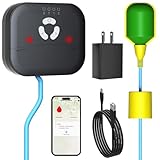
Overview: The WLA-Z2PRO Smart WiFi Sump Pump Alarm offers reliable water level monitoring at $89.99 with a built-in backup battery for outage protection. This system delivers triple alerts through a 90dB siren, flashing LED, and free smartphone notifications via the Smart Life app. Its IP44 splash-proof design suits semi-outdoor installations like covered basements or garages.
What Makes It Stand Out: The modular product family is a key differentiator, allowing users to choose between IP44 and IP65 models with or without battery backup. The free app notifications remain free permanently, unlike subscription-based competitors. Flexible installation in areas without outlets expands placement options, requiring only WiFi coverage.
Value for Money: While competitively priced at $89.99, the IP44 rating positions this as an indoor/semi-outdoor solution. You’re getting solid smart features and battery backup, but the lower water resistance means it’s not ideal for harsh environments. The optional paid SMS/call alerts provide upgrade paths without forcing subscriptions.
Strengths and Weaknesses: Pros: Built-in backup battery; genuinely free app alerts; triple notification system; multiple model options; flexible AC-free installation; Smart Life app integration. Cons: IP44 rating limits outdoor use; 90dB is adequate but not piercing; paid subscription required for SMS/call alerts; battery capacity unspecified; less waterproof than same-price alternatives.
Bottom Line: The WLA-Z2PRO is a practical choice for homeowners needing flexible indoor monitoring. Its battery backup and free app notifications provide solid value, but those requiring rugged outdoor durability should consider the IP65 upgrade. For covered sump pits and basements, it delivers dependable performance.
3. Smart WiFi High Water Level Alarm with Backup Battery, Sump Pump Alarm, Free App Notifications, IP65, 90dB Siren & LED Flashing, for Basement, Septic Tank, Water Tank, Sump Pit (WLA-Z7PRO)
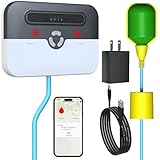
Overview: The WLA-Z7PRO represents the premium tier of the WLA alarm series at $99.99, upgrading to IP65 waterproofing while retaining all smart features. This model provides comprehensive water level monitoring with a 90dB siren, LED flashing, and instant app notifications through Smart Life. The built-in backup battery ensures continuous operation during power failures.
What Makes It Stand Out: The IP65 rating transforms this from a semi-outdoor to a true all-weather device, resisting dust and water jets for reliable performance in harsh conditions. The triple alert system covers all notification preferences, while the product family’s modular design lets users select features a la carte. Remote monitoring via smartphone provides peace of mind anywhere.
Value for Money: The $10 premium over the Z2PRO for IP65 certification is money well spent for outdoor installations or humid environments. At $99.99, it undercuts many competing IP65 smart alarms while delivering comparable features. The free app notifications and optional paid upgrades create a flexible cost structure.
Strengths and Weaknesses: Pros: Robust IP65 waterproof rating; integrated backup battery; permanently free app alerts; triple notification system; product family compatibility; suitable for harsh environments. Cons: 90dB alarm could be louder for large properties; paid subscription needed for SMS/call alerts; battery specifications not provided; mode switching details unclear; tethered float switch requires space.
Bottom Line: The WLA-Z7PRO is the sweet spot for homeowners needing outdoor-rated protection with smart connectivity. The IP65 upgrade justifies the modest price increase, making it ideal for septic tanks, outdoor cisterns, and exposed sump pits. For under $100, it delivers professional-grade durability.
4. Briidea Battery Backup Sump Pump System for Basement, 2.4G & 5G WiFi, 9 LED Indicators, Smart Alarm, Electronic Water Level Sensor, 12V Battery Compatible (Battery Not Included)

Overview: The Briidea Battery Backup Sump Pump System transcends simple alarms by providing active flood protection at $109.99. This isn’t just a monitoring device—it’s a complete secondary pump system that automatically engages when your primary pump fails. With dual-band WiFi (2.4G/5G), nine LED status indicators, and an electronic water level sensor, it offers professional-grade monitoring and pumping capability.
What Makes It Stand Out: The high-efficiency DC pump moves up to 2,700 GPH, providing real protection rather than just warnings. Electronic sensors respond faster than traditional floats with greater accuracy. Nine LED indicators provide at-a-glance system status, while dry-contact terminals enable seamless integration with existing alarm panels or smart home systems—features rarely seen in consumer-grade units.
Value for Money: At $109.99 (plus battery cost), this delivers exceptional value compared to professional installations costing $500+. While requiring a separate 12V battery ($50-100), the total investment remains competitive for a pump system. For homeowners wanting active defense against flooding, it’s far more valuable than passive alarms.
Strengths and Weaknesses: Pros: Active pumping capability; dual-band WiFi compatibility; electronic sensor accuracy; comprehensive LED diagnostics; smart home integration; easy DIY installation; dry-run protection. Cons: Battery not included; requires more space than simple alarms; overkill for basic monitoring needs; battery maintenance required; pump capacity limited compared to AC pumps.
Bottom Line: The Briidea system is ideal for homeowners seeking proactive flood prevention rather than just alerts. Its pumping capability and smart home integration justify the battery investment. If you want to stop water, not just hear about it, this is your best value option under $200 complete.
5. The Basement Watchdog Big Combo CONNECT Preassembled Primary & Battery Backup Sump Pump System - WiFi-Capable w/Add-on Module (CITS-50)

Overview: The Basement Watchdog Big Combo CONNECT is a professional-grade, preassembled primary and battery backup sump pump system priced at $427.00. This comprehensive solution combines a ½ HP energy-efficient primary pump with a robust backup system, delivering 3,540 GPH and 1,850 GPH respectively at 10-foot lifts. It’s designed for homeowners who demand maximum protection for finished basements or high-value properties.
What Makes It Stand Out: This is a complete pumping ecosystem, not just an add-on. The primary pump’s PSC motor saves electricity while moving massive volumes. The backup controller provides 24/7 monitoring of pump status, power, and battery health with descriptive alarms. Runtime extends for days on a single charge, with parallel battery connection capability for double endurance. The system is compatible with both AGM and wet-cell batteries.
Value for Money: While expensive, the Big Combo replaces separate primary and backup pumps that could cost $600+ combined. However, the WiFi module (BW-WiFi) is a separate purchase, adding hidden cost. For high-risk homes, the investment pales compared to flood damage. For basic needs, it’s substantial overkill.
Strengths and Weaknesses: Pros: Complete primary+backup solution; powerful pumping capacity; extended battery runtime; professional monitoring features; energy-efficient primary pump; expandable battery system; descriptive fault alarms. Cons: Premium pricing; WiFi module sold separately; may require professional installation; physical size requires space; excessive for simple monitoring needs; battery not included.
Bottom Line: The Big Combo CONNECT is the premium choice for comprehensive flood protection. It’s ideal for finished basements, high water table areas, or homes where failure isn’t an option. While costly and requiring additional WiFi investment, it delivers professional-grade reliability that justifies the price for critical applications.
6. Briidea Battery Backup Sump Pump System for Basement, 2.4G & 5G WiFi, 9 LED Indicators, Smart Alarm, Electronic Water Level Sensor, 12V Battery Compatible (Battery Not Included)
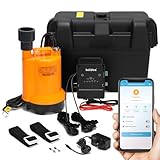
Overview: The Briidea Battery Backup Sump Pump System delivers smart basement protection with modern connectivity and robust pumping power. This 12V system moves 2,700 GPH at 0 ft head and 1,900 GPH at 10 ft, automatically activating when primary pumps fail or water levels surge dangerously high. It connects in parallel to existing systems without interfering with main pump operation, providing continuous 24/7 protection during power outages, heavy rains, or vacations. Compatible with 12V deep cycle batteries (80AH lead-acid recommended, not included), the kit includes all installation accessories for DIY setup.
What Makes It Stand Out: Dual-band 2.4G and 5G WiFi support distinguishes this system, enabling remote monitoring through the GeniLife App from anywhere with internet access. Nine LED indicators provide comprehensive at-a-glance status updates for water level, battery, pump operation, and power conditions. The electronic water level sensor responds faster and more accurately than traditional mechanical floats, reducing maintenance while providing dry-run protection. A dry contact interface integrates seamlessly with existing home alarm or automation systems, creating a unified smart home solution.
Value for Money: At $169.99, this mid-range backup system justifies its price through WiFi connectivity and advanced sensor technology. While the battery adds $100-150 to the total investment, the combined cost of $270-320 remains competitive against professional installations exceeding $500. The parallel connection capability means you won’t need to replace functioning primary pumps, saving additional expense. For tech-savvy homeowners, the remote monitoring capability alone offsets the premium over basic backup systems.
Strengths and Weaknesses: Strengths include dual-band WiFi monitoring, high flow rates, parallel installation compatibility, and detailed LED diagnostics. The electronic sensor eliminates float-switch jamming issues common in debris-heavy pits. Weaknesses: battery not included, electronic components may require occasional troubleshooting, and WiFi dependency could concern users in areas with unreliable internet. The system also lacks a primary pump, requiring a functional existing unit.
Bottom Line: The Briidea system excels for homeowners wanting intelligent monitoring without professional installation costs. Its combination of strong pumping performance and modern connectivity makes it an excellent value, provided you’re comfortable with app-based controls and factor in battery expenses.
7. Smart WiFi High/Low Water Level Alarm with Alarm-Activated oulet, Backup Battery, Free App Notifications, IP65, 110dB Siren & LED Flashing, for Basement, Septic Tank, Water Tank, Sump Pump

Overview: This Smart WiFi Water Level Alarm functions as an intelligent monitoring and control hub rather than a pump itself. Priced at $109.99, it features an alarm-activated outlet that automatically triggers connected pumps when high water is detected, effectively adding smart automation to existing equipment. The IP65-rated unit includes a built-in backup battery and adjustable high/low detection modes, making it versatile for basements, septic tanks, and water storage applications. Alerts are delivered through a 110dB siren, flashing LED, and free app notifications.
What Makes It Stand Out: The automatic pump activation via alarm-triggered outlet is the standout feature—connected pumps start without manual intervention when water reaches critical levels. The adjustable monitoring mode switches between high-level and low-level detection, adapting to unconventional applications like water tank fill control. A triple-alert system ensures warnings aren’t missed, while the built-in battery enables installation in locations lacking power outlets, provided WiFi coverage exists. The free Smart Life app notifications avoid subscription fees.
Value for Money: Excellent value for monitoring-focused applications. At $110, it costs significantly less than full backup pump systems while providing smart alerts and automatic pump control. The integrated battery backup eliminates the need for separate UPS systems, and the weatherproof IP65 rating ensures durability. While SMS/call alerts require a paid subscription, the free push notifications suffice for most users, making it more economical than monitored alarm services.
Strengths and Weaknesses: Strengths include versatile monitoring modes, loud 110dB alarm, flexible installation options, and automatic pump control. The low-level detection mode is useful for preventing pump dry-run situations. Weaknesses: cannot pump water independently, alarm-activated outlet disables in battery mode, and WiFi dependency means no alerts during internet outages. The device also lacks flow rate monitoring or pump health diagnostics beyond water level.
Bottom Line: Perfect for homeowners with reliable primary pumps seeking smart automation on a budget. This alarm acts as a force multiplier for existing systems, providing critical automatic response capabilities. It’s not a standalone flood solution but an intelligent enhancement for well-maintained equipment.
8. The Basement Watchdog Emergency Battery Backup Sump Pump - Up to 2,000 GPH - 24/7 Monitoring Controller (BWE)

Overview: The Basement Watchdog BWE represents decades of proven reliability in basement flood prevention. This 12V backup system pumps 2,000 GPH at 0 ft lift and 1,000 GPH at 10 ft, providing days of intermittent operation on a single battery charge. The user-friendly control panel monitors pump, power, and battery conditions continuously, delivering plain-language visual and audible alarms that specify exact maintenance needs. Compatible with both maintenance-free AGM and traditional wet-cell batteries, it offers installation flexibility.
What Makes It Stand Out: Basement Watchdog’s reputation for bulletproof reliability distinguishes this system—when failure means thousands in damage, proven track records matter. The dual float switch provides redundant protection; if one switch fails or jams, the second ensures activation. Controller alarms speak in clear terms (“Add water to battery,” “Check fuse”) rather than cryptic codes, eliminating guesswork. This simplicity makes it ideal for homeowners who want protection without technological complexity or ongoing subscription costs.
Value for Money: At $167.80, it competes directly with entry-level smart systems while offering superior brand trust. A quality battery adds $100-130, bringing the total under $300—reasonable for professional-grade protection. The lack of WiFi or app fees means zero ongoing costs, and the flexible battery compatibility lets users choose between lower-cost wet-cell or maintenance-free AGM options based on preference.
Strengths and Weaknesses: Strengths include trusted brand reputation, redundant float switches, intuitive diagnostic alarms, and flexible battery compatibility. The system operates independently of internet connectivity and requires minimal technical knowledge. Weaknesses: no remote monitoring capabilities, lower GPH rating than WiFi-enabled competitors, and basic LED indicators demand physical inspection. The controller design appears dated compared to modern touchscreen interfaces.
Bottom Line: A solid choice for homeowners prioritizing proven reliability over smart features. The Basement Watchdog BWE delivers essential backup protection with straightforward operation and no learning curve. It’s ideal for those wanting set-it-and-forget-it security without relying on technology that might become obsolete.
9. PumpSpy PS2000C Pre-Assembled SmartPump Combination Wi-Fi Connected 1/2HP Primary Sump Pump and 12V Battery Backup Sump Pump with Internet Monitoring & Alerts, Water Alarms for Basements
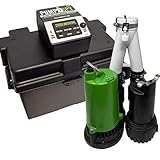
Overview: The PumpSpy PS2000C is a premium integrated solution combining a primary 1/2HP sump pump with a 12V battery backup in one pre-assembled unit. This powerhouse moves 4,320 GPH through the main pump and 3,600 GPH via backup at 0 ft lift, with automatic bi-daily self-testing and comprehensive WiFi monitoring. Designed for 15-inch or larger sump basins, it connects to standard 1.5-inch discharge lines. The system performs silent operation through integrated check valves and is assembled in the USA.
What Makes It Stand Out: Pre-assembly and proactive self-testing are revolutionary—installation requires only 15 minutes, and the system automatically runs diagnostics every two days, reporting results through the PumpSpy app. Dual backup pump switches rated for 1 million cycles provide exceptional redundancy. The powerful 7-amp split capacitor motor handles demanding conditions, while silent check valves eliminate disruptive pipe banging. Made in the USA quality control ensures component reliability.
Value for Money: At $549.99, this is a significant investment, but it replaces separate primary and backup systems costing $400+ individually. When factoring in professional installation savings of $200-400, the value proposition strengthens considerably. For flood-prone homes or finished basements where failure is catastrophic, the premium is justified. However, the battery adds $150-200, pushing total cost near $700.
Strengths and Weaknesses: Strengths include all-in-one design, exceptional pumping capacity, proactive self-testing, silent operation, and robust app monitoring. The dual backup switches and 30-foot max lift handle extreme scenarios. Weaknesses: high upfront cost, requires 15-inch minimum sump basin (many older homes have smaller pits), and WiFi dependency limits outage functionality. The backup pump battery life could be longer for severe weather events.
Bottom Line: For homeowners seeking maximum protection with minimal maintenance, the PS2000C is worth the premium. Its integrated design, powerful performance, and proactive monitoring make it the top choice for high-risk basements or finished living spaces where reliability is non-negotiable.
10. Moen Moen Smart Sump Pump Monitor, Wi-Fi Connectable Water Alarm Sensor for Basement Sump Pump, S2000ESUSA

Overview: The Moen Smart Sump Pump Monitor adds intelligent oversight to existing sump pump systems without replacing functional equipment. At $149.12, this monitoring device tracks water levels, pump performance, power status, temperature, humidity, and includes a remote leak sensing disc for floor water detection. Alerts are delivered through the Moen Smart Water App, text, email, phone calls, or audible alarms. It provides 24/7 proactive monitoring with real-time data logging.
What Makes It Stand Out: Moen’s comprehensive sensor array exceeds basic level monitoring by detecting pump failure patterns, excessive running cycles, and environmental conditions that indicate system stress. The remote leak sensing disc provides secondary protection against pump housing leaks or discharge line failures often missed by basin-only sensors. As part of Moen’s smart water ecosystem, it integrates with other leak detection products for whole-home protection. Multiple alert channels ensure redundancy.
Value for Money: Positioned as a premium monitoring solution, it commands a higher price than basic WiFi alarms but delivers significantly more data. For homes with reliable primary pumps, the detailed analytics provide early warning capabilities that could prevent catastrophic failures costing thousands. The brand reputation and comprehensive logging justify the $149 price compared to $100-120 basic alternatives with fewer sensors and no leak detection disc.
Strengths and Weaknesses: Strengths include multi-channel alert redundancy, detailed performance analytics, remote leak detection, and brand reliability. The system monitors actual pump behavior patterns, not just water levels. Weaknesses: no backup pumping capability, requires existing functional pump, and WiFi dependency limits alerts during internet outages. The price may seem steep for monitoring-only functionality, and setup requires comfort with smart home technology.
Bottom Line: An excellent upgrade for homeowners with dependable pumps wanting intelligent oversight. The Moen monitor provides peace of mind through detailed analytics and redundant alerting, making it ideal for finished basements where early detection of pump degradation is more valuable than backup pumping alone.
Why Smart Sump Pump Alarms Are Non-Negotiable in Modern Homes
The Hidden Dangers of Basement Flooding
Water damage ranks among the most common and costly home insurance claims, with basement flooding often occurring silently behind finished walls. A failed pump, clogged discharge line, or overwhelmed system can release hundreds of gallons before you notice. Smart alarms detect rising water levels the moment they exceed safe thresholds, giving you precious time to intervene. They monitor not just high-water events but also pump failures, power interruptions, and system malfunctions—problems that traditional alarms miss entirely.
How Battery Backup Saves the Day During Power Outages
Here’s the cruel irony: the most intense storms that overwhelm your sump pump are the same ones that knock out power. Without electricity, even the most powerful pump becomes a useless hunk of metal. A battery-backed alarm system ensures continuous monitoring regardless of grid status. When primary power fails, the system automatically switches to battery mode, maintaining sensor operation, Wi-Fi connectivity, and alert capabilities for days. This redundancy transforms your flood prevention from a single point of failure into a resilient, multi-layered defense.
Decoding the Technology: How Smart Water Level Alarms Work
Sensor Technologies: Float Switches vs. Electronic Probes
The heart of any alarm is its water level detection method. Traditional float switches use a buoyant mechanism that physically rises with water, triggering a simple on/off signal. While reliable, they can jam on pit walls or get tangled in debris. Electronic probes, conversely, use conductivity or ultrasonic waves to measure water height without moving parts. These digital sensors provide precise, continuous level readings rather than binary alerts, enabling features like “water rising faster than normal” predictions. The best smart systems often use redundant sensors—pairing a mechanical float with an electronic probe for dual verification.
Connectivity Protocols: Wi-Fi, Cellular, and Hybrid Systems
Your alarm is only smart if it can reach you. Wi-Fi connectivity offers seamless integration with home networks and smart hubs, but becomes useless when your router loses power unless it has battery backup. Cellular-based systems use mobile networks, providing true off-grid alerting during widespread outages but requiring a data plan. Hybrid systems combine both, automatically switching to cellular if Wi-Fi fails. Consider your area’s storm patterns: if power outages typically last hours and you have a generator, Wi-Fi may suffice. For extended outages or rural locations, cellular backup is worth the subscription cost.
Battery Backup Architectures: Integrated vs. Separate Systems
Smart alarms handle backup power in two primary ways. Integrated systems contain a built-in rechargeable battery that powers only the alarm unit, keeping sensors and communications alive while your pump itself remains dark. Separate battery backup systems power both the alarm and the sump pump itself, using a deep-cycle marine battery and inverter. While more expensive, this approach keeps water moving out while alerting you. For homes with high water tables or finished basements, the separate system offers superior protection. For others, an integrated alarm plus a generator for the pump strikes the right balance.
Critical Features That Separate Good Systems from Great Ones
Multi-Level Alert Systems
Basic alarms trigger at a single high-water mark. Advanced systems create a tiered alert cascade: a warning when water rises faster than the pump can handle, a critical alert when approaching overflow, and an emergency notification when flooding is imminent. Some even monitor pump cycle frequency, alerting you if the pump runs too often (indicating a potential failure) or not enough (suggesting a stuck float). This granularity helps you distinguish between a minor issue and a basement-threatening emergency.
Smart Home Integration Capabilities
The true power of smart alarms emerges when they become part of your connected home. Look for systems that integrate with platforms like SmartThings, Hubitat, or Apple HomeKit. This enables custom automation: flashing smart lights throughout your house during an alarm, triggering security cameras to record the sump pit area, or even automatically shutting off HVAC systems to prevent mold spore circulation. Voice assistant integration lets you ask, “Alexa, what’s my sump pump status?” while cooking dinner. API access for advanced users allows integration with home dashboards or custom notification services.
Battery Capacity and Runtime Specifications
Battery specs reveal more than just “how long it lasts.” Check the amp-hour (Ah) rating and the system’s power consumption in standby vs. alert mode. A 12V 7Ah battery might last 48 hours in standby but only 12 hours if sending frequent alerts. Systems with solar charging capabilities extend off-grid operation indefinitely. Pay attention to battery chemistry: sealed lead-acid is affordable but heavy with shorter lifespans; lithium-ion offers longer life and better cold-weather performance but costs more. The best systems provide low-battery warnings at 25% capacity, giving you time to recharge before complete failure.
Environmental Monitoring (Temperature, Humidity)
Premium alarms double as basement environmental monitors. Temperature sensors warn of freezing conditions that could burst discharge pipes. Humidity tracking helps detect slow leaks or condensation issues before they escalate. Some systems even monitor ambient air quality, alerting you to radon or VOC buildup. This transforms a single-purpose device into a comprehensive basement health monitor, providing year-round value beyond storm season.
Installation Mastery: Getting It Right the First Time
Pre-Installation Assessment Checklist
Before mounting anything, document your sump pit dimensions, pump discharge rate, and typical water inflow during heavy rain. Measure the distance from your sump pit to your Wi-Fi router—signal strength below -70dBm may cause dropped connections. Identify your home’s highest water level mark from past flooding events to set alert thresholds appropriately. Check local electrical codes: some jurisdictions require GFCI protection for sump circuits, which can nuisance-trip and require special alarm configurations. Finally, photograph your current setup; these “before” images prove invaluable if you need warranty support later.
Step-by-Step Mounting and Wiring Guide
Mount the alarm control unit at least 12 inches above the highest anticipated water level, but within easy reach for maintenance. Secure sensors to the discharge pipe—not the pit walls—to prevent shifting during pump cycling. Use waterproof wire nuts and route cables upward in a drip loop to prevent water from tracking into connections. For battery backup systems, install the battery box in a well-ventilated area away from the pit to avoid corrosive moisture. Connect the alarm’s power supply to a dedicated outlet, not the same circuit as the pump, so a tripped pump breaker won’t silence your alarm. Test the entire system with a bucket of water before sealing everything up.
Configuring Your Smart Alerts and Notifications
During setup, resist the urge to enable every possible notification. Configure a daily “heartbeat” message to confirm the system is online, but limit critical alerts to actual emergencies. Set up escalation rules: first alert goes to your phone, second to your spouse, third to a trusted neighbor. Use geofencing to suppress non-critical alerts when you’re home. Customize notification tones—make the sump alarm distinct from text messages so you recognize it instantly at 2 AM. Most importantly, test alerts monthly by manually lifting the float or pouring water on the sensor; an untested alarm is just expensive decoration.
Maintenance Regimens for Long-Term Reliability
Monthly Testing Protocols
Every month, simulate a high-water event by slowly pouring 5 gallons of water into the pit. Observe if the pump activates, if the alarm triggers at the correct level, and if you receive notifications within 30 seconds. Check the alarm’s battery status in the app—voltage should remain above 12.5V for lead-acid batteries. Inspect sensor cables for rodent damage or corrosion. Press the alarm’s test button to verify the audible siren still works; app notifications are useless if you’re asleep and your phone is on silent. Document each test in a logbook or spreadsheet—patterns of degradation appear over time.
Seasonal Battery Care
Before storm season, perform a full battery capacity test: disconnect AC power and let the system run on battery for several hours while monitoring voltage drop. If capacity has degraded below 70% of original, replace the battery. Clean battery terminals with a wire brush and apply anti-corrosion gel. For lead-acid batteries, check electrolyte levels and top off with distilled water if needed. In cold climates, verify the battery heater (if equipped) is functioning; battery capacity drops 30-50% below freezing. Store a spare charged battery if extended outages are common in your area.
Troubleshooting Common Alert Failures
False alarms usually stem from sensor fouling—clean probes monthly with a soft brush and vinegar solution. Missed alerts often trace to Wi-Fi issues; consider a mesh network node near the basement. If battery tests good but runtime is short, check for parasitic drains like a backlit display left on continuously. Intermittent connectivity may indicate weak cellular signal; reposition the antenna or upgrade to an external antenna kit. When all else fails, factory reset the device and reconfigure from scratch—firmware updates sometimes corrupt settings. Always keep the manufacturer’s tech support number saved in your phone; during a flooding event, you won’t have time to hunt for it.
Buying Guide: Matching Features to Your Specific Needs
Evaluating Your Home’s Flood Risk Profile
High-risk homes—those with finished basements, high water tables, or history of flooding—need cellular backup and separate battery systems for the pump itself. Moderate-risk homes with unfinished basements can opt for Wi-Fi-only integrated alarms. Low-risk homes in dry climates might be served by a basic smart alarm without cellular, but still benefit from battery backup for monitoring during outages. Consider your travel habits: frequent travelers need robust remote monitoring, while homebodies can rely more on audible alarms. Homes with elderly residents should prioritize loud sirens and simple interfaces over complex app features.
Understanding Warranty and Support Options
Look beyond the standard 1-2 year warranty. Quality manufacturers offer 3-5 year warranties on the control unit and pro-rated battery warranties. More importantly, investigate support responsiveness: does the company have 24/7 emergency tech support? Check online forums and reviews for real-world support experiences. Some premium brands offer “alarm assurance” programs that automatically ship replacement units overnight if yours fails during a storm. Understand what’s not covered: damage from improper installation, lightning strikes, or submersion above rated depths. Register your device immediately after purchase—many warranties require online registration within 30 days.
Frequently Asked Questions
1. Will a smart sump pump alarm work if my internet goes out during a storm?
It depends on your system’s connectivity. Wi-Fi-only alarms cannot send remote notifications without internet, though they’ll still sound local audible alarms if powered. Cellular-equipped systems continue alerting via mobile networks independently of your home internet. For maximum reliability, choose a hybrid system that automatically switches to cellular when Wi-Fi fails, ensuring continuous off-site alerting.
2. How long should the battery backup last during a power outage?
A quality system should provide at least 24-72 hours of monitoring on battery power alone. Runtime varies based on alert frequency, sensor type, and battery capacity. Systems sending constant alerts drain faster. For extended outages, select a model with solar charging capability or keep a spare deep-cycle battery. Test your system’s actual runtime annually—manufacturer specs assume ideal conditions.
3. Can I install a smart alarm on an old sump pump, or do I need a new system?
Most smart alarms are retrofit-friendly and work independently of your pump’s age or brand. They monitor water level, not pump operation directly. However, if your pump is over 10 years old, consider replacing it simultaneously. A smart alarm alerting you to a failing old pump provides little value—it’s like having a smoke detector for a house with faulty wiring.
4. What’s the difference between a water level alarm and a pump failure alarm?
Water level alarms trigger when water rises above a set point, regardless of pump status. Pump failure alarms monitor electrical current or vibration patterns to detect if the pump motor has seized or burned out. Premium smart systems combine both: they alert to rising water AND confirm whether the pump is actually running, helping diagnose whether the problem is pump failure or overwhelming inflow.
5. Do I need a separate battery backup for the alarm if I have a whole-house generator?
Yes. Generators typically have a 10-30 second startup delay, during which your alarm would be dark. More critically, generators can fail to start or run out of fuel during extended outages. A battery-backed alarm ensures continuous monitoring as a failsafe. Think of it as the emergency brake in your car—you hope you never need it, but you definitely want it independent of the primary system.
6. How do I prevent false alarms from normal pump cycling?
Mount the high-water sensor at least 6 inches above the pump’s normal activation point, accounting for the highest water level during typical operation. Use systems with adjustable delay timers—setting a 30-second delay prevents alerts from brief water level spikes. Some advanced systems learn your pump’s normal cycle pattern and only alert to anomalies, not routine operation.
7. Are smart sump pump alarms secure from hacking?
Reputable manufacturers use encrypted communications and regular security updates. Change default passwords immediately and enable two-factor authentication if available. Keep firmware updated and isolate the device on a separate guest network if your router supports it. While no IoT device is 100% hack-proof, the risk is minimal compared to the certainty of undetected flooding.
8. Can I monitor multiple sump pits or properties with one app?
Most quality systems support multiple devices under a single account, perfect for vacation homes or rental properties. Each location appears as a separate “zone” in the app. Some property management platforms even allow assigning different alert contacts per location. Verify device limits before purchasing—some basic plans restrict you to 3-5 locations.
9. What happens when the battery eventually wears out? Will the alarm still work on AC power?
Yes, the alarm continues functioning on AC power when the battery is depleted, but you lose backup capability during outages. Most systems emit a persistent low-battery chirp and send app notifications when replacement is needed. Battery lifespan ranges from 3-5 years for lead-acid to 5-7 years for lithium-ion. The system should seamlessly switch to AC-only operation until you replace the battery.
10. Is professional installation worth the cost, or can most homeowners DIY?
If you’re comfortable with basic wiring and your sump pit is easily accessible, DIY installation is straightforward and saves $150-$300. However, professional installation ensures optimal sensor placement, proper electrical code compliance, and integration with existing backup systems. It’s worth the investment for complex setups involving multiple pits, cellular antennas, or separate battery banks. Many installers also provide ongoing maintenance plans.