Your smart home devices are talking past each other. While you’ve been busy adding Matter-certified light bulbs, door locks, and sensors, you might be missing the single most critical piece of infrastructure that makes the whole ecosystem actually work: the Thread Border Router. Think of it as the multilingual diplomat that translates between your Wi-Fi network and the low-power mesh network your battery-powered devices desperately need to communicate reliably. Without it, your Matter-ready home is like a modern city with no highway on-ramps—plenty of destinations, but no way to get there efficiently.
Understanding Thread Border Routers isn’t just another technical deep-dive for IoT enthusiasts; it’s essential knowledge for anyone investing in the future of connected living. As Matter becomes the universal language of smart homes, Thread emerges as its preferred transport layer—a self-healing, IPv6-based mesh network that finally delivers on the promise of seamless, responsive, and secure device communication. This guide will equip you with everything you need to evaluate, deploy, and optimize Thread Border Routers for a truly Matter-ready home.
Top 10 Thread Border Routers for Matter-Ready Homes
Detailed Product Reviews
1. Aqara Smart Hub M100 for Home Automation, Matter Controller, Thread Border Router, Features Aqara Zigbee (Not Third-Party), Wi-Fi, Supports Amazon Alexa, Apple HomeKit, IFTTT, Home Assistant

Overview: The Aqara Smart Hub M100 emerges as a remarkably affordable entry point into the multi-protocol smart home world. At just $29.99, this compact hub bridges Aqara’s Zigbee ecosystem with modern Matter and Thread standards, supporting up to 20 Aqara Zigbee devices and 20 Thread devices while offering compatibility with major platforms like Apple HomeKit, Amazon Alexa, Home Assistant, and IFTTT.
What Makes It Stand Out: The M100’s standout feature is its advanced Matter bridging capability, which uniquely preserves Aqara’s sophisticated functions like facial recognition and complex automations across ecosystems. Unlike many budget hubs, it supports local automation execution for both Zigbee and Matter devices, ensuring millisecond response times and continued operation during internet outages. The flexible USB-A power design with 210-degree rotation allows creative placement options, while Wi-Fi 6 connectivity with WPA3 security provides future-proofed, robust wireless performance in congested networks.
Value for Money: At $29.99, the M100 significantly undercuts most multi-protocol hubs while delivering premium features like Matter bridging, Thread border routing, and local processing. Comparable hubs typically cost $50-$80, making this an exceptional value for Aqara ecosystem users. However, the limitation to Aqara Zigbee devices (not third-party) means you’ll need to factor in potential device replacement costs if you’re migrating from another Zigbee ecosystem.
Strengths and Weaknesses: Strengths: Unbeatable price for Matter/Thread hub; local automation reliability; Wi-Fi 6 with WPA3; flexible placement; preserves Aqara advanced features across platforms. Weaknesses: Restricted to Aqara Zigbee devices only; 40 total device limit may constrain larger homes; 5V⎓0.5A power adapter not included; optimal placement requires specific 6-19 foot router distance.
Bottom Line: The Aqara Smart Hub M100 is an outstanding choice for Aqara loyalists or newcomers wanting an affordable, future-proof hub. Its Matter bridging and local automation capabilities punch far above its price point, though the Aqara-only Zigbee limitation requires careful ecosystem consideration.
2. SMLIGHT SLZB-07p7 Zigbee 3.0 USB Coordinator - Pre-Flashed and Ready-to-Use Zigbee Adapter for ZHA Home Assistant and Zigbee2MQTT
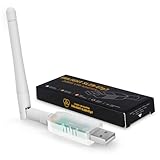
Overview: The SMLIGHT SLZB-07p7 is a specialized Zigbee 3.0 USB coordinator designed for Home Assistant power users seeking maximum performance and flexibility. Pre-flashed and ready for both ZHA and Zigbee2MQTT, this adapter eliminates the technical hurdles of firmware installation, offering a plug-and-play experience for advanced smart home enthusiasts.
What Makes It Stand Out: Built around the powerful CC2652P7 chipset with a +20dB amplifier and included +3dB antenna, this coordinator delivers exceptional range and device-handling capabilities. Its multipan firmware makes it Thread and Matter-ready, future-proofing your investment. The standout feature is remote flashing capability, allowing firmware updates without physical access—a game-changer for hidden or hard-to-reach installations. The CP2102N USB interface ensures broad compatibility across host systems.
Value for Money: At $36.99, the SLZB-07p7 offers professional-grade hardware at a hobbyist price point. Coordinators with similar specifications and amplifiers typically cost $45-$60, and the pre-flashed convenience saves hours of technical setup. For Home Assistant users wanting reliable, long-range Zigbee networks without DIY firmware headaches, this represents excellent value, though casual users may find cheaper options sufficient for basic needs.
Strengths and Weaknesses: Strengths: Pre-flashed for immediate use; powerful CC2652P7 chip with signal amplifier; excellent range; remote firmware updates; Thread/Matter ready; works with both ZHA and Zigbee2MQTT. Weaknesses: Requires always-on host device (PC, Raspberry Pi, etc.); not a standalone hub; may be overkill for small deployments; higher price than basic coordinators.
Bottom Line: The SMLIGHT SLZB-07p7 is ideal for serious Home Assistant users demanding performance and flexibility. Its powerful hardware and remote management features justify the premium over budget options, making it a smart long-term investment for expanding Zigbee networks.
What Is Thread and Why Does It Matter for Matter?
Thread is an open, IPv6-based wireless networking protocol designed specifically for the Internet of Things. Unlike traditional hub-and-spoke models where every device talks directly to a central controller, Thread creates a resilient mesh network where devices (called nodes) can relay messages for each other. This architecture eliminates single points of failure and extends network range organically as you add more devices.
Matter, the new universal smart home standard, doesn’t require Thread—it can run over Wi-Fi or Ethernet too—but Thread is Matter’s secret weapon for battery-powered devices. The protocol’s low power consumption, sub-15ms latency, and ability to sleep and wake efficiently make it ideal for sensors, door locks, and switches that can’t afford to drain batteries by maintaining constant Wi-Fi connections. A Thread Border Router is the mandatory gateway that bridges this low-power mesh to your IP-based home network, allowing your phone, voice assistants, and cloud services to communicate with Thread devices.
The Role of a Thread Border Router in Your Smart Home
A Thread Border Router performs three critical functions that no other device can replicate. First, it provides IP connectivity between Thread devices and your home network, translating between Thread’s 6LoWPAN (IPv6 over Low-Power Wireless Personal Area Networks) packets and standard IPv6 traffic. Second, it manages network security by handling device commissioning, authentication, and key management. Third, it routes traffic efficiently across the mesh, dynamically updating paths as devices join, leave, or move.
Without a border router, your Thread devices would form an isolated island—communicating with each other but invisible to your phone, voice assistants, or any cloud service. With it, you get the best of both worlds: the efficiency of mesh networking for device-to-device communication and the accessibility of IP networking for user control and automation.
How Thread Differs From Traditional Smart Home Protocols
Thread’s architecture fundamentally diverges from Zigbee and Z-Wave, despite surface-level similarities. While all three use mesh networking, Thread is IP-native, meaning each device gets a real IPv6 address and can communicate directly with internet services without protocol translation. Zigbee and Z-Wave require application layer gateways that translate between their proprietary protocols and IP, introducing latency and complexity.
Wi-Fi, meanwhile, remains a power-hungry beast ill-suited for battery devices. A typical Wi-Fi sensor might last weeks on a coin cell; the same sensor on Thread could last years. Thread also avoids Wi-Fi’s congestion issues in the 2.4 GHz band by using IEEE 802.15.4 with channel hopping and built-in interference avoidance. The result is a network that remains responsive even in dense RF environments.
Key Features to Look for in a Thread Border Router
Radio Performance and Range
Not all Thread Border Routers are created equal when it comes to RF performance. Look for devices with external antennas or high-gain internal designs that maximize range. The difference between a border router with a +2 dBi antenna and one with a +5 dBi antenna can be the difference between covering your entire home or leaving dead zones in distant rooms. Pay attention to transmit power specifications—many regions limit this to +10 dBm, but how efficiently the router uses that power matters enormously.
Concurrent Connection Capacity
Thread networks support hundreds of devices, but individual border routers have practical limits on concurrent connections. A basic implementation might handle 32-50 active children (directly connected devices), while enterprise-grade designs can manage 128 or more. More important is the router’s ability to handle indirect connections—devices that route through other Thread routers in the mesh. A quality border router should support at least 250 total network nodes to accommodate future expansion.
Multi-Admin Capabilities
Matter’s Multi-Admin feature allows devices to be controlled by multiple ecosystems simultaneously—think Apple Home, Google Home, and Amazon Alexa all managing the same smart lock. Your Thread Border Router must fully support this by maintaining separate security contexts and not locking devices into a single vendor’s ecosystem. Verify that the router implements the full Matter specification for shared fabric management rather than proprietary extensions.
Firmware Update Mechanisms
Thread and Matter evolve rapidly. Your border router needs a robust, automatic firmware update mechanism that doesn’t require you to factory reset your entire network. Look for devices that support Matter’s OTA (Over-The-Air) update protocol and provide clear changelogs. The update process should be atomic—if it fails, the router rolls back to the previous version without bricking itself or dropping devices from the network.
Thread Network Topology: Building a Self-Healing Mesh
Thread networks organize into a three-tier hierarchy: Border Routers, Router-Eligible End Devices (REEDs), and End Devices. Border Routers connect the mesh to IP networks. REEDs can become routers if the network needs more routing capacity. End Devices are typically battery-powered sensors that sleep extensively and only communicate with their parent router.
This dynamic self-configuration means your network improves as you add more mains-powered devices. When a router fails, the network automatically re-routes traffic through alternate paths within milliseconds. The Thread protocol’s mesh-under routing at the link layer makes this transparent to applications—you don’t need complex automation rules to handle failover; it just works.
Understanding this topology helps you plan device placement. Position mains-powered Thread devices (smart plugs, powered shades) strategically to act as backbone routers. Place battery devices where you need them; they’ll automatically find the best parent. Your border router’s location matters less than you think—any Thread device with good connectivity can relay traffic to it.
Matter Compatibility: What “Matter-Ready” Really Means
The term “Matter-Ready” is frustratingly ambiguous. For a Thread Border Router, it should mean full certification through the Connectivity Standards Alliance (CSA) and implementation of all mandatory clusters for border router functionality. However, many devices claim Matter support while only implementing a subset of features.
True Matter-ready border routers support both Thread 1.3 (the version required for Matter) and the complete Matter data model. They handle DNS-SD (DNS Service Discovery) for device commissioning, implement the Operational Discovery mechanism, and support the full security model including Distributed Compliance Ledger (DCL) lookups. They also provide diagnostic clusters that let you monitor network health through any Matter controller.
Beware of “Thread-capable” devices that require proprietary commissioning. If you can’t add the border router to your home through standard Matter commissioning flows, it’s not truly Matter-ready—it’s a walled garden.
Security Considerations for Thread Border Routers
Commissioning and Authentication
Thread security starts with the commissioning process, which uses a QR code or numeric code printed on each device. This code contains the device’s unique Device Attestation Certificate and a pre-shared key. Your border router must verify this certificate against the DCL to ensure the device is genuine and certified. Look for routers that provide visual feedback during commissioning—LED patterns or app notifications—so you know when a device is securely joined versus merely connected.
Network Encryption Standards
Thread encrypts all network traffic at two levels: the MAC layer with AES-128-CCM and the application layer with Matter’s additional encryption. Your border router should support hardware-accelerated crypto operations to maintain performance under load. Verify that it implements the full Thread security suite, including key rotation and secure key storage in a hardware security module (HSM) or trusted execution environment. Software-only crypto implementations are vulnerable to extraction and side-channel attacks.
Certificate Management
Thread uses X.509 certificates for device identity. A robust border router manages these certificates throughout the device lifecycle—issuing them during commissioning, renewing them before expiration, and revoking them when devices are removed. The router should maintain a certificate revocation list (CRL) and support certificate pinning to prevent man-in-the-middle attacks. Check whether the vendor publishes security advisories and how quickly they patch vulnerabilities.
Integration Challenges: Mixing Thread With Wi-Fi, Zigbee, and Z-Wave
Few homes start fresh with Thread. Most have existing Zigbee sensors, Z-Wave locks, or Wi-Fi cameras. Your Thread Border Router must coexist gracefully with these networks. The primary concern is RF interference—all three protocols use the 2.4 GHz band. Quality border routers implement clear channel assessment and dynamic channel selection to avoid congested frequencies.
More subtle is the application layer integration. Your Matter controller app should present a unified view of all devices, regardless of protocol. This requires the border router to work seamlessly with protocol bridges. Some ecosystems bridge Zigbee to Matter internally; others require separate hardware. Plan for a transition period where you maintain parallel networks. The goal is eventual consolidation, but ripping out working devices rarely makes economic sense.
Consider power management carefully. Zigbee and Thread devices can’t route for each other, so a sensor at the edge of your home might need to connect to both networks if you’re running them concurrently. This doubles power consumption and defeats Thread’s efficiency benefits. Strategic placement of border routers and bridges minimizes this overhead.
Placement Strategies for Optimal Thread Coverage
Thread operates at 2.4 GHz, which penetrates walls poorly compared to sub-GHz Z-Wave. A border router tucked in a basement utility room might struggle to reach second-floor sensors. The ideal placement is central, elevated, and away from metal objects and interference sources.
But here’s the counterintuitive part: because Thread is mesh, border router placement is less critical than the placement of your first few mains-powered Thread devices. A border router in a corner can still serve the whole house if you have a smart plug or two creating a mesh backbone. Think of the border router as the root of a tree—it doesn’t need to reach every leaf directly if the branches are strong.
Avoid placing border routers near microwaves, baby monitors, or Wi-Fi access points using 40 MHz wide channels in 2.4 GHz. These create persistent interference. If you must co-locate with a Wi-Fi router, ensure the Thread border router supports channel avoidance and configure your Wi-Fi to use channels 1, 6, or 11 (20 MHz only) to minimize overlap.
Power Consumption and Always-On Requirements
Thread Border Routers must remain powered continuously. Unlike battery devices that sleep, border routers maintain constant network presence, respond to discovery requests, and route traffic. This has implications for both electricity costs and installation location.
Most border routers consume 2-5 watts—comparable to a small LED bulb. Over a year, that’s 15-45 kWh, or roughly $2-6 in electricity. More concerning is the dependency on mains power. During a blackout, your Thread network becomes isolated unless you have UPS backup. For security-critical devices like door locks and leak sensors, consider powering your border router from a UPS alongside your internet modem.
Some vendors are exploring “opportunistic border routing” where a battery device temporarily assumes the role during power outages. This is non-standard and not yet part of the Matter specification. For now, treat border router power as infrastructure-critical and plan accordingly.
Scalability: Planning for Future Device Expansion
Thread networks can theoretically support over 250 devices, but practical limits depend on traffic patterns and network topology. A network of 200 battery sensors reporting once per minute generates minimal load. But add 50 smart switches that broadcast state changes instantly and you might saturate the mesh.
When evaluating border routers, examine their backhaul capacity. A router with 100 Mbps Ethernet might bottleneck if you have dozens of Thread security cameras streaming video (though Matter currently focuses on control, not high-bandwidth video). More importantly, check the router’s RAM and CPU specifications—adequate buffering prevents packet loss during traffic bursts.
Plan your device onboarding sequence carefully. Commission mains-powered devices first to establish a robust mesh backbone. Add battery devices afterward; they’ll automatically attach to the best available parent. If you add devices in the opposite order, battery sensors might attach directly to the border router at poor signal strength, then fail to roam when better paths become available.
The Multi-Admin Ecosystem: Managing Multiple Ecosystems
Matter’s Multi-Admin capability is revolutionary but complex. Your Thread Border Router must maintain separate “fabrics” for each ecosystem—Apple, Google, Amazon, SmartThings—each with its own security domain. A device can belong to all fabrics simultaneously, receiving commands from any controller.
This requires the border router to implement fabric-scoped access control lists (ACLs). When you tell Siri to turn off a light, the border router verifies that Apple’s fabric has permission for that device and that specific command. When you ask Alexa to do the same, it checks Amazon’s fabric permissions independently.
The challenge is synchronization. If you rename a device in Apple Home, Matter should propagate that name to other fabrics. In practice, this works inconsistently. Look for border routers that explicitly support the Subscription and Reporting clusters, which enable real-time state synchronization across fabrics. Without this, you’ll spend hours manually renaming devices in each app.
Common Setup Pitfalls and How to Avoid Them
The most frequent mistake is commissioning the border router to one ecosystem and expecting other ecosystems to see it automatically. Matter requires explicit pairing for each fabric. After adding the router to Google Home, you must put it back in pairing mode and add it to Apple Home as a separate action. The device maintains all fabrics concurrently; you just need to perform the pairing dance for each.
Another pitfall is mixing Thread versions. Matter requires Thread 1.3, but some early devices shipped with 1.1 or 1.2. They’ll join the network but lack critical features like Domain Unicast Addressing, causing intermittent connectivity. Always verify Thread version compatibility before purchase.
Network segmentation causes headaches. If your border router lives on an IoT VLAN isolated from your phone’s VLAN, mDNS discovery fails. Either place the router on your main network or configure your firewall to pass mDNS and Matter’s operational discovery traffic between VLANs. Many “secure” network setups inadvertently block the very protocols Matter needs.
Troubleshooting Your Thread Network Like a Pro
When a Thread device becomes unreachable, start with the basics: check its battery. Thread devices report battery level infrequently to conserve power; a “100%” reading might be weeks old. Replace the battery even if it seems premature.
Next, verify mesh connectivity. Use your border router’s diagnostic tools (usually in the advanced settings of your Matter controller app) to view the network topology. Look for devices with high path cost or frequent parent changes—these indicate poor RF conditions. A device that keeps switching parents suggests interference or marginal signal strength.
If the entire network is sluggish, check for congestion. Thread uses CSMA-CA (Carrier Sense Multiple Access with Collision Avoidance), but a flood of broadcast messages can still saturate the mesh. Temporarily power off suspected noisy devices and observe if performance improves. Some border routers provide per-device traffic statistics—use these to identify chatty devices.
Finally, don’t forget the IP layer. Thread devices need IPv6 addresses and must be able to reach your border router’s IPv6 prefix. If your ISP doesn’t provide IPv6, your border router should generate ULAs (Unique Local Addresses) automatically. Verify this in the router’s network settings.
Future-Proofing Your Investment
Thread and Matter are evolving. Thread 1.4 is already in development, promising enhanced security and better support for border router redundancy. Your investment should withstand at least five years of protocol evolution.
Choose border routers with sufficient flash memory for firmware updates—32 MB should be considered minimum today. Ensure the vendor has a public track record of supporting devices for multiple years, not just until the next model launches.
Modularity matters. Some border routers are software-only, running on existing hardware like Raspberry Pi or NAS devices. While these require more technical skill, they offer infinite upgrade potential. Hardware appliances are simpler but risk obsolescence.
Consider Thread’s roadmap. Future versions will support multiple border routers sharing load and providing failover. If redundancy matters to you, select a router that already implements the Thread Border Router Multicast Routing features, even if your current ecosystem doesn’t use them yet.
Frequently Asked Questions
How many Thread Border Routers do I need for my home?
One properly placed Thread Border Router can cover most homes up to 3,000 square feet, but the real answer depends on your mesh density, not square footage. A single router can handle hundreds of devices if you have enough mains-powered Thread devices to create a robust mesh. For homes over 4,000 square feet or with dense walls, consider two routers on opposite sides of the house. Matter doesn’t yet support border router redundancy, so each router creates a separate Thread network; devices will join whichever network offers better connectivity.
Can I use a Thread Border Router without any Matter devices?
Yes, but it’s like buying a sports car for grocery runs. Thread Border Routers function perfectly well as Thread networks without Matter, but you’ll need a Thread-native application to control devices. Few such applications exist for consumers; most Thread devices are now Matter-compatible. If you’re not planning to adopt Matter within the next year, invest in a border router that supports both Thread and Zigbee/Z-Wave bridging to maximize utility.
Will Thread interfere with my Wi-Fi network?
They share the 2.4 GHz band, so some coexistence is inevitable. However, Thread uses 802.15.4 which employs narrower channels (2 MHz vs Wi-Fi’s 20-40 MHz) and aggressive channel hopping. Properly configured Thread networks actually reduce Wi-Fi interference by using spectrum more efficiently. The key is configuring your Wi-Fi to use 20 MHz channels on 1, 6, or 11, leaving gaps for Thread. Most modern border routers perform automatic channel selection to avoid Wi-Fi.
What’s the difference between a Thread Border Router and a Matter Controller?
The border router connects Thread devices to your IP network; the Matter Controller (like Apple TV, Google Nest Hub, or Echo) provides the user interface and automation logic. Some devices combine both roles—a smart speaker with Thread radio acts as both. However, you can have a border router without controller functionality (some smart thermostats) or a controller without Thread (older smart speakers). For a Matter-ready home, you need at least one device that performs both functions, or separate devices for each role.
How do I migrate from Zigbee to Thread without replacing everything?
Gradual migration is Matter’s strength. Keep your Zigbee hub running alongside your Thread border router. As you buy new devices, choose Thread/Matter versions. For critical Zigbee devices that lack Thread equivalents, consider a protocol bridge that translates Zigbee clusters to Matter clusters. These bridges are ecosystem-dependent—SmartThings and Hubitat offer experimental support. Over 2-3 years, natural device replacement will shift the balance to Thread without a painful rip-and-replace.
Do Thread devices work when the internet is down?
Yes, with caveats. Thread is a local protocol; devices communicate directly with each other and your Thread Border Router without cloud dependency. If your border router is also your Matter Controller (like a smart speaker), local automations continue working. However, if you typically control devices through cloud-dependent apps or voice assistants that require internet, those interfaces will fail. For true offline operation, ensure your automation logic lives on a local controller, not in the cloud.
What happens if my Thread Border Router fails?
The Thread mesh itself continues functioning—devices can still talk to each other—but you lose IP connectivity. You can’t control devices from your phone or cloud services. There is no automatic failover to a backup border router yet; Matter’s fabric remains tied to the commissioning router. Keep your border router on a UPS to protect against brief outages. For extended failure, you’ll need to factory reset devices and re-commission them to a replacement router—a process that can take hours for large networks.
Can Thread devices roam between different ecosystems?
A Thread device can belong to multiple Matter ecosystems simultaneously (Multi-Admin), but it doesn’t “roam” in the traditional sense. It’s concurrently present in all fabrics. If you remove it from Apple Home, it remains in Google Home. This is powerful but creates management complexity. You must explicitly remove devices from each fabric individually. A factory reset is often the only way to fully cleanse a device of all fabric memberships if you lose access to one ecosystem.
How secure is Thread compared to Wi-Fi?
Thread is arguably more secure than typical home Wi-Fi. It mandates AES-128 encryption at multiple layers, uses certificate-based device authentication (no passwords), and includes secure commissioning with QR codes. Wi-Fi networks often rely on a single pre-shared key that, if compromised, exposes all devices. Thread’s per-device certificates mean a compromised device doesn’t jeopardize the entire network. However, security depends on proper implementation; choose border routers from vendors with strong security track records and prompt patch cycles.
Will Matter and Thread make my existing smart home obsolete?
Not immediately. Matter is designed for gradual adoption. Your existing devices will continue working with their current hubs. However, new devices increasingly launch as Matter-only, and ecosystem support for legacy protocols will wane over 3-5 years. Think of this as a platform shift, not a death sentence. Start with a Thread Border Router now, add Matter devices as you expand, and let natural replacement cycles handle the transition. The devices that work today will keep working; you’ll just have more—and better—options tomorrow.