Remember when clapping to turn off your lights felt revolutionary? We’ve come a long way from the Clapper. Today’s voice-controlled ceiling fixtures represent the convergence of sophisticated LED engineering, wireless connectivity, and AI-powered assistants that respond to your every command. These aren’t just light bulbs with Wi-Fi—they’re integrated ceiling-mounted systems designed to disappear into your architecture while delivering unprecedented control over your home’s ambiance, energy consumption, and security.
As smart home adoption accelerates, ceiling fixtures have emerged as the crown jewels of connected lighting. Unlike lamps that plug into outlets, these permanent installations require careful consideration before purchase and installation. Whether you’re renovating your living room, building a new home, or simply upgrading your current setup, understanding the nuances of voice-controlled ceiling fixtures will save you hundreds of dollars and countless hours of frustration. This guide dives deep into everything from connectivity protocols to circadian rhythm programming, ensuring you make an informed decision that enhances your daily life for years to come.
Top 10 Voice-Controlled Ceiling Fixtures for Smart Homes
Detailed Product Reviews
1. Govee Smart Ceiling Light, RGBIC LED Ceiling Light Fixture, 2400LM Flush Mount Light Fixture, DIY Colors, Works with Alexa, 2200K-6500K Lights for Bedroom, Living Room,12 Inch, 1 Pack (White)

Overview: The Govee Smart Ceiling Light represents a premium entry in smart home illumination, delivering powerful 2400-lumen output through a 12-inch flush mount design. This RGBIC-enabled fixture offers an exceptional color temperature range from 2200K warm amber to 6500K cool daylight, accommodating everything from cozy relaxation to focused task lighting. Controlled exclusively via Alexa voice commands or the Govee Home App, it eliminates traditional wall dimmers while providing sophisticated zone-based lighting effects. The fixture’s dual-layer design separates main and backlighting zones, enabling complex ambient scenes that standard RGB lights cannot replicate.
What Makes It Stand Out: The revolutionary RGBIC backlighting technology distinguishes this product, offering 16 million independent background colors that create depth and atmosphere beyond flat illumination. Its comprehensive library of 71 scene modes includes specialized options for entertainment, productivity, and relaxation, while music synchronization transforms audio into visual displays. The circadian rhythm lighting system automatically adjusts brightness and color temperature throughout the day, mimicking natural sunlight patterns to support healthy sleep cycles and daily routines.
Value for Money: Priced at $79.99, this premium fixture justifies its cost through superior brightness, build quality, and exclusive features. The RGBIC technology and circadian automation are typically reserved for $100+ systems. While budget alternatives exist at half the price, none match this combination of lumens, color accuracy, and intelligent scheduling. The energy-efficient LED design reduces long-term operating costs, offsetting the initial investment.
Strengths and Weaknesses: Strengths:
- Exceptional 2400-lumen brightness
- Innovative RGBIC dual-zone lighting
- Comprehensive 71 scene modes
- Circadian rhythm automation
- Reliable Alexa integration
Weaknesses:
- Main and back WW lights cannot operate simultaneously
- Incompatible with external dimmer switches
- Premium pricing limits accessibility
- Requires stable Wi-Fi connection
Bottom Line: A high-performance smart ceiling light ideal for tech enthusiasts seeking premium ambiance and advanced automation features.
2. UprizeP RGB LED Ceiling Light, with Bluetooth Speaker, 24W 11Inch Smart Music Ceiling Lamp with App and Remote Control, 3000K-6500K Color Changing Lights Fixture for Child Bedroom Bathroom, White

Overview: The UprizeP RGB LED Ceiling Light merges illumination with entertainment in an 11-inch, 24W fixture featuring a built-in 5W Bluetooth speaker. This smart ceiling lamp offers color temperatures from 3000K to 6500K alongside 16 million RGB colors, controllable through either the included remote or mobile app. Designed specifically for child bedrooms and bathrooms, it incorporates safety features like a fire-resistant plastic shell and practical functions including memory recall and timer settings. The integrated audio system streams music directly from smartphones, creating a multifunctional device that simplifies room installations.
What Makes It Stand Out: The integrated Bluetooth speaker is the defining feature, enabling wireless audio streaming for parties, bedtime stories, or sleep hypnosis without separate speakers. Its 12 recommended scenes provide quick ambiance selection, while the memory function intelligently recalls previous settings after a 15-second power cycle. The fire-resistant construction addresses safety concerns in children’s rooms and moisture-prone bathrooms, exceeding typical plastic fixture standards.
Value for Money: At $30.99, this hybrid device delivers exceptional value by combining two products—smart light and Bluetooth speaker—into one affordable package. Comparable smart lights without speakers cost $25-35, while separate Bluetooth speakers add $20+. The 85% energy savings versus traditional bulbs reduces operational costs, and the 24W output provides sufficient illumination for 100-150 square foot rooms.
Strengths and Weaknesses: Strengths:
- Integrated 5W Bluetooth speaker
- Excellent price-to-feature ratio
- Memory function retains preferences
- Fire-resistant safety design
- Convenient timer functionality
Weaknesses:
- Lower brightness than dedicated fixtures
- 3000K minimum less warm than competitors
- Potential Bluetooth audio latency
- App reliability concerns at price point
- Limited advanced automation
Bottom Line: An affordable, multifunctional smart light perfect for kids’ rooms or casual users prioritizing entertainment integration.
3. Giousv Smart RGB Ceiling Light – 16 Million Colors, Voice Control & Dimming, Compatible with Alexa/Google Home
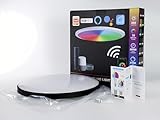
Overview: The Giousv Smart RGB Ceiling Light delivers comprehensive smart lighting in an ultra-thin flush-mount design at an accessible price point. This fixture supports 16 million colors and adjustable white light from 2700K to 6500K, accommodating both vibrant party scenes and daily task lighting. Controlled via included remote or smartphone app, it offers dynamic effects including smooth transitions, strobe, flash, and fade modes. Voice control compatibility with Alexa and Google Home eliminates the need for physical switches, while the 120V standard ensures broad residential compatibility.
What Makes It Stand Out: Its ultra-thin profile enables installation in shallow ceiling boxes where bulkier fixtures won’t fit, making it ideal for retrofit projects. The impressive 50,000-hour LED lifespan translates to over 17 years of typical use, far exceeding traditional bulbs. Dynamic lighting effects like strobe and fade provide genuine entertainment value for gaming setups or parties, features often omitted in budget-tier products.
Value for Money: At $27.99, this represents one of the most affordable true smart ceiling lights with voice control. Competing products with similar capabilities start at $40+, making this a compelling entry point. The extended lifespan and low power consumption generate long-term savings, while the 120V compatibility avoids costly electrical modifications.
Strengths and Weaknesses: Strengths:
- Extremely competitive pricing
- Ultra-thin, retrofit-friendly design
- 50,000+ hour LED lifespan
- Voice control compatibility
- Dynamic effect modes
Weaknesses:
- Lumen output not specified
- Build quality feels less premium
- Limited scene mode variety
- App ecosystem less robust
- No circadian scheduling
Bottom Line: A budget-conscious smart light that doesn’t sacrifice core features, ideal for first-time smart home buyers.
4. DESIGNERS FOUNTAIN LED Flush Mount Ceiling Light, 12 Inch Voice Controlled Smart Lighting Fixture, Brushed Nickel , LED1552RGB-BN
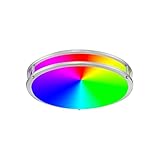
Overview: The Designers Fountain LED Flush Mount elevates smart lighting with its sophisticated brushed nickel finish and elegant dual-ring design. This 12-inch voice-controlled fixture offers 16 million colors and an impressive 64,000 shades of white, spanning the full spectrum from warm to cool. The WiZ app enables remote control and automation without requiring a hub, while direct Wi-Fi connectivity ensures reliable performance. The fixture dims from 0-100% through digital commands, eliminating traditional wall dimmers and providing precise lighting control.
What Makes It Stand Out: The premium brushed nickel construction and dual-ring aesthetic distinguish it from plastic competitors, blending seamlessly with modern décor. The WiZ platform’s location-based automation adjusts lighting based on your smartphone’s location, enabling sophisticated routines. Pre-loaded scenes including party, relax, summer, sleep, and wake modes provide instant ambiance, while custom scene creation offers personalization.
Value for Money: At $25.87, this is the most affordable voice-controlled smart ceiling light reviewed, offering premium materials at budget pricing. Comparable brushed nickel fixtures without smart features cost $35-50, while adding smart capabilities typically adds $20+. The no-hub design reduces setup complexity and cost, making high-end aesthetics accessible.
Strengths and Weaknesses: Strengths:
- Elegant brushed nickel finish
- Sophisticated dual-ring design
- WiZ app location automation
- No hub required
- 64,000 white shade precision
Weaknesses:
- Brightness specifications not detailed
- WiZ ecosystem less widespread
- Limited to 12-inch size
- Metal may reduce Wi-Fi range
- Fewer scene modes than premium brands
Bottom Line: A stylish, budget-friendly smart light prioritizing design aesthetics without sacrificing essential smart capabilities.
5. Universal Smart WiFi Ceiling Fan Remote Control Kit, Compatible with Alexa, Google Assistant and Smart Life App, No Hub Required DIMMER

Overview: This Universal Smart WiFi Ceiling Fan Remote Control Kit transforms existing ceiling fans into smart devices without full fixture replacement. Compatible with major brands like Hampton Bay, Harbor Breeze, and Hunter, it installs inside standard canopy covers. The kit controls three fan speeds and dimmable lights via Alexa, Google Assistant, or Smart Life app. Supporting dimmable LED, CFL, and incandescent bulbs, it offers broad compatibility. Real-time status sync ensures accurate app feedback, while separate fan and light controls provide granular management.
What Makes It Stand Out: Unlike complete fixture replacements, this retrofit solution preserves your existing fan investment while adding modern capabilities. The super compact receiver fits most conventional covers, avoiding aesthetic changes. Its dual control system manages fan speeds and light dimming independently, mimicking high-end smart fans. The 2.4GHz Wi-Fi ensures reliable connectivity while maintaining compatibility with most routers.
Value for Money: At $33.99, this kit delivers exceptional value by upgrading existing fans for a fraction of replacement costs. Smart ceiling fans start at $150+, making this an 80% savings. The broad brand compatibility maximizes utility across multiple rooms, while support for various bulb types prevents additional purchases.
Strengths and Weaknesses: Strengths:
- Retrofits existing ceiling fans
- Broad brand compatibility
- Multiple bulb type support
- Independent fan/light control
- Real-time status synchronization
Weaknesses:
- Requires existing fan installation
- 2.4GHz Wi-Fi only limitation
- May not fit all canopy sizes
- Installation needs electrical comfort
- No color changing capabilities
Bottom Line: The most practical smart upgrade for existing ceiling fans, delivering premium control and compatibility at a budget price.
6. AQUBT Smart Ceiling Fans with Light and Remote,20’’ Low Profile Ceiling Fan with 6-Speed & Dimmable LED, Alexa/APP Home Voice Control, App, Reversible Airflow, App Timer, for Bedroom(White)

Overview: The AQUBT Smart Ceiling Fan with Light is a 20-inch low-profile fixture designed for modern bedrooms. This white variant combines efficient air circulation with intelligent lighting controls, offering a streamlined solution for smart home enthusiasts seeking year-round comfort and convenience.
What Makes It Stand Out: This fan distinguishes itself through comprehensive smart integration, supporting both app and Alexa voice commands for hands-free operation. The 4800-lumen LED delivers 60% more brightness than conventional fan lights, with adjustable color temperatures and dimming from 10-100%. Six fan speeds paired with reversible airflow provide seasonal versatility, while the app-enabled timer offers precise scheduling down to the second—far beyond standard remote limitations.
Value for Money: At $119.99, this device merges a ceiling fan and smart light into one unit, eliminating the need for separate purchases. Comparable smart fans often exceed $150, while adding smart bulbs to a traditional fan would cost $30-50 extra. The energy-efficient design further reduces long-term operational costs, making it a financially sound investment.
Strengths and Weaknesses: Strengths include seamless smart home integration, exceptional brightness, reversible motor for year-round use, and intuitive memory functions. The 20-inch size suits bedrooms perfectly, and installation is straightforward. Weaknesses are the 2.4GHz WiFi limitation and potentially insufficient airflow for larger spaces exceeding 150 square feet.
Bottom Line: Ideal for bedroom installations, this smart ceiling fan delivers premium features at a competitive price. Recommended for tech-savvy homeowners wanting automated comfort without complex setups or multiple devices.
7. AQUBT Smart Ceiling Fans with Light and Remote,20’’ Low Profile Ceiling Fan with 6-Speed & Dimmable LED, Alexa/APP Home Voice Control, App, Reversible Airflow, App Timer, for Bedroom(Black)

Overview: The AQUBT Smart Ceiling Fan with Light in black offers identical functionality to its white counterpart, providing a 20-inch low-profile solution for modern bedrooms. This variant caters to contemporary decors with its sleek dark finish while delivering the same smart features and year-round comfort homeowners expect.
What Makes It Stand Out: Beyond the striking black aesthetic, this fan excels through comprehensive smart integration with Alexa and app control. The 4800-lumen LED system provides exceptional illumination—60% brighter than traditional fixtures—with adjustable color temperatures and 10-100% dimming. Six-speed reversible airflow ensures optimal comfort across seasons, while precise app-based scheduling down to the second surpasses conventional remote capabilities.
Value for Money: Priced at $119.99, this fan-light combo eliminates the need for separate smart devices. Traditional fans with separate smart bulbs would cost $130-180, making this an economical choice. The energy-efficient operation reduces electricity expenses over time, enhancing its long-term value proposition for budget-conscious buyers.
Strengths and Weaknesses: Advantages include robust smart connectivity, impressive brightness, reversible motor functionality, and convenient memory settings. The black finish resists visible dust better than white alternatives. The compact 20-inch size is perfect for bedrooms. Limitations include 2.4GHz WiFi exclusivity and limited coverage for rooms larger than 150 square feet.
Bottom Line: Perfect for those preferring darker aesthetics, this black smart ceiling fan combines style with intelligent functionality. A solid choice for modern bedrooms seeking automated climate and lighting control without compromising on design.
8. Wireless Dimmer Switch, Remote Light Switch and Receiver kit, Compatible with Alexa Voice Control, Smart Wall Switch Lighting Fixture for Ceiling Lights Pendant Lamps, Support 2.4G&5G

Overview: This Wireless Dimmer Switch Kit provides an affordable entry into smart lighting control without requiring complex rewiring. The system includes a remote and receiver that works with existing dimmable bulbs, offering both manual and voice-controlled operation through Alexa for enhanced convenience.
What Makes It Stand Out: The remote operates independently of WiFi, transmitting through walls without line-of-sight requirements. This detachable switch can be mounted anywhere, solving the problem of misplaced remotes. Bluetooth connectivity enables Alexa voice control and app management, while the memory function preserves settings after power outages—a feature rarely found in budget dimmers.
Value for Money: At $18.99, this kit dramatically undercuts hardwired smart switches ($25-40) while eliminating electrician costs. It transforms existing fixtures into smart lights for less than the price of a single smart bulb, delivering exceptional affordability for budget-conscious consumers.
Strengths and Weaknesses: Strengths include wireless flexibility, broad bulb compatibility (dimmable LED/halogen/incandescent/CFL), straightforward installation, and reliable memory function. The remote works without internet, ensuring basic control during outages. Weaknesses include the requirement for dimmable bulbs (non-dimmable LEDs will flicker), necessary neutral wire, and Bluetooth’s limited range compared to WiFi. The single-pole design doesn’t support three-way configurations.
Bottom Line: An excellent budget solution for renters or homeowners wanting smart dimming without electrical work. Ideal for single-fixture upgrades where rewiring isn’t feasible, provided you have compatible bulbs and a neutral wire.
9. Vanance Smart LED Ceiling Light Fixture, Modern Dimmable Flush Mount Ceiling Light, Compatible with Alexa & Google Home, Lighting for Bedroom, Kitchen, Living Room, 12 Inch

Overview: The Vanance Smart LED Ceiling Light is a 12-inch flush mount fixture that brings vibrant color control and voice automation to any room. Compatible with Alexa and Google Home, it offers dual connectivity options and music synchronization at an entry-level price point that appeals to smart home newcomers.
What Makes It Stand Out: This light excels with 16 million color choices and tunable white spectrum, controlled via voice, app, or Bluetooth. The dual WiFi and Bluetooth connectivity ensures setup flexibility—operate without internet using Bluetooth or enjoy remote access via WiFi. Music sync mode transforms your space by pulsing colors to audio beats, creating dynamic ambiance for entertainment and parties.
Value for Money: At $29.99, this fixture undercuts most color-changing smart lights by $10-20 while offering comparable features. The inclusion of both connectivity methods and music sync at this price represents exceptional value for those wanting customizable lighting without premium costs from major brands.
Strengths and Weaknesses: Advantages include affordable pricing, extensive color options, dual connectivity, timer automation, and engaging music sync functionality. Installation is straightforward for standard junction boxes. Drawbacks include unspecified lumen output (potentially dim for large rooms), limited size for expansive spaces, and reliance on proprietary app controls. The 12-inch diameter suits bedrooms and kitchens but may underwhelm in living rooms.
Bottom Line: A feature-packed smart light for budget-minded users wanting color versatility and voice control. Best suited for small to medium rooms where vibrant ambiance matters more than raw brightness.
10. Govee Smart Ceiling Light, RGBIC LED Ceiling Light Fixture, 2400LM Flush Mount Light Fixture, DIY Colors, Works with Alexa, 2200K-6500K for Bedroom, Living Room, 12 Inch, 1 Pack, Black
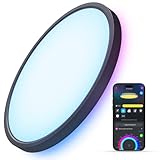
Overview: The Govee Smart Ceiling Light is a 12-inch RGBIC fixture that elevates smart lighting with advanced color segmentation and circadian rhythm features. Delivering 2400 lumens, it integrates with Alexa and the Govee Home app for sophisticated whole-home lighting orchestration and automation.
What Makes It Stand Out: The dual-layer design features RGB+WW main light and RGBIC backlight, enabling independent color zones for stunning effects. With 71 scene modes and music synchronization, it creates immersive environments. The circadian rhythm mode automatically adjusts brightness and temperature throughout the day, supporting natural sleep-wake cycles—a health-focused feature uncommon in this price category.
Value for Money: At $54.99, it commands a premium over basic smart lights but justifies the cost through RGBIC technology and advanced automation. Competing RGBIC fixtures typically cost $70-90, making this a mid-range bargain for lighting enthusiasts wanting professional-grade effects without breaking the bank.
Strengths and Weaknesses: Strengths include exceptional brightness (2400 lumens), segmented color control, extensive scene library, circadian lighting, and Govee ecosystem integration for synchronized whole-home displays. Installation is simple, and build quality feels premium. Weaknesses include incompatibility with external dimmer switches, inability to run main and backlights simultaneously, and a higher price point than entry-level alternatives. The 12-inch size may not suit large rooms requiring multiple units.
Bottom Line: Perfect for users wanting cutting-edge lighting effects and health-conscious automation. The RGBIC capability and circadian features make it worth the premium for serious smart home lighting enthusiasts seeking advanced customization.
What Are Voice-Controlled Ceiling Fixtures?
Voice-controlled ceiling fixtures are integrated lighting systems that mount directly to your ceiling and respond to verbal commands through smart assistants like Amazon Alexa, Google Assistant, or Apple Siri. Unlike smart bulbs that screw into existing sockets, these are complete units combining the housing, driver, LEDs, and wireless communication modules into a single, cohesive design. They range from flush-mount disks that sit nearly invisible against your ceiling to elaborate pendant-style fixtures with built-in voice-responsive technology.
The key differentiator is their native integration with smart home ecosystems. While a standard LED fixture simply illuminates when powered, these fixtures contain microprocessors that interpret commands, adjust brightness and color, and communicate with other devices. They’re hardwired into your home’s electrical system but controlled through wireless protocols, creating a seamless blend of permanent installation and flexible smart functionality.
The Evolution From Traditional to Smart Lighting
Traditional ceiling fixtures operated on a simple binary: on or off, controlled by a physical switch on your wall. The first evolution came with dimmer switches, introducing analog control over brightness. Then came smart bulbs—retrofit solutions that added connectivity but often created aesthetic compromises with visible bulbs in fixtures designed for incandescence.
The current generation of voice-controlled ceiling fixtures represents a fundamental redesign from the ground up. Engineers now treat the entire fixture as a smart device, not just the light source. This shift enables features impossible with retrofit solutions: ultra-thin profiles that house all components, optimized heat dissipation for LED longevity, and antennas positioned for maximum wireless range. The result is lighting that doesn’t just respond to voice commands but enhances architectural design while delivering professional-grade performance.
How Voice-Controlled Lighting Actually Works
When you say “Alexa, dim the kitchen lights to 30%,” your voice travels through a remarkably complex chain of technology before the lights respond. First, your smart speaker or display captures the audio and converts it to a digital command using natural language processing. This command gets encrypted and sent to Amazon’s cloud servers, where it’s authenticated and interpreted.
The cloud service then sends a secure command back through your home network to the smart lighting system. If you’re using a hub-based system, the hub receives this command first and translates it into the appropriate protocol—Zigbee, Z-Wave, or proprietary—before broadcasting it to the fixture. For direct Wi-Fi fixtures, the command travels straight to the light’s onboard processor. The fixture’s microcontroller then adjusts the LED driver output, changing the current flowing to the diodes and achieving your desired brightness level—all in under a second.
The Role of Smart Hubs and Bridges
Smart hubs act as translators and traffic controllers for your lighting ecosystem. Devices like SmartThings, Hubitat, or dedicated lighting bridges serve three critical functions: protocol conversion, local processing, and network stability. When your internet connection drops, a hub can still execute local commands, ensuring your lights work even during outages. Hubs also reduce Wi-Fi congestion by handling dozens of devices on low-power mesh networks, freeing your router for bandwidth-intensive tasks like streaming and video calls.
For ceiling fixtures, hubs offer another advantage: extended range. Zigbee and Z-Wave create mesh networks where each powered device relays signals to others, allowing fixtures in distant rooms to receive commands even when far from your router. This is particularly valuable in multi-story homes where Wi-Fi signals struggle to penetrate floors and walls.
Direct Wi-Fi vs. Hub-Based Systems
Direct Wi-Fi fixtures connect straight to your home network, offering simplicity and lower upfront costs. They work immediately after installation without additional hardware purchases. However, each fixture consumes an IP address and contributes to network congestion. In homes with 20+ smart devices, this can strain consumer-grade routers and cause latency issues.
Hub-based systems require an initial investment in a bridge device but scale more efficiently. A single hub can manage 50+ fixtures while using only one Wi-Fi connection. They also enable more sophisticated automation through local processing and create a dedicated, reliable network for your lighting. The trade-off is complexity: you’ll need to understand which hub works with which fixtures and potentially manage multiple apps during initial setup.
Compatibility Matters: Matching Fixtures to Your Ecosystem
The single biggest mistake homeowners make is purchasing a beautiful fixture that doesn’t play nice with their existing smart home ecosystem. Unlike standard electrical devices that work universally, voice-controlled fixtures are locked into specific platforms. A fixture designed exclusively for Alexa may not respond to Siri, even if both use the same underlying connectivity protocol.
Before considering any fixture, audit your current ecosystem. Do you have Amazon Echos throughout your house? Are you invested in Apple’s HomeKit with multiple iPhones and iPads? Or have you committed to Google’s Nest ecosystem? Your answer determines which fixtures will integrate seamlessly and which will require workarounds or third-party platforms that dilute the user experience.
Amazon Alexa Integration
Alexa-compatible fixtures offer the broadest compatibility and most extensive third-party support. The Alexa Smart Home API allows manufacturers to create custom skills that unlock advanced features like dynamic lighting scenes and music synchronization. When evaluating Alexa fixtures, look for “Certified for Humans” badges, which indicate frustration-free setup and reliable performance.
Alexa’s groups and routines shine with ceiling fixtures. You can create layered commands like “Alexa, it’s movie time” that dim multiple ceiling fixtures, turn on bias lighting, and set your smart TV to cinema mode simultaneously. The platform also supports occupancy-based triggers through Alexa Guard, automatically turning lights on when motion is detected.
Google Assistant and Matter Support
Google’s ecosystem emphasizes contextual understanding and predictive automation. Fixtures integrated with Google Home can respond to natural language variations: “Hey Google, make the dining room brighter,” “increase dining room brightness,” or “dining room lights to 100%” all work interchangeably. Google’s recent adoption of the Matter standard means newer fixtures will work across ecosystems, though advanced features may remain platform-specific.
Look for fixtures with the “Works with Hey Google” certification and Matter logo. These devices will continue functioning even if you switch platforms in the future, protecting your investment. Google Assistant also excels at location-based commands—“turn off all lights” will only affect lights in your current room if you’ve configured room assignments properly.
Apple HomeKit and Siri Control
HomeKit fixtures prioritize privacy and local control. All processing happens on your HomePod, Apple TV, or iPad acting as a home hub, meaning your lighting commands never touch Apple’s servers. This architecture ensures reliability and security but requires all devices to be on the same network and within Bluetooth range if using Thread protocol.
Siri’s integration offers unique advantages: you can create location-based automations that trigger when you arrive home, and use Adaptive Lighting to automatically adjust color temperature throughout the day. The trade-off is stricter certification requirements, often resulting in higher prices and fewer design options compared to Alexa or Google ecosystems.
Core Performance Features to Evaluate
Beyond ecosystem compatibility, the fundamental performance characteristics determine whether your fixture will delight or disappoint. Start with lumen output: measure your room’s square footage and multiply by 20 for living spaces, 30 for kitchens, and 10 for bedrooms. A 200-square-foot living room needs fixtures totaling 4,000 lumens for adequate illumination.
Dimming quality separates premium fixtures from budget options. Look for fixtures with dimming ranges below 5%—many cheap options bottom out at 20%, leaving rooms too bright for movie watching or late-night navigation. Flicker-free dimming is essential; scan reviews for mentions of stroboscopic effects or compatibility issues with existing dimmer switches.
Brightness and Dimming Capabilities
High-quality fixtures deliver smooth dimming from 0.1% to 100% in 0.5% increments, creating imperceptible transitions. They use pulse-width modulation (PWM) frequencies above 1,000Hz to eliminate visible flicker that can cause eye strain and headaches. Premium models also remember their last brightness level after power outages, maintaining your preferred settings without reprogramming.
Consider fixtures with multiple LED channels—separate warm and cool white diodes plus RGB channels. This architecture enables precise color temperature tuning from 1800K (candlelight) to 6500K (daylight), matching natural light cycles and supporting circadian health. Single-channel fixtures only dim brightness, limiting your ability to create ambiance.
Color Temperature and RGB Options
Color temperature significantly impacts mood and productivity. Fixtures offering tunable white (2700K-5000K) let you shift from energizing cool light during morning routines to relaxing warm light for evening wind-down. RGBWW (Red, Green, Blue, Warm White, Cool White) fixtures add millions of color options for parties, holidays, or accent lighting.
Evaluate color rendering index (CRI) ratings—aim for 90+ for accurate color representation, crucial in kitchens, bathrooms, and closets where you need to see true colors. Some fixtures achieve RGB effects by mixing colored light, which can produce muddy whites and poor CRI. True tunable white fixtures maintain high CRI across all temperatures, ensuring your home always looks its best.
Smart Features and Integration Capabilities
Modern voice-controlled fixtures offer capabilities that transform them from simple lights into environmental control centers. Occupancy sensing uses integrated passive infrared (PIR) sensors to detect movement, automatically turning lights on when you enter and off after you leave. This feature works even without voice commands, providing hands-free convenience and energy savings.
Ambient light sensors adjust fixture brightness based on available natural light, maintaining consistent illumination levels throughout the day. When paired with voice control, you can override these automatic adjustments with commands like “ignore the sunlight, dim lights to 20%,” giving you manual control when needed.
Scene Setting and Automation
Scene setting allows you to save and recall complex lighting configurations with a single phrase. “Dinner party” might set dining room fixtures to warm 2700K at 80% brightness while dimming kitchen task lighting to 30%. The best fixtures store scenes locally, executing them instantly without cloud delays.
Advanced automation engines let you schedule scenes based on time, sunrise/sunset, or triggers from other smart devices. Program your hallway ceiling fixtures to gradually brighten to 10% at 6:30 AM, simulating dawn and easing your wake-up routine. Or create a “goodnight” routine that dims all lights over 10 minutes, giving you time to settle into bed.
Circadian Rhythm and Wellness Lighting
Circadian rhythm lighting automatically adjusts color temperature and brightness throughout the day to support your natural sleep-wake cycle. Morning light is cool and bright (5000K+, 100% brightness) to suppress melatonin and increase alertness. Evening light shifts to warm amber (2200K, 30% brightness) to promote melatonin production and prepare your body for sleep.
Look for fixtures with built-in circadian algorithms that calculate sunrise/sunset times based on your location. Some premium models integrate with fitness trackers or sleep apps, adjusting lighting based on your actual sleep data rather than generic schedules. This feature transforms your ceiling fixtures into wellness devices that actively improve your health and sleep quality.
Understanding Connectivity Protocols
The wireless protocol determines your fixture’s reliability, range, and future compatibility. Each protocol represents trade-offs between power consumption, bandwidth, and network topology. Understanding these differences prevents purchasing fixtures that won’t perform reliably in your specific home environment.
Wi-Fi Enabled Fixtures
Wi-Fi fixtures connect directly to your 2.4GHz network (some support 5GHz) and offer the highest bandwidth, enabling features like firmware updates and complex animations without hub intervention. They typically support 802.11n or newer standards, with external antennas providing 100+ feet of range. However, they consume more power and may not be suitable for battery backup systems.
The main drawback is network congestion. Each fixture maintains a constant connection to your router, and consumer routers often limit the number of simultaneous connections to 32-64 devices. In smart homes with cameras, thermostats, and other devices, adding 10-15 Wi-Fi fixtures can strain the network. Consider a dedicated IoT network or mesh router system if choosing Wi-Fi fixtures.
Zigbee and Z-Wave Options
Zigbee operates on the 2.4GHz band but uses mesh networking, where each powered device repeats signals to extend range. A Zigbee mesh can span hundreds of feet and support 65,000+ devices, making it ideal for whole-home installations. Zigbee 3.0, the current standard, offers improved security and interoperability between brands.
Z-Wave uses sub-1GHz frequencies (908MHz in North America), providing better wall penetration and less interference from Wi-Fi networks. Its mesh network supports 232 devices per network with range extending up to 100 feet per hop. Z-Wave’s stricter certification ensures devices from different manufacturers work together seamlessly, though the ecosystem is smaller than Zigbee.
The Matter Standard: Future-Proofing Your Investment
Matter represents the industry’s attempt to create universal compatibility. Backed by Apple, Google, Amazon, and Samsung, Matter-certified fixtures will work with all major platforms while maintaining local control. The standard uses Thread (a low-power mesh network) for device communication and Wi-Fi for high-bandwidth applications.
When evaluating fixtures, prioritize those with Matter certification or manufacturers committed to Matter updates. This ensures your ceiling fixtures won’t become obsolete if you switch smart home platforms or if a manufacturer discontinues support. Matter also enables multi-admin control, allowing family members on different platforms to control the same fixtures without complex workarounds.
Design Aesthetics and Form Factors
Voice-controlled ceiling fixtures must balance technology with visual appeal. Flush-mount designs, typically 4-12 inches in diameter, sit nearly flat against the ceiling and work best in rooms with ceiling heights under 9 feet. Semi-flush fixtures drop 4-8 inches, creating a subtle pendant effect suitable for transitional spaces like entryways.
Recessed downlights offer the cleanest aesthetic, disappearing into the ceiling for a minimalist look. These require 4-6 inch cutouts and work with standard recessed housing, making them ideal for retrofits. For statement lighting, voice-controlled chandeliers and pendant fixtures combine traditional designs with hidden smart modules, though these command premium prices.
Consider the fixture’s material and finish. Metal housings dissipate heat better than plastic, extending LED lifespan. Glass or acrylic diffusers should be frosted to hide individual LED hotspots while maintaining high light transmission (85%+). The best fixtures hide microphones and sensors within the design, maintaining clean lines without visible technology.
Installation Considerations for Retrofits
Retrofitting voice-controlled fixtures into existing ceilings requires evaluating your current electrical boxes. Most smart fixtures require neutral wires for their control modules—many older homes only have hot and ground wires. You’ll need to verify box compatibility before purchase or budget for electrical upgrades.
Ceiling box capacity is another concern. Smart fixtures are deeper than traditional fixtures due to integrated drivers and wireless modules. Standard 2-inch deep boxes may not accommodate thicker designs. Look for fixtures under 3 inches deep for retrofit applications, or plan to install ceiling medallions to cover gaps.
Electrical Requirements and Safety
Voice-controlled fixtures require stable 120V AC power with minimal voltage fluctuations. Homes with frequent power surges should consider whole-house surge protectors, as the sensitive electronics in smart fixtures can be damaged by spikes. Most fixtures draw 15-30 watts at full brightness, well within standard 15-amp circuit capacities.
Installation should always be performed by a licensed electrician or experienced DIYer comfortable with electrical work. Turn off power at the breaker, not just the wall switch, as some smart switches leak small currents that can cause shock. Verify the fixture’s IP rating for bathroom or outdoor installations—IP44 or higher resists moisture and dust.
Ceiling Height and Room Size Calculations
Mounting height dramatically affects perceived brightness and coverage area. For ceilings 8-9 feet high, space fixtures every 4-6 feet to eliminate dark spots. In rooms with 10+ foot ceilings, increase spacing to 6-8 feet and choose fixtures with 120+ degree beam angles for adequate coverage.
Calculate fixture placement using the “spacing criterion” formula: divide ceiling height by 2 to determine maximum spacing between fixtures. An 8-foot ceiling means fixtures should be no more than 4 feet apart for even illumination. For task lighting over kitchen islands or desks, position fixtures directly above work surfaces and reduce spacing to 3 feet.
Installation Considerations for New Construction
New construction offers the freedom to design your lighting layout from scratch. Run neutral wires to every ceiling box—even if current code doesn’t require it—to future-proof for smart fixtures. Install ceiling boxes rated for fan support (even for light-only fixtures) as they’re deeper and sturdier, accommodating smart fixture dimensions.
Consider pre-wiring for low-voltage control wires if planning a whole-home lighting system. While voice control eliminates the need for complex keypads, low-voltage wiring enables backup manual control through centralized panels. Install conduit between fixture locations and your electrical panel to allow easy upgrades to future protocols without opening walls.
Electrical Requirements and Safety
New construction allows you to specify dedicated lighting circuits with arc-fault circuit interrupters (AFCIs) that protect smart fixture electronics from arcing faults. Use 12-gauge wire instead of 14-gauge for lighting circuits to reduce voltage drop and support higher-wattage fixtures. Install neutral wires at every switch location for smart switch compatibility, even if using voice control as primary interface.
Plan your lighting loads carefully. While LED fixtures draw minimal power, large homes with 30+ fixtures can approach circuit limits when all lights operate simultaneously. Spread fixtures across multiple 15-amp circuits, calculating 1440 watts maximum per circuit (80% of 1800 watts) to maintain safety margins.
Ceiling Height and Room Size Calculations
In new construction, design lighting zones based on room function rather than fixture count. A 200-square-foot living room might need 4,000 lumens total, but distribution matters more than raw output. Place fixtures in a grid pattern with 4-foot spacing for 8-foot ceilings, adjusting for furniture placement and architectural features.
For vaulted or cathedral ceilings, position fixtures along the lower perimeter rather than the peak. This reduces perceived ceiling height and creates more usable light. In two-story foyers, use pendant-style voice-controlled fixtures that drop into the space, providing both illumination and visual interest at human scale.
Energy Efficiency and Cost Analysis
Voice-controlled ceiling fixtures consume 80-90% less energy than incandescent equivalents while delivering superior light quality. A 15-watt smart fixture producing 1,500 lumens replaces a 100-watt incandescent bulb, saving $12-15 annually per fixture at average electricity rates. Over a 15-year LED lifespan, energy savings exceed $180 per fixture.
However, the smart premium adds $50-150 per fixture compared to standard LED equivalents. Calculate payback periods by dividing the price difference by annual energy savings. A $75 premium saving $12 annually pays back in 6.25 years—reasonable given the 15+ year lifespan. Factor in convenience value: automated scheduling can reduce energy waste by an additional 20-30% by ensuring lights never stay on in empty rooms.
Privacy and Security in Voice-Controlled Lighting
Voice-controlled fixtures themselves don’t contain microphones—the voice processing happens on your smart speaker or phone. However, the fixtures do collect usage data: on/off times, brightness levels, and automation schedules. This data typically resides on manufacturer servers, though premium brands offer local-only control options.
Secure your lighting network by creating a separate IoT Wi-Fi network with a strong password. Disable unused features like remote access if you only control lights at home. For maximum privacy, choose Thread-based Matter fixtures that process commands locally without cloud dependency. Regularly update firmware—manufacturers patch security vulnerabilities, but updates often require manual approval through their apps.
Troubleshooting Common Voice Control Issues
Unresponsive fixtures often stem from network issues rather than hardware failure. If a fixture stops responding to voice commands, first check its app for connectivity status. Wi-Fi fixtures may have dropped off the network due to IP address conflicts—assigning static IPs through your router prevents this. Zigbee and Z-Wave fixtures might have lost their mesh connection; power cycling the fixture (turning off at the breaker for 30 seconds) forces it to rejoin the network.
Delayed responses indicate network congestion or cloud processing delays. For Wi-Fi fixtures, reduce router load by moving other devices to 5GHz band. Enable local control in your smart home app settings to bypass cloud processing for on/off commands. If problems persist, check for firmware updates that optimize communication protocols and reduce latency.
The Future of Voice-Controlled Ceiling Fixtures
The next generation of fixtures will integrate environmental sensors directly into the housing: air quality monitors, humidity sensors, and even basic motion detection for security applications. These multi-function devices will communicate through Matter over Thread, creating a dense sensor network that informs whole-home automation beyond lighting.
Advances in micro-LED technology will enable fixtures just 1/4-inch thick that can be painted over, disappearing completely into your ceiling. Voice control will evolve from simple commands to contextual awareness—fixtures will adjust based on who’s in the room, what activity they’re doing, and even their biometric data from wearables. The ceiling fixture is transforming from a light source into an ambient computing node that enhances your environment without demanding attention.
Frequently Asked Questions
1. Do voice-controlled ceiling fixtures work during power outages? No, they require electricity to operate. However, some models with battery backup can maintain basic on/off functionality for 2-4 hours during outages, though voice control requires your router and smart speakers to also have backup power.
2. Can I install voice-controlled fixtures in bathrooms? Yes, but ensure they’re rated at least IP44 for moisture resistance. For shower areas, use IP65 or higher. The voice control components are sealed, but humidity can still affect wireless performance over time.
3. Will these fixtures increase my Wi-Fi bill? No, smart lighting uses minimal data—typically less than 50MB per month per fixture. The impact on your internet bill is negligible, though they do count toward device limits on your router.
4. What happens if the manufacturer goes out of business? The fixture will continue working with your current smart home platform, but you won’t receive firmware updates or security patches. Matter-certified fixtures are most resilient, as they don’t depend on manufacturer-specific clouds.
5. Can renters install voice-controlled ceiling fixtures? Only with landlord permission and professional installation, as they require electrical work. Consider smart bulbs in existing fixtures or plug-in pendant lamps with smart switches as renter-friendly alternatives.
6. How long do voice-controlled ceiling fixtures typically last? LED lifespan averages 25,000-50,000 hours (15-25 years at 4 hours daily use). The smart components typically last 7-10 years before wireless standards evolve beyond their capabilities.
7. Do I need a smart speaker in every room? No, a single smart speaker can control fixtures throughout your home. However, room-specific commands require a speaker in that room or manual room assignment in your smart home app.
8. Can voice-controlled fixtures be used with existing wall switches? Yes, but you’ll need smart switches that maintain power to the fixture. Standard switches cut power completely, preventing voice control. Smart switches allow manual control while keeping the fixture powered for wireless commands.
9. Are voice-controlled fixtures safe for homes with children? Absolutely. They eliminate the need for children to touch switches or climb furniture to reach pull chains. Many parents use voice commands to create bedtime routines that dim lights gradually, signaling sleep time.
10. How do I reset a voice-controlled ceiling fixture? Most have a reset sequence involving rapid on/off cycles at the breaker or switch—typically 5-10 cycles within 10 seconds. Consult the manual for specific patterns, as reset procedures vary by manufacturer and model.