Imagine coming home after a long day to perfectly clean floors without lifting a finger—or even seeing a dustbin. That’s the promise of self-emptying robot vacuums, where the tedious chore of manually dumping debris becomes a thing of the past. These intelligent machines don’t just navigate your carpets and hard floors; they autonomously return to a specialized base that sucks dust, crumbs, and pet hair into a sealed, high-capacity bag, often lasting weeks between changes. For busy households, allergy sufferers, or anyone craving true hands-off maintenance, this technology transforms robotic cleaning from a helpful tool into a genuinely set-and-forget solution. The convenience isn’t just a luxury—it’s a fundamental shift in how we maintain our living spaces.
Gone are the days when robot vacuums merely supplemented your cleaning routine. Self-emptying models tackle the biggest pain point: the frequent, messy intervention required with standard bots. By integrating a powerful vacuum base that activates when the robot docks, these systems handle the dirtiest part of the job, keeping allergens contained and reducing your exposure. But with so many features and claims flooding the market, how do you cut through the noise to find a system that genuinely fits your home and lifestyle? Understanding the core technology, evaluating critical performance factors, and setting realistic expectations are essential steps before investing in this premium cleaning evolution. Let’s demystify what makes these systems work and how to choose wisely.
Top 10 Self-Emptying Robot Vacuums
Detailed Product Reviews
1. Shark Navigator Robot Vacuum and Self-Empty Base with Bagless 60-Day Capacity Self-Empty Base, SmartPath Navigation, Powerful Pet Hair Pickup, Anti-Hair Wrap, For Carpets & Hard Floors, Grey, RV2120AE

Overview: The Shark RV2120AE targets pet owners and busy households with its self-emptying base and focus on pet hair removal. It combines strong suction for carpets and hard floors with Shark’s signature anti-hair wrap technology. What Makes It Stand Out: Its bagless 60-day capacity self-empty base eliminates recurring bag costs, a significant advantage over competitors requiring disposable bags. The SmartPath Navigation using spot LiDAR ensures systematic row-by-row cleaning for superior coverage compared to random-path models, while the self-cleaning brushroll actively prevents hair tangles during operation. Value for Money: Positioned competitively against bag-dependent rivals, the elimination of ongoing bag expenses enhances long-term value. The robust pet hair performance and genuine self-emptying justify the price for households seeking reduced maintenance, though initial cost is higher than basic models. Strengths and Weaknesses: Strengths: Bagless self-empty base (60-day capacity), excellent anti-hair wrap brushroll, strong suction for carpets/hard floors, efficient SmartPath navigation. Weaknesses: Lidar navigation, while good, isn’t the most advanced on the market; self-empty base can be bulky; app functionality is reportedly less refined than some competitors. Bottom Line: An excellent choice for pet owners prioritizing low-maintenance cleaning and effective hair pickup, offering genuine value through its bagless design and reliable performance, making it a top contender in the mid-to-high tier market.
2. MAMNV Robot Vacuum and Mop, 11500 Pa Suction, 3-in-1 Robotic Vacuum with Smart LiDAR Navigation, 90 Day Self-Emptying,160 Min Runtime,App/Alexa/Voice Control, Ideal for Pet Hair, Carpet & Hard Floor

Overview: The MAMNV D13S MAX is a feature-packed 3-in-1 robot offering vacuuming, sweeping, and mopping with an exceptionally long 90-day self-emptying cycle, targeting large homes needing comprehensive, hands-off cleaning. What Makes It Stand Out: The standout feature is the industry-leading 90-day (10-week) hands-free operation promised by its massive self-empty base capacity. Combined with very strong 11,500Pa suction and true simultaneous vacuum-mop functionality via a dual-tank system, it delivers unparalleled convenience for extensive coverage. Value for Money: While priced premium, the inclusion of a complete ecosystem (dust bags, brushes, mops, filters) and the extended 90-day maintenance interval offer strong long-term value, especially for large or multi-floor homes where frequent emptying is a chore. It competes well against similarly specced models costing more. Strengths and Weaknesses: Strengths: Unmatched 90-day self-empty capacity, powerful 11,500Pa suction, effective simultaneous vacuum/mop, advanced LiDAR mapping with robust zone control, comprehensive accessory kit. Weaknesses: Mopping effectiveness is limited on very dirty floors; large base station footprint; some users report occasional navigation quirks in complex layouts. Bottom Line: Highly recommended for large households seeking maximum hands-off cleaning time and strong suction, especially those needing mopping. Its extended self-empty cycle and feature completeness make it a premium investment with significant convenience payoff.
3. eufy L60 Robot Vacuum with Self Empty Station, Hair Detangling Technology, Up to 60 Days Hands Free Cleaning, 5,000 Pa Suction, Remove Hair, Dust

Overview: The eufy L60 focuses on solving the common pain point of hair缠绕 with its unique Hair Detangling Technology at the self-empty station, paired with solid 60-day hands-free operation for homes with shedding pets or long hair. What Makes It Stand Out: The innovative Hair Detangling Technology, which actively cuts hair缠绕 from the roller brush during the self-emptying process at the base station, is a genuine differentiator. This significantly reduces manual maintenance compared to models where you must clean the brushroll frequently. Value for Money: Offering a compelling balance, the eufy L60 provides core premium features (LiDAR navigation, 60-day self-empty, app control) at a more accessible price point than Shark or Roborock. The included dust bags and focus on solving hair缠绕 deliver excellent value, particularly for pet owners. Strengths and Weaknesses: Strengths: Unique Hair Detangling Technology at base, true 60-day hands-free operation with bagged base, precise iPath Laser Navigation, strong value proposition, quiet operation. Weaknesses: 5,000Pa suction is adequate but less powerful than some competitors; mopping is not included; app interface can feel less polished. Bottom Line: A top recommendation for pet owners frustrated by hair缠绕 on brushrolls. Its specialized detangling feature, reliable self-emptying, and strong value make it an efficient and low-maintenance solution for hair-heavy environments.
4. Bagotte Robot Vacuum and Mop, Robot Vacuum Self Emptying, 6000Pa Powerful Suction, 90-Day Hands-Free, Advanced Smart Mapping, LiDAR Navigation Robotic Vacuum for Pet Hair, Dust, Carpet, WiFi/App/Alexa

Overview: The Bagotte robot vacuum/mop combo promises extended 90-day hands-free cleaning with 6000Pa suction and simultaneous vacuum-mop functionality, targeting pet owners needing both dry and wet cleaning with minimal intervention. What Makes It Stand Out: Its claim of 90-day hassle-free operation via the self-emptying station is a major selling point, potentially exceeding many competitors. The 4-in-1 functionality (sweep, vacuum, mop, self-clean) aims to consolidate cleaning tasks into one truly autonomous device for comprehensive floor care. Value for Money: Positioned as a high-value package, it includes mopping alongside self-emptying at a competitive price. The 90-day claim offers significant convenience value for large, less messy homes, though real-world duration depends heavily on debris levels. It presents a strong alternative to pricier 3-in-1 models. Strengths and Weaknesses: Strengths: Aggressive 90-day self-empty claim, 4-in-1 cleaning capability (vacuum + mop), strong 6000Pa suction, precise LiDAR navigation, good app/voice control integration. Weaknesses: 90-day capacity is likely optimistic in pet-heavy or very dirty homes; mopping performance is basic; self-cleaning of mop pad at station is limited. Bottom Line: A solid choice for those prioritizing extended hands-off time and needing basic mopping, especially in moderately messy homes. Manage expectations on the 90-day claim, but it delivers good core functionality and value for the price.
5. Shark AI Ultra Voice Control Robot Vacuum with Matrix Clean Navigation, Home Mapping, 60-Day Capacity, XL Self-Empty Base for Homes with Pets, Carpet & Hard Floors, Cool Grey, AV2511AE
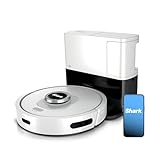
Overview: The Shark AV2511AE builds on Shark’s reputation for pet hair mastery, featuring Matrix Clean navigation for thorough coverage, voice control, and a large bagless 60-day self-empty base designed specifically for homes with pets and mixed flooring. What Makes It Stand Out: The Matrix Clean Navigation is its key differentiator, using a precise grid pattern with multiple passes over high-traffic areas to ensure deeper cleaning, particularly effective on embedded pet hair in carpets. Combined with Shark’s proven anti-hair wrap brushroll and bagless base, it targets deep dirt removal relentlessly. Value for Money: The bagless 60-day base eliminates ongoing costs, enhancing long-term value. While premium-priced, the focus on deep carpet cleaning with Matrix Clean and robust pet hair performance justifies the cost for households where thoroughness on carpets is paramount, offering better value than bag-dependent models with similar features. Strengths and Weaknesses: Strengths: Excellent deep-cleaning Matrix Clean pattern, powerful pet hair pickup, bagless 60-day self-empty base, strong all-surface suction, good object detection. Weaknesses: LiDAR mapping can be slower to initialize than some; voice control implementation is basic; base station is large. Bottom Line: Highly recommended for pet owners with significant carpeting who prioritize deep, thorough cleaning over absolute navigation speed. Its unique Matrix Clean and bagless convenience make it a standout for achieving visibly cleaner carpets with minimal effort.
6. MONSGA Robot Vacuum and Mop Combo, 6000Pa Robotic Vacuum with 3.5L Self Emptying Station, Lidar Navigation Robot Vacuum Cleaner, 180mins Runtime, APP/Remote/Voice Control, for Hard Floors and Carpets
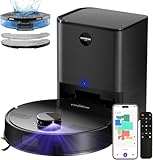
Overview: The MONSGA Robot Vacuum and Mop Combo is a high-performance 3-in-1 cleaning solution designed for hands-free maintenance of hard floors and carpets. It integrates sweeping, vacuuming, and mopping with robust automation features, targeting busy households seeking minimal intervention.
What Makes It Stand Out: Its unmatched 6000Pa suction (19,500 RPM motor) tackles embedded dirt and pet hair effortlessly, while the V-shaped rubber-bristle brush prevents tangles. The 3.5L self-emptying dock enables 60 days of maintenance-free operation, and LiDAR navigation creates precise multi-floor maps in 10 minutes. Full app customization—no-go zones, room-specific settings, and 5-map storage—adds exceptional versatility.
Value for Money: Priced competitively against premium models, it delivers superior suction power and a capacious dustbag at a mid-range cost. The inclusion of mopping and 180-minute runtime outperforms similarly priced units lacking self-emptying, though budget models may undercut it for basic needs.
Strengths and Weaknesses: Strengths: Exceptional suction for pet hair; seamless self-emptying; intuitive app controls; effective mopping customization. Weaknesses: Water tank capacity (270ml) limits large-area mopping; 2.4GHz Wi-Fi requirement may frustrate some users; initial mapping occasionally falters in complex layouts.
Bottom Line: Ideal for pet owners and multi-floor homes needing thorough, automated cleaning. Despite minor app limitations, its power, self-sufficiency, and mopping versatility justify the investment for hands-off convenience.
7. Shark UR2360S Ultra Robot Vacuum, with Matrix Clean, Precision Mapping, 30-Day Capacity HEPA Bagless Self Empty Base, Self-Cleaning Brushroll Perfect for Pet Hair, WiFi, Black (Renewed)

Overview: This renewed Shark UR2360S offers budget-friendly automation with Matrix Clean technology and a self-emptying base, targeting eco-conscious buyers seeking reliable pet hair management without new-model pricing.
What Makes It Stand Out: Shark’s Matrix Clean ensures meticulous coverage via grid-pattern passes, while the self-cleaning brushroll actively combats pet hair tangles. The bagless 30-day self-empty base uses HEPA filtration to trap allergens, and 360° LiDAR enables accurate day/night mapping—uncommon in renewed units at this price.
Value for Money: As a renewed product, it provides exceptional value—retailing near half the cost of new equivalents. The HEPA filtration and pet-hair focus justify the price for allergy sufferers, though the 30-day base capacity lags behind newer 60+ day competitors.
Strengths and Weaknesses: Strengths: Outstanding pet hair handling; quiet operation; precise LiDAR mapping; eco-friendly renewal option. Weaknesses: Bagless base requires frequent washing (vs. disposable bags); shorter 90-minute runtime; app interface feels dated compared to rivals.
Bottom Line: A smart choice for pet owners prioritizing affordability and allergen control. While the self-empty base demands more upkeep, its renewed status delivers remarkable bang for buck for smaller homes.
8. Robot Vacuum and Mop, Robotic Vacuum with Mapping, Self-Emptying Station for 90 Days Hands-Free Cleaning, LiDAR Navigation, No-Go Zones, Wi-Fi/App/Alexa Voice Control, for Carpets and Hard Floors

Overview: The BL20 Pro Robot Vacuum and Mop emphasizes extreme hands-off operation with a 90-day self-emptying station, catering to users wanting months of set-and-forget cleaning across carpets and hard floors.
What Makes It Stand Out: The sealed 90-day dustbag eliminates mess during disposal, while 6000Pa suction rivals premium models. LiDAR navigation promises 70% faster cleaning via optimized routes, and app-based no-go zones prevent restricted-area access—a rarity in this segment. The all-in-one mop/vacuum design avoids device switching.
Value for Money: It competes aggressively by offering 90-day autonomy at a mid-tier price, undercutting brands like iRobot. The mopping integration adds value over vac-only rivals, though the 2.4GHz Wi-Fi limitation slightly reduces convenience for modern smart homes.
Strengths and Weaknesses: Strengths: Industry-leading 90-day self-emptying; efficient LiDAR pathing; strong suction for price; versatile no-go zones. Weaknesses: Mopping lacks scrubbing action (passive only); app reliability inconsistent; water tank prone to leakage on deep carpets.
Bottom Line: Best for large households prioritizing longevity between maintenance. Despite minor mopping flaws, its unrivaled 90-day runtime makes it a top value pick for truly hands-off cleaning.
9. iRobot Roomba 105 Vac Robot Vacuum with AutoEmpty Dock - Self-Empties for 75 Days, Easy to use, Intense Power-Lifting Suction, LiDAR Navigation, Multi-Surface Cleaning, Cleans in Neat Rows

Overview: The Roomba 105 with AutoEmpty Dock delivers iRobot’s signature reliability in a streamlined package, focusing on allergen capture and intuitive operation for allergy-prone households.
What Makes It Stand Out: Its AutoEmpty dock uses disposable bags to trap 99% of allergens (down to 0.7 microns), enabling 75 days of hands-free use. The 70X power-lifting suction (vs. Roomba 600 series) combined with multi-surface brushes excels on edges and carpets, while ClearView LiDAR ensures systematic row-by-row cleaning without falls.
Value for Money: Premium-priced but justified by iRobot’s trusted allergen filtration and durability. It costs more than MONSGA or BL20 but offers superior edge-cleaning and brand reliability—ideal for users prioritizing health over mopping versatility.
Strengths and Weaknesses: Strengths: Best-in-class allergen control; effortless scheduling; exceptional edge cleaning; quiet row-based navigation. Weaknesses: No mopping capability; lower suction (2000Pa) than competitors; app lacks advanced room customization.
Bottom Line: The go-to for allergy sufferers needing pure vacuuming excellence. Skip if you want mopping, but for dust/pet dander removal with minimal fuss, it’s unmatched in its niche.
10. roborock Q7 M5+ Robot Vacuum and Mop, Upgraded from Q5 Max+, Up to 7-9 Weeks Self-Empty, 10000Pa Suction, Dual Anti-Tangle System for Pet Hair & Carpet, PreciSense LiDAR Navigation, App Control, White

Overview: The Roborock Q7 M5+ represents a powerhouse upgrade with hyper-suction and dual anti-tangle tech, targeting pet owners in large homes demanding deep carpet cleaning and extended autonomy.
What Makes It Stand Out: A staggering 10000Pa suction lifts deeply embedded debris, while JawScrapers brush and 0% hair-tangling side brush conquer long pet hair. The 2.7L RockDock Plus supports 7–9 weeks of self-emptying, and PreciSense LiDAR creates dynamic maps for pet-friendly navigation. Mopping captures residual dust traditional vacuums miss.
Value for Money: Positioned at the premium end, it justifies cost with class-leading suction and pet-hair durability. Outperforms Roomba 105 in suction and BL20 in tangle resistance, though MONSGA offers better value for light-pet households.
Strengths and Weaknesses: Strengths: Unrivaled 10000Pa suction; superior anti-tangle system; efficient mopping synergy; precise room-specific mapping. Weaknesses: White finish shows scuffs easily; dock slightly bulky; mopping pad requires manual washing.
Bottom Line: The ultimate pick for pet owners in carpeted homes needing aggressive cleaning. Despite premium pricing, its suction power and hair resistance make it a worthy investment for high-maintenance floors.
Understanding Self-Emptying Technology
How the Self-Emptying Base Functions
The magic happens when the robot docks. Instead of just recharging, it aligns with a port on the base where a powerful external vacuum motor engages. This motor creates significant suction—often much stronger than the robot’s onboard motor—pulling debris from the robot’s small dustbin through a channel and into a large, sealed disposable bag within the base. This process typically takes 10-30 seconds and is designed to be quiet enough for nighttime operation.
The Role of Sealed Systems and Allergen Control
A truly effective self-emptying system isn’t just about capacity; it’s about containment. High-quality bases use multi-layer filtration within the bag compartment, often including HEPA-grade filters, to trap microscopic dust, pollen, and dander. Crucially, the entire transfer process happens within a sealed pathway, preventing allergens from escaping back into your air during emptying—a vital feature for sensitive individuals.
Bag Capacity and Longevity Considerations
Disposable bags vary significantly in size, ranging from holding a few weeks’ worth of debris in a small apartment to potentially two months in a larger, less dusty home. Consider your floor type (carpet vs. hard floors), pet presence, and household size. Larger bags mean fewer changes, but also a bulkier base unit. Some systems use proprietary bags, while others offer universal compatibility, impacting long-term cost.
Key Performance Features to Evaluate
Suction Power Dynamics: Robot vs. Base
Don’t equate the robot’s suction (measured in Pascals or Air Watts) with the base’s emptying power. A robot might have moderate suction for daily cleaning but rely on the base’s stronger vacuum for final debris transfer. Ensure the robot’s suction is sufficient for your primary flooring and debris types—higher isn’t always better if noise becomes an issue.
Navigation and Mapping Intelligence
Advanced mapping (using LiDAR or sophisticated camera-based systems) is non-negotiable for true efficiency. It allows the robot to learn your home’s layout, define no-go zones (like pet bowls or delicate rugs), schedule room-specific cleans, and navigate complex furniture with precision. Poor navigation leads to missed spots and inefficient battery use, undermining the self-emptying benefit.
Battery Life and Recharge & Resume Capability
A robust battery (typically 120+ minutes) is essential for larger homes. Crucially, the robot must support “Recharge & Resume.” If it runs low mid-clean, it should dock, empty itself if necessary, recharge, and then automatically continue cleaning the unfinished area—ensuring complete coverage without manual intervention.
Practical Home Integration Factors
Base Station Placement Requirements
The base isn’t just a charger; it’s a bulky unit needing specific placement. It requires 3-4 feet of clear space on both sides and several feet in front for the robot to dock reliably. It must be on a hard floor surface (not carpet), near a power outlet, and ideally in a central, low-traffic area. Awkward placement can cause docking failures, rendering the self-emptying feature useless.
Noise Levels During Operation and Emptying
Consider where the base will live. Emptying cycles, while brief, generate noticeable noise (like a small vacuum). If placed in a bedroom or quiet living area, this could be disruptive, especially on scheduled cleanings. Check decibel ratings for both cleaning and emptying phases—some models offer quieter “night mode” emptying.
Compatibility with Multi-Level Homes
Most self-emptying systems are designed for single-level operation. If you have stairs, the robot cannot carry the base upstairs. You’d need a separate base per level (a significant added cost) or accept that only one floor benefits from automatic emptying. Ensure the robot has strong stair detection to avoid accidents.
Maintenance and Long-Term Ownership
Filter and Brush Care Routine
Self-emptying reduces dustbin handling, but regular maintenance is still vital. Side brushes, main rollers (especially tangle-prone ones), and both the robot’s and base’s filters need periodic cleaning—often weekly for homes with pets or high traffic. Neglecting this clogs the system, reduces suction, and can cause errors.
Bag Replacement Frequency and Cost
Calculate the long-term expense. Proprietary bags can cost $2-$5 each. If you change them monthly, that’s $24-$60 annually. Factor this into your decision versus models using universal bags or larger-capacity systems. Also, consider how easy it is to order refills and whether the base alerts you when a bag is full.
Software Updates and App Reliability
The companion app is your command center for scheduling, maps, and settings. A system with regular, seamless OTA (Over-The-Air) updates ensures you get new features and bug fixes. A clunky or unreliable app undermines the convenience, so research user experiences with the specific app ecosystem.
Cost Analysis and Value Assessment
Initial Investment vs. Long-Term Savings
Self-emptying models carry a significant premium over basic robots. Assess if the time saved, reduced physical effort, and improved hygiene justify the cost for your situation. Consider potential savings on disposable bags versus the cost of not having to buy replacement bins or filters for a standard model.
Evaluating Total Cost of Ownership
Look beyond the sticker price. Factor in:
- Cost of replacement bags over 3-5 years
- Potential need for extra filters or brushes
- Energy consumption (minimal, but not zero)
- Expected lifespan (typically 3-5 years for quality units) A slightly more expensive model with cheaper bags or better durability might be more economical long-term.
When the Premium Makes Sense
This technology shines for specific users: those with mobility challenges, severe allergies, large homes requiring frequent cleaning, multi-pet households generating constant fur, or individuals valuing maximum convenience above all. If you only vacuum weekly in a small, low-dust apartment, a standard robot might suffice.
Setting Realistic Expectations
Not a Replacement for Deep Cleaning
Self-emptying robots excel at daily maintenance, capturing surface debris and light dust. They cannot replace periodic deep cleaning with a corded vacuum for embedded dirt in carpets, thorough edge cleaning, or handling large spills or debris (like cereal or paper scraps). Think of them as your consistent first line of defense.
Limitations with Certain Debris Types
They struggle with very fine powders (like drywall dust), large sticky messes, or long strands of hair/thread that can tangle rollers. Pet vomit or significant liquid spills will damage the unit. Always clear large objects before a scheduled clean.
Potential for Occasional Failures
No system is flawless. Robots can get stuck under furniture, miss spots due to poor lighting affecting navigation, or fail to dock due to obstacles. The base might not empty completely if the robot’s bin is jammed. Understand these hiccups happen and have a basic troubleshooting plan.
Future-Proofing Your Purchase
Emerging Sensor and AI Capabilities
Look for systems incorporating advanced object recognition (identifying and avoiding socks, cords, or pet waste) and smarter room recognition. Future updates may enable even more autonomous decision-making, like adjusting suction based on detected floor type or debris level without manual input.
Ecosystem Integration Potential
Consider how well the robot integrates with your existing smart home (Google Home, Alexa, Apple HomeKit). Future value increases if it can trigger other actions (e.g., “When the robot finishes cleaning, turn on the air purifier”) or be part of broader home automation routines.
Sustainability and Repairability Trends
The industry is slowly moving towards more repairable designs and standardized parts. While still limited, check if the manufacturer offers replaceable batteries or modular components. Supporting brands focused on longevity reduces e-waste and long-term cost.
Frequently Asked Questions
What exactly does “self-emptying” mean for a robot vacuum?
It means the robot automatically transfers collected dust and debris from its own small bin into a larger, sealed bag housed within its charging base when it docks, eliminating the need for you to manually empty the robot frequently.
How often do I need to replace the disposable bags in the base?
This varies significantly based on home size, flooring, pets, and usage. Typically, bags last between 30 to 60 days for an average-sized home. Homes with multiple pets or high traffic may need changes more often, while smaller, cleaner spaces might stretch to 2 months.
Are self-emptying bases messy to set up or maintain?
Setup involves placing the base correctly and inserting the bag. Maintenance is minimal: you simply remove the full, sealed bag (which contains all the debris) and replace it with a new one, usually without touching the dust itself. The base itself rarely needs cleaning beyond occasional wiping.
Can self-emptying robots handle pet hair effectively?
Yes, many are designed specifically for pet owners. Look for models with tangle-resistant brush rolls and strong suction. The sealed bag system is excellent for containing pet dander and hair, reducing allergens in your home environment significantly.
Do I still need to clean the robot itself?
Absolutely. While the base handles the main dustbin, you must regularly clean the robot’s brushes (to remove缠绕 hair and string), empty its small pre-filter if applicable, and wipe its sensors for optimal performance. This is usually a quick weekly task.
Will the emptying process be too loud for my apartment or bedroom?
Emptying cycles typically generate noise comparable to a quiet handheld vacuum (around 60-70 dB) for 15-30 seconds. If placed in a bedroom, it might be noticeable at night. Position the base in a hallway, closet, or less sensitive area if noise is a major concern.
How much space does the base station require?
The base is significantly larger than a standard robot charger. It generally needs 3-4 feet of clear space on both sides and several feet in front for the robot to dock properly. It must sit on a hard, flat surface directly against a wall with easy access to a power outlet.
Can one self-emptying base work for multiple robots?
Generally, no. Each self-emptying base is designed to work with a single specific robot model. If you have a very large home, you’d need to purchase separate robot-and-base systems for different zones, not share one base between multiple robots.
Are the replacement bags expensive and hard to find?
Cost varies by brand. Proprietary bags typically range from $2 to $5 each. While usually easy to order online through the manufacturer, ensure the brand has a reliable supply chain. Some newer models are adopting more universal bag formats, improving availability.
Is a self-emptying robot worth the extra cost compared to a standard model?
It depends on your priorities. If you value maximum convenience, have allergies, pets, or a large home requiring frequent cleaning, the time saved and reduced contact with dust make it highly worthwhile. If you only clean infrequently in a small space, a standard robot might meet your needs more cost-effectively.